
All paid jobs absorb and degrade the mind.
~ Aristotle
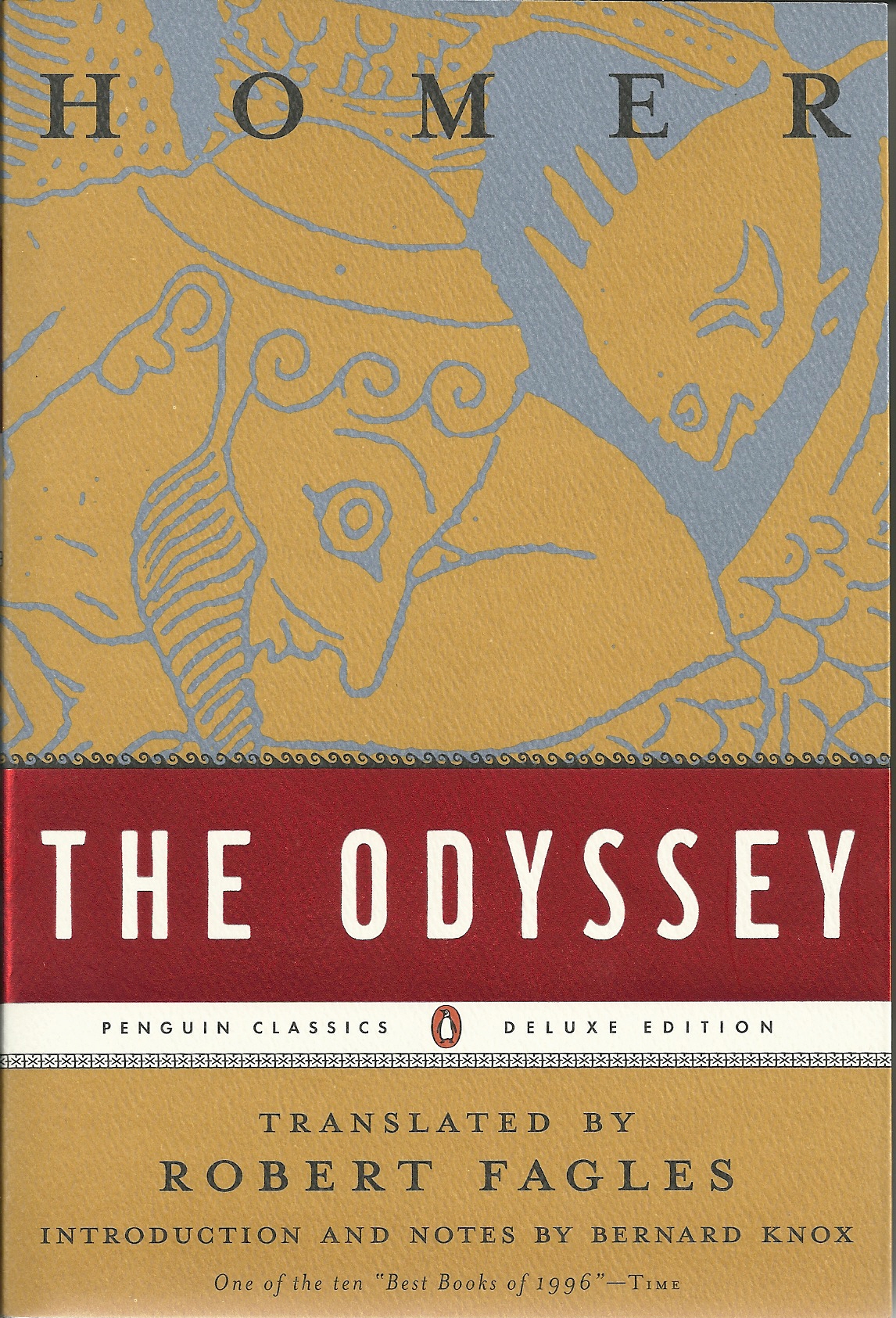
Happy Friday! Any exciting plans for the weekend? I’ll be at the New York City Poetry Festival. Poet RA Araya invited me to read as part of the line up for Miguel Algarin’s Brooklyn Poetry happening on Saturday at 11:40 at the Algonquin stage on Governor’s Island. If you want to come, take the first ferry out of Battery Park. It’s free! The ferry’s free, the poetry reading is free. If it’s anything like last year, you can envision yourself lofting in the grass and losing yourself to the Siren-pull of beautiful words. Speaking of Sirens, I’ll be reading from The Odyssey in its original Homeric Greek (help!) and from the book I’m coauthoring with Paul Maher Jr., Burning Furiously Beautiful: The True Story of Jack Kerouac’s “On the Road.”
In light of this, here are a few Friday links on the topic.
Literary Elitism vs. Populism (Is Homer much better than Kerouac?)
The New Yorker rejects Homer and Kerouac
Paul Maher Jr.’s Jack Kerouac’s American Journey: The Real-Life Odyssey of “On the Road”
“Like Odysseus in Homer’s poems, Kerouac in The Duluoz Legend is a restless adventurer that embarks on an epic journey — an Odyssean archetype of the indomitable wanderer in modern guise,” writes LewRockwell.com
“Dean Moriarty was the Odysseus of Tennyson not Homer, sailing away again from his island-kingdom not because he loved his family less, but because he loved more the drumbeat of heroic adventure in his breast,” writes HistoryJournal.org
Steve McCurry looks at Travelers’ Tales
“[T]he Odyssean archetype of the indomitable wanderer has persisted down to modern times in works as diverse as James Joyce’s “Ulysses,” Jack Kerouac’s “On the Road,” Charles Frazier’s “Cold Mountain,” and even in the film “O Brother, Where Art Though?” in 2000,” writes Lubbock Avalanche-Journal
“Everything since the Greeks has been predicted wrong, he says, because geometrical systems of thinking are fundamentally flawed. On the Road, then, is not just a travel memoir, a series of successive “kicks” from travel and all its accompaniments; it is Kerouac’s aesthetic manifesto that he sets up in opposition to the dominant idea of beauty-as-geometrical-harmony. This is why On the Road arrives out of nowhere and goes nowhere. That is why if you look for structure, for symmetry, for a narrative with a categorical beginning, a clear ending and internal consistency throughout, you will be disappointed,” writes anenduringromantic
“I listened to Snyder attentively. I wanted to understand more. In preparing to write the nonfiction saga of our long walk across Turtle Island – Odyssey of the 8th Fire – I’d been informed by books telling of our human journey: Homer’s Odyssey, Chaucer’s Canterbury Tales, Steinbeck’s Travels with Charlie, William Least Heat Moon’s Blue Highways, Cervantes’ Don Quixote, and Paolo Cohelo’sThe Pilgrimage. Inevitably, Kerouac’s On the Road also touched me with its entraining cross-America accounts of reaching outward, inward, downward, upward,” writes Steven McFadden
Never discourage anyone…who continually makes progress,
no matter how slow.
~ Plato
By all means marry; if you get a good wife, you’ll be happy.
If you get a bad one, you’ll become a philosopher.
~ Socrates
 photo of me from the 2nd Annual New York City Poetry Festival
I’ll be reading at this summer’s 3rd Annual New York City Poetry Festival!
Poet RA Araya invited me to read from Homer’s epic road trip The Odyssey in the original Homeric Greek and from my book coauthored with Paul Maher Jr., Burning Furiously Beautiful: The True Story of Jack Kerouac’s “On the Road” as part of Miguel Algarin’s Brooklyn poetry series.
I’m SUPER excited. You may remember what a lovely time I had at last year’s New York City Poetry Festival. And that I read from the Kerouac book at Miguel Algarin’s birthday bash and read from Homer at RA’s own birthday reading last year.
Here are the details:
Hope to see you there! I’m looking forward to hearing all the other brilliant poets.
You can always check out the Appearances section on my website (tab above) for my past and upcoming readings, tours, and teaching engagements.

While surfing the Web, I came across an article titled “Vacationing in the Most Miserable Place on Earth This Summer?” The tag line: “The Mediterranean is a miserable place.”
By the second sentence, the author Curtis Tate, was finger-pointing Greece: “[…] Greece was the flag bearer for the economic and social misery these countries are experiencing.”
There are countries in the news right now for deadly protests, horrific crimes against women, suicide bombers, and warlords. Vacationing in those countries would quite possibly be a more miserable experience.
But wait! Tate’s article actually has nothing to do with vacations. It’s about how people actually living in the Mediterranean–not only in Greece but also France–are unhappy with their current economic situation. His article concludes by saying “[…] China, Brazil, and even Kenya are optimistic for the future….” I have nothing against those countries, and I’m sure they can make lovely vacation destinations, but I’ve heard more people say they’d want to travel to France and Greece. Tate’s article is dangerously misleading.
Tate’s article title perhaps compels readers to click to read but it is offensive in its fear mongering. Unfortunately it appears to be a tactic he–or his editor–has used before:
Is Europe’s Unemployment Worst Than We Thought?
7 Reasons to Fear the Housing Bubble
Is Europe Holding the Rest of the World Back?
Are Chinese Export Numbers Increasingly Sketchy?
To be fair, the actual content of Tate’s “Miserable Place” article is not inaccurate in terms of the statics cited for the outlook of people in the Mediterranean.
The topic is not even his original idea.
Instead of linking to the Pew Research Center’s reports that he cites, Tate links to Drew DeSilver’s article published the day before his, entitled “The Mediterranean: Go for the Beaches, Not the Mood.” Although not identical word for word, Tate’s and DeSilver’s articles have the same content and in the same order. While Tate’s title invokes fear, DeSilver’s title is slightly more optimistic but suggests that the mood will affect one’s vacation.
While it is true that a poor economy can put a damper on tourism because of diminished resources and increased crime, neither Tate’s nor DeSilver’s articles are not making this point. Their articles says absolutely nothing about if and how the economy is affecting vacationers.Instead, Tate remarks that young people are unemployed. Unless he is subtly trying to warn you that you’ll be ordering your frappes from someone in their forties instead of some hot young thang, the fact that young people aren’t finding work right now probably isn’t going to deter your vacation plans. Oh and about that age thing — Jennifer Aniston is 44 and John Stamos is 49. We age well.
DeSilver says, “And, in what should surprise exactly no one, Greece has by far the bleakest outlook.” Hm… “in what should surprise exactly no one,” huh? He’s right: I’m not surprised that the statistics say 99% of Greeks say their country’s economic situation is “very or somewhat bad.” We’re a notoriously melodramatic people. Have you ever read the tragedies?
Does our “miserable” and “very or somewhat bad” outlook on the economy really affect who we are and how we treat our tourists, though?
My sense is that it doesn’t. Certainly, I’m a bit biased, but I’m basing my understanding of Greek tourism on the fact that every non-Greek I know who has visited there has loved it. They’ve found the people to be warm and generous, and they’ve gone multiple times or wished they could.
An article published the same day as Tate’s article was titled “Greece: Athens Tourism Up 10% for First Time in Three Years.” It concluded saying, “Arrivals at regional airports across the country last month showed a 20.5% increase in arrivals of foreign tourists compared to the same month last year.” Earlier this year, the Austrian newspaper Der Standard even hypothesized that this could be “the year of Greek tourism,” according to Capital.Gr.
I did my due diligence and checked out the Pew Research Center’s report. Guess what. The words “travel,” “traveler,” and “vacation” appeared no where in the report.
Greece needs your tourism now more than ever.

Kalo mina! It’s the first day of May–or as we Greeks call it, Protomaia or the Feast of the Flowers. Here in New York it’s been a long, long winter. Every time it started to warm up, it would start snowing. After we had one big snowstorm, a robin, that ephemeral symbol of spring, chirped on top of a construction rod as if to say it was tired of the cold weather too. Now, at last the days are longer, and pink flowers are blooming in Spanish Harlem.
During the winter, people always tell me that they’re sure I must wish I was in Greece during the cold season. Yes, we have palm trees in Greece–my dad is obsessed with plants!–but the country doesn’t have a tropical climate year-round. It actually snowed in Greece this year, as you can see from Yannis Behrakis’ stunning photos of a snow-topped Acropolis.
Perhaps this year, more than ever, Greeks are celebrating May Day. Traditionally heralded by picnics and flower collecting, Protomaia announces the start of spring. And with spring comes rebirth. A new beginning. A fresh start.
We could all use that.
“Skillful pilots gain their reputation
from storms and tempest.”
~ Epicurus

So here’s a fun fact I just read this week, via Yahoo: Ted Leonsis was the very first person to ever sent an AOL instant message.
If you don’t know who Ted Leonsis is here’s a quick run-down of just some of his achievements:
Successful people are often thought of as ruthless and privileged, but Ted Leonsis is a self-made millionaire who follows his heart. This is the promotional copy for The Business of Happiness:
When the plane he was on prepared for a crash landing, Ted Leonsis asked himself the crucial question, If today is my last day on earth—will I die happy?. . . and realized the answer was no. Despite having achieved massive business success—he was a self-made multi-millionaire at the age of twenty-seven—he realized he would die unfulfilled. He told God that if he survived, he would turn his life around, give back more than he took, and pursue happiness. After walking off that plane, he got to work.
And while I mentioned Nanking above, I should also point out that his other documentaries are equally about social justice. Kicking It is a documentary narrated by Colin Farrell about the issue of homelessness, and A Fighting Chance tells the motivational story of Kyle Maynard, a wrestler who was born without arms and legs.
Ted Leonsis and the stories he helps get to the public are examples that no matter what our circumstances we are all capable of achievement.
“The mind is not a vessel to be filled
but a fire to be kindled.”
~ Plutarch
Stephanie Nikolopoulos is a writer, editor, writing teacher, and speaker based in New York City.
She is the coauthor, with Paul Maher Jr., of "Burning Furiously Beautiful: The True Story of Jack Kerouac's 'On the Road.'"
You can email her at stephanie_701 {@} yahoo.com


 Stephanie Nikolopoulos