Tag Archives: Gregory Corso

Remembering Gregory Nunzio Corso

17 Jan

corso_mindfield_new

I have a special place in my heart for Gregory Corso. I’ve always appreciated his Romantic notions and the levity he brought to the so-called Beat Generation canon.

Unlike a lot of the other people he associated with, who were brought up in middle-class families and took an interest in the seedy underbelly of New York City as adults, Corso was abandoned by his mother at a Catholic charity and his father had him put in the foster care system. At thirteen, he landed in jail, where he discovered poetry. It was only many years later, after he became famous, that filmmaker Gustave Reininger found Corso’s mother and reunited them in what turned out to be a happy ending. His mother actually outlived him, though, as he soon found out he had cancer. During that time, his daughter Sheri Langerman, a nurse, took care of him.

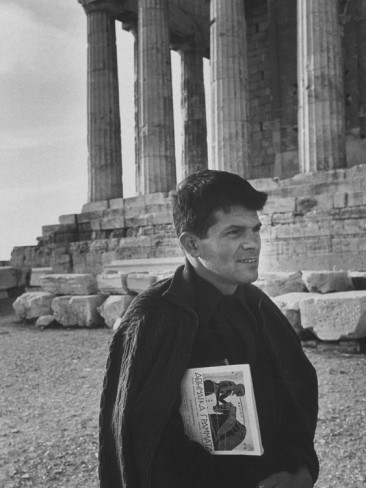
Corso passed away in Robbinsdale, Minnesota, on January 17, 2001. His ashes were buried at the Protestant Cemetery, Cimitero acattolico, in Rome, across from the poet that inspired him, Percy Bysshe Shelley.

Friday Links: Aristophanes Edition

13 Dec

swellfoot

Happy Friday! I’m wrapping up Aristophanes week with some link love devoted to this funny dramatist.

Lysistrata is a name featured on the Heritage Floor at The Dinner Party, at the Elizabeth A. Sackler Center for Feminist Art at the Brooklyn Museum

Pablo Picasso was so inspired by Aristophanes’ Lysistrata that he made several prints related to it, on view at the Met

Artist Aubrey Beardsley, who is often inspired by literature, also created a print inspired by Aristophanes

Obviously, there’s Radiohead’s Cloud Cuckoo Land

Lisa Borders titled her book about a young female busker’s search for home Cloud Cuckoo Land

On Fernhill Farm in Somerset, there’s a festival called Cloud Cuckoo Land

Festivals may seem very post-Woodstock, but Aristophanes was part of a festival back in Ancient Athens, called Lenaia, where he actually won first prize for his play The Knights

There’s an international architecture journal called Cloud-Cuckoo-Land

In London there’s a delightful period-clothing shop called Cloud Cuckoo Land

Percy Bysshe Shelley (Gregory Corso’s favorite poet) imitated Aristophanes’ The Frogs in the comic drama Oedipus Tyrannus: Or, Swellfoot the Tyrrant

“Aristophanes is ridiculous!” shouted Oscar on an episode of The Odd Couple in which he and Felix are contestants on the game-show Password


* * *

Burning Furiously Beautiful: The True Story of Jack Kerouac’s “On the Road” is now available as an ebook and paperback!

The British Are Coming!: The Beat Generation’s Influence on The Beatles

12 Nov

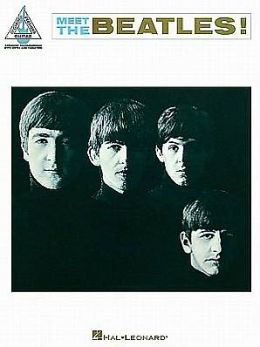
9781617804618_p0_v1_s260x420Check out the turtlenecks on the cover of Meet the Beatles

Yesterday, inspired by Olivia Cole’s article “Won over by the West: The irresistible allure of Americana for post-war Britons” for the November 2013 issue of British GQ, I kicked off a week-long series about the relationship between the Beat Generation and the British Invasion. I didn’t get too much into her article, but instead I wrote about the general history of each “group” (please take this term lightly; neither was an intended movement or formal group) and how and why they are connected. Today, I want to share a fun story with you about the two longest love affairs (Oh gosh, take that even lighter. People get so mad when I use hyperbole.) of my life: the Beatles and the Beats.

I was a HUGE Beatles fan back when I was in high school. I can’t quite remember how I got into the Beatles, but I know it’s not because of my parents. My dad didn’t listen to music. I was raised on smooth jazz, Prince, Lionel Ritchie, and Stevie Wonder, thanks to my mom. As I grew up and started discovering music on my own—Vanilla Ice, Boyz II Men, Snow, Positive K, Arrested Development, REM (should I go on? Ah, nostalgia)—she was the cool mom that listened to whatever I listened to on the radio. My mom was actually too young to be into the Beatles. In the craze of my own private Beatlemania, I pestered her for information, and she said she remembered her older sister getting a letter from their cousin in Sweden talking about this new band The Beatles and how popular they were.

One of the first exposures I had to Jack Kerouac and the Beat Generation came through The Beatles. I owned a VHS — yes, I’m that old! — documentary about The Beatles. It was a pretty low-quality documentary that I think I picked up at the K-Mart at the Closter Plaza. I don’t remember the name of it, but I used to watch it over and over again after school. I remember it saying that John Lennon named The Beatles, in part, because he was influenced by the Beat Generation. I didn’t know what the Beat Generation was at the time, nor did I bother to look it up — again, I’m old, and this was before I’d ever even heard the word “Internet,” so looking things up required going to the Closter Public Library and rifling through the encyclopedias. Still, when you watch something on repeat enough times, it gets ingrained in your memory, and when you suddenly learn something new, the threads of your brain weave everything together.

Wayne Mullins explored this in his essay “Long John Silver and the Beats” for Beatdom:

Several name changes occurred in the early life of the Beatles before John Lennon and Stuart Sutcliffe decided to honour the memory of Buddy Holly by changing the band name to the Beetles (as a play on Buddy Holly and the Crickets), but as John Lennon was a fan of clever word play he decided to change the spelling of The Beetles to Beatles as a way to suggest “beat” or “beat music”. As John Lennon said in a 1964 interview, “It was beat and beetles, and when you said it people thought of crawly things, and when you read it, it was beat music.”

Mullins goes on to prove the Beat–Beatles by discussion John Lennon’s art school education and the exposure he had to instructors who were fans of the Beats and the meeting of Lennon and Allen Ginsberg. He also makes notable claims about the parallel paths the Beats and the Beatles took toward enlightenment, coming from religious upbringings, looking toward the East, and returning (or at least considering) the religions of their youth. The article also points out that Jack Kerouac and Lennon both rejected the associations people made with them, preferring to remain autonomous.

Steve Turner’s book Jack Kerouac: Angelheaded Hipster also speaks to Kerouac’s influence on Lennon:

[John Lennon’s] fellow student Bill Harry specifically remembers Lennon reading “On the Road” and the short story “The Time of the Geek”, which was published in an anthology called ‘Protest’ in 1960. “He loved the ideas of open roads and travelling,” says Harry. “We were always talking about this Beat Generation thing.”

Mullins’ story about Lennon’s meeting Ginsberg was just one incident. The Allen Ginsberg Project post “Sunday 9th – John Lennon” recalls when Ginsberg invited The Beatles to his birthday party and Lennon and George Harrison showed up with their wives.

When the Nixon administration wanted to deport Lennon and Yoko Ono, Beat poet Gregory Corso wrote a letter, as did a whole lot of other famous people, according to John Weiner’s article “How Bob Dylan, Gregory Corso, Joyce Carol Oates and Others Helped Stop Nixon From Deporting John Lennon and Yoko Ono” in the Los Angeles Times.

The Beatles also had an affinity for William S. Burroughs, who appeared on the cover art of their Sgt. Pepper’s Lonely Hearts Club Band.

Not only that, in the Dangerous Minds article “The William S. Burroughs/Beatles connection,” Richard Metzger writes:

Over the weekend, I noticed the following passage in the book With William Burroughs: A Report From the Bunker by Victor Bockris:

Burroughs: Ian met Paul McCartney and Paul put up the money for this flat which was at 34 Montagu Square… I saw Paul several times. The three of us talked about the possibilities of the tape recorder. He’d just come in and work on his “Eleanor Rigby.” Ian recorded his rehearsals. I saw the song taking shape. Once again, not knowing much about music, I could see that he knew what he was doing. He was very pleasant and very prepossessing. Nice-looking young man, hardworking.

He goes on to elucidate the obvious connection: Barry Miles, whom The Allen Ginsberg Project also points to. Miles deserves his own post, but in short the thing to know is that he owned a bookshop in London that was frequented by the Beats when they were there, and he wrote about The Beatles and 1960s London underground culture.

Tune in tomorrow when I finally get into the meat of Cole’s article by discussing her commentary on The Kinks’ frontman Ray Davies’ new memoir.

* * *

Burning Furiously Beautiful: The True Story of Jack Kerouac’s “On the Road” is now available as an ebook and paperback!

Are the Beatniks Anti-American?

27 May

OLYMPUS DIGITAL CAMERAAmerican flag outside Kerouac’s birth home

I came to read Jack Kerouac, Allen Ginsberg, Gregory Corso, and Lawrence Ferlinghetti with little to no preconceived ideas about the Beat Generation. I had heard of Gilligan but never Maynard G. Krebs. I associated goatees with Ethan Hawke and turtlenecks with Sharon Stone. I liked the poetry bit in So I Married an Axe-Murderer but associated it with the spoken word poets of 1990s coffeehouses. So when I picked up The Portable Beat Reader, edited by Ann Charters, I had no presupposed knowledge of the writers in it or the culture they apparently inspired, apart from having discovered the book in a photo spread of a teen girl’s magazine. The kids in the spread looked like how I looked–or, rather, the cooler version of how I wished myself to look. That seemed as good a reason as any to beg my mom to buy the book for me.

I discovered humor and beauty and sensitivity in the words of the poets and novelists associated with the Beat Generation. When I read Kerouac explain the definition of “beat” as being both beat down and beatific, I understood and believed his words. It enlightened the way I read On the Road, and yet I read it sympathetically in the first place. I was a lot like Sal Paradise, hanging out with a friend who was wilder than I was. I longing to hit the road, to escape the humdrum of the suburbs and walk the city sidewalks of New York.

It was only later that I discovered that many others viewed the Beats and their work quite differently. It was only through reading biographies and nonfiction books on the Beats that I came to see that these writers were referred to as “beatniks,” and that that had a negative connotation. The term was a derogatory amalgamation of “Beat” and “sputnik,” and not being up on my history in my teen years, I understood it simply to mean they were “far out,” like a satellite in the space race. I had certainly heard of the Cold War, but it took me longer to understand that “beatnik” suggested the writers were somehow anti-American.

The idea of the Beats as anti-American took a long time for me to wrap my head around. Kerouac had written such a beautiful novel about America. He seemed so in love with the country and even made me fall in love with it in a new way. Before then, as the daughter of an immigrant, I had considered travel as something to do outside of America. I’d been to Europe but never the West Coast. Reading the Beats, I wanted to know more about this splendid vision of America they described. Sure, Ginsberg challenged America, but growing up decades later than him I was encouraged in school to think independently as he did. One could speak up in love. One must speak up in love.

As I continued to study Kerouac in particular, I learned about how he had been in the Merchant Marine during World War II. So much of what I read emphasized that he’d gotten discharged from the US Navy after being diagnosed with “schizoid personality.” It took more digging to hear a story like this one of how much Kerouac respected even the American flag:

At a party with Kesey’s Merry Pranksters Kesey came up and wrapped an American flag around me. So I took it (Kerouac demonstrates how he took it, and the movements are tender) and I folded it up the way you’re supposed to, and put it on the back of the sofa. The flag is not a rag.

The Beats were far from squeaky clean, but anti-American? I don’t see it. Perhaps the Beats didn’t jive with sock hops and malt shops, but maybe that’s a good thing because those 1950s stereotypes whitewashed the truth and left out large segments of the population. Some of us had fathers who spoke with an accent the way Ricky Ricardo did. Some of were intelligent but didn’t like stuffiness. Some of us liked to play our music LOUD. Some of us were friends with the outcasts. Some of us were misfits ourselves.

This Memorial Day, remember that many who died fighting for our country were just kids looking for a chance to escape from home or hoping for a chance to make something of their lives or desiring to be a part of something bigger than themselves. And think about today’s generation of Americans, those who may be a little rough around the edges or a little outspoken but who are so full of life, liberty, and justice.

You may also be interested in Memorial Day: Kerouac in the Merchant Marines.

David Amram Performs in NYC Twice Next Week!

2 May

Amram

In case you missed it in the comments section last week, David Amram dropped and mentioned he’ll be reading at Literary Manhattan’s 2013 Spring Symposium. David is one of my all-time heroes–exceedingly talented and generous. I never get tired of listening to him play music–and when I say “play,” it really does feel like play, like he’s having a ball going from instrument to instrument, enjoying the craft of making music. He’s also a great storyteller. He has stories about everyone: Jack Kerouac, Allen Ginsberg, Gregory Corso, Dizzy Gillespie, Charles Mingus, Dimitri Mitropoulos, Johnny Depp, the list goes on.

Here’s the info for the 2013 Spring Symposium:

May 5, 2013

299 Madison Ave, New York, NY 10017

12 Noon to 3:30PM

$20 suggested donation


He didn’t mention it, but he’ll also be playing at Cornelia Street Cafe the following evening. Here are those details:

May 6, 2013

29 Cornelia Street, New York, NY  10014

$20 (includes a drink!)


Happy 68th Birthday to Anne Waldman!

2 Apr

Happy birthday, Anne Waldman!

Anne Waldman’s New York – New Jersey upbringing and connection to Greece is the opposite of mine. She was born in A Millville, New Jersey, on April 2, 1945, and grew up on MacDougal Street in New York City, while I was born in New York City and grew up in New Jersey. Likewise, it was her mother who moved to Greece for a few years, while it was my father who was from Greece. These connections and opposites don’t really mean anything, but a few years ago I did run into her at a party.

Anne Waldman is an impressive woman. Here’s a little bit of her bio from Poets.org:

She received her BA from Bennington College in 1966. From 1966 until 1978 she ran the St. Mark’s Poetry Project, reading with fellow poets such as Allen Ginsberg and Gregory Corso. Immediately following her departure from St. Mark’s, she and Ginsberg founded the Jack Kerouac School of Disembodied Poetics at the Naropa Institute in Boulder, Colorado.

She has published over forty books of poetry….

…Waldman has received numerous awards and honors for her poetry, including The Dylan Thomas Memorial Award, The Poets Foundation Award, The National Literary Anthology Award, and The Shelley Memorial Award for poetry. She has received grants from the National Endowment for the Arts and the Foundation for Contemporary Performance Arts. She is a two-time winner of the International Poetry Championship Bout in Taos, New Mexico. She was elected an Academy Chancellor in 2011.

Gregory Corso’s Friends and Fans Give Him a Birthday Tribute

26 Mar

Michael Limnios is doing impressive work interviewing poets, scholars, and friends of the Beat writers over on Blues GR. For Gregory Corso’s birthday today, he’s compiled stories about the poet from those who had the pleasure of knowing him over the years and those who have read and been influenced by his work. The tribute includes memories and reflections from:

  • Ken Babbs
  • Hettie Jones
  • Harold Chapman
  • Dario Bellini
  • Andy Clausen
  • Eddie Woods
  • Nanos Valaoritis
  • Paul Fericano
  • Francis Kuiper
  • Helen Weaver
  • Elsa Dorfman
  • Marc Olmsted
  • Hank Harrison
  • Elliot Rudie
  • Levi Asher
  • Frank Beacham
  • Neeli Cherkovski,
  • Gordon Ball
  • Catfish McDaris
  • Tisa Walden
  • David Amram
  • Yannis Livadis
  • George Nicholas Koumantzelis
  • Gerald Nicosia
  • Robert Yarra
  • Ruth Weiss
  • Joe Ambrose
  • Cyclop Lester
  • John Sinclair
  • Michael Minzer
  • A. D. Winans
  • Kurt Lipschutz
  • Mark Sargent
  • Harvey Kubernik

Happy 83rd Birthday, Gregory Corso!

26 Mar

bday

One of my very favorite poets was born on this day in 1930. That’s right: Gregory Corso. He was quite a few years younger than his friends—William S. Burroughs was born in 1914, Jack Kerouac in 1922, Allen Ginsberg in 1926—but was one of the first published. Kerouac had published The Town and the City in 1950, but the novel that would put him on the map—On the Road—wasn’t published for another seven years. Ginsberg’s Howl was published in 1956. Corso published his first poetry book, The Vestal Lady on Brattle, in 1955. He was only twenty-five years old. Speaking of which, Corso wrote a lovely poem called “I Am 25.” I remember back when I was in college, reading it and thinking how far off that seemed. Twenty five. What a magical age. I wrote a little poem emulating his about how old I was then, and instead of saying “I HATE OLD POETMEN!” like the line in his poem, I wrote “I LOVE OLD POETMEN!” And I do. Gregory Corso is brilliant. Both a classicist and a rule breaker.

If anyone could be called “beat,” it was Corso. Most of the people who came to be associated with the Beat Generation were middle-class suburbanites, or something close to that. Corso was born to a sixteen-year-old Italian immigrant in New York City, who later abandoned him to the Catholic Church Charities. He was sent to live with foster parents and ended up homeless on the streets of New York, eventually doing time in prison at thirteen years old for petty larceny. The story goes that while in The Tombs, the Mafia encouraged him to read, and he fell in love with poetry.

Modern Love

14 Feb
by William Hilton

by William Hilton

When I was still just a teenager, I fell for John Keats. He was a Romantic, prone to fits of passion and depression, the highs and lows most teenagers can relate to. He had studied and gotten his apothecary license, but who wants to be a doctor when they could be a poet? Both fix the heart, do they not? He sat under a plum tree and wrote an ode to a nightingale. Swoon. He wasn’t stuffy. He infused humor into his poetry and broke traditional rules, using false rhymes. He went on “road trips,” walking tours of the Lake District, Ireland, and Scotland. There’s a beautiful scene in the film Bright Star, about Keats’ romance with Fanny, in which a million butterflies flutter though a bedroom. And isn’t that just like love? Whimsical. Animated. Delicate. Fleeting. Memorable.

Gregory Corso, the poet associated with the Beat Generation, was a fan of John Keats’ poetry. It’s easy to see their resemblance to each other—the way they both referenced their hero poets in their poetry, the cheeky humor, their admiration for the Classics, the way they strayed from conformity, their struggling to make ends meet.

In honor of Valentine’s Day, here’s Keats’ thoughts on modern love.


Fragment: Modern Love

And what is love? It is a doll dress’d up

For idleness to cosset, nurse, and dandle;

A thing of soft misnomers, so divine

That silly youth doth think to make itself

Divine by loving, and so goes on

Yawning and doting a whole summer long,

Till Miss’s comb is made a pearl tiara,

And common Wellingtons turn Romeo boots;

Then Cleopatra lives at number seven,

And Antony resides in Brunswick Square.

Fools! if some passions high have warm’d the world,

If Queens and Soldiers have play’d deep for hearts,

It is no reason why such agonies

Should be more common than the growth of weeds.

Fools! make me whole again that weighty pearl

The Queen of Egypt melted, and I’ll say

That ye may love in spite of beaver hats.


Gift Guide for the Beat Reader

14 Dec

The writers associated with the Beat Generation were anti-Consumerism, and I have a hard time believing they’d want anyone to buy beatnik merch. They would want you to buy and read their literature instead. However, if you have friends who love Beat literature, you may be hesitant to buy them On the Road because chances are they probably already have dog-eared paperbacks of both the standard novel and the scroll version. Here are a couple of alternative Beat-inspired gifts.

Amram

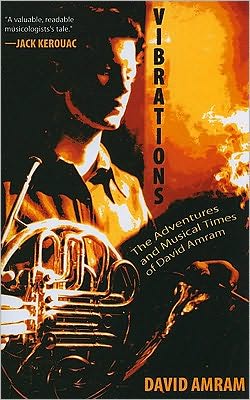
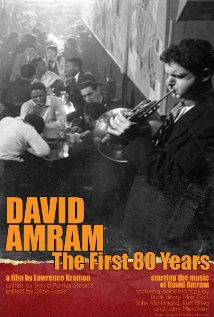
Musician and author David Amram did jazz-poetry performances with Kerouac and other poets. He also wrote the scores to films such as Splendor in the Grass and The Manchurian Candidate and has jammed with a wide variety of musicians. David Amram: The First 80 Years chronicles his genius talent. (You can watch a video of me reading with Amram here.)

logo

Another gift-worthy film is Ginsberg’s Karma, a “documentary about the legendary poet Allen Ginsberg and his mythical journey to India in the early 1960s that transformed his perspective on life and his work.” The film was edited, produced, and directed by Ram Devineni, and features poet Bob Holman. I saw this film at the PEN World Voice Literary Film Feast a few years ago and was inspired to get involved in some of their subsequent projects.

billykoumantzelis

Billy Koumantzelis was a friend of Kerouac’s back in their hometown of Lowell and served as a pallbearer at his funeral. I picked up this CD when I was at Lowell Celebrates Kerouac in 2011. It’s full of stories about Kerouac hanging out at bars, getting into fights, and appearing on The William Buckley Show and makes a great gift for someone who wants to hear stories from someone who knew Kerouac. (I got to meet Koumantzelis last week, and he is a true gentleman. I’ll be sharing stories from that soon.)

corso2

Allen Ginsberg had a portrait of poet Walt Whitman hanging in his apartment. This framed portrait of Gregory Corso is a great tribute to a poet who loved the Classics.

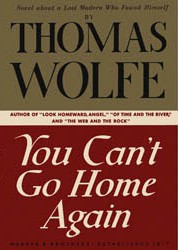
YouCantGoHomeAgain

Jack Kerouac was inspired by author Thomas Wolfe. Bundle up Look Homeward, Angel and You Can‘t Go Home Again for the Kerouac fan.

the-visitation

Kerouac wrote about the Grotto in Lowell, which is a beautiful and peaceful space to visit. Artist Jonathan Collins, whom I met at one of my readings, did a series based on the Grotto, which would make a lovely gift.

Larry-Closs_Beatitude_Anthony-Freda-194x300

Another person I met at a reading was Larry Closs, author of the book Beatitude.
 I stayed up late one night reading this heartbreaking-but-hopeful book of love, friendship, and the power of literature. You can read the synopsis here.

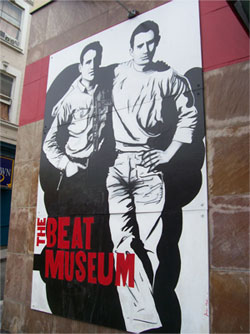
museum-sign

I haven’t finished my California road trip posts yet (so many posts, so little time!), but it will include my visit to The Beat Museum in San Francisco. I was greeted by none other than proprietor Jerry Cimino himself, whose stellar work in preserving Beat history I’ve been following for many years. He took some time out to chat with me and show me the plethora of rare and first-edition Beat books. Even if your budget isn’t big enough for a first edition, you can still get archival lit mags, which make a really cool gift.

Sea

Another place soon to be featured on my California road trip is City Lights Bookstore. In addition to rare and signed copies of books, you can also get some exclusive works here. At Sea is an “Exquisite handmade letterpress edition of Lawrence Ferlinghetti’s new poem” for poet Pablo Neruda.

Of course there are tons of biographies, walking tour books, graphic novels, films, and so forth that would also make great gifts, but if you’re looking for something a bit more off the beaten path (heh), these might be the gifts you’re looking for.