Archive | Beat Generation RSS feed for this section

Happy 68th Birthday to Anne Waldman!

2 Apr

Happy birthday, Anne Waldman!

Anne Waldman’s New York – New Jersey upbringing and connection to Greece is the opposite of mine. She was born in A Millville, New Jersey, on April 2, 1945, and grew up on MacDougal Street in New York City, while I was born in New York City and grew up in New Jersey. Likewise, it was her mother who moved to Greece for a few years, while it was my father who was from Greece. These connections and opposites don’t really mean anything, but a few years ago I did run into her at a party.

Anne Waldman is an impressive woman. Here’s a little bit of her bio from Poets.org:

She received her BA from Bennington College in 1966. From 1966 until 1978 she ran the St. Mark’s Poetry Project, reading with fellow poets such as Allen Ginsberg and Gregory Corso. Immediately following her departure from St. Mark’s, she and Ginsberg founded the Jack Kerouac School of Disembodied Poetics at the Naropa Institute in Boulder, Colorado.

She has published over forty books of poetry….

…Waldman has received numerous awards and honors for her poetry, including The Dylan Thomas Memorial Award, The Poets Foundation Award, The National Literary Anthology Award, and The Shelley Memorial Award for poetry. She has received grants from the National Endowment for the Arts and the Foundation for Contemporary Performance Arts. She is a two-time winner of the International Poetry Championship Bout in Taos, New Mexico. She was elected an Academy Chancellor in 2011.

Gregory Corso’s Friends and Fans Give Him a Birthday Tribute

26 Mar

Michael Limnios is doing impressive work interviewing poets, scholars, and friends of the Beat writers over on Blues GR. For Gregory Corso’s birthday today, he’s compiled stories about the poet from those who had the pleasure of knowing him over the years and those who have read and been influenced by his work. The tribute includes memories and reflections from:

  • Ken Babbs
  • Hettie Jones
  • Harold Chapman
  • Dario Bellini
  • Andy Clausen
  • Eddie Woods
  • Nanos Valaoritis
  • Paul Fericano
  • Francis Kuiper
  • Helen Weaver
  • Elsa Dorfman
  • Marc Olmsted
  • Hank Harrison
  • Elliot Rudie
  • Levi Asher
  • Frank Beacham
  • Neeli Cherkovski,
  • Gordon Ball
  • Catfish McDaris
  • Tisa Walden
  • David Amram
  • Yannis Livadis
  • George Nicholas Koumantzelis
  • Gerald Nicosia
  • Robert Yarra
  • Ruth Weiss
  • Joe Ambrose
  • Cyclop Lester
  • John Sinclair
  • Michael Minzer
  • A. D. Winans
  • Kurt Lipschutz
  • Mark Sargent
  • Harvey Kubernik

Happy 83rd Birthday, Gregory Corso!

26 Mar

bday

One of my very favorite poets was born on this day in 1930. That’s right: Gregory Corso. He was quite a few years younger than his friends—William S. Burroughs was born in 1914, Jack Kerouac in 1922, Allen Ginsberg in 1926—but was one of the first published. Kerouac had published The Town and the City in 1950, but the novel that would put him on the map—On the Road—wasn’t published for another seven years. Ginsberg’s Howl was published in 1956. Corso published his first poetry book, The Vestal Lady on Brattle, in 1955. He was only twenty-five years old. Speaking of which, Corso wrote a lovely poem called “I Am 25.” I remember back when I was in college, reading it and thinking how far off that seemed. Twenty five. What a magical age. I wrote a little poem emulating his about how old I was then, and instead of saying “I HATE OLD POETMEN!” like the line in his poem, I wrote “I LOVE OLD POETMEN!” And I do. Gregory Corso is brilliant. Both a classicist and a rule breaker.

If anyone could be called “beat,” it was Corso. Most of the people who came to be associated with the Beat Generation were middle-class suburbanites, or something close to that. Corso was born to a sixteen-year-old Italian immigrant in New York City, who later abandoned him to the Catholic Church Charities. He was sent to live with foster parents and ended up homeless on the streets of New York, eventually doing time in prison at thirteen years old for petty larceny. The story goes that while in The Tombs, the Mafia encouraged him to read, and he fell in love with poetry.

What a Garifuna-Breton Party Has to Do with Jack Kerouac

15 Mar

James-Lovell

photo via ELA

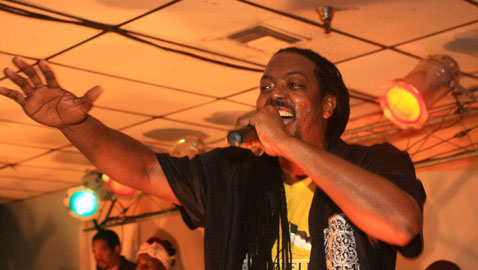
After a short hiatus for renovations and new partnership, Bowery Poetry is back—dropping “Club” from its title—and they’re hosting a Garifuna-Breton party! I’ve posted before about endangered languages—both of which these are—but why I specifically want to mention this party is because Jack Kerouac claimed to have descended from a Breton nobleman.

Bretons are people from Brittany, a Celtic nation located in France. During Kerouac’s day and age there were more than one million Breton speakers. The Brythonic language (Welsh, also endangered, is another example of a Brythonic language) was originally well regarded and spoken among the upper classes, but as people began assimilating it became known as the language of the commoners. Today,  most Bretons today speak French, and only about 200,000 people—particularly in the western area—speak Breton. In the 1960s, the language was being forced out of schools—just like many Native American and Sami languages were. Today, schools are returning to bilingualism, particularly through the efforts of Diwan schools, which were founded in 1977 as an immersion program. Even so, UNESCO classifies Breton as a “severely endangered” language. For more on the history of the language visit Breton Language and visit the US Branch of the International Committee for the Defense of the Breton Language.

Kerouac’s family was French Canadian, and growing up in Lowell, Massachusetts, his first language was the working-class French-Canadian dialect joual. It’s interesting to note that both Breton and joual are associated with commoners; perhaps this is a key to understanding Kerouac and his literature. As far as my current research shows, he was not familiar with the Breton language. However, I recently saw Christopher Felver’s documentary Ferlinghetti: A Rebirth of Wonder, which told the story of how one day Kerouac was sitting on the beach in Big Sur with poet and City Lights founder Lawrence Ferlinghetti repeated the phrase “the fish in the sea speak Breton.” Kerouac perked up, hearing the connection to his roots, and asked Ferlinghetti about it and wrote it down in the little notebook he always carried with him. The phrase found its way into his novel Big Sur.

Satori in Paris, which came three years after Big Sur, recounts Kerouac’s travels to France and Brittany in search of his roots. For a fascinating look at Kerouac’s trip and ancestral lineage, check out Dave Moore’s article “The Breton Traveller” on Beatdom.

Here’s the press release for the Garifuna-Breton party:

BOWERY POETRY

IS BACK WITH

A GRAND GARIFUNA-BRETON PARTY!

Poetry! Music! Dance!

Sunday*, March 18 from 6pm-11pm

Admission $10

Bowery Poetry, 308 Bowery (at 1st Street)

Endangered Language groups unite in a call to action to focus attention on the fact that more than half the world’s languages will disappear this century  

Two cultures who met through the Endangered Language Alliance, will celebrate their differences (Breton being Celtic and Garifuna being Arawak), and their similarities (both on the Endangered Language spectrum), but mainly will just celebrate with live music, dance and poetry. This event is being produced by the Bowery Arts + Science Endangered Language Program, and will be one of the first events at the newly renovated Bowery Poetry space at 308 Bowery.

Breton

The strong Breton cultural movement, known as Fest-Noz,  has preserved the expression of a living and constantly renewed practice of inherited dance repertoires with several hundred variations, and thousands of tunes. About a thousand Festou-Noz take place every year with participants varying from a hundred to several thousand people, thousands of musicians and singers and tens of thousands of regular dancers.

Garifuna

Descendants of Arawak, Carib, and African warriors, the resilient Garifuna people of Central America and the Caribbean are known for their rich traditional folklore, including music, dance, food and language. James Lovell is a New York based Belizean Garifuna drummer, recording artist, performer, teacher, and Garifuna cultural activist who grew up with stories told by his elders about the bravery of the Garifuna people and their military leader, Chief Joseph Chatoyer, against efforts by the British colonialists to deny them their identity and the right to speak the Garifuna language.  


*I double-checked this, and according to the Endangered Language Alliance the event is on MONDAY the 18th.

Review: Ferlinghetti: A Rebirth of Wonder

14 Mar

ferlinghetti_splash

I caught the documentary Ferlinghetti: A Rebirth of Wonder (2009) at Anthology Film Archives this past weekend. Lawrence Ferlinghetti is one of my favorite poets, for his use of language and whimsy. I’ve long appreciate his commitment to freedom of speech, and this documentary made me more aware of how he used his position as a poet and bookseller for activist purposes. Quirky fact: he uses the windows of his office at City Lights as a “blog,” writing his political thoughts for all who pass by to see.

Ferlinghetti: A Rebirth of Wonder is star-studded, including informative interviews and clips with everyone from Amiri Baraka, David Amram, Jack Hirschman, Michael McClure, Anne Waldman, and George Whitman to Giada Diano, Bill Morgan, Dave Eggers, and Lorenzo Ferlinghetti. It impresses upon the viewer just how important Ferlinghetti is by indicating his support of Bob Dylan, his place in American poetry, awards given to him, and the naming of a street after him.

The biographical background information is fascinating, particularly when we hear about Ferlinghetti’s rearing in France, how his mother’s ineptitude at caring for him led to his being raised by the daughter of the founder of Sarah Lawrence College, and his service in World War II (spoiler alert: he saw Nagasaki right after the bomb dropped). There’s even a scene in which Ferlinghetti searches for his roots in Italy, where he was arrested for trespassing when he tried to get a sneak peek at where his father grew up! This of course is all balanced with his founding of City Lights, the Howl trial, and the Human Be-In.

All of it is wonderful, but its broad scope and pacing left the film falling flat in terms of its aesthetics. As a biographer, I understand how director/producer Christopher Felver must have struggled with the editing process. How could he cut anything out when it’s all so important? No one wants to see significant and appealing research fall on the cutting room floor. As a viewer, though, I would have preferred a more limited scope or narrative approach. It would have been a stronger film if Felver, who worked on the documentary for ten years, ruthlessly edited his work to give it a story arc. This film is best suited for those interested in learning more about the free speech movement, poetry in America, the Beat Generation (though Ferlinghetti adamantly declares in one scene “Don’t call me a Beat! I never was a Beat!”), San Francisco, and the 1950s and ‘60s. I’d recommend Ferlinghetti: A Rebirth of Wonder for high-school English classes as well as for writers in general, as it motivates one to consider poetry as subversive action.

Happy 91st Birthday, Jack Kerouac!

12 Mar

OLYMPUS DIGITAL CAMERA

Today would’ve been Jack Kerouac’s birthday. It’s too bad he’s not around this year–he passed away in 1969 at forty-seven years old–to see the films Big Sur, Kill Your Darlings, and On the Road.

If you’re interested in discovering his birth home, you can check out my Kerouac birthday post from last year, which has photos and history.

You may also be interested in seeing artist Jonathan Collins’ painting of Kerouac’s birth home.

Friday Links: Flavorwire’s Kerouac Obsession

8 Mar

Flavorwire is obsessed with Jack Kerouac. Here’s a round-up of articles referring to him this year:

Notice a trend?

Jack Kerouac’s Birthday Celebrations Happening Across the Country

7 Mar

Jack Kerouac’s birthday is coming up on the 12th, and there are a couple of celebratory events happening.

Lowell Celebrates Kerouac has several days of fantastic events centered around what might be my favorite (it’s hard to choose just one!) Kerouac book, Visions of Gerard. They will also be honoring David Amram, who has been a great mentor in my life and work:

Lowell Celebrates Kerouac! will be spotlighting Jack Kerouac’s deeply spiritual and Lowell-based book, Visions of Gerard, throughout this 50th anniversary year of its publication, starting with the birthday events of March 2013. March will feature music by celebrated world musician David Amram, musical collaborator and friend of Kerouac, an art exhibition, educational programs, walking tours, poetry, readings, and other cultural events that celebrate the life and writings of Jack Kerouac.

Friday 8 March 2013

Kerouac: People, Places, and Things
Time: 6:00 to 10:00pm
Location: Lowell Telecommunications Center Gallery, 246 Market St.
Kerouac-influenced art exhibition opening reception

The Magnificent Pigtail Shadow
Time: 6:30 to 7:45pm
Location: Lowell Telecommunications Center Gallery, 246 Market St.
A film by Steven Cerio with the director to present, plus a reading from Big Sur played against the director’s newest short

Music for Jack
Time: 8:00 to 9:30pm
Location: Lowell Telecommunications Center Gallery, 246 Market St.
David Amram and friends. A $10 donation is requested.

Saturday 9 March 2013

Amram and Marion
Time: 10:30am to 12:00pm
Location: Welles Emporium, 175 Merrimack St.
Help Lowell Celebrates Kerouac celebrate its new merchandise home at the Welles Emporium. Musician-author David Amram and poet Paul Marion help Lowell Celebrates Kerouac celebrate its new merchandise home at the Welles Emporium. David and Paul will do readings from their books and poetry as well as Kerouac passages with musical interludes by David. They will sign books and CDs.

Jack and Woody: Two American Originals
Time: 1:00pm
Location: Pollard Memorial Library, 401 Merrimack St.
Woody Guthrie and Jack Kerouac life parallels, talk by author Steve Edington.

Mystic Jack Tour
Time: 3:30 to 5:00pm
Location: Meet at St. Louis Church, 221 West Sixth St.
Led by master Kerouac interpreter Roger Brunelle, specially presented this year in honor of 50th anniversary of publication of Visions of Gerard. A $10 donation is requested.

Lowell Celebrates Kerouac Celebrates Amram!
Time: 8:00pm to ?
Location: White Eagle Cafe, 585 Market St.
Musical event with David Amram, the Part-Time Buddhas, and guest musicians. A $10 donation is requested.

Sunday 10 March 2013

Walking Jack Loop Walk
Time: 12:00 to 5:00pm
Location: Meet at Jack Kerouac Commemorative at Jack Kerouac Park, intersection of French and Bridge Streets
End at Old Worthen Tavern at 5:00 for toasting the birth of Jack Kerouac in March of 1922

Tuesday 12 March 2013

Kerouac Birthday Walk
Time: 6:00pm
Location: Starts at Centralville Social Club, 364 W. 6th St.
On Jack Kerouac’s 91st birthday, walk with LCK group to Lupine Road birth house for readings. The walk will start and end at Centralville Social Club (364 W. 6th St.) parking lot by the prominent Ace Hardware sign on Lakeview Ave., Centralville neighborhood.

Tuesday 19 March 2013

Reading of Visions of Gerard
Time: 7:00pm
Location: Pollard Memorial Library, 401 Merrimack St.
Tour of “Jack’s Library” followed by selected readings and discussion of Visions of Gerard on the 50th anniversary of its publication. This is Kerouac’s possibly most spiritual book as he remembers his childhood years and the deep impacts of his brother Gerard’s death. Sponsored by UMassLowell and Pollard Memorial Library. Funded in part by the Massachusetts Council on the Humanities.

Thanks to Welles Emporium, the Pollard Memorial Library, the White Eagle Pub, the Old Worthen Tavern, Lowell Telecommunications, and the St. Louis de France School for hosting our events.

I also learned via LCK that the Northport Historical Society is hosting a birthday celebration for Kerouac:

Writer/Playwright, Pat Fenton will be reading from his play “Jack’s Last Call, Say Goodbye to Kerouac”, as part of the March is Kerouac Month at the Northport Historical Society. Mr. Fenton will also discuss Kerouac’s Northport years as well as his importance to American literature.

It’s the end of summer in 1964. A major cultural shift is starting to happen in the U.S., and on his last night in Northport, Long Island the America Jack Kerouac saw through a rear view mirror riding along side his “On the Road” partner Neal Cassady is slowly playing again in his mind.

Long after a small going away party that he has thrown for himself is over; Jack keeps on drinking as he prepares to move to Florida with his mother. He reflects back on his fame, his youth as a football star in Lowell, Massachusetts, and the worry that his time has come and gone. As he sums up parts of his life to the audience in a bittersweet narrative, he receives a series of soul-searching phone calls from his daughter Jan.

An obligatory stop at Gunther’s Bar down the block on Main Street, where Jack Kerouac spent much of his Northport Years, will be made by the writer, and the conversation will continue over pints of tap beer.

The birthday celebration will take place on Sunday, March 10th at 3 P.M., at the Northport Historical Society, 215 Main Street, Northport, Long Island.

The Laughing Goat, a coffeehouse and performance space in Colorado, is hosting a poetry reading on March 11:

”So, You’re a Poet,” presents Jack Kerouac’s 91st Birthday Reading & On the Road film screening: The ”So, You’re a Poet” reading series by Boulder’s ”beat book shop” has several Kerouac events on its poetry calendar. Poets who have performed in this venerable, decades-old series include the late Allen Ginsberg, Bernadette Mayer (who will be in Boulder this summer for the Summer Writing Program), Diane di Prima, Janine Pommy Vega, Anselm Hollo, and many more. The series has always been hosted by poet and Kerouac School alumnus Tom Peters, owner of the Pearl Street landmark ”beat book shop.” The series was hosted for many years by the famous Penny Lane Cafe. In the introduction to Poems from Penny Lane Anne Waldman writes ”One thinks of the legendary Cabaret Voltaire in Zurich where the Dadaist movement was born, or the cafes and bars in San Francisco which spawned the Beat Literary Movement, also the cafe Metro and the Nuyorican Cafe, both in New York City’s East Village.” The series currently takes place in the new Laughing Goat Coffeehouse, which has strong ties to the original Penny Lane. Amiri Baraka, Miguel Algarin, Lewis MacAdams, and other poets read there during last year’s Summer Writing Program. The Laughing Goat is surely a Boulder literary institution in the making.

Are there any other Kerouac birthday celebrations we should know about?

How will you be celebrating? If you can’t make it to one of the events, maybe you could write a poem or read a passage from one of Kerouac’s books or stop by the Beat Museum in San Francisco.


Happy Birthday, Dimitri Mitropoulos

1 Mar

Happy birthday to Dimitris Mitropoulos! Born in Athens, the Greek composer began conducing the New York Philharmonic in 1949. He was raised Greek Orthodox and is remembered as being devout. From everything I’ve heard and read — I first heard about Mitropoulos through David Amram, who tells lots of stories about him in his books and remembers him fondly — Mitropoulos sounds like quite a character! To make music more accessible to the masses and reach a younger audience, Mitropoulos did a week of shows at the Roxy, a movie theatre in Times Square.


Clip on Xu Beihong Plus Thoughts on Calligraphy, the Beats, and the Abstract Expressionists

19 Feb

plant2

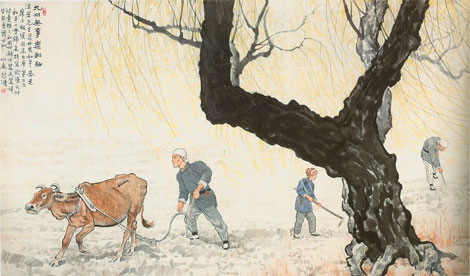
Burnside published my art post “A Time to Plant and a Time to Uproot” today.

It only occurred to me as I was posting this clip how interesting it is that Xu Beihong’s painting is from 1951. Doesn’t the seemingly traditional shuimohua painting seem much older? Xu is actually known for his Western sensibilities and is considered a forerunner in modern Chinese art.

Xu studied calligraphy with his father before attending the famous École Nationale Supérieure des Beaux-Arts — you know, that Parisian school where Degas, Matisse, Monet, and Renoir studied at. In 1917, Xu Beihong went to Japan to study art. During World War II, he sold his paintings in exhibitions throughout Asia, giving the proceeds to the Chinese whose lives had been upturned because of the war. As a teacher and artist, Xu’s policies greatly influenced the way both colleges and the government respond to art in Communist China. He died in 1953.

Meanwhile, over in Oregon at Reed College in the early 1950s, Gary Snyder, Philip Whalen (who served Stateside during World War II), and Lew Welch–who are associated with the Beat Generation–were studying with calligrapher Lloyd Reynolds. Snyder and Whalen later spent time in Japan, where they studied zen. The US State Department initially denied Snyder a passport, alleging he was a Communist.

Asian influences can also be seen in the art of the time period, most notably the abstract expressionist art of Franz Kline, Adolph Gottlieb, and Theodoros Stamos. Note this opening paragraph from the Guggenheim’s article “Abstract Art, Calligraphy, and Metaphysics“:

Following World War II New York City became the center of the avant-garde art world. Artists were working in new ways, and some were exploring the energy of the gesture with loose brushwork that reflected the impact of the artist’s bold movements. The calligraphic brushstroke was an approach to abstract painting that focused on the spontaneous gesture of the artist’s hand and was informed by the East Asian art of calligraphy and popular writings on Zen and its principles of direct action.

The article goes on to say:

In Chinese and Japanese calligraphy the brush becomes an extension of the writer’s arm, indeed, his or her entire body. The artist’s stroke not only suggests the movement of the body, but also inner qualities. Abstract as it appears, calligraphy also conveys something about the essence of the individual artist. It is therefore not surprising that 20th-century American Abstract Expressionists who sought to convey emotion through paint were drawn to it.

Because so many soldiers were stationed in the East during World War II, both the West and the East were influenced by each other.

What I personally find fascinating with calligraphy is the collision of art and literature, the visual and the literal, words becoming art, and art becoming words.