Happy 68th Birthday to Anne Waldman!

2 Apr

Happy birthday, Anne Waldman!

Anne Waldman’s New York – New Jersey upbringing and connection to Greece is the opposite of mine. She was born in A Millville, New Jersey, on April 2, 1945, and grew up on MacDougal Street in New York City, while I was born in New York City and grew up in New Jersey. Likewise, it was her mother who moved to Greece for a few years, while it was my father who was from Greece. These connections and opposites don’t really mean anything, but a few years ago I did run into her at a party.

Anne Waldman is an impressive woman. Here’s a little bit of her bio from Poets.org:

She received her BA from Bennington College in 1966. From 1966 until 1978 she ran the St. Mark’s Poetry Project, reading with fellow poets such as Allen Ginsberg and Gregory Corso. Immediately following her departure from St. Mark’s, she and Ginsberg founded the Jack Kerouac School of Disembodied Poetics at the Naropa Institute in Boulder, Colorado.

She has published over forty books of poetry….

…Waldman has received numerous awards and honors for her poetry, including The Dylan Thomas Memorial Award, The Poets Foundation Award, The National Literary Anthology Award, and The Shelley Memorial Award for poetry. She has received grants from the National Endowment for the Arts and the Foundation for Contemporary Performance Arts. She is a two-time winner of the International Poetry Championship Bout in Taos, New Mexico. She was elected an Academy Chancellor in 2011.

The Quotable Greek: Wide-Hipped, Sarcastic Greek Girl

1 Apr

“This worked out perfectly for me in college, because what nineteen-year-old Virginia boy doesn’t want a wide-hipped, sarcastic Greek girl with short hair that’s permed on top? What’s that you say? None of them want that? You are correct.”

~ Tina Fey in Bossypants

Clip: A Time to Build

28 Mar

In case you missed it, the art I curated for Burnside’s latest “A Time to…” series posted last week. This one’s on “A Time to Build.”

It shows a photograph of the two beams of light that serve as a reminder of the Twin Towers. I began working in Manhattan a month after 9/11. I used to see these light sculptures all the time while walking in the Village. I don’t remember them being discontinued, but I do remember how they stopped me in my tracks when I saw them turned on again at the ten-year anniversary date of the attacks. The lights may represent the physical buildings that were lost and honor those who lost their lives, but for me they also are a symbol of hope and resilience. The light pierces the darkness, showing that sometimes the intangible is more powerful than the physical.

Gregory Corso’s Friends and Fans Give Him a Birthday Tribute

26 Mar

Michael Limnios is doing impressive work interviewing poets, scholars, and friends of the Beat writers over on Blues GR. For Gregory Corso’s birthday today, he’s compiled stories about the poet from those who had the pleasure of knowing him over the years and those who have read and been influenced by his work. The tribute includes memories and reflections from:

  • Ken Babbs
  • Hettie Jones
  • Harold Chapman
  • Dario Bellini
  • Andy Clausen
  • Eddie Woods
  • Nanos Valaoritis
  • Paul Fericano
  • Francis Kuiper
  • Helen Weaver
  • Elsa Dorfman
  • Marc Olmsted
  • Hank Harrison
  • Elliot Rudie
  • Levi Asher
  • Frank Beacham
  • Neeli Cherkovski,
  • Gordon Ball
  • Catfish McDaris
  • Tisa Walden
  • David Amram
  • Yannis Livadis
  • George Nicholas Koumantzelis
  • Gerald Nicosia
  • Robert Yarra
  • Ruth Weiss
  • Joe Ambrose
  • Cyclop Lester
  • John Sinclair
  • Michael Minzer
  • A. D. Winans
  • Kurt Lipschutz
  • Mark Sargent
  • Harvey Kubernik

Happy 83rd Birthday, Gregory Corso!

26 Mar

bday

One of my very favorite poets was born on this day in 1930. That’s right: Gregory Corso. He was quite a few years younger than his friends—William S. Burroughs was born in 1914, Jack Kerouac in 1922, Allen Ginsberg in 1926—but was one of the first published. Kerouac had published The Town and the City in 1950, but the novel that would put him on the map—On the Road—wasn’t published for another seven years. Ginsberg’s Howl was published in 1956. Corso published his first poetry book, The Vestal Lady on Brattle, in 1955. He was only twenty-five years old. Speaking of which, Corso wrote a lovely poem called “I Am 25.” I remember back when I was in college, reading it and thinking how far off that seemed. Twenty five. What a magical age. I wrote a little poem emulating his about how old I was then, and instead of saying “I HATE OLD POETMEN!” like the line in his poem, I wrote “I LOVE OLD POETMEN!” And I do. Gregory Corso is brilliant. Both a classicist and a rule breaker.

If anyone could be called “beat,” it was Corso. Most of the people who came to be associated with the Beat Generation were middle-class suburbanites, or something close to that. Corso was born to a sixteen-year-old Italian immigrant in New York City, who later abandoned him to the Catholic Church Charities. He was sent to live with foster parents and ended up homeless on the streets of New York, eventually doing time in prison at thirteen years old for petty larceny. The story goes that while in The Tombs, the Mafia encouraged him to read, and he fell in love with poetry.

The Quotable Greek: Learn to Sail in High Winds

25 Mar

“We must free ourselves of the hope that the sea will ever rest.

We must learn to sail in high winds.”

~Aristotle Onassis


Vote for Your Favorite Greeks!: GABBY Voting

20 Mar

gab

You, yes YOU, have the power to select the winners of the 2013 GABBY Awards. What’s that? You’ve never heard of the GABBYs? Where have you been, my friend? The GABBY Awards celebrates Greek America’s best and brightest:

The Gabby Awards were created to celebrate those Greek North Americans who strive to be the very best at what they do. Whether in business, philanthropy, the arts, education or other areas of interest that our awards cover, we celebrate the pursuit excellence as a core Greek ideal and are inspired by people who pursue excellence.

The name “Gabby” comes from the acronym “Greek America’s Best and Brightest Stars” and the Gabby has quickly become the top achievement awards for Greek North Americans. The awards are based on a purely meritocratic system that involves a 100-member Academy that determines the nominees, followed by a popular vote via the internet.

I attended the 2011 GABBY Awards on Ellis Island, which were AMAZING. Here are my recaps.

This year, the star-studded festivities will take place in Hollywood.

And the nominees are….

…Drum roll, please!

Business & Entrepreneurism

  • Sophia Amoruso, Founder and Owner, Nasty Gal (fashion)
  • George Kalogridis, President, Walt Disney Resort
  • Arianna Huffington, Journalist and Founder of the Huffington Post

Politics & Public Service

  • Andromache Karakastanis, Justice of the Supreme Court of Canada
  • Reince R. Priebus, Attorney, Chairman of the Republican National Committee
  • John Sarbanes, Maryland Congressman

Philanthropy

  • John Paul DeJoria, Co-founder of Paul Mitchell Systems, Patron Spirits, and JP Selects
  • Michael Lazaridis, Founder of Blackberry, Philanthropist
  • John Pappajohn, Entrepreneur, Philanthropist

Athletics

  • George Kontos, Professional Baseball Player
  • Christina Loukas, Olympian, Diver
  • Nick Markakis, Professional Baseball Player

Education

  • Nicholas Economides, Professor of Economics
  • C. L. Max Nikias, President, University of Southern California
  • Nicholas Zeppos, Chancellor, Vanderbilt University

Arts & Culture

  • Alexander Payne, Screenwriter and Director
  • George Pelecanos, Novelist, Writer and Producer
  • Greg Yaitanes, Director and Innovator

Performing Arts

  • Chris Diamantopoulos, Actor
  • Tina Fey, Actress
  • Zachary Galifianakis, Actor and Comedian

Science & Medicine

  • Paul Alivisatos, Ph.D., Professor of Chemistry and Materials Science
  • Dr. Peter Diamandis, Founder, Chairman & CEO of the X Prize Foundation
  • Constantine Stratakis, M.D. D.Sc., Medical Investigator

You can officially vote here. Let me know in the comments section, though, who you’re voting for. Also, is there anyone that didn’t make the cut that you think should have been nominated?

Clip: A Time to Tear Down

19 Mar

In case you missed it, the art I curated for Burnside’s latest “A Time to…” series posted last week. This one’s on “A Time to Tear Down.”

It involves Legos.

The Quotable Greek: A Person Needs a Little Madness

18 Mar

“A person needs a little madness,

or else they never dare cut the rope and be free.”

~Nikos Kazantzakis


What a Garifuna-Breton Party Has to Do with Jack Kerouac

15 Mar

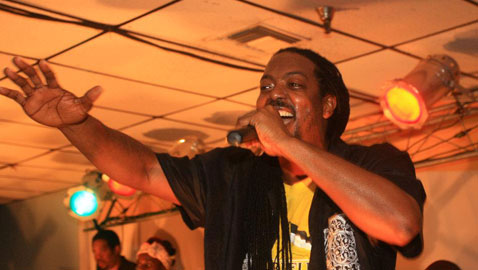
James-Lovell

photo via ELA

After a short hiatus for renovations and new partnership, Bowery Poetry is back—dropping “Club” from its title—and they’re hosting a Garifuna-Breton party! I’ve posted before about endangered languages—both of which these are—but why I specifically want to mention this party is because Jack Kerouac claimed to have descended from a Breton nobleman.

Bretons are people from Brittany, a Celtic nation located in France. During Kerouac’s day and age there were more than one million Breton speakers. The Brythonic language (Welsh, also endangered, is another example of a Brythonic language) was originally well regarded and spoken among the upper classes, but as people began assimilating it became known as the language of the commoners. Today,  most Bretons today speak French, and only about 200,000 people—particularly in the western area—speak Breton. In the 1960s, the language was being forced out of schools—just like many Native American and Sami languages were. Today, schools are returning to bilingualism, particularly through the efforts of Diwan schools, which were founded in 1977 as an immersion program. Even so, UNESCO classifies Breton as a “severely endangered” language. For more on the history of the language visit Breton Language and visit the US Branch of the International Committee for the Defense of the Breton Language.

Kerouac’s family was French Canadian, and growing up in Lowell, Massachusetts, his first language was the working-class French-Canadian dialect joual. It’s interesting to note that both Breton and joual are associated with commoners; perhaps this is a key to understanding Kerouac and his literature. As far as my current research shows, he was not familiar with the Breton language. However, I recently saw Christopher Felver’s documentary Ferlinghetti: A Rebirth of Wonder, which told the story of how one day Kerouac was sitting on the beach in Big Sur with poet and City Lights founder Lawrence Ferlinghetti repeated the phrase “the fish in the sea speak Breton.” Kerouac perked up, hearing the connection to his roots, and asked Ferlinghetti about it and wrote it down in the little notebook he always carried with him. The phrase found its way into his novel Big Sur.

Satori in Paris, which came three years after Big Sur, recounts Kerouac’s travels to France and Brittany in search of his roots. For a fascinating look at Kerouac’s trip and ancestral lineage, check out Dave Moore’s article “The Breton Traveller” on Beatdom.

Here’s the press release for the Garifuna-Breton party:

BOWERY POETRY

IS BACK WITH

A GRAND GARIFUNA-BRETON PARTY!

Poetry! Music! Dance!

Sunday*, March 18 from 6pm-11pm

Admission $10

Bowery Poetry, 308 Bowery (at 1st Street)

Endangered Language groups unite in a call to action to focus attention on the fact that more than half the world’s languages will disappear this century  

Two cultures who met through the Endangered Language Alliance, will celebrate their differences (Breton being Celtic and Garifuna being Arawak), and their similarities (both on the Endangered Language spectrum), but mainly will just celebrate with live music, dance and poetry. This event is being produced by the Bowery Arts + Science Endangered Language Program, and will be one of the first events at the newly renovated Bowery Poetry space at 308 Bowery.

Breton

The strong Breton cultural movement, known as Fest-Noz,  has preserved the expression of a living and constantly renewed practice of inherited dance repertoires with several hundred variations, and thousands of tunes. About a thousand Festou-Noz take place every year with participants varying from a hundred to several thousand people, thousands of musicians and singers and tens of thousands of regular dancers.

Garifuna

Descendants of Arawak, Carib, and African warriors, the resilient Garifuna people of Central America and the Caribbean are known for their rich traditional folklore, including music, dance, food and language. James Lovell is a New York based Belizean Garifuna drummer, recording artist, performer, teacher, and Garifuna cultural activist who grew up with stories told by his elders about the bravery of the Garifuna people and their military leader, Chief Joseph Chatoyer, against efforts by the British colonialists to deny them their identity and the right to speak the Garifuna language.  


*I double-checked this, and according to the Endangered Language Alliance the event is on MONDAY the 18th.