Tag Archives: Allen Ginsberg

Happy 88th Birthday, Allen Ginsberg!

3 Jun

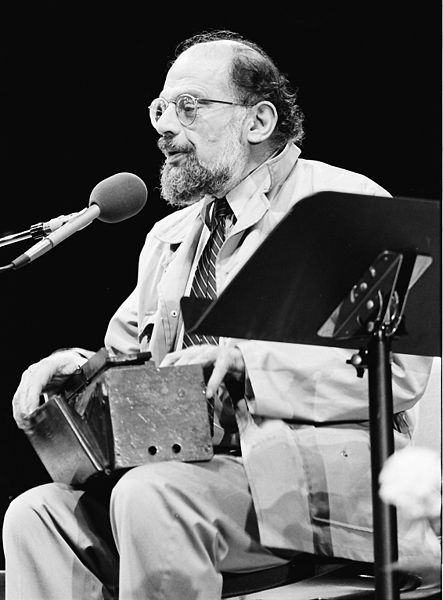
ginsbergAllen Ginsberg at the Miami Bookfair International on November 7, 1985. Photo by MDCarchives via Wikipedia.


Today would’ve been Allen Ginsberg’s eighty-eighth birthday, and in honor of the Jersey-born poet’s powerful and beautiful work we asked people on the Burning Furiously Beautiful facebook page what their favorite Ginsberg poem was. I’ve loved hearing the results! So far we’ve heard:

My favorite is “Sunflower Sutra,” in which Ginsberg writes about Kerouac and him sitting under the shadow of a train as the sun set and spying a dried up sunflower amdist the machinery. The line “when did you forget you were a / flower?” slays me every time.

What’s your favorite poem by Allen Ginsberg? Leave it in the comments below or on the Burning Furiously Beautiful facebook page.

Want to read more about Ginsberg on his birthday?

And if you’ve ever been curious about how Allen Ginsberg met Jack Kerouac in the first place, you can read all about the early origins of the key people who came to represent the Beat Generation but who are all really so much more than that in Burning Furiously Beautiful.


See New York Through David Amram’s Eyes Tomorrow

25 Apr

First80

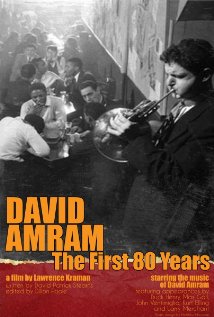
Ever since pioneer jazz French-horn player David Amram mentioned that he’ll be doing an urban hike, pointing out places of importance to him on the Upper West Side, I’ve been counting down the days.

I usually associate David with Greenwich Village. Whenever I see him play at Cornelia Street Cafe or (le) poisson rouge, he always tells enthralling stories of how we’re only steps away from where he and Jack Kerouac did their first jazz-poetry readings or how he used to go into the music store down the street and learn how to play instruments from around the world. It’s that curiosity, though, along with talent and tenacity that allow him to transcend any particular place or “movement” or style. Uptown, he worked, for instance, with The New York Philharmonic’s conductor Dimitri Mitropoulos; in 1966, Leonard Bernstein selected him to be The New York Philharmonic’s first composer-in-residence.

Now, the New York Public Library of the Performing Arts at Lincoln Center has acquired David Amram’s archive and is hosting David Amram’s New York, a series of free events, which includes a screening of a documentary about him and the urban hike. Here’s the info via the New York Public Library:

Composer, conductor, multi-instrumentalist, and author David Amram is a musician with a celebrated career as prolific as it is diverse. While his achievements and influences extend far beyond the city, New York has played a vital role in Amram’s life and music. Specific locations throughout New York have served as inspiration for Amram’s compositions, and his pioneering work with Leonard Bernstein and The New York Philharmonic, Arthur Miller and Elia Kazan, Joseph Papp, Jack Kerouac, Dizzy Gillespie, Pete Seeger, and many other jazz, folk, and world music artists has helped shape the city’s cultural landscape. To celebrate the recent acquisition of Amram’s archives, The New York Public Library for the Performing Arts in Lincoln Center will present David Amram’s New York, a series of public programs and offerings that explore his remarkable career and ongoing relationship with the music of New York.

The series begins on Saturday, April 26 with a screening of the documentary feature film David Amram: The First 80 Years, followed by a conversation between the filmmaker Lawrence Kraman and Amram. Later that afternoon, Amram will lead a walking tour of Manhattan locations that have played a significant role in his life and music. The walk will be co-hosted by author Bill Morgan and sociologist Dr. Audrey Sprenger of SUNY Purchase.

On Tuesday, April 29, the series concludes with a special concert of Amram’s chamber music compositions, featuring a program that spans Amram’s career and musical influences. Nora Guthrie, daughter of Woody Guthrie, will also be in attendance to celebrate her commissioning Amram to compose THIS LAND: Symphonic Variations on a Song by Woody Guthrie. Performers for the concert include Howard Wall and Kim Laskowski, both members of The New York Philharmonic, former Metropolitan Opera concertmaster Elmira Darvarova, and saxophonist Ken Radnofsky. The evening will also mark the release of two new albums of Amram compositions: The Chamber Music of David Amram – Live from the New York Chamber Music Festival (Urlicht AudioVisual), featuring Darvarova; and Newport Classic Records’ album of Radnofsky performing Amram’s compositions for saxophone, including the concerto Ode to Lord Buckley and Trio for Tenor Saxophone, French Horn and Bassoon.

In conjunction with the programs, The Library for the Performing Arts will exhibit original materials from Amram’s archives.

One of the most influential and prolific composers of his generation, David Amram has composed more than 100 orchestral and chamber music works, two operas, and scores for the award-winning films Splendor in The Grass, The Manchurian Candidate, and Jack Kerouac’s Pull My Daisy–all while balancing a career as a pioneering jazz improviser, symphony conductor, and multi-instrumentalist featuring 35 instruments from around the world, all of which remain a source of inspiration for many of his formally composed classical works. Amram was a vital force in the Beat Generation, and presented the first-ever public jazz-poetry concerts in New York City in the 1950s with Kerouac. Amram was the first Musical Director and composer for Joseph Papp’s New York Shakespeare Festival, for the Phoenix Theater, and for The Lincoln Center Repertory Theater, where he composed scores for new plays by Arthur Miller directed by Elia Kazan and Harold Clurman. In 1966, Leonard Bernstein named Amram The New York Philharmonic’s first Composer-In-Residence. Five years later, Amram became the Brooklyn Academy of Music’s first Musical Director for Young People’s, Family and Free Parks Concerts, a position he held for nearly three decades.

Today, Amram continues to compose music while traveling the world as a conductor, soloist, bandleader, author, visiting scholar, and narrator in five languages. In addition to the David Amram’s New York programs at The Library for the Performing Arts, Amram’s other projects this spring include the release of THIS LAND: Symphonic Variations on a Song by Woody Guthrie (Newport Classic Recordings), a live recording of Amram conducting the Colorado Symphony Orchestra in a performance of his work by the same name, and the DVD release of David Amram: the First 80 Years in May. Amram’s fourth book, David Amram: The Next 80 Years, will be published in 2015.

All events included in the David Amram’s New York series take place at The New York Public Library for the Performing Arts (40 Lincoln Center Plaza), and are free and open to the public.

David Amram’s New York

Saturday, April 26 @ 1pm
Film Screening: David Amram: The First 80 Years
Post-Screening Conversation with Lawrence Kraman and David Amram In Person

http://on.nypl.org/1l4ObCG
Lawrence Kraman’s 2012 documentary about the life and times of David Amram features interviews and performances with Buck Henry, Pete Seeger, Sir James Galway, Kurt Elling, Paquito d’Rivera, Max Gail, Larry Merchant, Candido Camero, Bobby Sanabria, John Ventimiglia, Philip Myers, Maurice Peress and the Queens College Orchestra, David Broza, Avram Pengas, Tiokasin Ghosthorse, Floyd Red Crow Westerman, the Earl McKintyre Orchestra, and David Amram and his three children Alana, Adira and Adam. This compelling film not only explores Amram’s unique career and the breadth of his talents, but as the title implies, also proves that one of the most exciting aspects of Amram’s story is knowing that with his endless energy and zest for life, his narrative is far from over, and the future chapters are sure to be just as exciting as the past.

Saturday April 26 @ 3pm
Walking Tour With David Amram
Meet in the lobby outside of The Bruno Walter Auditorium, located at the Library’s 111 Amsterdam Avenue entrance
http://on.nypl.org/1hpUzo5 
David Amram leads this walking tour of Lincoln Center and other nearby locations that have influenced his life and music. The tour will be co-hosted by Bill Morgan and Dr. Audrey Sprenger.

Tuesday, April 29 @ 6pm
Chamber Music Compositions of David Amram: from 1958 – 2014
http://on.nypl.org/1gqMVsQ
Over the course of his career, David Amram has composed more than 100 orchestral and chamber music works. For this concert, he selects four of his favorite chamber works:

Trio for Tenor Saxophone, French Horn and Bassoon (1958)
Ken Radnofsky – Saxophone
Howard Wall – French Horn
Kim Laskowski – Bassoon

Violin Sonata (1960)
Elmira Darvarova – Violin
Linda Hall – Piano

Blues for Monk for Unaccompanied Horn (1982)
Howard Wall – French Horn

Three Greenwich Village Portraits (2014)
For Alto Saxophone and Piano
Ken Radnofsky – Alto Saxophone
Damien Francoeur-Krzyzek – Piano

About The New York Public Library for the Performing Arts, Dorothy and Lewis B. Cullman Center
The New York Public Library for the Performing Arts houses one of the world’s most extensive combination of circulating, reference, and rare archival collections in its field. These materials are available free of charge, along with a wide range of special programs, including exhibitions, seminars, and performances. An essential resource for everyone with an interest in the arts — whether professional or amateur — the Library is known particularly for its prodigious collections of non-book materials such as historic recordings, videotapes, autograph manuscripts, correspondence, sheet music, stage designs, press clippings, programs, posters and photographs. For more information please visit www.nypl.org.

Don’t live in New York? Check out David Amram’s extensive calendar to see when he’ll next be in your neighborhood.

You may also like:::


How Antonin Artaud Came to Influence the Beats

24 Apr

Antonin_Artaud_jeune_b_SDAntonin Artaud had great fashion sense.

Bronx-born writer Carl Solomon joined the United States Maritime Service in 1944 and traveled overseas to Paris, where he was encountered Surrealism and Dadaism. When he came back to the US, he voluntarily admitted himself to a New Jersey psychiatric hospital as Dadaist expression of being beat, being conquered, being overpowered. There, he received shock therapy instead of the lobotomy he requested. He wrote about the experience in Report from the Asylum: Afterthoughts of a Shock Patient.

At the psychiatric hospital, Solomon met Allen Ginsberg. (You can read about how Ginsberg ended up there in Burning Furiously Beautiful.) He introduced the young poet to the poetry of Antonin Artaud, a French poet of Greek ancestry (his parents were from Smyrna) whom he had seen give a screaming poetry reading in Paris. Artaud had written the first Surrealist film, The Seashell and the Clergyman (1928), and produced Romantic poet Percy Bysshe Shelley’s The Cenci in 1935. The year after that, he went to Mexico, living with the native Tarahumara people and experimenting with peyote, before Jack Kerouac and William S. Burroughs would pack their bags for Mexico. Another year passed and Artaud was found penniless in Ireland, where he was arrested and deported. Back in France, he was sent to various psychiatric hospitals, where he was subjected to electroshock therapy. Notably, in his earlier years, Artaud had spent time in a sanatorium, where he read none other than Arthur Rimbaud.

Solomon wrote Report from the Asylum with Artaud in mind, while Ginsberg wrote “Howl” with both Artaud and Solomon in mind.

Once again, I could not find any of his poems in public-domain English translation. So, here’s a quote I found interesting and relevant from Artaud’s prose piece The Theater and Its Double:

“I cannot conceive any work of art as having a separate existence from life itself.”

You can read one of his poems, “Jardin Noir,” here.

*4/24/14: The subject’s name was originally misspelled and has now been corrected. Thanks to my reader for pointing that out!

Before the Beats, Rimbaud Had a “Bohemian Life”

17 Apr

225px-RimbaudPhoto by Etienne Carjat (1871)

Rimbaud’s kinda cute, eh?

Before Jack Kerouac coined the term “Beat Generation” during a conversation on the Lost Generation with fellow writer John Clellon Holmes, before he went on the road and lived a bohemian life, he attended (and dropped out of) Columbia University. It was through his Columbia connections—which Paul and I explain in more detail in Burning Furiously Beautiful (it’s actually super interesting to discover how they all met and became friends)—that Kerouac met Lucien Carr and Allen Ginsberg. Back then, the phrase they were throwing around was a “New Vision.”

Carr had borrowed the phrase from Arthur Rimbaud, and the young friends in Morningside Heights used it to mean:

1) Naked self-expression is the seed of creativity. 2) The artist’s consciousness is expanded by derangement of the senses. 3) Art eludes conventional morality.[17]

As a teenager, Rimbaud was part of the Decadent movement in late-nineteenth-century France. The term “Decadents” refers to the clever poets who preferred to show off their literary skill rather than emote as naturally as the Romantics. The earlier Romantics—such as William Blake, Percy Bysshe Shelley, and John Keats—used more colloquial language than the highly stylized language of the Decadents.

In a letter to a friend, Rimbaud wrote:

I’m now making myself as scummy as I can. Why? I want to be a poet, and I’m working at turning myself into a seer. You won’t understand any of this, and I’m almost incapable of explaining it to you. The idea is to reach the unknown by the derangement of all the senses. It involves enormous suffering, but one must be strong and be a born poet. It’s really not my fault.


Sounds like something Kerouac might write, doesn’t it? Not because the author of On the Road sought to make himself scummy by any means, but because he shook off pretensions and suffered for his art, appreciating the authenticity of experience.

I couldn’t find a translation of any of Rimbaud’s poetry that was in the public domain, so here is Rimbaud’s “My Bohemian Life (Fantasy)” in the original French:

Ma Bohème (Fantaisie)

Je m’en allais, les poings dans mes poches crevées ;
Mon paletot aussi devenait idéal ;
J’allais sous le ciel, Muse ! et j’étais ton féal ;
Oh ! là là ! que d’amours splendides j’ai rêvées !

Mon unique culotte avait un large trou.
– Petit-Poucet rêveur, j’égrenais dans ma course
Des rimes. Mon auberge était à la Grande Ourse.
– Mes étoiles au ciel avaient un doux frou-frou

Et je les écoutais, assis au bord des routes,
Ces bons soirs de septembre où je sentais des gouttes
De rosée à mon front, comme un vin de vigueur ;

Où, rimant au milieu des ombres fantastiques,
Comme des lyres, je tirais les élastiques
De mes souliers blessés, un pied près de mon coeur !

You can read a 1962 English translation by Oliver Bernard here.


Percy Bysshe Shelley’s “Music, when Soft Voices die”

10 Apr

ShelleyPortrait of Shelley by Alfred Clint (1819)

When you think Beat Generation do you also think Romanticism? No?? Don’t get tripped up by the overuse of the word “neon” and other supposed markers of so-called Beat poetry. Think more about their shared notions of colloquial language, intuition over reason, and spontaneity. Beat poetry is a natural evolution of Romantic poetry. (Caveat: “Beat Generation” and “Romanticism” are convenient labels, but the people associated with them wouldn’t identify themselves as being “members” of any sort of “movement.”)

I’ve written before about Beat poet Gregory Corso’s connection to one of my personal favorite poets, John Keats. Even more than Keats, though, Corso professed an admiration for Percy Bysshe Shelley. Corso is actually buried across from Shelley. While Allen Ginsberg (read last week’s post on Ginsberg’s Blake vision here)  is known for littering his poetry with the names of Jack Kerouac and Neal Cassady, Corso wrote of Shelley in “I Am 25” and “I Held a Shelley Manuscript.” I love, love, love the language he uses in those poems and can relate to the theme of idolizing other poets who have gone before one’s time.

When thinking about possible poems to share with you for National Poetry Month, I decided on Percy Bysshe Shelley’s “Music, when Soft Voices die” not just because of Gregory Corso’s love for Shelley but because it reminded me of the themes I’d found myself wonderfully entrenched in while recently reading Marcel Proust’s Swann’s Way, a book the Beats also read—themes of memory and love and music and flowers. (Swoon, swoon, swoon.) Like Corso’s “I Held a Shelley Manuscript,” Shelley’s “Music, when Soft Voices die” sensually touches on what remains after death.

Without further ado, Percy Bysshe Shelley’s “Music, when Soft Voices die”:

Music, when soft voices die,
Vibrates in the memory;
Odours, when sweet violets sicken,
Live within the sense they quicken.

Rose leaves, when the rose is dead,
Are heap’d for the belovèd’s bed;
And so thy thoughts, when thou art gone,
Love itself shall slumber on.

What’s your favorite poem by Percy Bysshe Shelley?

Allen Ginsberg’s William Blake Vision

3 Apr

 Blake_Roses_Sun-Flower_LillyWilliam Blake’s illustrated “Ah! Sun-Flower”

I’m kicking off this National Poetry Month series with William Blake for reasons that will soon become obvious. In 1948, when he was in his early twenties, Allen Ginsberg experience a supernatural vision. He was alone in his Harlem apartment, reading William Blake, when the Romantic poet appeared to him. Ginsberg said he wasn’t high at the time but was having some … um, personal alone time. Wink, wink. He looked out his Harlem window at the bright blue sky and realized that the sky had been created, that the sky did the creating, and found God. In later years, Ginsberg experimented with drugs to try to recapture that feeling.

One of the poems that Ginsberg heard Blake read in his vision was “Ah! Sun-flower,” published in his 1974 poetry collection Songs of Experience. Blake illustrated the poem (see above). Here is the poem in its entirety:

Ah Sun-flower! weary of time,
Who countest the steps of the Sun:
Seeking after that sweet golden clime
Where the travellers journey is done.

Where the Youth pined away with desire,
And the pale Virgin shrouded in snow:
Arise from their graves and aspire,
Where my Sun-flower wishes to go.

Close to a decade after his Blake vision, while in Berkeley in 1955, Ginsberg composed his own sunflower poem, “Sunflower Sutra.” I’m inclined to say it’s my favorite poem. You can read it here.

You may also like these posts:

And of course you can read more about Allen Ginsberg in the book I coauthored, Burning Furiously Beautiful.

Remembering John Clellon Holmes

30 Mar

brother

Earlier this month we celebrated what would’ve been John Clellon Holmes’ 88th birthday. Today marks the anniversary of his passing from cancer at the age of 62 in 1988.

Holmes’ first published book was Go, a fantastic novel about the early Beat scene featuring the same cast of characters that Kerouac wrote about in On the Road. In fact, Kerouac and Holmes remained life-long friends, after initially meeting on their way to a party in 1948.

Somewhat recently — 2010 — Ann Charters and Samuel Charters edited Brother-Souls: John Clellon Holmes, Jack Kerouac, and The Beat Generation. Here’s the write up on Barnes & Noble:

John Clellon Holmes met Jack Kerouac on a hot New York City weekend in 1948, and until the end of Kerouac’s life they were–in Holmes’s words–“Brother Souls.” Both were neophyte novelists, hungry for literary fame but just as hungry to find a new way of responding to their experiences in a postwar American society that for them had lost its direction. Late one night as they sat talking, Kerouac spontaneously created the term “Beat Generation” to describe this new attitude they felt stirring around them. Brother Souls is the remarkable chronicle of this cornerstone friendship and the life of John Clellon Holmes.

From 1948 to 1951, when Kerouac’s wanderings took him back to New York, he and Holmes met almost daily. Struggling to find a form for the novel he intended to write, Kerouac climbed the stairs to the apartment in midtown Manhattan where Holmes lived with his wife to read the pages of Holmes’s manuscript for the novel Go as they left the typewriter. With the pages of Holmes’s final chapter still in his mind, he was at last able to crack his own writing dilemma. In a burst of creation in April 1951 he drew all the materials he had been gathering into the scroll manuscript of On the Road.

Biographer Ann Charters was close to John Clellon Holmes for more than a decade. At his death in 1988 she was one of a handful of scholars allowed access to the voluminous archive of letters, journals, and manuscripts Holmes had been keeping for twenty-five years. In that mass of material waited an untold story. These two ambitious writers, Holmes and Kerouac, shared days and nights arguing over what writing should be, wandering from one explosive party to the next, and hanging on the new sounds of bebop. Through the pages of Holmes’s journals, often written the morning after the events they recount, Charters discovered and mined an unparalleled trove describing the seminal figures of the Beat Generation: Holmes, Kerouac, Neal Cassady, Allen Ginsberg, William Burroughs, Gregory Corso, and their friends and lovers.

In addition to reading any of Holmes’ works, Brother-Souls provides a portrait of an author whose work deserves more recognition.

Happy 88th Birthday to the Quiet Beat!

12 Mar

Go

John Clellon Holmes is the friend Jack Kerouac was talking to when he coined the phrase “Beat Generation.” Holmes actually found success more quickly than Kerouac did in writing about the scene when he published Go in 1952. The writing style is vastly different than Kerouac’s, as it takes a much more traditional approach to novel writing, but it is fantastic! Go is one of my favorite books of the so-called Beat canon. Holmes does a fantastic job bringing all the familiar characters — Gene Pasternak as Kerouac, Hart Kennedy as Neal Cassady, David Stofsky as Allen Ginsberg, Will Dennison as William S. Burroughs, and so forth — to life as he explores hipsters partying it up in New York City. Dare I say his descriptions of the 1940s party scene are more memorable to me than Kerouac’s?!

Holmes was born in Holyoke, Massachusetts, on this day in 1926. Celebrate his life and work by reading Go!


Happy 89th Birthday to Lu the Glue!

1 Mar

“Lu was the glue,” said Allen Ginsberg, talking about how integral Lucien Carr was to connecting the people who would go on to become collectively known as the Beat Generation. Carr and Ginsberg met when Ginsberg came knocking on his dorm door at Columbia (well, technically they were attending Columbia but lodged at Union Theological Seminary) to discover who was playing the delightful music of Brahms. Carr was also friends with a fun-loving student named Edie Parker who introduced him to her boyfriend Jack Kerouac. Meanwhile, around that same time, Carr’s stalker, David Kammerer, and William S. Burroughs, whose family Carr had known back in their hometown of St. Louis, arrived in New York City. A charismatic wit, Carr drew this circle together and came up with the idea of a New Vision that embodied “naked self-expression,” a “derangement of the senses,” and the doing away with conventional morality” when it came to art.

Lucien Carr was born on this day in 1925 in New York City.

UCLA Prof Blames “Beatniks” for Kristen Stewart’s Poetry

12 Feb

mc

Kristen Stewart’s poetry has been blowing up the internet. I read a bunch of snarky comments about it on facebook last night, and this afternoon on my lunch break I discovered via Poets & Writers that the venerable Poetry Foundation gave it attention on their blog, Harriet.

I wasn’t going to comment on it, but then I read, via The Poetry Foundation, what Brian Kim Stefans had to say about it:

My own initial post went like this: “The second stanza isn’t horrible. Worst part of the poem are those awful adjectives! Stupid Beats.” What I meant by this was that the words “digital” (applied to moonlight), “scrawled” when linked to “neon” (neon is a much overused word by poets who want to sound like Beatniks) and “abrasive” (applied to organ pumps) weren’t working for me….”

What Stefans doesn’t say and what The Poetry Foundation doesn’t say is that Kristen Stewart played the role of Marylou in the film adaptation of Jack Kerouac’s Beat novel On the Road. Part of her training for the film included “Beatnik Boot Camp,” where biographers and Neal Cassady’s son, John Allen Cassady, talked to them about the real-life individuals the novel was based on and the time period. It’s important to state this upfront because the very critique hurled against her work is that it sounds too Beatnik. Whether that’s because her poetry does sound too “Beatnik”—we’ll come back to defining that word in a moment—or whether her association with the Beats fueled criticism of her work is up for debate. Maybe, more than anything, though, the criticism surrounding Stewart’s poetry has less to do with the work itself and more to do with her celebrity persona—which, let’s face it, is similar to how the Beats are reviewed. Even before her poem was revealed, the media has loved to lash out at Stewart.

Actress Amber Tamblyn was also in a Beat-related film—One Fast Move Or I’m Gone: Kerouac’s Big Sur—and has gone on record about being influenced by the Beats. Except Tamblyn blogs for The Poetry Foundations’ Harriet and has published a jazz-inspired poetry chapbook, while Stewart, seven years her junior, revealed her road-trip inspired poem to the women’s glossy Marie Claire. This certainly says something about the difference in the seriousness and literary merit of their work, but it also says something about their celebrity persona and how they are received by the media.

Okay, so now we’re caught up on Stewart. In case Stewart, or you, didn’t know, Stefans makes his authority known at the outset of his open letter:

I’m a poet and professor at UCLA, and thought you might be interested in what some of my poet friends (most of whom also teach and are otherwise very accomplished) and I have been writing on Facebook about your recent poem published in Marie Claire.

I take it Professor Stefans is not a fan of the Beat poetry. That’s fine; to each their own. Stefans is actually quite an accomplished poet, and I particularly respect his postmodern innovations in digital poetry as he bridges the gap between new media and literature. From his UCLA faculty page:

My interests in electronic writing stem directly out of my work as a poet, though it has branched off into any number of art genres that have fallen under the persuasion of digital technology, such as photography, film/video and book publishing. Research interest include creating a “bridge” between the concepts and traditions of various 20th-century avant-gardes — Language writing, the Oulipo, concrete poetry, conceptual art, Situationism, metafiction, etc. — and the various genres of digital literature, including animated poems, interactive texts, algorithmically-generated and manipulated texts, “nomadic” writing, hacktivism and experimental blogs. Presently working on a series of wall projections called “Scriptors” which will appear as gallery and environmental installations in the coming years.

His research and work in electronic literature suggests his open-mindedness toward new and experimental ideas that may not yet be culturally accepted. I would think then that he’d find Stewart’s use of the word “digital” related to his own interests, but perhaps it wasn’t “working” for the Brown graduate who got his MFA in Electronic Literature because it was too obvious of a connection, the word “digital” sounding contrived or outmoded in today’s ever-changing technical world. I wouldn’t disagree with that assessment. His forward-searching eye may also be why he lays into her for relying on passé Beatnik clichés and the word “Whilst.” Stefans’ critique of Stewart’s poem is fair and balanced. There is validity to his point about “overused words” in poetry and even Beatnik buzz words.

My contention is with Stefans’ comment “Stupid Beats” and the lumping of Beat literature with “people who want to sound like Beatniks.” Yes, I get that this is a flippant response to pop culture that shouldn’t be taken too seriously, however the cultural knowledge of so-called Beatniks is wrought with so much misconception that it makes me uncomfortable to see a humanities professor at a well-known college perpetuate the stereotype.

Here’s a little Beat 101 refresher course:

  • Jack Kerouac coined the term “Beat Generation” during a conversation with fellow novelist John Clellon Holmes, in which they were riffing on the Lost Generation and their own generation.
  • Holmes went on to write “This Is The Beat Generation” for The New York Times Magazine in 1952.
  • Six years later, journalist Herb Caen coined the term “beatnik” in an article for The San Francisco Chronicle. An amalgamation of the word “beat” and “Sputnik,” the word, as conceived during the Cold War, was derogatory.
  • In fact, “The Examiner had a headline the next day about a beatnik murder,” reported the SF Gate. Note that this had nothing to do with David Kammerer or any of the writers associated with the literature of the Beat Generation.
  • In the column in which Caen coined the term “beatnik,” he was eye rolling at how Look magazine was doing yet another photo spread on the San Francisco Beat Generation scene, saying “250 bearded cats and kits were on hand.” So right there we have it that he wasn’t commenting specifically on Kerouac, Holmes, Allen Ginsberg, Gregory Corso, and the specific poets or poetry associated with the Beat Generation. He was talking about the scene, man.

Let me put this into more current context. Caen used the word “beatniks” the same way people today use the term “hipster.” Think of the way people in the 2000s equated the Williamsburg hipster with the eccentric trust-fund kid wearing aviator sunglasses and skinny jeans and making really bad “art.” That’s the equivalent of a “beatnik.” They’re both pop-culture fads that aren’t wholly indicative of the art, literature, and music that loosely inspired these “scenes.”

Consequently, saying Kristen Stewart was writing in the vein of bad beatnik poetry could be a worthwhile critique and even a very interesting one if the critic were to delve into more specific examples like the use of the word “neon” (HTML Giant questions if “neon” is solely beatnik; I apparently already have a tag for “neon” because I used it for light sculptor Stephen Antonakos … was he a beatnik??), discuss the appropriation and disfiguration of Beat ideas and style (Stefans mentions a colleague who posted a response to Stewart’s poem that suggests an evolution of Beat literature: “If it’s ‘beat’, it’s more Bolinas or young Bernadette than hortatory elder beat.” [hyperlinks mine]), and analyze the cultural phenomenon of beatniks.

Saying “Stupid Beats,” though, is akin to saying “Idiot Pre-Raphaelites,” “Dimwitted Transcendentalists,” or “Insipid Oulipo.” It’s negating an entire body of literature that has resounding cultural importance.

You can read Stewart’s poem “My Heart Is A Wiffle Ball/Freedom Pole” on IndieWire’s blog, The Playlist.