Tag Archives: Jack Kerouac

I’m Soooooo Pretentious

18 Mar

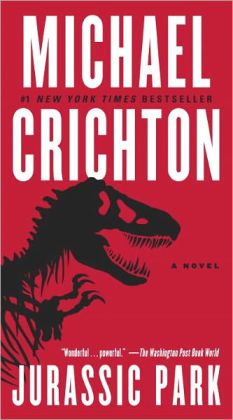
jurassic


I told a boy I’m reading Proust, and he told me that sounds pretentious.

He suggested I check out Michael Crichton. …As in the author who writes about dinosaurs.

I have to laugh at the suggestion of sounding pretentious for reading Marcel Proust, though. I’m usually called immature and not well read for reading Jack Kerouac. The irony is that my inspiration for reading Proust is Kerouac. David Amram had actually mentioned to me how he and Jack read Proust’s A Remembrance of Things Past, and when Walter Salles and Ann Charters spoke after a screening of the film adaptation of On the Road they talked about the role of Proust (Swann’s Way is seen a few times onscreen). Paul and I decided to read Swann’s Way, and each got different translations, which I think will give us a well-rounded perspective.

I just can’t win! Either I’m pretentious or I’m banal. Haha, good thing I’ve never cared what people thought of my reading habits.

Happy 88th Birthday to the Quiet Beat!

12 Mar

Go

John Clellon Holmes is the friend Jack Kerouac was talking to when he coined the phrase “Beat Generation.” Holmes actually found success more quickly than Kerouac did in writing about the scene when he published Go in 1952. The writing style is vastly different than Kerouac’s, as it takes a much more traditional approach to novel writing, but it is fantastic! Go is one of my favorite books of the so-called Beat canon. Holmes does a fantastic job bringing all the familiar characters — Gene Pasternak as Kerouac, Hart Kennedy as Neal Cassady, David Stofsky as Allen Ginsberg, Will Dennison as William S. Burroughs, and so forth — to life as he explores hipsters partying it up in New York City. Dare I say his descriptions of the 1940s party scene are more memorable to me than Kerouac’s?!

Holmes was born in Holyoke, Massachusetts, on this day in 1926. Celebrate his life and work by reading Go!


Happy 92nd Birthday, Jack Kerouac!

12 Mar

OLYMPUS DIGITAL CAMERAphoto I took two years ago at Kerouac’s birth home when I attended Lowell Celebrates Kerouac

On a Sunday in winter, Jean-Louis Kerouac was born to Leo and Gabrielle Kerouac in Lowell, Massachusetts. He was the baby of the family, the youngest of three, and his French-speaking family called him Ti Jean, or Little John.

It was March 12, 1922. Warren G. Harding, a Republican, was president and had just introduced radio to the White House the month before. Women had received the right to vote two years prior to that, but even the month before Kerouac was born the Nineteenth Amendment was still being challenged in court — a fact important to understanding the gender politics in which Kerouac grew up.

James Joyce’s Ulysses was first published that year by Sylvia Beach in Paris, and the experimental novel would impact Kerouac’s own writing. Kerouac himself would grow up to become the voice of his generation, the Beat Generation, a generation that had been born around the time of the Great Depression, that had seen the destruction of World War II and lost many friends and loved ones, that had faced a repressive government. Kerouac remains a startlingly refreshing voice even today, reminding readers to observe the sparkles in the sidewalk, to embrace life over possessions, to blaze their own paths.

KerouacCakephoto I took at Kerouac’s birthday bash last year at the Northport Historical Society

Happy 89th Birthday to Lu the Glue!

1 Mar

“Lu was the glue,” said Allen Ginsberg, talking about how integral Lucien Carr was to connecting the people who would go on to become collectively known as the Beat Generation. Carr and Ginsberg met when Ginsberg came knocking on his dorm door at Columbia (well, technically they were attending Columbia but lodged at Union Theological Seminary) to discover who was playing the delightful music of Brahms. Carr was also friends with a fun-loving student named Edie Parker who introduced him to her boyfriend Jack Kerouac. Meanwhile, around that same time, Carr’s stalker, David Kammerer, and William S. Burroughs, whose family Carr had known back in their hometown of St. Louis, arrived in New York City. A charismatic wit, Carr drew this circle together and came up with the idea of a New Vision that embodied “naked self-expression,” a “derangement of the senses,” and the doing away with conventional morality” when it came to art.

Lucien Carr was born on this day in 1925 in New York City.

Clip: Scripps Magazine Features “Burning Furiously Beautiful”

27 Feb

2012-header-scripps-college

If you flip — or scroll! — to page 40 of Scripps Magazine you’ll see me featured in their regular column of alumnae authors, “ManuScripps.”

The column talks about how Scripps, the women’s college of the Claremont Colleges, fostered my education in the Beat Generation. …Which just goes to show you that feminists can like the Beats!

Special thanks to the Scripps Magazine and the Scripps College Alumnae Association for their support of my writing.

And if you missed it, here’s a post on the New York chapter of the Scripps book club reading Burning Furiously Beautiful: The True Story of Jack Kerouac’s “On the Road.”

Remembering Hunter S. Thompson

20 Feb

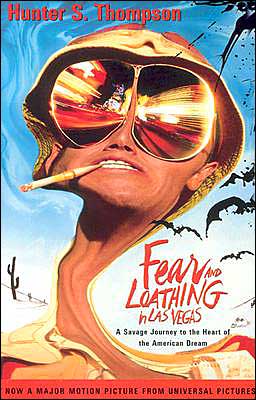
fear2

Sometimes it’s strange how you get introduced to an author’s work and what you end up associating with them. I’ve had people make assumptions that I got into Jack Kerouac because I was trying to impress boys, which is far, far from the truth. I got into Kerouac after discovering The Portable Beat Reader in the pages of Seventeen magazine, an unabashedly teen girls’ magazine. It never even crossed my mind that Kerouac might be associated as a guy’s book or that reading his book or any book might make me popular with guys. I mean, when you’re in high school, you don’t really think that reading is going to make you sexy. You think lip gloss will. Lip gloss and CK Be.

But when I think of how I first encountered Hunter S. Thompson’s work, I remember watching Fear and Loathing in Las Vegas in college with a boy I liked. A boy that liked my friend. She had a boyfriend and was not interested in this boy, and yet he remained puppy-dog in love with her, barely noticing me. But we did watch Fear and Loathing in Las Vegas together. And so now whenever I think of that movie, I think of that time, insignificant as it may have been.

Hunter S. Thompson was alive at that time, and I don’t remember his passing, but he passed away on this day in 2005 from a self-inflicted gunshot wound. In his typewriter was a sheet of paper with the words “Feb 22 ’05” and “counselor” typed on it. You can see the police report on The Smoking Gun.

How did you first come across Hunter S. Thompson‘s work?

Kerouac Goes Missing in Mali

18 Feb

I ran across a story of a dog named Kerouac that’s too good not to share.

If someone names their scruffy dog Kerouac, you know they’re an adventurer. Such is the case of Stephane, a Frenchman who doesn’t pay attention to those pesky travel warnings about dangerous countries. With Kerouac in tow, Stephane travels the world in search of On the Road-inspired adventures.

In Bamako, Mali, though, Stephane ran into trouble. Kerouac apparently ran off just as Stephane’s envoy was leaving, and the two got separated. What follows is the story of a journalist and the director-general of Mali’s national gendarmerie, and a happy ending despite the journalist’s fears of Malian government corruption.

You can read the full story on Global Animal.

You may also like:


Surrealist Film at Pravda: Thoughts on Breton’s Automatism and Kerouac’s Spontaneous Prose

17 Feb

surreal1

surreal2

Pravda ran a Surrealist and Experimental film night series over the summer, and although I’m terribly late in posting about it, my friend and I had such a great time that I figured better late than never. One night of Surrealism can lead to many more!

Pravda is a subterranean Russian speakeasy in Soho, near two of my favorite bookstores, Housing Works and McNally Jackson. They serve delicious food and have a fantastic vodka selection. I cannot recommend the horseradish-infused vodka enough.

Occasionally they host special events, such as Salon Dinners, Roaring Twenties Parties, and Surrealist & Experimental Cinema of the 1920s & 30s. The film nights are such a treat! The films are actually silent, and they hire a musician to play live piano music!! I was enthralled. Inspired. They showed films by Man Ray, whom I’d studied at Scripps College, as well as other artists.

A little background::: Surrealism developed out of Dada during World War I in Paris. André Breton is the key player here. Using Sigmund Freud’s psychoanalytic methods on soldiers, the French poet worked at a neurological hospital. In 1924, he wrote the Surrealist Manifesto, a work that defined the cultural revolution:

“Psychic automatism in its pure state, by which one proposes to express — verbally, by means of the written word, or in any other manner — the actual functioning of thought. Dictated by the thought, in the absence of any control exercised by reason, exempt from any aesthetic or moral concern.”

While Surrealism affected all the arts, I want to pause right here to focus on the connections between Surrealist literature and the Beat Generation. The idea of Surrealist automatism is key here. Automatism is the practice of writing without self-censorship. The Oxford University Press defines it as:

Term appropriated by the Surrealists from physiology and psychiatry and later applied to techniques of spontaneous writing, drawing and painting.

“Spontaneous writing.” Sound familiar? Jack Kerouac wrote a writing manifesto called “Essentials of Spontaneous Prose.” In it, Kerouac wrote, for example:

Not “selectivity” of expression but following free deviation (association) of mind into limitless blow-on-subject seas of thought….

I haven’t yet done any extensive research into this to see if the connections are accurate, but there is a cultural connection to Kerouac and automatism. On Wikipedia (obviously not a true source to go by, but one that can be a launching pad for actual informed research) I read:

The notion of Automatism is also rooted in the artistic movement of the same name founded by Montreal artist Paul-Emile Borduas in 1942; himself influenced by the Dadaist movement as well as André Breton. He, as well as a dozen other artists from Quebec’s artistic scene, very much under restrictive and authoritarian rule in that period, signed the Global Refusal manifesto, in which the artists called upon North American society (specifically in the culturally unique environment of Quebec), to take notice and act upon the societal evolution projected by these new cultural paradigms opened by the Automatist movement as well as other influences in the 1940s.

Remember that Kerouac’s parents were from Quebec, and he and his family used to travel back and forth to visit relatives. The Automatism of Quebec happened in 1942, when Kerouac was already an adult, having graduated from high school and moved to New York by that time. Still, it’s possible that the seeds were planted in both Kerouac and Borduas around the same time and place, in at least the small point that they spoke French, the language of Surrealism.

In “Earwitness Testimony: Sound and Sense, Word and Void in Jack Kerouac’s Old Angel Midnight” for Empty Mirror, Gregory Stephenson makes the claim:

Indeed, in method and intention, Old Angel Midnight could be said to be closer to the sound poetry of the dadaists, Hugo Ball and Kurt Schwitters, and to the automatic writing practiced by the surrealists, André Breton and Philippe Soupault, in their book-length exercise in textual autogenesis, The Magnetic Fields, originally published in 1919.

There’s much more to be said about Surrealism, Automatic Writing, Spontaneous Prose, and Surrealist Film, and the evening at Pravda whet my appetite.


Two Love Stories Inspired by Jack Kerouac

14 Feb

“Boys and girls in America have such a sad time together; sophistication demands that they submit to sex immediately without proper preliminary talk. Not courting talk- real straight talk about souls, for life is holy and every moment is precious.” ~Jack Kerouac, On the Road

Happy Valentine’s Day! I just want to take a moment on this sappy holiday to say how thankful I am for each and every one of you who reads my blog, leaves comments, and forwards it to friends. The life of a writer can be quite solitary at times, as we hole ourselves up in a room with our notebook or computer, and I’m so thankful for the community I’ve made through writing, researching, giving readings, and social media. Maybe I’m a big old nerd for spending so much time in front of a computer, but through blogging, I met my coauthor and made friends along the way so that has to count for something!  Thank you for taking time out of your busy schedules to read and support my writing!!

If you’re looking for a Valentine’s Day read this weekend, here are two great love stories inspired by On the Road.


Beatitude by Larry Closs


Mañana Means Heaven by Tim Z. Hernandez

Will you be my Valentine?

UCLA Prof Blames “Beatniks” for Kristen Stewart’s Poetry

12 Feb

mc

Kristen Stewart’s poetry has been blowing up the internet. I read a bunch of snarky comments about it on facebook last night, and this afternoon on my lunch break I discovered via Poets & Writers that the venerable Poetry Foundation gave it attention on their blog, Harriet.

I wasn’t going to comment on it, but then I read, via The Poetry Foundation, what Brian Kim Stefans had to say about it:

My own initial post went like this: “The second stanza isn’t horrible. Worst part of the poem are those awful adjectives! Stupid Beats.” What I meant by this was that the words “digital” (applied to moonlight), “scrawled” when linked to “neon” (neon is a much overused word by poets who want to sound like Beatniks) and “abrasive” (applied to organ pumps) weren’t working for me….”

What Stefans doesn’t say and what The Poetry Foundation doesn’t say is that Kristen Stewart played the role of Marylou in the film adaptation of Jack Kerouac’s Beat novel On the Road. Part of her training for the film included “Beatnik Boot Camp,” where biographers and Neal Cassady’s son, John Allen Cassady, talked to them about the real-life individuals the novel was based on and the time period. It’s important to state this upfront because the very critique hurled against her work is that it sounds too Beatnik. Whether that’s because her poetry does sound too “Beatnik”—we’ll come back to defining that word in a moment—or whether her association with the Beats fueled criticism of her work is up for debate. Maybe, more than anything, though, the criticism surrounding Stewart’s poetry has less to do with the work itself and more to do with her celebrity persona—which, let’s face it, is similar to how the Beats are reviewed. Even before her poem was revealed, the media has loved to lash out at Stewart.

Actress Amber Tamblyn was also in a Beat-related film—One Fast Move Or I’m Gone: Kerouac’s Big Sur—and has gone on record about being influenced by the Beats. Except Tamblyn blogs for The Poetry Foundations’ Harriet and has published a jazz-inspired poetry chapbook, while Stewart, seven years her junior, revealed her road-trip inspired poem to the women’s glossy Marie Claire. This certainly says something about the difference in the seriousness and literary merit of their work, but it also says something about their celebrity persona and how they are received by the media.

Okay, so now we’re caught up on Stewart. In case Stewart, or you, didn’t know, Stefans makes his authority known at the outset of his open letter:

I’m a poet and professor at UCLA, and thought you might be interested in what some of my poet friends (most of whom also teach and are otherwise very accomplished) and I have been writing on Facebook about your recent poem published in Marie Claire.

I take it Professor Stefans is not a fan of the Beat poetry. That’s fine; to each their own. Stefans is actually quite an accomplished poet, and I particularly respect his postmodern innovations in digital poetry as he bridges the gap between new media and literature. From his UCLA faculty page:

My interests in electronic writing stem directly out of my work as a poet, though it has branched off into any number of art genres that have fallen under the persuasion of digital technology, such as photography, film/video and book publishing. Research interest include creating a “bridge” between the concepts and traditions of various 20th-century avant-gardes — Language writing, the Oulipo, concrete poetry, conceptual art, Situationism, metafiction, etc. — and the various genres of digital literature, including animated poems, interactive texts, algorithmically-generated and manipulated texts, “nomadic” writing, hacktivism and experimental blogs. Presently working on a series of wall projections called “Scriptors” which will appear as gallery and environmental installations in the coming years.

His research and work in electronic literature suggests his open-mindedness toward new and experimental ideas that may not yet be culturally accepted. I would think then that he’d find Stewart’s use of the word “digital” related to his own interests, but perhaps it wasn’t “working” for the Brown graduate who got his MFA in Electronic Literature because it was too obvious of a connection, the word “digital” sounding contrived or outmoded in today’s ever-changing technical world. I wouldn’t disagree with that assessment. His forward-searching eye may also be why he lays into her for relying on passé Beatnik clichés and the word “Whilst.” Stefans’ critique of Stewart’s poem is fair and balanced. There is validity to his point about “overused words” in poetry and even Beatnik buzz words.

My contention is with Stefans’ comment “Stupid Beats” and the lumping of Beat literature with “people who want to sound like Beatniks.” Yes, I get that this is a flippant response to pop culture that shouldn’t be taken too seriously, however the cultural knowledge of so-called Beatniks is wrought with so much misconception that it makes me uncomfortable to see a humanities professor at a well-known college perpetuate the stereotype.

Here’s a little Beat 101 refresher course:

  • Jack Kerouac coined the term “Beat Generation” during a conversation with fellow novelist John Clellon Holmes, in which they were riffing on the Lost Generation and their own generation.
  • Holmes went on to write “This Is The Beat Generation” for The New York Times Magazine in 1952.
  • Six years later, journalist Herb Caen coined the term “beatnik” in an article for The San Francisco Chronicle. An amalgamation of the word “beat” and “Sputnik,” the word, as conceived during the Cold War, was derogatory.
  • In fact, “The Examiner had a headline the next day about a beatnik murder,” reported the SF Gate. Note that this had nothing to do with David Kammerer or any of the writers associated with the literature of the Beat Generation.
  • In the column in which Caen coined the term “beatnik,” he was eye rolling at how Look magazine was doing yet another photo spread on the San Francisco Beat Generation scene, saying “250 bearded cats and kits were on hand.” So right there we have it that he wasn’t commenting specifically on Kerouac, Holmes, Allen Ginsberg, Gregory Corso, and the specific poets or poetry associated with the Beat Generation. He was talking about the scene, man.

Let me put this into more current context. Caen used the word “beatniks” the same way people today use the term “hipster.” Think of the way people in the 2000s equated the Williamsburg hipster with the eccentric trust-fund kid wearing aviator sunglasses and skinny jeans and making really bad “art.” That’s the equivalent of a “beatnik.” They’re both pop-culture fads that aren’t wholly indicative of the art, literature, and music that loosely inspired these “scenes.”

Consequently, saying Kristen Stewart was writing in the vein of bad beatnik poetry could be a worthwhile critique and even a very interesting one if the critic were to delve into more specific examples like the use of the word “neon” (HTML Giant questions if “neon” is solely beatnik; I apparently already have a tag for “neon” because I used it for light sculptor Stephen Antonakos … was he a beatnik??), discuss the appropriation and disfiguration of Beat ideas and style (Stefans mentions a colleague who posted a response to Stewart’s poem that suggests an evolution of Beat literature: “If it’s ‘beat’, it’s more Bolinas or young Bernadette than hortatory elder beat.” [hyperlinks mine]), and analyze the cultural phenomenon of beatniks.

Saying “Stupid Beats,” though, is akin to saying “Idiot Pre-Raphaelites,” “Dimwitted Transcendentalists,” or “Insipid Oulipo.” It’s negating an entire body of literature that has resounding cultural importance.

You can read Stewart’s poem “My Heart Is A Wiffle Ball/Freedom Pole” on IndieWire’s blog, The Playlist.