
Many summers ago, a couple of poets and I dragged some rickety chairs outside of the Bowery Poetry Club and sat in a circle, chatting about our writing, our day jobs, and life, as people passed by, sometimes stopping to talk to us. One of the girls in the group worked at a publishing house, like I did, and she offered to send us some of the books everyone in her office was buzzing about. About a week later, the package arrived, and I excitedly opened it. It’s been too many years to recall all that was in it, but I do remember it contained a book by Philipppa Gregory, which I in turn gave to another coworker because I have little patience for historical novels about the Tudor period—although I later saw her The Other Boleyn Girl on an airplane and enjoyed it—and Found.
Found started as a magazine that showcased notes, lists, drawings, and other miscellanea that readers found and sent in to the editors. In April 2004, they compiled the best of the best from the magazine and published the book Found: The Best Lost, Tossed, and Forgotten Items from Around the World. Having the book upped my coolness factor among the skinny hipster set I was hanging with at the time, and I began dating one of the guys. When Found’s founder, Davy Rothbart, published a short story collection called The Lone Surfer of Montana, Kansas, in 2005, I gave it to the guy I was dating.
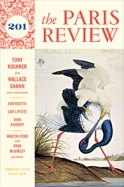
I never read the book myself, but recently I read one of Rothbart’s short stories in the summer 2012 issue of The Paris Review, and it made me wonder if Rothbart might be my generation’s Jack Kerouac. While Rothbart lacks Kerouac’s poetry, they share an ear for dialogue, a captivating retelling of riding in buses and cars, an obsession with music, and an awkwardness with girls. In the short nonfiction story “Human Snowball,” Rothbart takes a Greyhound from Detroit to Buffalo to see a girl who isn’t quite his girlfriend yet or maybe ever and ends up in a carful of eccentric characters, including an ancient black man and a Neal Cassady-esque car thief. It may not have the sensory details that On the Road has, but “Human Snowball” captures characters with such honest and real details and dialogue that you feel like you know them. They’re beat characters. A little rough-around-the-edges, but sensitive and full of life.
In a bit of a Kerouac connection, actor Steve Buscemi, who stars in the film adaptation of On the Road, optioned the rights for Rothbart’s The Lone Surfer of Montana, Kansas. Rothbart himself is a chronic roadtripper. He’s traveled the country and toured with the punk rock band Rise Against, creating the documentary How We Survive for the dvd Generation Lost as well as the documetnary Another Station: Another Mile.


 Stephanie Nikolopoulos