Archive | March, 2012

Happy 90th Birthday, Jack Kerouac

12 Mar


Today would’ve been Jack Kerouac’s ninetieth birthday.

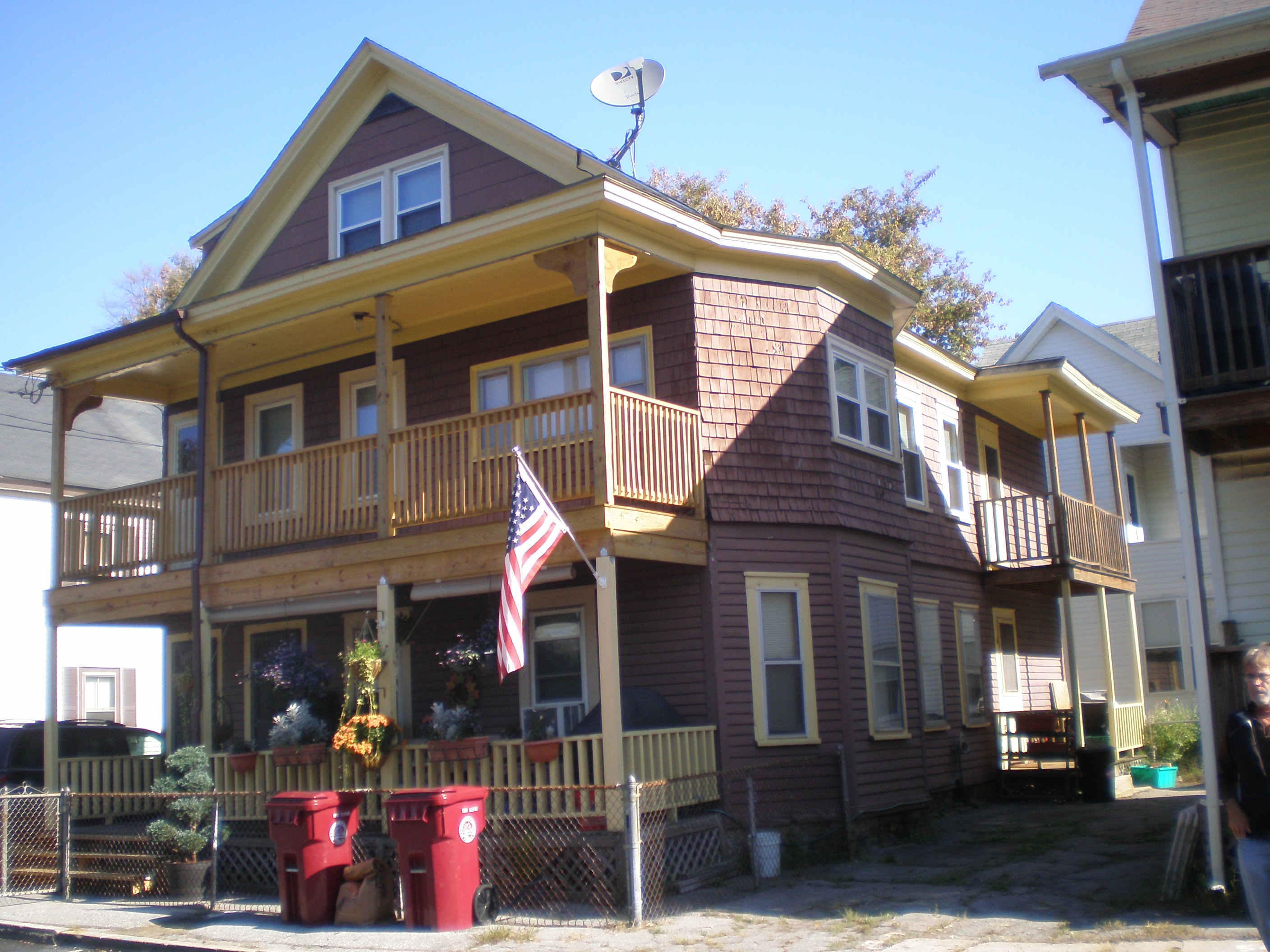
On March 12, 1922, French-Canadian immigrants Gabrielle and Leo Kerouac had their third, and last, child.  He was born at home, on the second floor of the brown house sitting at 9 Lupine Road in Lowell, Massachusetts.   This was in the West Centralville neighborhood, affectionately called Little Canada, of Lowell.  They baptized the baby boy in the Catholic Church.  His baptism certificate reads: Jean Louis Kirouac.  Although that was the standard Quebec spelling of the surname, the family spelled the name Kerouac.  They would call him Ti Jean, meaning Little John.  In fact, he would publish his first book, The Town & the City as John Kerouac.


I visited Jack Kerouac’s birth home when I attended Lowell Celebrates Kerouac! last October.  Apart from the plaque on the front of the house, nothing sets it apart as a any sort of landmark.  Today a new family lives in Kerouac’s birth home.  When the bus dropped my tour group off, the people came outside and gawked at us pilgrims just as we gawked at their regular-looking house.  I love touring authors’ homes and wish Kerouac’s had been preserved for visitors, but it seems fitting that it wasn’t.  After all, the Kerouacs moved often, and the house at 9 Lupine Road is just one of many that Kerouac lived in in Lowell.  Although he lived much of his life with his mother, Kerouac spent much of his time on the road and crashing at friends’ pads.  “Home” for Kerouac didn’t seem to be a house.


My Festival of Faith & Writing Festival Circle: Holy Grounds — The Role of Place in Your Spiritual and Literary Life

9 Mar

As I mentioned a while back, I’ll be leading a Festival Circle this year at the Festival of Faith & Writing held at Calvin College.  It’s a tremendous honor to have been selected to facilitate a discussion group at this prestigious writing conference, where so many authors I admire will be speaking.

In case you’re unfamiliar with what Festival Circle is, here’s how FFW describes it:

This year, we are once again offering Festival Circles, small groups that will meet at least two times during the Festival to discuss a topic of common interest. Each circle, composed of approximately 12–15 attendees and led by a Festival participant, will meet during Thursday dinner and Saturday lunch. Because the circles are scheduled to meet at the same time, it’s possible for attendees to participate in only one.

They go on to explain its purpose:

We hope that Festival Circles will give you a place to connect with other attendees, and to deepen and extend your experience of the Festival.

I want to share with you the description of the Festival Circle that I’m hosting:

Holy Grounds: The Role of Place in Your Spiritual and Literary Life
By looking at what the Bible has to say about the setting of a story, this circle will encourage participants to carefully consider the role of place in their writing, and challenge them to see how different locations affect a story’s style and content.

Facilitator: Stephanie Nikolopoulos
Bio: Stephanie Nikolopoulos (www.StephanieNikolopoulos.com) has worked in book publishing in Manhattan for ten years, is the visual arts editor for Burnside Writers Collective, and is a co-leader of the Writers Group at the Center for Faith & Work at Redeemer Presbyterian Church in New York; her writing has appeared in magazines, newspapers, and books across the country.

I’m genuinely passionate about the multi-faceted subject of place.  I wrote about place for my undergrad thesis at Scripps College, my Burnside Writers Collective column Church Hopping talks about the architecture of unique and beautiful places, the travelogue I wrote an introduction to obviously has a strong emphasis on place, the nonfiction book Burning Furiously Beautiful I’m co-authoring describes how the landscape and history of place affected one of America’s greatest novels, and the memoir I’m writing deals very much with place. My resume aside, I love traveling.  I moved out to California for college without ever even visiting the state first.  I’m the child of an immigrant so place has always played an important role in my identity, in my understanding of who I am and where I come from.

Place isn’t always about a physical place, though.  Place can be a mood, a mental space, a spiritual space.  Place can be about a journey, whether that means hopping a train, opening a book and getting lost in the imagination of an author, being moved to tears, learning something about yourself, understanding the world better, or opening yourself up to a new relationship.  A journey from point A to point B isn’t always a single straight line.  This is true for a traveler (even Jack Kerouac had an infamous setback when he first set off on the road), for a writer (hello, thesis draft number 452), or for a person of faith (Paul went around killing Christians before he went on the road to Damascus and saw the light; as a boy David may have killed Goliath but as an adult he committed adultery … and had the woman’s husband killed; Peter adamantly denied even knowing Christ and then became a martyr).  As the old Paula Abdul song goes, two steps forward, two steps back….

With all that in mind, know that I am on a journey too.  I simply want to walk alongside other writers and talk about the meaning of place in all areas of our lives.  If you would like to join my Festival Circle or any of the others, you can find out how to do so here.

Behind the Curtain: A Magazine Roundtable

8 Mar

Everyone complains about the cost of living in New York City, but I’ve never lived in any other town or city that offered such amazing free events.  It was a Leap Day miracle when McNally Jackson’s Bookstore held a free literary event featuring the esteemed literary editors of top magazines.  Behind the Curtain: A Magazine Roundtable brought together Deborah Treisman of The New Yorker, James Marcus of Harper’s, and Ellah Allfrey of Granta for a conversation moderated by Granta editor John Freeman.


And like all worthwhile free events, this one was PACKED!  Even many who got there early had to stand in the aisles of bookshelves because there were so many attendees.  Those who got there late listened from the stairs.  It was worth it.

The editors discussed using interns—MFA candidates, mind you, not undergrad students—to read through the slush pile (unsolicited manuscripts).  The result was that some interns turned away some really great work before the editors had a chance to see it, while other interns erred on the side of caution, passing too many candidates along to the editors.  I’ve read through slush piles for my grad school’s lit mag and for the children’s book department at my office, and what struck me was how patient the panelists were.  Reading through slush piles is a lot like panning for gold: most of it is just dirt that should be tossed out.


The panelist of editors were genuinely excited about working with new authors—even to the point of overlooking cover letters with the nebulous “Dear Editor/Reader.”  At one point, Freeman asked Granta’s associate editor Patrick Ryan, who was in the audience, to come up and share heartfelt stories of giving first-time contributors their big break.  For those looking to break into lit mags, it’s reassuring to know that the editors really do want to find great, undiscovered writers and are even willing to go through several rounds—one editor mentioned an astounding twenty-one!—of revisions to get a solid piece of work from a writer just starting out in his or her career.

Treisman, Marcus, and Allfrey also talked about what sort of writing they’re looking for, and while responses and desires ranged it was clear that they’re looking not only for high-quality writing (in fact, they admitted to sometimes having to turn away well-written pieces simply because the timing wasn’t right) but for writing that is unique, that covers an area that is has been underserved.  This includes writers from areas of the world where literature isn’t being promoted in the United States or England.


The magazine editors addressed the VIDA controversy, admitting that magazines are failing when it comes to representing women writers.  Treisman said there is a generational divide.  Older women weren’t submitting work to The New Yorker at the same rate as their male counterparts.  Today’s younger generation of women writers, though, are more apt to submit their work to bigger magazines earlier on in their writing careers.  The practical application here is that women writers should be submitting their work to big-name publications.

The big take-away from the night was that the short-story form is not dead.  As someone with a book publishing background, I’ve been taught to be leery of short-story collections.  They just don’t sell.  I’ve repeated this to hopeful writer friends of mine, perhaps crushing their tender, creative spirits.  However, it was clear from the Behind the Curtain discussion that, though the amount of publications have diminished, there are still beloved magazines publishing works of short fiction.  A lot of these magazines also publish personal essays.

Remembering Philips Lamantia

7 Mar

Beat poet Philip Lamantia passed away on this day 2005.  He read at the famous Six Gallery reading in San Francisco in which Allen Ginsberg debuted Howl.  Instead of reading his own poetry, though, Lamantia read poems by his friend John Hoffman, who had recently passed away.  His own poems were erotic, surrealist, Catholic.

You can read the last interview Lamantia ever gave here (it was with Garrett Caples) and the original obituary that ran in The New York Times.


I Love Menominee: Student Speaks Endangered Language

2 Mar

A middle school student was reprimanded recently for saying “I love you” in her the Menominee language while at school.  Miranda Washinawatok was benched from her basketball game because her teacher couldn’t understand what she was saying.  The teacher said the Wisconsin student could not speak in the endangered Native American language because it kept the teacher from knowing what she was saying.

When I was growing up in New Jersey, it was common to hearing foreign languages—mainly Korean—in the hallways or on the playground.  Maybe there were times when I had to remind my friends to translate for me, but I don’t remember the teachers ever telling students they weren’t allowed to speak in their native language.  Of course, non-native English speakers attended ESL and encouraged to learn English, and you weren’t allowed to whisper or talk in class regardless of what language you were speaking in.  There was, however, never a sense that a student wasn’t allowed to speak in a foreign language among his or her friends.

However, that has not been the case elsewhere in the world.  My ancestors from my mother’s side were Sami, from the Swedish Lapland, and there are many stories of children not being allowed to speak their native Sami language and the language was not taught in schools.  Today there are nine living Sami languages, but some Sami languages are critically endangered.

Likewise, the Menominee language that the Wisconsin middle schooler said “I love you in” is a critically endangered language.  The language is an Algonquian language used by the Native American Menominee tribe in the Midwest.

Wikipedia reports:

According to a 1997 report by the Menominee Historic Preservation Office, 39 people speak Menominee as their first language, all of whom are elderly; 26 speak it as their second language; and 65 others have learned some of it for the purpose of understanding the language and/or teaching it to others.

If you’re interested in learning Menominee, check out this English-Menominee dictionary or this tutorial.

You may also be interested in the College of Menominee Nation, which is working on a grant called “Menominee Language Revitalization: Teaching the Community” that proposes the following:

The language project will focus on implementing weekly “Language Tables” at six sites on the Menominee Indian Reservation. A Language Table is a place where a person can go and learn Menominee Language. The Language Tables, held on a year round basis, are set up for beginning learners as well as for advanced learners. A fluent Menominee will be in attendance at all Language Tables. Most often, Language Tables will start with a pot luck meal.

Here’s the website for the Menominee tribe

So just how do you say “I love you” in Menominee?  “Tapanaew” means love.

Post-Valentine’s Day Book Club: Sexy Travel, Wedding Magazines, and Mysterious Photographs

1 Mar

It was the day after Valentine’s Day.  The night before, the subway became a roving flower shop as roses crammed between eager bodies heading toward their better half.  By morning, last night’s couples sat side-by-side, staring blankly out the subway car windows.  The streets were a lot less crowded that evening.  No one was carrying flowers.  It was a good night to attend a book club.

A group of coworkers from the publishing house where I work—ranging from managing ed to design and children’s books—went to MediaBistro’s Book Club Party at Bar 13 on February 15.  You know, because we don’t get enough books at the office.

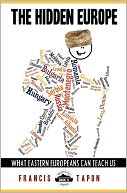
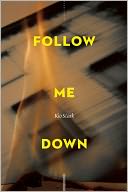
And what a reading it was!  Francis Tapon read a scandalous tale of his traveling days in The Hidden Europe: What Eastern Europeans Can Teach Us.  Susan Schneider then treated us to what it’s like to work as a writer for a wedding magazine when she read from her novel The Wedding Writer.  Hint: It’s glamour gone ruthless.  Kio Stark read from her debut novel Follow Me Down about a woman who finds a twenty-year-old envelope containing a photograph.

MediaBistro doled out free copies of the books, and the bar had a great two-for-one special on a wide variety of drinks.

What I really want to point out, though, is the authors’ websites.  Tapon, Schneider, and Stark each wrote very different books, and their websites reflect that.  Their websites are great examples of what an author website should look like—visually compelling, blurbs from media outlets that make you want to pick up the book, the option to buy the book, social media links, excerpts from the book, and a blog.  If you’re in the process of building your author platform, you may want to take a few cues from these authors.

PS: Here are the pics from MediaBistro’s Meet the Teachers Cocktail Party at Stone Creek in New York.