
I’ve got army print nail polish on to tackle my thesis!!


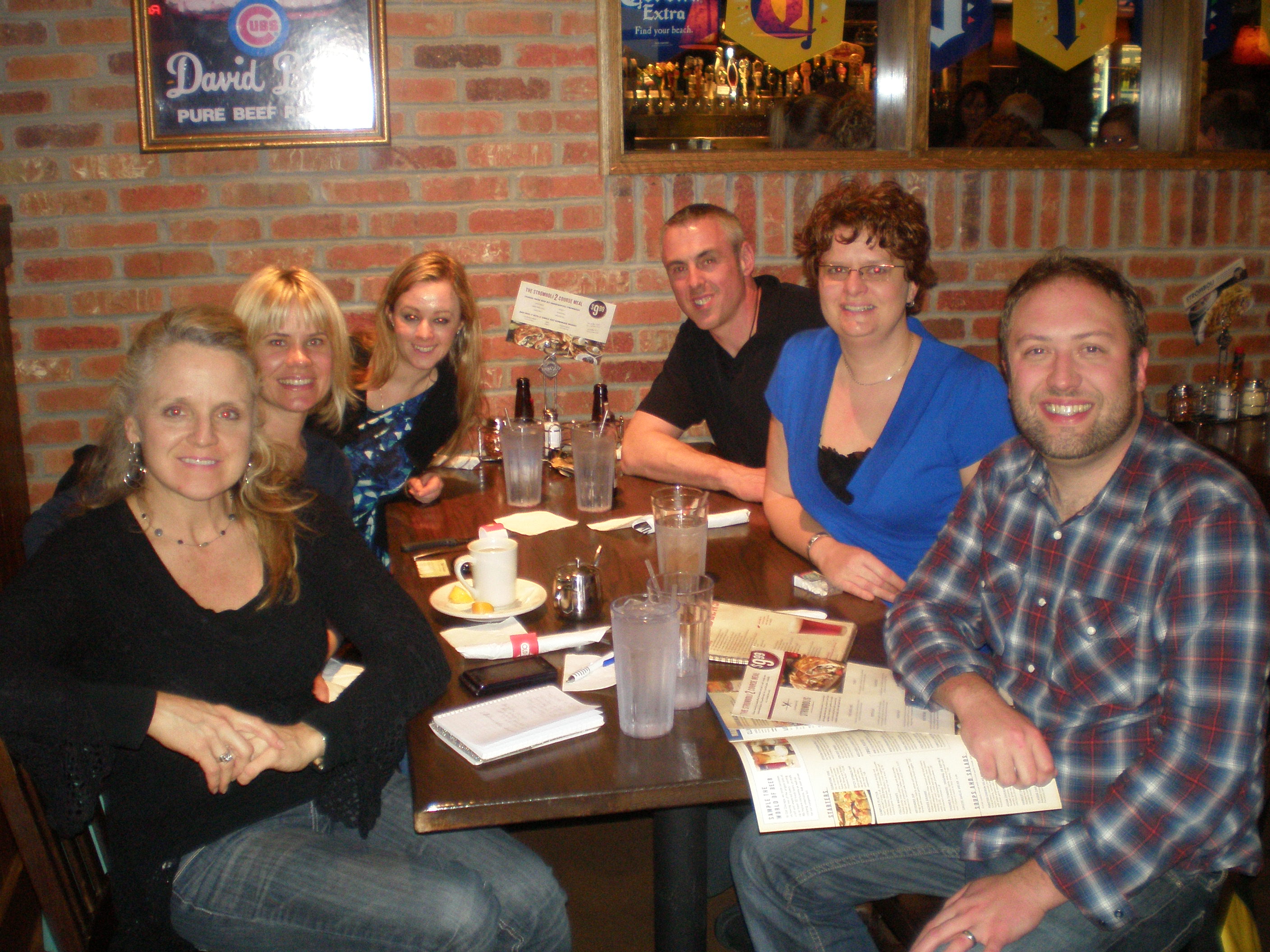
front, right: Jordan Green, Editor in Chief.
middle row, left to right: Kim Gottschild, managing editor; Diane Nienhuis contributer (and personal website)
back row, left to right: Stephanie Nikolopoulos, visual arts editor; Larry Shallenberger, contributor (and personal website)

left to right: Larry Shallenberger, contributor; Kim Gottschild, managing editor; me.
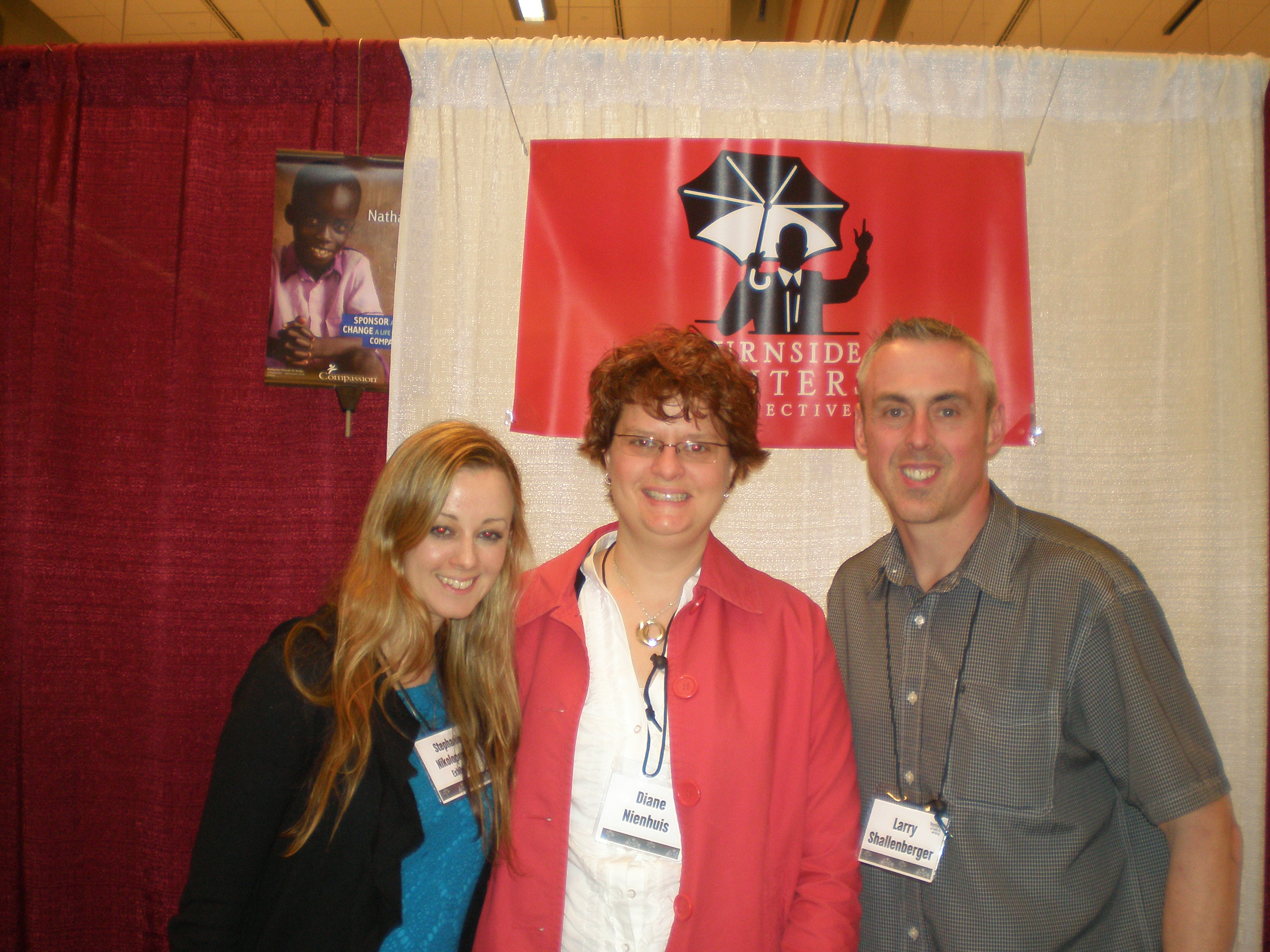
Left to right: Me, Diane Nienhuis contributer; and Larry Shallenberger, contributer
I had such a fun time hanging out with the Burnside Writers Collective at the Festival of Faith & Writing! Some of them I hadn’t seen in years, some I saw at the last Festival, some I saw when they last came through New York, and some I met only for the first time at the Festival even though I’d been working with them for years. Allof them are amazingly talented writers with huge hearts and are loads of fun.
While I was “working the booth” (fancy speak for chatting with all the cool writers and editors that stopped by our table at the Festival of Faith & Writing), I talked with a lot of people who were intrigued by the concept of a collective. Burnside Writers Collective is not just a website. We’re not just individual writers posting articles. We’re a collective. A team. Our work is collaborative, both in the sense that there are a lot of people dedicated to behind-the-scenes work to make it possible for the website to exist and exist well, and in the sense that all of our individual work and varied opinions adds up to something bigger than just ourselves. We’re also a community. Writers, editors, and readers share with each other, get to know each other, meet each other.
Writing is such a solitary endeavor. It suits many of us because we’re introverted. Almost everyone I spoke to claimed to be an introvert, meaning we get our energy from alone time rather than in the public. It does not mean that everyone is shy, though. A festival full of introverts is still boisterous, is still loud, is still frenetic. Maybe it’s because we’ve finally lifted our faces from our books, and our eyes are no longer glazed over from the glare of a computer screen. We’ve emerged to find kindred spirits in other writers–and it feels good! Since so many of us spend our days and nights writing, alone, we are oftentimes looking for community. That’s what makes Burnside Writers Collective so attractive. The people who write for and read Burnside tend to come back again and again, to stick around and join the conversation, to share their dissenting opinions, their encouragement, their feelings. That said, we’re always looking for new writers! As the visual arts editor, I’m looking for people who can write about arts trends, review new exhibits at galleries, interview artists, and share their art. Email me at snikolop {@} alumna.scrippscollege.edu if you’re interested.
I miss the Burnsiders already…. Looking forward to seeing you all at the next Festival of Faith & Writing!
Here’s Larry’s “Brain Dump” on FFW.
Note: This article was edited to include names of people and Larry’s Brain Dump post.
My Q&A with poet Bob Holman is up on BOMBlog!! We chat about wayward camels, the resurrection of the Hebrew language, the Greek word “poesis,” the UN, griots, and endangered languages.
I recently workshopped a new memoir chapter I had been working on, and it wasn’t until after I left the workshop that it occurred to me that perhaps the distinction between the author and the narrator had gotten jumbled in the evaluation of the piece.
I don’t enjoy self-deprecating memoirs, but I had written a rather self-deprecating line to make a point about my past.
“We don’t see you this way,” someone said.
I didn’t get the sense that she was suggesting I needed to show evidence in the work to prove I was that way in the past. I think she was surprised to see my negative statement and was concerned that I had low self-esteem that wasn’t based on fact.
I rambled off some explanation that only made me sound more pathetic and weird, and then I left feeling exposed and awkward. But I was trying to explain the person I was—not the person I am today.
I believe good writing takes readers into the feelings of a particular moment in time. When I write about myself, I think back to how I felt when I was going through a particular period. I try not to censor myself. I try to be true to who I was at that time.
Maybe I need to write in double perspective. Perhaps I need to explain right up front that who I was then is now who I am now. But I feel like writing and reading is a journey, and I think sometimes you have to wallow in the past a bit before explaining away and fixing things, and saying, “I’m alright! I’m alright! Don’t worry about me. My story gets better.”
I’m okay with who I was in the past. I love that shy little middle-schooler and I love that twenty-something who was naïve and nervous and emotional, and I don’t want to change her. She is the foundation for who I am today. But she is not who I am today.
The person I am today is not someone who you can get to know in one chapter or one blog post. I am not someone who you get to know over one semester. And I am not the same person in the office as I am when I’m at home. I’m not someone easily identified by the types of books I read, and I hope no one would ever judge me on my indulgent music playlist. (I think I almost lost a few friends the day I posted on Facebook that I don’t like Radiohead.)
And I hope tomorrow I’m not the same person I am today. Maybe that’s self-deprecating. Or maybe it’s just honest.
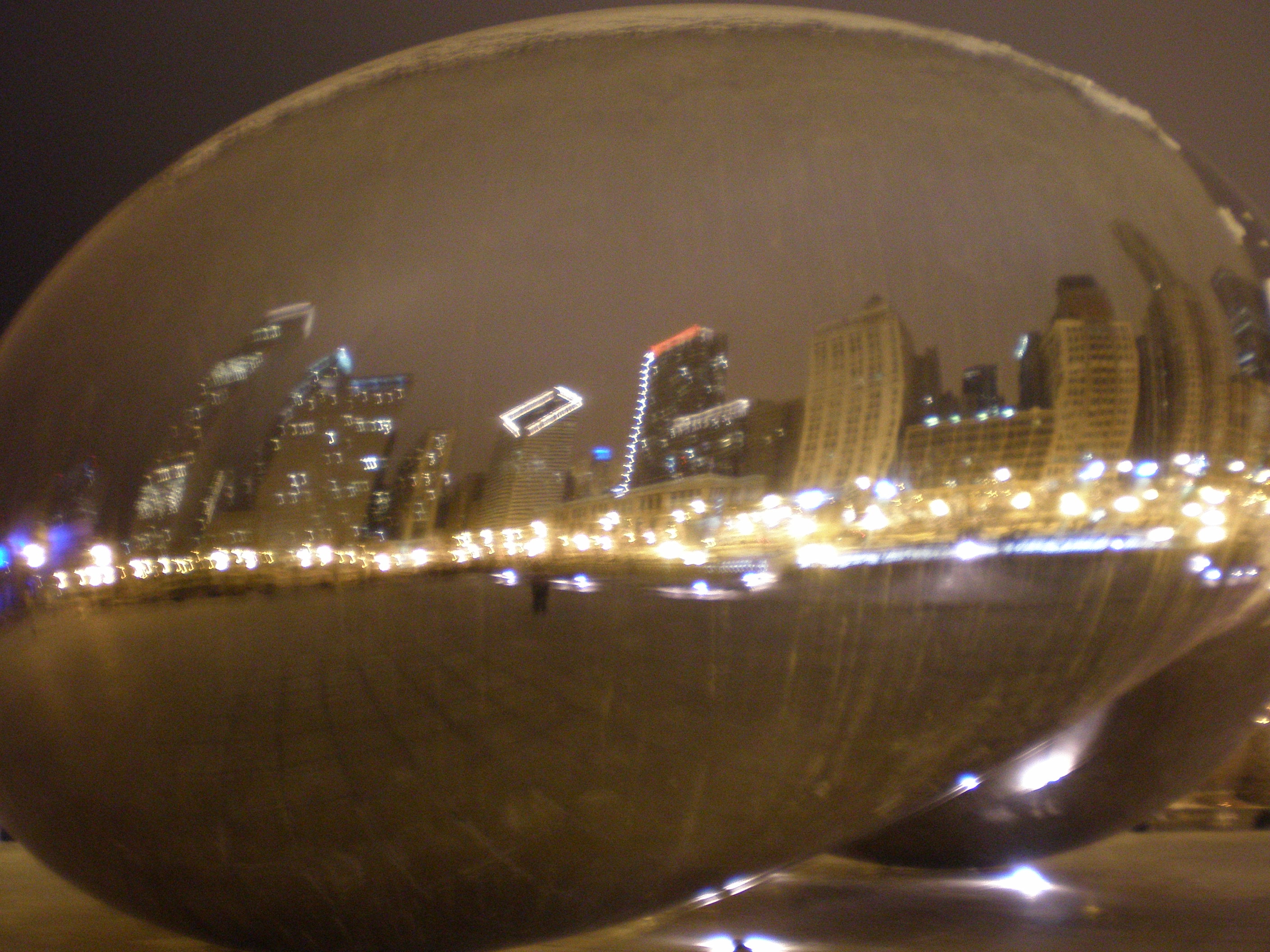
Some places are so iconic. I think this may be one of them.
Every story involves place, whether real, imagined, or seemingly absent. Place isn’t just a physical location, it’s a feeling, a memory, a metaphor, a symbol.
My writing has always centered around place. My memoir is a complicated look at what home means. It’s about how even for people who live in the same house together home can mean different things — can even be different places. And sometimes, oftentimes, the place you call home changes. It’s about the physicality of a house, the emotions of a home, the culture of a country.
Meanwhile, the book I’m coauthoring on Jack Kerouac is also about place in its own way. It’s about exploring, about living, about identity. It shows that place itself can become a character and plot device.
I’m teaching on place this weekend at the Festival of Faith and Writing, and I think one of the most valuable ways to learn is to read how other writers have talked about place. Here are some literary quotes about place. Feel free to share your favorite quotes about place in the comments section.
How hard it is to escape from places. However carefully one goes they hold you – you leave little bits of yourself fluttering on the fences – like rags and shreds of your very life.
~Katherine Mansfield
But I do like churches. The way it feels inside. It feels good when you just sit there, like you’re in a forest and everything’s really quiet, expect there’s still this sound you can’t hear.
~Tim O’Brien
A place belongs forever to whoever claims it hardest, remembers it most obsessively, wrenches it from itself, shapes it, renders it, loves it so radically that he remakes it in his own image.
~Joan Didion
Every perfect traveler always creates the country where he travels.
~Nikos Kazantzakis
Human nature will not flourish, any more than a potato, if it be planted and replanted, for too long a series of generations, in the same worn-out soil. My children have had other birthplaces, and, so far as their fortunes may be within my control, shall strike their roots into unaccustomed earth.
~Nathaniel Hawthorne
This is the most beautiful place on Earth. There are many such places. Every man, every woman, carries in heart and mind the image of the ideal place, the right place, the one true home, known or unknown, actual or visionary.
~Edward Abbey
The landscape affects the human psyche – the soul, the body and the innermost contemplations – like music. Every time you feel nature deeper you resonate better with her, finding new elements of balance and freedom…
~Nikos Kazantzakis
Do you think writers are defined by where they were born? Where they live? By whether or not they’ve moved? By how much they’ve traveled?
Yesterday, I wrote about how at the Faith & Writing Festival Circle we’ll be discussing is the idea of how where you write can actually affect your writing. Today, I’m bringing you another little preview. This time on writers from Michigan.
I’ve only been to Michigan the one other time I was at the Festival of Faith & Writing, and from what I’ve seen, it’s pretty unique. It’s a rather large and diverse state. Michigan is definitely Midwest — so different from where I grew up on the East Coast. Yet each city and town seems to have its own culture and identity. I think if two people from Michigan meet they’d probably judge each other based on where they live.
Yet, Michigan seems integral to America’s history as a whole because of the car industry in Detroit and the way cars began to define a certain type of American identity.
Below is a list of Michigan writers.
Books Set in Michigan or Written by Michigan Authors
Who are your favorite Michigan-based authors?
As most of you know, at the Festival of Faith & Writing I’ll be leading a Festival Circle called Holy Grounds: The Role of Place in Your Spiritual and Literary Life. One of the things we’ll be discussing is the idea of how where you write can actually affect your writing.
We’ll be talking about writing in such places as quiet home offices, caffeine-fueled coffeehouses, musty old libraries, in the serene beauty of nature, awe-inspiring churches, on the subway, in prison, and while you’re traveling. Where do you like to write?
I’ll be providing those who registered for the Holy Grounds Festival Circle with a list of literary(-ish) places near Calvin College in Grand Rapids. Places to relax, get inspiration, study Midwestern scenery and characters, and write. A lot of us are traveling from out of state so I thought this list would be helpful. There are plenty of places on campus to write and grab a cup of coffee, and the Festival will probably keep everyone busy enough that they won’t need this list, but sometimes it’s nice to break free from the bubble and see something outside the Festival grounds. This list may also be helpful to writers who live in the area and are looking for a change of scenery from where they normally write. I haven’t actually been to any of these places, so tread carefully! Haha. If you’re a Michigan writer, tell us your recommended writing places, coffee shops, bookstores, and literary havens.
Literary(-ish) places in Grand Rapids:
Ladies Literary Club (now a performing arts center)
61 Sheldon Blvd SE
Grand Rapids, MI 49503
(616) 459-6322
Bookstores in Grand Rapids
Argos Book Shop – Grand Rapids’ Oldest and Largest Used Book Shop!
1405 Robinson Rd SE; Grand Rapids, MI 49506-1722
616-454-0111
argos@argosbooks.com
Business Hours: Monday to Saturday: 10am to 6pm; Sunday: Noon to 3:00 pm
3343 Alpine Ave. NW, #A; Grand Rapids, MI
616-784-7179
Literary Life Bookstore & More
758 Wealthy Street SE (the southwest corner of Wealthy and Eastern); Grand Rapids, MI
Business Hours: Monday – Saturday: 10am to 8pm; Sunday closed
Schuler Books & Music – Celebrating 30 years as your local, independent bookstore!
2660 28th Street SE; Grand Rapids, MI 49512
616-942-2561
info@schulerbooks.com
bookgroupsgr@schulerbooks.com
Manager: Tim@schulerbooks.com
Business Hours: Monday to Saturday: 9am to 10pm; Sunday: 10am to 7pm
Schuler Books & Music
40 Fountain N.W.
Grand Rapids, MI 49503
Phone: 616-459-7750
Promotions: Emily@schulerbooks.com
Manager: Neil@schulerbooks.com
Business Hours: Monday, Tuesday, Wednesday: 9am to 6pm; Thursday and Friday: 9am to 8pm; Saturday and Sunday: 11am to 5pm
Coffeehouses in Grand Rapids
76 Coffee
1507 Wealthy St SE
Grand Rapids, MI 49506
616-301-2226
227 Winter Avenue NW; Grand Rapids, MI 49504
616-459-6257
632 Wealthy Street, SE; Grand Rapids, MI 49503
(616) 780-7777
info@newamericancoffee.com
Business Hours: Monday to Friday: 7am – 7pm; Saturday: 9am – 5pm; Sunday: 11am – 3pm.
55 Monroe Center NW; Grand Rapids MI 49503
Business Hours: Monday to Friday: 6:30am – 5:00pm; Saturday: 9am to 5pm; Sundays: closed
I’m getting excited for the Festival of Faith & Writing!! I’m so looking forward to catching up with all my friends from the Burnside Writers Collective, some of whom I haven’t seen in years and others whom I’ve never met before. We’ll have a booth so please do stop by and say hello! I’m the visual arts editor for Burnside, and I’m always looking for new writers and cool artists whose work we can feature on the site. If you’re interested, let’s chat at the Festival.
If you’re going — or just want to live vicariously through this blog — you might be interested in the Church Hopping column I wrote up after our last trip to the Festival. Some of the panels and Q&As are held in the Pizza Hut Chapel, as Diane called it.

Burnside commentary:
Kim Gottschild: “I liked the chapel’s architecture. What I found particularly interesting was the pergola type structure that lined the inside of the sanctuary like an overhang. Together with the beautiful view of the budding trees, it made me feel like I was sitting in a garden setting, the outside having been brought in. I also loved the light feel of the wooden interior. Overall, the interior atmosphere felt natural, light and airy, and I felt like I could breathe. And Mary Karr’s interview only enhanced that, as listening to her always gives me permission to be human.”
Penny Carothers: “I liked the chapel, too. I liked the inclusive feel, the feeling of being surrounded by others, not just staring at the dais. I also appreciated how the dais was almost in the center of the room. I liked how light it was.”
Cary Campbell Umhau: “Well, I hate to be a naysayer but I found it cold. I wanted a cozy corner, not an exposed openness. I’m sure that says something antisocial and awful about me, but I wanted to flee! I have to say I was swayed a little by Diane saying that it’s sometimes referred to as the Pizza Hut Chapel (Diane, am I misquoting you?). Is it bizarre that I preferred the ‘Undercroft’ of cinderblock (and the bathrooms were nearby too; handy with all the coffee I was downing), and I loved hearing Lisa Samson down there.”
Diane Nienhuis: “Cary, you quoted correctly!”
You can read the rest of Church Hopping: Calvin College Chapel here.
All the endangered language research I’ve been doing seeped its way into the rough draft of my memoir. Below is a scene in which I encounter two darker-skinned boys at the Greek Consulate in New York City. From the looks of them, I gather that they must be Albanians. As I’m dealing with my own language issues at the Consulate, I begin to think about theirs. This section turned out to be too Wikipedia-ish in comparison to the lighter, humorous tone of that chapter in my memoir, so I was advised to take it out. Still, I found the subject matter fascinating, and so I’m posting it here as an outtake.
Two dark-skinned boys in their teens or twenties—it was hard to tell—filled out paperwork at the long table. They wore motorcycle-style jackets that made them look tough but in more of a poor than badass look. I wondered if they were perhaps Albanian refugees. Cham Albanians began migrating to Greece during the Middle Ages. They speak the Cham Albanian language, a type of Tosk Albanian that was the language of the most well-known bejtexhinj, Muhamet Kyçyku, first poet of the Albanian National Renaissance. Bejtexhinj is the oftentimes religious poetry written in Albanian with Arabic alphabet and Persian, Turkish, and Arabic words, that began in the eighteenth-century to rebel against the influence of the Ottoman Empire. During that time and also in the early twentieth century, Albanians known as Arvanites came to Greece as well. The Tosk Albanian dialect they speak, known as Arvanitika, is now an endangered language, as they assimilate into Greek culture. Though sometimes Arvanitika is used interchangeably, the Orthodox Albanians who in the 1920s came to northeastern Greece, namely to the areas of Western Thrace and Greek Macedonia, are called Shqiptars. They speak the Northern Tosk Albanian. Although many Arvanitika fought against the Ottomans in the Greek War for Independence from 1821 to 1832, by World War II the Cham Albanians had sided with Italy and Germany and had to flee from Greece to Albania, Turkey, and the United States. After the fall of Communism in 1991, another group of Albanians came over to Greece to escape economic depravity. Today, most Albanians living in Greece self-identify as Greek; they have converted to Greek Orthodox Christianity and speak the Greek language. Now, listening in on the two boys consulting each other for their paperwork, I couldn’t tell whether they spoke an Albanian dialect or Greek.
Stephanie Nikolopoulos is a writer, editor, writing teacher, and speaker based in New York City.
She is the coauthor, with Paul Maher Jr., of "Burning Furiously Beautiful: The True Story of Jack Kerouac's 'On the Road.'"
You can email her at stephanie_701 {@} yahoo.com


 Stephanie Nikolopoulos