Archive | September, 2013

“On the Road”‘s Dilemma

12 Sep

logo-sm

“[M]ost people (perhaps increasingly) don’t seem to be drawn to fiction that offers more questions than answers,” writes Rob Roberge in “Literary Fiction’s Dilemma” for The Rumpus. Toward the end of the essay, the MFA professor and author of The Cost of Living writes:

We are messy creatures. Beautiful, flawed, disturbed, at times selfless and at times selfish animals left to attempt to make sense of a world that doesn’t lend itself to easy questions or easy answers. To document a world where we are neither gods nor beasts but often a mix of both is to document a world most don’t like to think about.

Roberge makes an interesting—and beautifully written—point that we are complicated beings made up of good and bad characteristics. I wouldn’t necessarily say we don’t want to acknowledge the fact that we don’t live in a black-and-white, all-or-nothing world because I think it’s a very American trait to want to see the silver lining in something and to want to hear a comeback story. I would argue we even prefer our characters a little flawed. We like Jo March, Rodion Raskolnikov, Jay Gatsby, and Tom Sawyer. But I think Roberge is onto something. Even if we don’t desire perfect, goody-two-shoes characters—and I don’t mean to say Roberge is suggesting we do—I think we want the author’s point of view to be morally clear.

Roberge’s thesis does not mention Jack Kerouac, but it got me thinking about the criticism I’ve read about On the Road. So many articles I’ve read about Kerouac’s novel and the recent film adaptation refer to morality:

David Depsey’s 1957 article “In Pursuit of ‘Kicks’” in The New York Times:

Today, one depression and two wars later, in order to remain uncommitted one must at least flirt with depravity. “On The Road” belongs to the new Bohemianism in American fiction in which an experimental style is combined with eccentric characters and a morally neutral point of view.

Referring to Norman Podhoretz’s 1958 essay “The Know-Nothing Bohemians,” Andrew O’Hagan writes the following in the New York Review of Books article “Jack Kerouac: Crossing the Line”:

In actual fact the Beats now seem pretty innocent: far from being a threatening group of “morally gruesome” primitives, they were a bunch of college kids with a few new things to offer.

Yahoo! Movies describes the film On the Road saying:

Dean is extremely charming and has a flexible moral code….

Amanda Chen reviewed the film for Scene Creek:

If you have a thirst for adventure and a loose line of morality, you will enjoy all that Walter Salles has to offer in his cinematic interpretation of Jack Kerouac’s novel, On The Road.

Ann Hornaday reviewed it for the Washington Post:

The literary and larger cultural argument that Kerouac’s book ignited and engaged — about formalism, narrative, morality and breaking open new ways of being and expression — is virtually nonexistent in “On the Road,” Walter Salles’s warm but strangely staid adaptation of a piece of literature that was never meant to be tamed as cinema.

Robert Moor writes in “On The Road Again” for the Paris Review:

The moral atmosphere of American life has changed considerably over the past half century; we have moved towards Kerouac’s liberal ideals, which has slackened the tension between the lived and the imagined.

An anonymous poster on Barnes & Noble left this review:

I can give you symbolism for every event in Vonnegut’s Cat’s Cradle. I can give you the moral, philosophical points of Burgess’ A Clockwork Orange. I can decode the works of Burroughs. But ‘On the Road’ left me feeling like it was pointless…a good, enjoyable read, but…pointless.

These reviews would make one think that Kerouac was the first writer to ever write about characters with flaws, that somehow literature up until 1957 was devoid of characters who did “bad” things—or at least if they were immoral they were severely punished for their crimes. I get the sense that they want to see Dean Moriarty die in a fiery car crash or repent of his sins and devote his life to helping winos and pregnant teens. But that’s not how life works, and I think the beauty of On the Road is that it is complex.

Roberge says readers have trouble with work that “offers more questions than answers.” Interestingly, despite criticism to the contrary, it would appear that Kerouac believed he found good, moral answers:

Dean and I were embarked on a journey through post-Whitman America to FIND that America and to FIND the inherent goodness in American man. It was really a story about 2 Catholic buddies roaming the country in search of God. And we found him.

Kerouac’s characters are complex, flawed, blessed, messy, striking, honest, real. They ask questions we might very well be asking ourselves.

You might also like:

Life Continues to Be Absurd: Saul Bellow, Jack Kerouac, F. Scott Fitzgerald, and Joseph O’Niell

From the Inside Out: Harrowing Escapes from the Twin Towers of the World Trade Center

11 Sep

9781566493840_p0_v2_s260x420

If you’re looking for an insider’s perspective on September 11, check out From the Inside Out: Harrowing Escapes from the Twin Towers of the World Trade Center. The author, Erik O. Ronningen, was the last person to escape from the South Tower after it was attacked by terrorists.

Here’s the marketing copy for the book:

Erik Ronningen was on the 71st floor of the North Tower on September 11, 2001 when American Airlines Flight 767 struck the building. After an incredible, even miraculous journey down through the acrid, smoke-filled building lit by occasional fireballs, Erik tried to get to the Security Command Center in the South Tower. Unable to do so, he was the last person to make it out of the South Tower alive.

Here is the story of his harrowing escape interwoven with the accounts of fourteen others who were lucky enough to be able to recount them.

Altogether, these accounts document the bravery and heroism, selflessness and generosity demonstrated by hundreds of people when their normal everyday lives were suddenly plunged into a fiery scramble for survival.

The astonishing photograph on the cover of this book was taken by survivor Jim Usher as he lay on the concrete outside the WTC losing consciousness, so his family could see what he saw during what he thought were the last moments of his life. And yes, that flag was really there! This photograph has never before been made public.

I happen to know the agent, who gave me an early draft of the book to read about two years ago, and I remember being impressed by the grand scope of the story. There are parts of it that have stuck with me — not only the scenes of fireballs in the elevator, but more so the quieter moments that personalize the story. Piercing the trauma are profound demonstrations of loyalty and love.

I sat down with the author, agent, and publisher, Welcome Rain, a few weeks ago, right before it went to press. The excitement buzzed in the air, as they told me about its progress and the never-before-made-public photograph being used for the cover. Last week I picked up a copy signed by the author.

The book has historical and personal importance. The stories told in the book are by people who made it out of the Twin Towers alive, but I think we all have a 9/11 story….

Never Forget

11 Sep

In remembrance of September 11, here is the Church Hopping post I had done on St. Nicholas Church at the World Trade Center.

I’m Reading at Jason Harrod’s Album Launch!

10 Sep

Harrod

Jason Harrod invited me to read at the release for his new album Highliner on Friday, September 13. I’m super excited to help him celebrate his third album’s launch. Musicians Paul and Bets will also be performing.

He asked me to read something related to wrestling with God or faith through hard times. Oh, the stories I could tell…!

The event starts at 7:30pm at IAM (International Art Movement ~ 38 West 39th Street, 3rd Floor, NYC). There’s a $10 suggested donation. Wine, beer, and hors d’oeuvres will be available.

Hope to see you there!


Find out about past and upcoming readings in Appearances.


Continue reading

The Quotable Greek: I’ve Never Had the Right Words to Describe My Life

9 Sep

“Emotions, in my experience, aren’t covered by single words. I don’t believe in “sadness,” “joy,” or “regret.” Maybe the best proof that the language is patriarchal is that it oversimplifies feeling. I’d like to have at my disposal complicated hybrid emotions, Germanic train-car constructions like, say, “the happiness that attends disaster.” Or: “the disappointment of sleeping with one’s fantasy.” I’d like to show how “intimations of mortality brought on by aging family members” connects with “the hatred of mirrors that begins in middle age.” I’d like to have a word for “the sadness inspired by failing restaurants” as well as for “the excitement of getting a room with a minibar.” I’ve never had the right words to describe my life, and now that I’ve entered my story, I need them more than ever. ”

~Jeffrey Eugenides

Photos from the Greek American Fashion Week Kick-Off Event

6 Sep

I’m about to head out to the Greek American Fashion Week Runway Event, so I’m leaving you with a few photos I snapped at the Greek American Fashion Week Kick-Off Event that was held on Wednesday night at the Lower East Side’s lush rooftop bar The DL.

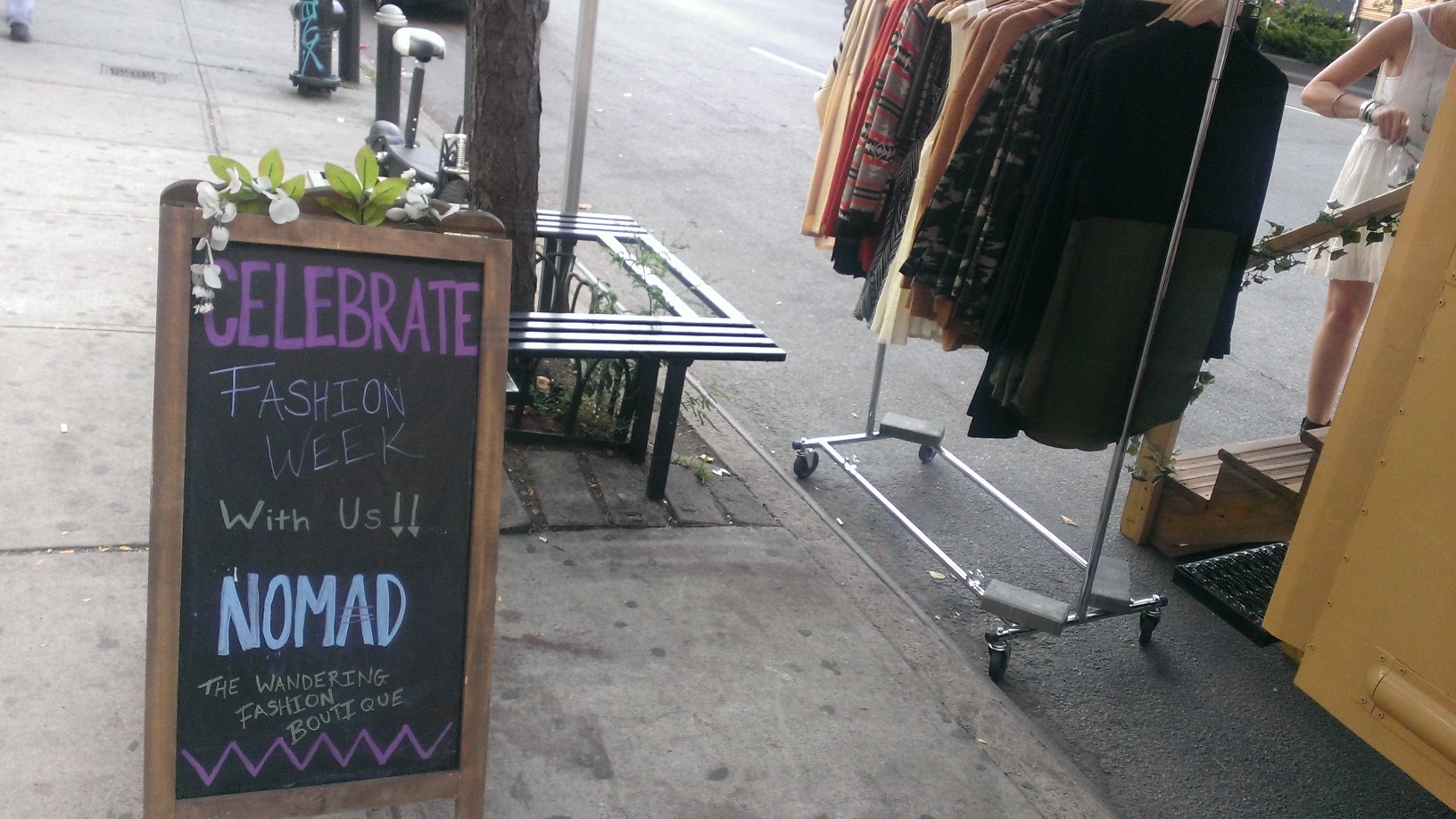
Parked outside was the aptly named Nomad truck, “the wandering fashion boutique” … and you know my obsession with sweet rides.

WP_20130904_005

WP_20130904_006

WP_20130904_007

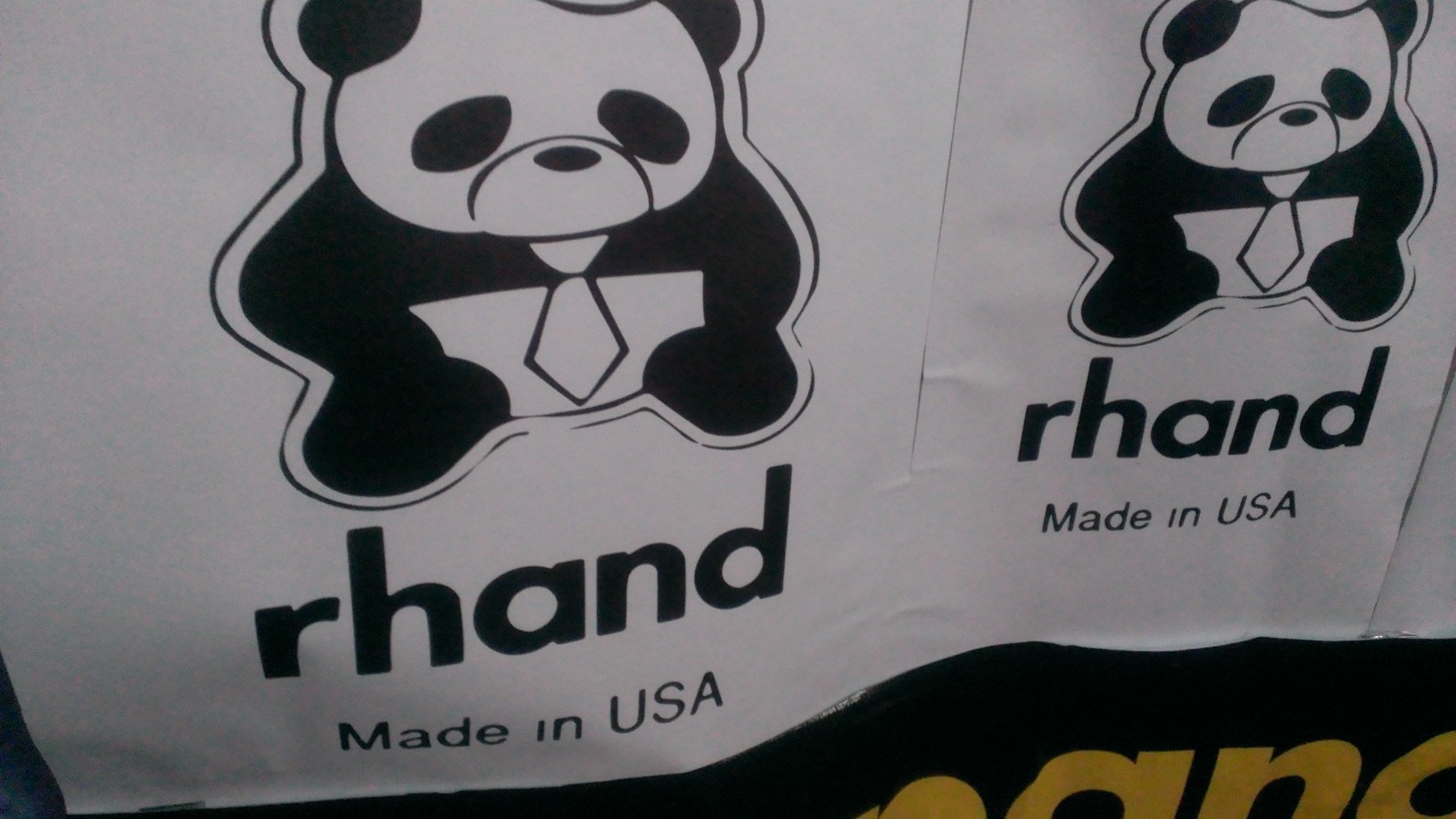
The rooftop of The DL was turned into a pop-up shop with fashion by the likes of Dani Djokic and Panda Rhand.

WP_20130904_009

WP_20130904_008

WP_20130904_011

In case you’re wondering, I wore a black shift with buttons down the side to the kick-off event. My hair was in a low side bun. I had neutral eye makeup with strong brows and dark, berry lips, inspired by Michelle Williams and Emma Watson.

Lomogram_2013-09-04_09-15-27-PM

I felt like I was at my house in Greece with all the palm trees on the rooftop!

WP_20130904_015

WP_20130904_019

WP_20130904_016

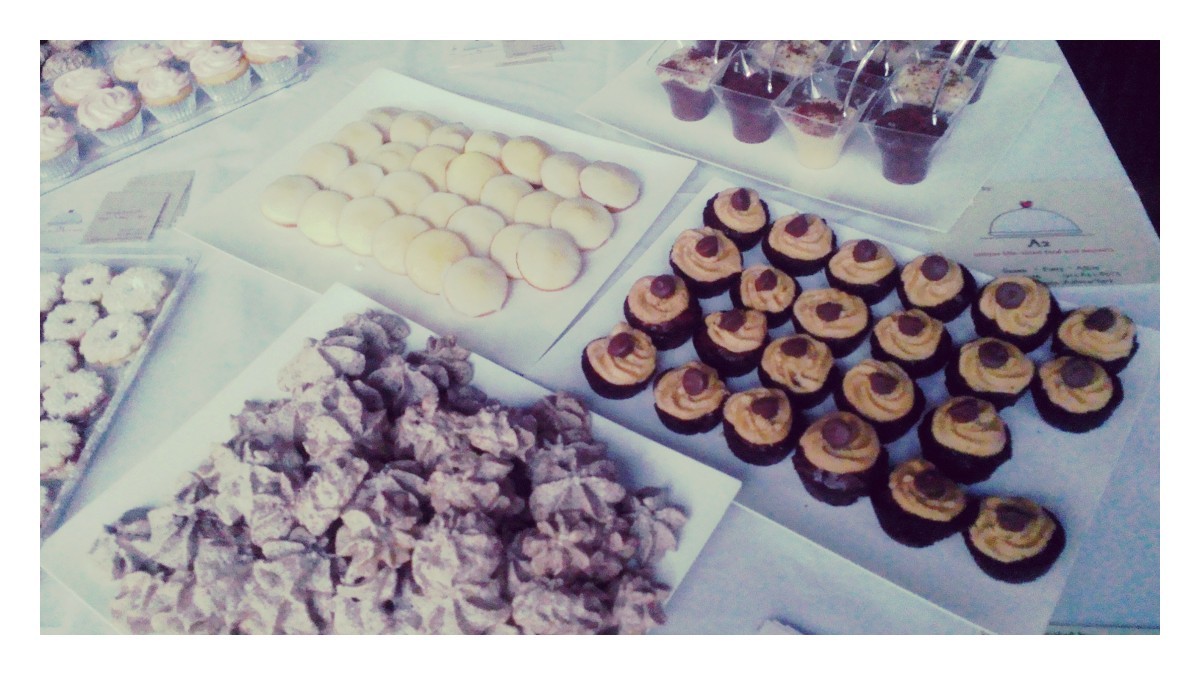
Pizza was provided by Patsy’s (so good with that fresh basil!) and dessert by A2 (the peanut-butter cupcakes were to die for!).

Lomogram_2013-09-04_09-20-54-PMIn full disclosure, the organizers of the Greek American Fashion Week invited me to cover the Greek American Fashion Week events.


On the Road Turns 56

5 Sep

OnTheRoadimage of the first edition via Wikipedia


After years of work and years of trying to find a publisher, Jack Kerouac’s On the Road was published by Viking Press on this day in 1957.

Clip: A Time to Give Up

5 Sep

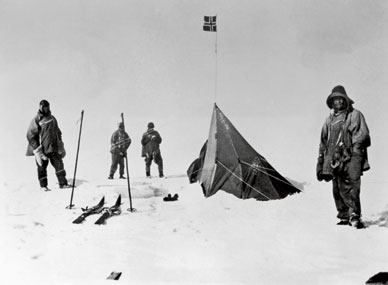
Indelible-South-Pole-expedition-388-thumbPhoto of Robert Falcon Scott’s failed exploration via The Smithsonian‘s article “The Doomed South Pole Voyage’s Remaining Photographs,” which states: “Their return trip would become one of the most dismal failures in the annals of polar exploration.”

Burnside published my latest art post in the “A Time to…” series. It’s

A Time to Give Up


In case you missed the previous posts in the series. They are:

A Time to Search

A Time to Embrace

A Time to Refrain from Embracing

A Time to Gather Stones

A Time to Scatter Stones

A Time to Dance

A Time to Mourn

A Time to Laugh

A Time to Weep

A Time to Build

A Time to Tear Down

A Time to Plant and a Time to Uproot

Writing Wednesday: There Will Be Twerking at Brooklyn Book Festival

4 Sep

310aVv9nW8L._SY300_

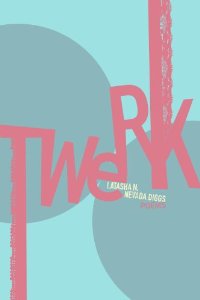
It may not be the VMAs, but the Brooklyn Book Festival isn’t your mother’s book club. The festival announced its schedule of events last week, and, yes, there will be twerking … or rather, the author of TwERK, LaTasha N. Nevada Diggs, will be on the panel Poetry in Performance. Here’s TwERK‘s overview, in case you aren’t familiar with it:

TWERK unveils an identity shaped by popular media and history, code switching and cultural inclusivity. The poems, songs, and myths in this long-awaited first book are as rooted in lyric as in innovation, in Black music as in macaronic satire. TWERK evokes paradox, humor, and vulnerability, and it offers myriad avenues fueled by language, idiom, and vernacular. This book asks only that we imagine America as it has always existed, an Americana beyond the English language.

“Here it is: a dope jam of dictions; a remixed, multicultural, polyphonic dance of vocabularies; a language of high stakes, hi-jinx, and hybridity. TWERK is subversive, vulnerable, and volatile. TwERK twists tongues. TwERK tweaks speech. Reading these amazing poems mostly makes me say, Wow! Open your ears to take this music in, open your mouth to say it out loud. And: Wow!”—Terrance Hayes

The Poetry in Performance panel will also feature Tyehimba Jess (leadbelly), Taylor Mali (The Last Time As We Are), and Quincy Troupe (ErranCities) and is moderated by Mary Gannon of the Academy of American Poets.

Performance has long been an essential part of poetry. The great ancient epics were told through oral storytelling or sung. It’s believed that Homer’s The Odyssey, for example, was brought to life by a professional performer known as a rhapsode, who improvised according to his audience.

Readings expose works to new audiences. They can make the words on a page feel more personal as the audience hears the intonation of the author’s voice and connects with him or her.

Allen Ginsberg’s “Howl” stands on its own as a great poem, but hearing him read it aloud makes it that much more powerful.

It’s sometimes been said, though, that writers are their own worst readers. This is because writing and performing are two very different skill sets.

Some poets love open mics and performing their works, but not all do. Many introspective writers envisioned a life of sitting alone in a room with a cup of steaming hot coffee as their fingers flew over a typewriter; not a life shuttling from bookstore to coffeehouses to give readings to bored patrons. Yet, many authors today are told to give readings, appear on radio shows, and sell their work.

The blogs have been abuzz about Miley Cyrus’ twerking at the VMAs, and some, like Pakalert Press, have blamed her handlers, like her father, Billy Ray Cyrus, did a few years ago. We like to think of poetry performance as being on a higher plane, but, to play devil’s advocate, is it always so different? Isn’t performance just another form of marketing?

Is the proliferation of burlesque poetry an example of literary twerking? Are these female poets subverting expectations or unwittingly playing into them? Does slam improve one’s improvisation and literary techniques or has it simply become its own cliche style? Must a writer give into the agent/publicist/handler’s pressure to perform his or her work to succeed in today’s literary landscape?


More Writing Wednesday posts here.


Kill Your Darlings Gets the Cartoon Treatment

3 Sep

Kill Your Darlings, a film about a murder, isn’t the first film I’d personally think of for a cartoon treatment, but Randeep Katari created a cartoon image for it that’s actually pretty thought-provoking. You can view it here.