Archive | Writing RSS feed for this section

Writing Wednesday: Publication Therapy

30 Jan

The other day I was updating my submissions spreadsheet. Yes, I’m that big of a nerd. The spreadsheet tracks the articles, essays, and other creative works I’ve written, so at a quick glance I can tell what I have to pitch, where I’ve submitted it, and when—if at all—I’ve heard back from a publication.

There are a lot of blank rectangles on the spreadsheet.

In the past, the blank rectangles used to indicate that I had yet to submit my work. Rejections seemed scary so I wouldn’t even submit to journals because I was so worried the editors wouldn’t be interested in my work. This meant my work had zero chance of getting published. When I became an editor myself I realized how much editors depend on writers. It’s not this terrible power struggle I’d imagined. Editors really want to like writers’ work. They want to publish us. Getting a rejection doesn’t mean they hate us. If you want to have your work published, you have to send it out.

After a while, though, it was the “accepted” column that had the blank rectangles. I carefully sent queries or unsolicited manuscripts out and then suffered to hear from someone—anyone! Opening my mailbox and refreshing my inbox became subtle forms of self-torture, as I never knew when I’d hear back from a publication and what the news would be.

But more frequently I’ve been getting rejections. This is not a bad thing! I’ve come to realize that the greatest writers have gotten rejections. Jack Kerouac couldn’t get On the Road published for years. Stephen King nailed all his rejection letters to the wall, the stack growing larger and larger before he found fame.

I just read an article in Bloomsberg Businessweek about a guy named Jia Jiang who is doing a project called 100 Days of Rejection Therapy, in which he opens himself up to rejection at least once a day in order to desensitize himself to the pain of rejection so that he can go after his dream. The concept is attention-grabbing, and I think there are some valuable lessons to learn from it about courage and perseverance. There are also fundamental flaws to this approach, though. It’s easier to not get hung up on a rejection when you’re not invested, and in this case the rejections Jiang is receiving have nothing to do with his real dream. Furthermore, the project title itself suggests and attracts self-defeat. Although Jiang hasn’t gotten rejected from everything he’s tried, he believes he will be rejected. Although his rejection therapy is supposed to give him the courage to not let fear of rejection keep him from pursuing his dream, it essentially is saying that he thinks he will get rejected. Otherwise, why not call it Achievement Therapy? Or Success Therapy? Or Acceptance Therapy?

Also, as the article itself points out, there are valid reasons for rejection and we can learn from them:

But career coach Nemko suggests Jiang focus on what made the initial investor balk. “I have clients who apply for a number of jobs [and] who get rejected a bunch. They like to brush it off, like, ‘Oh, it’s the economy,’ but I say: ‘Take a look at yourself. Do you need more skills? What’s your employment track record? Are you obnoxious?’”

Back in 2011, I blogged about how Kathryn Stockett’s The Help was rejected sixty times. Here was someone who was truly invested in her work, and yet she didn’t start asking donut makers to do strange things to her donuts in an effort to build her confidence in her writing abilities and achieve success. She actually took a good long look at why she was getting rejected and revised her work accordingly.

Sometimes you need criticism, even if it comes in the form of a rejection, to improve your work. Other times, there may be nothing wrong with your work, but it’s just not the right fit for that publication at that time. It happens. It’s worth being part of a writing group and getting honest feedback on your work from more than one person who is not your mom.

Lately, the rejections I’ve been getting have come with personalized notes that say things like “great story but it’s not timely enough” or “great writing but it’s not for us. Feel free to submit again in the future.” I don’t like getting rejections, but I have learned from them. I’ve taken the comments I’ve received from editors and revised my works. I’ve grown as a writer, and even when my work isn’t what the editor wants, I know it’s getting closer to hitting the mark.

The other day when I was updating my spreadsheet, I smirked at the callousness with which I treated my rejections. There was a time when I would’ve taken them so personally, but now I realize that rejections come with the territory.

This applies to life too. No one ever did anything great in life without taking a risk.

Nominated for the Blog of the Year Award 2012

9 Jan

I was nominated for the Blog of the Year Award 2012!

Special thanks to Tarisai from Writersfield for the nomination. It’s amazing how much social media has influenced my life and work, connecting me to other writers, bloggers, and readers.

The Light Holds Harvey Shapiro

8 Jan

9780819560964_p0_v1_s260x420

I have just learned that Harvey Shapiro passed away yesterday.

Shapiro, whose first language was the endangered language of Yiddish, is the person who suggested Martin Luther King, Jr., compose a letter while he was in jail. The result was “Letters From Birmingham Jail,” which Shapiro wasn’t able to get published at The Times Magazine, where he was editor, but which was published by The Christian Century, among others.

Shapiro was a poet in his own right, crafting poems both witty and profound and oftentimes reflecting on life in New York City. Born in 1924 and obtaining his master’s degree in American literature from Columbia University in 1948, he was a contemporary of the Beats. He served in World War II and edited the volume Poets of World War II.

I had the good fortunate of hearing him speak at McNally Jackson Books two years ago. One of the big takeaways I had was that one must persevere in writing. Here was someone who even in his eighties was still engaged in the literary community and encouraging writers.

The How-To Books in Men’s Apartments

26 Dec


The other day a friend invited me over to his apartment for the first time. As I surveyed the apartment—Christmas lights as everyday decorations, a well-stocked bar, a computer as the focal point of the décor: the essential makings of a man cave—I spotted a bookshelf. When I’d first met him, we’d talked about literature, and I’d been impressed by what he was reading at the time and by his exemplary knowledge of literature. I walked over to the skinny bookshelf, thinking I’d find inspiration for my next read, but instead I discovered a bunch of how-to books related to his profession. It was an interesting insight into who he is.

About a month prior to this, I visited another friend’s apartment for the first time. She’s subletting a furnished place from a guy who had multiple get-your-body-in-shape-without-even-trying books. I’d never met him yet I automatically judged him by the books on his shelf. One book about working out is acceptable to me. Multiple books that make promises of getting a ripped bod without breaking a sweat made me think he’s not only boring but also delusional. I bet he’s the type of guy who orders pepperoni pizza from chains and takes girls to Dave & Busters on dates.

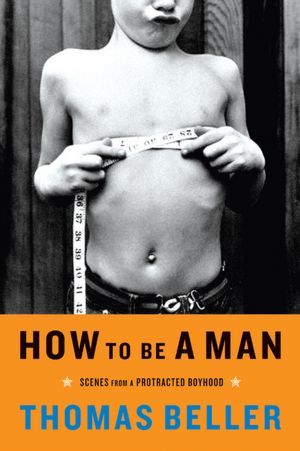
Having snooped around people’s apartments, I’ve noticed that women generally devote more space in their apartments for housing their books. They tend to have kept the books they read in college as well as added new works of fiction, memoir, and photographic cookbooks. Men, more than women, have how-to manuals on their bookshelves. Of course that’s not always the case. The people I know with the most books are men, and they’re men who read fiction, poetry, and criticism. In fact, I know one man who supposedly has a whole apartment just for his books. I haven’t seen it with my own eyes, but I don’t doubt it. It’s just that these men are fewer and farther between.

Titles Impact Sales: The Many Titles of On the Road

20 Dec

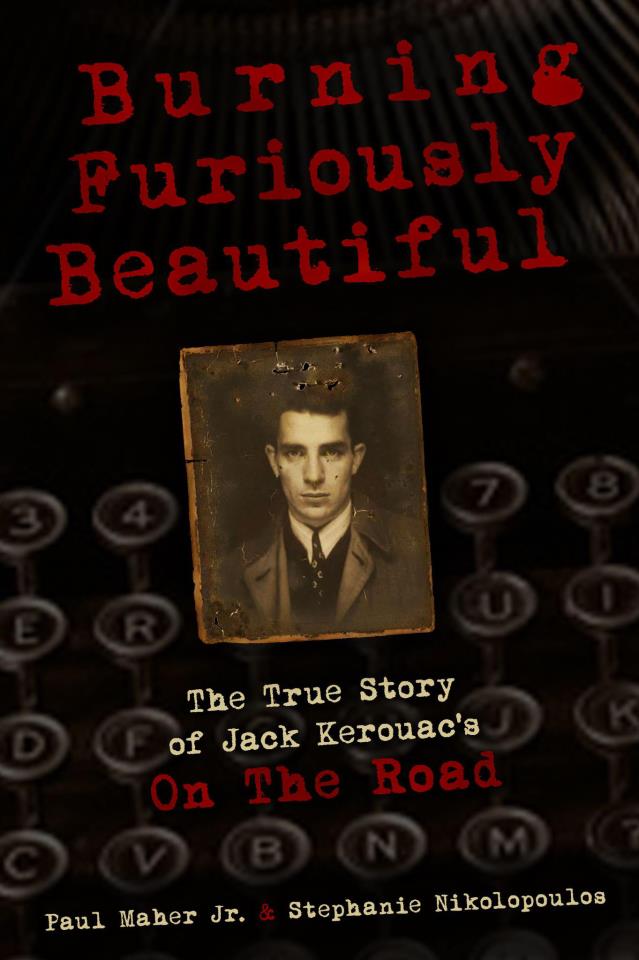
At the premiere reading of Burning Furiously Beautiful: The True Story of Jack Kerouac’s On the Road, I read a section from a chapter that mentioned that Kerouac titled an early draft of his road trip novel Gone on the Road.  Isn’t it amazing how one word can completely change the perception of a work?

What I didn’t mention at the reading is that this wasn’t the only incarnation of the title.  At another point, Kerouac considered changing the title so that it reflected the rock music that was emerging at the time.  Considering how influential jazz music was on his writing style and on the content of the book, it’s better that the title wasn’t changed just to capture a certain market.  It’s always better to remain true to your voice and vision.

The title On the Road is perfect.  And yet in another way it’s just so … obvious.  So literal.  I wonder if his work were being published for the first time today, if an editor would change the title to something flashier.

Jazz for Peace

10 Dec

When my dear friend Sue, whom I’ve known since first grade, invited me to a jazz show fundraiser I immediately said yes. As I’ve been studying Jack Kerouac, I’ve been reading a lot about how he frequented the jazz clubs of Harlem and wrote jazz reviews. I’m kind of a method writer, and I like to get out and experience what I’m writing about. And of course it’s great to be able to help others just by doing something you love — listening to music and eating great food. And when I say great food, I mean they had fried olives stuffed with blue cheese! Afterwards, I asked Sue if she’d be interested in doing a little write up, and she not only agreed but was so enthusiastic about it.  Below she shares about this worthwhile fundraiser, the great music, and the cute moment we shared with people at our table:

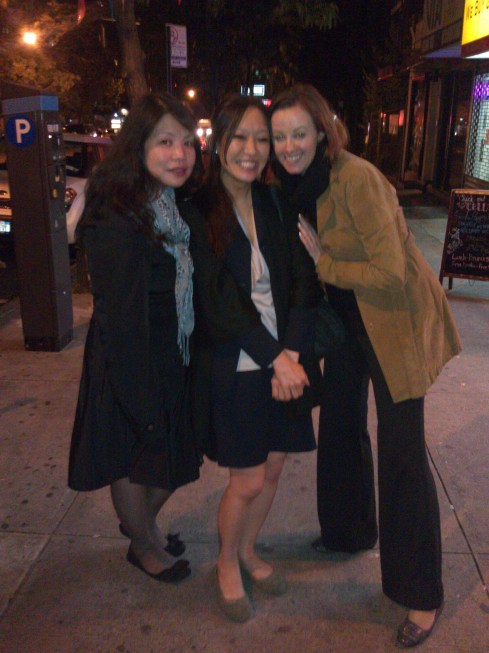
Jack, Josie and I hurriedly rushed into the restaurant.  We finally arrived at Lura Restaurant Lounge at 949 Columbus Avenue (Duke Ellington Blvd and 106th Street), way uptown.  We were running late for the Jazz for Peace Event, the Global Alliance for Community Development’s (GACD) 2nd Anniversary Fundraiser.  Jack serves on GACD’s Board of Directors, and the three of us work for the same company in midtown, where we were rushing in from.  I was to meet my friends, Mike and Stephanie, at Lura by 7pm.  I walked in and looked around.  To my left, Steph sat alone at a table, dressed in black, buried deep in a book.  Mike was off to my right at the bar, looking directly at me and smiling. 

Josie and I gathered Mike and joined Steph at the table.  I know them; they know of each other.  The usual chatter ensued, and drinks and food were ordered.  Lura has an exceptional menu, and we had a hard time deciding what to get.  Everything looked (and was) scrumptious.  As we settled in, David McCoy, Executive Director of GACD, stood up in front of the room and talked about the work they are doing and aspire to do and the results of their labor up to that point.  One of the most inspiring initiatives that he described was the water programs GACD has designed in collecting and filtering rainwater for communities. It made one feel so proud to be a part of this great cause in some way and was an appropriate reminder of what was going on outside of the room.  He turned our attention over to Rick DellaRatta and Jazz for Peace* and, appropriately for a late October evening, they opened up with “Autumn Leaves.”

I noticed that Josie was talking to an elderly couple at the next table.  The man was keeping half-time with his hand on the table and on his knee, joking that the music was too fast for old people to dance to.  Josie, who was sitting closest to the woman, was deep in conversation, probably partly due to the fact that one could hardly hear anyone unless he or she was right next to you.  After a few moments, Josie revealed to us that this couple happened to be, in fact, the parents of the keyboardist and vocalist, Rick DellaRatta.  The man, DellaRatta’s father, had been a musician in the War, and his wife, DellaRatta’s mother, was a pianist who had played with him.  They’d been married for over 50 years.  DellaRatta’s father displayed so much insight into the music being played, the technicalities of it, how each instrument contributed to the overall sound.  The bassist plucked away, with all ten fingers at one point.  The drummer, who looked like a teenager, blew everybody away with the seeming madness of his drumming.  He paused and syncopated with so much force, yet absolute grace and control.  The saxophonist, who stood in front, slightly to the right of the stage, whenever I looked over at him, would just be standing there, still, looking out at the audience.  Every so often, you’d hear him first, the singing, soaring sounds of the sax, running up and down the octaves where his fingers, all of a sudden, were a blur, a complete contrast to his previous state of inertia.  The energy emanating from the stage forced one to stop what one was doing, or even thinking about, and to just feel the music, to let the symphony flow through you and move you.

The next day at work, Jack and I agreed that the night was too short.  Josie and I were anxious to see the pictures Mike had taken of us inside and outside the venue. 

4

Please see links for more information on GACD and how you can help support them and their more-than-worthy cause to combat poverty.  Hope to see you at GACD’s 3rd Anniversary Fundraiser!

Sue J. Chang lives in Manhattan, NY in Battery Park City and publishes mixes on 8tracks.com.

* Via: On September 25, 2002 Jazz pianist and vocalist Rick DellaRatta was invited to lead a band consisting of Israeli, Middle Eastern, European, Asian and American Jazz Musicians in a concert inside the United Nations for an International audience in what is now considered one of the significant cultural events of our time. Rick named this band JAZZ FOR PEACE™ and has since performed over 800 Benefit Concerts to raise funds, publicity and awareness for outstanding organizations in need worldwide. In addition Jazz for Peace performs educational programs bringing music and Jazz back into the schools and donates musical instruments to underprivileged children. Jazz for Peace concerts have featured Rick DellaRatta along with such notable jazz artists as Paquito D’Rivera, Victor Lewis, Lenny White, Eddie Gomez, Dave Valentin, Ray Mantilla, Rick Margitza and many others. Mr. DellaRatta’s Jazz influenced orchestral composition “Permutata” was recently recorded by the London Symphony Orchestra.  For more information please visit http://www.jazzforpeace.org


Gift Guide for Writers

5 Dec

Please don’t buy me a book for Christmas.  Instead buy my book, Burning Furiously Beautiful, in large quantities and give it out as gifts.

Burnside published my Gift Guide for Writers.  Enjoy!

Where Is Knowledge Inherent?

28 Nov

“Knowledge was inherent in all things. The world was a library and its books were the stones, leaves, grass, brooks and the birds and animals that shared, alike with us, the storms and blessings of the earth….”

~ Luther Standing Bear, Lakota tribe

I read this quote in The Sacred Wisdom of the American Indians by Larry J. Zimmerman and thought it was just lovely.

Thanksgiving and Lamenting

22 Nov

image via Burnside Writers Collective

Super impressed by all of you who were already posting photos on Facebook last night of delicious-looking Thanksgiving food.  I saw “papou’s stuffing” and “maple-glazed brussels sprouts” and pie galore.  My family was always in charge of bringing dessert and liquor.  We’d pick up the cake — no pie from us; it had to be chocolate cake — along the way.  The Glenlivet was already in the closet.  I’m carrying on the tradition.  No measuring and mixing going on over here.  I’ll stop and pick up some wine along the way to my aunt and uncle’s.

This Thanksgiving season, I’ve been seeing a lot of daily posts on Facebook on what people are thankful for, which is a great practice and quite beautiful. However, I also have a lot of friends who are going through significant struggles. It’s okay to feel sad, hurt, angry, or frustrated. It’s important that we acknowledge that our lives don’t always go as planned and that we don’t pretend that our lives are perfect. Sometimes on Facebook, it’s easy to get the impression that people’s lives are so much better than our own, but we don’t always know what’s going on behind the scenes.

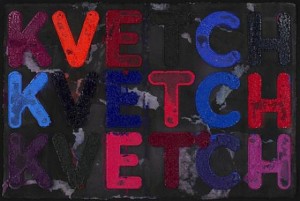
I’ll confess that I was a bit “jealous” of my colleague, Emily Timbol, who wrote this article on lament and thanksgiving: “Let’s Have a Kvetch Fest.” Her writing career is going really well. She writes for the Huffington Post, has participated in radio interviews, and has made great progress with her book. I’m happy for her, but at times frustrated with my own writing. In this article, she shares her frustrations with her writing. This does not bring me joy. I think she has an important story to tell and has an engaging voice, and I want her to succeed. Her honesty, though, was a good reminder to me not to compare myself to others and not to be so hard on myself. I share all this because I believe it’s important to be thankful even in the difficult times, however I also believe that when we’re open with each other we learn that we’re not alone in our struggles, our fears, our frustrations, our sadness, our loneliness, our insecurities, and on and on.

The Next Big Thing Blog Hop

21 Nov

I am so excited to have been tagged by Maria Karamitsos for the The Next Big Thing Blog Hop.  Even though I’m not a mother, I love reading Maria’s blog From the Mommy Files, which is full of humor and light.  She has the gift of storytelling.  Her blog entries read like snippets of a novel-like memoir, with dialogue, reflection, and a strong voice, despite the fact that much of her writing is focused on what could be a very technical topic: molar pregnancy.  Take for instance, her post “The Influence of the Lost Child,” in which she talks to her two adorable little girls—”BooBoo BeDoux” and “Bebs LaRoux”—about the baby she miscarried.  It’s a difficult and heartbreaking subject, yet she injects humor in it through the personalities of her daughters (“it’s tough to be 3, after all!”) as well as tenderness and faith.  I’m really excited about the book she’s writing called Positive About Negative: Adventures in Molar Pregnancy.  Maria also tagged some other Greek authors for the Blog Hop, and it’s great discovering all these writers.

I’m tempted therefore to write about my memoir about being Greek American, but since my book on Jack Kerouac is coming out first my answers to the Blog Hop questions are about that book.

What is the working title of your book?  Burning Furiously Beautiful: The True Story of Jack Kerouac’s On the Road

Where did the idea come from for the book?  Paul Maher Jr. had written a book entitled Jack Kerouac’s American Journey: The Real-Life Odyssey of “On the Road” for the fiftieth anniversary of the publication of Kerouac’s seminal work.  I had read this book one summer and some months later began reading Paul’s blog.  We began talking and decided to revise and expand his book because we knew that a film adaptation of On the Road was coming out and we wanted to provide a resource for those interested in finding out more about this famous novel.  It was important to us that the book had a strong narrative, contextual information, and new research because we wanted both the teenager turned on from the film and the literary scholar who’s read every book by Kerouac to enjoy it and find value in it.

What genre does your book fall under?  It’s literary criticism and biography.

Which actors would you choose to play your characters in a movie rendition?  Isn’t that the million dollar question?  There’s been a lot of talk over the years about who should play Sal Paradise and Dean Moriarty in the film adaptation of On the Road.  Johnny Depp, Brad Pitt, Colin Farrell, Marlon Brando, you name it, they’ve been associated with it.  I almost never go to the movies and don’t really know the young actors of today well enough to say who would be age appropriate to cast.  Joseph Gordon-Levitt?  Zac Efron?  These actors are too old to play the roles now but if I were casting the film back when I first read On the Road as a teenager, this is who I’d pick:

  • Sal Paradise — Johnny Depp and Ethan Hawke would be excellent choices for Sal Paradise, particularly because they both have a deep appreciation for literature.  Depp is a known Kerouac fan and just started his own publishing imprint, and Hawke is a published author.
  • Dean Moriarty — Woody Harrelson would make a great Dean Moriarty.  He can play both earnest and wild so well!  Matthew McConaughey would be great as Dean too.
  • Carlo Marx — I loved James Franco’s portrayal of Allen Ginsberg in Howl, but if I had to select someone else I might go with Adam Goldberg.
  • Old Bull Lee — The choice of Viggo Mortensen as Old Bull Lee for the Walter Salles film is brilliant, but again if I had to choose someone else maybe I’d with Ewan McGregor.
  • Marylou — Drew Barrymore would be so much fun to watch as Marylou.  Do you remember her in Mad Love and Boys on the SideAlmost Famous hadn’t been made yet when I was a teenager but Kate Hudson (think Penny Lane) would be my runner-up pick.


What is the one-sentence synopsis of your book?  Burning Furiously Beautiful tells the true story of  Jack Kerouac travels on the road and how it took him years, not weeks, to write On the Road.

Will your book be self-published or represented by an agency?  We decided to self-publish Burning Furiously Beautiful.

How long did it take you to write the first draft of your manuscript?  The first draft, so to speak, had already been written and published as Jack Kerouac’s American Journey.

What other books would you compare this story to within your genre?  There have been so many biographies of Kerouac written over the years, and each offers its own perspective.  Burning Furiously Beautiful uses Kerouac’s journals and letters, as well as archival material from other people who knew Kerouac during the time he was on the road and writing On the Road, to tell a the specific story of the making of a novel that continues to generate interest today.

Who or What inspired you to write this book?  Obviously, Paul Maher Jr. inspired Burning Furiously Beautiful as it was his original idea.  I, however, had been researching and writing about Kerouac since I was an undergrad many years prior to this and brought my own knowledge and skills to the project.  I was very much inspired by the fact that the film adaptation is soon to be released here in the States.  There’s a whole new generation coming to Kerouac’s literature, which is immensely exciting to me.  Reading Kerouac when I was in high school opened up so many possibilities for me as a reader and writer.  I hope that the film will pique people’s interest so that they’ll go back and read Kerouac’s books for themselves—not just On the Road  but his other great works as well—and that they’ll watch Pull My Daisy, the film that Kerouac himself spontaneously narrated.  Burning Furiously Beautiful is important because it contextualizes On the Road and provides a fascinating look at Kerouac’s life and writing process.  This is critical because there’s so much myth surrounding Kerouac and the 1950s.  I became engrossed in odd little details like the fact that the Kerouac’s didn’t have a phone and took their calls at the store below their apartment in Queens.  It’s so different than today when it seems like every middle schooler has a cell phone.  If Cassady could’ve just called Kerouac up on his iphone, he might not have written the infamous Joan Anderson letter that spurred on Kerouac’s writing style.

What else about your book might pique the reader’s interest?  Burning Furiously Beautiful is a great book for an aspiring writer, regardless of whether or not you like Kerouac’s writing style.  It’s a portrait of a young writer and details how his writing voice developed (his first book has a much different style), what his writing routine was, the editing process (yes, there was one!), what his relationship with other writers and editors was like (imagine lots of parties), and the many false starts he had in writing his book.  We even talk about book signings, contracts, and press interviews.  Sometimes I’ve felt frustrated with various writing projects of mine, but realizing that Kerouac, who purported to have written On the Road in only three weeks, went through some of the same struggles and took years to find success makes me realize that it’s all part of the writing process.

I tag:

Emily Timbol

Nana Ekua Brew-Hammond

Larry Shallenberger 

Michael D. Bobo

Check them out!  They’re each really different from each other.