Tag Archives: Beat Generation

Prepping for Hurricane Sandy

28 Oct


Just got word that the MTA is shutting down at 7 tonight for Hurricane Sandy.  Doesn’t make much difference to me.  I’ve been stuck sick in bed for two days.  Yesterday, started out well enough.  I went to Barnes & Noble and got a Pumpkin Spice latte and Dutch Apple cheesecake and then braved the grocery store.  Grocery shopping in New York City is always a nightmare with too many people and tight aisles, but yesterday was nuts as people were preparing for the storm.  It was like trying to shop the day before Thanksgiving.  I bought ingredients to make broccoli soup from a recipe out of one of the cookbooks I edited and fortunately made it before I got to feeling too sick so now I don’t have to cook at all.  I can just sit in bed and watch a million episodes of Color Splash, my favorite interior decorating show, and dream up my perfect home.

Are you prepared for Hurricane Sandy?

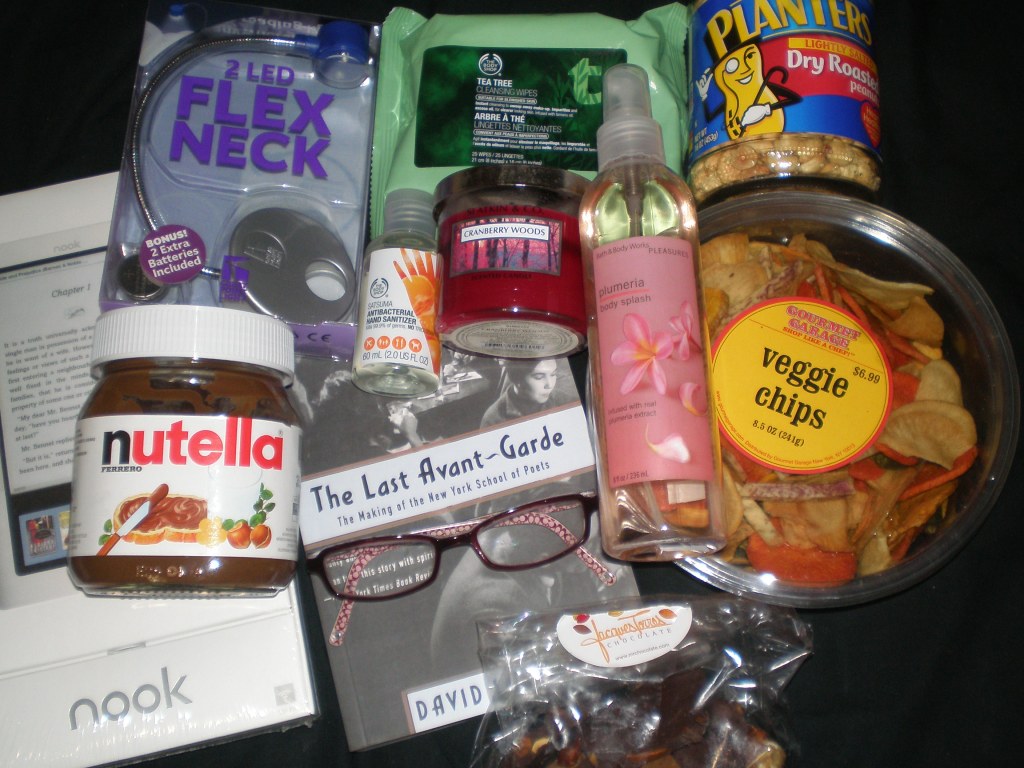
If you’re like me and totally unprepared for any sort of emergency and don’t own a flashlight, shame on you!  By now, all the flashlights are gone.  Even finding candles in the drugstores is getting hard.  Get creative.  Barnes & Noble* sells a wide variety of battery-operated reading lights.  Just because it’s for reading, doesn’t mean you can’t use it to find your can opener if the lights go out.

While you’re there, pick up the Barnes & Noble* ereader the nook if you don’t already have one.  Charge it up pronto and download some books.  If the power is out for a long time, you’ll have plenty of reading material.  My book recommendation is Jack Kerouac’s Dr. Sax perfect for Halloween.

It’s still a good idea to have some candles on hand.  If you can’t find any at the drugstore or grocery store, that’s okay.  Class it up with some scented candles from Bath & Body Works.  I picked up the Cranberry Woods and Lemon ones during their 2-for-1 sale.

Speaking of scents, if we don’t have access to water that means you won’t be able to shower.  I suggest some perfume or body splash to keep you smelling fresh.  I’ve got Bath & Body Works‘ Plumeria body splash (which always makes me think of my Hawaiian friend from undergrad).

Now you may not be able to wash your hair but you can use an oil-absorbing dry shampoo.  I’ve used the TRESemme dry shampoo with mixed results.  That said, I do favor their regular shampoo and condition.  And, they don’t test on animals.

Another great animal- and eco-friendly company is The Body Shop, where I’ve been shopping since middle school.  I love the Tea Tree Oil line, and today stocked up on their cleansing wipes in case I won’t have access to water to wash my face.

While at The Body Shop, I also picked up anti-bacterial hand sanitzers in my most favorite scents satsuma and pink grapefruit.  I normally advise against these sorts of anti-bacterial hand sanitizers because I fear using it will lead to the creation of a resistant super-bug, but hey, you’ve got to have clean hands somehow if there isn’t good old-fashioned soap and water.  Plus these ones smell amazing, unlike some brands that smell like rubbing alcohol.

If you wear contacts, keep your stylish glasses in an easy to locate place.  In fact, make a to-go bag of all your critical necessities (medication, keys, cash, etc.).

Now in terms of food, non-perishables does not have to mean SPAM!  There are lots of great foods that are either non-perishable or that don’t require cooking.  Go Greek with canned domathes, Kalamata olive spread, raw almonds, honey on bread, and sesame candies.

How are you staying storm stylin’?


*I work for a subsidiary of Barnes & Noble.
Road Trip: Sea Lions and Sea Otters on the Northern California Coast

19 Oct


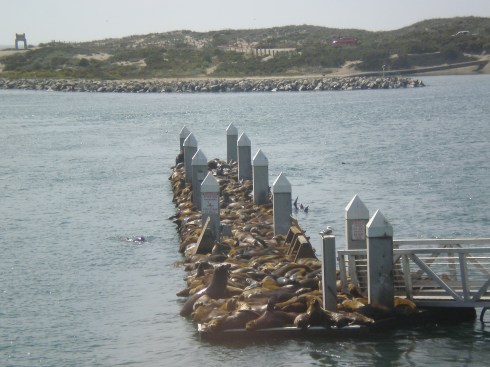
I’m a total sucker for cute animal videos, and a while ago I came across this video of a sea lion that falls in love with a woman on the beach.  I’m not sure where it was filmed, but I thought of it when I spotted sea lions while road tripping down Highway 1.

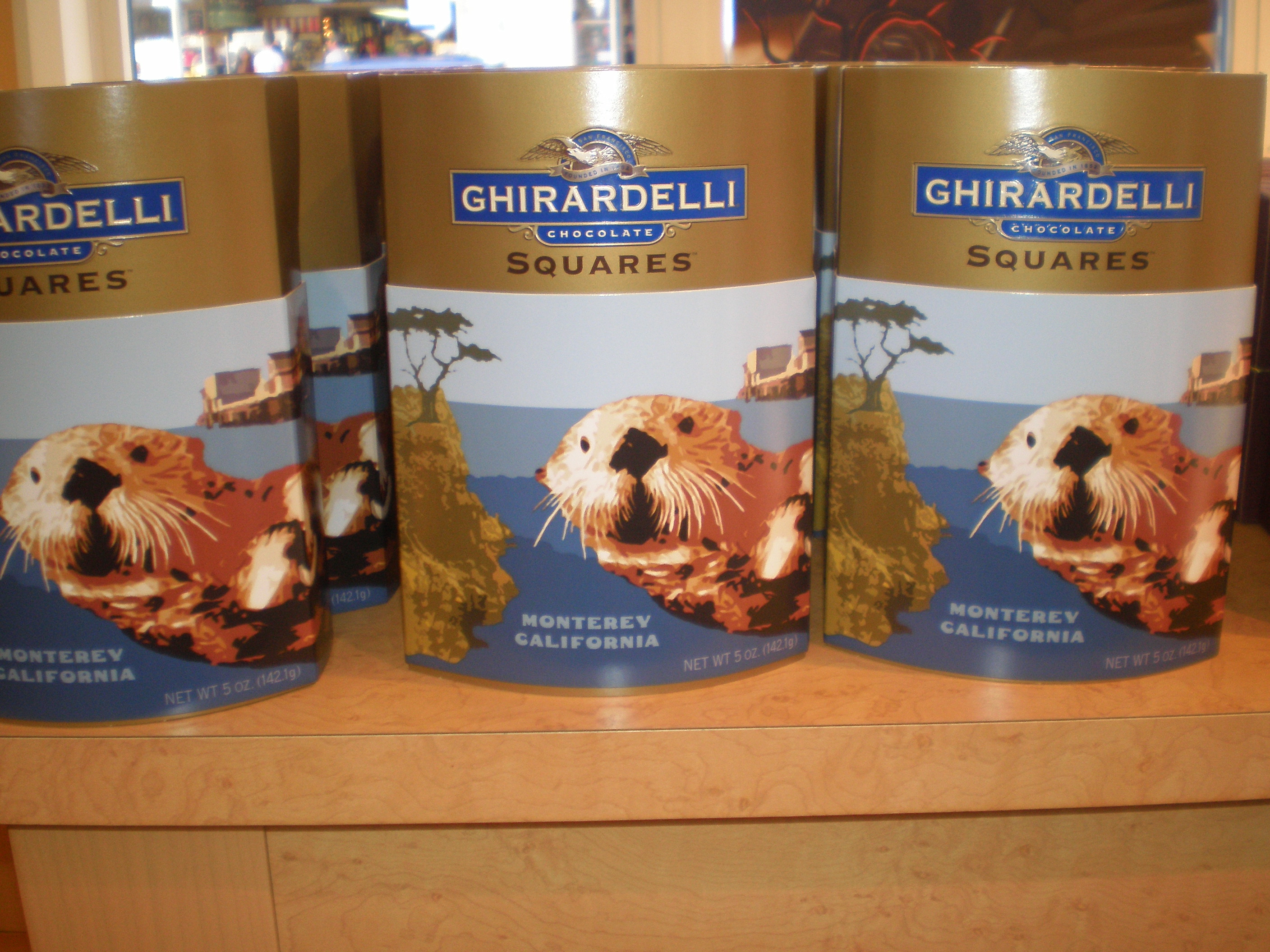
Even cuter than sea lions, though, are sea otters, which are also native to that magnificent stretch of Northern California coastline.  Unfortunately, the lives of sea otters have been in danger due to disgusting toxins flushed into the ocean.  The Sea Otter Alliance is a good resource for finding out more about these adorable animals.  The Monterey Bay Aquarium offers helpful information on California coastal protection, sustainable seafood, and saving sea otters.  According to the Monterey Bay Aquarium website’s sea otter page:

Southern sea otters once ranged from Baja California to the Pacific Northwest. But by the 1920s they were considered extinct due to intensive hunting. They were listed as “threatened with extinction” under the Endangered Species Act in 1977. But despite decades of federal and state protection, the population of southern sea ottersAnimal Guide(Enhydra lutris nereis) which resides along the California coast, struggles to survive at a fraction of its historic numbers, estimated at 16,000-20,000 animals. No one knows why the population isn’t recovering. Pathogens and parasites, possibly linked to coastal pollution, can weaken otter immune systems. And the risk of a major oil spill remains a serious threat.


Jack Kerouac obsessed over the death of a sea otter in his novel Big Sur.  After On the Road became such a huge success that fans were literally arriving on Kerouac’s doorstep, the author retreated to nature, staying at his friend Lawrence Ferlinghetti’s cabin in Big Sur.  Kerouac was a man who loved animals, going to the extent of putting out food for wildlife.  He was drinking heavily at the time and the novel documents a dark period in his life.  Death becomes a constant threat, and foreshadows his own premature death, as he sees animals all around him die.  One in particular is a sea otter that washes ashore, which he mentions time and time again in the novel.


Overarching Writing Tip from Big Sur Writers: Don’t Censor Your First Draft

17 Oct

If you’re a frequent visitor to this site, you’re probably a fan of the Beat Generation, which means you’ve probably read Jack Kerouac’s Rules for Spontaneous Prose.  In a recent fit of procrastination, I stumbled upon Henry Miller’s Commandments while browsing the blog a lovely being.  Then through a rabbit hole that began on Poets & Writers, I discovered John Steinbeck’s writing rules on brain pickings.

As I scoured their tips for jewels of wisdom, I considered whether there were any repeating schemes amongst the three authors, who each lived at various points in their career in the Monterey area of Northern California.  The theme that emerges is one of writing with the force of one of the ferocious waves in Big Sur—quickly, spontaneously, wildly, freely, bravely, deeply, purely.

John Steinbeck: Write freely and as rapidly as possible and throw the whole thing on paper. Never correct or rewrite until the whole thing is down. Rewrite in process is usually found to be an excuse for not going on. It also interferes with flow and rhythm which can only come from a kind of unconscious association with the material.

Henry Miller: Don’t be nervous. Work calmly, joyously, recklessly on whatever is in hand.

Jack Kerouac: Composing wild, undisciplined, pure, coming in from under, crazier the better

In other words, while you’re composing, just get it all out there on the page.  Don’t concern yourself with censoring your thoughts, diction, or punctuation.  You can always go back and fix things later, but for the first draft, at least, it’s better to let the story take shape naturally.

I’m generally not the type of person who subscribes to a set of writing rules, mainly because I believe everyone has their own technique and process, but I am a huge fan of lists.

Through Poets & Writers, I also discovered Kyle Minor’s “Advice to My Younger Self” and Margaret Atwood’s advice to writers, through which I consequently found similar lists by Zadie SmithElmore LeonardKurt Vonnegut, and David Ogilvy.

What are your tips for writing?

A Manhattan in Big Sur: Cocktail Recipe for Jack Kerouac’s Big Sur Manhattan

16 Oct

Big Sur tells the story of Jack Kerouac’s alter ego escaping the pressures of fame brought on after the publishing success of On the Road by hiding out at the desolate cabin owned by his friend, City Lights Bookstore owner Lawrence Ferlinghetti (called Lorenzo Monsanto in the novel).  Kerouac had a notorious sweet tooth, perhaps most noticeably evident by all that delicious apple pie a la mode he writes of eating in On the Road.  In Big Sur, his friends point out his taste for a sweet of a different sort—sweet drinks!

Kerouac’s drink of choice in Big Sur is the classic cocktail the Manhattan, which gets its sweetness from vermouth, orange bitters, and a maraschino cherry.  The Manhattan has been called “the drinking man’s drink,” though, probably because of all the whiskey in it.

Here’s the history of the Manhattan, as told by That’s the Spirit!:

Samuel J. Tilden was elected Governor of New York in 1874, and to celebrate, socialite Jenny Jerome threw a party at the Manhattan Club in New York City.  Jerome asked the bartender to create a drink for the occasion. The bartender mixed 1 1/2 ounces bourbon, 1 1/4 ounces each of sweet and dry vermouth, and a dash of bitters. It met with Jerome’s approval and she named the drink the “Manhattan,” after the club.  Jenny Jerome later earned her place in history as she later became Lady Randolph Churchill, mother of Sir Winston Churchill, one of England’s most famous Prime Ministers.  The Manhattan became a classic cocktail that has survived a number of changes over the years and is presently enjoying a comeback alongside its cousin, the Martini.

That’s the most popular version of the story, but of course, like most cocktail history, there are other versions of the story as well.

That said, there are also variations of Manhattans.  It can be made with rye whiskey or bourbon.  Although Big Sur doesn’t specify, Kerouac would probably have preferred the bourbon variety, since rye whiskey is more on the bitter side.  Likewise, there are different types of vermouth: sweet and dry.  The bitters can either be traditional Angostura bitters or Angostura Orange.  Some people add a lemon peel for garnish.

On almost any given page of Big Sur there is a reference to alcohol, as the book documents Kerouac gripped by the disease of alcoholism.  While many culture critics have accused Kerouac of promoting a nefarious lifestyle, Kerouac makes the dangers of alcohol quite plain in Big Sur as he portrays himself in deplorable states of breakdown.  In addition to the maraschino cherry, some bartenders will even add a bit of the cherry juice to the drink.  Yum!

Big Sur also describes Kerouac drinking a lot of port wine.  A Manhattan made with port instead of vermouth is called a Ruby Manhattan.  Since he frequented the famous Nepenthe in Big Sur, though, I’m going to go with their recipe.  It’s quite possible the restaurant has changed its cocktail recipe since Kerouac’s autobiographical novel was published in 1962, but their current Manhattan ingredients includes Makers Mark, sweet vermouth, and blood orange bitters.

Nepenthe doesn’t include the ingredient breakout, but based on other general Manhattan recipes, this is my take on Jack Kerouac’s Big Sur Manhattan:

  • 3 oz. Makers Mark
  • 2 oz. sweet vermouth
  • dash of blood orange bitters
  • a Maraschino cherry as garnish, but while you’re at it add a splash of cherry juice to sweeten

Stir the ingredients over ice, then strain into a cocktail glass (the Martini glass) to serve straight up. Garnish with the cherry.

Big Sur and the Best Laid Plans….

15 Oct

I just got back from a trip where everything seemed to go awry.

On my recent trip to San Francisco for a friend’s wedding, I had big plans to visit John Steinbeck’s Monterey, where Cannery Row is set, and Jack Kerouac’s Big Sur, where he spent time in his friend poet Lawrence Ferlinghetti’s cabin and the title of one of his books.  This idea, mind you, came after plans had already gone awry when I discovered none of my other friends were able to make it to the wedding or were flying in just in time for the wedding, leaving me with a few days to myself.  I’d been to San Francisco a few times and already done the big touristy things and the Beat literary things in the city (minus the Beat Museum, which wasn’t around the last time I was there–and which will have its own post coming up soon!), so I figured I’d take my literary wanderings a bit further south.

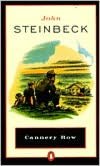
Steinbeck’s Cannery Row came out in 1945, two years before Kerouac made that first big trip out West.  Post-World War II, both Steinbeck and Kerouac spent time in the same area of California—Monterey, Big Sur, Salinas—and wrote about migrant workers, the working class, the down and out, absurd heroes.  Steinbeck writes of Cannery Row:

Its inhabitants are, as the man once said, “whores, pimps, gamblers and sons of bitches,” by which he meant Everybody. Had the man looked through another peephole he might have said, “Saints and angels and martyrs and holy men,” and he would have meant the same thing.

Steinbeck’s message is very much Kerouac’s as well.  Kerouac writes about “the holy con-man with the shining mind” and other Beat characters whom society might consider derelicts but whom he considers saint-like.

I planned to do a close study of Steinbeck’s Cannery Row and to reread Kerouac’s Big Sur to compare and contrast the places, characters, themes, and language.  Visiting a place can sometimes be the best form of research.  You see and hear things that aren’t in books, get a sense of proportion and distance, and see how the landscape has changed.  I wanted to see the land, to feel the sand between my toes, to have the salty ocean breeze whip through my hair, to smell the sardines.  I wanted to experience the rough terrain that so embodied Kerouac’s mind frame in Big Sur.

Unfortunately, a trip to Big Sur would not happen for me.  My plans went awry when I discovered that after Labor Day public transportation to Big Sur stopped running during the week and that the only tour that stops at Big Sur was sold out before I got to book it.  Discovering this two days before I was supposed to leave—okay, so they weren’t exactly “the best-laid plans…”—put a wrench in my itinerary.

Well, here’s my Pinterest inspiration board for Big Sur.

Here’s an article called “Steinbeck vs. Kerouac: Gentlemen, Start Your Engines!” from Big Think.

And here’s an article from Monterey County Weekly on the film adaptation of Kerouac’s Big Sur.

I was, however, able to book a different tour that at least went to Monterey.  I had to get up super early–did I mention there were several conferences going on in San Francisco so the only hotel I could find within my budget was an hour away?–to get to the 9am bus.  I got there right on time, getting one of the few remaining seats in the very back of the bus, on the side that wouldn’t have a good view.  …Two hours later, we were still in San Francisco.  The bus was blowing hot air through the vents and overheating–not great for all the senior citizens on the trip (oh, did I not mention the demographic was ever-so-slightly older?).  They brought in mechanics, and when they failed to fix it, we eventually got a new bus.  About half the people on the tour were so mad that their precious vacation time was wasted that they refused to get on and left the tour completely.  The good news: I got a better seat.

Here are a few pictures from Salinas and Monterey.

John Steinbeck references the aphorism “the best-laid plans of mice and men often goes awry” in the title of one of his other books, Of Mice and Men.  The phrase can be traced back to Robert Burns’ poem “To a Mouse”:

The best-laid schemes o’ mice an’ men
Gang aft agley

Don’t you love that eighteenth-century Scottish English?  (One day I will have to describe my misadventures in Scotland too….)

One of the things I love best about On the Road is Jack Kerouac’s candor that trips often do go awry.  When Sal Paradise, the narrator based on Kerouac, starts his first big road trip from the East Coast to the West, he has grand plans of traveling one great highway all the way there.  That doesn’t work out—nor does he even get out of state before having to turn back and come home again.  He’d been trying to hitchhike his way out of New York City and ended up stranded in a torrential downpour in Bear Mountain, one of the places my own family frequented when I was growing up.  Not one to let problems rain on his parade, Paradise/Kerouac heads back to New York City and buys fare for public transportation that will take him to the first leg of his destination.

Sometimes you just gotta keep on truckin’!  It’s a good lesson for traveling and for life.

What’s the worst that has ever happened to you on your vacation?

* * *

I’m reading tonight at 7pm at  The Penny Farthing (103 3rd Ave., downstairs in the speakeasy) here in New York City! This is a Storytellers event, hosted by C3.  I’ll be reading from Burning Furiously Beautiful: The True Story of Jack Kerouac’s On the Roadcoauthored with Paul Maher Jr.

“Beat Generation” Premieres during Lowell Celebrates Kerouac

10 Oct


Kerouac’s play “Beat Generation,” written the same year that On the Road was published, will also have its premiere tonight.  The event stage production is taking place during Lowell Celebrates Kerouac, the week-long literary where fans from across the country make their pilgrimage to Kerouac’s hometown in Massachusetts.

As The Guardian reports, until around 2005, Kerouac’s play “The Beat Generation” sat unpublished in a New Jersey warehouse. In 2006 Da Capo Press published the play, with an introduction by A. M. Holmes.  Kerouac, who had a great interest in film, never got to see his own play put on or his novels made into a film.

Merrimack Repertory Theatre (MRT) raised funds through Kickstarter to stage the play in Lowell and is presented with UMass Lowell.  It was made with “the support and collaboration of Kerouac Literary Estate representative John Sampas,” according to MRT.

The play centers around the same group of New York City friends Kerouac often wrote about, as they pass around a bottle of wine.  Perhaps even more so than his novels, which are rich in poetry, the emphasis in “Beat Generation” is on dialogue.  Kerouac had a great ear for the unique syncopation of everyday language and the lingua franca of the working class.  As Kerouac himself said:

One thing is sure: It is now a real play, an original play, a comedy but with overtones of sadness and with some pretty fine spontaneous speeches that are as good as Clifford Odets.

Odets (1906-1963) was a playwright raised in Philly and the Bronx who wrote such plays as Waiting for Lefty and Golden Boy.  Born to Russian- and Romanian-Jewish immigrant parents, Odets used ethnic language and street talk in his plays.  Arthur Miller said of Odets’ work,  ″For the very first time in America, language itself . . . marked a playwright as unique.″  Kerouac himself was the son of immigrant French-Canadian parents and made use of both ethnic language–his own joual dialect as well as Greek and Spanish–and street talk.

For information on the special events surrounding the play as well as tickets, visit MRT.

Lowell Celebrates Kerouac: The Typewriter

9 Oct


One evening, a student came into our writing workshop at The New School and announced he’d bought a typewriter.  We were all very impressed.

“What kind?” we asked.

“Where did you get it?”

Most of us were in our twenties or thirties and had grown up using computers.  Many of us had entire mini computers—smart phones—jammed into our pockets and purses at that very moment.  We’d attended readings in bars across Manhattan, where authors had read poetry off their iphones.

But a typewriter!  Now that sounded really literary.  The click-clack of the keys echoing in a bare-bulb room.  Allen Ginsberg’s first-thought-best-thought mantra forced upon a generation accustomed to the “backspace” button on our keyboards.  Facebook procrastination less accessible.

And the history!  Continuing the beautiful tradition of authors attached to specific models of typewriters.

This evening, the documentary The Typewriter will screen at the Lowell National Historical Park Visitor Center Theater (245 Market St.) as part of the Lowell Film Collaborative with Lowell Celebrates Kerouac.  Here’s a little bit about the film from its website:

Three typewriter repairmen the filmmakers have interviewed all agree that their business is better than it has been in years.

Perhaps it is a reaction to the plugged in existence of today’s 24/7 communications world. Perhaps it is mere nostalgia and kitsch. Perhaps it is an admiration for the elegance of design and the value of time-tested workmanship. And for some, like typewriter collector Steve Soboroff, it is the appeal of owning machines on which American writers like Ernest Hemingway, Tennessee Williams, Ray Bradbury, John Updike and Jack London typed some of their finest work. (He also owns typewriters once owned by George Bernard Shaw and John Lennon)

The film is directed by Christopher Lockett and produced by Gary Nicholson.  You can read fascinating typewriter stories here.

As for Jack Kerouac, he owned several typewriters throughout his lifetime but most famously used a 1930s Underwood typewriter.  His father was a printer, so even from a very young age, Kerouac was in a world full of language, literacy, typography, and printing presses.  Not surprisingly, he had a reputation for being a speed typist.  myTypewriter.com offers some background information on Kerouac’s—as well as other literary figures’—use of typewriters.  Burning Furiously Beautiful: The True Story of Jack Kerouac’s On the Road will also include information about Kerouac’s typewriter.  Larry Closs‘ novel Beatitude also includes a plot involving Kerouac and typewriters.

Here’s a tip for those of you attending Lowell Celebrates Kerouac or if you happen to find yourself in Lowell any other time: you can see one of Kerouac’s Underwood typewriters, and other memorabilia firsthand at the Mill Girls and Immigrants Exhibit at the Morgan Cultural Center.  It may sound like an unlikely place to view some of Kerouac’s possessions, and it’s not really well advertised, so it’s easy to miss if you don’t know about it, but the exhibit is open 1:30-5:00pm except on major holidays.  It’s free, but even if it weren’t the entire exhibit is fascinating.  The case display for Jack Kerouac is very small, but literary pilgrims will appreciate it nevertheless, since it’s rare to have opportunities to view his personal travel gear and typewriter in person.  The exhibit is engaging in retelling the story of immigration to Lowell.  Many of the immigrants were from Greece so the exhibit gives insight into the influence of Greek culture on Lowell.

Lowell Celebrates Kerouac 2012: The Basics

5 Oct

Lowell Celebrates Kerouac kicks off next week, and this year the literary festival features a full week-long schedule of fantastic events with an incredible lineup of authors and poets, musicians, and filmmakers.  Perhaps most exciting of all, Jack Kerouac’s play “Beat Generation,” written the same year that On the Road was published, will also have its premiere during Lowell Celebrates Kerouac.

Roger Brunelle will also be leading his guided tours of Kerouac’s old haunts, which in the past have been my favorite part of LCK.  Brunelle has firsthand experience of Lowell and injects his tours not only with fascinating historical knowledge but also personal stories and warmth from his own life.

Visiting Lowell and seeing the Merrimack River and walking the bridges gives readers of Kerouac better insight into the landscape he describes in his Lowell novels and his upbringing in this Massachusetts mill town.  For the first-time visitor, LCK is an opportunity to encounter Kerouac’s hometown.  Many people return year after year to the festival, though, because LCK is also about community.  You meet people who grew up around the same time as Kerouac, and you meet fresh-faced pilgrims eager for experience. You meet people who have read every single one of Kerouac’s books, and you meet people who are new to Beat literature and simply curious.  You meet people who come every year to LCK, and you meet people who just happened to stumble upon it.

Here are a couple tips if you decide to go to Lowell Celebrates Kerouac:

How to get to Lowell by public transportation — There is a Greyhound bus that goes to Lowell, however service is not frequent.  The easier option is to take the commuter rail from Boston to Lowell.  You can take the train from Boston’s North Station.  It runs about once an hour during the weekday and is only about an hour long.

Wear your walking shoes —  If you’re on any of the tours you’ll be doing a bit of walking.  Lowell is a very walkable city, so if the tour or event is meeting anywhere in Lowell you can probably walk there without much difficulty from the center of the city.  It’s usually easier to walk than to catch a cab.  Unlike in major cities, taxis aren’t easily flagged down in Lowell; if you want a taxi, you should call for one in advance.  There are a few sections of Lowell that get a little eerily quiet at night, so after dark it is best to not walk alone, which is commonsense for any city.

Take time out to eat — There will be so much to see and do at LCK that you may forget to actually eat!  Many of the locales you’ll visit during the pub crawl offer food, and there usually is time on the tour to get a bite to eat at the pub, but chances are you’ll be so absorbed in conversation you will neglect eating.  That or maybe pub food just isn’t your thing.  An inexpensive, quick, light, and conveniently located alternative is Brew’d Awakening Coffeehaus, which offers delicious bagel sandwiches and other fare.  It’s a particularly good choice if you’re traveling solo since there’s often live acoustic music, so you can just sit back and read one of the free magazines and listen to some great music without the awkwardness of being in a sit-down restaurant by yourself or being in a takeout joint.  They also have great vegetarian options.

Skip an event or two — You’ll want to attend most events, but you don’t have to attend every single event at LCK.  Lowell has a rich history outside of Jack Kerouac, and discovering the city itself can help you understand the environment in which Kerouac grew up.  Visiting Boott Cotton Mills Museum, for instance, can lead to a great understanding of immigration in Lowell and Kerouac’s desire not to be a “mill rat.”  Meanwhile, the Whistler Museum is a great place to discover another one of Lowell’s great artists.

Here’s the complete schedule from LCK.

Miguel Algarin’s Birthday Reading

4 Oct

Poet RA Araya invited me to read at poet Miguel Algarin‘s birthday bash last month at Mama’s Bar in the East Village.  It was such an honor to read for someone who has influenced so many lives.

Miguel has been a major force of influence in poetry, creating space and awareness for ethnic literature and community.  He is a Shakespeare scholar and Professor Emeritus at Rutgers University in New Jersey.  He also co-founded the Nuyorican Poets Cafe in the 1970s, which is one of those sacred New York City literary scenes.

Here’s a section of Algarin’s bio from his website:

Born in Santurce, Puerto Rico, Algarin moved with his family to New York City in the early 1950’s where his love for the written word intensified by the artistic energy radiating from the City streets. Obtaining advance degrees in literature from the University of Wisconsin and Pennsylvania State University, Algarin developed a successful career pursuing his passion for literature. He served as a Professor Emeritus for more than 30 years of service to Rutgers University where he taught Shakespeare, Creative Writing, and United States Ethnic Literature.

The life and work of Algarin spans the universities and the streets, so much so that combining the two resulted in the development of the Nuyorican Poets Cafe, a New York City cultural haven within the Lower East Side famed for being creatively drenched with great artistic intensity. Being the founder of such an organization, Algarin’s mission was to create a multi-cultural venue that both nurtures artists and exhibits a variety of artistic works to both enlighten and empower the underclass, it is a mission that has remained true to this day.

When I first moved back to northern New Jersey, after attending college in California, I became friends with a group of people that included many first- and second-generation Puerto Rican Americans and Colombian Americans.  It was through one of them that I first heard about the Nuyorican Poets Cafe.  Nuyorican is an amalgamation of the words “Nueva York” (Spanish for “New York”) and “Puerto Rican,” and the Nuyorican Poets Cafe championed Spanish-language poets and spoken word.  At the time, I had never been to the Nuyorican Poets Cafe, but together my friends and I founded a coffeehouse in suburban New Jersey, where we invited bands, poets, and visual artists to perform.  Most of the people involved were immigrants or children of immigrants–including myself.  As the child of an immigrant father, I have always gravitated toward other immigrants and children of immigrants.  That’s why even though I myself am not Nuyorican, I in many ways relate to the issues of identity and language raised through Nuyorican poetry.

That being the case, one of the highlights of Miguel Algarin’s birthday bash reading was hearing poet Joe Pacheco, whom I had just heard read “The Night Charlie Parker Played Tenor at Montmartre Cafe in Greenwich Village” at David Amram‘s show the week prior, read his poem about the pronunciation of his name and other immigrant people’s names.  I couldn’t help but laugh when he included a Greek name!  With great humor, Pacheco pointed out how people with ethnic names are often perceived by others (“but you speak English so well!”).

Produced by Araya, the reading also included:

  • Brian Omni Dillon
  • Rome Neal
  • Charlie Vazquez
  • Ray DeJesús
  • Danny Shot
  • Jeff Wright
  • Puma Perl
  • Kymberly Brown
  • Carlos Manuel Rivera
  • Lydia Cortes
  • Noah Levin
  • Edwin Torres
  • Nancy Mercado
  • David Henderson
  • Lois Griffith
  • Adam Ash
  • Susan Yung
  • Nancy Mercado

It was really great meeting Edwin Torres, who was huge on the poetry scene when I first came back to the East Coast but has since moved out of the city, making it rarer to get to see him perform.  I enjoy his poetry so much, and he was really down to earth and easy to talk to.

Jeff Wright and I had connected through social media a while back, and it was fun to finally meeting him in person.  He even gave me a copy of Live Mag, which I was really excited about because I had gotten a chance to skim it at John Reed‘s reading at the Guerilla Lit Reading series back in July and really wanted my own copy because it contains poetry by some of my favorite living poets.

Well, I could obviously go on and on about how great everyone was, but really the night was about Miguel Algarin.  I had actually never heard him perform before, so it was awesome hearing him scat!

The last time I saw him, Miguel had told me about how he had known Jack Kerouac and was very interested in having me send a copy of Burning Furiously Beautiful: The True Story of Jack Kerouac’s On the Road, the book I’m coauthoring with Paul Maher Jr., to him.  The photo above, taken by Ra, is of me reading from the book for Miguel’s birthday.

10 Things You May Not Know about Jack Kerouac

27 Sep

Here are ten things you may not know about Jack Kerouac.

  1. His parents were French-Canadian immigrants, and he didn’t learn to speak English until he went to school.  It wasn’t until he was a teenager that he began feeling comfortable conversing in English.
  2. He was the baby of the family.  He had an older sister named Caroline (nicknamed “Nin”) and an older brother named Gerard, who died when he was just a boy.
  3. He was a Classicist.  He used to skip school just to go read the Classics in the library.
  4. He attended prep school.  Graduating a year early from high school, he had a scholarship lined up to attend Columbia University, but they required him to attend Horace Mann Preparatory School first.
  5. While in school, he wrote music reviews.  He also had a job as a sports writer for his hometown paper.
  6. He joined the US Navy and the US Merchant Marine.
  7. His go-to food while hitchhiking across the country was apple pie.
  8. His first book, The Town and the City, was published under the name John Kerouac.  When he drew the cover he envisioned for On the Road, he also wrote his name as John Kerouac.  His parents had given him the name Jean-Louis, and John was the closest Americanization of his name.
  9. His first marriage took place in prison.  He had been arrested as a material witness after his friend murdered a man who had been stalking him.  Kerouac’s girlfriend agreed to post bail if he married her.
  10. In addition to writing, he also was a painter.