Tag Archives: Beat Generation

The Pits: Bridge That Jack Kerouac’s Watermelon Man Walked Demolished

27 Jun

sax

The other day I talked about how “karpouzi” is just one of those words I always say in Greek and shared my recipe for watermelon-and-feta salad. Since I’m a big fan of tying things together, can I tell you about a connection between watermelon and Jack Kerouac?

In his novel Dr. Sax, Kerouac writes about a man who died while carrying a watermelon across a bridge in Lowell. My coauathor for Burning Furiously Beautiful, Paul Maher Jr., actually discovered the identity of the man the memory is based on. You can read Paul’s story about Kerouac’s watermelon man in Pop Matters

At last year’s Lowell Celebrates Kerouac festival, the group visited the bridge where this took place (also known as the Textile Memorial Bridge, the University Bridge, and the Moody Street Bridge). Well, this February the bridge was demolished. In its place is the Richard P. Howe Bridge.

Maybe its a suburban thing but when I was a teenager, I used to hang out a lot at a bridge. Do you have memories of hanging out at this bridge or any other bridge?

Happy Bloomsday 2014!

16 Jun

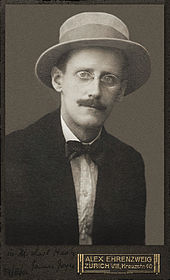
JamesJoyce

Doesn’t James Joyce look dapper?!

Happy Bloomsday!!

James Joyce set his rambling modern novel Ulysses on June 16, and today literary lovers around the world celebrate the iconic Irish author with marathon readings (it is about 265,000 words long!) and pub crawls. The raucous literary holiday takes its name from the central character of the novel: Leopold Bloom. The title of Joyce’s book, on the other hand, comes from the Latin version of Odysseus. Apparently, this is because he discovered the story of The Odyssey through Charles Lamb’s children’s book adaptation, Adventures of Ulysses. Just like that cunning Greek Odysseus embarked on adventure that introduced him to a wide variety of characters, Leopold Bloom traversed Dublin and met characters that paralleled those found in The Odyssey.

I thought it would be fun to share a few beautiful and provocative quotes from James Joyce’s Ulysses:

  • “Every life is in many days, day after day. We walk through ourselves, meeting robbers, ghosts, giants, old men, young men, wives, widows, brothers-in-love. But always meeting ourselves.”
  • “People could put up with being bitten by a wolf but what properly riled them was a bite from a sheep.”
  • “She would follow, her dream of love, the dictates of her heart that told her he was her all in all, the only man in all the world for her for love was the master guide. Come what might she would be wild, untrammelled, free.”
  • “The heaventree of stars hung with humid nightblue fruit.”
  • “A region where grey twilight ever descends, never falls on wide sagegreen pasturefields, shedding her dusk, scattering a perennial dew of stars.”

Those last two quotes remind me of one of my favorite lines from Jack Kerouac’s On the Road:

  • “Soon it got dusk, a grapy dusk, a purple dusk over tangerine groves and long melon fields; the sun the color of pressed grapes, slashed with burgandy red, the fields the color of love and Spanish mysteries.”

I’ve written about James Joyce’s influence on Jack Kerouac a few times before so today in celebration of Bloomsday, here are the links:

For Bloomsday activities around the globe, check out The James Joyce Centre Dublin. I want to highlight a few that I found particularly relevant to the themes I write about:

  • In Athens, there will be a free screening of a poetical film based on Joyce’s Greek notebooks.
  • In Manhattan, Symphony Space is putting on an event that features Malachy McCourt, Colum McCann, Cynthia Nixon and others.
  • In Brooklyn, there will be a pub crawl.
  • In St. Petersburg (the Florida city where Jack Kerouac died), there will be readings and performances.

Have you ever participated in a Bloomsday event? What is your favorite quote by James Joyce?

Happy 120th Birthday, Mark Van Doren

13 Jun

mark

Pulitzer Prize-winning poet Mark Van Doren was born on this day in Vermilion County, Illinois.

In 1920 he earned his Ph.D. from Columbia University and joined the faculty. Among his students was Lionel Trilling, who would also go on to teach at Columbia. They both taught Jack Kerouac and Allen Ginsberg. Trilling also taught Robert Lax, whom Kerouac later got in touch with.

Trilling won the Pulitzer Prize for Poetry in 1940 for Collected Poems 1922–1938.

Celebrate his birthday by reading some of his sonnets here.

Happy Memorial Day Weekend!

23 May

Happy Memorial Day weekend! Are you doing anything fun?? Grilling out on the patio? Reading The Haunted Life? Reading Burning Furiously Beautiful? Hitting the beach? Spending time with the family? Taking a road trip??

Whatever you do, I hope it’s just what you want it to be!

Here’s my Memorial Day post from last year, in which I asked if the Beat Generation writers were anti-American, and here’s the one from the year before in which I explore Jack Kerouac’s time in the Merchant Marines.

TODAY: William S. Burroughs Centennial Conference

25 Apr

burroughsimage via CUNY

William S. Burroughs turned 100 back in February — and we’re all still celebrating!

Today the WSB@100 Festival continues at the CUNY Center for Humanities. What I particularly love about this event is how academic it is! Though the writers associated with the so-called Beat Generation are studied in colleges across the country, many critics and scholars alike still focus more on the writers’ personal lives than on their literature. The William S. Burroughs Centennial Conferences tackles weightier issues such as innovation and technique, the business of publishing, and gender politics.

Here’s a look at the schedule:

Fri Apr 25, 9:30am – 6:30pm | Conference | Room 9206-9207

William S. Burroughs Centennial Conference

John M. Bennett
Ann Douglas
Oliver Harris
Barry Miles
Jed Birmingham
Charles Plymell
Geoffrey D. Smith
Anne Waldman
Regina Weinreich
Jan Herman

Held in honor of the centennial of William S. Burroughs’s birth, and the WSB@100 Festival in New York City scheduled for the entirety of the month of April, 2014, this conference will explore the life and works of one of the most innovative and influential twentieth-century American writers and artists. Join us for a series of talks and roundtables by editors, artists, and scholars on a range of issues from the problem of gender in Burroughs’s writings to his role in postwar America little magazines, his still unpublished archival materials, cut-up experiments and novels, and his photography.

“Listen to my last words any world. Listen all you boards syndicates and governments of the earth. And you power powers behind what filth deals consummated in what lavatory to take what is not yours. To sell the ground from unborn feet. Listen. What I have to say is for all men everywhere. I repeat for all. No one is excluded. Free to all who pay. Free to all who pain pay.” – William S. Burroughs

This conference is free and open to the public.

This event will be livestreamed. For viewing during the event, please see here: https://videostreaming.gc.cuny.edu/videos/livestreams/page1/

Join this event on Facebook.

SCHEDULE:

9:30AM  Coffee

10:00AM
Editing Burroughs with John Bennett and Geoffrey Smith

11:00AM
Burroughs and Literary Magazines with Jed Birmingham, Charles Plymell, and Jan Herman

12:30PM Lunch

2:00PM
Biography and Photography: Barry Miles in conversation with Oliver Harris

3:30PM
Gender Trouble with Anne Waldman, Regina Weinreich, and Ann Douglas

5:15PM Coffee Break

5:30PM
Keynote:  Oliver Harris Cutting up the Trilogy


Cosponsored by the English Students Association, Lost & Found: The CUNY Poetics Document Initiative, the PhD Program in English, the Center for Lesbian and Gay Studies, the Doctoral Students’ Council, and the WSB@100 Festival.

You can find all the information on the CUNY website.

* * *

Interested in how William S. Burroughs helped shape Jack Kerouac’s literature? Check out Burning Furiously Beautiful: The True Story of Jack Kerouac’s “On the Road,” the book I coauthored with Paul Maher Jr. (2013). It’s available through Lulu’s print edition, Amazon, and Barnes & Noble.


Before the Beats, Rimbaud Had a “Bohemian Life”

17 Apr

225px-RimbaudPhoto by Etienne Carjat (1871)

Rimbaud’s kinda cute, eh?

Before Jack Kerouac coined the term “Beat Generation” during a conversation on the Lost Generation with fellow writer John Clellon Holmes, before he went on the road and lived a bohemian life, he attended (and dropped out of) Columbia University. It was through his Columbia connections—which Paul and I explain in more detail in Burning Furiously Beautiful (it’s actually super interesting to discover how they all met and became friends)—that Kerouac met Lucien Carr and Allen Ginsberg. Back then, the phrase they were throwing around was a “New Vision.”

Carr had borrowed the phrase from Arthur Rimbaud, and the young friends in Morningside Heights used it to mean:

1) Naked self-expression is the seed of creativity. 2) The artist’s consciousness is expanded by derangement of the senses. 3) Art eludes conventional morality.[17]

As a teenager, Rimbaud was part of the Decadent movement in late-nineteenth-century France. The term “Decadents” refers to the clever poets who preferred to show off their literary skill rather than emote as naturally as the Romantics. The earlier Romantics—such as William Blake, Percy Bysshe Shelley, and John Keats—used more colloquial language than the highly stylized language of the Decadents.

In a letter to a friend, Rimbaud wrote:

I’m now making myself as scummy as I can. Why? I want to be a poet, and I’m working at turning myself into a seer. You won’t understand any of this, and I’m almost incapable of explaining it to you. The idea is to reach the unknown by the derangement of all the senses. It involves enormous suffering, but one must be strong and be a born poet. It’s really not my fault.


Sounds like something Kerouac might write, doesn’t it? Not because the author of On the Road sought to make himself scummy by any means, but because he shook off pretensions and suffered for his art, appreciating the authenticity of experience.

I couldn’t find a translation of any of Rimbaud’s poetry that was in the public domain, so here is Rimbaud’s “My Bohemian Life (Fantasy)” in the original French:

Ma Bohème (Fantaisie)

Je m’en allais, les poings dans mes poches crevées ;
Mon paletot aussi devenait idéal ;
J’allais sous le ciel, Muse ! et j’étais ton féal ;
Oh ! là là ! que d’amours splendides j’ai rêvées !

Mon unique culotte avait un large trou.
– Petit-Poucet rêveur, j’égrenais dans ma course
Des rimes. Mon auberge était à la Grande Ourse.
– Mes étoiles au ciel avaient un doux frou-frou

Et je les écoutais, assis au bord des routes,
Ces bons soirs de septembre où je sentais des gouttes
De rosée à mon front, comme un vin de vigueur ;

Où, rimant au milieu des ombres fantastiques,
Comme des lyres, je tirais les élastiques
De mes souliers blessés, un pied près de mon coeur !

You can read a 1962 English translation by Oliver Bernard here.


The Feast Day of Saint Bernadette

16 Apr

469px-Bernadette_Soubirousimage via Wikipedia

Bernadeta Sobiróus was only thirty-five years old when she passed away. A miller’s daughter from Lourdes, France, Bernadette was fourteen years old when she first saw a “small young lady” appear to her while she was out fetching firewood in Massabielle. This apparition requested that a chapel be built in the grotto near there, and later it was revealed that she was the Immaculate Conception. Indeed, a number of chapels were built at Lourdes, and today Bernadette is remembered as a saint even though many did not believe she’d had visions at the time.

In Jack Kerouac’s hometown of Lowell, Massachusetts, where many French-Canadian Americans resided, there is a a Grotto of Our Lady of Lourdes, which he writes about it. I’ve visited it twice and wrote about it as part of my Church Hopping column.


Percy Bysshe Shelley’s “Music, when Soft Voices die”

10 Apr

ShelleyPortrait of Shelley by Alfred Clint (1819)

When you think Beat Generation do you also think Romanticism? No?? Don’t get tripped up by the overuse of the word “neon” and other supposed markers of so-called Beat poetry. Think more about their shared notions of colloquial language, intuition over reason, and spontaneity. Beat poetry is a natural evolution of Romantic poetry. (Caveat: “Beat Generation” and “Romanticism” are convenient labels, but the people associated with them wouldn’t identify themselves as being “members” of any sort of “movement.”)

I’ve written before about Beat poet Gregory Corso’s connection to one of my personal favorite poets, John Keats. Even more than Keats, though, Corso professed an admiration for Percy Bysshe Shelley. Corso is actually buried across from Shelley. While Allen Ginsberg (read last week’s post on Ginsberg’s Blake vision here)  is known for littering his poetry with the names of Jack Kerouac and Neal Cassady, Corso wrote of Shelley in “I Am 25” and “I Held a Shelley Manuscript.” I love, love, love the language he uses in those poems and can relate to the theme of idolizing other poets who have gone before one’s time.

When thinking about possible poems to share with you for National Poetry Month, I decided on Percy Bysshe Shelley’s “Music, when Soft Voices die” not just because of Gregory Corso’s love for Shelley but because it reminded me of the themes I’d found myself wonderfully entrenched in while recently reading Marcel Proust’s Swann’s Way, a book the Beats also read—themes of memory and love and music and flowers. (Swoon, swoon, swoon.) Like Corso’s “I Held a Shelley Manuscript,” Shelley’s “Music, when Soft Voices die” sensually touches on what remains after death.

Without further ado, Percy Bysshe Shelley’s “Music, when Soft Voices die”:

Music, when soft voices die,
Vibrates in the memory;
Odours, when sweet violets sicken,
Live within the sense they quicken.

Rose leaves, when the rose is dead,
Are heap’d for the belovèd’s bed;
And so thy thoughts, when thou art gone,
Love itself shall slumber on.

What’s your favorite poem by Percy Bysshe Shelley?

Allen Ginsberg’s William Blake Vision

3 Apr

 Blake_Roses_Sun-Flower_LillyWilliam Blake’s illustrated “Ah! Sun-Flower”

I’m kicking off this National Poetry Month series with William Blake for reasons that will soon become obvious. In 1948, when he was in his early twenties, Allen Ginsberg experience a supernatural vision. He was alone in his Harlem apartment, reading William Blake, when the Romantic poet appeared to him. Ginsberg said he wasn’t high at the time but was having some … um, personal alone time. Wink, wink. He looked out his Harlem window at the bright blue sky and realized that the sky had been created, that the sky did the creating, and found God. In later years, Ginsberg experimented with drugs to try to recapture that feeling.

One of the poems that Ginsberg heard Blake read in his vision was “Ah! Sun-flower,” published in his 1974 poetry collection Songs of Experience. Blake illustrated the poem (see above). Here is the poem in its entirety:

Ah Sun-flower! weary of time,
Who countest the steps of the Sun:
Seeking after that sweet golden clime
Where the travellers journey is done.

Where the Youth pined away with desire,
And the pale Virgin shrouded in snow:
Arise from their graves and aspire,
Where my Sun-flower wishes to go.

Close to a decade after his Blake vision, while in Berkeley in 1955, Ginsberg composed his own sunflower poem, “Sunflower Sutra.” I’m inclined to say it’s my favorite poem. You can read it here.

You may also like these posts:

And of course you can read more about Allen Ginsberg in the book I coauthored, Burning Furiously Beautiful.

Coming Soon! Ferlinghetti’s Travel Journals

31 Mar

Ferlinghetti

In super exciting Beat-, travel-, poetry-, publishing- related news, Liveright Publishing will publish Lawrence Ferlinghetti’s travel journals in September 2015! The suspense is driving me crazy!!

Ferlinghetti is one of my most favorite poets. Back when I was in undergrad, I made my first pilgrimage to City Lights, the bookstore he founded, bought his San Francisco Poems, and proceeded to drag my biology-major friend all around the city to read the poems in their appropriate places. The fact that his travel journals are now being published may just inspire me to hit the road again.

The book, titled Writing Across the Landscape: Travel Journals, will cover the years 1950 to 2013. As I wrote in my recap of the film Ferlinghetti: A Rebirth of Wonder, Ferlinghetti once traveled to Italy to seek out his family roots and promptly got arrested! He also happened to own a little cabin out in Big Sur, California, where Jack Kerouac stayed; Kerouac wrote a book about his time there that’s since been made into a film. For the record, Ferlinghetti does not consider himself a Beat, and he’s not one of the characters constantly described as sitting in the back of a car driven by Neal Cassady. He’s had his own set of adventures through Cuba, France, Haiti, Mexico, and North Africa.

Kerouac’s literary agent Sterling Lord brokered the deal for Ferlinghetti’s new book with Liveright’s editor-in-chief Robert Weil. You can read more about it in The New York Times.