Tag Archives: feminism

April Books by Greek-American Authors

4 Apr

When you think Greek literature, what do you think?  Homer’s The Odyssey? Plato’s Republic?

I often worry that the world at large does not recognize contemporary Hellenic literature.  This month, though, we see two books by famous Greek-American comedians turned Greek-American authors.


Bossypants by Tina Fey

A few years ago, when Christopher Hitchens said that women aren’t funny, he said it with the caveat, “there are some impressive ladies out there. Most of them, though, when you come to review the situation, are hefty or dykey or Jewish, or some combo of the three.”  That was in 2007.  By then, Tina Fey had already showed the world her comedic chops by following up her “Weekend Update” skit on Saturday Night Live with another hit: 30 Rock.  Last year she became the youngest person ever to win the Mark Twain Prize for American Humor.

In a recent interview, Fey actually said that it was only after she lost weight that she was able to move from comedy writer to comedy actress.

Tina Fey is a Greek-American by birth.  Her given name is Elizabeth Stamatina Fey.  Her 2001 wedding to Jeff Richmond was held in a Greek Orthodox Church.

She—and a lot of other women—proved Hitchens wrong on all three counts.  And now she has a memoir coming out that lets you step into the life of this very funny Greek-American woman.


Look for it: April 5


This Is a Book by Demetri Martin

Books by comedians usually go one of two ways: either really funny or really sad. Demetri Martin goes funny in his first book, a collection of short stories.  Martin, known for his work on “The Daily Show” and Comedy Central’s “Important Things with Demetri Martin,” was born in New York City and grew up in Toms River, New Jersey.  His dad, Dean C. Martin, is a Greek Orthodox priest.  Martin’s Greek heritage plays into his comedy and writing.

Kirkus Review notes that in “Socrates’s Publicist,” one of the short stories in Martin’s upcoming book, “imagines the deadly consequences of the Greek philosopher acquiring a chirpy PR rep eager to brand him and bring his “question thing” to a wider audience.”

Look for it: April 11
A Chat with My Editor Brings Exciting News

1 Apr

Had a great chat with my former editor last week.  He told me about some great events at Cornelia Street Café;  I told him about a reading by a political prisoner I attended at The New School.

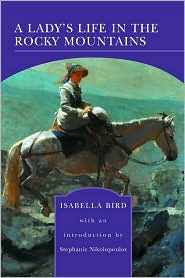
He also let me in on some exciting news::: the ebook edition of A Lady’s Life in the Rocky Mountains—letters by Isabella Bird, introduction by yours truly—is currently one of his bestsellers!


Obviously, I’m happy on a personal and professional level, but I’m also happy because Isabella Bird’s story is so beautiful and inspiring and it deserves a wider audience.  The short of it is that Bird left the comforts of home in Victorian England to travel by herself through the rough terrain of America’s Rocky Mountains.  As I wrote in my introduction to the book, “Whether you’re interested in nature, the history of the Rocky Mountain region, travel writing, Christianity, or women’s studies, Bird’s simple yet provocative letters will entertain your imagination.”

I’d say that’s worth the $1.99 for the nook book!

30 Rock, Franzenfreude, and VIDA: Women Writers

1 Mar

Last week’s 30 Rock was an episode titled “TGS Hates Women,” a commentary on late summer’s “Franzenfreude” and the recent findings by VIDA that women writers don’t get as much attention as male writers.

When I look around the publishing house I work in and the classroom at the MFA program I attend, I see women.  Lots of them.  That’s not to say there aren’t any guys.  There are.  I see them in their windowed offices, I attend the lectures they organize, and I read the newsletters they write.  That isn’t to say there aren’t women in high-level, high-visibility roles.  There are.  But the percentage of men versus women in these upper-management roles is significantly skewed.

That’s why I wasn’t surprised when I read VIDA’s “The Count 2010.”

The short take is that men far outnumber women in getting published in lit mags and having their books reviewed.  I definitely agree with the commenters that the statistics are inconclusive without the facts of how many women versus men submit manuscripts. My editor friend Elizabeth sent me this follow up to the article, in which the editors responded to the criticism that their publications don’t publish an equal ratio of women to men.

Part of the problem is that women do not submit to well-known, “gender-neutral” publications at the same rate as men.  A few months ago, I went with my writer friend Jane to hear Lorrie Moore (Birds of America) talk with fiction editor Deborah Treisman at the wonderfully designed (hello, tilting fish-tank!) (le) Poisson Rouge for The New Yorker Festival. One of the comments that stuck out the most for me (Elissa Bassist, with whom I took class taught by Susan Shapiro, offers further notes on The Rumpus) was that men more often than women submit stories to The New Yorker, which is why men, more often than women, get published in The New Yorker.

I am a feminist, not a whiner.  I don’t believe in railing against the injustices of this or that without actually doing something positive to enact change.  Dialogue itself is useful but dialogue without action is meaningless.  It reminds me of the whole Christian debate of faith versus works, which is solved quite eloquently by the phrase “faith without works is dead.”  In other words, we can talk until we’re blue in the face about how more women should be published but unless more women are submitting quality work and unless more women are studying and working hard to become editors and unless we get over the silly notion that matters of politics are for men and the world at large and matters of domestic life are for women exclusively then all our philosophizing is for naught.  (Yes, I just said “for naught.”)

Women, if you want to be taken seriously as writers and if you want to get published then study writing, write, revise, and submit to publications!  Aim high.  If you get a rejection, try to find out why.  Then find another publication that you believe is a good fit for your writing style (remember there’s a huge difference between Cosmo and The Times) and submit.  Take classes, form writing groups, seek out professional freelance editors, and work on your craft, continually submitting high-quality work.  Make your writing so good they can’t say no!

Let’s not end up like Elaine Mozell in Meg Wolitzer‘s The Wife. Let’s look at the example Tina Fey set by becoming the first female head writer of Saturday Night Live.   And wouldn’t you know it, she’s a Greek!