Tag Archives: Lowell

Lowell Celebrates Kerouac: The Typewriter

9 Oct


One evening, a student came into our writing workshop at The New School and announced he’d bought a typewriter.  We were all very impressed.

“What kind?” we asked.

“Where did you get it?”

Most of us were in our twenties or thirties and had grown up using computers.  Many of us had entire mini computers—smart phones—jammed into our pockets and purses at that very moment.  We’d attended readings in bars across Manhattan, where authors had read poetry off their iphones.

But a typewriter!  Now that sounded really literary.  The click-clack of the keys echoing in a bare-bulb room.  Allen Ginsberg’s first-thought-best-thought mantra forced upon a generation accustomed to the “backspace” button on our keyboards.  Facebook procrastination less accessible.

And the history!  Continuing the beautiful tradition of authors attached to specific models of typewriters.

This evening, the documentary The Typewriter will screen at the Lowell National Historical Park Visitor Center Theater (245 Market St.) as part of the Lowell Film Collaborative with Lowell Celebrates Kerouac.  Here’s a little bit about the film from its website:

Three typewriter repairmen the filmmakers have interviewed all agree that their business is better than it has been in years.

Perhaps it is a reaction to the plugged in existence of today’s 24/7 communications world. Perhaps it is mere nostalgia and kitsch. Perhaps it is an admiration for the elegance of design and the value of time-tested workmanship. And for some, like typewriter collector Steve Soboroff, it is the appeal of owning machines on which American writers like Ernest Hemingway, Tennessee Williams, Ray Bradbury, John Updike and Jack London typed some of their finest work. (He also owns typewriters once owned by George Bernard Shaw and John Lennon)

The film is directed by Christopher Lockett and produced by Gary Nicholson.  You can read fascinating typewriter stories here.

As for Jack Kerouac, he owned several typewriters throughout his lifetime but most famously used a 1930s Underwood typewriter.  His father was a printer, so even from a very young age, Kerouac was in a world full of language, literacy, typography, and printing presses.  Not surprisingly, he had a reputation for being a speed typist.  myTypewriter.com offers some background information on Kerouac’s—as well as other literary figures’—use of typewriters.  Burning Furiously Beautiful: The True Story of Jack Kerouac’s On the Road will also include information about Kerouac’s typewriter.  Larry Closs‘ novel Beatitude also includes a plot involving Kerouac and typewriters.

Here’s a tip for those of you attending Lowell Celebrates Kerouac or if you happen to find yourself in Lowell any other time: you can see one of Kerouac’s Underwood typewriters, and other memorabilia firsthand at the Mill Girls and Immigrants Exhibit at the Morgan Cultural Center.  It may sound like an unlikely place to view some of Kerouac’s possessions, and it’s not really well advertised, so it’s easy to miss if you don’t know about it, but the exhibit is open 1:30-5:00pm except on major holidays.  It’s free, but even if it weren’t the entire exhibit is fascinating.  The case display for Jack Kerouac is very small, but literary pilgrims will appreciate it nevertheless, since it’s rare to have opportunities to view his personal travel gear and typewriter in person.  The exhibit is engaging in retelling the story of immigration to Lowell.  Many of the immigrants were from Greece so the exhibit gives insight into the influence of Greek culture on Lowell.

Jonathan Collins’ Beat Generation Locale Series

8 Oct


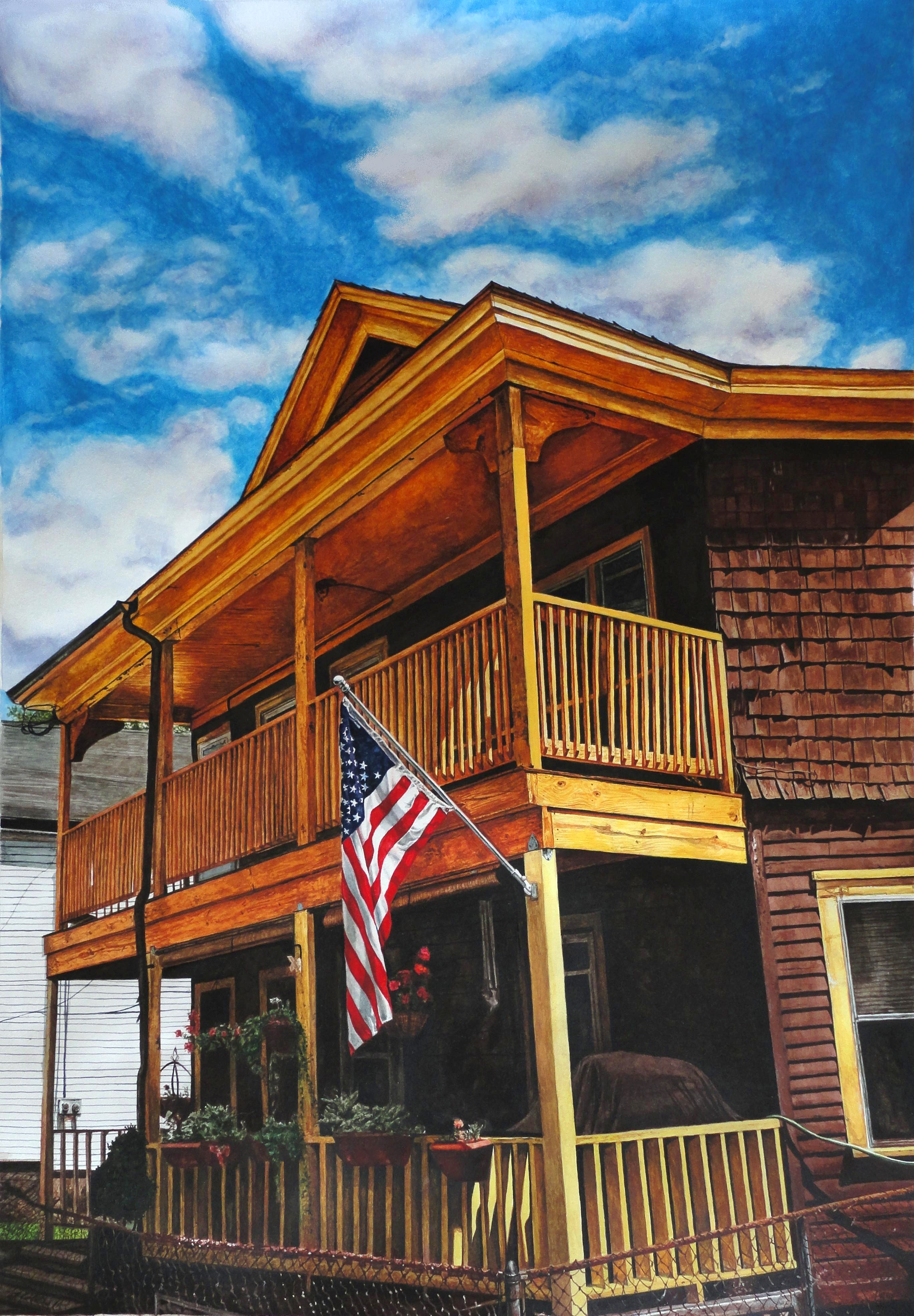
9 Lupine Road

When I first saw artist Jonathan Collin’s paintings in person, I thought they were photographs.  They’re stunning.  Incredibly detailed and richly saturated, his Lowell series captures with paint the Massachusetts landscape that Jack Kerouac captured with words.  More than just setting and subject matter, Collins’ use of chiaroscuro resonates with Kerouac’s literature.  There is light piercing the darkness.

When I asked Jonathan if he’d write a little artist statement, he sent me back an email with the below, saying he’d written it spontaneously and with no revision, according to Beat principles.

Visions of Lowell

Jack Kerouac’s Duluoz Legend has always been an important touchstone of literature and revelation of light and beauty to me. In my research of those heady days of the 40s and 50s, I found them not only to be thrilling, but all in the family.

My father, Don Collins, was also in the Navy in WWII , the Merchant Marines, and traveled the world as Kerouac did. My father came back home, worked and painted, Kerouac wrote!

I began this series of paintings of Beat Generation locales in 2010. Traveling to San Francisco first, via the California Zephyr , in 2007, I was astounded by the natural richness and depth of the American landscape. I strolled the streets of North Beach, with its glistening neons and vibrating nightlife. I recorded everything in my journal, sketchbook, and camera. Everything that rose the hairs on my neck in artistic excitement!

I had been to Lowell many times, from the mid 1990s on, but my trip in July 2011 was intended to document the birth and mystery of the seeds planted in Kerouac’s psyche. From the Lupine Road house, to downtown cobbled streets, to the glowing Grotto, I stood transfixed.

Paterson was where my mother was born, and my parents met at the bridge surrounding the Great Falls. Allen Ginsberg was raised in Paterson and grew up  a mere four blocks from these sites. I found Ginsberg’s poem, “The Green Automobile” to be an exquisite inspiration, tying the mythical past to present;”From Lowell’s Merrimack to Paterson’s Passaic.”

My main focus was not only the historical context both personal and literary , but illumination, literally.  Light is the essence of my paintings and a key ingredient in the tempest of Beat literature. From Rimbaud’s “Illuminations,” to Kerouac’s “Visions” series, Gregory Corso’s visionary odes, to Ginsberg’s “Howl,” his plea for understanding.

The need to shed light, to reveal hidden truths beyond words, to make sense of the beauty and sanctity of life, feeling the mystery in the shadows, was and IS, the artists’ true quest.

Just as the Paterson Falls continue to boom and crash, and the neons of Frisco glow endurably, and the spirit of Lowell pulses in the night, so will the work of the Beats continue to inspire, and illuminate generation after generation.

It is my hope that these paintings will enrich the hearts and minds of others, with a glimpse of the light surrounding us, and pray we honor and express the light within us all.

The Moon Her Majesty

Lord

The Visitation

[The three paintings above are of the Grotto in Lowell and should be viewed from left to right in the order in which they appear.]

Lowell Celebrates Kerouac 2012: The Basics

5 Oct

Lowell Celebrates Kerouac kicks off next week, and this year the literary festival features a full week-long schedule of fantastic events with an incredible lineup of authors and poets, musicians, and filmmakers.  Perhaps most exciting of all, Jack Kerouac’s play “Beat Generation,” written the same year that On the Road was published, will also have its premiere during Lowell Celebrates Kerouac.

Roger Brunelle will also be leading his guided tours of Kerouac’s old haunts, which in the past have been my favorite part of LCK.  Brunelle has firsthand experience of Lowell and injects his tours not only with fascinating historical knowledge but also personal stories and warmth from his own life.

Visiting Lowell and seeing the Merrimack River and walking the bridges gives readers of Kerouac better insight into the landscape he describes in his Lowell novels and his upbringing in this Massachusetts mill town.  For the first-time visitor, LCK is an opportunity to encounter Kerouac’s hometown.  Many people return year after year to the festival, though, because LCK is also about community.  You meet people who grew up around the same time as Kerouac, and you meet fresh-faced pilgrims eager for experience. You meet people who have read every single one of Kerouac’s books, and you meet people who are new to Beat literature and simply curious.  You meet people who come every year to LCK, and you meet people who just happened to stumble upon it.

Here are a couple tips if you decide to go to Lowell Celebrates Kerouac:

How to get to Lowell by public transportation — There is a Greyhound bus that goes to Lowell, however service is not frequent.  The easier option is to take the commuter rail from Boston to Lowell.  You can take the train from Boston’s North Station.  It runs about once an hour during the weekday and is only about an hour long.

Wear your walking shoes —  If you’re on any of the tours you’ll be doing a bit of walking.  Lowell is a very walkable city, so if the tour or event is meeting anywhere in Lowell you can probably walk there without much difficulty from the center of the city.  It’s usually easier to walk than to catch a cab.  Unlike in major cities, taxis aren’t easily flagged down in Lowell; if you want a taxi, you should call for one in advance.  There are a few sections of Lowell that get a little eerily quiet at night, so after dark it is best to not walk alone, which is commonsense for any city.

Take time out to eat — There will be so much to see and do at LCK that you may forget to actually eat!  Many of the locales you’ll visit during the pub crawl offer food, and there usually is time on the tour to get a bite to eat at the pub, but chances are you’ll be so absorbed in conversation you will neglect eating.  That or maybe pub food just isn’t your thing.  An inexpensive, quick, light, and conveniently located alternative is Brew’d Awakening Coffeehaus, which offers delicious bagel sandwiches and other fare.  It’s a particularly good choice if you’re traveling solo since there’s often live acoustic music, so you can just sit back and read one of the free magazines and listen to some great music without the awkwardness of being in a sit-down restaurant by yourself or being in a takeout joint.  They also have great vegetarian options.

Skip an event or two — You’ll want to attend most events, but you don’t have to attend every single event at LCK.  Lowell has a rich history outside of Jack Kerouac, and discovering the city itself can help you understand the environment in which Kerouac grew up.  Visiting Boott Cotton Mills Museum, for instance, can lead to a great understanding of immigration in Lowell and Kerouac’s desire not to be a “mill rat.”  Meanwhile, the Whistler Museum is a great place to discover another one of Lowell’s great artists.

Here’s the complete schedule from LCK.

Exclusive Interview with Author Paul Maher Jr.

7 Sep

I am so excited to share my interview with Paul Maher, Jr.  He has such incredible insight on Kerouac and the writing process in general.  I think you’ll see why I enjoy working with him so much on Burning Furiously Beautiful: The True Story of Jack Kerouac’s On the Road.

How did you first become interested in Jack Kerouac?

I remember one of the first books I ever picked up of Kerouac’s, it was Dr. Sax. I didn’t buy it at the time, I just looked at the back cover and read its blurb: “In this haunting novel of intensely felt adolescence, Jack Kerouac tells the story of Jack Duluoz, a French-Canadian boy growing up, as Kerouac himself did, in the dingy factory town of Lowell, Massachusetts.” That was the exact same sentiment of myself at the time, I must have been about 18 or 19, and my adolescence too was “intensely felt” as well as growing up in Lowell. I also grew up in Centralville in a French  Canadian enclave for about the same time period as Jackie Duluoz. Soon afterwards, when I did buy Dr. Sax, I related to Kerouac’s capturing of the whole scene, the sense of hauntingness; the dialects, the sensibilities, and the mystery of Catholicism. I attended Saint Louis de France school like Jack did, and attended masses there. My last time in the basement of that church, it was for my father’s funeral. I remember sitting in those little wooden pews, smelling the burning candles, and the hushed yet amplified sounds of murmurings, sneezes and the priest standing before us all. It brought me right back to my boyhood when I used to walk there every day. Except, of course, the cycle was complete for my father who had also attended that church as a boy, as well as his parents.

So, dipping into Kerouac was easy for me. That was my introduction, not, like many, On the Road. After reading Dr. Sax and Visions of Cody, my first Kerouac books, On the Road seemed a bit tame. A disappointment really, and it still ranks lower than those aforementioned visionary masterpieces. It is no wonder Dr. Sax was a novel that he was really proud of.

You grew up in Kerouac’s hometown of Lowell, MA.  What was that like and how does it inform your understanding of Kerouac and his work?

I can’t objectively say what it was like, it just was. There was also a lot not to like about Lowell, like any other town or city. Growing up in Lowell was as natural as anything else. My home address was less than a quarter-mile from three of his Centralville addresses. His house in Dr. Sax was next to the Hildreth Street cemetery, and walking by that cemetery, as a child, the stone wall was high and there were iron gates surrounding it. It was padlocked with a chain. We never got in, so we wondered what was in there, and so that naturally retained a mystery for us. Adjacent to that house was a funeral home, and my father and grandfather were waked there (among others). There was a mystery to all of it, and I easily made those associtations captured so perfectly in his Lowell writings. However, I didn’t feel it so much with Maggie Cassidy or Vanity of Duluoz, because I didn’t grow up in Pawtucketville or attend Lowell High School. Those two books do more to capture an era than a certain mystical reverence for childhood.

I have a high regard for Visions of Gerard as well, because it captures more of the Franco-American sensibility of Centralville, and that sort of insular vibe common to the city. Like Kerouac, I was friends with kids named Plourde and Beaulieu, for all I know they were grandsons of his friends.

Which is your favorite of Kerouac’s books?

In no particular order, any of those books written between 1952 and 1954, especially those that have more of a mystical nature. I love The Subterraneans and Tristessa. The Lowell novels, Visions of Gerard and Dr. Sax; Book of Sketches and Some of the Dharma. I always carry Visions of Cody with me, though I am no admirer of Neal Cassady, I am fond of how Kerouac transmuted that person into his artistic sensibility to create a portrait of bygone America.

One of your greatest skills as a biographer is the thoroughness of your research.  Do you have any tips for aspiring biographers on how to track down hard-to-find material and incorporate the information into a work without it sounding like a Wikipedia entry?

I’m not a trained researcher. I took courses for my degrees on how to conduct research and much of it was rote, based on archaic practices and for the most part, teaching us to dispense with the piecemeal detective work of newspapers and archives, and instead operate backwards by working through secondary sources. For my Kerouac biography, I made it a point not to use the existing biographies as a resource. On the other hand, I had already retained much of what was written and having that knowledge, I could work on another level.

I also operate out of a sixth sense, almost intuiting where material might be, or something that may exist and is worth pursuing by surmising that it might be there. It may be as simple as spelling a name wrong, and then doing searches for it. The Internet has made it awfully easy to do much of it, especially in regards to newspapers and magazines. However, there is also room to abuse it, so that it does sound like a Wikipedia entry.

Per incorporating it, that can be tricky. You always want to use it where it adds to the narrative and doesn’t seem like filler material. I could have easily added anecdotal information on every town Kerouac passed through when he traveled across America. However, the emphasis is on Kerouac, not the town. However, if it was a documentary on the Travel channel, then it works.

I feel like you and I have worked really well together on Burning Furiously Beautiful, but collaboration is not desirable to many people or can be intimidating for those interested in it, particularly artists who want to leave their personal imprint on a work.  However, there is a grand tradition of collaboration; Kerouac himself collaborated with Burroughs on And the Hippos Were Boiled in Their Tanks.  What would you say to someone who is contemplating collaboration?

You just have to operate on blind trust and intuition. I like collaborating, but I can certainly understand the desire to want to have your own book, with just your name beneath the title. I am past that; it doesn’t matter to me if my name is on there at all. Films are created in collaboration with others, books are no exception.

In addition to various biographies on Kerouac, you’ve written Tom Waits on Tom Waits, Miles on Miles, and One Big Soul: An Oral History of Terrence Malick.  You’ve recently started writing your first novel and are documenting the process through your blog Scrivener Notes.  Why are you documenting the writing process?  What do you think are the positive and negative effects of lifting the curtain to expose the work that goes into writing, especially this early on when the work is still at its nascent stage?

I have always been very open about my work, sometimes to my detriment. To write inside a vacuum, to sit on your idea and let it gestate in isolation doesn’t seem like fun at all. I feel with this little adventure, that the book can just as well bloom when it is fostered by a like-minded community. I think there is something perilous and reckless yet strangely beautiful in throwing your ego out the window and letting the world watch you try to invent something out of nothing.

I have finally arrived to the point in my life that I don’t care about how any book of mine is received, because they are written out of a pure volition of wanting to do it, not having to, and in wanting to do it, once it is done, the act of creating has already been accomplished. The rest is just grist for the mill.

Documenting it just seemed right to do. I always wanted to see someone else do it, and I haven’t found it done to my satisfaction. I could write an entry how thrilled and elated I am to finish a chapter, and the next day write how much I suck. There is a reality television vibe to it. I do understand that it will only appeal to maybe 1% of the people out there, if anyone at all, but since I am doing it for myself, it doesn’t matter to me who reads it in the end. At the very least I will eventually get a novel out of it for better or for worse.

In happenstance, I could say the negative thing is that someone can lift your ideas and run with it. This has already happened with a reputable person in Kerouac studies. However, I think once the writing on the blog is exposed enough, it is more or less on public record so if someone does lift from it, then they are pretty much hurling themselves and their work into disrepute.

You write a little on your blog about why you wanted to make the leap from biography to novel.  What I want to know is how, if at all, do you think your biography work will influence your fiction?

I’m not sure that it will. The work ethic is already ingrained in me. I wanted to free myself from the world of facts and I have started resenting having to prove myself to publishers any longer. I have come to recognize that it isn’t an art form, it is a business, and I do not have a business mindset.

Also, a recent incident when my research and ideas were stolen from me has totally killed the spirit of writing biography, though I do admire others that are more honest in their profession. Operating out of my own intelligence and imagination keeps my ideas and impulses sacred and pure. I guess that’s it.

You also are a photographer and a filmmaker.  While these are notable in their own right, as a writer I am curious if you see any correlation between those art forms and the literary arts?  You and I have spoken before about how the narrative of film has influenced your scene-setting in your books.  Can you talk a little more about this?

The only correlation for it is personal, in that I am creating out of my own impulses to satisfy me. Taking a photo is immediate gratification, writing keeps me constantly busy, and it keeps my depression at bay. It keeps me in books and it serves to keep my mind occupied and focused since it is always burning at both ends.

Through chance and not design, I have a natural tendency to see things cinematically. That takes in imagery, dialogue, and creating a setting. This is how our collective minds are trained, and to bombard a reader with minutiae just for the sake of being all-encompassing with the facts is just an exercise of indulgence. We live in new times, where the facts are available if we want them, within a few keystrokes. I think pointing to the heart of the matter, isolating a biographical scenario like it was a storyboarded scene adds to the appeal of the book tremendously. I think Kerouac also had that in mind with his “bookmovies.”

How do you find time to do everything?  How do you balance all these various projects?

If I had to itemize my time, I couldn’t do it. I live this stuff. I breathe it. If we were taught at the beginning of our lives that we had to make sure we breathe at least eighteen times per minute, and it wasn’t automatic, that we had to go about our daily lives having to count, then we would crumble, sooner or later, under the pressure of it all. It would be too stressful. Instead, it comes to us automatically; we don’t have to make room for it. I just do it because it is all I think about. If I don’t do it, then I feel like shit. My mind turns to mud. I get lethargic. Unbalanced. So, like I said, it has become a survival mechanism for me, whether it is a book, a blog entry, an email or a photograph, all of it is tied into the daily phenomena of my being.

I never have considered how it is all balanced other than I keep my own schedule. When I need a break from one project to let it breathe, I move to another. Eventually I return to all of them.

Actually, managing writing projects is a lot easier than trying to manage a practical everyday life for me. To that end I am a colossal failure.


***

9/7/12, 10:28am: Several minor edits were made to this interview.

Road Trip Writing: On the Road and The Canterbury Tales

18 Jun

Jack Kerouac once quipped back at a journalist, “I’m not a beatnik; I’m a Catholic.”  Despite the Beat Generation being associated with the countercultural movement—sex, drugs, and … jazz—Kerouac’s writing so often points toward the spiritual.

Visions of Gerard describes his saint-like brother who died at age nine and touches upon life in the Catholic church in Lowell, Massachusetts.  When he left home, Kerouac began exploring Buddhism.  Ultimately he grew disenchanted by it, though, an experience he describes in Desolation AngelsOn the Road is tinged with the idea of holiness.  Check out this quote:

As we crossed the Colorado-Utah border I saw God in the sky in the form of huge gold sunburning clouds above the desert that seemed to point a finger at me and say, “Pass here and go on, you’re on the road to heaven.”

Beautiful, isn’t it?  In some ways, Sal Paradise—what a name!—is on a pilgrimage.  The point of the trip itself isn’t religious, but along the way Sal sees God in nature and in the act of traveling.  Throughout On the Road, Kerouac writes about searching for the holy.  What he finds there on the open road is the beatific—the blessings that seem contradictory to what the world says are blessings.

If you think about it, one of the earliest road trip novels is about a pilgrimage: The Canterbury Tales.  Chaucer’s fourteenth-century tale has all the seedy characters one might find William S. Burroughs depicting.  The pilgrims are road tripping from Southwark to the Saint Thomas Becket shrine at Canterbury Cathedral.  Just like how Sal Paradise finds he has tell good stories to anyone who picks him up while hitchhiking, the cast of characters in The Canterbury Tales each tell a story along the journey.

To support the National Literacy Trust, a group of modern-day pilgrims recently reenacted The Canterbury Tales.  You can read about it, see photographs, and listen to portions at the Guardian.


* * *

Don’t forget!

I’m reading tonight at 7:00 at The Penny Farthing (103 3rd Ave., downstairs in the speakeasy), here in New York City, as part of the Storytellers event, hosted by C3.

Happy 90th Birthday, Jack Kerouac

12 Mar


Today would’ve been Jack Kerouac’s ninetieth birthday.

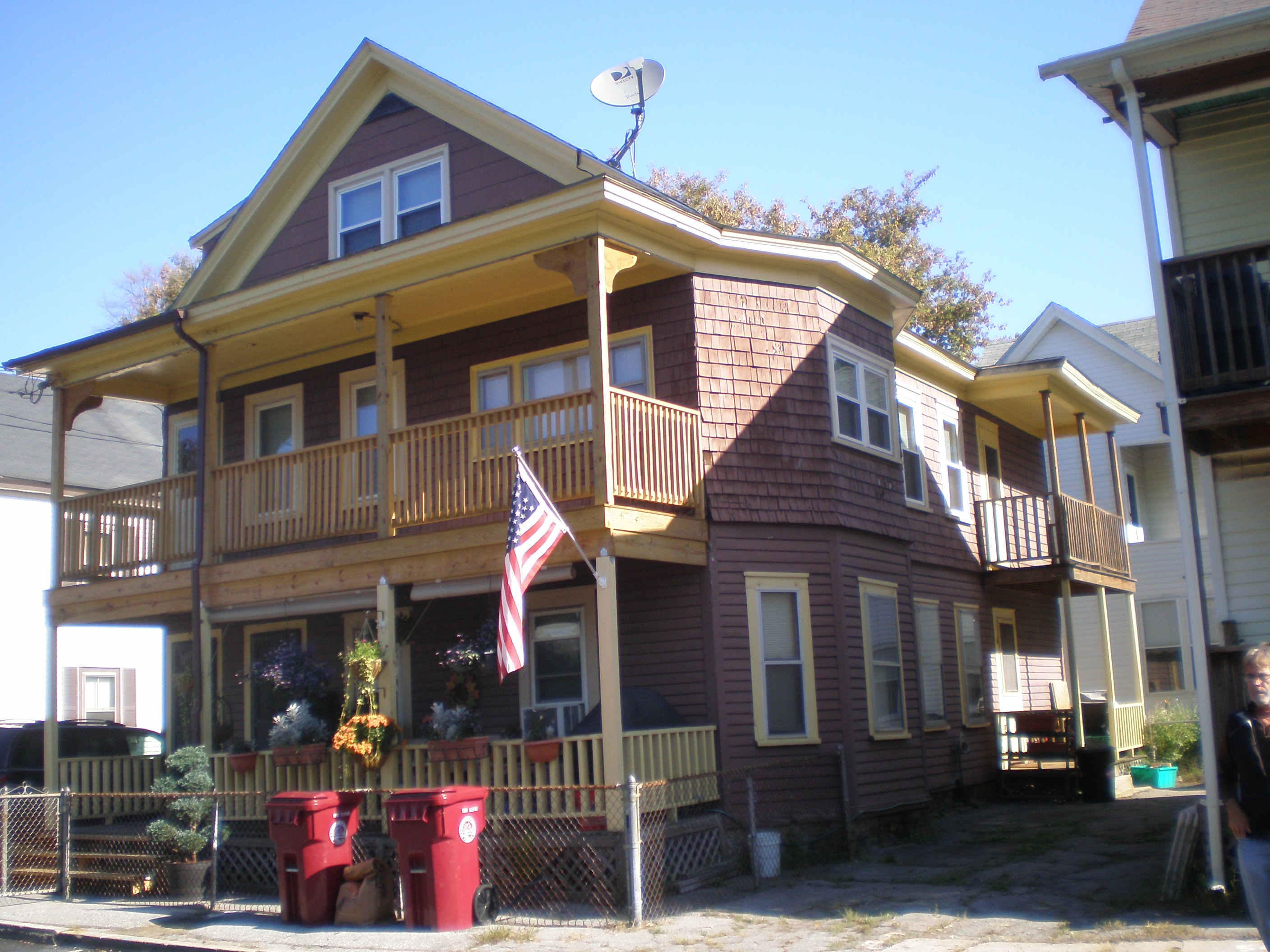
On March 12, 1922, French-Canadian immigrants Gabrielle and Leo Kerouac had their third, and last, child.  He was born at home, on the second floor of the brown house sitting at 9 Lupine Road in Lowell, Massachusetts.   This was in the West Centralville neighborhood, affectionately called Little Canada, of Lowell.  They baptized the baby boy in the Catholic Church.  His baptism certificate reads: Jean Louis Kirouac.  Although that was the standard Quebec spelling of the surname, the family spelled the name Kerouac.  They would call him Ti Jean, meaning Little John.  In fact, he would publish his first book, The Town & the City as John Kerouac.


I visited Jack Kerouac’s birth home when I attended Lowell Celebrates Kerouac! last October.  Apart from the plaque on the front of the house, nothing sets it apart as a any sort of landmark.  Today a new family lives in Kerouac’s birth home.  When the bus dropped my tour group off, the people came outside and gawked at us pilgrims just as we gawked at their regular-looking house.  I love touring authors’ homes and wish Kerouac’s had been preserved for visitors, but it seems fitting that it wasn’t.  After all, the Kerouacs moved often, and the house at 9 Lupine Road is just one of many that Kerouac lived in in Lowell.  Although he lived much of his life with his mother, Kerouac spent much of his time on the road and crashing at friends’ pads.  “Home” for Kerouac didn’t seem to be a house.


Writing Wednesday: Richard Stratton

18 May

On Saturday night, I went to a professional’s group gathering in which author-filmmaker Richard Stratton spoke and presented a short film.  My friends were hosting the event in their lovely Financial District apartment, where we could watch the sun set over the Statue of Liberty.  After a cocktail hour of mingling over wine and beer, cheese and pretzels, we settled into chairs to hear more about Stratton’s life story and projects.

Richard Stratton smuggled drugs before getting caught and imprisoned for eight years.  He was friends with Norman Mailer and while in prison wrote the novel Smack Goddess.  The PEN American Prison Writing contest awarded him first prize for a work of fiction in 1989.  He has since gone on to write for Esquire, GQ, Rolling Stone, and Spin. 

When he was released from prison, he brought his knowledge and experience into his career as a writer and filmmaker, raising American consciousness on what that life is really like.  He was a consultant on the Emmy Award-winning HBO prison documentary Thug Life in D.C. and on the dramatic prison series Oz and producer for the indie film Slam, a favorite at Cannes and Sundance.  Steve Fishman wrote a great article on Stratton for New York Magazine, which goes into more depth on his fascinating life story.

One tidbit revealed during the chat on Saturday night is that Stratton—who is originally from Provincetown, MA, and now resides in New York—is related to the Lowells who came over on the Mayflower.  Lowell, MA, is named after the Lowells.  Lowell is where Jack Kerouac (On the Road) is from, so if you’ve been following my blog for a while you’ll probably guess that my ears perked up at the mention of Lowell.  I’ve actually been working on a piece set in Lowell, and now I’m considering doing some more research into the Lowell family.

Stratton is currently working on a film about an autistic child who loses his firefighter father on 9/11, and screened a short of it for us.

The evening inspired me to think more broadly about writing—both in terms of how writing and film are connected and in its purpose for raising awareness for the general public.