Tag Archives: New Jersey

Happy 68th Birthday to Anne Waldman!

2 Apr

Happy birthday, Anne Waldman!

Anne Waldman’s New York – New Jersey upbringing and connection to Greece is the opposite of mine. She was born in A Millville, New Jersey, on April 2, 1945, and grew up on MacDougal Street in New York City, while I was born in New York City and grew up in New Jersey. Likewise, it was her mother who moved to Greece for a few years, while it was my father who was from Greece. These connections and opposites don’t really mean anything, but a few years ago I did run into her at a party.

Anne Waldman is an impressive woman. Here’s a little bit of her bio from Poets.org:

She received her BA from Bennington College in 1966. From 1966 until 1978 she ran the St. Mark’s Poetry Project, reading with fellow poets such as Allen Ginsberg and Gregory Corso. Immediately following her departure from St. Mark’s, she and Ginsberg founded the Jack Kerouac School of Disembodied Poetics at the Naropa Institute in Boulder, Colorado.

She has published over forty books of poetry….

…Waldman has received numerous awards and honors for her poetry, including The Dylan Thomas Memorial Award, The Poets Foundation Award, The National Literary Anthology Award, and The Shelley Memorial Award for poetry. She has received grants from the National Endowment for the Arts and the Foundation for Contemporary Performance Arts. She is a two-time winner of the International Poetry Championship Bout in Taos, New Mexico. She was elected an Academy Chancellor in 2011.

My Clothes Still Smell Like My Grandma

4 Jan

When I was growing up in Closter, New Jersey, there was beautiful blue fir right outside my balcony window. I can only recall one white Christmas. The snow blanketed the pine needles, turning the outdoors into a winter wonderland. It was even more fantastical than anything Hollywood could produce.

Over the years, my mother suggested we go on vacation for Christmas. I was dead set against this. I don’t recall ever believing in Santa Claus, so it’s not as if I was afraid Santa wouldn’t find us to drop off the gifts. Rather, I knew that if we went on vacation that would mean less gifts because the money would go toward hotel rooms.

Also, even as a young child I felt it important for my family to be all together in our home. My father was usually working so we didn’t spend a lot of time together as a whole family. Holidays represented a time for us to come together, and it seemed like for something as holy as Christmas we should   be in our house instead of each running off in different directions on the beach and distracted by landmarks. We’d done enough traveling for me to know that trying to please children with seven years of age difference and parents with dissimilar interests never worked.

Once the last of the children had flown the nest, we stopped spending Christmas as a family altogether.

Nine years later, we reunited for Christmas in Florida. Instead of a blue fir, there was a palm tree outside my window.

I remember the first time I ever saw a palm tree in real life. I was in fifth grade and had gone with my family to Florida to see my grandma and go to Disney World. We got off the plane, and pulling out of the airport I saw the many palmed leaves of a palm tree against the backdrop of a blue sky. It looked like a cheerleader’s pom-pom or a wig on a Muppet. I was enamored.

We spent Christmas this year in my grandma’s condo. I remember playing out in the backyard with my little sister, taking photographs of us with the exotic palm trees. The same palm trees still shake their confetti heads into the coastal breeze. But so much has changed…. My sister, for one, is no longer little. She is a woman with a life of her own. She has a career in which she speaks about resolutions and treaties to delegates from around the world. She will one day, maybe before I’m even ready for it, have her own family.

For every new beginning, there is also an ending.

Many years ago, my grandma died. She died on the day of my sister’s high-school graduation.

That was more than a decade ago, and her immaculate white condo still reeks of the cigarettes she smoked that caused her lung cancer. The cigarette smoke is in the white chairs and in the white sofa and seeped into the white carpet. And when I flew back to New York City, I realized my grandma’s smell had clung to my black puffy jacket. A part of her came with me.

I miss my grandma a lot. It was hard for me being back in her place without her even though I’d been there only two other times since she passed away. Various members of my family have spent significant time there, but it’s still her place to me. Her presence lingers so strong that even all these years later her smell is still a part of her  home.

In another day or so, the smell of cigarette smoke will leave my jacket, but for now I want to hold onto it. I want to hold onto her.

If you would like to stop smoking, here is a free resource.

Road Trip: Nightmare of a Trip

31 Oct

Happy Halloween!  I’ve been recounting some rather nightmarish road trip tales for you — the tour I booked not going all the way to Big Sur, the bus breaking down, not being able to stop and pick up 7 avocados for a dollar in Salinas, my road trip essentially going awry.  Oh, the horror!  I know, I know.  White girl problems.  But really it all just added up to be one semi-disastrous trip.  Here’s what I didn’t tell you:

  • my friend and I spoke on the phone about getting tix together, she sent me an email confirming the arrival time was okay, I booked my flight … and then she told me she wasn’t coming after all
  • my other friends had planned their trip in reverse of mine, arriving the day before the wedding and then staying a few days after I left, so I didn’t get to hang out with them apart from the wedding
  • the person who’s place I was supposed to crash at was sick so I had to book a last-minute hotel, which would’ve been fine except apparently there were several conferences going on that week so every hotel in the city of San Francisco was at least $400
  • my connecting flight was delayed, so then the shuttle I prebooked said it would only take me if I paid more money
  • the shuttle dropped me off at the hotel, sped away, and then I was left with the realization that the hotel had shut down for the night.  What kind of hotel shuts down??
  • I decided to take the BART on my way back to the airport at the end of my trip, drag all my luggage the 20 minutes from the hotel to the train, only to discuss mass transport doesn’t start running til 8am in SF.  I will miss my flight if I wait an hour for the BART to run.  I call the shuttle company; it won’t pick me up because I don’t have a reservation.
  • I get a cab.  The driver tells me it will cost $120 to get to the airport.  It’s that or miss my flight.
  • We get to the airport and can’t find my airline.  For some reason, it’s in the international flight section of the airport, even though I’m flying SFO to LGA.
  • I’m waiting for my flight to leave, when I get a call from my bank that they’re shutting my card down due to strange charges.

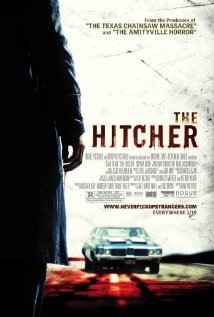
Okay, so my trip wasn’t the stuff of B horror movies.  It wasn’t the opening of I Know What You Did Last Summer, when a driver hits someone on the road and dumps their body in the ocean.  It wasn’t The Hitcher, where a young couple gives a ride to a hitchhiker and horror ensues.  It wasn’t The Texas Chainsaw Massacre, where a group picks up a stranger on their way to gravesite and then are stalked by, well, a guy with a chainsaw and his cannibal family.  And it wasn’t Urban Legends, where a college coed is driving along and suddenly a guy pops up in the back seat!

See, back when Jack Kerouac was taking road trips in the 1940s and ’50s, hitchhiking was pretty commonplace.  It was never really the ideal or safest way to travel, but it wasn’t as scary as it is today.  Today, horror movies are moral tales that warn drivers to always  check the perimeter and interior of their car before getting in and to not pick up strangers.  Parents not only forbid kids to hitchhike but also have to warn them about getting too close to cars in general.  Currently in the area in which I grew up in New Jersey, there’s a man who’s been trying to lure kids into his car.  There have been at least 17 luring attempts in Bergen County recently, and some New Jersey towns are considering a Halloween curfew.

Have a happy and safe Halloween!  What’s your favorite horror movie road trip?

Road Trip: 17 Mile Drive

22 Oct

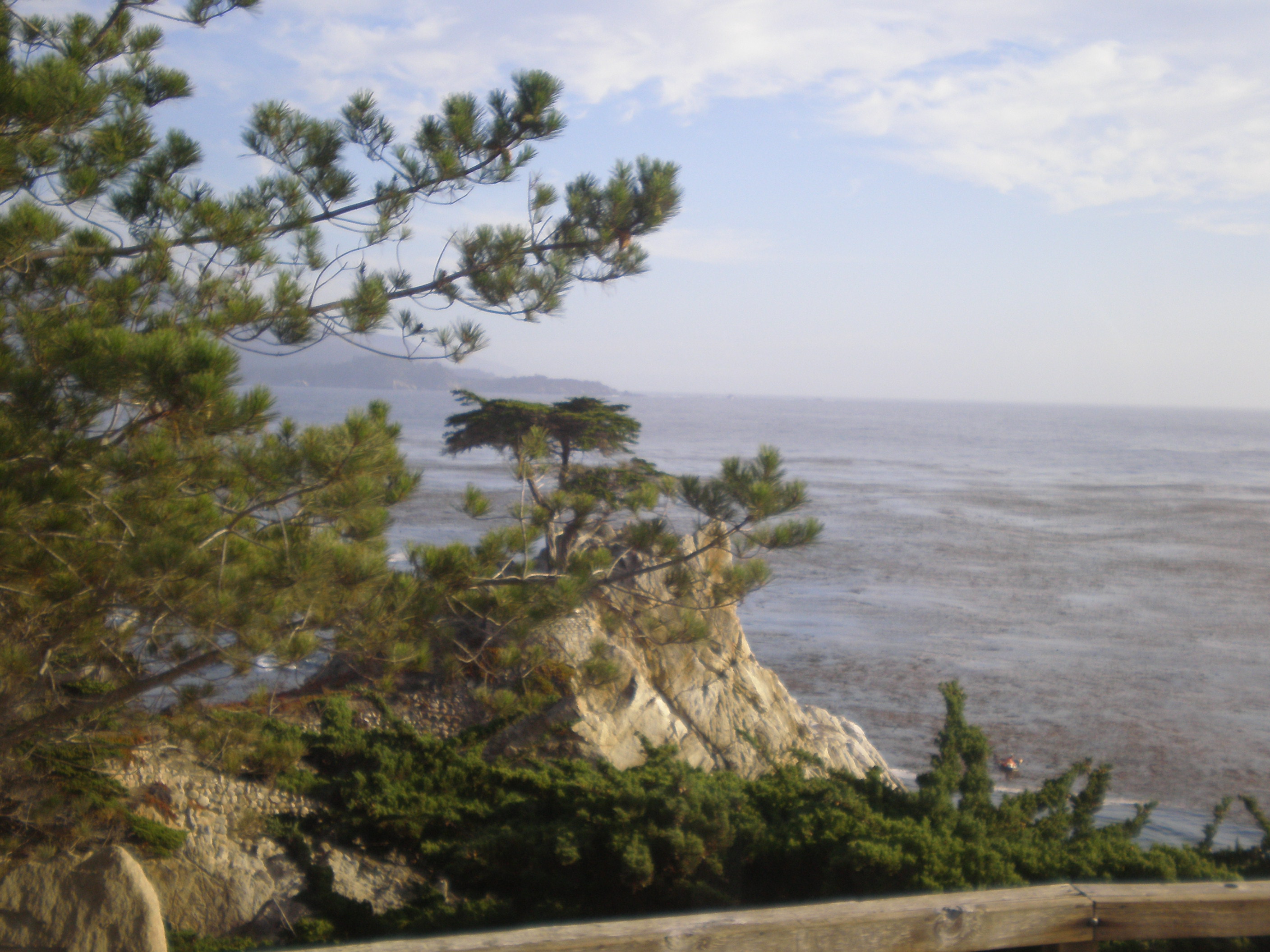
On my road trip down the California Coast, we took the 17 Mile Drive.  I’d never heard of it before, but everyone talked about it as if it were the highlight of the trip even though we spend a lot less time there.  What I discovered was that California’s 17 Mile Drive is a stretch of road associated with luxury.  Millionaires build mansions that overlook the Pacific Ocean.  Golf is the sport of choice.  The art scene is thriving among the cultured citizens.

Here’s a bit about the 17 Mile Drive from Wikipedia:

At the north end, a portion of the early route through Pacific Grove begins at the intersection of Del Monte Blvd and Esplanade Street. The famous portion of 17-Mile Drive then begins a few miles south of this point. The crossing of Highway 68 (Holman Highway/Sunset Drive) and 17-Mile Drive marks the entrance to Pebble Beach.

From the Sunset Drive/Pacific Grove gate, the drive runs inland past Spanish Bay, then adjacent to beaches and up into the coastal hills, providing scenic viewpoints. Travel along the road takes as long as the traveler likes, a minimum of 20 minutes south to Carmel without stops. Numerous turnouts along the road allow stopping to take pictures, or getting out to stroll along the ocean or among the trees. Visitors receive a map that points out some of the more scenic spots. In addition, a red-dashed line is marked in the center of the main road to guide visitors, and help prevent them from venturing into the adjacent neighborhood streets.[2]

The road provides vistas of golf courses including Spyglass HillCypress Point and Pebble Beach. After reaching Carmel Way, and the exit to Carmel, the 17-Mile Drive then heads northeast to the Highway 68/Highway 1 interchange, where one can exit, or continue to loop along the higher vistas of 17-Mile Drive, some of which offer views from more than 600 feet above sea-level. The full loop will take you back to the Pacific Grove Gate at Sunset Drive — a distance of 17 miles.


The driver slowed down and pointed out various homes.  I was not impressed.  I grew up with parents who trapped us kids in the back seat while they drove around looking at the mansions in Alpine, New Jersey.  I’ve seen beautiful, large homes before, and it just doesn’t impress me.  Interior decorating and architecture are passions of mine, so it’s not that I don’t appreciate nice homes.  And I’m by no means against luxury.  I rather enjoy a certain lifestyle.  I’m just not impressed by it.

Do you enjoy driving around looking at mansions?


In case you missed last week’s road trip posts:

everything on my trip went wrong

cocktail recipe for what Jack Kerouac drank in Big Sur

writing tips from Big Sur writers

save the sea otters and sea lions

“Beat Generation” Premieres during Lowell Celebrates Kerouac

10 Oct


Kerouac’s play “Beat Generation,” written the same year that On the Road was published, will also have its premiere tonight.  The event stage production is taking place during Lowell Celebrates Kerouac, the week-long literary where fans from across the country make their pilgrimage to Kerouac’s hometown in Massachusetts.

As The Guardian reports, until around 2005, Kerouac’s play “The Beat Generation” sat unpublished in a New Jersey warehouse. In 2006 Da Capo Press published the play, with an introduction by A. M. Holmes.  Kerouac, who had a great interest in film, never got to see his own play put on or his novels made into a film.

Merrimack Repertory Theatre (MRT) raised funds through Kickstarter to stage the play in Lowell and is presented with UMass Lowell.  It was made with “the support and collaboration of Kerouac Literary Estate representative John Sampas,” according to MRT.

The play centers around the same group of New York City friends Kerouac often wrote about, as they pass around a bottle of wine.  Perhaps even more so than his novels, which are rich in poetry, the emphasis in “Beat Generation” is on dialogue.  Kerouac had a great ear for the unique syncopation of everyday language and the lingua franca of the working class.  As Kerouac himself said:

One thing is sure: It is now a real play, an original play, a comedy but with overtones of sadness and with some pretty fine spontaneous speeches that are as good as Clifford Odets.

Odets (1906-1963) was a playwright raised in Philly and the Bronx who wrote such plays as Waiting for Lefty and Golden Boy.  Born to Russian- and Romanian-Jewish immigrant parents, Odets used ethnic language and street talk in his plays.  Arthur Miller said of Odets’ work,  ″For the very first time in America, language itself . . . marked a playwright as unique.″  Kerouac himself was the son of immigrant French-Canadian parents and made use of both ethnic language–his own joual dialect as well as Greek and Spanish–and street talk.

For information on the special events surrounding the play as well as tickets, visit MRT.

Writing Wednesday: Building Your Book Before You Even Begin Writing It

5 Sep

David Krell’s article “From Book to . . . Blog? Inspiration for the Aspiring Nonfiction Author,” published in Publishing Perspectives is jam-packed with great advice for nonfiction writers.  To sum it up succinctly: start garnering interest in your nonfiction book before you even publish it.

Krell offers five tips on how to build your author platform before you’ve even published books.  He advises that you can score interviews and forewords for your book as well as lectures at conferences before you’ve even finished writing your book.  This, in turn, will improve your chances of writing a well-informed book, obtaining a reputable agent, and selling your book successfully because you’ll have taken the time to build up your reputation as an authority on the subject and gotten other authorities on the subject to contribute to your book.  You should read his tips on Publishing Perspectives for more insight on how to begin building your platform and become a successful author now, even before you’ve written a book.

In relation to Krell’s advice, here are a few questions I think a nonfiction writer should start thinking about as early as possible:

Who is your target audience?

What are the sub-themes of your book?  What are the various angles you can use to market your book?  (Krell’s book is about the Brooklyn Dodgers, but his friend suggests it’s also about urban history.  One of my books is a memoir about growing up Greek American in New Jersey.  It touches on family dynamics, coming-of-age stories, New Jersey, Greece, identity, and the immigrant experience.  Another of the books I’m working on is about Jack Kerouac.  Looking at it through a broader lens, it could appeal to anyone interested in the Beat Generation, the 1940s and 1950s, travelogues, and American history.)

Who would you like to interview?  (Approach them now.)

Who would you like to write your foreword?  (Approach them now.)

Who would you like to blurb your book?  (A blurb is the endorsement on the back of a book.  Approach people now.)

What associations are there for your subject?  (Sign up for the mailing list, get to know its leaders, volunteer to help with an event or to write a guest blog entry.)

What conferences are held on your subject—or on your sub-theme?  (Begin attending, meeting people, speaking.)

What websites are about your subject or sub-theme?  (Sign up for their newsletter, leave comments on their posts, offer to guest blog.)

What books are similar to yours?  (Read them to get ideas.  Also, read the acknowledgements to find out who their agent is.  Begin following the agent’s work to see if you’re interested in signing with them.)

Are there any other questions you would add to the list?

By thinking about these questions now, you’ll have a clearer vision of where you’re headed.  You’ll also be more motivated to continue writing because you’ll have people who are already invested in your success.

Happy writing!

Happy 86th Birthday, Allen Ginsberg!

3 Jun


“Poetry is not an expression of the party line.

It’s that time of night, lying in bed, thinking what you really think, making the private world public, that’s what the poet does.”

~Allen Ginsberg


Today would’ve been Allen Ginsberg’s 86th birthday.  In celebration, here are a couple of links:::

2012 Howl Festival

Howl (the film starring James Franco); clip of the section on how to write poetry

Allen Ginsberg reading part 1 of Howl

The flowering dogwood at St. Mark’s is blooming for Ginsberg’s birthday

“when did you forget you were a flower?” ~ Sunflower Sutra (one of my favorite poems — It’s beautiful. It’s true. It makes me tear up.)

Ginsberg’s Karma (documentary on Ginsberg’s time in India; produced by Ram Devineni and hosted by Bob Holman)

Ginsberg’s photography

Vomit Express (Allen Ginsberg and Bob Dylan)

Howl on the list of banned books

Ginsberg’s hometown of Paterson, NJ

Roses from My Father

17 May

When I was a little girl, my father used to surprise me with roses.  Most of the gardening my father did was of a practical nature: cucumber and tomato plants, the occasional “karpouzi” (watermelon) if the raccoons didn’t get to it first (they always got to it first).  He had grown up on a farm in Greece, and gardening was not a hobby so much as a way of life and a means toward putting food on the table.  There were very few flowers in our garden in New Jersey.

In our backyard, there was a tattered fence that separated our yard from a little brook.  It was here that he planted roses.  In the spring, the thorny bushes climbed up the fence in a tangled mess.  Then one summer morning, while I was still asleep, they bloomed pink, yellow, white, and red, opening their petals up to the blue, blue sky.  My father would cut these beautiful roses and present them to me.  He told me I was a delicate flower.

I’ve been swirling in these memories of my father out in the garden, as I’ve been writing my memoir.

Clip: Creating Space

26 Mar


I’m pleased to have a personal essay published inCreating Space.  In the essay, I write about my angsty teen years in New Jersey … and how I still sometimes feel that way.

Creating Space is a Lenten devotional published by RedeemerWrites, part of the Redeemer Writers Group, an arts ministry at the Center for Faith & Work.  As you may know, I’m one of the leaders of the Writers Group, and so I was involved in soliciting entries for Creating Spaceand editing them, under the direction of Maria Fee.  The devotional features poetry, fiction, and nonfiction, as well as calligraphy by artist David Chang.

Creating Space is on sale for $5.

Burlap to Cashmere Drops New Album Today

19 Jul


Back when I worked for a little indie newspaper in Los Angeles County, I had the incredible opportunity of interviewing the band Burlap to Cashmere.  They were one of my favorite bands at the time, making the whole experience of calling them up to chat — I remember I interrupted percussionist Scott Barksdale’s breakfast — and seeing them play live at Hollywood’s Key Club intensely exciting.  I was a real journalist, reporting on real stars!

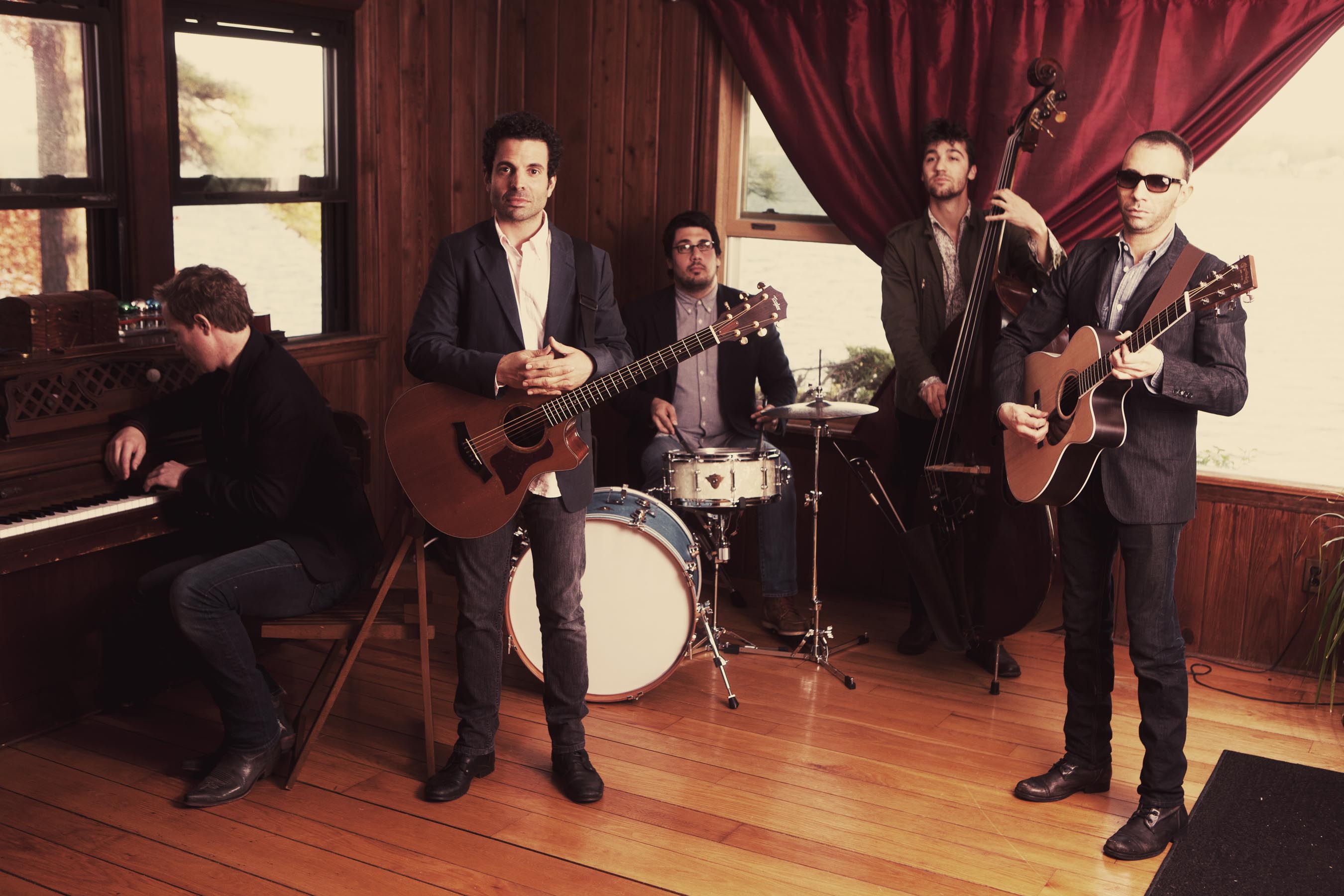
I felt an immediate connection to Burlap to Cashmere.  The fast guitar, the earthy drumbeats, the yelps, the ethnic undertones — it was all so reminiscent of the Greek folk music I grew up listening to at family gatherings … and yet it was modern and lyrical too, preceding the whole indie folk rock movement.  The two founding members, cousins Steven Delopoulos and John Philippidis, were Greek like me.  Not only that, they were from New Jersey like me.  Their songs were poetry.  Their songs were full of Truth and Beauty and Love.

That was more than a decade ago, and they hadn’t put out an album since their Dove Award-winning Anybody Out There? (1998) until now.  Today, they release their new self-titled album.  The line up of the band has changed a bit, but Delopoulos, Philippidis, and Theodore Pagano are still in it.  The new album, Burlap to Cashmere, features songs like the heavily Greek-influenced “Santorini,” the sixties folk rock-sounding “Love Reclaims the Atmosphere,” and the hopeful and faithful “The Other Country.”  Watch videos here.

Hopefully, they’ll be at the Bitter End this summer!