Tag Archives: New York

Happy 83rd Birthday, Gregory Corso!

26 Mar

bday

One of my very favorite poets was born on this day in 1930. That’s right: Gregory Corso. He was quite a few years younger than his friends—William S. Burroughs was born in 1914, Jack Kerouac in 1922, Allen Ginsberg in 1926—but was one of the first published. Kerouac had published The Town and the City in 1950, but the novel that would put him on the map—On the Road—wasn’t published for another seven years. Ginsberg’s Howl was published in 1956. Corso published his first poetry book, The Vestal Lady on Brattle, in 1955. He was only twenty-five years old. Speaking of which, Corso wrote a lovely poem called “I Am 25.” I remember back when I was in college, reading it and thinking how far off that seemed. Twenty five. What a magical age. I wrote a little poem emulating his about how old I was then, and instead of saying “I HATE OLD POETMEN!” like the line in his poem, I wrote “I LOVE OLD POETMEN!” And I do. Gregory Corso is brilliant. Both a classicist and a rule breaker.

If anyone could be called “beat,” it was Corso. Most of the people who came to be associated with the Beat Generation were middle-class suburbanites, or something close to that. Corso was born to a sixteen-year-old Italian immigrant in New York City, who later abandoned him to the Catholic Church Charities. He was sent to live with foster parents and ended up homeless on the streets of New York, eventually doing time in prison at thirteen years old for petty larceny. The story goes that while in The Tombs, the Mafia encouraged him to read, and he fell in love with poetry.

“Flophouse Budget Lifestyle”

27 Feb

Remember the other day when I waxed poetic about my submission spreadsheet? Well, I just stumbled upon Aaron Gilbreath’s article “The Business of Tracking Lit Mag Submissions” on Tin House‘s blog. I loved his old-fashioned pen-and-paper advice. This paragraph punched me in the gut:

Accepting contributor copies as payment for something that took six to twelve months to write; subsisting off microwavable Trader Joes food in order to keep your expenses low enough that you can afford time to write; working temp and odd jobs while publishing in magazines that writers respect but non-writers have never heard of – that’s monkey business. To have an adult’s business mindset and the flophouse budget lifestyle of a twenty year old musician seem antithetical, but I think of those things as part of the business of writing: few poets or essayists make enough money to support themselves by writing, but if you’re willing to live frugally and without popular recognition, you can enjoy a gratifying creative freedom by writing for literary magazines.

It’s so important to protect your creative freedom. There was a time when I didn’t. When I’d take little writing jobs here or there just for the few extra pennies in my pocket and the thrill of seeing my name in print. It took a breakup for me to realize I’d been squandering my time and my creative energy. I don’t publish as much these days, but the writing I’m doing is better, more thoughtful, more “me.” It’s worth more, to me.

And yet it’s so difficult to explain what Gilbreath phrases as “To have an adult’s business mindset and the flophouse budget lifestyle of a twenty year old musician” to someone who isn’t an artist.

Especially when you live in New York City, where the first question someone asks you is “What do you do for a living?” and where you’re judged by which neighborhood you live in. Here, a box of pasta costs double of what it costs over the bridge in New Jersey. Being middle class in New York City isn’t really the same as being middle class in other parts of the country.

Take this quote from The New York Times’ article “What Is Middle Class in Manhattan?“:

By one measure, in cities like Houston or Phoenix — places considered by statisticians to be more typical of average United States incomes than New York — a solidly middle-class life can be had for wages that fall between $33,000 and $100,000 a year.

By the same formula — measuring by who sits in the middle of the income spectrum — Manhattan’s middle class exists somewhere between $45,000 and $134,000.

But if you are defining middle class by lifestyle, to accommodate the cost of living in Manhattan, that salary would have to fall between $80,000 and $235,000. This means someone making $70,000 a year in other parts of the country would need to make $166,000 in Manhattan to enjoy the same purchasing power.

Or this one from NY Daily News‘ “N.Y.C. so costly you need to earn six figures to make middle class“:

In Manhattan, a $60,000 salary is equivalent to someone making $26,092 in Atlanta.

And of course, there’s this one from The Huffington Post’s “New York City’s Middle Class Is Facing An ‘Affordability Crisis,’ Says Christine Quinn“:

City Council defines “middle class” as those with a household income within 100 to 300 percent of the area median income (AMI). In New York City, that means an income ranging from $66,400 to $199,200.

I personally don’t have a “flophouse budget lifestyle.” I have a Career. Yes, capital “C.” I enjoy the work I do, and it also affords me the creative space I need to work on my writing without having to make a living off my writing, though I do earn money for my writing.

But, what does “lifestyle” really even mean? Reading and writing, and even being part of the literary community, do not require much money. There was some talk a while back about bookstores considering charging for readings, however most readings in New York City are free. Libraries lend out books for free. Museums have pay-what-you-wish days. There are more literary opportunities for writers in New York City than in many other places in the country, so in some ways it evens out. But maybe that’s just wishful thinking.

I did think this Onion article was funny, though.

Greek-American Tina Andreadis Promoted to Senior VP of Publicity at HarperCollins

18 Jan

HarperCollins Publishers promoted Tina Andreadis to senior vice-president of publicity, according to Publishers Lunch.  Hired in 2005 as vice president, director of publicity, Andreadis oversees publicity for many of the publishing house’s imprints.

The Greek America Foundation named Andreadis as part of the Class of 2010 winners of the Forty Under 40; she was thirty-nine at the time. They noted:

Andreadis is very involved in philanthropic and media efforts on behalf of the Greek Orthodox Archdiocese of America. In October 2009 she was a key member of the media team for Patriarch Bartholomew’s historic tour of the United States, working to promote his trip to America. Her influence helped secure an opinion piece by the Patriarch in the Wall Street Journal. Andreadis is an active member of Kimisis Tis Theotokou Greek Orthodox Church of the Hamptons. There she is media chair for the future expansion of the church and a committee chairperson for the church’s annual festival in Southampton.

Congratulations to Tina Andreadis on her new role at HarperCollins!

The New York-based publishing house’s origins go as far back as 1817 when Harper & Brothers was founded and is now one of the largest publishing houses in the world. Side note: like most publishing houses, they have a history of publishing Beat Generation-related books, including Rub Out the Words: The Letters of William S. Burroughs, 1959 – 1974  and Howl: A Graphic Novel.

Lou Reed, Anne Waldman, Hettie Jones, and Others Celebrate Allen Ginsberg’s FIRST BLUES

16 Jan

ORG_BKS_FirstBlues_01

Image via Housing Works

If you’ve never heard Allen Ginsberg read “Howl,” you can’t grasp its full intensity. Ginsberg has one of those voices you can’t shake out of your head, a voice you could hear once and then ten years later still recognize. It’s even but possessive, sucking you into the inner crevices of the poet’s mind and locking you in.

This evening at 7, Housing Works is hosting a musical soiree for the reissue of Ginsberg’s First Blues: Rags, Ballads, Harmonium Songs, Chanteys & Come-All-Ye’s. Ginsberg was a connector, a person who liked to introduce people and make things happen for them. As such, he had many friends and collaborators. Among those who will be celebrating this night of poetry and song include:

Here’s a bit about First Blues from Housing Works:

The work was originally released as a double LP back in 1983, and as a CD in 2006.  Produced by legend John Hammond Sr., this record of songs is a collection of studio sessions from 1971, 1976, and 1981 and included the likes of Bob Dylan, Arthur Russell, David Mansfield, Happy Traum, David Amram, Steven Taylor and Peter Orlovksy. To commemorate this reissue, a limited run of 500 seven track vinyl that mimics the original style down to the newspaper insert will be available that night and online.

Housing Works puts on nerdilcious events.  There was, for instance, the epic reading of Moby-Dick.
They’re also advocates for those living with HIV/AIDS. They’re located at 126 Crosby Street  in Manhattan.

The event is also hosted by Ginsberg Recordings (a collaboration of Ginsberg’s Estate and Esther Creative Group), VitaCoco, and Warby Parker (after all, it’s hard to picture Ginsberg without picturing glasses). 

The Light Holds Harvey Shapiro

8 Jan

9780819560964_p0_v1_s260x420

I have just learned that Harvey Shapiro passed away yesterday.

Shapiro, whose first language was the endangered language of Yiddish, is the person who suggested Martin Luther King, Jr., compose a letter while he was in jail. The result was “Letters From Birmingham Jail,” which Shapiro wasn’t able to get published at The Times Magazine, where he was editor, but which was published by The Christian Century, among others.

Shapiro was a poet in his own right, crafting poems both witty and profound and oftentimes reflecting on life in New York City. Born in 1924 and obtaining his master’s degree in American literature from Columbia University in 1948, he was a contemporary of the Beats. He served in World War II and edited the volume Poets of World War II.

I had the good fortunate of hearing him speak at McNally Jackson Books two years ago. One of the big takeaways I had was that one must persevere in writing. Here was someone who even in his eighties was still engaged in the literary community and encouraging writers.

Blessing of the Waters

6 Jan

hudson

This past year, we’ve seen the power of water when Hurricane Sandy hit, devastating homes, businesses, and even lives. And yet water remains critical to our existence:

  • About 57% of our body weight is water.
  • Approximately 88% of 1.8 million deaths a year is attributed to unsafe water supplies and sanitation and hygiene issues. Most of these deaths are in children.
  • Water covers about 70% of our planet.
  • Africans spend 40 billion hours just walking to get water every year. It is usually women and children who have the responsibility of fetching water, and this arduous task keeps them away from school.

Water is a dichotomy of life and death.

I once saw a priest in Brooklyn throw a cross into the muddy waters of the Hudson.  It was a frigid January day, yet a bunch of boys jumped into the river to save the cross.

What would possess a priest to throw a cross into the river?

Theophany; or, as most westerners call it, Epiphany.

The word “Theophany” comes from the Greek “τα Θεοφάνια,” which means “appearance of God,” and January 6 is the feast day that commemorates the incarnation of Jesus.  It celebrates His birth and baptism.

When St. John the Baptist baptized Jesus in the Jordan River, the heavens opened up and the Holy Spirit descended like a dove.  God spoke from the heavens, saying, “This is my Son, whom I love; with him I am well pleased” (Matt 3:17, NIV).  It marked one of the very few times that all three characters of the Trinity—Jesus, the Holy Spirit, and God—revealed themselves at the same time to man.

Jesus’ baptism marks His first step toward Crucifixion, according to Orthodox theology.

And so, on January 6, Orthodox priests throughout the world throw crosses, symbolic of Jesus’ crucifixion, into bodies of water, symbolic of His baptism.  This is called the Blessing of the Waters.  Volunteers jump into the water to retrieve the cross.  The priest, according to tradition, prays a blessing on the person who gets to the cross first and brings it back to him.

Here’s the Troparion (tone 4) from the Eve and Afterfeast hymn, which has some powerful imagery:

The River Jordan receded of old by the mantle of Elisha when Elijah ascended into heaven; and the water was separated to this side and that, the wet element turning into a dry path for Him, being truly a symbol of Baptism, by which we cross the path of transient age. Christ appeared in the Jordan to sanctify its waters.

Parts of this post were first published on my blog in 2011 and 2012.

“On the Road” Review

18 Dec


OLYMPUS DIGITAL CAMERA

OLYMPUS DIGITAL CAMERA

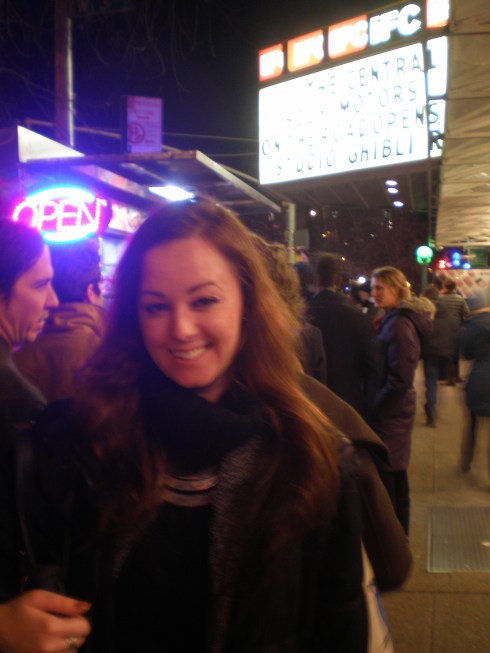
On Friday, December 14, I attended a special sneak preview of On the Road at IFC Center in Greenwich Village. It was history in the making. At long last, Jack Kerouac’s seminal road novel had made its way to the silver screen. Kerouac himself wrote a lot about going to the movies, and he wanted his novel turned into a film. In fact, he even wrote to Marlon Brando, asking him to buy it and star in it.

Francis Ford Coppola bought the film rights decades ago. I have a friend who wrote a screenplay that he showed to Coppola, and there have been numerous actors associated with the film adaptation, but the project always seemed to stall. Finally, Walter Salles came on as director and Jose Rivera as screenwriter, and soon after an impressive cast lined up, and the film looked like it would finally take off. And it did! It debuted at Cannes Film Festival in May 2012. Throughout the summer and into the fall, the film showed at theatres across Europe and South America. Those of us in the States read reviews, watched clips, argued about whether the novel could be adapted for film in a successful way, and debated the choices for the cast while we waited for the quintessential American story to come to us. At long last, when it was announced that a sneak preview of On the Road was taking place in the neighborhood Kerouac used to hang out in, people lined up on the Avenue of Americas for a chance to see it. As my good friend Elizabeth and I waited in line, an older man offered us $50 for our movie tickets. Considering we were so excited we were taking photos to commemorate the event, we probably weren’t the best people to try to scalp from. Needless to say, I watched the film, and, for whatever it’s worth, I can now give you my review of On the Road, which opens in New York and LA on December 21 and the rest of the country in January.

Let me start with a caveat: I am perhaps a bit too close to the subject matter to review On the Road objectively. After all, I am writing a book about the true story of On the Road. I have also heard and read reviews by a few other Beat scholars and fans and watched many Youtube clips from the film. I came in with lots of preconceived notions, and I watched the film more as a critic than as your average moviegoer. That said, I did not go into it as a literary snob wanting it to fail. I came into it wanting to see Kerouac’s work done justice.

***

On the Road is wonderfully nuanced. And to me, it’s the nuances in the acting, directing, and screenwriting that make On the Road a worthwhile adaptation of the novel. Everyone involved in the film understood that Kerouac’s novel is not just about some crazy kids driving at high speeds across the country, getting high, and getting laid. They understood that depicting this wild behavior — the film does not censor anything — was necessary not for shock value but because it underscores the complexity of the characters. In particular, the film does justice to the theme of the loss of fathers. Burning Furiously Beautiful, the book I’m coauthoring, delves into the personal life stories of the real-life people the characters are based on, giving further insight into their behavior and lifestyle. Understanding the characters’ back story elucidates their desires and actions, and the film adaptation neither glorifies nor critiques the characters. It gives them space to reveal themselves to the viewer.

Interestingly, the character that fell flat to me was the character of Sal Paradise, based on Jack Kerouac and played by Sam Riley. The actor, screenwriter, and director did a great job showing him to be an observer, which was true to Kerouac’s nature. However, the film itself was not seen through Sal’s eyes. He seemed like just another character. The landscape, the jazz shows, the parties were depicted through a neutral perspective. Not only did this make it difficult to understand Sal’s motivations and character — this is most evident in the scene with Terry (“the Mexican girl”), which isn’t developed enough for us to understand why it’s included — it meant we lost his voice. While critics over the years have focused on the road trip antics, for me, the strength of the novel was its insanely beautiful poetry. The film adaptation was more about the story and less about the literature.

Overall, though, the dialogue for the characters and the acting was phenomenal. Viggo Mortensen needs to star in a biopic on William S. Burroughs. Amy Adams took on the persona of Jane. Kristen Stewart brought a depth to Marylou that Kerouac himself didn’t. Kirsten Dunst showed great emotion in her scenes. Tom Sturridge played Carlo Marx with intensity but also surprising humor; his dialogue was quintessential Ginsberg: dramatic and over the top. Elisabeth Moss’ Galatea was a nice contrast to the other characters, while Danny Morgan’s Ed was a bit too goofy; these two characters are the reason the characters end up at Old Bull Lee and Janes’s place, but if it weren’t for that they could’ve been edited out for the film. Garrett Hedlund was charismatic. He lit up the screen.

My most pressing criticism of the film is that it felt a bit too much like a period piece for my personal preference.  I was impressed that the film was historically accurate, and yet I found myself distracted by those details. For example, when the focus was on the exterior of the Hudson, it made the story feel removed instead of vibrant; yet the shots within the car or from the viewpoint of the passenger were beautiful. Likewise, there were times when the wallpaper in a room jumped out at me more than it probably should have. I’m by no means suggesting the story should have been modernized, but the setting and props should not overpower the story. There were also scenes like the one at the jazz club which felt staged, almost cartoonish. I would’ve liked something a bit more raw, a bit grittier or impressionist.

In contrast, the New Year’s Eve party was sheer brilliance. Here were fast cuts and disorienting angles. Here were sweat and thrashing limbs. Here was jazz you wanted to dance to. Here was the energy that made you want to shout go, go, go! There were also beautiful quiet moments laced throughout the film. Poetic landscape. Honest heart-to-hearts. Subtle glances. Almost any time the characters were on the road, the dialogue, the filmography, and the acting were spot on.

The film adaptation of On the Road may enlighten some people’s perception of Jack Kerouac.

She Threw Out Her Cell Phone and Packed On the Road

13 Nov

This young woman gets up to the microphone.  She speaks confidently but not in a rehearsed manner as she tells her story.   She’s been in New York City only for a few months now, since sometime this summer.  Unlike many people, she wasn’t intent on staying here.  New York City wasn’t her dream destination.  She had run away from home.  Her plan was to flee the East Coast for the West.  Californ-i-a.  She packed her bags and hit the road.  Along the way, she met a guy and became involved with a church in Manhattan.  She decided to stay.  She decided to share her story with others.

Afterwards, I approach her.  I want to know more.  Why had she left, throwing out her cell phone so no one could even get in touch with her?  Has she reconciled with those she left behind?  She answers my questions and asks about the book — Burning Furiously Beautiful — I had read from at the same microphone as her.  She tells me that of the few possessions she packed with her when she left home, one of them was Jack Kerouac’s On the Road.

Election 2012: The White House Landscape Artists

6 Nov

In honor of the upcoming election, here’s a bit of trivia:::

The grounds at the White House in Washington, D.C., were designed by Calvert Vaux and Andrew Jackson Downing.  While Downing was American, Vaux was British.  After Downing was killed in a steamboat accident (I kid you not), Vaux went on to work with Frederick Law Olmsted.  Together they designed Central Park and Morningside Park in Manhattan and Fort Greene Park and Prospect Park in Brooklyn.  Is it any wonder that he cited the Transcendentalist author of “Nature,” Ralph Waldo Emerson, as one of his influences?

I took a group Church Hopping to the Church of the Intercession in Washington Heights, part of New York City, where Calvert Vaux was commissioned to to do landscape work on the cemetery grounds.  You can read about it here.

Prepping for Hurricane Sandy

28 Oct


Just got word that the MTA is shutting down at 7 tonight for Hurricane Sandy.  Doesn’t make much difference to me.  I’ve been stuck sick in bed for two days.  Yesterday, started out well enough.  I went to Barnes & Noble and got a Pumpkin Spice latte and Dutch Apple cheesecake and then braved the grocery store.  Grocery shopping in New York City is always a nightmare with too many people and tight aisles, but yesterday was nuts as people were preparing for the storm.  It was like trying to shop the day before Thanksgiving.  I bought ingredients to make broccoli soup from a recipe out of one of the cookbooks I edited and fortunately made it before I got to feeling too sick so now I don’t have to cook at all.  I can just sit in bed and watch a million episodes of Color Splash, my favorite interior decorating show, and dream up my perfect home.

Are you prepared for Hurricane Sandy?

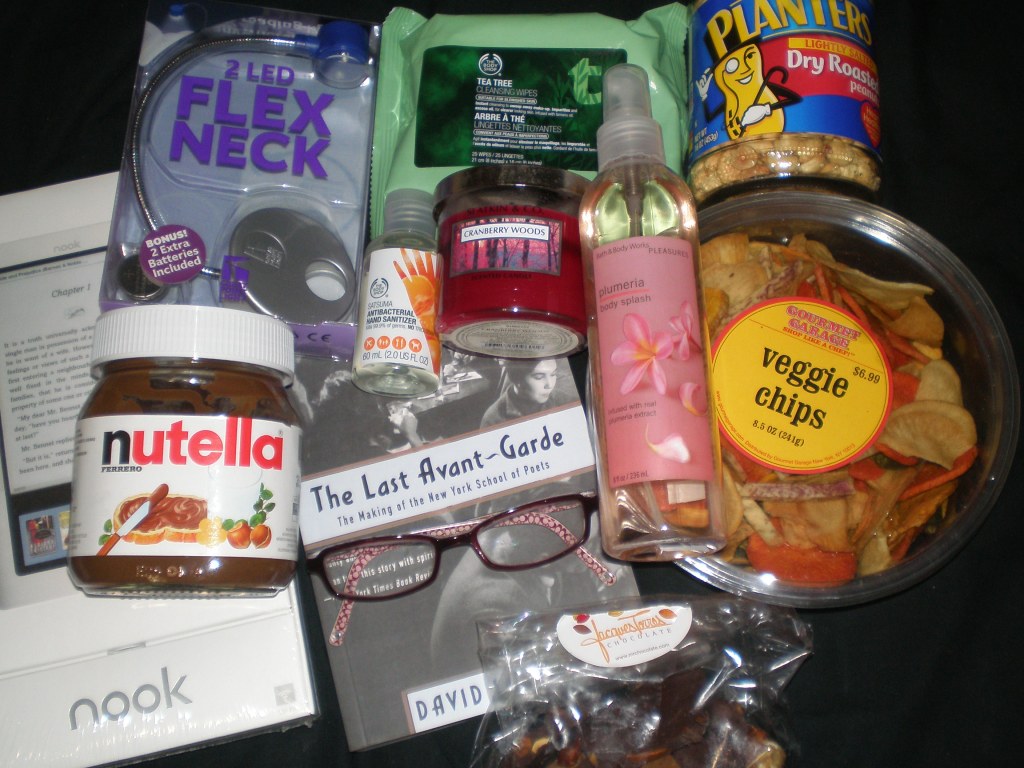
If you’re like me and totally unprepared for any sort of emergency and don’t own a flashlight, shame on you!  By now, all the flashlights are gone.  Even finding candles in the drugstores is getting hard.  Get creative.  Barnes & Noble* sells a wide variety of battery-operated reading lights.  Just because it’s for reading, doesn’t mean you can’t use it to find your can opener if the lights go out.

While you’re there, pick up the Barnes & Noble* ereader the nook if you don’t already have one.  Charge it up pronto and download some books.  If the power is out for a long time, you’ll have plenty of reading material.  My book recommendation is Jack Kerouac’s Dr. Sax perfect for Halloween.

It’s still a good idea to have some candles on hand.  If you can’t find any at the drugstore or grocery store, that’s okay.  Class it up with some scented candles from Bath & Body Works.  I picked up the Cranberry Woods and Lemon ones during their 2-for-1 sale.

Speaking of scents, if we don’t have access to water that means you won’t be able to shower.  I suggest some perfume or body splash to keep you smelling fresh.  I’ve got Bath & Body Works‘ Plumeria body splash (which always makes me think of my Hawaiian friend from undergrad).

Now you may not be able to wash your hair but you can use an oil-absorbing dry shampoo.  I’ve used the TRESemme dry shampoo with mixed results.  That said, I do favor their regular shampoo and condition.  And, they don’t test on animals.

Another great animal- and eco-friendly company is The Body Shop, where I’ve been shopping since middle school.  I love the Tea Tree Oil line, and today stocked up on their cleansing wipes in case I won’t have access to water to wash my face.

While at The Body Shop, I also picked up anti-bacterial hand sanitzers in my most favorite scents satsuma and pink grapefruit.  I normally advise against these sorts of anti-bacterial hand sanitizers because I fear using it will lead to the creation of a resistant super-bug, but hey, you’ve got to have clean hands somehow if there isn’t good old-fashioned soap and water.  Plus these ones smell amazing, unlike some brands that smell like rubbing alcohol.

If you wear contacts, keep your stylish glasses in an easy to locate place.  In fact, make a to-go bag of all your critical necessities (medication, keys, cash, etc.).

Now in terms of food, non-perishables does not have to mean SPAM!  There are lots of great foods that are either non-perishable or that don’t require cooking.  Go Greek with canned domathes, Kalamata olive spread, raw almonds, honey on bread, and sesame candies.

How are you staying storm stylin’?


*I work for a subsidiary of Barnes & Noble.