Tag Archives: Odyssey

Photos from Reading at Sidewalk Cafe

15 Aug

I had so much fun reading at poet RA Araya’s birthday bash at the Sidewalk Cafe this past Sunday!! RA was such a great host and is so encouraging.  There were so many amazingly talented poets and musicians there.  I felt so honored to get to read with them.

I started off reading the beginning of Homer’s The Odyssey in Ancient Greek (bringing awareness to Greece’s cultural heritage as well as the plight of endangered languages) and then read a section from Burning Furiously Beautiful: The True Story of Jack Kerouac’s On the Road, the book that I’m coauthoring with Paul Maher Jr., while the flashbackpuppy band improvised a jazzy tune.

Here are some pictures RA took.


That’s me sitting next to poet Juan Valenzuela.  In the foreground is poet Miguel Algarin, who co-founded the Nuyorican Poets Cafe and knew Jack Kerouac back in the day.

Special thanks to my friends, who came out to support me.

Gift Guide: For the Hellenophile

20 Dec

Whether you’re giving a Greek American a taste of their homeland when they can’t make it back for the holidays or satiating a Hellenophile’s interest in Greek culture, there are countless foods, books, beauty products, and jewelry that will suit your needs.  Plus, select a gift made in Greece and you’ll also be supporting the struggling Greek economy.  Here’s just a small selection of Greek gift ideas, some made in the States, some in Greece, and others elsewhere, but all unique and lovely.

Gifts for the Greek food lover:::


Kokkari: Contemporary Greek Flavors by Janet Fletcher


How to Roast a Lamb: New Greek Classic Cooking by Michael Psilakis


A selection of delicious dressings and marinades from Sophia’s Gourmet Foods

A selection of three different flavors of honey from Odysea Shop

Traditional Greek preserves (rose petal and pergamot) by Monastiri

Kalamata olive oil

Ouzo candies

Pavlidis Dark Chocolate

Pastelli with honey

Bonus tip! – Gifts appear so much nicer when they come as a set.  You may want to give a cookbook with some Greek spices.  A duo or trio of a certain type of product (such as honey or olive oil) is a great way for the recipient to try out a few flavors.  Or, you may want to give a gift basket of assorted Greek candies.


Gifts for someone who loves Greek literature:::


The Greek Poets: Homer to Present by Peter Constantine


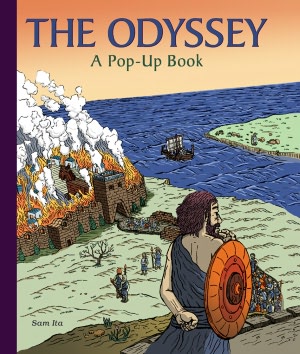
The Odyssey: A Pop-up Book by Sam Ita


Greek classics

Subscription to Greek America Magazine

Bonus tip! – Trying pairing the book with a book light, a notebook and pen, a bookmark with a quote by a Greek philosopher, or a coffee mug (maybe even with a bag of Greek coffee).


Gifts to make someone feel like a beautiful and pampered Greek goddess:::

Beauty products from Korres

Olive oil body lotion by Olivia

Jewelry by Konstantino

Bonus tip! – Include a lovely handwritten letter.  A bottle of Greek wine or some fine Greek chocolates would also make someone feel loved and pampered.


As the Greek proverb says, “A gift, though small, is welcome.”

Gripster: 2011 Coney Island Mermaid Parade & Greek Mermaid Myths

20 Jun

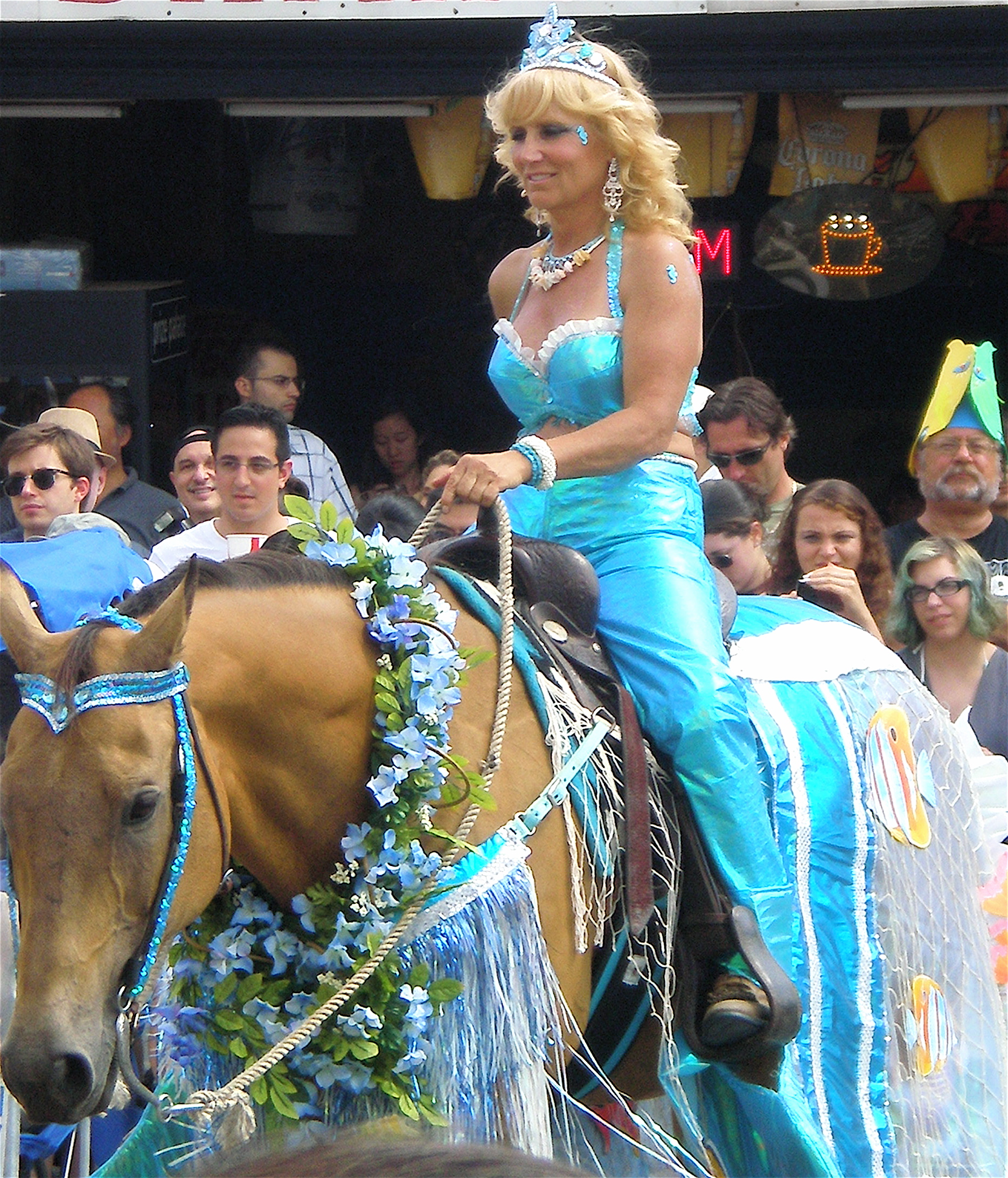
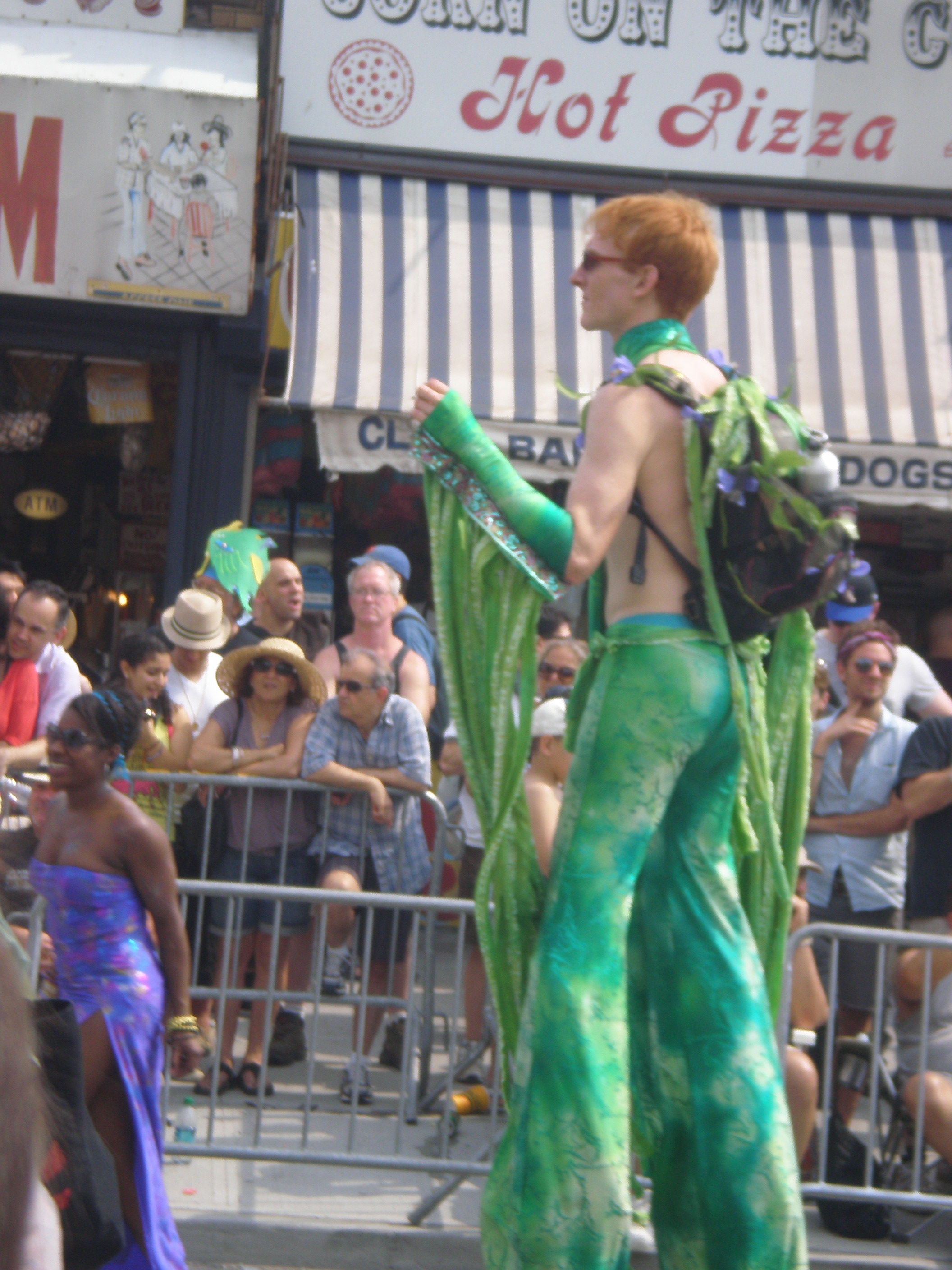
I hit the beach for the first time this year for the 2011 Coney Island Mermaid Parade.  I’ve been going for a few years now, so I was kind of surprised when friends asked me what it is.  It’s pretty much what it sounds like.  It’s kind of like an all-mermaid version of the Village Halloween Parade.  A lot of the outfits are scandalous, but the parade is so much fun!

The Coney Island Mermaid Parade is the world’s largest art parade.  It was founded in 1983 by the same not-for-profit arts organization that produces the Coney Island Circus Sideshow.  The official website describes the Coney Island Mermaid Parade:

The Mermaid Parade celebrates the sand, the sea, the salt air and the beginning of summer, as well as the history and mythology of Coney Island, Coney Island pride, and artistic self-expression. The Parade is characterized by participants dressed in hand-made costumes as Mermaids, Neptunes, various sea creatures, the occasional wandering lighthouse, Coney Island post card or amusement ride, as well as antique cars, marching bands, drill teams, and the odd yacht pulled on flatbed.

You probably know that Neptune is the Roman version of the Greek god Poseidon, the god of the ocean.  (If you’re curious about Poseidon, check out my blog entry “Gripster: Portlandia, Hipsters, and Greek Myth.”)  What I was curious about was mermaid Greek mythology.  I always think of the sirens that the cunning Odysseus outwitted as mermaids, when in fact they’re actually half woman, half bird.  So what does Greek mythology actually say about mermaids?

According to myth, Alexander the Great’s half-sister is a mermaid.  Thessalonike was born to King Philip II of Macedon and his concubine, Nicesipolis, in 252 or 345 BC.  According to legend, Alexander the Great bathed Thessalonike’s hair in life-giving water that he retrieved on his quest to find the Fountain of Immortality.  When her older brother died when she was only nineteen years old, Thessalonike tried to drown herself.  In death, Thessalonike transformed into a mermaid, according to legend.

Mermaid Thessalonike lived in the Aegean.  She stopped ships, asking, “Ζει ο Βασιλιάς Αλέξανδρος?” (“Is King Alexander alive?”)

If the passing ship answered, “Ζει και βασιλεύει και τον κόσμο κυριεύει” (He lives and rules the world), she calmed the waters.

If the ship answered anything less positive, she caused a severe storm that would spell death to all sailors.

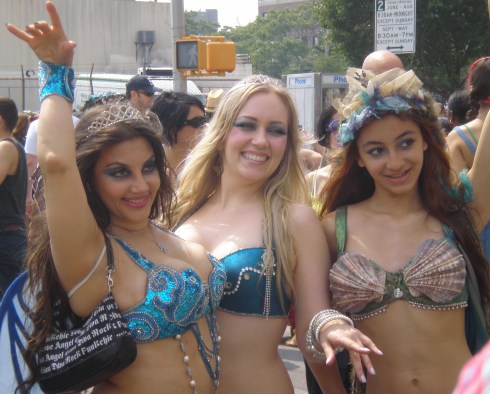
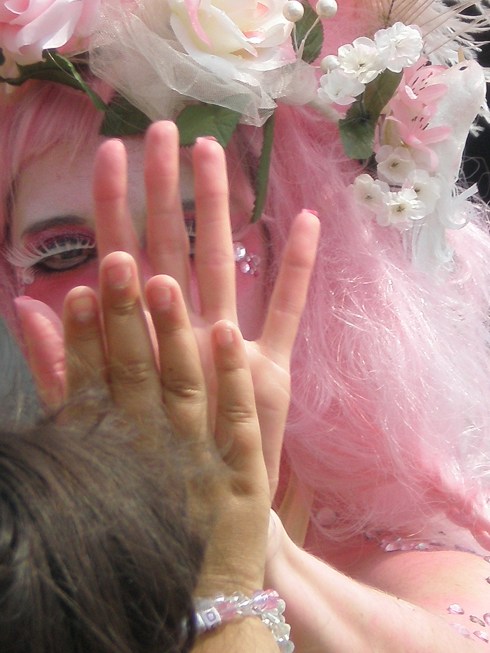
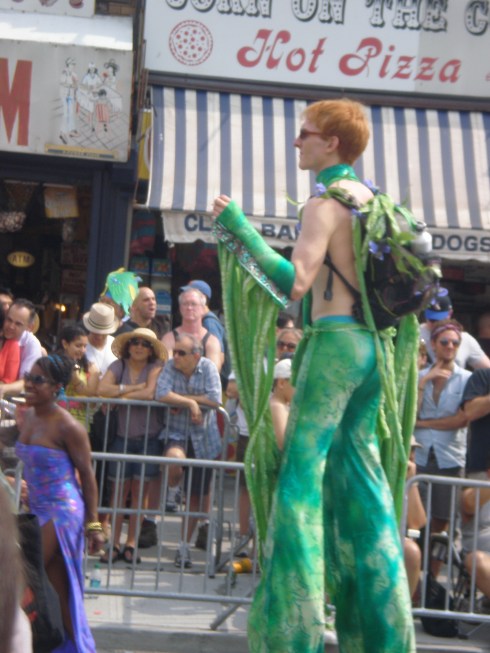
I took some 2011 Coney Island Mermaid Parade pictures.
I hear 2011 is the year of the mermaid trend.

Writing Wednesday: Greek Stereotypes — If You Can’t Beat ‘Em, Join ‘Em … Or Something Like That

6 Apr


“Stereotype” is a dirty word.  Stereotypes of ethnicities and races come with all sorts of negative connotations—the types of assumptions that are too dangerous to even give examples of, but you all know what I’m talking about.

I remember years ago learning that even “positive” stereotypes are negative.

Really?  How can that be?

I’ve been stereotyped.  Because of my last name, people make all sorts of assumptions about the literature I read and the language I speak.

“Did you read the new translation of The Odyssey?”

“Can you tell the class how to pronounce this Greek word?”

“I can’t remember who the god of wine is.  Stephanie, who was it again?”

If it happened once in a blue moon, it wouldn’t be a big deal.  But it happens often enough that it’s at times made me insecure in my identity.  Should I know that there’s a new translation of Homer’s epic poem?  What does it say about me that I don’t know?

Sometimes it works to my advantage, though.  I’ve received opportunities to write about Greek things by virtue of my ethnicity.  That is a positive, but it is also a negative.  Is that the only reason I was selected?, I can’t help but wonder….

“Why do you write about Greek things?” my mom, who is not Greek by blood, asked me.

My lit teacher has a theory that literature is reparative.  We write to rectify, to make ourselves whole.  She may be right.  I write about Greek things because I don’t feel as Greek as others seem to think I should—which makes me think I need to feel more Greek—and my writing seeks to explain, to justify, even to rectify.

Also, I figure if I can’t beat ‘em, join ‘em.  People have been making stereotypes about my interests and knowledge of Greece for decades.  That’s not likely to change.  The stereotyping comes from a good place: people love Hellenic history and Greek culture.  Why not give the people what they want?  After all, I like Greek culture too, even if I don’t always know as much about it as some people assume I do.

Penelope: NYC Restaurant Review and Mini Mythology Lesson

31 Jan

My sister treated me to lunch at Penelope on Friday, which was the perfect antidote to the snowy day.  The shabby chic look of the décor, in white and powder blue, reminded me of my Victorian dollhouse.  There were antique-looking light fixtures, salvaged wall art, and even a picket fence at the hostess desk.  Located in the Curry Hill area of New York, Penelope (159 Lexington Avenue, at 30th Street) is one of the cuter little restaurants in a neighborhood dominated by Indian buffets and grab-and-go bagel shops.

If you’re in the mood for a sophisticated take on comfort food, head over to Penelope.  The menu offered up so many vegetarian options, though there were also plenty of meat dishes.  There was Ellie’s Spinach Pie, which is described as “yia yia’s greek country recipe” [sic]; The John-Oliver, a goat cheese and olive tapenade sandwich on cranberry-pecan bread; and Grilled Three Cheese, which for a buck more you can add artichoke hearts to.

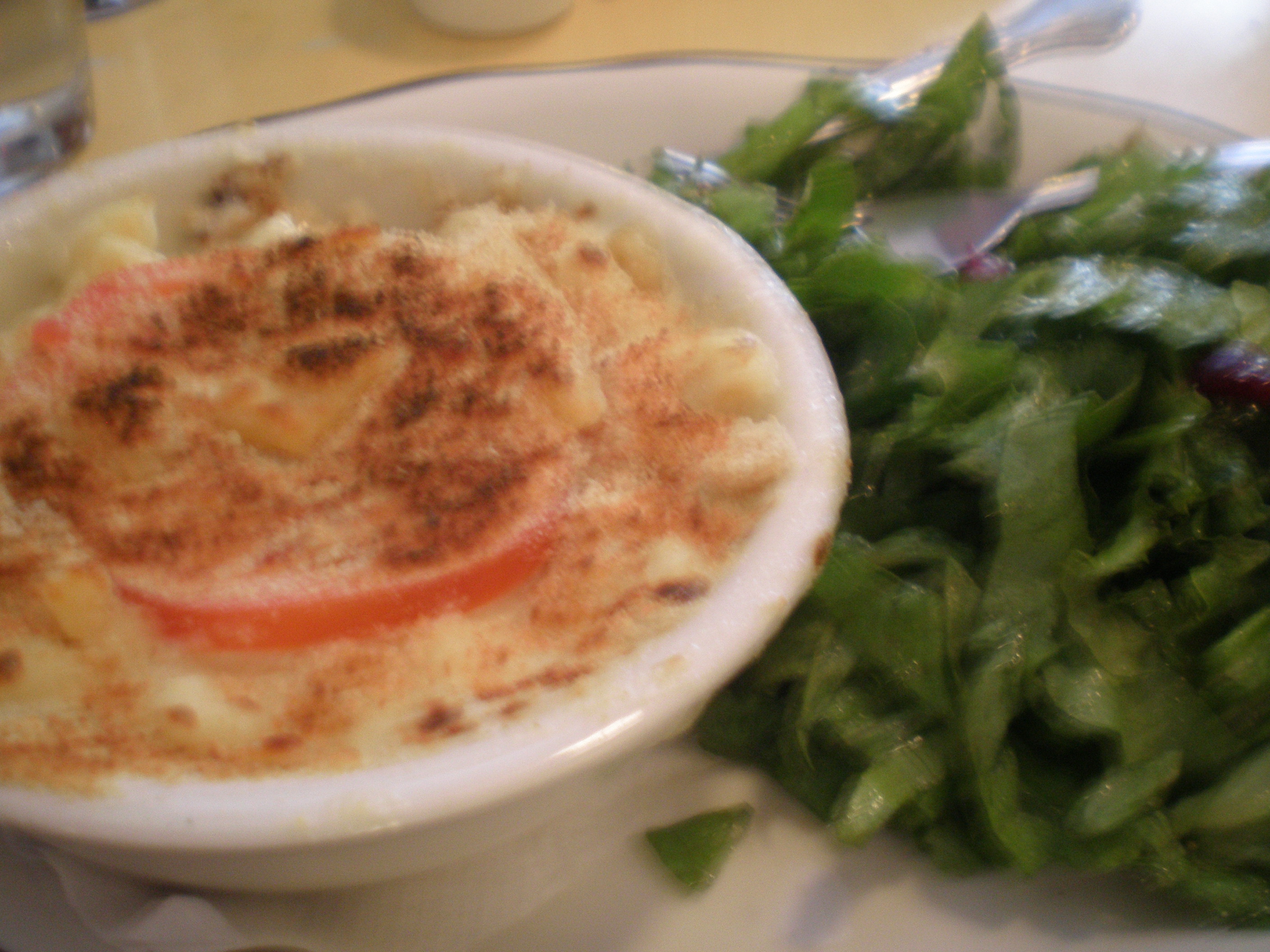
I ended up getting the Mac & Cheese.  It wasn’t quite as good as the one made at Chat’n’Chew, but I loved that they put tomato on it—just the way my mom serves it.

For dessert, my sister and I split a Peanut Butter Blondie, and I had a latte.  So good!

Next time, I’d like to come for brunch.  Their Nutella French Toast sounds amazing.

When Jennifer Potenza opened the restaurant in 2003, she named it after her pet turtle.

Fans of Greek literature, though, may remember that Penelope is also the name of Odysseus’ faithful wife in The Odyssey.  While much of the action in Homer’s epic poem revolves around the adventures of cunning Odysseus, who fends off the Cyclops and the sexy Sirens, it is also a story of profound love.  There’s no reason for Penelope to believe that her husband has survived when, days turn into years and still Odysseus has not returned from the Trojan War, and yet Penelope remains faithful to Odysseus by refusing to accept offers from any of the one hundred (108 to be exact) suitors that come into her life.

Twenty years later, Odysseus returns.  Penelope doesn’t believe it’s him at first, and it’s only after he tells the secret that only he and she knew about how part of their bed is made from an olive tree that she believes it is truly him.

One can pick out Penelope in artwork because artists depict her at a loom and with her legs crossed.