Tag Archives: On the Road

Mixtape: Music and Poetry for On the Road

28 Jun

photo via Aunt13’s 8tracks mix

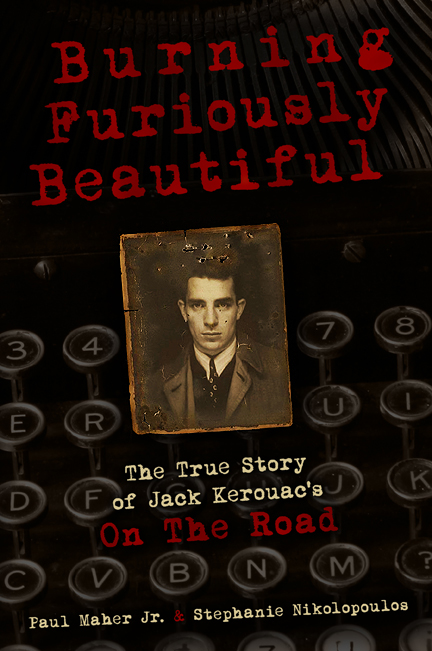
Aunt13 over on 8tracks made a mix called Music and Poetry for On the RoadIt’s inspired by Jack Kerouac’s On the Road and in the blurb she mentions Burning Furiously Beautiful!  How cool is that?!

I have the coolest friends!  I am going to be listening to this while I write, for sure, and daydreaming of hitting the road.  Aunt13 has over 300 mixes, so be sure to show her some love.

You may recall I posted a while back the soundtrack for the On the Road film.  It was just announced yesterday that the film will be making its US debut in late fall.

J. Haeske also made a mix for the soundtrack he’d envision for the film.  Teaser!  I have an interview with him about his new book on Kerouac lined up for you, so stay tuned.

What songs would you put on a mix for On the Road?

Also, I took my own advice about social media, and created a Facebook page for Burning Furiously Beautiful: The True Story of Jack Kerouac’s On the Road, the book I’m co-authoring with Paul Maher Jr.  Be sure to “like” the book on Facebook!  We’ll be posting news about the book, information from Across the Underwood, updates on the film, and so much more!

Road Trip Writing: On the Road and The Canterbury Tales

18 Jun

Jack Kerouac once quipped back at a journalist, “I’m not a beatnik; I’m a Catholic.”  Despite the Beat Generation being associated with the countercultural movement—sex, drugs, and … jazz—Kerouac’s writing so often points toward the spiritual.

Visions of Gerard describes his saint-like brother who died at age nine and touches upon life in the Catholic church in Lowell, Massachusetts.  When he left home, Kerouac began exploring Buddhism.  Ultimately he grew disenchanted by it, though, an experience he describes in Desolation AngelsOn the Road is tinged with the idea of holiness.  Check out this quote:

As we crossed the Colorado-Utah border I saw God in the sky in the form of huge gold sunburning clouds above the desert that seemed to point a finger at me and say, “Pass here and go on, you’re on the road to heaven.”

Beautiful, isn’t it?  In some ways, Sal Paradise—what a name!—is on a pilgrimage.  The point of the trip itself isn’t religious, but along the way Sal sees God in nature and in the act of traveling.  Throughout On the Road, Kerouac writes about searching for the holy.  What he finds there on the open road is the beatific—the blessings that seem contradictory to what the world says are blessings.

If you think about it, one of the earliest road trip novels is about a pilgrimage: The Canterbury Tales.  Chaucer’s fourteenth-century tale has all the seedy characters one might find William S. Burroughs depicting.  The pilgrims are road tripping from Southwark to the Saint Thomas Becket shrine at Canterbury Cathedral.  Just like how Sal Paradise finds he has tell good stories to anyone who picks him up while hitchhiking, the cast of characters in The Canterbury Tales each tell a story along the journey.

To support the National Literacy Trust, a group of modern-day pilgrims recently reenacted The Canterbury Tales.  You can read about it, see photographs, and listen to portions at the Guardian.


* * *

Don’t forget!

I’m reading tonight at 7:00 at The Penny Farthing (103 3rd Ave., downstairs in the speakeasy), here in New York City, as part of the Storytellers event, hosted by C3.

“On the Road” Makes “30 Books Everyone Should Read Before Turning 30”

14 Jun


Flavorwire listed “30 Books Everyone Should Read Before Turning 30,” and guess what’s on the list?!  That’s right, Jack Kerouac’s On the Road.

Unfortunately, this follows its inclusion:

Plus, then you’ll have ample time to develop your scorn towards it.

Why the scorn, Flavorwire?

As, I wrote in the comments field:

In the 10+ years since I first read “On the Road” when I was a teenager, I have not developed any scorn for it. In fact, as I’ve delved further into Kerouac’s life and work, I’ve come to see just how brilliant his writing is, especially considering English was not his first language. He had to learn the colloquialisms that he’s so often criticized for using. When “On the Road” was published in 1957, it was groundbreaking to use the type of slang Kerouac used and to improvise the way he did.

The comments section isn’t all that kind to the novel, either.  One commenter called it “one-dimensional.”

Really?  I can certainly understand a reader not liking the voice or even the story.  Everyone’s entitled to their own opinions.  There are plenty of people in the comments section admitting they don’t like Jane Austen or Nathaniel Hawthorne.  It’s okay not to enjoy something.  Not everyone has the same taste.  That’s what makes us unique.  But—you knew there was going to be a but—there’s a difference between personal taste and fact.  The fact of the matter is that On the Road is multi-dimensional.

On the Road is about so much more than the literal exploration of a road trip.  Perhaps Dean Moriarty is a bit one-dimensional in the sense that he acts impulsively, living for his own happiness, and never really grows out of that.  The narrator, Sal Paradise, is on a spiritual quest of sorts, though.  He hits the road, trying to leave behind the East of his youth to find himself in the West.  He befriends Dean, even though he knows he’s conning him.  He’s constantly caught between what he thinks he wants and what he really wants.  He’s searching for meaning and beauty and love and friendship.  He’s a complicated character, not entirely sure of what he wants.

Also on the list were a couple of Greek authors!  Namely, Homer and Jeffrey Eugenides.

Goodreads Page for Burning Furiously Beautiful

7 Jun

We’re on Goodreads!  Now you can add Burning Furiously Beautiful as a to-read on Goodreads.

Official Synopsis for Burning Furiously Beautiful

6 Jun

You probably have a pretty good idea by now of what Burning Furiously Beautiful: The True Story of Jack Kerouac’s On the Road is about, but here’s the official synopsis:

Fueled by coffee and pea soup, Jack Kerouac speed-typed On the Road in just three weeks in April 1951. He’d been traveling America for the past ten years and now, at last, the furious energy of his experiences flowed through his fingertips in a mad rush, pealing forth on a makeshift scroll that he laboriously taped together. The On the Road scroll has since become literary legend, and now Burning Furiously Beautiful sets the record straight, uncovering, among other things, the true story behind one of America’s greatest novels.

With unprecedented access to Kerouac’s journals and letters, Burning Furiously Beautiful explores the real lives of the key characters of the novel—Sal Paradise, Dean Moriarty, Carlo Marx, Old Bull Hubbard, Camille, Marylou, and others. Ride along on the real-life adventures through 1940s America that inspired On the Road. By tracing the evolution of Kerouac’s literary development and revealing his startlingly original writing style, this book explains how it took years—not weeks—to ultimately write the seemingly sporadic 1957 novel, On the Road. This revised and expanded edition of Jack Kerouac’s American Journey (2007) takes a closer look at the rise of Jack Kerouac and the Beat Generation.

Paul Maher Jr. is the author of the critically acclaimed biography Kerouac: His Life and Work and Empty Phantoms: Interviews and Encounters with Jack Kerouac.

Stephanie Nikolopoulos is an editor and writer based in New York City.

Maher and Nikolopoulos are currently co-authoring Visions of Kerouac for Rowman & Littlefield (2014).

Jack Kerouac, Music Journalist

9 May

When Jack Kerouac went off to Columbia University, he told people he was going to be a journalist.  His father, Leo Kerouac, was a printer in Lowell, who owned a print shop called Spotlight Print.  Leo handled printing for some of the big businesses in New England, and also did a bit of writing of his own.  This inspired Ti Jean, as little Jack was called.  He used to lay on the floor, creating his own little newspapers and comics.

In school in New York, first at Horace Mann prep school and then at Columbia, Kerouac contributed to the school newspapers.  The writing he did for the papers would best be described as music journalism.  He soaked in all the great 1940s bebop of Harlem and wrote jazz reviews.

There was no Pitchfork at the time.  Rolling Stone magazine wasn’t founded until 1967.  Even many of today’s popular jazz magazines weren’t in existence yet.  Music journalism didn’t have the esteem that it does today.

Jack Kerouac may not have gone on to become a famous music critic or any sort of journalist in the traditional sense of the word, but his jazz reviews were not in vain.  Writing music reviews, he honed his craft.  He learned to listen well, and he learned how to recreate the excitement of a live gig on the page.  This all went into his future novels.  In On the Road, Kerouac wrote about experiencing jazz firsthand.  Today, his books, even if they contain fictional elements, are testaments to the music of the 1940s and ‘50s.  Although he may have obscured the names of his friends, the names of musicians and famous jazz clubs remain intact.

Furthermore, bebop style influenced the way Kerouac wrote.  He learned about the notion of spontaneity and incorporated it into his own work.  His writing style echoes the rawness and the genius of live, spontaneous jazz.

In Burning Furiously Beautiful, Paul Maher Jr. and I write about some of the great jazz clubs of the 1940s and ‘50s that Kerouac visited while he criss-crossed the country.  The book tells the true story behind On the Road.  It is a portrait of Jack Kerouac, but it’s also a portrait of the United States.  In mentioning these jazz clubs that Kerouac visited, we examine a bit of America’s cultural history.

On the Road Soundtrack

4 May

You’ve seen the posters, the trailers, the movie stills, and the interviews for the On the Road film. Now discover the soundtrack for On the Road.

According to Indiewire, the film will mostly have an original score by Gustavo Santaolalla. The Academy Award-winning composer was behind the music for Babel and Brokeback Mountain.

“On The Road” Soundtrack Tracklist

1. Sweet Sixteen – Greg Kramer
2. Roman Candles
3. Yep Roc Heresy – Coati Mundi
4. Reminiscence
5. Lovin’ It
6. The Open Road
7. Memories / Up to Speed
8. I’ve Got the World on a String – Ella Fitzgerald
9. That’s It
10. Keep it Rollin’
11. Hit That Jive Jack – Slim Gaillard
12. God Is Pooh Bear
13. Death Letter Blues – Son House
14. I Think of Dean
15. Jack Kerouac Reads ‘On the Road’ – Jack Kerouac

Considering how important bebop was to Kerouac’s writing style and even the content of On the Road, music will probably—or at least it should—play a large role in this film. I’m curious if the film will actually incorporate the music that Kerouac listened to in Harlem jazz clubs and the musicians he wrote about in On the Road. Music rights can be hard to obtain, but given that many kids aren’t listening to jazz today, I’d think the estates of many jazz musicians would jump at the chance to get some publicity.

I’m excited to hear Santaolalla’s take on what the music for On the Road should sound like.

On the Bro’d: A Parody of Jack Kerouac’s On the Road​​

15 Apr


The only bros for me are the mad awesome ones, the ones who are mad to chug, mad to party, mad to bone, mad to get hammered, desirous of all the chicks at Buffalo Wild Wings, the ones who never turn down a Natty Light, but chug, chug, chug like f*cking awesome players exploding like spiders across an Ed Hardy shirt and in the middle you see the silver skull pop and everybody goes, “Awww, sh*t!”

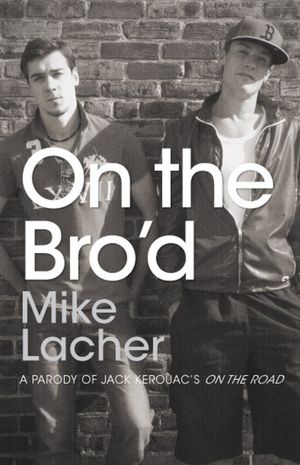
So goes On the Bro’d: A Parody of Jack Kerouac’s On the Road, by Mike Lacher, published today.  The book reimagines Jack Kerouac’s On the Road as if it were told by someone like How I Met Your Mother‘s Barney–a bro.

Contrary to the popular myth of the scroll, Kerouac spent years trying to get the voice right for On the Road.  Yes, he did pound the keys of the typewriter and turn out the novel in a matter of days, but that was only after he had spent years on the road and wrote and rewrote the novel multiple times, with different characters and different narration.  Neal Cassady’s famous letters spurred Kerouac on to write in a more confessional and conversational approach.  He worked hard to capture the feeling of a real talk, using words like “beat” and “hipster.”  However, Kerouac was well educated.  He did go to Columbia, after all, and while it may have been on a football scholarship that might make him seem a bit more like a bro, even as a child he used to ditch school so he could go read in the library.  While his work may appeal to a guy’s guy because he’s often with his “bro” Neal, recklessly driving, picking up chicks, and smoking pot, the diction and syntax in On the Road reveal that underneath it all he was a sensitive poet who saw the beauty in the color of grapes. After all, this is how the famous quote from Jack Kerouac’s On the Road paraphrased above actually read:

“The only people for me are the mad ones, the ones who are mad to live, mad to talk, mad to be saved, desirous of everything at the same time, the ones who never yawn or say a commonplace thing, but burn, burn, burn, like fabulous yellow roman candles exploding like spiders across the stars and in the middle you see the blue centerlight pop and everybody goes “Awww!”

On the Bro’d is just a parody. It says so right in the subtitle.  It’s not meant to be taken seriously, and the idea is actually clever.  Still, it points toward a common misconception people have of Jack Kerouac and the Beat Generation, whom critics pejoratively referred to as “beatniks,” meaning the Beats were as “far out” as Sputnik.  Keep in mind, Sputnik was launched by the Soviets during the Cold War.  Beatnik was not a compliment. Even today, many scholars don’t take Kerouac’s writing seriously because it is so accessible.  But his prose is poignant, his message spiritual.  He was not saying, the only people for him were the ones who wanted to get drunk.  He was saying the only people for him were the ones who want to truly live life to the fullest.  He didn’t like the type of brain-zapped people who said commonplace things and wore Ed Hardy t-shirts.  He said, “Great things are not accomplished by those who yield to trends and fads and popular opinion.”

I’m curious if you think On the Bro’d is a successful parody?  It seems like something that would sell well at Urban Outfitters, yes?

On the Road Trailer

29 Mar


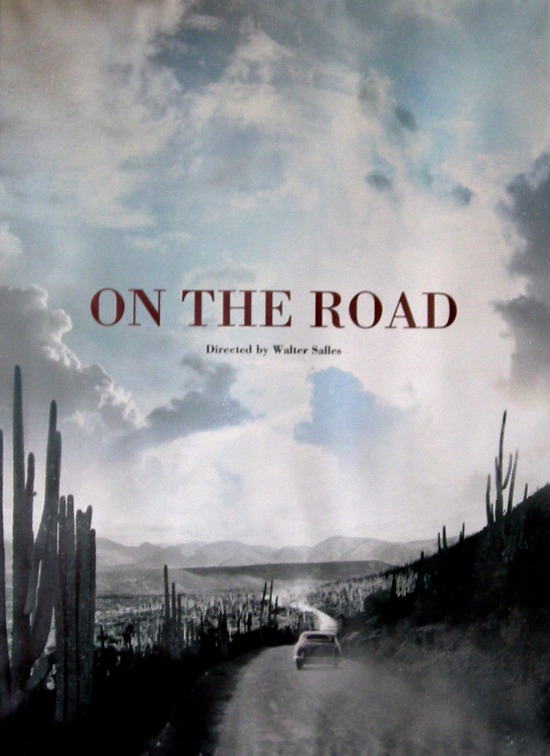
In case for some reason you haven’t seen the trailer for Walter Salles’ On the Road, screenplay by Jose Rivera, here it is.  It will star Sam Riley as Sal Paradise, Garrett Hedlund as Dean Moriarty, Kristen Stewart as Marylou, Kirsten Dunst as Camille, Tom Sturridge as Carlo Marx, Viggo Mortensen as Old Bull Lee, Amy Adams as Jane, Alice Braga as Terry, and Danny Morgan as Ed Dunkel.

Cast your opinions in the comments section….

From a purely cinematic standpoint, the landscape looks beautiful.  I’ve been following the production of the film for a while and paying particular attention to filming locations.  If you think about it, The United States is a character in the book and in the film so it deserves attention, and I think Walter Salles, who directed The Motorcycle Diaries, can accomplish that.

The book I’m coauthoring with Paul Maher Jr., Burning Furiously Beautiful, details the places Jack Kerouac visited and was inspired by when writing On the Road.  If you check out our Pinterest board, you can see just how incredible the landscape and history of the places Sal Paradise and Dean Moriarty visit are.