Tag Archives: poetry

Hear Me Read at The Red Room This Wednesday

25 Aug

redroom

I’m excited to reveal that poet RA Araya asked me to read with a bunch of super talented artists this Wednesday, August 27, 2014, from 7 to 10pm, at The Red Room. RA usually somehow manages to persuade me to read Homer in the Ancient Greek (no small feat!), but this time he said I was free to read whatever I wanted so I’m planning on reading from my memoir. If you’re interested in getting a candid look into my weird life, now’s your chance!

Author Ronnie Norpel will be hosting. She runs a great reading series uptown, and I admire the way she makes transitions between sets so natural. The other artists scheduled are each so unique that it’s kind of a dizzying array of poetry, jazz, fiction, and tap dance:

poets performance at 7pm:

  • Moira T. Smith
  • Sarah Sarai
  • Stephanie Nikolopoulos
  • Liz von Klemperer
  • Linda Kleinbub
  • The tap-dancing and choreography of Camille Schmoeker

music by The New York City Brass Brothers at 7:45pm

Chris Barrera & the ‘flash-back-puppy’ band at  8:15pm

The venue is gorgeous. I kind of want to live inside of it. The brainchild of Denis Woychuk, The Red Room is a lush speakeasy-style lounge on the third floor of KGB Bar (85 East 4th Street) in the East Village in New York City. It even has a bathtub by the bar!

tub

The event is $10, but I have a special discount offer for you: if you rsvp on Facebook you get half off! There’s also a 2 drink minimum.

See you there!

* * *

For other upcoming events, check out my appearances page. If you’re looking to book me for a reading or hire me to teach a writing workshop, you can contact me at snikolop {@} alumna.scrippscollege.edu.

Allen Ginsberg, Timothy Leary, and the CIA

31 Jul

leary


It’s widely acknowledged that the Beat Generation writers experimented with drugs, which influenced both the content and style of their writing. I’ve written before about how Allen Ginsberg’s drug use shaped his writing when he had a vision while reading William Blake, forever guiding his poetry.

But dear old Allen Ginsberg was also leery of America’s hand in the drug trade.

Let me backtrack a moment. In 1960 Allen Ginsberg became friends with Timothy Leary. Timothy Leary was an American psychologist born on October 22, 1920, in Springfield, Massachusetts—meaning he’d been born near Herbert Huncke, Jack Kerouac, and John Clellon Holmes a little after Huncke was born and a little before Kerouac and Holmes were born. At Harvard University—which William S. Burroughs also attended—Leary conducted experiments involving psychedelic drugs for the Harvard Psilocybin Project.

The friendship between Ginsberg and Leary led to the psychedelic revolution, with Leary popularizing the phrase:

“Turn on, tune in, drop out”

Timothy Leary invoked Socrates when he said:

“Question authority”

The irony of this, though, is that Leary didn’t drop out or subvert authority. Much like the way the CIA funded abstract expressionism, Leary was doing research at an ever-prestigious Ivy League college which consisted of experimenting on prisoners (see the Concord Prison Experiment). This isn’t all that different than in the 1950s when the CIA launched Project MKULTRA, which administered LSD to unwitting participants as a means toward experimenting with mind control. In fact, prior to meeting Leary, in 1959 Ginsberg participated in experimental studies of LSD at Stanford University, which it turned out were administered by psychologists working for the CIA to develop mind-control drugs. Leary also began experimenting on writers.

Peter Conners’ book White Hand Society: The Psychedelic Partnership of Timothy Leary & Allen Ginsberg, published by City Lights in 2010, alleges that Leary used Ginsberg to further publicize his studies. Here’s the marketing copy for the book from City Lights:

In 1960 Timothy Leary was not yet famous — or infamous — and Allen Ginsberg was both. Leary, eager to expand his experiments at the Harvard Psilocybin Project to include accomplished artists and writers, knew that Ginsberg held the key to bohemia’s elite. Ginsberg, fresh from his first experience with hallucinogenic mushrooms in Mexico, was eager to promote the spiritual possibilities of psychedelic use. Thus, “America’s most conspicuous beatnik” was recruited as Ambassador of Psilocybin under the auspices of an Ivy League professor, and together they launched the psychedelic revolution and turned on the hippie generation.

White Hand Society weaves a fascinating and entertaining tale of the life, times and friendship of these two larger-than-life figures and the incredible impact their relationship had on America. Peter Conners has gathered hundreds of pages of letters, documents, studies, FBI files, and other primary resources that shed new light on their relationship, and a veritable who’s who of artists and cultural figures appear along the way, including Jack Kerouac, William Burroughs, Thelonious Monk, Willem de Kooning, and Barney Rosset. The story of the “psychedelic partnership” of two of the most famous, charismatic and controversial members of America’s counterculture brings together a multitude of major figures from politics, the arts, and the intersection of intellectual life and outlaw culture in a way that sheds new light on the dawn of the 1960s.

Years later, 1967 to be exact, this conversation between Leary and Ginsberg took place about “dropping out”:

Ginsberg: For instance, you haven’t dropped out, Tim. You dropped out of your job as a psychology teacher in Harvard. Now, what you’ve dropped into is, one: a highly complicated series of arrangements for lecturing and for putting on the festival…

Leary: Well, I’m dropped out of that.

Ginsberg: But you’re not dropped out of the very highly complicated legal constitutional appeal, which you feel a sentimental regard for, as I do. You haven’t dropped out of being the financial provider for Milbrook, and you haven’t dropped out of planning and conducting community organization and participating in it. And that community organization is related to the national community, too. Either through the Supreme Court, or through the very existence of the dollar that is exchanged for you to pay your lawyers, or to take money to pay your lawyers in the theatre. So you can’t drop out, like DROP OUT, ’cause you haven’t.

The year after that, Ginsberg penned an article called “Remarks on Leary’s Politics of Ecstasy” for The Village Voice, in which he suggested the American government was trying to silence Leary:

Timothy Leary quit public life to write a book in Mexico some years ago, but he was searched by Agents of Government as he went to cross borders, arrested for possession of some herb, and thus forced to interrupt his writing, return to public action, and defend his person from attack by the State. So he traveled to academies and lectured to the young, & thus he paid large legal fees required by the State & thus maintained an Ashram of fellow seekers well known in Millbrook. Agents of Government raided and repeated abused the utopia, whereupon Dr. Leary was obliged to be Dr. Leary and lecture more to raise money for his family of imprisoned friends. Agents of Government concluded this phase of prosecution with a piece of Socratic irony so blatantly echoing an old Greek injustice that the vulgar rhetoric of a Tyrannous State would need only be quoted to be recognized, were it not for the fact that these States are by now so plagued with Tyrannously inspired chaos and public communication so flooded with images of State Atrocity from the alleys of Saigon to the parks of Chicago that official public conscience here now, as memorably in Russia and Germany, is shocked, dumbed & amnesiac.

Ginsberg grew to become leery of the government’s hand in drugs. Researching, Ginsberg became convinced that the CIA was involved in drug trafficking. Ginsberg’s poem “CIA Dope Calypso” uses the following refrain:

Supported by the CIA

Wikipedia gives a quick summary of Ginsberg’s conspiracy theory that the CIA profited off of drugs:

Through his own drug use, and the drug use of his friends and associates, Ginsberg became more and more preoccupied with the American government’s relationship to drug use within and outside the nation. He worked closely with Alfred W. McCoy who was writing The Politics of Heroin in Southeast Asia which tracked the history of the American government’s involvement in illegal opium dealing around the world. This would affirm Ginsberg’s suspicions that the government and the CIA were involved in drug trafficking. In addition to working with McCoy, Ginsberg personally confronted Richard Helms, the director of the CIA in the 1970s, but he was simply brushed off as being “full of beans”. Allen wrote many essays and articles, researching and compiling evidence of CIA’s involvement, but it would take ten years, and the publication of McCoy’s book in 1972, before anyone took him seriously. In 1978 Allen received a note from the chief editor of the New York Times, apologizing for not taking his allegations seriously so many years previous.[83]

Despite our notions of how counter-cultural drug use is its history is steeped in academia and politics. Even so-called counter-cultural writers theorize the government is behind drug trafficking.

Of course there are others who’d suggest that it was Timothy Leary and Allen Ginsberg who were conspiring to change the world.


Happy 120th Birthday, Mark Van Doren

13 Jun

mark

Pulitzer Prize-winning poet Mark Van Doren was born on this day in Vermilion County, Illinois.

In 1920 he earned his Ph.D. from Columbia University and joined the faculty. Among his students was Lionel Trilling, who would also go on to teach at Columbia. They both taught Jack Kerouac and Allen Ginsberg. Trilling also taught Robert Lax, whom Kerouac later got in touch with.

Trilling won the Pulitzer Prize for Poetry in 1940 for Collected Poems 1922–1938.

Celebrate his birthday by reading some of his sonnets here.

How Antonin Artaud Came to Influence the Beats

24 Apr

Antonin_Artaud_jeune_b_SDAntonin Artaud had great fashion sense.

Bronx-born writer Carl Solomon joined the United States Maritime Service in 1944 and traveled overseas to Paris, where he was encountered Surrealism and Dadaism. When he came back to the US, he voluntarily admitted himself to a New Jersey psychiatric hospital as Dadaist expression of being beat, being conquered, being overpowered. There, he received shock therapy instead of the lobotomy he requested. He wrote about the experience in Report from the Asylum: Afterthoughts of a Shock Patient.

At the psychiatric hospital, Solomon met Allen Ginsberg. (You can read about how Ginsberg ended up there in Burning Furiously Beautiful.) He introduced the young poet to the poetry of Antonin Artaud, a French poet of Greek ancestry (his parents were from Smyrna) whom he had seen give a screaming poetry reading in Paris. Artaud had written the first Surrealist film, The Seashell and the Clergyman (1928), and produced Romantic poet Percy Bysshe Shelley’s The Cenci in 1935. The year after that, he went to Mexico, living with the native Tarahumara people and experimenting with peyote, before Jack Kerouac and William S. Burroughs would pack their bags for Mexico. Another year passed and Artaud was found penniless in Ireland, where he was arrested and deported. Back in France, he was sent to various psychiatric hospitals, where he was subjected to electroshock therapy. Notably, in his earlier years, Artaud had spent time in a sanatorium, where he read none other than Arthur Rimbaud.

Solomon wrote Report from the Asylum with Artaud in mind, while Ginsberg wrote “Howl” with both Artaud and Solomon in mind.

Once again, I could not find any of his poems in public-domain English translation. So, here’s a quote I found interesting and relevant from Artaud’s prose piece The Theater and Its Double:

“I cannot conceive any work of art as having a separate existence from life itself.”

You can read one of his poems, “Jardin Noir,” here.

*4/24/14: The subject’s name was originally misspelled and has now been corrected. Thanks to my reader for pointing that out!

Writing Wednesday: Are Writers Right or Left Brained?

16 Apr

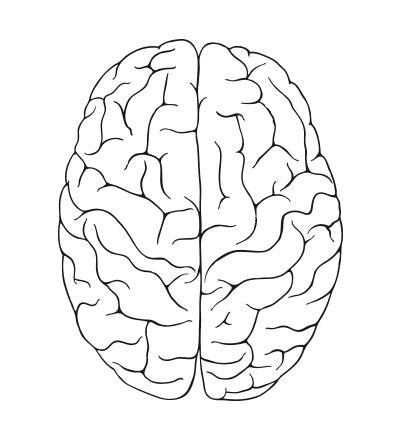
brain_resultvia sommer+sommer

Years ago, I read somewhere that right-brained people are more likely to put their right shoe on first. Since being right-brained is associated with creativity, naturally I began telling myself to put my right shoe on first whenever I left the house.

How left-brained of me!

Using facts — instead of intuiting — is a left-brain trait. My very attempt at subverting my instinct proved just how left-brained I am.

When I came across “Right-brained? Left-brained? Take the brain test!” on sommer+sommer, I had to take it. I’ve always been told I’m “creative” and have been interested in the arts, but I also take things very literally and sometimes veer toward the anal retentive. Perhaps that’s why I’m an editor. My left-brain tendencies to follow rules and look at parts can shine in a right-brained creative field that I enjoy.

I think the same holds true for writers. We tend to think of writers as being right-brained thinkers. Writers embrace fantasy, curiosity, chaos, and intuition. But writing takes a great deal of left-brained work.

Language itself is a left-brain trait. Nonfiction writers in particular deal in research and details, also left-brain traits. Fiction authors and poets also consider rules and details, even if they choose to subvert them. I think of the New York School poets in particular when it comes to writing rules, for their very creative writing experiments were in fact formulaic. For instance, Bernadette Mayer‘s “Writing Experiments“:

  • Make a pattern of repetitions.
  • Explore the possibilities of lists, puzzles, riddles, dictionaries,
    almanacs, etc. Consult the thesaurus where categories for the word "word"
    include: word as news, word as message, word as information, word as story,
    word as order or command, word as vocable, word as instruction, promise,
    vow, contract.
  • Structure a poem or prose writing according to city streets, miles, walks, drives. For example: Take a fourteen-block walk, writing one line per block to create a sonnet; choose a city street familiar to you, walk it, make notes and use them to create a work; take a long walk with a group of writers, observe, make notes and create works, then compare them; take a long walk or drive-write one line or sentence per mile. Variations on this.

Forced creativity! I love it!!

Having a successful writing career also take a great deal of left-brained work. As mentioned in Burning Furiously Beautiful, Jack Kerouac kept a running tally of the number of words he wrote each day. He also kept meticulous records of his work. Writers who seek to be published often create writing schedules and work regardless of whether the “muse” inspires them or not, they have to think analytically about the best market for their work, and they must keep notes on when and where they send work out to literary journals. There’s a lot of business in writing, as there is in many creative endeavors.

So what did the brain test reveal to me?

Congratulations
You use your brain equally.

It said I’m 59% left brained and 41% right brained.

You can take the test here. What did you get?

Find more Writing Wednesday entries here.

Percy Bysshe Shelley’s “Music, when Soft Voices die”

10 Apr

ShelleyPortrait of Shelley by Alfred Clint (1819)

When you think Beat Generation do you also think Romanticism? No?? Don’t get tripped up by the overuse of the word “neon” and other supposed markers of so-called Beat poetry. Think more about their shared notions of colloquial language, intuition over reason, and spontaneity. Beat poetry is a natural evolution of Romantic poetry. (Caveat: “Beat Generation” and “Romanticism” are convenient labels, but the people associated with them wouldn’t identify themselves as being “members” of any sort of “movement.”)

I’ve written before about Beat poet Gregory Corso’s connection to one of my personal favorite poets, John Keats. Even more than Keats, though, Corso professed an admiration for Percy Bysshe Shelley. Corso is actually buried across from Shelley. While Allen Ginsberg (read last week’s post on Ginsberg’s Blake vision here)  is known for littering his poetry with the names of Jack Kerouac and Neal Cassady, Corso wrote of Shelley in “I Am 25” and “I Held a Shelley Manuscript.” I love, love, love the language he uses in those poems and can relate to the theme of idolizing other poets who have gone before one’s time.

When thinking about possible poems to share with you for National Poetry Month, I decided on Percy Bysshe Shelley’s “Music, when Soft Voices die” not just because of Gregory Corso’s love for Shelley but because it reminded me of the themes I’d found myself wonderfully entrenched in while recently reading Marcel Proust’s Swann’s Way, a book the Beats also read—themes of memory and love and music and flowers. (Swoon, swoon, swoon.) Like Corso’s “I Held a Shelley Manuscript,” Shelley’s “Music, when Soft Voices die” sensually touches on what remains after death.

Without further ado, Percy Bysshe Shelley’s “Music, when Soft Voices die”:

Music, when soft voices die,
Vibrates in the memory;
Odours, when sweet violets sicken,
Live within the sense they quicken.

Rose leaves, when the rose is dead,
Are heap’d for the belovèd’s bed;
And so thy thoughts, when thou art gone,
Love itself shall slumber on.

What’s your favorite poem by Percy Bysshe Shelley?

Allen Ginsberg’s William Blake Vision

3 Apr

 Blake_Roses_Sun-Flower_LillyWilliam Blake’s illustrated “Ah! Sun-Flower”

I’m kicking off this National Poetry Month series with William Blake for reasons that will soon become obvious. In 1948, when he was in his early twenties, Allen Ginsberg experience a supernatural vision. He was alone in his Harlem apartment, reading William Blake, when the Romantic poet appeared to him. Ginsberg said he wasn’t high at the time but was having some … um, personal alone time. Wink, wink. He looked out his Harlem window at the bright blue sky and realized that the sky had been created, that the sky did the creating, and found God. In later years, Ginsberg experimented with drugs to try to recapture that feeling.

One of the poems that Ginsberg heard Blake read in his vision was “Ah! Sun-flower,” published in his 1974 poetry collection Songs of Experience. Blake illustrated the poem (see above). Here is the poem in its entirety:

Ah Sun-flower! weary of time,
Who countest the steps of the Sun:
Seeking after that sweet golden clime
Where the travellers journey is done.

Where the Youth pined away with desire,
And the pale Virgin shrouded in snow:
Arise from their graves and aspire,
Where my Sun-flower wishes to go.

Close to a decade after his Blake vision, while in Berkeley in 1955, Ginsberg composed his own sunflower poem, “Sunflower Sutra.” I’m inclined to say it’s my favorite poem. You can read it here.

You may also like these posts:

And of course you can read more about Allen Ginsberg in the book I coauthored, Burning Furiously Beautiful.

Kalo Mina and Happy National Poetry Month!

1 Apr

Happy National Poetry Month!


I cannot believe it’s April already. The winter months feel like a blur of snow. While a lot of people complained about it, for some reason I just didn’t seem to mind this year. Maybe it matched my mood. Or maybe since I spend most of my time cooped up in a windowless office or in front of my computer writing it doesn’t much matter if it’s sunny, rainy, or snowy. Still, I’m glad for the hope of spring. I can’t wait til it’s warm enough to go read in Central Park.

And I’m super excited about National Poetry Month! Last year, my friend John, from the Burnside Writers Collective, sent out poems written on the backs of postcards to celebrate, which I thought was a magnificent idea. This year I figured I’d celebrate by sharing poems with you on my blog throughout the month of April.

Tune in Thursdays this April for poems!

Happy 84th Birthday, Gregory Corso!

26 Mar

corso-gasoline

Gregory Nunzio Corso was born on March 26, 1930, in New York City. He would’ve been 84 today.

He’s one of my favorite poets, and to celebrate his wit and warmth, here is a link to his poem “I Am 25.”

You may also like:::

UCLA Prof Blames “Beatniks” for Kristen Stewart’s Poetry

12 Feb

mc

Kristen Stewart’s poetry has been blowing up the internet. I read a bunch of snarky comments about it on facebook last night, and this afternoon on my lunch break I discovered via Poets & Writers that the venerable Poetry Foundation gave it attention on their blog, Harriet.

I wasn’t going to comment on it, but then I read, via The Poetry Foundation, what Brian Kim Stefans had to say about it:

My own initial post went like this: “The second stanza isn’t horrible. Worst part of the poem are those awful adjectives! Stupid Beats.” What I meant by this was that the words “digital” (applied to moonlight), “scrawled” when linked to “neon” (neon is a much overused word by poets who want to sound like Beatniks) and “abrasive” (applied to organ pumps) weren’t working for me….”

What Stefans doesn’t say and what The Poetry Foundation doesn’t say is that Kristen Stewart played the role of Marylou in the film adaptation of Jack Kerouac’s Beat novel On the Road. Part of her training for the film included “Beatnik Boot Camp,” where biographers and Neal Cassady’s son, John Allen Cassady, talked to them about the real-life individuals the novel was based on and the time period. It’s important to state this upfront because the very critique hurled against her work is that it sounds too Beatnik. Whether that’s because her poetry does sound too “Beatnik”—we’ll come back to defining that word in a moment—or whether her association with the Beats fueled criticism of her work is up for debate. Maybe, more than anything, though, the criticism surrounding Stewart’s poetry has less to do with the work itself and more to do with her celebrity persona—which, let’s face it, is similar to how the Beats are reviewed. Even before her poem was revealed, the media has loved to lash out at Stewart.

Actress Amber Tamblyn was also in a Beat-related film—One Fast Move Or I’m Gone: Kerouac’s Big Sur—and has gone on record about being influenced by the Beats. Except Tamblyn blogs for The Poetry Foundations’ Harriet and has published a jazz-inspired poetry chapbook, while Stewart, seven years her junior, revealed her road-trip inspired poem to the women’s glossy Marie Claire. This certainly says something about the difference in the seriousness and literary merit of their work, but it also says something about their celebrity persona and how they are received by the media.

Okay, so now we’re caught up on Stewart. In case Stewart, or you, didn’t know, Stefans makes his authority known at the outset of his open letter:

I’m a poet and professor at UCLA, and thought you might be interested in what some of my poet friends (most of whom also teach and are otherwise very accomplished) and I have been writing on Facebook about your recent poem published in Marie Claire.

I take it Professor Stefans is not a fan of the Beat poetry. That’s fine; to each their own. Stefans is actually quite an accomplished poet, and I particularly respect his postmodern innovations in digital poetry as he bridges the gap between new media and literature. From his UCLA faculty page:

My interests in electronic writing stem directly out of my work as a poet, though it has branched off into any number of art genres that have fallen under the persuasion of digital technology, such as photography, film/video and book publishing. Research interest include creating a “bridge” between the concepts and traditions of various 20th-century avant-gardes — Language writing, the Oulipo, concrete poetry, conceptual art, Situationism, metafiction, etc. — and the various genres of digital literature, including animated poems, interactive texts, algorithmically-generated and manipulated texts, “nomadic” writing, hacktivism and experimental blogs. Presently working on a series of wall projections called “Scriptors” which will appear as gallery and environmental installations in the coming years.

His research and work in electronic literature suggests his open-mindedness toward new and experimental ideas that may not yet be culturally accepted. I would think then that he’d find Stewart’s use of the word “digital” related to his own interests, but perhaps it wasn’t “working” for the Brown graduate who got his MFA in Electronic Literature because it was too obvious of a connection, the word “digital” sounding contrived or outmoded in today’s ever-changing technical world. I wouldn’t disagree with that assessment. His forward-searching eye may also be why he lays into her for relying on passé Beatnik clichés and the word “Whilst.” Stefans’ critique of Stewart’s poem is fair and balanced. There is validity to his point about “overused words” in poetry and even Beatnik buzz words.

My contention is with Stefans’ comment “Stupid Beats” and the lumping of Beat literature with “people who want to sound like Beatniks.” Yes, I get that this is a flippant response to pop culture that shouldn’t be taken too seriously, however the cultural knowledge of so-called Beatniks is wrought with so much misconception that it makes me uncomfortable to see a humanities professor at a well-known college perpetuate the stereotype.

Here’s a little Beat 101 refresher course:

  • Jack Kerouac coined the term “Beat Generation” during a conversation with fellow novelist John Clellon Holmes, in which they were riffing on the Lost Generation and their own generation.
  • Holmes went on to write “This Is The Beat Generation” for The New York Times Magazine in 1952.
  • Six years later, journalist Herb Caen coined the term “beatnik” in an article for The San Francisco Chronicle. An amalgamation of the word “beat” and “Sputnik,” the word, as conceived during the Cold War, was derogatory.
  • In fact, “The Examiner had a headline the next day about a beatnik murder,” reported the SF Gate. Note that this had nothing to do with David Kammerer or any of the writers associated with the literature of the Beat Generation.
  • In the column in which Caen coined the term “beatnik,” he was eye rolling at how Look magazine was doing yet another photo spread on the San Francisco Beat Generation scene, saying “250 bearded cats and kits were on hand.” So right there we have it that he wasn’t commenting specifically on Kerouac, Holmes, Allen Ginsberg, Gregory Corso, and the specific poets or poetry associated with the Beat Generation. He was talking about the scene, man.

Let me put this into more current context. Caen used the word “beatniks” the same way people today use the term “hipster.” Think of the way people in the 2000s equated the Williamsburg hipster with the eccentric trust-fund kid wearing aviator sunglasses and skinny jeans and making really bad “art.” That’s the equivalent of a “beatnik.” They’re both pop-culture fads that aren’t wholly indicative of the art, literature, and music that loosely inspired these “scenes.”

Consequently, saying Kristen Stewart was writing in the vein of bad beatnik poetry could be a worthwhile critique and even a very interesting one if the critic were to delve into more specific examples like the use of the word “neon” (HTML Giant questions if “neon” is solely beatnik; I apparently already have a tag for “neon” because I used it for light sculptor Stephen Antonakos … was he a beatnik??), discuss the appropriation and disfiguration of Beat ideas and style (Stefans mentions a colleague who posted a response to Stewart’s poem that suggests an evolution of Beat literature: “If it’s ‘beat’, it’s more Bolinas or young Bernadette than hortatory elder beat.” [hyperlinks mine]), and analyze the cultural phenomenon of beatniks.

Saying “Stupid Beats,” though, is akin to saying “Idiot Pre-Raphaelites,” “Dimwitted Transcendentalists,” or “Insipid Oulipo.” It’s negating an entire body of literature that has resounding cultural importance.

You can read Stewart’s poem “My Heart Is A Wiffle Ball/Freedom Pole” on IndieWire’s blog, The Playlist.