Tag Archives: poetry

Is Jack Kerouac a Modern Heir of James Joyce?

12 Feb

ulysses


In The New York Times’ Sunday Book Review, Rivka Galchen and Pankaj Mishra took up the question: “Who Are James Joyce’s Modern Heirs?

The names Lydia Davis, Nadine Gordimer, Kenzaburo Oe, and José Saramago are mentioned between these two award-winning authors, but more than specific names Galchen and Mishra delineate ideas of what Joycean literature is.

Galchen writes:

The text — and it feels more like a “text” than a book — radiates in a way we associate more with parable than with mortal prose, even as any sense of grandness also feels undermined and played with and brought down to size. “Ulysses” thus manages the strange magic of being a mock epic of epic proportions. It reveals a world holy and human.

She goes on to write thoughtfully about language, epics, radiance, and rumor.

Mishra, in turn, writes:

Few declarations of aesthetic autonomy have resonated more in the last century than Stephen Dedalus’s in “A Portrait of the Artist as a Young Man”: “You talk to me of nationality, language, religion,” Stephen tells an Irish nationalist, “I shall try to fly by those nets.” The novel concludes with Stephen’s decision to make a writing career for himself in Europe: “Welcome, O life! I go to encounter for the millionth time the reality of experience and to forge in the smithy of my soul the uncreated conscience of my race.”

He argues that Joyce’s modern heirs are political writers.

As you’ve probably already guessed, I’d submit Jack Kerouac as a potential heir to James Joyce. Let me lay out a brief argument in support of this thesis:

  • Galchen suggests Joyce’s work “radiates in a way we associate more with parable than with mortal prose,” and in some ways this is what Kerouac’s work does. Readers have often criticized On the Road’s rambling prose, replete with multiple road trips, but I’d argue that the work is actually more effective because it is not a simple from-point-A-to-point-B story. Readers do best in thinking of it not just in terms of story but parable.
  • She says Joyce’s work has the “strange magic of being a mock epic of epic proportions.” Kerouac’s narrator Sal Paradise is like Odysseus/Ulysses, a flawed man on a journey. In self-mythologizing himself over the course of several novels, Kerouac created the epic Duluoz Legend.
  • Mishra quotes Joyce’s Stephen Dedalus in A Portrait of the Artist as a Young Man as saying “Welcome, O life!” as he desires to encounter “the reality of experience.” Kerouac echoes this in going out on the road for seven years, seizing life and writing about it.
  • Kerouac is an heir to Joyce’s language, as I pointed out in this post.
  • And his most famous passage closely resembles one of Joyce’s passages in Ulysses.
  • He suggests that Dedalus’ decision to exile himself as an artist in Europe is political. In contrast, critics at the time of On the Road’s publication noted that unlike the Lost Generation, the Beat Generation stayed in America. Kerouac was known to have deep respect for the American flag and his journeys across America show his love for the country. Whether one wants to argue if this is “political” or not, he does represent himself as an artist in America.

What do you think? Is Jack Kerouac James Joyce’s heir?

Who Is Rollo Greb in “On the Road”?

6 Feb

contact

Some names are practically synonymous with Jack Kerouac’s On the Road: Dean Moriarty/Neal Cassady, Old Bull Lee/William S. Burroughs, and Carlo Marx/Allen Ginsberg, for sure.

But what about Rollo Greb? Who was he?

The character Rollo Greb in On the Road was based on Alan Ansen. Kerouac renamed him in other books. He was Irwin Swenson in Visions of Cody and Book of Dreams, Austin Bromberg in Big Sur, and Amadeus Baroque (love that name!) in Doctor Sax. Burroughs called him AJ in Naked Lunch and Port of Saints. Gregory Corso named him Dad Deform in American Express. (See Beat Book Covers’ excellent character key.)

But who was he in real life?

Born on January 23, 1922, and raised on Long Island, Ansen attended Harvard University, which incidentally was also William S. Burroughs’ alma mater.

After college and back in New York City, in 1948, Ansen became a research assistant/secretary to W. H. Auden. The English poet had come over to the US with author Christopher Isherwood (The Berlin Stories) in the first month of 1939. Auden dedicated his 1950 book of lectures The Enchafèd Flood to Ansen. Based on the notes he took while working with the poet, Ansen published Table Talk of W. H. Auden. Here’s the write up on Amazon:

In New York, between 1946 and 1948, the scholar and poet Alan Ansen made rapid notes of Auden’s inimitable conversation. This book is a record of Auden’s private, offhand and sometimes wayward remarks and opinions about art, literature, music, politics, religion and sexuality.


Sounds like a must read! I’m adding it to my Goodreads list.

By the time Ansen was working for Auden, Kerouac was already in the early stages of the work that would become On the Road. Poet Ted Joans went so far as to say:

Without Alan Ansen there would be no William Burroughs.

Ansen himself went on to become a poet and playwright, but never reached the same heights of fame that his mentor and Beat contemporaries did.

If you’re looking to read one of Ansen’s works, Contact High is a good place to start. Here’s the copy from Barnes & Noble:

“Alan Ansen’s first book,” James Merrill has noted, “Disorderly Houses (1961), dedicated to both W. H. Auden and William Burroughs, was also his last to be published commercially. Since then this prolific and unpredictable poet’s work has been available only in editions of his own devising, distributed to friends at his own caprice. As one of the happy few, I can report that his gifts remain as brightly unnerving as ever.”
Though perhaps best known as the model for some of the most flamboyant characters in Beat fiction (Rollo Greb in Kerouac’s On the Road, A. J. in Burroughs’s Naked Lunch, Dad Deform in Corso’s American Express) and as Auden’s secretary (he helped Auden with the syllabification of The Age of Anxiety), Alan Ansen is an accomplished poet in his own right. Having affinities with both the Beats and the New York school of poets, Ansen fuses Beat sensibility with formalist rigor. Contact Highs is the first comprehensive collection of his poetry, and includes a biographical introduction, an afterword by poet Rachel Hadas, and a bibliography of Ansen’s elusive works.

“Alan Ansen occupies a specialized evolutionary niche in twentieth-century letters, and his poetry has unjustly been too long obscured by its unfashionable classicism and its author’s self-effacing stance towards a poetic career. His writings achieve the scarcely possible: transmuting existence into life.” (William Burroughs)

“Ansen is the most delicate hippopotamus of poets with his monstrous classical versifications—he gets conversational fatness ‘into stricter order’ by use of weird echosyllabics, polyphony, strict rhymeless pindarics, self-annihilating sestinas, mono-amphisbaenic and echo rhyme, skeltonics, versicles & alcaics coherent Palindromes & such like master eccentricities—a hangup on Forms which interestingly pushes academic models beyond polite limits into the area of lunatic personal genius—This is an amazing book, with many sad poems.” (Allen Ginsberg)

“Whatever the styles, the cadences are powerfully relentless and informed by an intellectual complexity rare today. As witty as O’Hara, Ansen also plunges into the depths of the human condition. This may be one of the more significant poetry publications of the decade; four stars.” (Library Journal)

“[Contact Highs] careens in voice from a tone of bravado—an unwavering insistence on seeing the universe in all its mockery and injustice—to one of unabashed tenderness. And such conflict implies the poetry’s central tension: a desire to be immersed in life’s drama, rather than merely to judge it. Ansen . . . is a vivid creator of worlds with words, but never too sober in his verbal wizardry. Sly and wild in the manner of Gregory Corso or Allen Ginsberg, the poet marries exultant anarchy to traditional forms. Dismissing ‘shameless lyrists’ who ‘warble their hearts’ content,’ like an ‘eerie oddity’ Ansen ‘retails his uniqueness’ with some bitterness but more brio, and many readers will be grateful.” (Publishers Weekly 10-20-89)

“Ansen’s poetry . . . joins Apollonian reserve and formal skill to Dionysiac drug taking and homoeroticism. Between those poles, however, he creates a space of truly living poetry. Recommended.” (Booklist 10-1-89)

“Beautifully wrought formal (though outrageous) verses. . . . His poems speak for themselves, combining playfulness with astonishing erudition, in the fashion of the better poets of what was in my mind ‘the Ginsberg nucleus.'” (Carl Solomon, American Book Review Nov-Dec 90)

Just goes to show you, just because the other characters in On the Road became more notorious doesn’t mean the lesser-known characters aren’t equally as fascinating.

“That Rollo Greb is the greatest, most wonderful of all. That’s what I was trying to tell you – that’s what I want to be. I want to be like him. He’s never hung-up, he goes every direction, he lets it all out, he knows time, he has nothing to do but rock back and forth. Man, he’s the end! You see, if you go like him all the time you’ll finally get it.”

~On the Road

Jack Kerouac’s First Novel Translated in Persian, and It’s Not “On the Road”

3 Feb

dharma

More than fifty years after he rose to literary stardom in America, a novel by Jack Kerouac is being published in Persian for the first time, according to Iran Book News Agency.

Rozaneh Publications hired Farid Qadami to translate Kerouac’s The Dharma Bums.

Apparently you can get Farsi subtitles to the film adaptation of On the Road but the novel hasn’t been translated into Persian yet.

Although this may be the first time a novel by Kerouac is being translated into Farsi, the Iran Book News Agency reported in 2010 that Kerouac’s poetry volume Book of Haikus was translated into Persian by poet Alireza Abiz, a story that David S. Wills covered for Beatdom.

In his now famous interview with Ted Berrigan published by The Paris Review, Kerouac claimed to have Persian origins:

And it’s a Cornish name, which in itself means cairnish. And according to Sherlock Holmes, it’s all Persian. Of course you know he’s not Persian. Don’t you remember in Sherlock Holmes when he went down with Dr. Watson and solved the case down in old Cornwall and he solved the case and then he said, “Watson, the needle! Watson, the needle . . .” He said, “I’ve solved this case here in Cornwall. Now I have the liberty to sit around here and decide and read books, which will prove to me . . . why the Cornish people, otherwise known as the Kernuaks, or Kerouacs, are of Persian origin.”

Here is a story about Houman Harouni translating Allen Ginsberg’s “Howl” into Farsi, which I found via the Allen Ginsberg Project.


Kerouac Pub Crawl Set in Alabama

23 Jan

WP_20131011_020a photo of a bar in Lowell, MA, where there are also Kerouac pub crawls

Anyone up for a Kerouac-inspired road trip to Alabama?!

There’s an On the Road pub crawl in Gadsden, Alabama, on March 12 at 5pm. David Murdock, an English instructor at Gadsden State Community College, will be giving a lecture on Jack Kerouac’s On the Road at the Back Forty Beer Company and then the group will begin a pub crawl.

There will also be a poetry contest for “beat-style” poems “preferably in ‘stream-of-consciousness'” for those who have pre-registered. You can sign up for the event (seating is limited) with Carol York at carol@gadsdenlibrary.org.

I’ll let anyone who wants to duke out what “beat-style” poetry means do so in the comments section. Here’s a hint: it does not mean saying “man” over and over again while you pound a bongo drum. Want another hint? The poets associated with the Beat Generation each had their own style and voice.

It is, apparently, Gadsden‘s longest running literary pub crawl series. Other authors highlighted in the past have included Hunter S. Thompson, John Milton, and Flannery O’Connor.

For more information on the On the Road pub crawl, visit Al.com.

Oh, and if you’re into beer culture, the story of Back Forty Beer Company is worth checking out. Here’s just a snippet on their name:

Back Forty Beer Company’s name is inspired by an old agricultural term referring to the 40 acres of land situated furthest from the barn. The back 40 acres are historically the most challenging land to maintain and are often overlooked due to their remote location.

Likewise, Alabama is widely seen as the wasteland for craft beer in America. With mass produced light beer being the drink of choice for many Southerners, the craft beer market here has been largely ignored.

However, if you dig a little deeper into the story of the back 40 you will see that because the soil is rarely used, it’s very fertile and is actually capable of producing a tremendous yield.  And just like the farm, the Deep South’s craft beer culture is fertile and primed for harvest.

I visited Alabama once. I saw more Confederate flags and livestock than classic novels and craft beer. Obviously there are probably a lot of different opinions, but I’d be really interested to hear how Kerouac is generally perceived there.

Amiri Baraka (October 7, 1934 – January 9, 2014)

9 Jan

Amiri Baraka

October 7, 1934 – January 9, 2014

If you follow the Burning Furiously Beautiful Facebook page, you know that Amiri Baraka‘s family recently reached out through social media to ask for prayers for the poet, who had gone into Beth Israel Medical Center in Newark. I have just learned of his passing. My condolences to his family and friends.

You may be interested in:

Writing Wednesday: Is Greatness Sabotaging Your Writing?

18 Dec
For better or worse, I don’t recognize a lot of critics’ names. David L. Ulin is an exception. Book critic for The Los Angeles Times, Ulin writes reviews that do so much more than summarize or sweep up a book in a blanket statement. His reviews critique on a higher intellectual plane.
Of course, it helped that he articulated so much of what I felt when I’d read Bruce Bawer’s attack in the New Criterion on Jack Kerouac being included in the Library of America. That’s not to say he unscrupulously defended Kerouac’s poetry—he admitted the Kerouac poem Bawer quoted is “negligible”—but he called Bawer out on spending more time focusing on the so-called Beat label and the people associated with it than on digging into Kerouac’s individual style and innovations.
But I digress.
Ulin has an essay entitled “My First Book(s)”  in the Paris Review Daily that first-time and struggling writers should read. With humorous (not silly—witty) self-deprecation, he writes about what provoked him to write (jealousy, opportunity) and how he got so bogged down in ideas that he incapacitated his body of work. Perhaps my favorite line from the essay:
I was twenty that summer, turning twenty-one in August, and I felt a growing pressure to be (how do I put this without reservation or irony?) great.
That parenthetical itself says so much about not only writing but the human condition. Guarding ourselves through cleverness we can become inauthentic. Sometimes the more we strive to be “great,” the more we lose our true vision and voice. We lose our stories. We lose ourselves.
He writes:
But here’s what is important: I sabotaged my own book. I did this in two ways, first by overthinking and then by overtalking, by telling everyone I knew everything about the work.
Replete with quotes from renowned authors, “My First Book(s)” explores the expectations an author puts of himself, some of which are naïve (“I had gathered so much material—so much unused material—that I’d had the fantasy the book would write itself…”) and some of which are nearly impossible to live up to (“I wanted to write not just a novel but a landmark novel…”).
Ulin’s essay is a refreshing read for all of us who get overwhelmed by our own “big” ideas. It’s also a gentle reminder that all writing—including our unpublished writing—is worthwhile because it teaches us about the process and improves our skills.
In the same link roundup in which they mentioned Ulin’s essay, Poets & Writers linked to a blog post by Percy Jackson author Rick Riordan that also spoke to the slippery idea of greatness:
One thing I’ve discovered. People who believe they are awesome and wonderful at their profession are often . . . not. People who have more self-doubt, who question themselves and are always examining what they did wrong and how they might do better – those folks are often better than they think they are, and they are much more likely to improve. It’s a difficult balance, between self-confidence and self-reflection. No wonder writers are a little barmy. But it is an important balance to strike.
Riordan continues:
Writing is hard. Not everyone can do it. It requires a combination of innate talent and lots and lots of practice and endurance. It also requires the right story, and publishing that story at the right time.
Though they have dissimilar writing styles, Riordan and Ulin both suggest that writing requires humility and stamina.

* * *

Burning Furiously Beautiful: The True Story of Jack Kerouac’s “On the Road” is now available as an ebook and paperback!

Clip: Vox Poetica Published My Poem “In a Diner in America Circa 1956”

20 Nov

Vox-Transparent

I’m thrilled to be published in vox poetica. The lit mag was founded in 2009 by Annmarie Lockhart, a resident of Bergen County, New Jersey — where I’m from!

The poem featured, “In a Diner in America Circa 1956,” came to me one day as I was walking on Park Avenue during my lunch break. I was thinking about Jack Kerouac stopping in a roadside cafe for a little nourishment as he traveled across the country, and the awkwardness and opportunities that abound when one travels on one’s own.

It’s a pastiche of Jack Kerouac’s interview on The Steve Allen Show, his narration of what may be the only true Beat film Pull My Daisy, and an amalgamation of information from his novels and letters as well as biographies.

You can read it here.

A Tribute to Constantine P. Cavafy

18 Nov

220px-Cavafy1900What an impressive mustache! Cavafy via Wikipedia

When you set out on your journey to Ithaca,
pray that the road is long,
full of adventure, full of knowledge.

~ from the poem “Ithaca” by Constantine P. Cavafy

Born in the Egyptian province of Alexandria, Constantine Peter Cavafy was born to Greek parents in 1863. Riffing on last week’s British invasion theme, I’ll note that he actually spent some time in the Beatles‘ hometown of Liverpool. Cavafy’s life, like Kerouac’s, was one of movement. From Liverpool, he moved back to Alexandria, and then from there to Constantinople and back to Alexandria. He also spent some time in France.

Cavafy worked as a journalist, and it wasn’t until he was in his forties that he wrote his most important works of poetry — giving all us late-bloomers hope! He urges us to embrace life’s journey in his passionate 1911 poem Ithaca, inspired by Homer’s Odyssey. He urges us to slow down, to explore, to learn, to experience, to savor. It is the perspective one gains on the journey itself that matters.

Tonight PEN presents a tribute to Cavafy, featuring André Aciman, Michael Cunningham, Mark Doty, Olympia Dukakis, Craig Dykers, Edmund Keeley, Harry Kremmydas, Daniel Mendelsohn, Orhan Pamuk, Dimitris Papaioannou, and Kathleen Turner. For more information on the New York tribute, visit the PEN America website.

* * *

You may also like:

* * *

Burning Furiously Beautiful: The True Story of Jack Kerouac’s “On the Road” is now available as an ebook and paperback!

Happy Birthday, David Amram!

17 Nov

Happy birthday to David Amram!

Michael Limnios of Blues.Gr put together a great tribute to David Amram featuring:

It is well deserved!

* * *

Burning Furiously Beautiful: The True Story of Jack Kerouac’s “On the Road” is now available as an ebook and paperback!


Jamming Jack

7 Nov

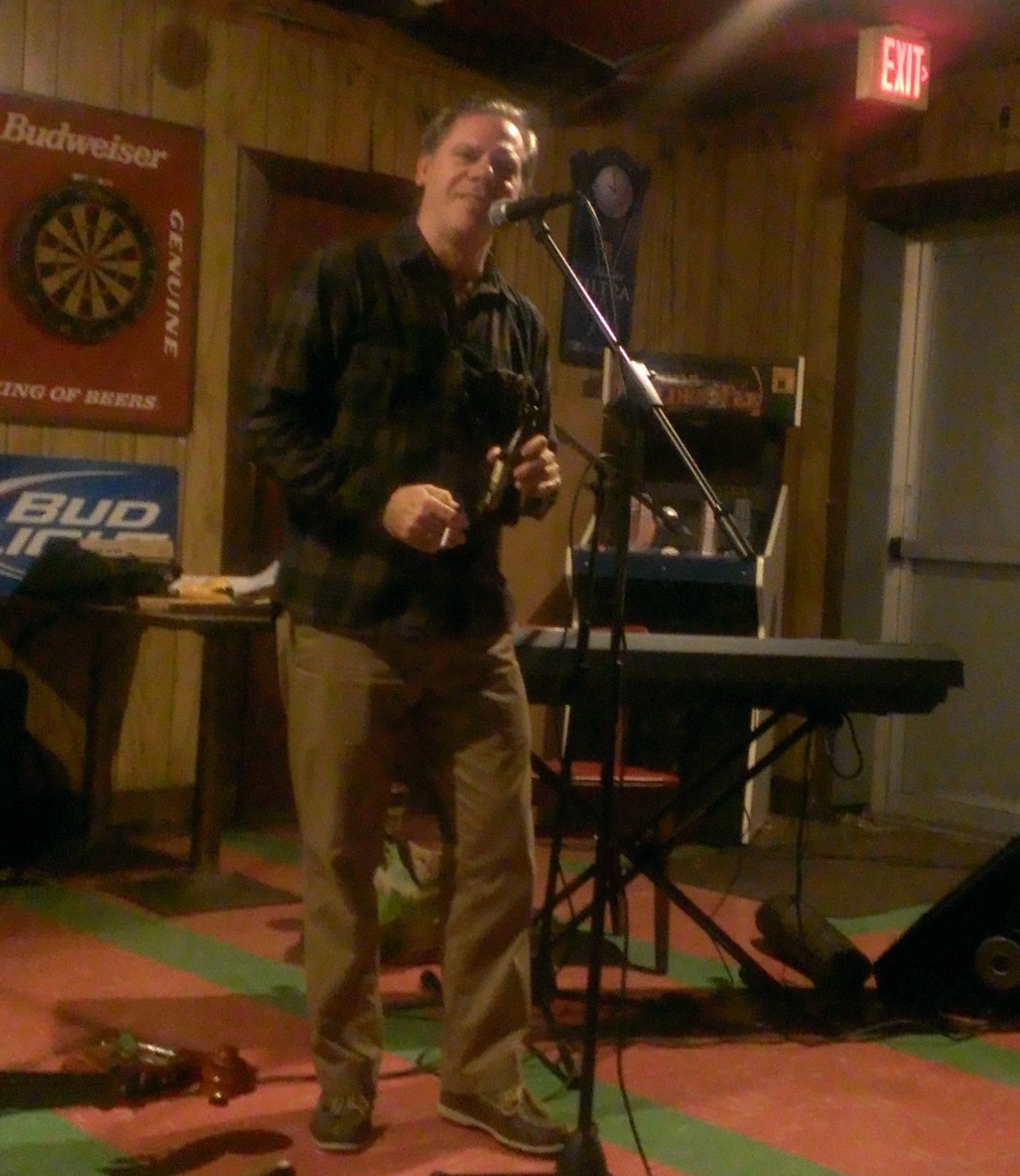
Friday night at Lowell Celebrates Kerouac we all headed over to the White Eagle Pub, a dive bar on Market Street.

WP_20131011_020

The evening started off with a viewing of Brent Mason’s documentary Grave Matters. The thirty-minute film got off to a riotous start when one of the people in the crowd fell or fainted off their chair! The film had to be stopped, but after it was determined she was okay, the documentary started rolling again. Whew, what excitement. Canadian musician and filmmaker Brent Mason explores Jack Kerouac’s life and legend by documenting his visit to the author’s hometown of Lowell, Massachusetts. Complete with interviews from people like Kerouac’s friend and eventual pallbearer Billy Koumantzelis.

Billy was there in the audience and afterwards he introduced me to Brent–who was there with his teenaged son–and Jim Sampas. Jim played some recordings of Jack reciting his work.

David Amram led Jamming Jack and was magnificent as always. I’ve seen him play a few times now, and each time feels unique.

He also invited people up to read and perform in what turned out to be an inspiring evening.

Jerry

Here Lowell’s very own actor and screenwriter Jerry Bisantz, of Image Theater, performs as Jack Kerouac.

Steve

Christopher Barry and his youngest brother Stephen Barry each performed their poetry. Stephen (pictured above) had flown all the way from California to be at the event. I’ve met Chris a few times, and it’s always a pleasure hearing him read. It was nice meeting his brother and seeing that talent obviously runs in the family.

SteveD

Jazz-poet Steve Dalachinsky, whom I’d heard read at Lowell Celebrates Kerouac two years ago, was back to read more poetry! He is brilliant. His wife Yuko Otomo was in the audience, and I wish she’d read too.

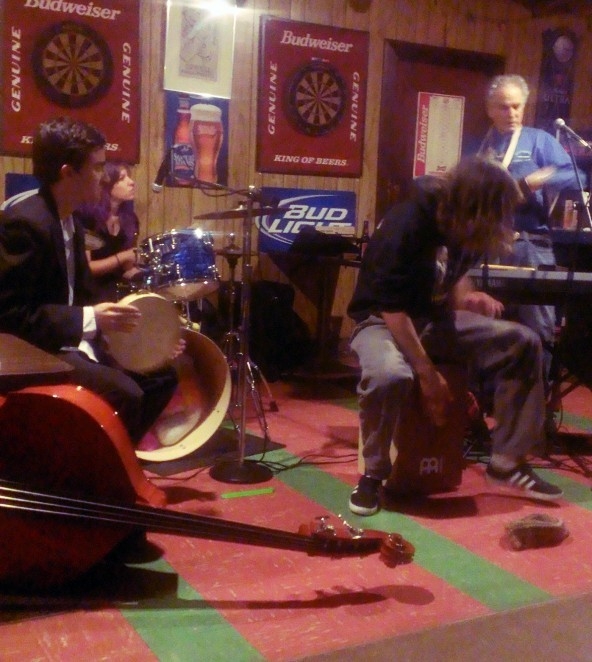
Drummer

Throughout the performances, David was playing the piano. He also selected some wonderful young musicians to accompany them. I believe the drummer and the guy on the tambourine were local students. The guy on the box-drum came from further away and was at LCK two years ago. If anyone has their names or contact info, please do pass it along. They were phenomenal.

Toward the end of the evening, David starts talking, says something about an author who wrote a new book, and that she doesn’t know he’s going to call her stage, and then calls out my name! The last time I read with David I was so nervous I could barely eat the entire day. I didn’t have time to get nervous this time around! I read one of Kerouac’s prose-poems. So beautiful! I don’t know that I did it justice, but it was such an honor to get to read Kerouac’s own words in his hometown and with so many phenomenal musicians and writers there.

The event made me kind of sad… It was so fun and inspiring, and I wish that Kerouac would’ve gotten to see that his literature continues to be appreciated to this day by people who are willing to come from far-flung locales of Canada and California and from people in their teens to people in their 80s.

* * *

Burning Furiously Beautiful: The True Story of Jack Kerouac’s “On the Road” is now available as an ebook and paperback!