Tag Archives: road trip

Road Trip: The Salad Bowl of the World

15 Nov

One of the reasons I was excited to travel the California coast from San Francisco to Monterey was because we’d pass Salinas.  John Steinbeck and Jack Kerouac wrote about Salinas Valley.  Steinbeck’s Of Mice and Men was set in Salinas.  In 1960, Kerouac published a piece called “The Vanishing American Hobo” in Holiday magazine, which in part said:

I myself was a hobo but only of sorts, as you see, because I knew some day my literary efforts would be rewarded by social protection — I was not a real hobo with no hope ever except that secret eternal hope you get sleeping in empty boxcars flying up the Salinas Valley in hot January sunshine full of Golden Eternity towards San Jose where mean-looking old bo’s ‘ll look at you from surly lips and offer you something to eat and a drink too — down by the tracks or in the Guadaloupe Creek bottom.  

Kerouac also wrote about Salinas in Big Sur.  Even though it was in Selma, California (called Sabinal in the novel) — the Raisin Capital of the World — that Kerouac wrote about picking crops with “the Mexican girl,” Terry, in On the Road, I imagine it to be very much like Salinas.

The Salinas Valley, which begins south of San Ardo, and runs all the way to Monterey Bay, is known as “the Salad Bowl of the World.”  Most of the green salad produce you eat in the US comes from the Salinas Valley.  Named during California’s Spanish colonial period, Salinas means a salty lake or marsh.  The climate and growing conditions make the valley particularly fertile.

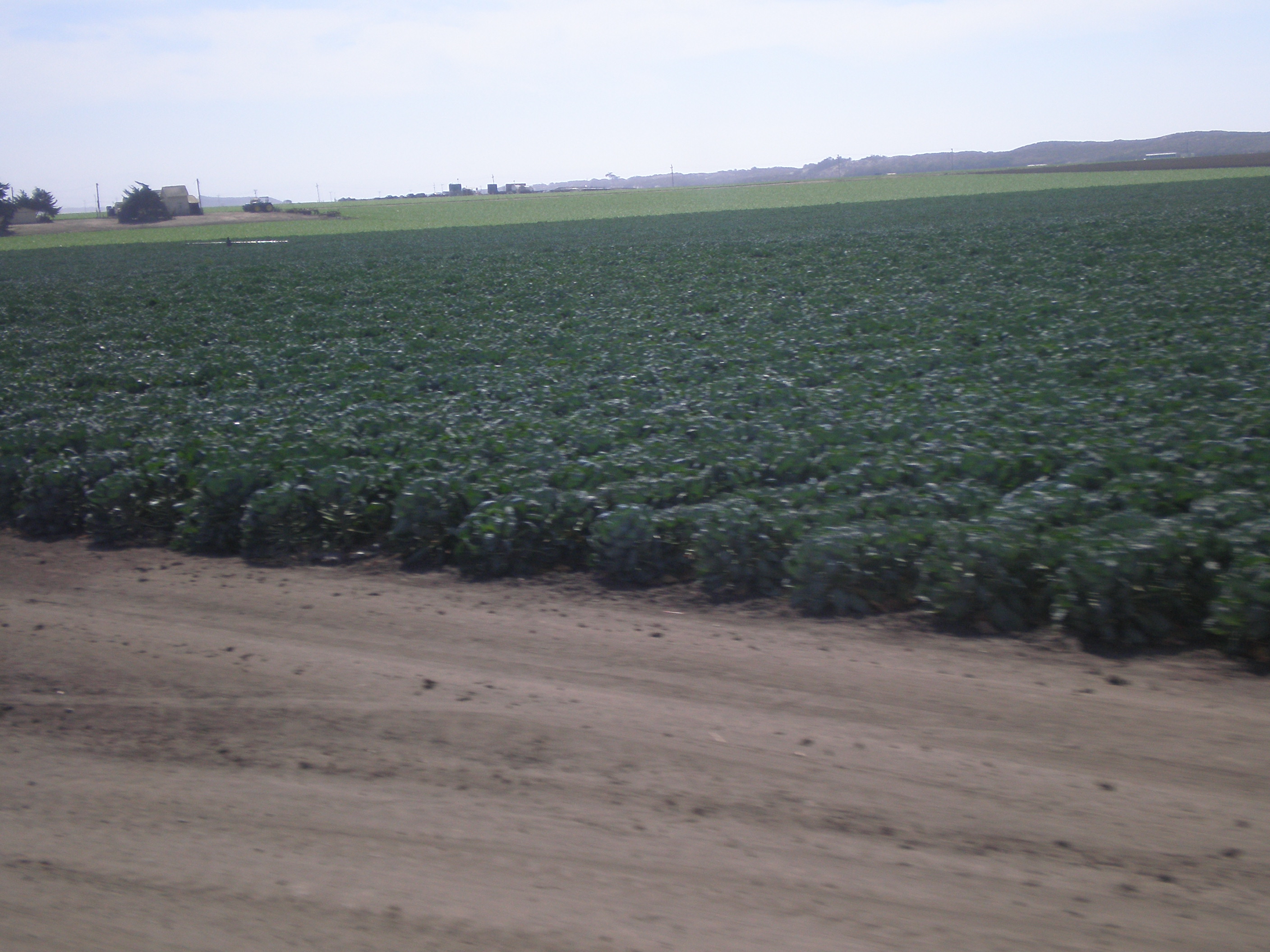
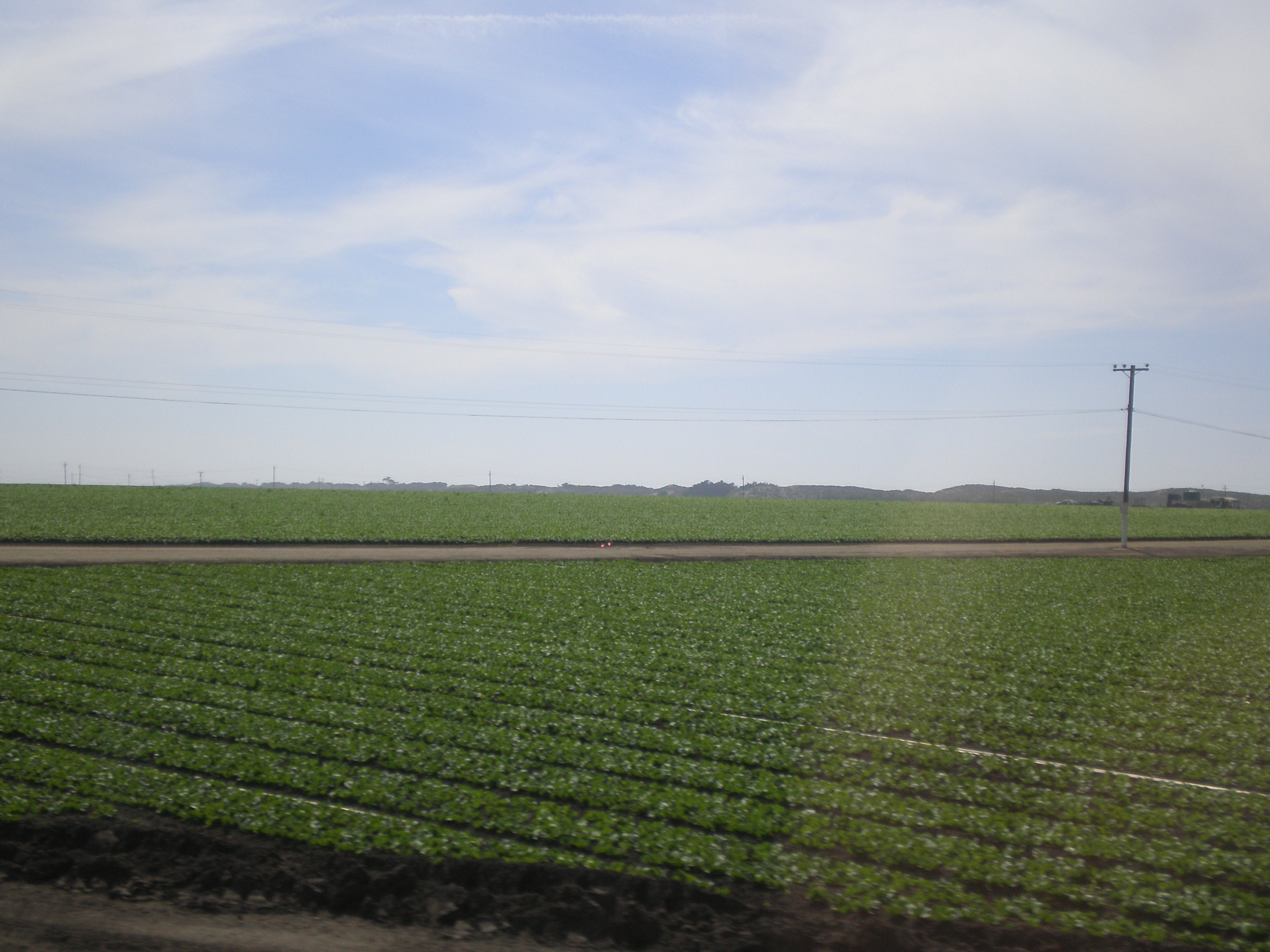
I saw signs promising 7 avocados for $1.  Do you know how much I pay for an avocado here in New York City?  $2 for a single avocado!  I was super excited — “stoked” to use the lingo I picked up while living in Cali (yes, people really talk like that there).  However, in keeping with the everything-going-awry theme of the trip, we did not get to make the stop because our bus had broken down earlier on the trip and we were already two hours behind schedule.  I took these photos from the window of the bus.

Road Trip: By Night

30 Oct

In honor of Cabbage Night and Halloween, I thought it would be fun to post some photos from my road trip that I took at night.  A midnight road trip is deliciously scary.  The moon taunting you from above.  Tree branches that look like claws.  Eerie silence.  On the bus, we watched the psychological thriller Vertigo, directed by Alfred Hitchcock, which was filmed in part at the 17-Mile Drive, which we traveled through on our road trip, but you could listen to an audio recording of a horror story if you have to keep your eyes on the road … and the rearview window!


Road Trip: Lone Cyprus Tree

25 Oct

We stopped real quick to see the Lone Cyprus Tree as we took a road trip along the famous 17-Mile Drive on the California Coast.  It’s such a beautiful symbol, a tree enjoying the salty ocean air.

Here’s a little bit about the Lone Cyprus Tree from Wikipedia:

Chief among the scenic attractions is the Lone Cypress Tree (36.568738°N 121.965321°W), a salt-pruned Monterey cypress (macrocarpa) tree which is the official symbol of Pebble Beach and a frequent fixture of television broadcasts from this area. In 1990 the Monterey Journal reported that Pebble Beach’s lawyer, Kerry C. Smith, said “The image of the tree has been trademarked by us,” and that it intended to control any display of the cypress for commercial purposes. The company had warned photographers that “they cannot even use existing pictures of the tree for commercial purposes.”[3] Other legal commentators have questioned the Pebble Beach Company’s ability to invoke intellectual property laws to restrict others’ use of such images.[4]


We also passed the Ghost Tree, which is a cyprus that’s turned completely white, but I missed it as we drove by too quickly.

Road Trip: Pebble Beach Is Not a Beach

23 Oct

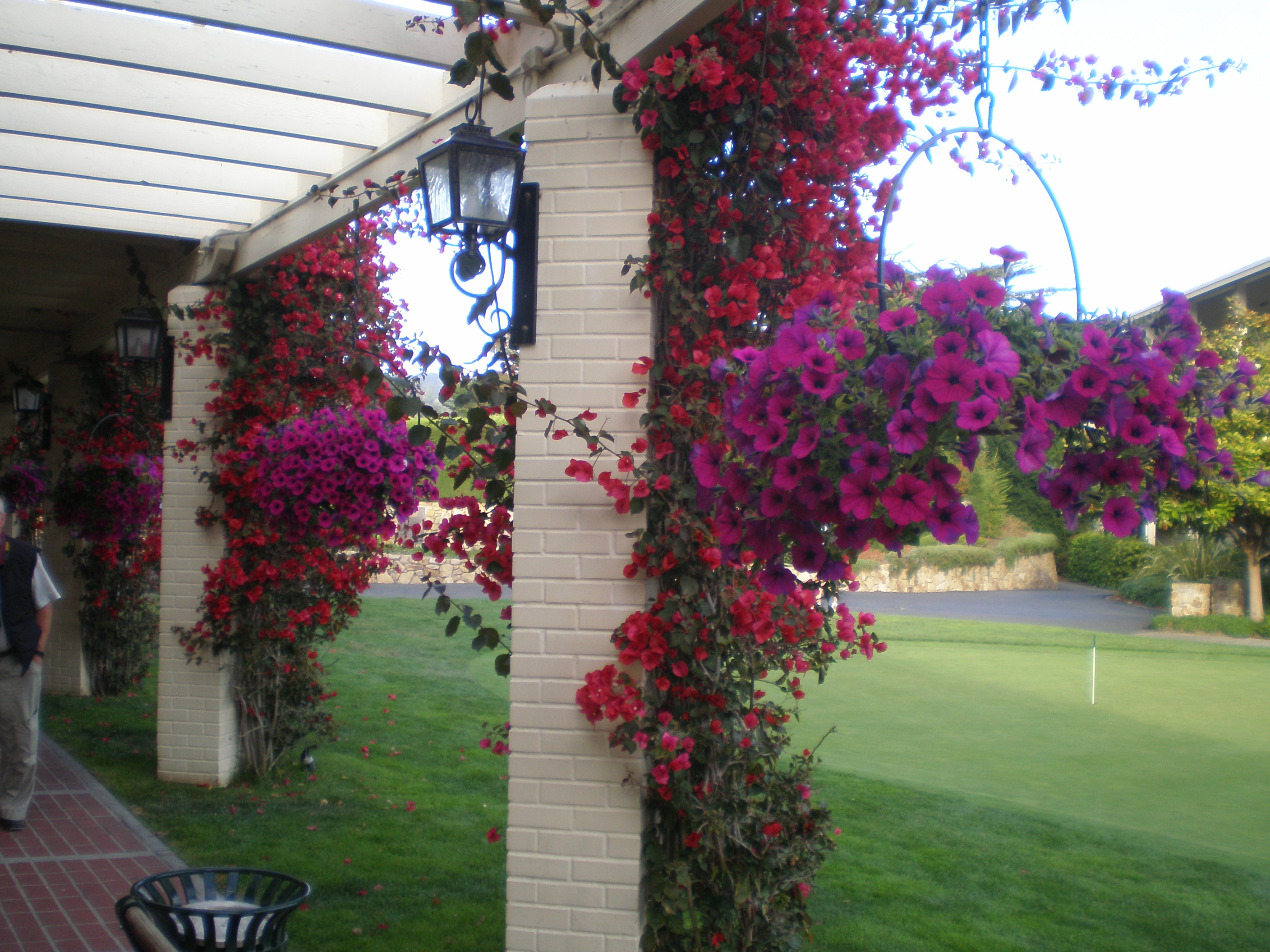
Part of my road trip down the California coast included a stop to Pebble Beach.  As it turned out, Pebble Beach is not actually a beach.  It’s a prestigious place to golf.  I kept seeing everyone take photographs with this clock so I took one too.  I have no idea why.  I know nothing about golf and this clock means nothing to me.


Big Sur and the Best Laid Plans….

15 Oct

I just got back from a trip where everything seemed to go awry.

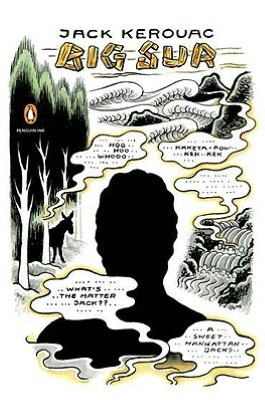
On my recent trip to San Francisco for a friend’s wedding, I had big plans to visit John Steinbeck’s Monterey, where Cannery Row is set, and Jack Kerouac’s Big Sur, where he spent time in his friend poet Lawrence Ferlinghetti’s cabin and the title of one of his books.  This idea, mind you, came after plans had already gone awry when I discovered none of my other friends were able to make it to the wedding or were flying in just in time for the wedding, leaving me with a few days to myself.  I’d been to San Francisco a few times and already done the big touristy things and the Beat literary things in the city (minus the Beat Museum, which wasn’t around the last time I was there–and which will have its own post coming up soon!), so I figured I’d take my literary wanderings a bit further south.
Steinbeck’s Cannery Row came out in 1945, two years before Kerouac made that first big trip out West.  Post-World War II, both Steinbeck and Kerouac spent time in the same area of California—Monterey, Big Sur, Salinas—and wrote about migrant workers, the working class, the down and out, absurd heroes.  Steinbeck writes of Cannery Row:

Its inhabitants are, as the man once said, “whores, pimps, gamblers and sons of bitches,” by which he meant Everybody. Had the man looked through another peephole he might have said, “Saints and angels and martyrs and holy men,” and he would have meant the same thing.

Steinbeck’s message is very much Kerouac’s as well.  Kerouac writes about “the holy con-man with the shining mind” and other Beat characters whom society might consider derelicts but whom he considers saint-like.

I planned to do a close study of Steinbeck’s Cannery Row and to reread Kerouac’s Big Sur to compare and contrast the places, characters, themes, and language.  Visiting a place can sometimes be the best form of research.  You see and hear things that aren’t in books, get a sense of proportion and distance, and see how the landscape has changed.  I wanted to see the land, to feel the sand between my toes, to have the salty ocean breeze whip through my hair, to smell the sardines.  I wanted to experience the rough terrain that so embodied Kerouac’s mind frame in Big Sur.

Unfortunately, a trip to Big Sur would not happen for me.  My plans went awry when I discovered that after Labor Day public transportation to Big Sur stopped running during the week and that the only tour that stops at Big Sur was sold out before I got to book it.  Discovering this two days before I was supposed to leave—okay, so they weren’t exactly “the best-laid plans…”—put a wrench in my itinerary.

Well, here’s my Pinterest inspiration board for Big Sur.

Here’s an article called “Steinbeck vs. Kerouac: Gentlemen, Start Your Engines!” from Big Think.

And here’s an article from Monterey County Weekly on the film adaptation of Kerouac’s Big Sur.

I was, however, able to book a different tour that at least went to Monterey.  I had to get up super early–did I mention there were several conferences going on in San Francisco so the only hotel I could find within my budget was an hour away?–to get to the 9am bus.  I got there right on time, getting one of the few remaining seats in the very back of the bus, on the side that wouldn’t have a good view.  …Two hours later, we were still in San Francisco.  The bus was blowing hot air through the vents and overheating–not great for all the senior citizens on the trip (oh, did I not mention the demographic was ever-so-slightly older?).  They brought in mechanics, and when they failed to fix it, we eventually got a new bus.  About half the people on the tour were so mad that their precious vacation time was wasted that they refused to get on and left the tour completely.  The good news: I got a better seat.

Here are a few pictures from Salinas and Monterey.

John Steinbeck references the aphorism “the best-laid plans of mice and men often goes awry” in the title of one of his other books, Of Mice and Men.  The phrase can be traced back to Robert Burns’ poem “To a Mouse”:

The best-laid schemes o’ mice an’ men
Gang aft agley

Don’t you love that eighteenth-century Scottish English?  (One day I will have to describe my misadventures in Scotland too….)

One of the things I love best about On the Road is Jack Kerouac’s candor that trips often do go awry.  When Sal Paradise, the narrator based on Kerouac, starts his first big road trip from the East Coast to the West, he has grand plans of traveling one great highway all the way there.  That doesn’t work out—nor does he even get out of state before having to turn back and come home again.  He’d been trying to hitchhike his way out of New York City and ended up stranded in a torrential downpour in Bear Mountain, one of the places my own family frequented when I was growing up.  Not one to let problems rain on his parade, Paradise/Kerouac heads back to New York City and buys fare for public transportation that will take him to the first leg of his destination.

Sometimes you just gotta keep on truckin’!  It’s a good lesson for traveling and for life.

What’s the worst that has ever happened to you on your vacation?

* * *

I’m reading tonight at 7pm at  The Penny Farthing (103 3rd Ave., downstairs in the speakeasy) here in New York City! This is a Storytellers event, hosted by C3.  I’ll be reading from Burning Furiously Beautiful: The True Story of Jack Kerouac’s On the Roadcoauthored with Paul Maher Jr.

Character Growth in “On the Road”

27 Aug

A friend of mine told me he was reading On the Road and couldn’t figure out what the point of the novel was.  He was only partway through and wanted to know if the characters ever grow.

I thought it was such a fascinating question!

As I’ve posted before, I do believe that the narrator, Sal Paradise, grows.  He is exceedingly complicated.  He’s zigzagging across America, refusing to conform to society.  And yet he keeps stating that’s what he so desperately wants.  He wants the house and the wife.  Likewise, he’s Sal Paradise—oh what a name!—is out cavorting with a car thief, and yet he’s constantly thinking about God and heaven and the holy.

I guess I can kind of relate to Sal Paradise a bit, and maybe that’s why I feel like the whole notion of whether his character grows is a complicated one.  I so often feel torn between two things that don’t seem to fit together.

I don’t know if it’s an American thing or a contemporary reader thing, or both, but it seems like we have this notion that characters have to change, grow, evolve.  We want them to become people by the end of the story.  …I guess that’s because we want that for our own lives.  We like inspirational stories—be they self-help books or Hollywood movies.  We think if this lowly character can overcome this-or-that, maybe we can too.

But how often does life play out like an inspirational book or movie?  Isn’t it more often the case that life is pretty mundane?  That we continually struggle with the same issues over and over again?  Aren’t we always searching for meaning?  Significance?  Trying to understand ourselves better?

I suppose if I’m honest, I do want to like the characters I read about, and I do want them to grow.  But I don’t think they have to.  I think part of what I love about On the Road has more to do with the language.  I’m not a huge fan of Kerouac’s poetry—though I do enjoy a few of his haikus—but I love the poetry imbued in On the Road.  I love reading his novel because of how sensual, visual it is.  I feel like I’m looking out the car window with him.  I don’t really care whether he’s in California or Mexico, whether he’s picking cotton or hitchhiking.  It’s all just so beautiful.

Road Trip with Kevin Russ

23 Aug

I stumbled down the rabbit hole of the Internet into some incredible road-trip photography by Kevin Russ, via Miss Moss. Looking at his photographs of grazing buffalo and wild horses that can’t be broken is like looking into the great American West of the past—and yet his photographs were taken with an iphone.

Kevin Russ’ photographs, wild and natural, rustic and warm, capture a moment that could be any moment in time. Massive mountains and deep gorges speak to the untamed beauty of the American landscape—the type of view that makes you pull over on the side of the road, speechless. You feel small. Not insignificant, but no longer the center of the universe. Your perch in the corner office becomes a little less important. Your eyes readjust. You begin to see.

The photographs have such a timeless quality to them even though there are signs of modern-day life in some of them. There are no people in the photographs that Miss Moss featured, and yet the contemporary traveler is present. There’s the lone yellow school bus traveling in the distance. Mundane-looking cars parked by a corral. The camper on the side of the road. A pastoral home, with what appears to be a kerosene lamp. Teepees. Yellow stripes dashing down grey pavement.

What’s interesting about the absence of people in the photographs is that Russ is actually an amazing portrait photographer. I liked his road-trip work so much that I did a bit of digging around on the Internet and found more of his photos on CameraLuv. He shoots hipsters with envy-inducing haircuts in front of abandoned tires, layers of newspapers, beat-up vans, and industrial fences. Is it any surprise he’s based in Portland?

So then I found his Flickr page and discovered he’s done photography for Radiant, a publication that has published my writing.

I want to languish all day on his Tumblr.

Seeing Kevin Russ’ photography makes me kind of wonder what it would’ve been like if iphones were around when the poets and writers of the Beat Generation were crisscrossing the United States. Allen Ginsberg was the itinerant photographer of the group, capturing hipster friends Jack Kerouac, William S. Burroughs, Gregory Corso, Peter Orlovsky, and the like on their travels.

14 Road Trip Movies for Every Personality

17 Aug

When I was an arts & entertainment editor for an indie paper in LA county, I used to work a lot with the big Hollywood studios to promote their films.  At the time, the American Pie franchise was all the rage, and the PR execs in Hollywood contacted me about coordinating a free screening for my readers of the similarly raunchy teen comedy Road Trip.  Not exactly the highest form of entertainment, but it just went to prove that there’s a road trip movie for everyone.

As I’ve been working with Paul Maher Jr. on Burning Furiously Beautiful: The True Story of Jack Kerouac’s On the Road, I’ve been thinking about the upcoming film of On the Road and wondering who it will appeal to.  Will it be the die-hard Beat fans that pilgrimage out to Lowell Celebrates Kerouac?  Will it be a new crop of hipsters in the making?  Will it be a bunch of fanged teenyboppers brought in by Twilight’sKristen Stewart, who’s playing LuAnne?  Will it be the social justice league brought in by Walter Salles, of The Motorcycle Diaries?

For the wine lover: Sideways

For the BFFs (emphasis on the last F): Thelma & Louise

For the quirky, dysfunctional family: Little Miss Sunshine

For remembering your own family road trips gone awry: National Lampoon’s Vacation

For brothers: The Darjeeling Limited

For the beer-lovin’, truck-drivin’, betting type: Smokey and the Bandit

For the hippie: Easy Rider

rc=”http://www.youtube.com/embed/UjlxqANj68U&#8221; frameborder=”0″ allowfullscreen></iframe>

For the revolutionary: The Motorcycle Diaries

For the reader who shuns conventional life and his family: Into the Wild

For the scamming father-daughter team: Paper Moon

For fashionable gangsters in love: Bonnie and Clyde

For bored, hormonal teens whose girlfriends are on vacation: Y Tu Mama Tambien

For quirky con artists and an heiress who like their trips European: The Brothers Bloom

For the spoiled heiress and the desperate journalist: It Happened One Night

There are so many other road trip movies.  Which are your favorites?

Road Trip Writing: On the Road and “Human Snowball”

26 Jul

Many summers ago, a couple of poets and I dragged some rickety chairs outside of the Bowery Poetry Club and sat in a circle, chatting about our writing, our day jobs, and life, as people passed by, sometimes stopping to talk to us. One of the girls in the group worked at a publishing house, like I did, and she offered to send us some of the books everyone in her office was buzzing about. About a week later, the package arrived, and I excitedly opened it. It’s been too many years to recall all that was in it, but I do remember it contained a book by Philipppa Gregory, which I in turn gave to another coworker because I have little patience for historical novels about the Tudor period—although I later saw her The Other Boleyn Girl on an airplane and enjoyed it—and Found.

Found started as a magazine that showcased notes, lists, drawings, and other miscellanea that readers found and sent in to the editors. In April 2004, they compiled the best of the best from the magazine and published the book Found: The Best Lost, Tossed, and Forgotten Items from Around the World. Having the book upped my coolness factor among the skinny hipster set I was hanging with at the time, and I began dating one of the guys. When Found’s founder, Davy Rothbart, published a short story collection called The Lone Surfer of Montana, Kansas, in 2005, I gave it to the guy I was dating.

I never read the book myself, but recently I read one of Rothbart’s short stories in the summer 2012 issue of The Paris Review, and it made me wonder if Rothbart might be my generation’s Jack Kerouac. While Rothbart lacks Kerouac’s poetry, they share an ear for dialogue, a captivating retelling of riding in buses and cars, an obsession with music, and an awkwardness with girls. In the short nonfiction story “Human Snowball,” Rothbart takes a Greyhound from Detroit to Buffalo to see a girl who isn’t quite his girlfriend yet or maybe ever and ends up in a carful of eccentric characters, including an ancient black man and a Neal Cassady-esque car thief. It may not have the sensory details that On the Road has, but “Human Snowball” captures characters with such honest and real details and dialogue that you feel like you know them. They’re beat characters. A little rough-around-the-edges, but sensitive and full of life.

In a bit of a Kerouac connection, actor Steve Buscemi, who stars in the film adaptation of On the Road, optioned the rights for Rothbart’s The Lone Surfer of Montana, Kansas. Rothbart himself is a chronic roadtripper. He’s traveled the country and toured with the punk rock band Rise Against, creating the documentary How We Survive for the dvd Generation Lost as well as the documetnary Another Station: Another Mile.

Road Trip Writing: On the Road and Through Painted Deserts

16 Jul

Donald Miller’s New York Times-bestselling book Blue Like Jazz recently was made into an indie film, and I had the opportunity to watch a screening in Times Square before the film was officially released on April 13.  I’ve had the immense pleasure of meeting and getting to know some of the “characters” in the book.  I was so proud of them!  Penny Carothers wrote a beautiful article about her experience going to the premier and seeing an actress play her on the silver screen.

The film was very different than the book.  I knew this going into it.  The story of this process of turning a collection of essays from Blue Like Jazz into an actual storyline is told in Miller’s A Million Miles in a Thousand Years.  There’s a scene in A Million Miles when Don is told that he essentially needs to change his life story for the movie.  He says:

“You think they might be bored if we just show my life the way it is,” I clarified. I guess I was asking for reassurance that my life was okay.

From the perspective of a fellow memoirist, I found the process fascinating.   I think memoirists, particularly those who are in the process of turning their book into a movie, should consider reading Blue Like Jazz and A Million Miles in a Thousand Years and then watching the film, just to get a sense of process.

After watching the film Blue Like Jazz, I can’t help but wonder what will happen with the film On the Road.  After all, both are fictional portrayals of real life.  If Blue Like Jazz is any indication, On the Road will be very different than the book.  A guy I interned with years ago at the Bowery Poetry Club left a comment recently in response to one of my Facebook posts, saying that Kerouac wasn’t a good storyteller.  In a way, I kind of agree with him.  On the Road would seemingly make a lot more sense if it was just one big road trip across the United States.  Instead, the protagonist, Sal Paradise, barely hits the road before he turns back around.  There are multiple trips across the country, and the story can get a bit confusing because of that.  Maybe Jack Kerouac was trying too hard to stick to the truth to combine all the trips into one.  Then again, maybe he knew what he was doing.  There’s something so much more telling about Sal Paradise failing his first attempt at road tripping and then frenetically ping-ponging between his mother’s house and the open road than if it had all happened easily, perfectly.  Can the film capture that?  Will it try?  Will gaining cohesive action and a clear plot lessen the reality, the rawness, the beat-ness of life?

While I do recommend Donald Miller’s A Million Miles in a Thousand Years for an honest look at not just the writing process but the process of living life, the Donald Miller book I’d actually recommend as an example of beautiful storytelling and craft is his first book, which was republished as Through Painted Deserts.  This is the book that pays more attention to the way words sound as they roll of the page.  It inspires because of its beauty and simplicity, and not because of grand, sweeping gestures and actions.

Through Painted Deserts is Donald Miller’s road trip book.  Here’s how the overview reads:

This classic road trip tale will inspire readers of all ages.

Fueled by the belief that something better exists than the mundane life they’ve been living, free spirits Don and Paul set off on an adventure-filled road trip in search of deeper meaning, beauty, and an explanation for life. Many young men dream of such a trip, but few are brave enough to actually attempt it. Fewer still have the writing skills of Donald Miller, who records the trip with wide-eyed honesty in achingly beautiful prose. In this completely revised edition, he discusses everything from the nature of friendship, the reason for pain, and the origins of beauty.

As they travel from Texas to Oregon in Paul’s cantankerous Volkswagen van, the two friends encounter a variety of fascinating people, witness the fullness of nature’s splendor, and learn unexpected lessons about themselves, each other, and even God.

Through Painted Deserts is the modern-day, Protestant version of On the Road.  It’s about a young man looking for truth out on the open roads of America.

PS::: You may also like:

my article on Church Hopping with Donald Miller

my article on Church Hopping with Penny Carothers