Tag Archives: Writing Wednesday

Writing Wednesday: Memoirist Patricia Volonakis Davis on How Cultural Identity Changes after Marriage and Moving

13 Jul

Happily ever after wasn’t the case when first-generation Italian Patricia V.–as in Volonakis–Davis married a Greek national.  The author calls her book Harlot Sauce: A Memoir of Food, Family, Love, Loss, and Greece “a tragedy written as a black comedy,” in her interview with Jane Friedman for the article “How to Find a Direct Line to Your Readers” in Writer’s Digest.

In the interview, Davis alludes that her sense of self shifted when she experienced another culture:

…Harlot’s Sauce was about how being raised first generation Italian-American affected my worldview and attitude about myself, then how these both changed as a result of my marrying a Greek national and moving to Greece with him, in an attempt to save our failing marriage.

As a memoirist writing about identity and culture, I’ve often reflected on how being raised Greek American affected my worldview.  For me, though, it wasn’t just about being Greek–it was about being Other.  Or rather, being Something.  I wasn’t just plain Jane American.  My family did not come over on the Mayflower.  I was more than American.  I was Greek American.

However, I did not fully understand this until I moved to California.  I grew up in a pretty diverse town in New Jersey.  Most people were “ethnic.”  When I moved to California, I was suddenly surrounded by blonde-haired, blue-eyed, white Americans.  They weren’t white like I was white, though.  They were American.  Their family had been here for generations.  It was in moving that I came to a better understanding of who I am as a Greek American and who I am as someone who grew up in Northeast America.

I’ve never lived abroad, like Patricia Volonakis Davis did, but I did wander around Europe for about three months one summer, and I gained further understanding of my identity through these travels.  People were quick to make assumptions about my American-ness.  People didn’t really care that I was of Greek descent.  Being raised in America trumped ethnicity in terms of my identity.

It seems to me that identity is fluid.  Depending on where we are and who we’re “comparing” ourselves with, our identity can shift.

For women especially, identity changes with marriage.  Most women still take on their husband’s name, and our names signal a lot about who we are.  For instance, I saw the name Volonakis, and I immediately assumed the author of Harlot Sauce was Greek, even though as it turns out she’s Italian American.  And yet in some ways she became more Greek than I simply by virtue of living in Greece.

I wonder how many women become culturally Other to what they were raised as because of marriage?

Check next week’s Writing Wednesday for more on Patricia Volonakis Davis.

Writing Wednesday: BWC Church Hopping Column Goes Live in NYC This Summer

29 Jun

While I tend to write a lot about my life as a Greek American here, for the past few years I’ve been writing about art and architecture and faith over at Burnside Writers Collective.  Three years ago, I began writing a column called Church Hopping, in which I visit — most of the time physically but occasionally virtually — churches throughout the world, and write about their incredible history and art.  The Church Hopping column is one of the writing projects I’m the most proud of, and of which the Burnside community has been incredibly supportive of.

That’s why I’m so happy to announce that I’m partnering with Burnside Writers Collective, City Grace Church, and Redeemer Presbyterian Church to create live Church Hopping events this summer!  That means that you can join in on the fun.  Read more about it here and register here.  Space is limited and it’s filling up fast so even though the first event is a month away, I suggest registering asap if you plan on attending.

MFAism: Hosting Summer Writing Workshop

22 Jun

Even though the MFA writing program is officially on summer break — whoo-hoo! — some of us from the creative-nonfiction writing workshop decided we were having so much fun (or something like that) that wanted to keep on meeting.  Last Tuesday we had our first informal workshop.  It was so nice to catch up with everyone and to chat about our writing.

As I’ve alluded, everyone in my classes always recommends I read David Sedaris when they find out I write about growing up Greek American.  I do get a kick out of David Sedaris, but it’s his sister Amy Sedaris who captured my heart with her book I Like You: Hospitality Under the Influence. There’s just something about us Greek women — we love hosting and feeding people.  I barely had anyone over during the semester so I was super-excited to volunteer hosting the writing workshop in my apartment.

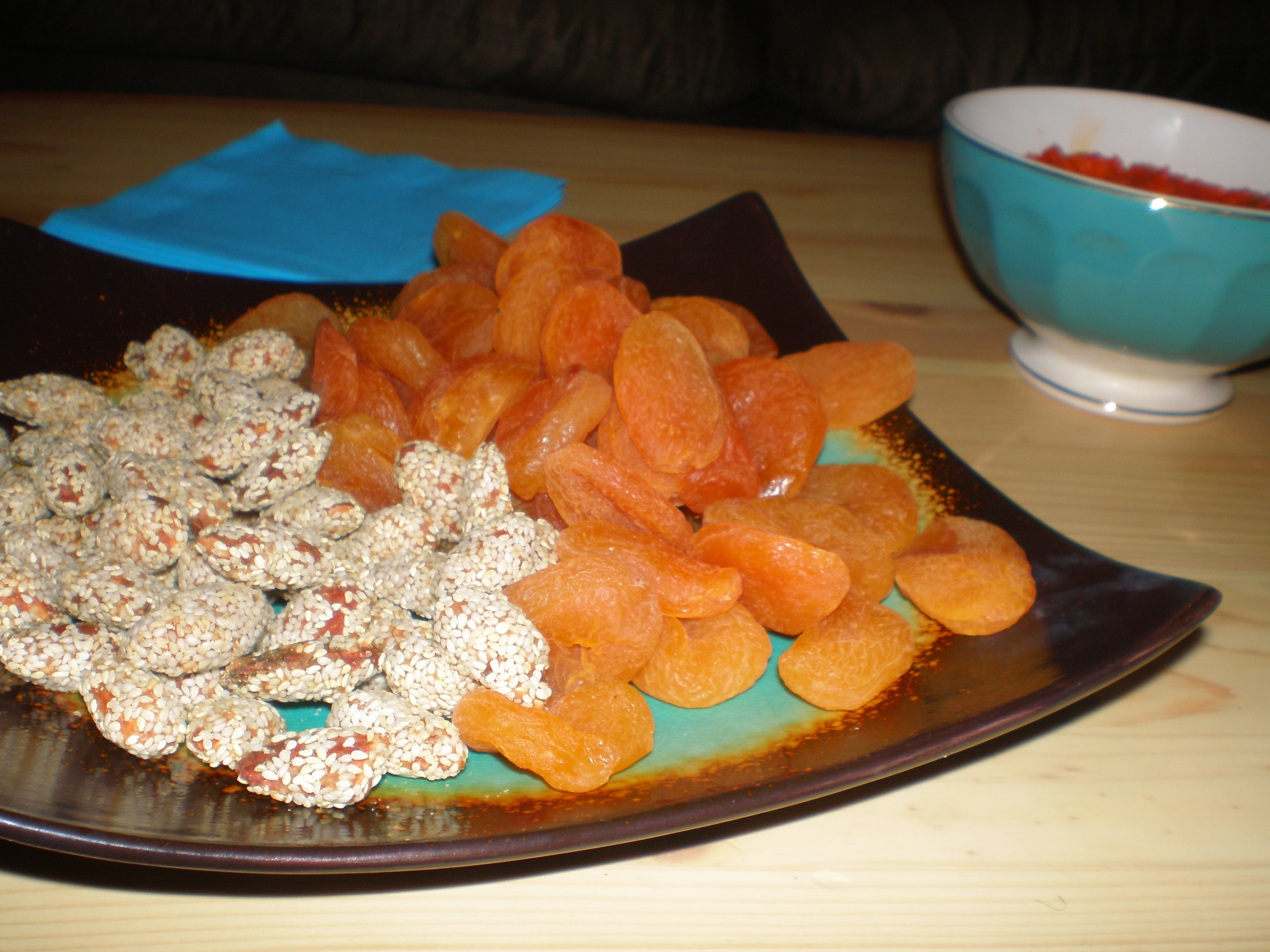
Since my classmates have been giving me feedback all semester on the Greek American memoir I’m writing — and since I’m the Queen of Theme Parties — I of course prepared Greek meze for them.  I served feta cheese (imported from Greece!  I’m stimulating the Greek economy!), sliced tomatoes with sea salt, pita, red pepper & eggplant dip, dried apricots, and almonds.  The other writers graciously brought delicious homemade (!) scones and sumptuous red wine.  I pretty much gorged!

We had a great conversation about nonfiction vs. fiction writing and talked about the role of blogging in our writing.  Then we spent some time critiquing each other’s works.  I got helpful feedback on a short reflection I’d written about my experience at the 2011 Gabby Awards.  I really enjoyed reading their new pieces too.  Everyone has such interesting stories to tell!

Now I’ve got to get to work on the next chapter to submit!

In the meantime, if anyone has any tips on how to run a writing workshop, please post in the comments section.

Writing Wednesday: Richard Stratton

18 May

On Saturday night, I went to a professional’s group gathering in which author-filmmaker Richard Stratton spoke and presented a short film.  My friends were hosting the event in their lovely Financial District apartment, where we could watch the sun set over the Statue of Liberty.  After a cocktail hour of mingling over wine and beer, cheese and pretzels, we settled into chairs to hear more about Stratton’s life story and projects.

Richard Stratton smuggled drugs before getting caught and imprisoned for eight years.  He was friends with Norman Mailer and while in prison wrote the novel Smack Goddess.  The PEN American Prison Writing contest awarded him first prize for a work of fiction in 1989.  He has since gone on to write for Esquire, GQ, Rolling Stone, and Spin. 

When he was released from prison, he brought his knowledge and experience into his career as a writer and filmmaker, raising American consciousness on what that life is really like.  He was a consultant on the Emmy Award-winning HBO prison documentary Thug Life in D.C. and on the dramatic prison series Oz and producer for the indie film Slam, a favorite at Cannes and Sundance.  Steve Fishman wrote a great article on Stratton for New York Magazine, which goes into more depth on his fascinating life story.

One tidbit revealed during the chat on Saturday night is that Stratton—who is originally from Provincetown, MA, and now resides in New York—is related to the Lowells who came over on the Mayflower.  Lowell, MA, is named after the Lowells.  Lowell is where Jack Kerouac (On the Road) is from, so if you’ve been following my blog for a while you’ll probably guess that my ears perked up at the mention of Lowell.  I’ve actually been working on a piece set in Lowell, and now I’m considering doing some more research into the Lowell family.

Stratton is currently working on a film about an autistic child who loses his firefighter father on 9/11, and screened a short of it for us.

The evening inspired me to think more broadly about writing—both in terms of how writing and film are connected and in its purpose for raising awareness for the general public.

Writing Wednesday: Hung Up on the First Line

18 May

I often get hung up on the first line.  I feel like if I get the first sentence right, the rest of the work will have a better chance of coming out right too.  Maybe that’s because I generally don’t write with an outline.  Rather, I allow the first line to determine the direction of the piece.

That’s probably not the best way to write.  It’s probably better to know what you’re going to say and then say it.  But sometimes it takes writing about something for me to really wrap my head around it.

Unfortunately, that puts a lot of pressure on writing a good first line.  I guess that’s why the whole revision process is so important.

What about you?  Do you know ahead of time exactly how your story is going to conclude?  How does your first line determine the rest of your piece?

Writing Wednesday: Thrown in the Deep End

20 Apr

One of the big MFAisms is: “Start with the action.”

As a journalist, I understand the importance of strong titles and hooks.  You need to entice the reader, draw him in.  I don’t believe, though, that the hook and action are synonymous.

As a reader, I feel flung into the deep end of a cold swimming pool when a story starts with the action.  I splash around trying to figure out where I am and where I can find some solid ground.  Once on dry land again, I feel like I was needlessly jerked around.  I would’ve loved to swim around, but I prefer to stick my feet in first, test the waters.

I felt relieved then when I read Jane Friedman’s article “The Biggest Bad Advice About Story Openings” on her Writer’s Digest blog There Are No Rule.  Friedman states that an opening with lots of action and little characterization, “Delivers a stereotypical crisis moment that’s full of action or pain, but without a center.”

Isn’t that so true?  Doesn’t it seem like all action stories are the same?  The reason action matters in any type of story is because we are intrigued by the characters.

What are your feelings about starting a story with the action?  What does a great hook look like?

Writing Wednesday: Greek Stereotypes — If You Can’t Beat ‘Em, Join ‘Em … Or Something Like That

6 Apr


“Stereotype” is a dirty word.  Stereotypes of ethnicities and races come with all sorts of negative connotations—the types of assumptions that are too dangerous to even give examples of, but you all know what I’m talking about.

I remember years ago learning that even “positive” stereotypes are negative.

Really?  How can that be?

I’ve been stereotyped.  Because of my last name, people make all sorts of assumptions about the literature I read and the language I speak.

“Did you read the new translation of The Odyssey?”

“Can you tell the class how to pronounce this Greek word?”

“I can’t remember who the god of wine is.  Stephanie, who was it again?”

If it happened once in a blue moon, it wouldn’t be a big deal.  But it happens often enough that it’s at times made me insecure in my identity.  Should I know that there’s a new translation of Homer’s epic poem?  What does it say about me that I don’t know?

Sometimes it works to my advantage, though.  I’ve received opportunities to write about Greek things by virtue of my ethnicity.  That is a positive, but it is also a negative.  Is that the only reason I was selected?, I can’t help but wonder….

“Why do you write about Greek things?” my mom, who is not Greek by blood, asked me.

My lit teacher has a theory that literature is reparative.  We write to rectify, to make ourselves whole.  She may be right.  I write about Greek things because I don’t feel as Greek as others seem to think I should—which makes me think I need to feel more Greek—and my writing seeks to explain, to justify, even to rectify.

Also, I figure if I can’t beat ‘em, join ‘em.  People have been making stereotypes about my interests and knowledge of Greece for decades.  That’s not likely to change.  The stereotyping comes from a good place: people love Hellenic history and Greek culture.  Why not give the people what they want?  After all, I like Greek culture too, even if I don’t always know as much about it as some people assume I do.

Writing Wednesday: Who Is the Patron Saint of Your Writing?

23 Mar

Detail of Turf One's painting "Holy Ghost."

“Who is the patron saint of your writing?” my lit instructor inquired.

I’m taking a class that looks at how classic works of literature inspire contemporary works.  We look, for example, at how Evan S. Connell’s Mrs. Bridge informed Meg Wolitzer’s The Wife.  It seems natural that great authors would inspire other great writers to write either in the same style or the same theme.  And yet, my instructor’s question has had me thinking for days.

I’ve never thought of my own writing as being inspired by another writer.  I don’t try to write like my favorite authors, though I’m sure I must’ve done it subconsciously many times.

In a way, this rejection of sameness is reflective of my life in general.  I was the English major in undergrad who hung out with all the premed students.  I was the Greek kid in middle school with all the Korean and Japanese friends.  It never occurred to me to hang out with people who had my identical interests and culture, and it never occurred to me to try to write like another writer.

Except maybe Gregory Corso.

When I was 22 I wrote an homage to Corso’s “I Am 25.” It was pretty much a rip off of Corso’s poem, but it was meant to be.  Corso writes about stealing the poems of Shelley, Chatterton, and Rimbaud, and I more or less swapped out the names of these “old poetmen” for those of Corso, Kerouac, and Ginsberg.

Along those Beat Generation lines, one of my favorite writers is Jack Kerouac.  Read these lines from On the Road:

“Soon it got dusk, a grapy dusk, a purple dusk over tangerine groves and long melon fields; the sun the color of pressed grapes, slashed with burgundy red, the fields the color of love and Spanish mysteries.”

“The one thing that we yearn for in our living days, that makes us sigh and groan and undergo sweet nauseas of all kinds, is the remembrance of some lost bliss that was probably experienced in the womb and can only be reproduced (though we hate to admit it) in death.”

It pains me how beautiful these words are.  While so much has been made of Kerouac’s subject matter and improvisational style, I find that it is his lyrical descriptions and, yes, the rhythm of his prose that captivate me the most.

I have zig-zagged across the country, visiting places Kerouac visited, and I’ve written short travel articles, but I don’t write road-trip novels.  I would like very much to write about America, though.  I’ve written about Kerouac, sure, but I haven’t (consciously) attempted to write in his style.  I love punctuation rules too much.

I would probably choose Jack Kerouac to be the patron saint of my writing, but in reality, my writing voice comes out more like Sue Monk Kidd or, as my mom has pointed out, Donald Miller and Anna Quindlen.

Others tell me to read David SedarisHe’s Greek!  He writes about his family! And indeed, I do see his humor sometimes creeping into my personal essays.  One time, right after reading David Foster Wallace’s Consider the Lobster, I will confess I conjured up his style for an article I wrote, but I fear that was only similar to off-key humming of a song that just played on the radio.

Must I choose just one patron saint?

I admire great writers, and I love to reference them and turn other readers on to them, but I don’t think I could ever choose just one to be my patron saint.  I’m way too much of a schizophrenic writer for that.

Who is your patron saint of writing?

Writing Wednesday: The Schizophrenic Writer

23 Feb

“Writing is a socially acceptable form of schizophrenia.”

~E. L. Doctorow

I’ve been attending a lot of seminars on the importance of branding oneself as an artist.  Branding makes sense.  After all, categorization makes buying and selling easier.  Consumers like to know what they’re getting and how to find it, and companies like to make it easy for consumers to find things to buy.  That’s why movie genres like horror, sci-fi, and comedy and music genres like hip hop, country, and pop are so helpful.  If you hate a certain genre, you can just skip over it to find what you do like.

As a writer, though, I have a hard time with branding.  I don’t want to be branded as just The Greek Writer or The Art Writer or The Religious Writer.  Call me schizophrenic but I like having different writing personalities.  I wouldn’t want to only ever watch crime dramas so why would I want to only write about one topic in one voice for the rest of my writing career?

Well, if I want to build up a readership, I have to consider my audience.  Does Stephen King have the same audience as Nicholas Sparks?  Maybe, but not necessarily, and certainly if a reader is in the mood for horror she’s not going to pick up a Nicholas Sparks book.  Whether I like it or not, branding impacts who’s going to read my books.

Some authors, Stephen King included, use pen names.  That’s a great way to keep one’s writing identities separate.  The downside, of course, is that loyal readers that may have taken a chance on a book in a different genre or subject matter (hey, readers don’t always stick to only one genre either!) by the author may miss out on a book they’d love because it’s (supposedly) written by an author they’ve never heard of.

Perhaps then, a better solution is to focus mainly on branding the book instead of the author.  Think of it this way: just as a parent’s children are unique so are an author’s books unique, but that doesn’t mean that they’re not all connected and show traces of the author’s presence in them.  After all, Stephen King’s pseudonym was cracked when a reader thought that a certain Richard Bachman wrote an awful lot like King.

That said, a schizophrenic writer can also be an immature writer who has yet to find her voice.  We all have strengths and weaknesses, likes and dislikes, and sometimes it takes time to discover how those attributes come into play for us as writers.  I, for instance, went through a period where I wrote on any topic that came along with a paycheck.  The articles weren’t bad but one of my readers mentioned they could tell when I was really passionate about a subject.  That made me reevaluate my priorities and my skill set.  Now I still like to experiment with different subject matters but I’m more selective in the voice I use when writing.

How do you deal with writing schizophrenia?

Writing Wednesday: Impersonating My Voice

16 Feb

I dress according to my mood.  I don’t mean I just dress for the occasion; I mean my style itself is subject to whim.  On Monday I could fit into the category of preppy but by Thursday I could be mistaken as a hipster.

Is it any surprise, then, that one of my biggest writing frustrations is finding my voice?  It seems absurd that one would need to find her writing “voice.”  Isn’t voice something inherent?

Yes, and no.

The Million’s recent interview between novelist Bill Morris (Motor City, All Soul’s Day) and personal essayist Carl H. Klaus, author of the new book The Made-Up Self: Impersonation in the Personal Essay, confirmed my thoughts on voice.  In the article, “When We Aspire to Write Like Ourselves,” Klaus discusses the “fluid nature of the self,” and says,

To think that I could in fact create a style that was an echo of such a multi-sided thing as the self – that’s simply a cuckoo notion.

I feel vindicated.  Critics have been saying for years to beware of the constructed identities of authors.  However, it’s refreshing to consider the author’s struggle in creating a portrait of self.  While, writers may acknowledge creating a personae—a “character”—of themselves, either out of convenience or agenda, there seems to be less talk about the struggle of figuring out who their “character” is.

I certainly have a perspective that is uniquely my own, but depending on the subject matter, my feelings toward it, and whom I suspect will read my work, my tone, diction, and style shift.  I’ve feared that this might be a sign of immaturity, but I really do feel that who I am and how I write ebbs and flows.  I will admit there is a predominant voice to most of my personal essay writing, but I don’t think that is my only voice.

If I am to present the most accurate portrayal of myself, how can I limit my voice?