Archive | June, 2011

2011 Gabby Awards: Stephen Antonakos, Lifetime Achievement Award Winner

7 Jun

I am extremely thankful to the Gabby Awards for sending me tickets to attend the 2011 Gabby Awards, a celebration of “Greek America’s Best and Brightest Stars.”  The website describes the Gabby Awards as follows:

The Gabby Awards were created to celebrate and reward the excellence Greek Americans have achieved in various fields. Founded in 2009 to also celebrate the 15th anniversary of the launching of Greek America Magazine, the Gabby Awards serve as the “Oscars®” of the Greek American community.

The 2011 Gabby Awards were held on Ellis Island, and there were special, star-studded events all weekend to celebrate.

On Friday, June 3, the American College of Greece hosted a cocktail and art exhibition to honor Gabby Awards Lifetime Achievement Award winner artist Stephen Antonakos at Lori Bookstein Fine Art.  I’m a huge fan of Stephen Antonakos’ art.  I love modern art in general but I’m particularly entranced with the idea of using neon in fine art, as Antonakos does.  Neon — symbol Ne; atomic number 10 — comes from the Greek word “νέον,”  which means “new one.”  Neon was discovered by British chemists in 1898 and made into advertising signs first in France in 1912.  It wasn’t until 1923 that neon signs were bought in the U.S.  Antonakos, who was born three years later in 1926 in Greece, move to America in 1930 and thirty years later, in 1960, began using neon in his art.  According to the Gabby Awards:

Antonakos “discovered” neon in 1960 when he was intrigued by the light emanating from midtown Manhattan neon signs. From there, he made neon his primary medium, developing his individual contribution to modern art.

I was hoping for a whole roomful of neon sculptures, but there was only one, Plea, at the Lori Bookstein Fine Art gallery.  Plea is a red rectangle, hung vertically on the wall.  Neon light emanates from behind it, making one reconsider the shape, color, and even significance of the red rectangle.

The sculptor of light, Antonakos, says:

My use of neon is really my own.  I began with it around 1960 and very soon it became central to my work.  The geometric forms, usually incomplete circles and squares, were a tremendous excitement to me.  It is very difficult to separate light from space — even when the art is directly on the wall.  For years I have been investigating the great subtlety and range of neon using forms that haven’t changed that much since the beginning.  It’s spatial qualities interest me — formal relationships within a work and with the architecture of the room or building and the kinetic relationship that viewer may feel in the space of the light.  I feel that abstraction can have a very deep effect visually, emotionally, and spatially.

Stephanie in front of Gabby Awards Lifetime Achievement Award Winner Stephen Antonakos' "Drawing/Neon For The University of Massachusetts" (1978, Colored pencil on paper, 38" x 50")

As this quote indicates, Antonakos’ artwork is about more than just neon — it’s also about shape.  At first, some of his works seem simplistic, but upon closer inspection they are brilliantly thought-provoking.  Take for instance, Drawing/Neon For The University of Massachusetts, also up at the gallery.  On top of white paper sits the outline of a circle, done in red pencil.  Except, it’s not a circle at all — there circle never closes, never completes.  It’s very nature — unending — is interrupted, challenged.

The Gabby Awards points out:

In his long and storied career, Antonakos has had more than 100 one-person shows, more than 250 group shows, and almost 50 Public Works installed in the United States, Europe, and Japan. He is recognized as the world’s pioneer light artist.

Antonakos’ Lifetime Achievement Award was presented the following night at the Gabby Awards, by Helen Evans, the Mary and Michael Jaharis Curator for Byzantine Art at the Metropolitan Museum of Art in New York City.  Friday’s event at the gallery was quite lovely, even though I wish there would have been more of Antonakos’ art on view — in particular, I want to see Mani Sky, Arrival, and Transfiguration.

The passed hors d’oeuvres were probably the best appetizers of the entire event.  I’m talking mac-and-cheese croquettes, vegetarian sushi, and other delectable treats, served by charming caterers, who caught on to my dietary choice and looked out for me, going out of their way to give me vegetarian options.

I want to also take a moment to mention Deree, The American College of Greece.  The college’s president, David G. Horner, Ph.D., was there to speak about the college’s esteemed history as “Europe’s oldest and largest, comprehensive, U.S.-accredited academic institution.”  The college offers undergrad, grad, and continuing ed courses.

Congratulations to Stephen Antonakos!  His work will be on display at the Lori Bookstein Fine Art Gallery (138 10th Ave, New York) through June 25, 2011.


Dreams of European Picnics

3 Jun


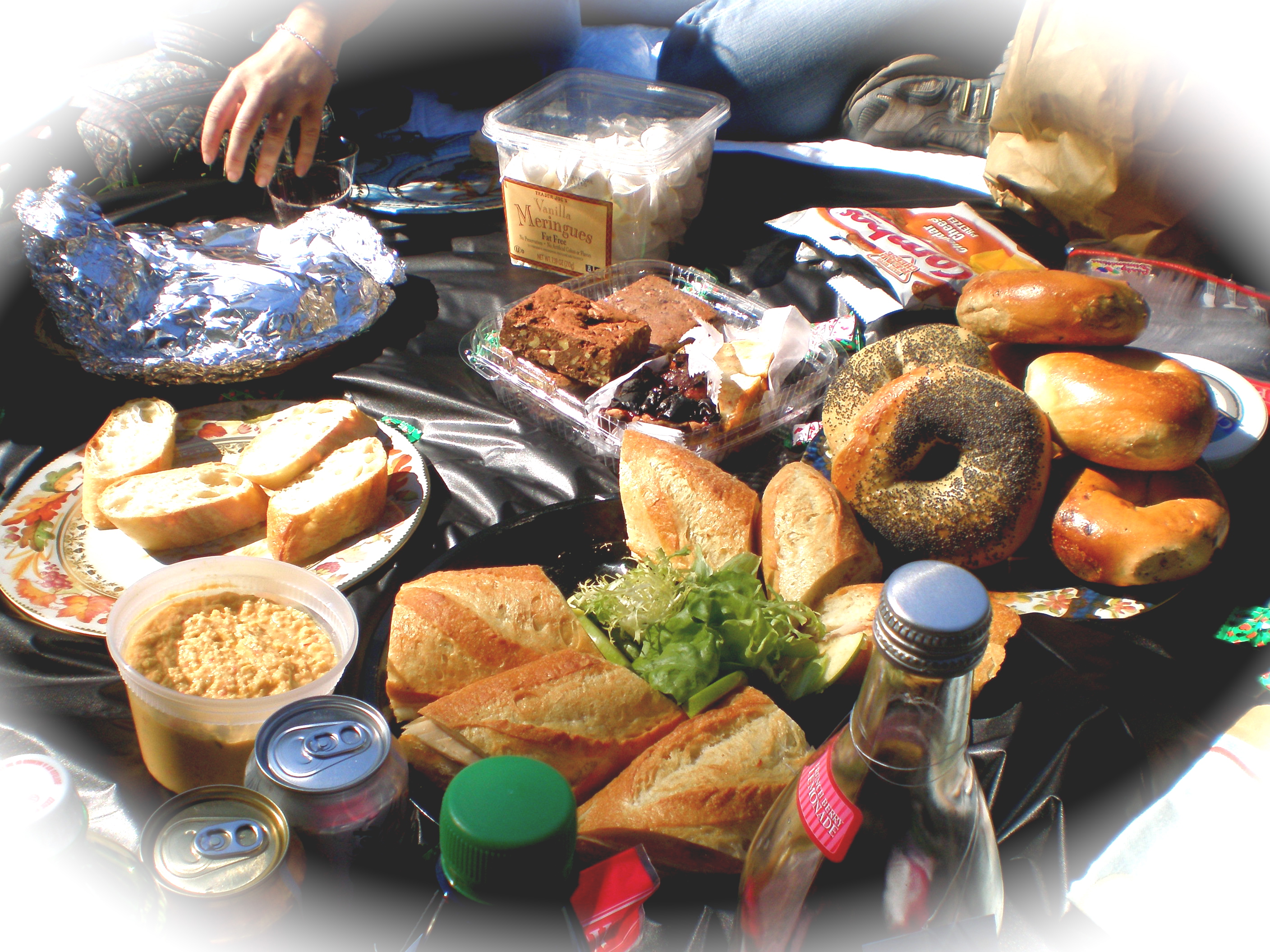
Two nonfiction writers in my MFA program individually suggested that I check out Saveur, and I’m so glad they recommended the culinary magazine to me!  It’s always full of such mouthwatering images of food and recipes I’d love to taste test.  This week, the article “Menu: A French Picnic for Early Summer” arrived in my inbox.  Sometimes I think I must’ve been French in another lifetime.  I’ve always thought of myself more as an Anglophile than a Francophile, but there’s just something so charming and whimsical about the whole French flea-market aesthetic.

A summer or two ago, I read Barry Miles’ The Beat Hotel, about the years Beat Generation writers Allen Ginsberg, William S. Burroughs, and Gregory Corso lived at 9 rue Git-le-Coeur on the Left Bank of Paris.  Wouldn’t it be lovely to have a long, leisurely picnic of baguette and chevre along the Seine?  Experiencing communion with God while drinking cabernet sauvignon and contemplating the enormous rose window of Cathedrale Notre-Dame de Paris?  Reading bohemian and Beat poetry and penning poems in a pocket journal?

Sometimes I wish the Greek aesthetic lent itself to a more feminine and whimsical feel.  I picture triangles of tiropita, squares of feta cheese generously sprinkled with oregano, and delicate twists of diples dripping with honey and cinnamon all laid out on an off-white doily-like tablecloth crocheted by my yiayia.  Someone is fingerpicking an ornate bouzouki, and I’m reading about how Allen Ginsberg sailed to Greece in 1961 to track down his love.  And I am writing stories about cultivating a garden of memories in Greece.

Greek Cookbooks at BEA 2011

2 Jun

Zigzagging my way through the Javitz Center last week at BEA, I discovered two beautifully packaged Greek cookbooks I want to share with you.


I’m a huge fan of pretty much everything Chronicle publishes, and their upcoming book Kokkari is no exception.  Written by executive chef Erik Cosselman and food writer Janet Fletcher, the cookbook gives insight into life at the Greek restaurant Kokkari in San Francisco.  Look for it this coming September.

Marketing copy not yet available, but the book will be 224 pages of text and color photography.  Just look at that cover design!  Rather than focusing only on traditional Greek fare, the cookbook will discuss contemporary Greek cooking through the lens of what is servied at the popular California restaurant.


Arsenal Pulp Press showed off last year’s publication From the Olive Grove—and with good reason: Helen Koutalianos’ and Anastasia Koutalianos‘ book pairs the history and health benefits of olive oil with classic Mediterranean recipes.

Marketing copy reads as follows:

The healthful virtues of olive oil, a key component of the Mediterranean diet, have become well-known in recent years; its monounsaturated fats and antioxidants are beneficial in preventing heart disease by controlling LDL (“bad”) cholesterol levels while simultaneously raising HDL (“good”) cholesterol levels.

Helen Koutalianos has preached the gospel of olive oil and its benefits for years; at the same time, consumers across North America have become more sophisticated and appreciative of flavorful, boutique olive oils that are not mass produced. In this charming, intimate cookbook, Helen and her daughter Anastasia have collected 150 delectable, Mediterranean-inspired recipes (Greek and beyond), many of which have been passed along from Helen’s mother and grandmother, in which olive oil is a central ingredient; these include Olive Oil Poached Lamb, Quail with Olives, Turkish Kebab with Garlic, Shrimp and Feta Casserole, Octopus in Wine Sauce, Seared Scallop and Prawn Gazpacho, Artichokes with Lemon, and Kolokethakia Yemista (Stuffed Zucchinis with Lemon Egg Sauce).

The book also takes readers through the artisan olive oil-making process, from cultivating and processing the fruit to the production of the oil itself. Complemented with full-color photographs of recipes, From the Olive Grove will seduce and inspire readers to create their own delicious, heart-healthy meals at home.


Perhaps in the downturn of the Greek economy, more Greeks have been immigrating to the United States, because I’ve noticed at least two new Greek restaurants pop up in Manhattan in the past six months.  In the past few years, Peruvian and Korean food seems to have assimilated into the culinary world, and while Greek food has been around for a while, I wonder if we might be headed into a bit of a Greek food renaissance—with a focus on new, contemporary explorations of Greek cooking.

The Buzz on Flash-mob Bees, Bowery Bees, and Greek Bee Myths

1 Jun

Oh my goodness, did you guys hear about the bees that took over Little Italy yesterday??  Apparently, thousands of bees decided to meet up at lunchtime in front of the Italian American Museum on the corner of Mulberry and Grand.  They swarmed a mailbox, completely covering its side.  This leads me to ponder two questions:

1.  Are these flash-mob bees the insect contingent of Improv Everywhere?

2.  What sort of sweet notes would a bee mail to his honey?

It also reminds me that I still haven’t told you about Bowery Bees.  On Sunday, May 8, my photojournalist friend Annie Ling and I went to the Festival of New Ideas for the New City, an incredibly thought-provoking art initiative that brought artists and thinkers together to explore ideas that could shape a new New York.  One of the collaborations was between Anarchy Apiaries, a Hudson Valley apiary run by beekeeper-artist Sam Comfort, and the Bowery Poetry Club, a performing-arts venue founded and run by poet Bob Holman.

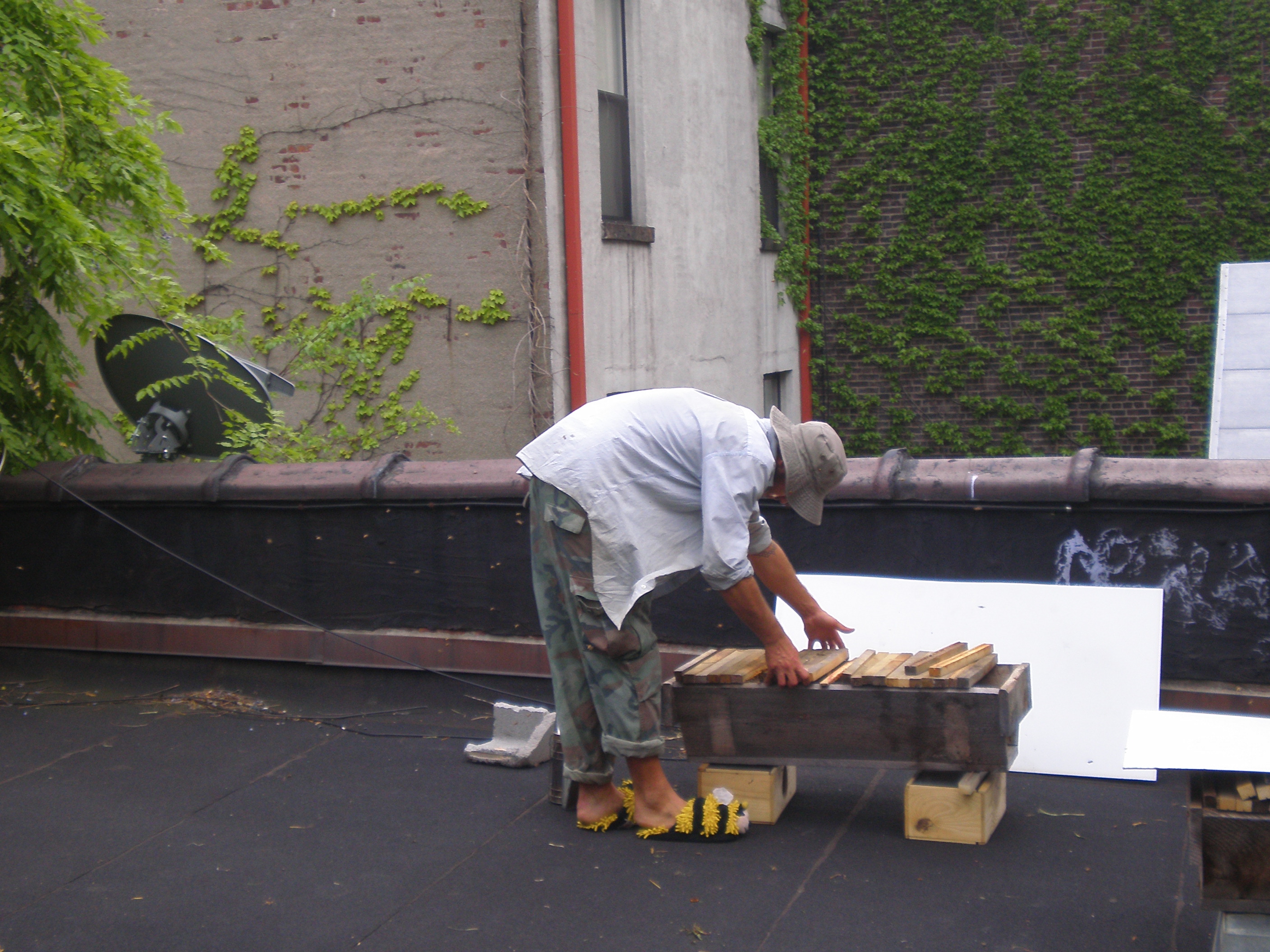
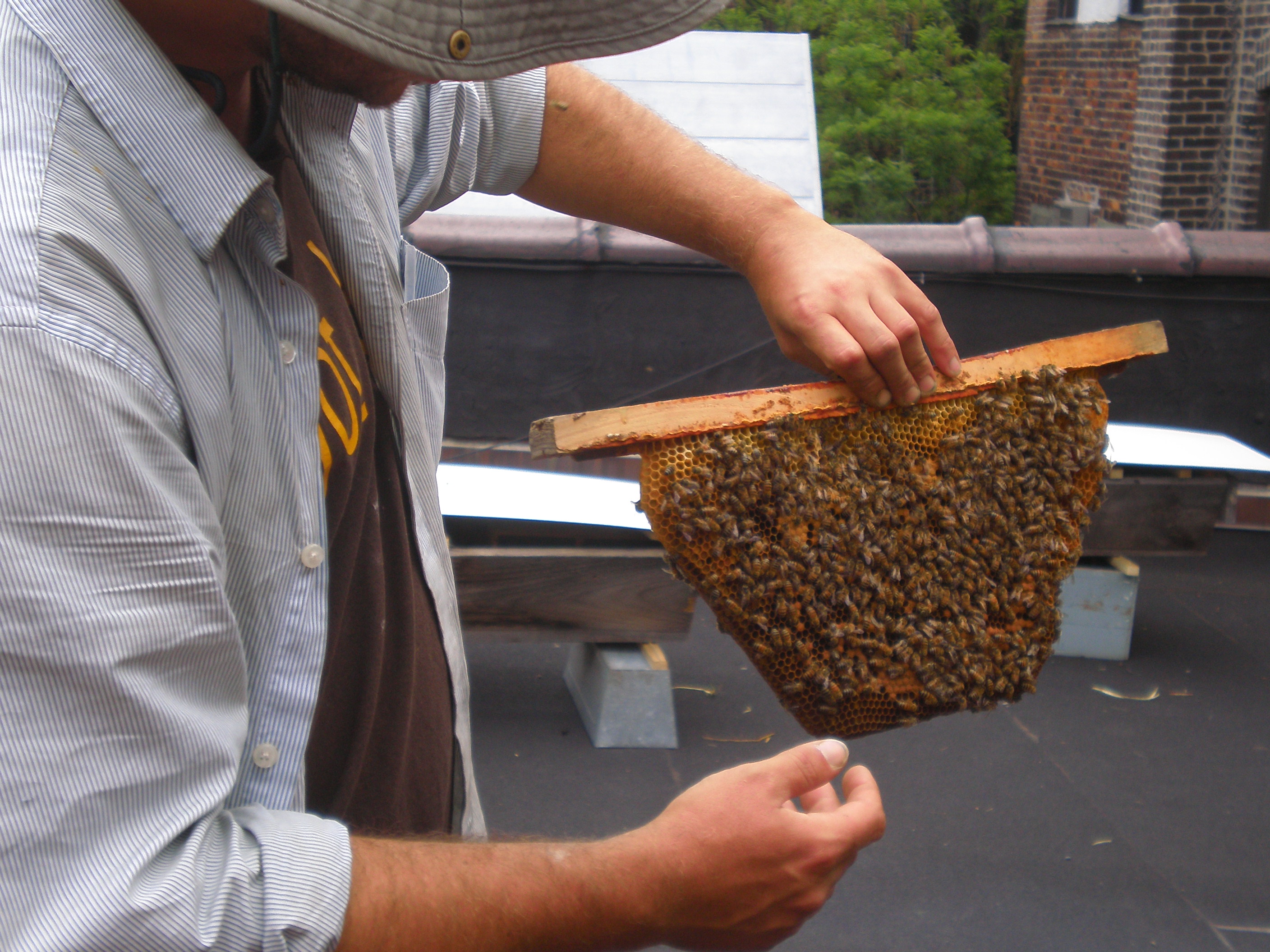
After a brief talk on bees, we climbed up to the rooftop of the Bowery Poetry Club for the unveiling of the apiary.  Sam had brought the bees down from Germantown that morning and set up hives so that Bob could start the rooftop apiary Bowery Bees.  Standing amidst the skyscrapers of Manhattan’s East Village, we witnessed the queen bee do her dance.

Even though I was afraid of getting stung, I have to admit it was rather spectacular.  My parents have a large garden in Greece, where they gather olives to make their own olive oil, and I tried to convince my dad he should set up some beehives.  Bee myths play heavily into Greek mythology and Greek literature.  Bee emblems appear in ancient ruins on the Greek islands of Crete and Rhodes.

Bowery Bees honey can be bought at the Bowery Poetry Club, located at 308 Bowery, between Houston and Bleecker.

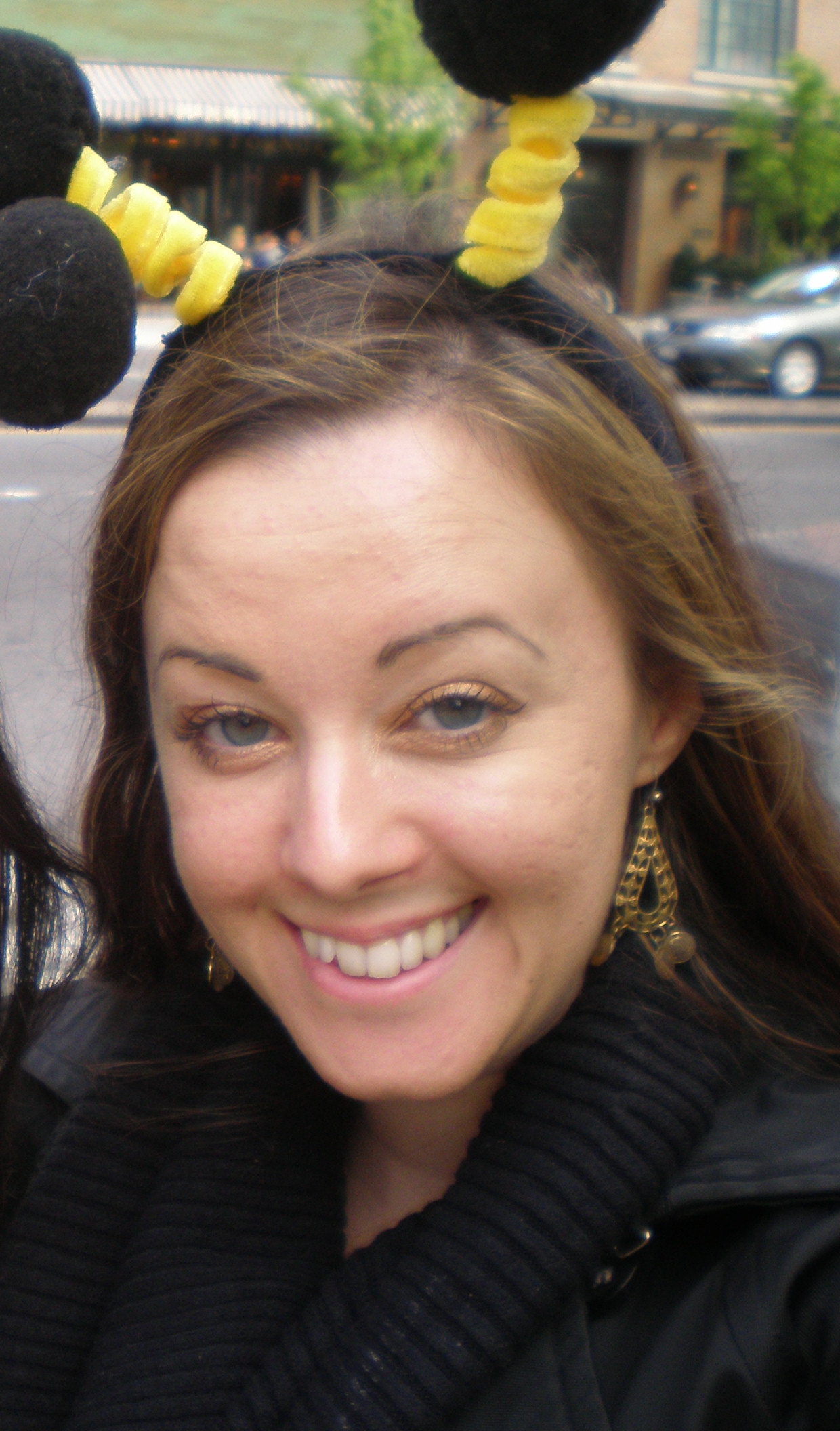
How do you like the antenna?