Archive | Beat Generation RSS feed for this section

Salon Wonders: Is “On the Road” a Classic?

3 Feb

salonOh, hey, that’s an ad for my book on Salon!

What makes a book a classic,” wonders Laura Miller in Salon.

Wouldn’t you know it, Jack Kerouac’s On the Road gets a mention, amongst works by Seamus Heaney, Kurt Vonnegut, David Foster Wallace, Daphne du Maurier, P.G. Wodehouse, Toni Morrison, J. R. R. Tolkien, and Alexandre Dumas. Miller writes:

And what about “On the Road” which to the same reader might seem like an incontestable classic at age 17 and sadly or sentimentally jejune at 45?

Her question in regard to Kerouac’s most famous novel raises some questions of its own:

  • Does our definition of “classic” change with our age?
  • Is On the Road definitively insignificant after age 45?
  • Does content matter more than literary style even for the classics?

But let’s go back to the discussion at hand for a moment to build some context. In her article, Miller points to an interesting discussion on Goodreads:

A fascinating Goodreads discussion on this topic shows participants tossing out all the most common defining characteristics of a classic book. It has stood the test of time. It is filled with eternal verities. It captures the essence and flavor of its own age and had a significant effect on that age. It has something important to say. It achieves some form of aesthetic near-perfection. It is “challenging” or innovative in some respect. Scholars and other experts endorse it and study it. It has been included in prestigious series, like the Modern Library, Penguin Classics or the Library of America, and appears on lists of great books. And last but not least, some people define a classic by highly personal criteria.

She also references an essay by an Italian journalist, translated by Patrick Creagh in 1986:

Perhaps the most eloquent consideration of this question is Italo Calvino’s essay, “Why Read the Classics?,” in which he defines a classic as “a book that has never finished saying what it has to say,” among a list of other qualities.

So does On the Road fit these contrived attributes of a classic?

  • Has On the Road stood the test of time?
  • Does On the Road hold eternal truths?
  • Does On the Road capture its era, the 1940s and ‘50s?
  • Did On the Road have a significant effect on the 1950s?
  • Does On the Road have something important to say?
  • Does On the Road achieve some form of aesthetic near-perfection? Side question: Is aesthetic near-perfection something we can define or is it subjective??
  • Is On the Road challenging? Side question: Does challenging mean from a reading-level standpoint? From a philosophical standpoint?
  • Is On the Road innovative?
  • Has On the Road been included in a prestigious literary series?
  • Has On the Road appeared on a list of great books?
  • Does On the Road fit your own personal criteria of classic?
  • Has On the Road ever finished saying what it’s had to say?

Okay, many of these can be objectively answered as “yes.” One can point to numerous sources that show that Kerouac’s road novel rocked the era in which it was published and continues to be discussed by scholars and pop culture alike today. A few seem debatable, but I would argue that anyone knowledgeable of literary history and criticism would agree—from a literary standpoint—that On the Road is innovative (read Burning Furiously Beautiful for in depth analysis of Kerouac’s literary style) and therefore challenging in both style and content. It also speaks to eternal verities (notably the search for it, for meaning) and therefore has something important to say and continues saying it afresh to new readers. The two questions that remain because they are the most subjective are:

  • Does On the Road achieve some form of aesthetic near-perfection?
  • Does On the Road fit your own personal criteria of classic?

I’d love to hear your thoughts on wrestling with these questions. Is On the Road a classic?

One thing that struck me—hard!—when I was reading Miller’s thought-provoking article is that I immediately agreed that David Foster Wallace’s work is a classic, but was put off by J. R. R. Tolkien being included. While this shows my own personal bias, if pressed I would concede that Lord of the Rings is “a classic” but not “a Classic.” It is, after all, fantasy—genre fiction. And in my mind, as in many other people’s mind, there is a distinction, a dividing line in literature. For some reason, I can concur that magical realism can fall under the category of classic but have a more difficult time with fantasy. Yet, if I hold Lord of the Rings up to the same questions as On the Road, I’m hard-pressed to deny it’s a classic. So what is a classic? What standards should we agree to when defining a work as classic? Are there classics and Classics?

And why do Lord of the Rings nerds get a free pass for liking Tolkien well into their adult years while society derides Kerouac as a novel just for teenagers??

Which Decade Do I Actually Belong In??

30 Jan

quizimage via Buzzfeed

I’m kind of a sucker for personality quizzes, so naturally I took Buzzfeed’s “Which Decade Do You Actually Belong In?” quiz.

Anyone who knew me in high school would probably venture to say I should’ve been around in the ’60s. I became obsessed with The Beatles early on in high school, listening to all their greatest hits, watching their movies, learning how to play their songs on my guitar, and reading book after book about them. I wore bellbottoms and parted my hair down the middle. I thought Mary Quant was a genius. I hosted my own Woodstock party.

On top of my cultural tastes, I had what many East Coasters deemed to be a low-key, chill vibe that seemed to gel with the hippie mentality. I wouldn’t say I was all peace, love, and happiness. I was a teenager, after all, and my mother will gladly tell you I was moody. But, even so, if I was left alone I could easily just lay in the grass outside and ponder life.

But I didn’t get the 1960s; I got the 1950s.

I’d say maybe all reading and studying of Jack Kerouac rubbed off on me, but check out what Buzzfeed had to say about the person who belongs in the ’50s:

You yearn for a simpler time when people were polite, curt, and followed the rules. Maybe people say you’re a conformist, but you know you just like things to stay a certain way. Home is where the heart is.

Yep. That sounds about right. I’m a rule follower through and through and crave stability. Maybe that’s why I’ve always been so drawn to so-called counter-cultural movements and people who rebel against expectations. It’s escapism for me. I admire people who march to the beat of their own drum. I want to be like that. But I’m a cross your “t”s and dot your “i”s type of person. Literally. My career is founded upon anal-retentive attention to detail and to making texts conform to style.

But there is another part of me that does defy rules and expectations. I’ve always been sure of who I am and been true to myself in the greater scheme of life. Tell me I have to participate in class to get ahead, and I will stubbornly keep my mouth because I don’t want to play by society’s rules of social behavior. Expect me to be flaky in business matters because I’m an artist, and I’ll get all type A on you because I really care about my art and understand I have to treat it like a business.

We’re all like that deep down. Complex and individualistic. Not tethered to labels. The same goes for the so-called Beat Generation. Cultural critics argue that Beat writers eroded the pleasantries of the 1950s, but if you really look at the decade and if you really read their works you’ll see it was much more complex than that. The 1950s weren’t all separate twin beds for married couples and Leave It to Beaver childhoods. Jack Kerouac didn’t desire an aimless life on the road; he yearned for a ranch and family life.

Sorry. I didn’t mean to get all philosophical and literary over a Buzzfeed quiz! Anyway, I still think that if I could go back in time I’d want to go back to the 1960s.

What decade did you get? Which decade would you want to live in?

Kerouac Pub Crawl Set in Alabama

23 Jan

WP_20131011_020a photo of a bar in Lowell, MA, where there are also Kerouac pub crawls

Anyone up for a Kerouac-inspired road trip to Alabama?!

There’s an On the Road pub crawl in Gadsden, Alabama, on March 12 at 5pm. David Murdock, an English instructor at Gadsden State Community College, will be giving a lecture on Jack Kerouac’s On the Road at the Back Forty Beer Company and then the group will begin a pub crawl.

There will also be a poetry contest for “beat-style” poems “preferably in ‘stream-of-consciousness'” for those who have pre-registered. You can sign up for the event (seating is limited) with Carol York at carol@gadsdenlibrary.org.

I’ll let anyone who wants to duke out what “beat-style” poetry means do so in the comments section. Here’s a hint: it does not mean saying “man” over and over again while you pound a bongo drum. Want another hint? The poets associated with the Beat Generation each had their own style and voice.

It is, apparently, Gadsden‘s longest running literary pub crawl series. Other authors highlighted in the past have included Hunter S. Thompson, John Milton, and Flannery O’Connor.

For more information on the On the Road pub crawl, visit Al.com.

Oh, and if you’re into beer culture, the story of Back Forty Beer Company is worth checking out. Here’s just a snippet on their name:

Back Forty Beer Company’s name is inspired by an old agricultural term referring to the 40 acres of land situated furthest from the barn. The back 40 acres are historically the most challenging land to maintain and are often overlooked due to their remote location.

Likewise, Alabama is widely seen as the wasteland for craft beer in America. With mass produced light beer being the drink of choice for many Southerners, the craft beer market here has been largely ignored.

However, if you dig a little deeper into the story of the back 40 you will see that because the soil is rarely used, it’s very fertile and is actually capable of producing a tremendous yield.  And just like the farm, the Deep South’s craft beer culture is fertile and primed for harvest.

I visited Alabama once. I saw more Confederate flags and livestock than classic novels and craft beer. Obviously there are probably a lot of different opinions, but I’d be really interested to hear how Kerouac is generally perceived there.

Keep Dreaming: Martin Luther King Jr., Amiri Baraka, Tamera Mowry, and Kim Kardashian

20 Jan

494px-Martin_Luther_King_Jr_NYWTSphotograph of Martin Luther King, Jr., taken by Dick DeMarsico via Wikipedia

Today is Martin Luther King Jr. Day.

We need to keep on dreaming and keep on working for a better future. I was saddened and frustrated to hear about these two recent incidents:

I don’t post a lot about pop culture, but these two headlines grabbed my attention. What is wrong with people? So hurtful and bigoted.

And this is why I felt uneasy about so much of the negativity I read after the passing of Amiri Baraka. The poet wasn’t one to mince words, and while I don’t agree with everything he said … neither did he: there were times he moved away from earlier statements. Yet one must think about the time period in which he grew up and was writing — the March on Washington, the assassination of Patrice Lumumba, the assassination of Malcolm X, the publication of Norman Mailer’s “The White Negro: Superficial Reflections on the Hipster” — and not be blind to the racism many people still face today. Sometimes strong rhetoric is needed to get one’s point across.

Stuart Mitchner’s “Looking for Amiri Baraka and LeRoi Jones on Martin Luther King’s Birthday” sheds some much-needed perspective on Baraka’s poetry and tells of Baraka’s tribute at the 2011 Community Celebration of King at the University of Virginia.

Baraka’s work through the Black Arts Movement gave others a voice.

We need writers to continue to challenge the status quo. We need writers to share their experience. We need writers to share their dreams. We need writers to share their nightmares. We need writers to be honest.

We cannot censor writers. We need to give writers a larger platform.

We need readers to read widely. We need readers to read outside of their personal experiences. We need readers to go straight to the source. We need readers who don’t rely on recaps, articles, blog entries, and soundbites. We need readers to speak up for the types of books they want to read.

This isn’t about school assemblies or having a day off of work. This isn’t even just about the facts. A study recently came out that said reading literary fiction improves compassion. We need to publish and promote more voices, and we need to read those voices.

Here’s a look at St. John’s Church, which is where more than 700 people met the day of his “I Have a Dream Speech”:

Remembering Gregory Nunzio Corso

17 Jan

corso_mindfield_new

I have a special place in my heart for Gregory Corso. I’ve always appreciated his Romantic notions and the levity he brought to the so-called Beat Generation canon.

Unlike a lot of the other people he associated with, who were brought up in middle-class families and took an interest in the seedy underbelly of New York City as adults, Corso was abandoned by his mother at a Catholic charity and his father had him put in the foster care system. At thirteen, he landed in jail, where he discovered poetry. It was only many years later, after he became famous, that filmmaker Gustave Reininger found Corso’s mother and reunited them in what turned out to be a happy ending. His mother actually outlived him, though, as he soon found out he had cancer. During that time, his daughter Sheri Langerman, a nurse, took care of him.

Corso passed away in Robbinsdale, Minnesota, on January 17, 2001. His ashes were buried at the Protestant Cemetery, Cimitero acattolico, in Rome, across from the poet that inspired him, Percy Bysshe Shelley.

Harold Pinter’s Proust Screenplay Shows at the 92nd Street Y

14 Jan

G_011614_Pinter_Proustimage via 92nd Street Y

If you recall that Jack Kerouac, a native French speaker, read Marcel Proust’s Remembrance of Things Past, you may be interested in Harold Pinter’s screenplay of it at the 92nd Street Y:

In 1972, Harold Pinter wrote a screenplay from Proust’s seven-volume masterpiece Remembrance of Things Past.

Decades later, Pinter and directing partner Di Trevis adapted the never-filmed script for the National Theatre in London. It has never been produced in the US. In celebration of Pinter’s long friendship with the Poetry Center and the centenary of Swann’s Way, we present a staged reading of the play, affording us “the pleasure of providing yet another angle of perception upon a work so elaborate and many-faceted it never fails to give back new light,” wrote John Updike.

Here is the key facts:

Date: Thu, Jan 16, 2014, 8 pm

Location: Lexington Avenue at 92nd St

Venue: Kaufmann Concert Hall

Price: from $27.00

Pinter wrote “memory plays,” works like No Man’s Land (1975) and Betrayal (1978 — and yes, it was once alluded to on an episode of Seinfeld), which deal with the chronology of time and the way memory warps. He also acted and his last performance was as none other than the title character in Samuel Beckett’s Krapp’s Last Tape — fitting, you see, since the play is about an older man reviewing his earlier years.

Kerouac too was writing about memory as he mythologized himself in his series of semi-autobiographic novels, which he called The Legend of Duluoz.


Amiri Baraka (October 7, 1934 – January 9, 2014)

9 Jan

Amiri Baraka

October 7, 1934 – January 9, 2014

If you follow the Burning Furiously Beautiful Facebook page, you know that Amiri Baraka‘s family recently reached out through social media to ask for prayers for the poet, who had gone into Beth Israel Medical Center in Newark. I have just learned of his passing. My condolences to his family and friends.

You may be interested in:

MetroCard Turns 20; Metro Token Inspired “Beatitude” Cover

7 Jan

Larry-Closs_Beatitude_Anthony-Freda-194x300

I’m eating my words from yesterday — today is bitter cold. The buzz word of the day is “polar vortex.” I actually caught myself subconsciously holding my breath as I walked to the subway this morning. I felt bad for the guy who had to stand outside the station handing out the free little daily newspapers, and I took one and told him to say warm! Sometimes I feel so spoiled having a desk job…. In the free AM New York I read an interesting factoid: this week MetroCard is turning 20 years old.

That made me feel kind of old. For my entire adult life, I’ve used MetroCards, but I remember actually using the old subway tokens during my teen years. Now I wonder how anyone commuting got anywhere. The idea of lugging around a bunch of coins to get to and from work seems like it would get heavy. And were there no unlimited passes at the time? I really don’t remember…. But I do remember when the transition from coins to cards was happening I thought it seemed so high-tech. It was like a mini credit card just for the Metro! Haha, oh how times have changed.

As I was thinking about the old subway tokens, Larry Closs’ Beatitude popped into my mind. The cover of the Beat-inspired novel features a cat with a subway token for an eye. I’m drawn to the graphic imagery and bold colors of the cover. It really pops.

It’s no wonder why — the cover was designed by award-winning illustrator Anthony Freda. Larry told the cover story on his blog a while back, and you can find out more about Anthony Freda and his art — I love his collages and political humor — on his website.

Now I wish I’d saved one of those tokens. The Transit Museum actually sells merch made of subway coins, but it’s not the same.

Kerouac’s Hometown Inspires Charles Dickens

23 Dec

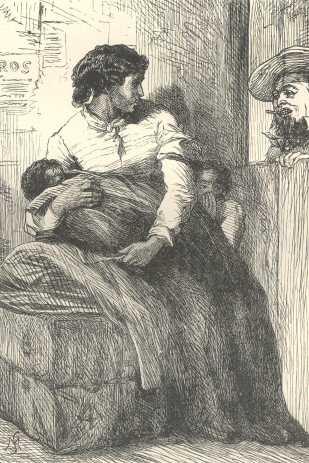
p112sIllustration (not of Mill Girl, fyi) by Marcus Stone, R.A., from Charles Dickens’ American Notes for General Circulation

Many authors have penned Christmas stories, but perhaps the most celebrated is Charles Dickens’ A Christmas Carol, which has spawned Broadway musicals, a Disney cartoon, a Muppet retelling, a United Nations special by Rod Sterling, a Star Trek version, among so many others.

Is it possible that the inspiration for this Victorian novella came from Jack Kerouac’s hometown?

Natalie McKnight, a dean at Boston University, conducted research with student Chelsea Bray that suggests Dickens was inspired by the stories of the Mills Girls when he visited Lowell, Massachusetts, in 1842.

On one of my trips to Lowell to research Kerouac, my friend George Koumantzelis had given me a stack of newspapers, magazines, and flyers to aid in my studies. Among these was information on UMass Lowell’s seven-month-long celebration of Dickens’ trip to Lowell. I had edited new editions of the British author’s stories including his work American Notes for General Circulation, about 1842 trip to America. About to turn thirty years old, he had traveled from Liverpool (later home to the Beatles!) aboard the RMS Britannia and arrived in Boston, where he then visited mental hospitals, orphanages, and prisons around the country and visited with President Tyler.

Among the dots on his map was Lowell … also known as Mill City. Lowell was founded about twenty years prior to Dickens’ visit, as a center for textile manufacturing. Dickens came about two years after the height of the Industrial Revolution, when there were about 8,000 women working in factories in Lowell. If Dickens was inspired by their stories, it should go without saying that their existence was one of strife. About 80 women were packed into a noisy room from 5 am to 7 pm, working under the direction of two men. However, Dickens actually seemed to think well of the mills.

Dickens wrote:

These girls, as I have said, were all well dressed: and that phrase necessarily includes extreme cleanliness.  They had serviceable bonnets, good warm cloaks, and shawls; and were not above clogs and pattens.  Moreover, there were places in the mill in which they could deposit these things without injury; and there were conveniences for washing.  They were healthy in appearance, many of them remarkably so, and had the manners and deportment of young women: not of degraded brutes of burden.  If I had seen in one of those mills (but I did not, though I looked for something of this kind with a sharp eye), the most lisping, mincing, affected, and ridiculous young creature that my imagination could suggest, I should have thought of the careless, moping, slatternly, degraded, dull reverse (I have seen that), and should have been still well pleased to look upon her.

The rooms in which they worked, were as well ordered as themselves.  In the windows of some, there were green plants, which were trained to shade the glass; in all, there was as much fresh air, cleanliness, and comfort, as the nature of the occupation would possibly admit of.  Out of so large a number of females, many of whom were only then just verging upon womanhood, it may be reasonably supposed that some were delicate and fragile in appearance: no doubt there were.  But I solemnly declare, that from all the crowd I saw in the different factories that day, I cannot recall or separate one young face that gave me a painful impression; not one young girl whom, assuming it to be a matter of necessity that she should gain her daily bread by the labour of her hands, I would have removed from those works if I had had the power.

Though he clearly recognizes that the girls work long and hard, he describes the mills as well as the girls’ dorm rooms in a somewhat positive light, mentioning pianos and libraries.

It would seem that the mills girls were of a literary mindset. Beyond just mentioning the library, Dickens goes on to say:

Of the merits of the Lowell Offering as a literary production, I will only observe, putting entirely out of sight the fact of the articles having been written by these girls after the arduous labours of the day, that it will compare advantageously with a great many English Annuals.  It is pleasant to find that many of its Tales are of the Mills and of those who work in them; that they inculcate habits of self-denial and contentment, and teach good doctrines of enlarged benevolence.  A strong feeling for the beauties of nature, as displayed in the solitudes the writers have left at home, breathes through its pages like wholesome village air; and though a circulating library is a favourable school for the study of such topics, it has very scant allusion to fine clothes, fine marriages, fine houses, or fine life.

What Dean McKnight and Bray suggest is that Dickens lifted ideas from these girls’ stories. Kevin Hartnett at The Boston Globe writes:

Now, new research is suggesting that the book may have borrowed—quite liberally—from the amateur writings of the millworkers he visited.

After reading an obscure literary journal published by Lowell textile workers and comparing it to Dickens’s novella, a Boston University professor and student are arguing that some of the most memorable elements of Dickens’s story—the ghosts, the tour through the past, Scrooge’s sudden reconsideration of his life—closely resemble plot points in stories by the city’s “mill girls” that Dickens read after his visit.

They propose that the ghost trope of A Christmas Carol stems from several selections in The Lowell Offering. Comparing the Mills Girls’ stories with Dickens’, they have found several parallels that they believe go beyond mere coincidence or literary tradition.

Their research has created quite a stir online, and they haven’t even written their paper yet, let alone published it.

It’s well worth visiting The Mill Girls and Immigrant Exhibit at the Morgan Cultural Center to find out more about the fascinating lives these factory workers led.

The Morgan Cultural Center also happens to be where one of Kerouac’s typewriters reside. While Kerouac began writing about a hundred years after Dickens’ visit, he too was inspired by the Mill Girls. He didn’t want to be a mill rat. He wanted to get out of Lowell, to do something more with his life. As a struggling writer, he did eventually end up working for a short time at a mill in America, but he continually worked on his writing. While Dickens had come over to Boston by ship from Liverpool, Kerouac went to Liverpool as a merchant seaman. Like Dickens, Kerouac toured America, writing his own travelogue full of social commentary.


* * *

Burning Furiously Beautiful: The True Story of Jack Kerouac’s “On the Road” is now available as an ebook and paperback!

Writing Wednesday: When Two Words Become One

11 Dec

1560

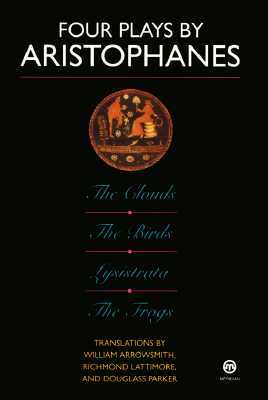
Welcome back to Aristophanes week!

Yesterday I mentioned that fun bit of trivia that Aristophanes is the creator of the longest word in literature that I gleaned from Oliver Tearle’s Huffington Post article “12 Fascinating Facts About Famous Literature.” Like any dutiful Greek scholar, I read some of Aristophanes’ plays when I was in college. They were strange and wild reads.

What I don’t remember learning back then and which I found while I was reading up on him this week was that Aristophanes had a knack for heaping words together, creating long, tongue-twisting compound words. It’s no wonder he’s the king of the longest word in literature!

Take a look at that last word in this stanza from The Acharnians:

How many are the things that vex my heart!
Pleasures are few, so very few — just four –
But stressful things are manysandthousandsandheaps!

The word Aristophanes used there in Greek was the made-up word ψαμμακοσιογάργαρα, which actually meant “sandhundredheaps.”

Meanwhile, in The Birds (no relation to Hitchcock’s film!), Aristophanes coined the word Νεφελοκοκκυγία, which translated is the compound word Cloudcuckooland. Genius, right?!

Okay, so when writing about the longest word in literature Tearle mentioned runner up James Joyce:

Some may think that James Joyce is responsible for the longest word in all of literature, but the longest he managed was 101 letters long, in Finnegans Wake. (This word, for those who are interested, was Bababadalgharaghtakamminarronnkonnbronntonnerronntuonnthunntrovarrhoun-awnskawntoohoohoordenenthurnuk, referring to the thunderclap associated with the Fall of Adam and Eve.)

You word nerds won’t find it too surprising that Joyce appropriated Aristophanes’ penchant for inventing new words since he was more than mildly inspired by Greek literature. You already know that Joyce’s Ulysses parallels Homer‘s The Odyssey. In Ulysses, he created made up and compound words like “scrotumtightening” and “endlessnessnessness.”

Now, I’ve made the point before about the connection between the Greek Classics, James Joyce and Jack Kerouac, and here is another instance in which we see the influence in that Kerouac used compound words as well. He used words like “hangjawed,” “redhot,” and “sicksicksick.”

Through the course of literary history, many authors have used compound words for effect and have coined their own words.

Can’t find the right word? Make up your own!

* * *

Burning Furiously Beautiful: The True Story of Jack Kerouac’s “On the Road” is now available as an ebook and paperback!