I have so many friends right now who either just got married or are in the process of planning their weddings. There’s so much to consider: venues, wedding cake ganache, narrowing down the guest list, who sits next to whom, DIYing centerpieces, the dress.
Eloping sounds better and better…. And what better way than eloping on the road?!
Green Wedding Shoes featured a couple who got married on the road. Their wedding photos feature retro suitcases, maps, and the classic hand-out-the-window shot.
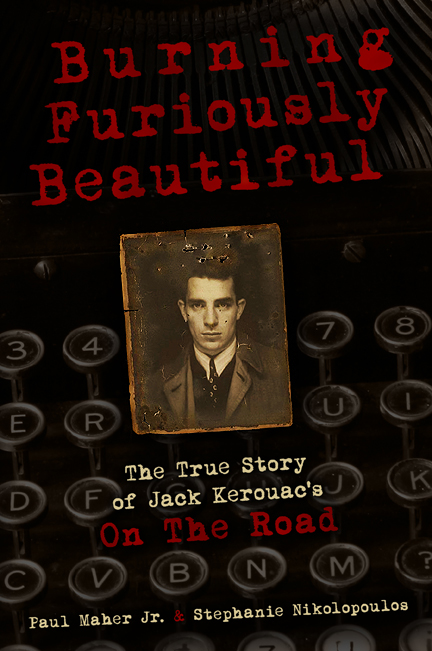
Did you know that when Jack Kerouac, the author of On the Road, got married he was quite the opposite of being on the road? He’d been arrested as a material witness of a murder. His dad was so upset he refused to post bail. But his girlfriend, Edie Parker, came from a wealthy family. She said she’d post bail—on one condition: that Kerouac agreed to marry her. You can read the whole story in Burning Furiously Beautiful.
I knew I was getting old the day I saw a car commercial where the driver was clearly younger than I am.
So here’s an interesting bit of news: Generation Y doesn’t like to drive. According to Reuter’s “America’s Generation Y not driven to drive,” the Millennials think driving is more of a hassle than it’s worth. A California think tank analyst, Tony Dudzik says instead of a driver’s license, a cell phone is the new rite of passage for young adults.
The article points to a few different reasons why Generation Y may be less interested in driving:
Smart phones make it easier to know public transportation schedules
More Gen-Yers are riding bikes
People are more concerned about saving the planet
Car-sharing services are making it easier not to have to own a car
From a cultural perspective, this makes total sense. Gen Y is the hipster culture. The kids in Williamsburg who listen to low-fi indie music on their hi-tech iphone, knit water-bottle cozies that they sell on etsy, ride their bicycles to work, buy their clothes from Buffalo Exchange, spend their weekends at the food coop, brew their own craft beer, and vlog on YouTube. If they drive, they drive hybrids. Because they’re all about the i-this and the i-that, they seek out community more intentionally. Who needs a car, if your friend or parents (they also happen to be the Peter Pan Generation, living at home after college) have one?
I personally fall somewhere between Gen X and Gen Y, making me part of Generation Flux. Generation X refers to people born between the early 1960s and 1980s, while Generation Y refers those born between the late 1970s and the 2000s. I know when I was growing up, there were a lot of cultural arts programs in the school about saving the rainforest and saving the whales, we studied acid rain and the ozone layer, and we joined KAP: Kids Against Pollution. In drivers ed, they pretty much terrified you with statistics, photos, and videos that suggested it was likely you were going to die if you got behind the wheel. The shows that were popular when I was a teen were Mad About You, Seinfeld, Friends, Will & Grace, and Sex and the City, all of which were set in New York City. Other popular shows like Ally McBeal, Frasier, and ER were also set in cities. Our stars didn’t drive. They took cabs and rode the subway. Is it any surprise that we moved into the city and followed suit?
So will a generation who grew up watching Paris Hilton, Lindsey Lohan, and Snooki getting arrested for driving under the influence and/or crashing their cars, a generation coming of age during the Great Recession, a generation who doesn’t care about driving, embrace the 1950s road trip adventure of On the Road when the movie comes out and the novel by Jack Kerouac it is based on? Well, here’s another interesting twist: Jack Kerouac didn’t like driving either. If you read his novel, you’ll see that most of the time, the character based on him in the novel is on the bus or in the passenger seat.
How do you feel like the era you grew up in influenced you?
Aunt13 over on 8tracks made a mix called Music and Poetry for On the Road. It’s inspired by Jack Kerouac’s On the Road and in the blurb she mentions Burning Furiously Beautiful! How cool is that?!
I have the coolest friends! I am going to be listening to this while I write, for sure, and daydreaming of hitting the road. Aunt13 has over 300 mixes, so be sure to show her some love.
You may recall I posted a while back the soundtrack for the On the Road film. It was just announced yesterday that the film will be making its US debut in late fall.
J. Haeske also made a mix for the soundtrack he’d envision for the film. Teaser! I have an interview with him about his new book on Kerouac lined up for you, so stay tuned.
What songs would you put on a mix for On the Road?
Also, I took my own advice about social media, and created a Facebook page for Burning Furiously Beautiful: The True Story of Jack Kerouac’s On the Road, the book I’m co-authoring with Paul Maher Jr. Be sure to “like” the book on Facebook! We’ll be posting news about the book, information from Across the Underwood, updates on the film, and so much more!
Jack Kerouac once quipped back at a journalist, “I’m not a beatnik; I’m a Catholic.” Despite the Beat Generation being associated with the countercultural movement—sex, drugs, and … jazz—Kerouac’s writing so often points toward the spiritual.
Visions of Gerard describes his saint-like brother who died at age nine and touches upon life in the Catholic church in Lowell, Massachusetts. When he left home, Kerouac began exploring Buddhism. Ultimately he grew disenchanted by it, though, an experience he describes in Desolation Angels. On the Road is tinged with the idea of holiness. Check out this quote:
As we crossed the Colorado-Utah border I saw God in the sky in the form of huge gold sunburning clouds above the desert that seemed to point a finger at me and say, “Pass here and go on, you’re on the road to heaven.”
Beautiful, isn’t it? In some ways, Sal Paradise—what a name!—is on a pilgrimage. The point of the trip itself isn’t religious, but along the way Sal sees God in nature and in the act of traveling. Throughout On the Road, Kerouac writes about searching for the holy. What he finds there on the open road is the beatific—the blessings that seem contradictory to what the world says are blessings.
If you think about it, one of the earliest road trip novels is about a pilgrimage: The Canterbury Tales. Chaucer’s fourteenth-century tale has all the seedy characters one might find William S. Burroughs depicting. The pilgrims are road tripping from Southwark to the Saint Thomas Becket shrine at Canterbury Cathedral. Just like how Sal Paradise finds he has tell good stories to anyone who picks him up while hitchhiking, the cast of characters in The Canterbury Tales each tell a story along the journey.
To support the National Literacy Trust, a group of modern-day pilgrims recently reenacted The Canterbury Tales. You can read about it, see photographs, and listen to portions at the Guardian.
* * *
Don’t forget!
I’m reading tonight at 7:00 at The Penny Farthing (103 3rd Ave., downstairs in the speakeasy), here in New York City, as part of the Storytellers event, hosted by C3.
Plus, then you’ll have ample time to develop your scorn towards it.
Why the scorn, Flavorwire?
As, I wrote in the comments field:
In the 10+ years since I first read “On the Road” when I was a teenager, I have not developed any scorn for it. In fact, as I’ve delved further into Kerouac’s life and work, I’ve come to see just how brilliant his writing is, especially considering English was not his first language. He had to learn the colloquialisms that he’s so often criticized for using. When “On the Road” was published in 1957, it was groundbreaking to use the type of slang Kerouac used and to improvise the way he did.
The comments section isn’t all that kind to the novel, either. One commenter called it “one-dimensional.”
Really? I can certainly understand a reader not liking the voice or even the story. Everyone’s entitled to their own opinions. There are plenty of people in the comments section admitting they don’t like Jane Austen or Nathaniel Hawthorne. It’s okay not to enjoy something. Not everyone has the same taste. That’s what makes us unique. But—you knew there was going to be a but—there’s a difference between personal taste and fact. The fact of the matter is that On the Road is multi-dimensional.
On the Road is about so much more than the literal exploration of a road trip. Perhaps Dean Moriarty is a bit one-dimensional in the sense that he acts impulsively, living for his own happiness, and never really grows out of that. The narrator, Sal Paradise, is on a spiritual quest of sorts, though. He hits the road, trying to leave behind the East of his youth to find himself in the West. He befriends Dean, even though he knows he’s conning him. He’s constantly caught between what he thinks he wants and what he really wants. He’s searching for meaning and beauty and love and friendship. He’s a complicated character, not entirely sure of what he wants.
Also on the list were a couple of Greek authors! Namely, Homer and Jeffrey Eugenides.
In the article, Larry mentions my work in writing about Jack Kerouac. It’s so interesting that he specifically mentioned this, as opposed to my visual arts writing for Burnside, because the Beat Generation has often been criticized for not being more open to women’s voices. Furthermore, so many women have told me they don’t enjoy reading Kerouac because of his hyper-masculinity.
You probably have a pretty good idea by now of what Burning Furiously Beautiful: The True Story of Jack Kerouac’s On the Road is about, but here’s the official synopsis:
Fueled by coffee and pea soup, Jack Kerouac speed-typed On the Road in just three weeks in April 1951. He’d been traveling America for the past ten years and now, at last, the furious energy of his experiences flowed through his fingertips in a mad rush, pealing forth on a makeshift scroll that he laboriously taped together. The On the Road scroll has since become literary legend, and now Burning Furiously Beautiful sets the record straight, uncovering, among other things, the true story behind one of America’s greatest novels.
With unprecedented access to Kerouac’s journals and letters, Burning Furiously Beautiful explores the real lives of the key characters of the novel—Sal Paradise, Dean Moriarty, Carlo Marx, Old Bull Hubbard, Camille, Marylou, and others. Ride along on the real-life adventures through 1940s America that inspired On the Road. By tracing the evolution of Kerouac’s literary development and revealing his startlingly original writing style, this book explains how it took years—not weeks—to ultimately write the seemingly sporadic 1957 novel, On the Road. This revised and expanded edition of Jack Kerouac’s American Journey (2007) takes a closer look at the rise of Jack Kerouac and the Beat Generation.
Paul Maher Jr. is the author of the critically acclaimed biography Kerouac: His Life and Work and Empty Phantoms: Interviews and Encounters with Jack Kerouac.
Stephanie Nikolopoulos is an editor and writer based in New York City.
Maher and Nikolopoulos are currently co-authoring Visions of Kerouac for Rowman & Littlefield (2014).
As thesis submission deadline approached, people began asking me what I was planning on doing after graduation. Then they’d stop themselves, afraid they may have asked too painful of a question. But it’s not!
In one of my last posts, I left off telling you about grabbing a cup of tea after turning my theses in. What I didn’t tell you was that on my walk back to my office, while sipping that delicious tea, I made a phone call to biographer Paul Maher Jr. Paul’s books are some of the most well respected in his categories, and they’ve been translated and sold around the globe.
Inspired by Laura Vanderkam’s List of 100 Dreams, I created my own a while back. Become a scholar on the Beat Generation was on my list. I’ve been studying the writers generally categorized as Beat for more than a decade now. I did my MFA at The New School, where Jack Kerouac took writing classes, and where I connected with writers who had known Jack Kerouac.
Now, my dream of becoming a Beat scholar is being realized. Paul and I are working on a book that tells the true story of Jack Kerouac’s On the Road. The phone call to him on Monday was to discuss cover ideas.
I don’t have a big life-altering answer to the question of what I’m doing after the MFA. Paul and I have been working on this book for a while now, and since I won’t be simultaneously working on a thesis anymore I’ll simply be refocusing my creative energies into the book. It helps that I didn’t enter the program straight out of undergrad. I’d already been working in book publishing, a career many of my classmates are hoping to enter, and so graduation isn’t a big scary unknown for me. I’ll be continuing in my editorial role. For me, life after the MFA is about continuing to follow my passions while also seizing new opportunities.
I’m extremely excited to say that my post-MFA plan is to co-author a book on Jack Kerouac.




 Stephanie Nikolopoulos
