Archive | Beat Generation RSS feed for this section

Writing Wednesday: If You Miss a Beat, You Create Another

14 Mar

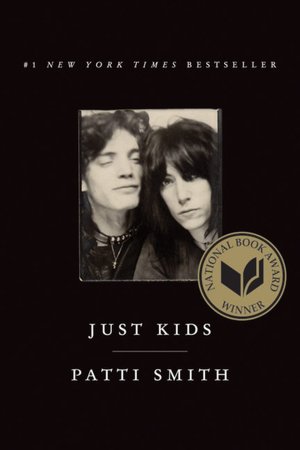
I had the great privilege of hearing Patti Smith read from Just Kids at The New School a while back.  She read from the priceless scene in which she meets Allen Ginsberg at an automat.  I’m quite fond of kitsch automat culture, and used to frequent the one down on Saint Marks when it was still around.  Basically, an automat is fast fast food: you don’t even have to stand in line to order a burger and fries; you just slip a few quarters into a vending machine and out comes surprisingly delicious warm food.  Whenever I ate at the Automat, I felt like I was a character straight out of The Jetsons.  I was hooked on their mac-and-cheese egg rolls.  The resurgence of The Automat only stuck around for a few years, but as a whole they were big a few decades ago.  When Patti Smith was in her early twenties, scraping by to survive, she fed a few quarters into an automat to get some quick, cheap food.  When she turned the knob she discovered the price had gone up.  The machine had sucked up her meager coins and she was about to go hungry when Allen Ginsberg offered her the additional cents and even paid for a cup of coffee.  They get to talking, she knowing perfectly well he is the great poet, and he thinking the whole time she is a handsome boy!

I knew for a long time that I wanted to read Just Kids.  It had all the makings of a book I knew I’d love—New York City, Beat poets, artists, The Hotel Chelsea, Andy Warhol, music, and memoir.  The only problem was that I was inundated with reading assignments for classes and bills to pay for tuition and books for said classes.  Just Kids wasn’t constantly checked out of the library, which was probably for the best because I didn’t have the time to read it anyway.  But!  I have at last read it—savored it.  I so greatly enjoyed Smith’s poetic voice and her obsession over Rimbaud.  I liked reading about Patti Smith and Robert Mapplethorpe’s relationship, their strivings toward art, their fashion!  And I was so happy to discover that in addition to the Allen Ginsberg connection, Smith also befriended poet Gregory Corso, whose poetry I revere.

Patti Smith also began a relationship with Sam Shepard, and they end up collaborating on a play together.  I find great reassurance in reading their exchange.  Smith was nervous about the prospect of improvising during the play, and on page 185 of the first edition (HarperCollins, 2010), Smith asked, “What if I mess it up?  What if I screw up the rhythm?”  Shepard replied:

“You can’t,” he said.  “It’s like drumming.  If you miss a beat, you create another.”

From Just Kids I learned a lot about being part of the “scene,” which comes across as important to the evolution and success of one’s career.  However, this little line spoken by Sam Shepard is a solid reminder that in writing and in life the beat goes on.  If you miss a beat, you improvise and create another.

Happy 90th Birthday, Jack Kerouac

12 Mar


Today would’ve been Jack Kerouac’s ninetieth birthday.

On March 12, 1922, French-Canadian immigrants Gabrielle and Leo Kerouac had their third, and last, child.  He was born at home, on the second floor of the brown house sitting at 9 Lupine Road in Lowell, Massachusetts.   This was in the West Centralville neighborhood, affectionately called Little Canada, of Lowell.  They baptized the baby boy in the Catholic Church.  His baptism certificate reads: Jean Louis Kirouac.  Although that was the standard Quebec spelling of the surname, the family spelled the name Kerouac.  They would call him Ti Jean, meaning Little John.  In fact, he would publish his first book, The Town & the City as John Kerouac.


I visited Jack Kerouac’s birth home when I attended Lowell Celebrates Kerouac! last October.  Apart from the plaque on the front of the house, nothing sets it apart as a any sort of landmark.  Today a new family lives in Kerouac’s birth home.  When the bus dropped my tour group off, the people came outside and gawked at us pilgrims just as we gawked at their regular-looking house.  I love touring authors’ homes and wish Kerouac’s had been preserved for visitors, but it seems fitting that it wasn’t.  After all, the Kerouacs moved often, and the house at 9 Lupine Road is just one of many that Kerouac lived in in Lowell.  Although he lived much of his life with his mother, Kerouac spent much of his time on the road and crashing at friends’ pads.  “Home” for Kerouac didn’t seem to be a house.


Remembering Philips Lamantia

7 Mar

Beat poet Philip Lamantia passed away on this day 2005.  He read at the famous Six Gallery reading in San Francisco in which Allen Ginsberg debuted Howl.  Instead of reading his own poetry, though, Lamantia read poems by his friend John Hoffman, who had recently passed away.  His own poems were erotic, surrealist, Catholic.

You can read the last interview Lamantia ever gave here (it was with Garrett Caples) and the original obituary that ran in The New York Times.


Dreaming of Coney Island

28 Feb

Winter doldrums, and I’m dreaming of Coney Island.

I took these pictures over the summer, when I went to lay in the sand and read a book.

What are you dreaming of?

Here’s a snippet from Lawrence Ferlinghetti’s “A Coney Island of the Mind.”

The Rumors Are True

31 Jan


Life can be so surreal sometimes.  One day you can be reading a book — and not long after that you can be co-authoring a book with the very same author whose book you once read.

A few years back, I was reading Paul Maher, Jr.’s, Jack Kerouac’s American Journey on the 6 train in New York.  Now, as you can read on his website, we’re co-authoring a revised and expanded edition called Burning Furiously Beautiful.

I’m so excited to be working with Paul.  Here’s a little bit of his bio from his website:

Paul Maher, Jr., is a seasoned leader of Kerouac scholarship; what’s more, many of Kerouac’s family, friends, and contemporaries (including Joyce Johnson and David Amram) endorse the fresh, unbiased perspective he uses to retell the life and work of this great American writer.

Maher’s Kerouac: The Definitive Biography (Taylor Trade Publishing, June 2004), is the first biography to be based entirely on primary sources. It is the most thoroughly researched and comprehensive life of Kerouac to date. It’s been selected by both Biography magazine and Vanity Fair for their “Hot Lists” and has received endorsements from the Kerouac Estate, composer David Amram (author of “Offbeat: Collaborating with Kerouac”),  Rolling Stone and Vanity Fair. Historian and journalist Douglas Brinkley (Rosa Parks; The Unfinished Presidency: Jimmy Carter’s Journey beyond the White House; and American Heritage”s History of the United States) has publicly praised the groundbreaking scholarship conducted by Maher.

Burning Furiously Beautiful will be published this year.  Stay tuned for more information!


Writing Wednesday: Symbolism Is Alright in “Fiction”

25 Jan

I wasn’t a fan girl when I was a teen.  I never really had the audacity to write a letter to an author or musician or to stand in line to ask for their autographs.  These were important people with busy lives.  I didn’t want to interrupt their work with my silly, affectionate musings.  I had too much respect for them—and too much pride.  I would’ve been crushed if they’d turned me down.

That wasn’t the case with sixteen-year-old Bruce McAllister.  In 1963, he sent off a survey to the most famous authors of the day, including my personal favorites, Jack Kerouac and Saul Bellow.  And they wrote him back.

The Paris Review published these letters, in which the authors answer McAllister’s survey about symbolism.

Jack Kerouac’s response:

Symbolism is alright in “Fiction” but I tell true life stories simply about what happened to people I knew.

I find his use of the word “simply” so fascinating.  The response could be matter-of-fact (I’m just telling a story and not thinking about writerly devices) or it could be methodology (I tell stories in a simple manner and don’t put symbols in it).

A few months ago, someone read a portion of the memoir I’m writing and said they saw symbols pertaining to two of the people in the story.  They suggested I push those symbols further.  It was an interesting conversation because I was simply writing true life events, and the symbol they saw for one of the people just happened to be something central to who they are.  It’s something I associated with the person long before they became a “character” with “symbols,” similar to the ideas I wrote about in my Burnside Writers Collective essay “Coffee and Portraiture and the Associations We Make.”  The dangerous part, though, in assigning symbols in real life stories is that life and people are complex, not easily contained, shifting.  So when my reader pointed out the obvious “symbol” of one “character,” they immediately leapt to the conclusion that the other character was in contrast to that person and deserving of an opposite symbol.  Maybe there’s some validity to that idea in fiction, but in real life people don’t exist simply to define, parallel, or contrast other people.

Sometimes a cigar is just a cigar.

Writing Wednesday: A Blurb Job

14 Dec

When Joan Williams asks William Faulkner to blurb her book, it takes an ugly turn.  In telling the story of their affair (a story also told by Lisa C. Hickman in William Faulkner and Joan Williams: The Romance of Two Writers), Glen David Gold makes a compelling argument for not sleeping with writers in “On Not Rolling the Log,” in The Los Angeles Review of Books.

Gold goes on to say:

How confusing it is to entangle acclaim and love. How much of a balancing act to determine your real value to another person. When you cultivate a literary friendship, it’s good to remember — and hard to prove — that it’s the work which is a commodity, not you.

An editor was telling me recently that Ken Kesey asked Jack Kerouac to blurb one of his books and he refused.  He was very protective of his name, his brand.

Some writers whore out their name.  Others keep it under lock and key.  The book business is a small and incestuous one, and a blurb from the right author can propel sales.  But at what cost?

A Very Nerdy Birthday

13 Dec

When I was a little girl, I always wanted my birthday party at the American Museum of Natural History.  (Well, that or The Rink — the roller rink in Bergenfield — where I’d feed quarters into the vending machines for neon friendship bracelets.)  I figured it was about time to bring the tradition back so the museum’s where I headed for my birthday earlier this month.


After the museum, I headed over to Momufuku’s Milk Bar.  What better birthday cake than crack pie and candybar pie??


And then it was on to The Dead Poet, where I got to drink for free because I share a birthday with Leo Tolstoy.  I ordered the Jack Kerouac, naturally.


So thankful to all the family and friends who made my birthday special!


Captain America and Harry Potter Will Kill Your Darlings

12 Dec

I can picture Captain America as Jack Kerouac.  On the Road pretty much defines the phrase “great American novel” so we might as well call Kerouac Captain America.  And there’s also the matter that Kerouac was a rugged athlete type.

I’m not sure what to make of Harry Potter as Allen Ginsberg, though.  I mean, I kind of get the similarity between the two in the sense that of the nerdy boy with the glasses and books.  And maybe there’s some sort of correlation between Harry Potter’s incantations and Allen Ginsberg’s manic howling.

It’s just that James Franco did such an amazing job as Allen Ginsberg in Howl.  He completely exceeded my expectations.  And Daniel Radcliffe just seems so … young.  But he does like The Hold Steady, who’ve been known to quote Kerouac.  Maybe he can pull it off.

In case you haven’t figured it out by now, Chris Evans was cast as Jack Kerouac and Daniel Radcliffe was cast as Allen Ginsberg in Kill Your Darlings.

Do the Brits Love Kerouac More than the Yankees?

3 Dec


Jack Kerouac is the Tupac of the literary world.  Even though he died in the infamous year of 1969, new works of Kerouac’s keep surfacing.  Recent years have seen the publication of Orpheus Emerged (2002) and When the Hippos Were Boiled in Their Tanks (2008), for which he collaborated with William S. Burroughs.  Around Thanksgiving The Sea Is My Brother came out.

Sort of.

The Sea Is My Brother was published in England on November 24, 2011, but it won’t come out in the States until March 6, 2012.  I know this because I’ve been stalking the BN.com product page and was confused when all of a sudden I started getting news that the novel had come out.  I thought maybe it had been released early.  Okay, for any of you who work in publishing, you know that I was really taking a wild leap with that one.  Pub dates shift out further.  Books rarely come in earlier than expected.  So what gives?  Why is a quintessential American author – the author that hitchhiked his way across the United States – being published overseas before in the States?

The good news is if you go to Penguin’s website, you can have the book shipped to you from the UK.  (The rights for the ebook are restricted to the UK.)  You just have pay a whole lot more than if you wait until spring.  Dear Santa….

Here’s the synopsis from Penguin:

Described by Kerouac as being about “man’s simple revolt from society as it is, with the inequalities, frustration, and self-inflicted agonies”, the 158-page handwritten manuscript was Kerouac’s first novel, but was not published during his lifetime. He wrote in his notes for the project that the characters were “the vanishing American, the big free by, the American Indian, the last of the pioneers, the last of the hoboes”. The novel follows the fortunes of Wesley Martin, a man who Kerouac said “loved the sea with a strange, lonely love; the sea is his brother and sentences. He goes down.”

Jack began this work not long after his first tour as a Merchant Marine on the S.S. Dorchester in the late summer of 1942 during which he kept a journal detailing the gritty daily routine of life at sea. Inspired by the trip, which exemplified Jack’s love for adventure and the character traits of his fellow shipmates, the journals were spontaneous sketches of those experiences that were woven into a short novel soon after disembarking from the S.S. Dorchester in October of 1942.

The book also contains correspondence between Kerouac and his Greek childhood friend Sebastian Sampas, with whom he grew up with in Lowell, Massachusetts.  Sampas died while serving in World War II, and Kerouac married his friend’s sister, Stella Sampas.

The BBC’s interview with Dawn Ward quotes the editor as saying Kerouac “‘opens up and shows a side to him that we don’t normally see in his books.'”

The top image is from the hardcover edition published by Penguin the UK.  Below is the cover image being used by Da Capo, an imprint of Perseus Books, which is publishing the book in the States.