Archive | Clips RSS feed for this section

Happy 161st Birthday, Antoni Gaudi!

25 Jun

Antoni Gaudi, Catalan architect of insanely intricate, bone-like structures, was born on this day in 1852.  When I was backpacking through Europe, I stopped by his La Sagrada Familia.  You can read about it in my Church Hopping column on Burnside Writers Collective.

Gaudi was beaten and imprisoned when he showed up at a demonstration against banning Catalan.  The language is now considered an endangered language.

Clip: Green Wedding Shoes

7 May

Resource3


The lovely editors at Resource Magazine asked me to cover a story on indie, DIY weddings for their Spring 2013 issue. I got to interview Jen Campbell of the blog Green Wedding Shoes, who is so sweet and creative.

You can pick up a print copy at your local Barnes & Noble or keep sitting where you are right now and get the digital edition.

Happy 144th Birthday, Bertram Goodhue!

28 Apr


American architect Bertram Goodhue was born on this day in 1869.  I went Church Hopping to the Church of the Intercession in Washington Heights and St. Bartholomew’s Episcopal Church in Midtown,  two churches he co-designed in New York.

Extra! Extra! Read all about it!  In 1896, Goodhue designed a typeface for Cheltenham Press.  Called Cheltenham, the typeface is the one used for the headline for The New York Times.


Clip: Trading Text for Visuals: Poets As Visual Artists

25 Apr

blake-300x211

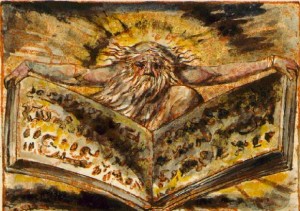
I had a really fun time putting together an article for Burnside about poets who are also visual artists. From the time I was a little child, I have been drawn to both the literary and visual arts worlds. Even in undergrad these two loves of mine co-mingled, as I majored in English and minored in studio art. My undergrad thesis looked at the relationship between writers and artists in New York in the ’40s and ’50s. It didn’t end there. While obtaining my MFA in creative writing, I took a poetry class on the collaborations of the poets and artists of the New York School. My article touches on some of the poets I’ve studied over the years, with of course a focus on the people commonly associated with the Beat Generation, but I pushed myself to find other examples as well.

Our cannons are so steeped in “dead white males” that it was important to me in stretching my knowledge to seek out poet-artists who did not play into that categorization. I was delighted to discover that Elizabeth Bishop painted.  Two years ago it was the hundred-year anniversary of the former Poet Laureate of the United States’ birth, so there were many readings and events to honor her work. Somehow, though, I missed the fact that she was a painter. Maybe it’s because she herself did not take it all that seriously, as I point out in my article. I happen to think they’re delightful, though.

A contemporary poet-painter I am quite interested in researching more about is Babi Badalov. As my article touches on, he mixes languages in his works, a result of having moved a lot between cultures to avoid persecution for his controversial visual poetry. As a writer, language is something I hold dear. My vocabulary is a key to who I am: the words I’ve picked up come from my mother’s midwestern phrasing and my father’s Greek tongue as well as the vernacular of northern New Jersey and the jargon of the institutes of higher learning I attended. I’ve found the preservation of endangered languages so critical because language is about identity. The idea that a poet has no language and has many languages intrigues me. When does Badalov express himself in his native Azerbaijani language and when in Russian? Is his use of English a political act?

In my exploration of the Beats as visual artists, I could have easily waxed on and on. In fact, I did not go into any detail about Jack Kerouac’s artwork, even though he has been the subject of much of my studies. If this is something you’re interested in, leave a note in the comment section below, and I’ll write something up on this. What I did try to do for the Burnside article, though, was show that the Beats were following a rich tradition that came long before them. I point to William Blake and the Chinese and Japanese calligraphers as forerunners and influencers on the work of Allen Ginsberg and Phillip Whalen, for example.

My article was limited to just a few examples, a small taste of the artwork of poets. I’d love to hear who you think should be added to the list. Maybe I’ll make a part II!

Clip: A Time to Laugh

17 Apr

Mona_Lisa

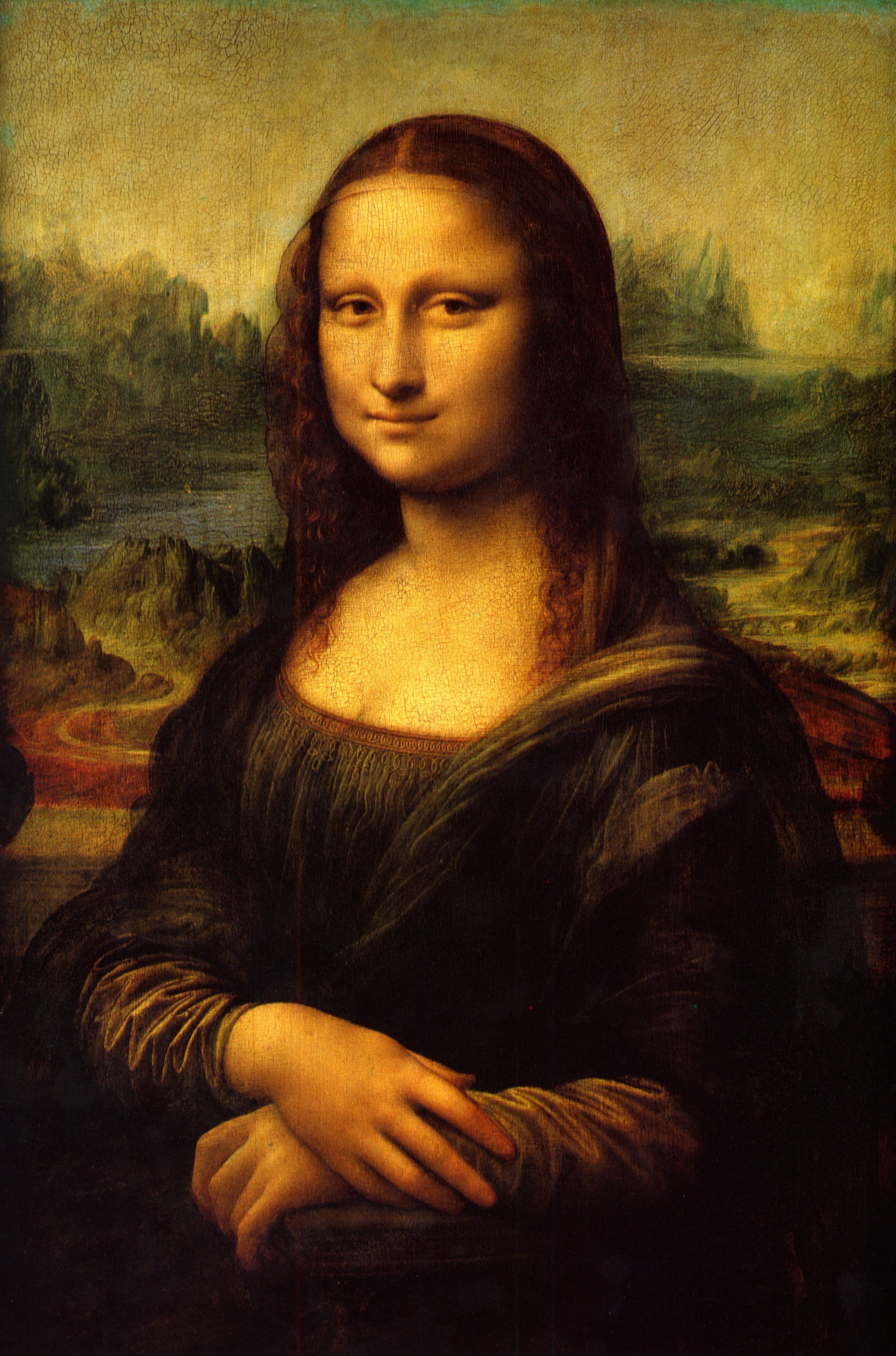
The post “A Time to Weep” seems more appropriate this week, after the Boston Marathon explosions, but yesterday my pre-scheduled post “A Time to Laugh” went up on Burnside. It’s just two works of art and a verse, like most of the blog posts in this “A Time to…” series. Sometimes, though, short is effective. If you need a little levity, silly renditions of the Mona Lisa might be just what you need.

Clip: Paintings in Praise of Poets

10 Apr

pushkin

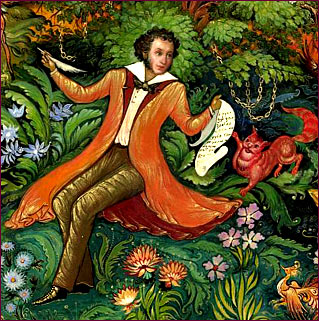
Back when I was in undergrad at Scripps, my thesis involved the relationship between poets and painters. Later, at grad school at The New School, I continued to study the way visual and literary artists influenced each other other and collaborated with one another. It’s endlessly fascinating and much more broad than the time periods of the ’40s, ’50s, and ’60s that I tend to focus on. Burnside Writers Collective just published a survey I did that shows painters honoring poets throughout the ages called “Painters in Praise of Poets.”

Clip: A Time to Weep

3 Apr

marystatue-223x300

My art post “A Time to Weep” went up on Burnside yesterday.

The photo above is of a statue of Mary, the mother of Jesus. Catholics refer to her as Our Lady of Lourdes because of the apparition Saint Bernadette had of her in Lourdes, France.

Jack Kerouac fans may be interested in my Church Hopping column on the Grotto of Our Lady of Lourdes.


Clip: A Time to Build

28 Mar

In case you missed it, the art I curated for Burnside’s latest “A Time to…” series posted last week. This one’s on “A Time to Build.”

It shows a photograph of the two beams of light that serve as a reminder of the Twin Towers. I began working in Manhattan a month after 9/11. I used to see these light sculptures all the time while walking in the Village. I don’t remember them being discontinued, but I do remember how they stopped me in my tracks when I saw them turned on again at the ten-year anniversary date of the attacks. The lights may represent the physical buildings that were lost and honor those who lost their lives, but for me they also are a symbol of hope and resilience. The light pierces the darkness, showing that sometimes the intangible is more powerful than the physical.

Clip: A Time to Tear Down

19 Mar

In case you missed it, the art I curated for Burnside’s latest “A Time to…” series posted last week. This one’s on “A Time to Tear Down.”

It involves Legos.

Clip on Xu Beihong Plus Thoughts on Calligraphy, the Beats, and the Abstract Expressionists

19 Feb

plant2

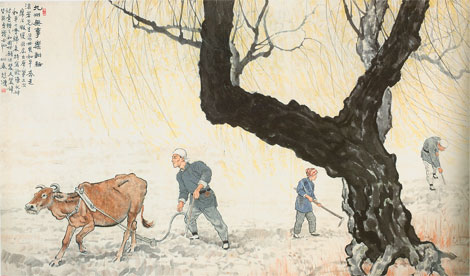
Burnside published my art post “A Time to Plant and a Time to Uproot” today.

It only occurred to me as I was posting this clip how interesting it is that Xu Beihong’s painting is from 1951. Doesn’t the seemingly traditional shuimohua painting seem much older? Xu is actually known for his Western sensibilities and is considered a forerunner in modern Chinese art.

Xu studied calligraphy with his father before attending the famous École Nationale Supérieure des Beaux-Arts — you know, that Parisian school where Degas, Matisse, Monet, and Renoir studied at. In 1917, Xu Beihong went to Japan to study art. During World War II, he sold his paintings in exhibitions throughout Asia, giving the proceeds to the Chinese whose lives had been upturned because of the war. As a teacher and artist, Xu’s policies greatly influenced the way both colleges and the government respond to art in Communist China. He died in 1953.

Meanwhile, over in Oregon at Reed College in the early 1950s, Gary Snyder, Philip Whalen (who served Stateside during World War II), and Lew Welch–who are associated with the Beat Generation–were studying with calligrapher Lloyd Reynolds. Snyder and Whalen later spent time in Japan, where they studied zen. The US State Department initially denied Snyder a passport, alleging he was a Communist.

Asian influences can also be seen in the art of the time period, most notably the abstract expressionist art of Franz Kline, Adolph Gottlieb, and Theodoros Stamos. Note this opening paragraph from the Guggenheim’s article “Abstract Art, Calligraphy, and Metaphysics“:

Following World War II New York City became the center of the avant-garde art world. Artists were working in new ways, and some were exploring the energy of the gesture with loose brushwork that reflected the impact of the artist’s bold movements. The calligraphic brushstroke was an approach to abstract painting that focused on the spontaneous gesture of the artist’s hand and was informed by the East Asian art of calligraphy and popular writings on Zen and its principles of direct action.

The article goes on to say:

In Chinese and Japanese calligraphy the brush becomes an extension of the writer’s arm, indeed, his or her entire body. The artist’s stroke not only suggests the movement of the body, but also inner qualities. Abstract as it appears, calligraphy also conveys something about the essence of the individual artist. It is therefore not surprising that 20th-century American Abstract Expressionists who sought to convey emotion through paint were drawn to it.

Because so many soldiers were stationed in the East during World War II, both the West and the East were influenced by each other.

What I personally find fascinating with calligraphy is the collision of art and literature, the visual and the literal, words becoming art, and art becoming words.