

Nothing says summer like fresh watermelon! I found these at a market in the Hamptons.
How about cutting up a few slices and serving it up with ouzo?
Nothing says summer like fresh watermelon! I found these at a market in the Hamptons.
How about cutting up a few slices and serving it up with ouzo?
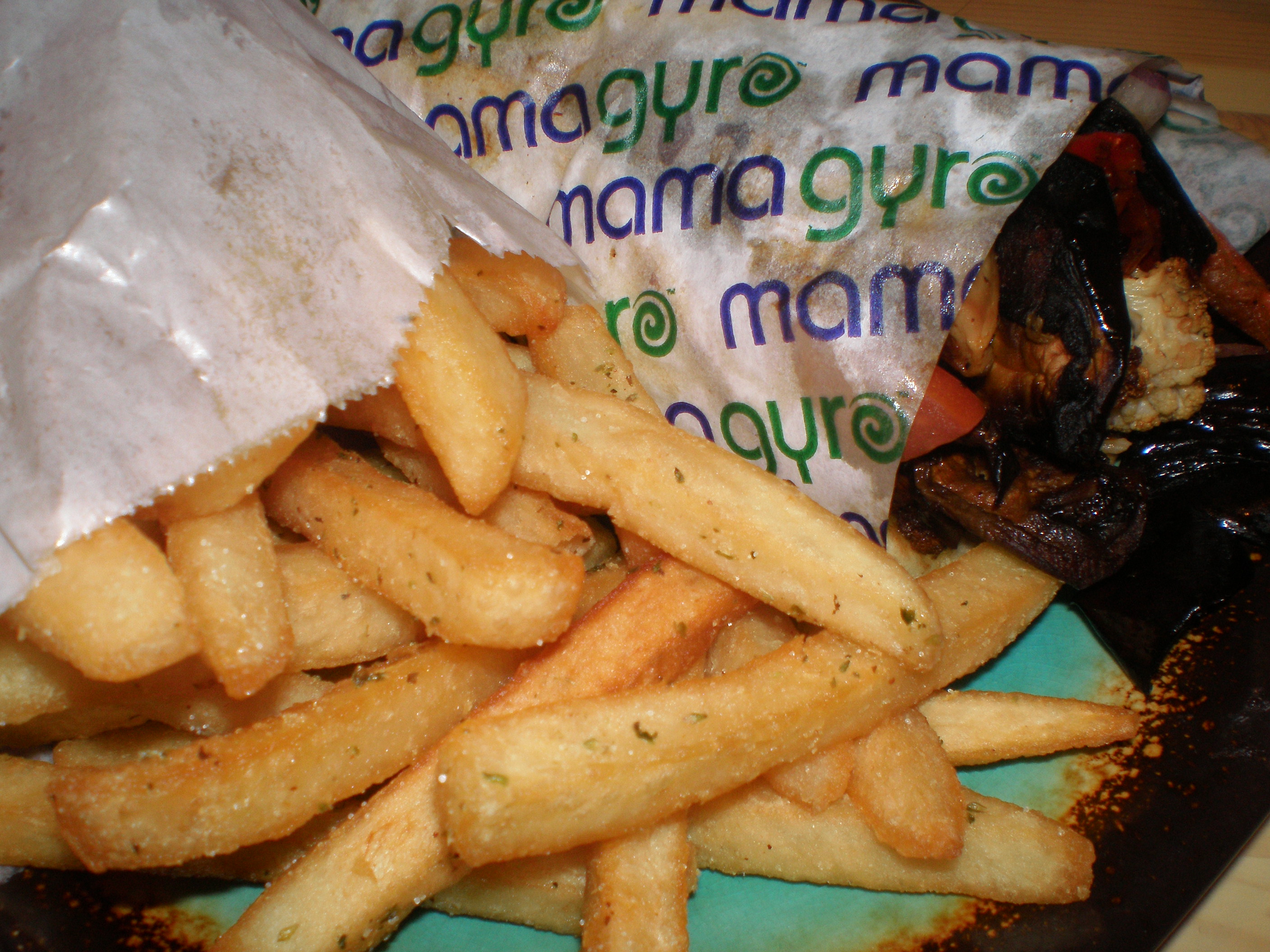
I didn’t feel like cooking so I decided to check out mamagyro. Isn’t that such a cute name?! It’s fast-food Greek food on the Upper East Side.
mamagyro is at 1113 Lexington Avenue, New York City.


While I was getting my MFA in creative nonfiction at The New School, I kept walking by a Greek restaurant that was being built on University Place. When it finally opened, I was drowning in writing my thesis and Burning Furiously Beautiful. Right before the semester ended my writer friend Allison–who is obsessed with Greece (a good thing considering all the Greek stories I shared in class)–and I went to check it out. Village Taverna was definitely worth the wait.
The food at Village Taverna is classic Greek taverna fare served up in a spacious, beautiful dining area with a casual vibe. The portions were generous–and delicious. I didn’t try the wine, but they have an impressive Greek wine list. Village Taverna has the best vegetarian gyro in New York–the grilled vegetables pita wrap. I want to go back and try their meze–tzatziki and veggie chips, namely–and vegetarian moussaka (it has artichokes in it!).
Who’s with me?!
Village Taverna is located at 81 University Place.
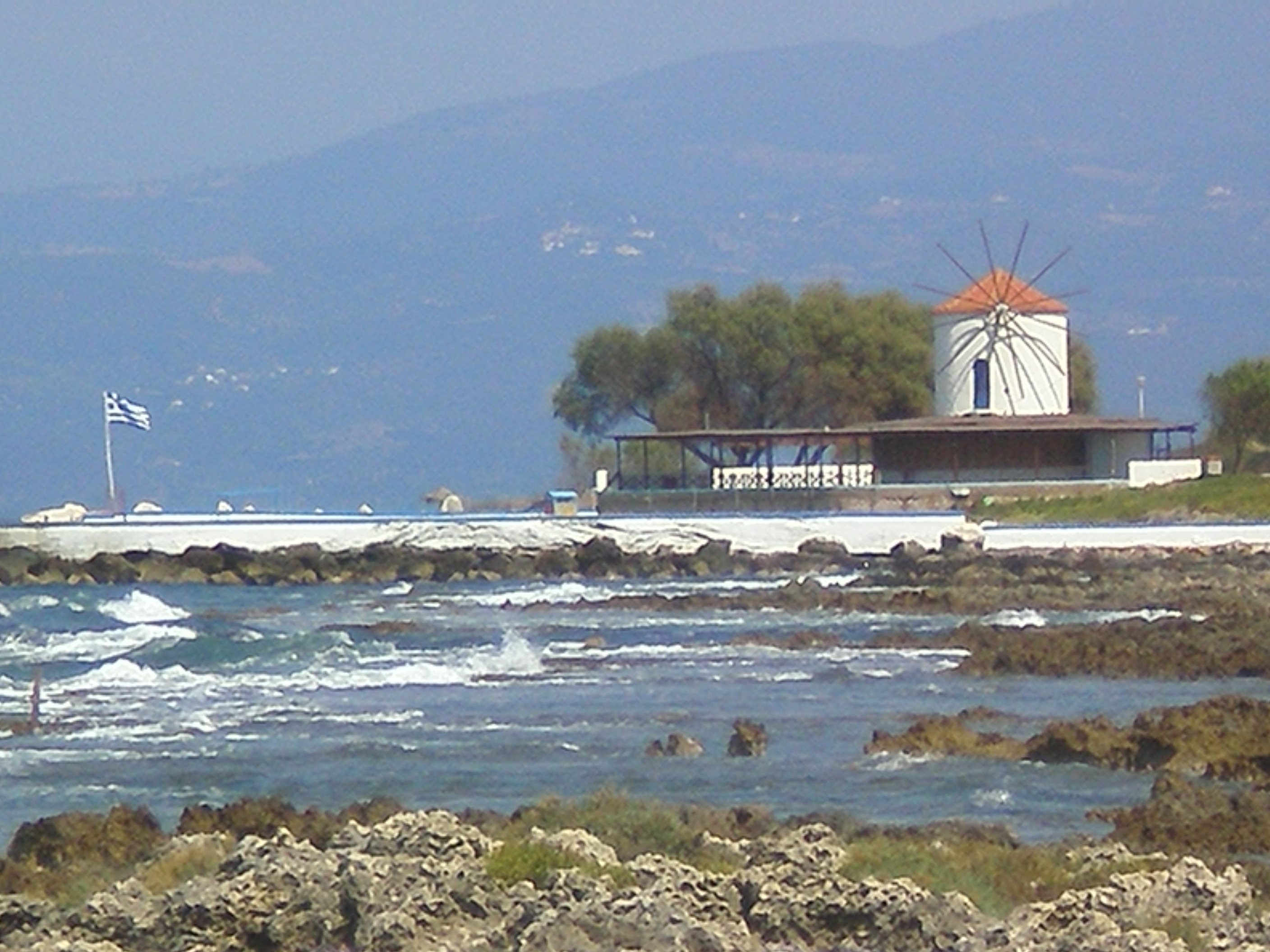
So many people I talk to seems to have this idea, driven by the media and not personal experience, that Greeks are lazy and aren’t doing anything innovative. This is simply not true.
Greece is working hard to bridge the gap between its rich history and its present. The country is respecting its past, its traditions, its natural landscape, and its flora and fauna, while simultaneously capitalizing on these strengths.



I went to brunch at Ovelia in Astoria with my sister and cousins when they visited. Ovelia is one of my favorite Greek restaurants in New York. I love their modern take on traditional Greek foods! And it’s got a great funky vibe going on with the decor.
A few months ago my father emailed me to tell me about his new pet. In New Jersey, he tried to literally bring the ocean into our house. He kept all sorts of salt water fish, starfish, shrimp, and sea horses in huge tanks that took up the length of our living room wall. Now in Greece, he’d apparently fished an octopus out of the ocean.
Over the course of several weeks, he emailed me stories about his pet octopus’ silly antics. It was a curious octopus, always watching him. One day, though, the octopus grew despondent. No amount of feta cheese improved his happiness. My father decided it was time to release him back into the ocean.
Now you may remember that my father lives in the Peloponnesus in Greece, near where the Greek poet Arion, who sang and danced for the gods, was rescued by a pod dolphins after being kidnapped by pirates.
Currently, the Ionian Dolphin Project is studying dolphins of the non-mythological variety in a different region of Greece, the island of Kalamos. Catalan biologist Joan Gonzalvo reported on the blog that he recently witnessed an octopus attach itself on top of a, um, rather sensitive, private area of a bottlenose dolphin. With the octopus still attached, the dolphin leapt out of the sea, and the scientists got some awesome photographs.
Speaking of Catalan, don’t forget to check out the Human Tower events happening throughout New York.

Branching out from writing of roses, of the myths and memories and makeup surrounding them, we turn to the Greek vegetation goddess, Persephone, also known as Kore.
The daughter of harvest-goddess Demeter and Zeus, Persephone represents the changing of the seasons. One day she was out gathering flowers with Athena, goddess of wisdom, and Artemis, goddess of wild animals, when she was abducted by the god of the underworld, Hades. There, she was tricked into eating the seeds of the pomegranate. Because she ate four juicy seeds, she was relegated to spending four months of the year in the underworld. Therefore, she is like vegetation itself, disappearing after the harvest.
In ancient Greek culture, the pomegranate was thought of as the “fruit of the dead.” In fact, according to Greek Orthodox tradition it was not an apple that Eve ate in the Garden of Eden but rather a pomegranate! Today, Greek Orthodox believers use pomegranate as an ingredient in koliva, the ritual food prepared for the memorial Divine Liturgy after a death.

I’m getting sick of the way everyone’s always ragging on Greece. I just read this comment in “Greece Vs. The Rest” in The New Yorker:
Greeks are fond of pointing out that they invented democracy; they invented tragedy, too, and that is what their situation increasingly looks like, whoever wins the election. The problem is that in recent years they haven’t invented much of anything else.
The author clearly thinks he’s being witty, but it is an insensitive and erroneous remark. We don’t go around mocking other countries that are experiencing crises. Why is it okay to denigrate Greece? Is it because, yes, “Greeks are fond of pointing out that they invented democracy,” and therefore come off as braggers? Or are other countries purely jealous of how much Greece has influenced the world?
Greece in fact is innovating. Greece is part of the Global Monitoring for Environmental and Security Initiative. Three years ago, Nanophos SA received first prize for Innovation and Sustainability in the International Exhibition “100% Detail.” Lavrion Technological and Cultural Park is linking culture and technology research. Furthermore, many well-known international companies—such as Coca-Cola, Ericsson, and Motorola—conduct their research and development in Greece.
Sorry, Greece did not invent the ipod. Let’s remember that much of modern Greece was under oppression. During World War I, many Greeks were killed, and Greek refugees fled Turkey for Greece, which led to its own economic stresses. During World War II, Nazis occupied Greece, sending Greek citizens to concentration camps. From 1946 to 1949, Greece had a civil war, when it rose up against Communism. And now, even in the years leading up to the economic crisis, the media has lampooned Greece, scaring off tourists and investors. It’s hard to be creative and inventive when you’re fighting for your life.
What I do agree with is the author’s statement:
An unsustainable burden is being loaded on those sectors of the population who were already paying.
Just like here in the US, where the rich are able to write everything off so as not to pay taxes, there are many people in Greece who are not paying taxes. Those who do pay their taxes are being overtaxed. These are the people who are poorer, who are older, who are retired, who are more generous to those in need, who do what is right, who are loyal to their country.
This is why we saw a 77-year-old man shoot himself in the head in Syntagma Square—the Times Square of Athens—back in April. As the Guardian reported, he shouted, “I’m leaving because I don’t want to pass on my debts.”
It saddens me that the media is not more compassionate towards Greece. Yes, there are many things that need to change there, but the blame cannot be placed solely on Greece. The country has suffered many hardships. There are real people living in Greece who are, yes, experiencing tragedy. Maybe we need to cling to our heritage to remind us of what we can accomplish and give us some hope for our future. Maybe instead of lambasting Greece, the foreign media should believe in Greece. Because you know what? Greece has overcome many trials and tribulations, and will rise again.
When you’re Greek and you live in such a foodie city as New York, you get the following question posed to you quite often: What’s your favorite Greek restaurant in New York City? I’ve been asked it enough time that I should have a solid answer, but usually I end up staring off into space and saying something vague about the Greek restaurant scene in New York City. My issue is that most of the Greek restaurants in New York City fall into three camps:
As far as the gyro carts go, I don’t care how trendy it is to eat out of food trucks, I won’t eat out of carts or trucks. Okay, maybe I’d do it for ice cream, but I feel anything that could be dangerous if not refrigerated properly or not cooked long and hot enough should not be created on wheels of any sort. There, I said it.
I love diners. I’m from Jersey. However, I don’t really consider diners Greek in the traditional sense. I’m more apt to order a grilled cheese than tiropita at a diner—even if it is owned by a Greek.
Now, I love luxurious meals at posh restaurants. However, I just don’t think most Greek food is meant to be upscale. It could be, don’t get me wrong. Most of the time, though, the best Greek food gets made in tiny tavernas. If you’re in New York, you can find these in Astoria. Part of my prejudice toward super-posh Greek restaurants is that I personally don’t really enjoy most Greek main meals.
I love all the Greek meze (appetizers) and side dishes. I’m talking tiganita, Greek salad, tzatziki sauce with warm pita, saganaki, feta, french fries with lemon and oregano…. I fill up on all of that and am too stuffed for the main course.
Christos Valtzoglou might be my new best friend. I’ve never actually met him, but a while back I read on Grub Street that the man behind Pylos was opening up a restaurant called Boukiés, which means “small bites.” The plan was to have only be two main courses on the menu, with the rest being all those delicious Greek meze I can never get enough of. Diane Kochilas, whom I’ve previously had the pleasure of interviewing, and Steffen Sander are also involved in the restaurant.
Boukiés opened in March at 29 East Second Street (Second Avenue), taking over the space of Valtzoglou’s former restaurant, Heartbreak. I’ve been tracking it for a while, but haven’t made it over yet.
I’m excited about the menu. It includes such items as:
Flaounes me Feta kai Meli
Feta phyllo flutes, drizzled with Greek honeyManitaropitakia Nymfaio
Northern Greek mushroom phyllo piesRevithia, Melitzanes V. Elladitika, Aromatiki Saltsa Domatas
Clay-baked chickpeas and eggplants, Northern Greek style, with cinnamon spiced tomato sauceSokolata Krya me Rodakina
Chocolate-Mastiha Ganache, Peach Compote
There’s also an impressive Greek wine list.
More recently, Boukiés began serving brunch. Some of the items offered on their menu include:
Poached eggs with sauteed spinach, tomato compote and
thyme Hollandaise, served on an English muffinSmoked salmon-asparagus omelet with manouri cheese, 14
lemon zest, and dillCitrony tsoureki (brioche) french toast served with mix
berries compote
Can’t wait to try Boukiés out!
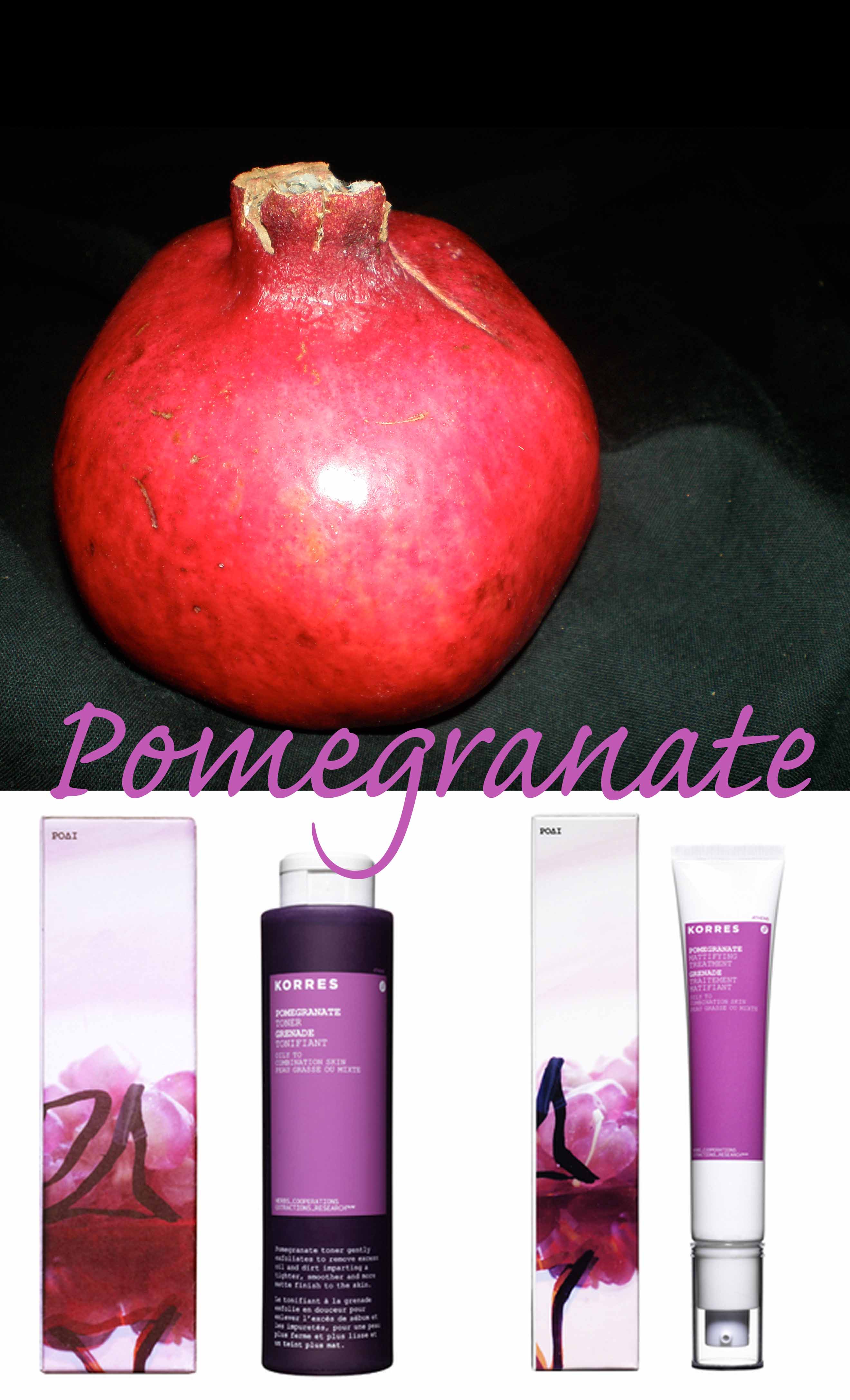
Thanks to Persephone eating those seeds of the pomegranate, we now experience the changing of the seasons, according to Greek mythology. Now that spring has sprung and summer is around the corner, modern Greek goddesses are spending more time outdoors and less time caking on makeup. These warm months are all about catching free summer concerts in the park, vineyard hopping in the Hamptons, and stalking the Coolhaus truck without worrying if your makeup is sweating off.
The Korres Pomegranate line is perfect for baring your skin this season.
I really love how gentle the Korres Pomegranate Toner is. I have delicate, sensitive skin and so many toners are just too harsh. The Korres Pomegranate Toner feels like water—mythical water. There is absolutely no stinging sensation, and my skin doesn’t feel tight after using it. Even though it doesn’t feel icy or tingly, I’ve been able to see from my cotton ball that it is working hard to remove impurities.
According to Korres, the Pomegranate Toner:
_Helps purify the skin’s surface by removing excess dirt, oil and impurities while minimizing the look of pores and helping to reduce the appearance or look of redness
_Leaves skin feeling fresh, and looking smoother and more matte
_Formulated with skin conditioners to leave skin feeling soft
It also happens to have a fresh, youthful aroma–unlike most toners, which tend to smell like rubbing alcohol. Korres Pomegranate Toner has a sweet and invigorating smell.
Even better smelling is the Korres Pomegranate Mattifying Treatment. However, this product takes about eight weeks to work. The benefits are impressive, according to Korres:
Breathable, oil absorbing formula to minimize the look/appearance of pores and redness and leave skin with a smooth, matte finish throughout the day.
KEY FEATURES & BENEFITS
_Instantly fills in pores to create a smooth, even skin surface texture.
_Clinically proven after 8 weeks to significantly reduce the visibility of pores (94% of subjects), the appearance of redness (84% of subjects), and improve the overall appearance of skin (88% of subjects)
I’ve been using it only for a few weeks now, and even though it’s probably the best-smelling face-care product I’ve ever used, my skin was shiny as ever in the photos snapped for my MFA graduation and the Mediabistro event I attended. I think my foundation actually rubs most of the product off when I apply it, though, so through trial and error I’ve learned to make sure the Korres Pomegranate Mattifying Treatment is completely dry on my face before applying any face makeup. (Beauty tip: Apply the Pomegranate Mattifying Treatment all over your face or t-zone, and while it’s drying apply your eye makeup to save time. It should only take about 20 seconds to dry, and then you can apply foundation. However, even then, pat your face makeup on gently because if you rub it, the mattifying treatment will come off in the process.) Even so, the Korres Pomegranate Mattifying Treatment seems to work better for days when I’m not wearing any other face makeup on top of it. And really, in the summer I don’t want to wear a lot of makeup anyway.
Neither of the scents linger, which is a positive for skincare, but if Korres offered a pomegranate perfume I’d be the first in line. It’s the perfect daytime scent for summer months.
Greece’s fastest-growing natural skincare company not only draws its inspiration from the flora of Greece, where pomegranates have grown for centuries, it also is committed to eco-friendly practices. The sleek and sophisticated packaging for Korres Pomegranate Toner and Pomegranate Mattifying Treatment is recyclable, and neither of the products are tested on animals.
So go ahead and channel your inner Greek goddess this summer, knowing that you don’t have to wear a lot of makeup to look beautiful.
Stephanie Nikolopoulos is a writer, editor, writing teacher, and speaker based in New York City.
She is the coauthor, with Paul Maher Jr., of "Burning Furiously Beautiful: The True Story of Jack Kerouac's 'On the Road.'"
You can email her at stephanie_701 {@} yahoo.com


 Stephanie Nikolopoulos