
“If you wish to be a writer, write.”
~ Epictetus
“If you wish to be a writer, write.”
~ Epictetus
“This worked out perfectly for me in college, because what nineteen-year-old Virginia boy doesn’t want a wide-hipped, sarcastic Greek girl with short hair that’s permed on top? What’s that you say? None of them want that? You are correct.”
~ Tina Fey in Bossypants
“We must free ourselves of the hope that the sea will ever rest.
We must learn to sail in high winds.”
~Aristotle Onassis
“A person needs a little madness,
or else they never dare cut the rope and be free.”
~Nikos Kazantzakis
“I am not an Athenian or a Greek,
but a citizen of the world.”
~ Socrates

“Artists, like the Greek gods, are only revealed to one another.”
~ Oscar Wilde
Happy birthday to Dimitris Mitropoulos! Born in Athens, the Greek composer began conducing the New York Philharmonic in 1949. He was raised Greek Orthodox and is remembered as being devout. From everything I’ve heard and read — I first heard about Mitropoulos through David Amram, who tells lots of stories about him in his books and remembers him fondly — Mitropoulos sounds like quite a character! To make music more accessible to the masses and reach a younger audience, Mitropoulos did a week of shows at the Roxy, a movie theatre in Times Square.
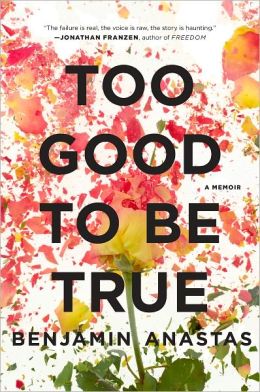
After reading about how Benjamin Anastas describes his father as “a brooding Greek beatnik” who is “potbellied from lentils and with a beard down to his solar plexus chakra,” I knew I had to read his memoir Too Good to Be True. After all, I write about Greeks and so-called beatniks. Too Good to Be True is the story of the breakup of his marriage and the dissolution of his writing career.
Its not told in an overtly emotional manner, yet its frankness is almost unsettling. These days we’re used to people baring all when it comes to relationships, but to tell the truth about money? To admit that even though he’d taught at an Ivy League and published in big-name magazines, he had to dig around in couch cushions to come up with money for his son’s dinner? That’s the type of honesty that’s hard to read because you worry he’s sabotaging his career by admitting his writing isn’t going all that well and putting it out there for editors and agents to read without the distance of time.
But isn’t that the struggle of the memoirist? While many critics claim that memoir writing is egocentric, a memoirist must lay down his ego. He must sacrifice self and present the truth. And while a memoirist may be introspective by nature, the beauty of memoir is discovering the truth along with the author.
This section from the chapter “Old Friends” is worth considering in terms of both memoir writing and living life:
How much of our lives do we write, and how much of them are written for us? I’ve been thinking about this problem lately, looking back over the trail that brought me to this place, and reading my progress at every step along the way—as adrift as I have been from the usual compass points, as unaware of my direction—for signs of an author, for the fingerprints left behind by some great invisible hand. My life is not a story. It has never been a story, not for me, not even while I’ve been taking great pains with this testament to tell it truthfully on the page. I am in too deep to call it a story. It hurts too much for me to understand it. But I am trying.
The contents of the book may center around infidelity and a mid-career slump, but the deeper story, the one that Anastas circles around to, is the relationship between parents and children, the relationship he had with his parents and the relationship he has with his son.
If I could request a follow up to Too Good to Be True, I would ask Benjamin Anastas to write a memoir about his childhood.
Ninety-two-year-old Greek diner St. Clair has closed down, reports Grub Street, after learning the news from Brownstoner.
Owned by five Cypriot brothers, according to New York magazine, offered various Greek dishes such as the Greek Delight Platter, Corfu Salad, and Greek Moussaka alongside classic American dishes like The Best Baked Meatloaf and 14 Oz. new York Cut Sirloin Steak Sandwich. Brooklyn Daily provided a little history that when the diner was revamped in 1967 it was opened up as the New St. Clair by the Costa family. In 2007, they sold it to Spiro Katehis, who also owns the Carroll Gardens Classic Diner. The Greek diner was at the corner of Smith and Atlantic in the Boerum Hill neighborhood of Brooklyn.
In The Town and the City, Jack Kerouac housed the parents of his main character in Brooklyn and mentioned the Boerum Hill neighborhood. Of course back then, the neighborhood hadn’t gone through its yuppie gentrification—Kerri Russell and Michelle Williams have called it home—and was known as South Brooklyn or North Gowanus.
Considering the establishment had already opened in 1920 and Kerouac was in the area in the 1940s and ‘50s, it’s possible—though not proven—that he could have stopped in the St. Clair Diner.
The neighborhood is famously home to another writer: Jonathan Lethem, who told the New York Sun, “’My image of the writer came from people like Henry Miller and Jack Kerouac.’” When he was younger, Letham hitchhiked to California and worked at used bookstores. In 2011, he was the Roy E. Disney Professor in Creative Writing at Pomona College, where I studied literature and Classical Greek.
HarperCollins Publishers promoted Tina Andreadis to senior vice-president of publicity, according to Publishers Lunch. Hired in 2005 as vice president, director of publicity, Andreadis oversees publicity for many of the publishing house’s imprints.
The Greek America Foundation named Andreadis as part of the Class of 2010 winners of the Forty Under 40; she was thirty-nine at the time. They noted:
Andreadis is very involved in philanthropic and media efforts on behalf of the Greek Orthodox Archdiocese of America. In October 2009 she was a key member of the media team for Patriarch Bartholomew’s historic tour of the United States, working to promote his trip to America. Her influence helped secure an opinion piece by the Patriarch in the Wall Street Journal. Andreadis is an active member of Kimisis Tis Theotokou Greek Orthodox Church of the Hamptons. There she is media chair for the future expansion of the church and a committee chairperson for the church’s annual festival in Southampton.
Congratulations to Tina Andreadis on her new role at HarperCollins!
The New York-based publishing house’s origins go as far back as 1817 when Harper & Brothers was founded and is now one of the largest publishing houses in the world. Side note: like most publishing houses, they have a history of publishing Beat Generation-related books, including Rub Out the Words: The Letters of William S. Burroughs, 1959 – 1974 and Howl: A Graphic Novel.
Stephanie Nikolopoulos is a writer, editor, writing teacher, and speaker based in New York City.
She is the coauthor, with Paul Maher Jr., of "Burning Furiously Beautiful: The True Story of Jack Kerouac's 'On the Road.'"
You can email her at stephanie_701 {@} yahoo.com


 Stephanie Nikolopoulos