Archive | Writing RSS feed for this section

Friday Links: Words in the Mail

21 Jun

Happy Friday!

Here are a couple Friday links to kick off the weekend. This week’s theme is about how the link between literature and the postal service.

Indie darlings The Postal Service, who collaborated through snail mail, are touring the US right now. Can you believe Give Up is celebrating its 10th anniversary?!

Ireland fit a whole short story on a new stamp (via PW Daily)

When you’re a writer, your mailbox can be a source of agony — but it’s important to remember you’re in good company: Alfred A. Knopf sent rejection letters to Jack Kerouac and other famous authors in this 2007 NPR story.

On my recent trip to Dallas, I read Maria Semple’s Where’d You Go, Bernadette on the plane. The book, which garnered tons of publicity last year, features emails and snail mail between the characters. What’s your favorite epistolary novel?

As a young girl growing up in Australia, Geraldine Brooks had pen pals through the world. Twenty years later she went on a search to find these long-lost pen-pal friends, as told in the memoir Foreign Correspondence.


Friday Links: Words in Motion

14 Jun

Penguin

Leaving you this weekend with a few fun links:::

I was just thinking the other day that there should be a library on every corner instead of a Starbucks … or maybe a library in every Starbucks? The Free Little Library might be the solution we need! Here’s to hoping the expand throughout New York City.

There’s a Secret Poet in Lynn, MA, who has been posting anonymous messages. (via Poets & Writers)

I want a Poet Tree outside my window! (via Poets & Writers)

Have you ever spotted the POEMobile?

Want to read poetry on the go? Poetry.org offers 2500 poems in mobile format.

Anakalian Whims posted last year about Parnassus on Wheels and the idea of a peddler’s caravan.

Walden on Wheels is a new book by Ken Ilgunas about how living on the open road helped the author find financial freedom.

In case you missed it, here’s my link to the Penguin Book Truck.

Something tells me I’ll be spending some time out on Library Lawn on Governor’s Island this summer.

What are you reading this weekend?

Brunch with Artists & Entertainers at the Lotos Club

7 May

LotosA

Last month Scripps College invited me to attend a lovely brunch amongst friends and fellow alumni at The Lotos Club:

Alumnae Panel: The Arts and Entertainment Scene in NYC

Mitra Abbaspour ’99, Associate Curator, The Museum of Modern Art

Barbara Barna Abel ’84, Casting Director and Coach, ABEL intermedia

Elizabeth Robbins Turk ’83, Artist, 2010 MacArthur “Genius” Award Winner

Moderator: Veronica Gledhill ’06, Senior Fashion Market Editor, New York Magazine, Online and 2012 Outstanding Recent Alumna

with an update on the College
from President Lori Bettison-Varga

Oh, how I wish they’d do more of these. It was truly inspiring to hear these women tell their stories. They were so impressive yet so humble and honest in talking about their individual journeys as artists.

Lotos1

Lotos2

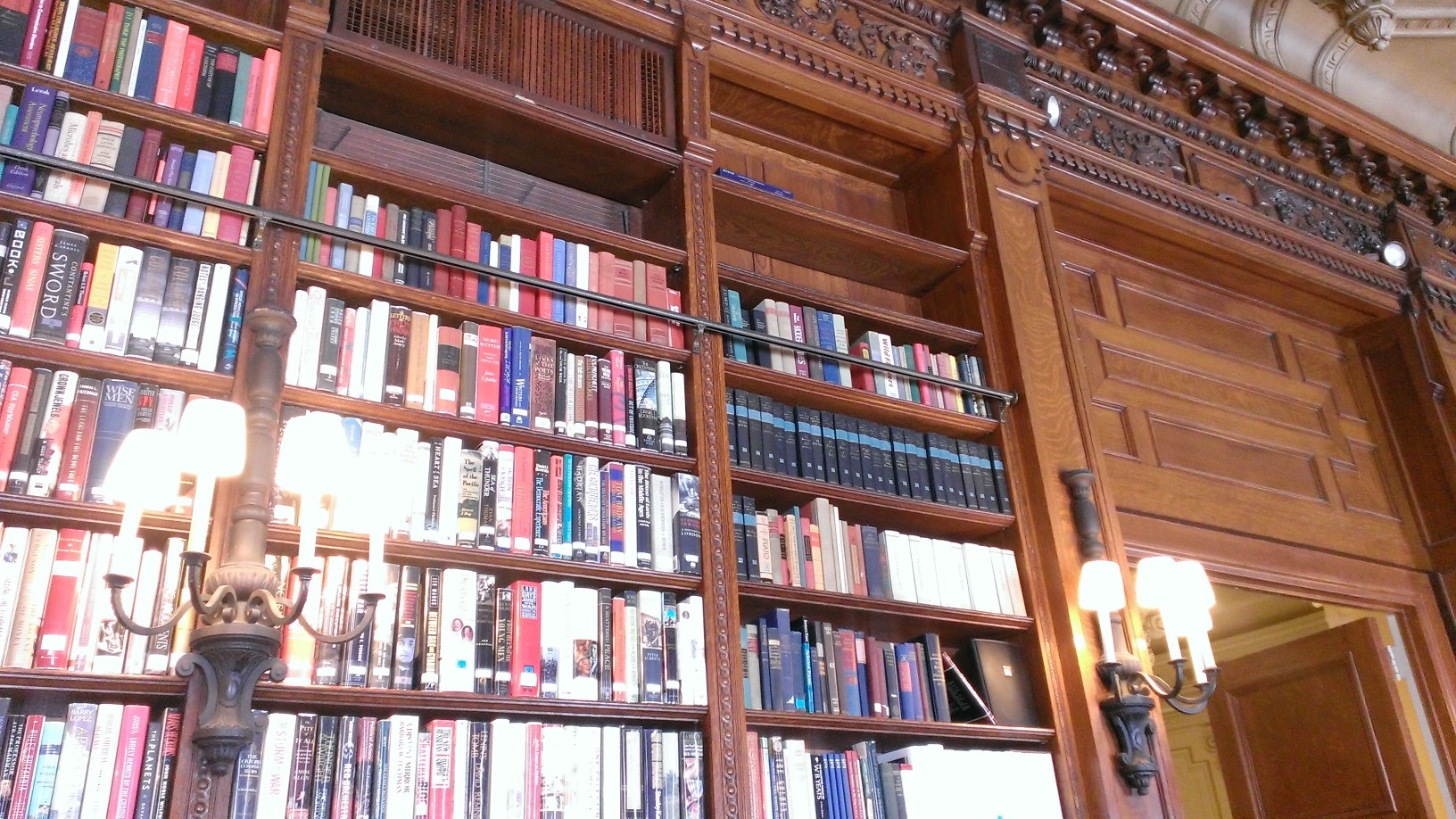
Elizabeth had secured The Lotos Club for the event, and I could’ve sat in that sumptuous library all day long. But I guess that was the point:

The selection of the name The Lotos Club was to convey “an idea of rest and harmony.” The spelling of Lotos comes from Alfred Lord Tennyson’s poem, The Lotos Eaters, two lines of which were selected as the motto of the Club:

 In the afternoon they came unto a land
In which it seemed always afternoon

The endless afternoon setting provided the ideal atmosphere to indulge in creative and stimulating thought and conversation.

Of course, as a good Greek, I should point out that Tennyson’s poem was inspired by The Odyssey.

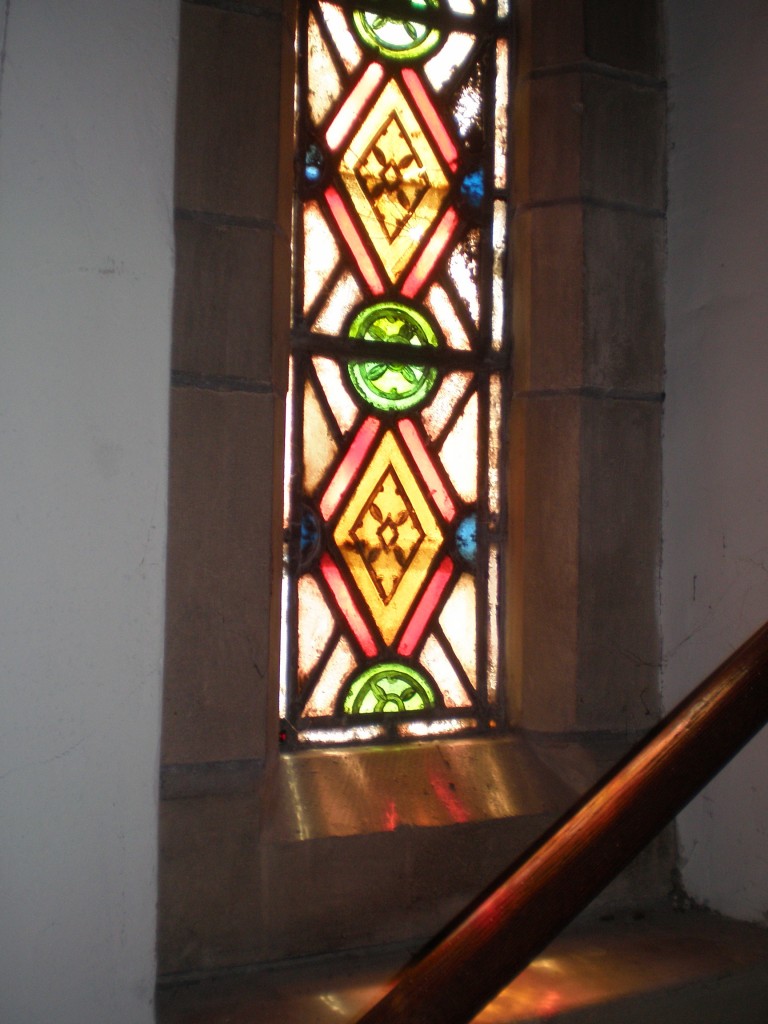
The circular staircase was breathtaking. I had to stop and take a photograph.

Lotos3

The Lotos Club has an impressive history and has counted amongst its members President Taft, Mark Twain, and Oscar Wilde’s brother Willie.


Happy 144th Birthday, Bertram Goodhue!

28 Apr


American architect Bertram Goodhue was born on this day in 1869.  I went Church Hopping to the Church of the Intercession in Washington Heights and St. Bartholomew’s Episcopal Church in Midtown,  two churches he co-designed in New York.

Extra! Extra! Read all about it!  In 1896, Goodhue designed a typeface for Cheltenham Press.  Called Cheltenham, the typeface is the one used for the headline for The New York Times.


Clip: Paintings in Praise of Poets

10 Apr

pushkin

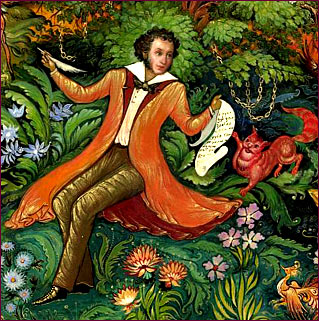
Back when I was in undergrad at Scripps, my thesis involved the relationship between poets and painters. Later, at grad school at The New School, I continued to study the way visual and literary artists influenced each other other and collaborated with one another. It’s endlessly fascinating and much more broad than the time periods of the ’40s, ’50s, and ’60s that I tend to focus on. Burnside Writers Collective just published a survey I did that shows painters honoring poets throughout the ages called “Painters in Praise of Poets.”

The Writerly Blog Hop

3 Apr

writerlybloghopbutton_zps5647d020

Huffington Post columnist and Burnside Writers Collective colleague Emily Timbol invited me to join a blog hop organized by writer Kirsten Oliphant of the wonderfully titled blog I Still Hate Pickles. You may remember that I participated in The Next Big Thing Blog Hop last year. I kind of feel like they’re the chain letters of the blog world and am infinitely curious who’s in my six degrees of separation.

Kirsten says in her “about me” section on her blog that she doesn’t like rules, so it should come as no surprise that she gave me and the other blog hoppers some general guidelines but told us we didn’t have to follow any set format or answer every question. Since I’m one of those creative types that tends to actually like rules (blame the editor side of my brain), I am taking a literal approach to the blog hop and answering her questions one by one.


What makes you (or makes a person) a writer?

A while back there was a funny meme going around called “What People Think Writers Do,” which shows just how relevant it is to discuss what makes a person a writer. There are all sorts of writers—some are political journalists, some write children’s books, some have their books turned into films, some are hobbyists. I don’t think it’s fair to place absolute judgment on who qualifies as a writer. There are many poets and fiction writers who only became famous late in life or even after death. Is a little girl writing in a diary a writer? What if I tell you her name is Anne Frank? Is a doctor who writes poetry on the side a writer? What if his name is William Carlos Williams? Okay, but what if that doctor is a career oncologist who writes nonfiction about cancer? Does it make a difference if his name is Siddhartha Mukherjee and he won a Pulitzer Prize for The Emperor of Maladies? Even if he never writes another book again? Is a blogger a writer? Is a grant writer a writer? Is someone a writer just because they have to write emails at work? Is there a difference between being a writer and writing? I wouldn’t say that whether someone is published or not or whether someone earns money or not means they are or are not a writer, but I would suggest that being a writer, in the sense of it meaning more than someone who occasionally writes their name on a check or writes a grocery list, means being intentional. This could mean being intention in carving out time for writing or being intentional in the selection of words, but not necessarily so: William S. Burroughs, for instance, used a cut-up technique that displaced authorial syntax yet he is still considered a writer.

So do I have the right to call myself a writer? Well, my name has appeared on book covers across the country and the New Yorker and the Paris Review have mentioned my writing. Then again, I don’t live off my writing—I didn’t even make a thousand dollars off my writing last year—and most people have never heard of me. I call myself a writer because even when I’m not writing I am thinking about writing.


Why is it sometimes hard to fess up to being a writer?

There are two big reasons why I sometimes have a difficult time admitting I’m a writer. The first is that when I introduce myself as a writer to people, they automatically ask who my publisher is—and I mean even people who aren’t in the industry suddenly want to know who the gatekeepers who let me through are or want some sort of proof that validates me as more than just the (in their mind) dreaded hobbyist. I feel like it’s like saying I’m a woman, and then someone asking who my gynecologist is. For the record, Barnes & Noble and HarperCollins Publishers have published books containing my writing. The truth, though, is that I sometimes don’t feel comfortable confessing to being a writer because I haven’t written, or published, a full-length book by myself—yet.

The second reason I don’t always like confessing that I’m a writer is because I am an editor. I personally feel that these two callings work well together, but I have noticed that people in publishing houses tend to think that the only reason I am an editor is because I’m trying to get published. I wish I was that savvy! The truth is that I began a career in book publishing because I love working with words. When I was starting out as a proofreader, the idea of being an author seemed like some far-off imagery dream, like being an astronaut. I always had a need to write, and even back then wrote for various publications, but I wasn’t diligently working on my own book. I really love working at a publishing house, seeing a book go from concept to finished product. I love working with authors and helping them achieve their dreams. From my experience, there are a lot of people in the industry who are editors and publishers because they love books and not because they themselves want to be writers. I just happen to be both.


How does writing affect your identity or otherwise impact your life?

I tend to view my experiences through the lens of being a writer. When I go to an art gallery, I automatically think that I have to write about the art I saw. When there’s a particularly momentous current event, I feel the need to write it down in my diary. It’s not just a matter of mining life for stories. I process information by writing. I often joke that I don’t really know what I think about something until I write about it.

Being a memoirist has helped me understand my identity beyond being a writer. Agents and editors tell writers that their main characters should never be a writer. But what do you do if you’re a memoirist and your main character is you, a writer? You dig deeper, you don’t allow your writerly self to speak for who you are. When you can’t rely on that shorthand of clichés about being a writer, that fancy wordwork that hides your true identity, you’re left with just yourself. Writing doesn’t just allow me to be myself—it forces me to be myself.

Want to join the blog hop? Answer the questions however you see fit on your own blog and post a link below as well as link to Kirsten’s post.

Gender Bias Strikes Again in the Lit World

6 Mar

VIDA charted the number of male-versus-female book reviewers and authors reviewed—and it doesn’t look good. By and large, men are reviewing and getting reviewed much more often than women. And yet, according to this old article on NPR, women read more than men. Go figure.

Two years ago, I presented the argument I’d heard that women aren’t submitting as often as men to the big-name publications. I’ve heard it said that this is because men are more likely to take risks or feel like they could actually get published in these magazines and journals, while in contrast women feel like they aren’t good enough writers yet and so don’t query as often in general and that when they do it’s to smaller, lesser-known publications. I’d still like to see some hard evidence of this.

Tin House responded to this year’s VIDA report, with editor Rob Spillman saying:

Our unsolicited submissions are nearly 50/50 consistently year to year, and our acceptance rate is also 50/50. Agented submissions average closer to 2/3 men versus 1/3 women, with acceptance rates around 60/40. Interestingly, the number of agents who are sending these submissions are 2/3 women versus 1/3 men. We were also surprised to find that although we solicited equal numbers of men and women, men were more than twice as likely to submit after being solicited. This even applies to writers I’ve previously published.

History has taught us to read “dead white men” so I don’t think it’s all that surprising that even female agents would pass along more male writers than female. What I do find curious is that, according to Spillman, women writers are less likely to send work in when it’s directly asked for.


“My life is not a story,” Wrote the Memoirist

28 Feb

9780547913995_p0_v1_s260x420

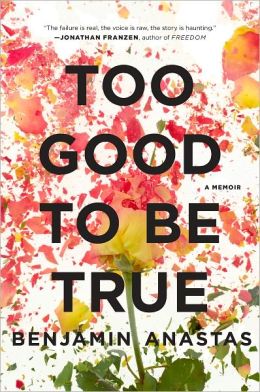
After reading about how Benjamin Anastas describes his father as “a brooding Greek beatnik” who is “potbellied from lentils and with a beard down to his solar plexus chakra,” I knew I had to read his memoir Too Good to Be True. After all, I write about  Greeks and so-called beatniks. Too Good to Be True is the story of the breakup of his marriage and the dissolution of his writing career.

Its not told in an overtly emotional manner, yet its frankness is almost unsettling. These days we’re used to people baring all when it comes to relationships, but to tell the truth about money? To admit that even though he’d taught at an Ivy League and published in big-name magazines, he had to dig around in couch cushions to come up with money for his son’s dinner? That’s the type of honesty that’s hard to read because you worry he’s sabotaging his career by admitting his writing isn’t going all that well and putting it out there for editors and agents to read without the distance of time.

But isn’t that the struggle of the memoirist? While many critics claim that memoir writing is egocentric, a memoirist must lay down his ego. He must sacrifice self and present the truth. And while a memoirist may be introspective by nature, the beauty of memoir is discovering the truth along with the author.

This section from the chapter “Old Friends” is worth considering in terms of both memoir writing and living life:

How much of our lives do we write, and how much of them are written for us? I’ve been thinking about this problem lately, looking back over the trail that brought me to this place, and reading my progress at every step along the way—as adrift as I have been from the usual compass points, as unaware of my direction—for signs of an author, for the fingerprints left behind by some great invisible hand. My life is not a story. It has never been a story, not for me, not even while I’ve been taking great pains with this testament to tell it truthfully on the page. I am in too deep to call it a story. It hurts too much for me to understand it. But I am trying.

The contents of the book may center around infidelity and a mid-career slump, but the deeper story, the one that Anastas circles around to, is the relationship between parents and children, the relationship he had with his parents and the relationship he has with his son.

If I could request a follow up to Too Good to Be True, I would ask Benjamin Anastas to write a memoir about his childhood.

“Flophouse Budget Lifestyle”

27 Feb

Remember the other day when I waxed poetic about my submission spreadsheet? Well, I just stumbled upon Aaron Gilbreath’s article “The Business of Tracking Lit Mag Submissions” on Tin House‘s blog. I loved his old-fashioned pen-and-paper advice. This paragraph punched me in the gut:

Accepting contributor copies as payment for something that took six to twelve months to write; subsisting off microwavable Trader Joes food in order to keep your expenses low enough that you can afford time to write; working temp and odd jobs while publishing in magazines that writers respect but non-writers have never heard of – that’s monkey business. To have an adult’s business mindset and the flophouse budget lifestyle of a twenty year old musician seem antithetical, but I think of those things as part of the business of writing: few poets or essayists make enough money to support themselves by writing, but if you’re willing to live frugally and without popular recognition, you can enjoy a gratifying creative freedom by writing for literary magazines.

It’s so important to protect your creative freedom. There was a time when I didn’t. When I’d take little writing jobs here or there just for the few extra pennies in my pocket and the thrill of seeing my name in print. It took a breakup for me to realize I’d been squandering my time and my creative energy. I don’t publish as much these days, but the writing I’m doing is better, more thoughtful, more “me.” It’s worth more, to me.

And yet it’s so difficult to explain what Gilbreath phrases as “To have an adult’s business mindset and the flophouse budget lifestyle of a twenty year old musician” to someone who isn’t an artist.

Especially when you live in New York City, where the first question someone asks you is “What do you do for a living?” and where you’re judged by which neighborhood you live in. Here, a box of pasta costs double of what it costs over the bridge in New Jersey. Being middle class in New York City isn’t really the same as being middle class in other parts of the country.

Take this quote from The New York Times’ article “What Is Middle Class in Manhattan?“:

By one measure, in cities like Houston or Phoenix — places considered by statisticians to be more typical of average United States incomes than New York — a solidly middle-class life can be had for wages that fall between $33,000 and $100,000 a year.

By the same formula — measuring by who sits in the middle of the income spectrum — Manhattan’s middle class exists somewhere between $45,000 and $134,000.

But if you are defining middle class by lifestyle, to accommodate the cost of living in Manhattan, that salary would have to fall between $80,000 and $235,000. This means someone making $70,000 a year in other parts of the country would need to make $166,000 in Manhattan to enjoy the same purchasing power.

Or this one from NY Daily News‘ “N.Y.C. so costly you need to earn six figures to make middle class“:

In Manhattan, a $60,000 salary is equivalent to someone making $26,092 in Atlanta.

And of course, there’s this one from The Huffington Post’s “New York City’s Middle Class Is Facing An ‘Affordability Crisis,’ Says Christine Quinn“:

City Council defines “middle class” as those with a household income within 100 to 300 percent of the area median income (AMI). In New York City, that means an income ranging from $66,400 to $199,200.

I personally don’t have a “flophouse budget lifestyle.” I have a Career. Yes, capital “C.” I enjoy the work I do, and it also affords me the creative space I need to work on my writing without having to make a living off my writing, though I do earn money for my writing.

But, what does “lifestyle” really even mean? Reading and writing, and even being part of the literary community, do not require much money. There was some talk a while back about bookstores considering charging for readings, however most readings in New York City are free. Libraries lend out books for free. Museums have pay-what-you-wish days. There are more literary opportunities for writers in New York City than in many other places in the country, so in some ways it evens out. But maybe that’s just wishful thinking.

I did think this Onion article was funny, though.

Writing Wednesday: Writing from a Brothel

6 Feb

Dear Mom and Dad,

I’m going to go live in a brothel now. Don’t worry — just as the landlord. William Faulkner told me to.

PS: Sorry for robbing you and drinking all your whiskey. I’m just trying to be a good writer.

xoxo.


Note: This is completely fictional. But, Faulkner’s 1956 interview poses an interesting question: What is the best type of job for a writer to hold to earn some income while working on a book?