Archive | Writing RSS feed for this section

Writing Wednesday: The Art of Discovering What You Believe

11 Apr

The art of writing is the art of discovering what you believe.

— Gustave Flaubert

I love this quote on so many levels. As I struggle with writing my book(s), I realize that sometimes you have to write a whole lot in order to figure out what it is you’re really trying to say, because sometimes the idea you go in to write about isn’t really the true heart of your story. It’s there. You’re onto it. It’s just buried deep inside your original idea. Sometimes, as you write, you learn something about yourself, about who you are and what you believe.

I think this is true even for those who don’t write for a living, but who enjoy keeping a diary or blogging. There have been many times I’ve scribbled into my journal and come to some revelation or at least clarity on something that had been on my heart.

Bravo for Writing a Greek-American Memoir

9 Apr

On my lunch break one afternoon I met a man from Greece at a coffee shop.  He had been born in Greece, but currently resides in New York.  He didn’t have the thick Greek accent that would’ve indicated a recent move, and yet like so many Greek people I’ve met, he was still very much hung up on Greece.

After some rather dull conversation he perked up when I told him the memoir I’m writing is about growing up Greek American.  It made me kind of hate him.  I know that’s a terrible, overdramatic reaction, but his reaction gave me the distinct sense that in his eyes my ethnic heritage played a role in my worth.

The Greek American community is incredibly proud of its Greek heritage.  As we should be.  We have a beautiful culture with a rich and fascinating history.  I often feel I don’t live up to Greek ideals.  I know the reason I inwardly cringed when the man expressed interest in my heritage above all else is because I feel like I fall short of the standards of Greek American identity.  I don’t speak the Greek language, I don’t look particularly Greek, and I’m not 100% Greek.  Culturally, I’m not very Greek.

In fact, those who know me well are surprised when I say I’m writing a memoir about growing up Greek American.  Spoiler alert!  The memoir isn’t really about being Greek.  It’s about being American.  It’s about growing up American but going through an experience as an adult that ties me back to Greece.

Life is too complex for anyone to be categorized or valued based on just one aspect of their identity.

Writing Wednesday: Punctuate Your Point with Punctuation

4 Apr

I’ve heard a lot of strange comments in my writing workshops.  Someone once told me they thought from my writing that I wished I was a boy.  Someone else questioned why I write more about Greek identity than Swedish identity.  I expect all sorts of reactions to the content of my essays and that I’ll get criticism in regard to structure.  It comes with the territory.

What I never suspected was that I’d get feedback on my punctuation.

I don’t recall ever hearing anyone else in a workshop receive comments on their lack of use of the oxford comma or their split infinitives.  Actually, that’s not entirely true.  I criticized someone’s use of parentheses.  If it’s unimportant enough to place in a parenthetical, it’s not important enough to keep in your book.  Edit it out!  Of course there are exceptions: for example, definitions of foreign words.  The other instance of a workshop debate being generated from punctuation had to do with the use of David-Foster-Wallace-like footnotes.  For the most part, though, comments about punctuation—errors in punctuation, that is—are kept to written edits on the writer’s page.

That’s why I found it so curious that at least once a semester, someone raised comments praising my grammar and punctuation.  As an editor by profession, punctuation is important to a fault for me.  I live by Oscar Wilde’s quote:

I was working on the proof of one of my poems all the morning, and took out a comma.  In the afternoon I put it back again.

It just never occurred to me that someone might actually notice my punctuation.  After all, correct punctuation should be a given.  And when punctuation is correct, it generally doesn’t stand out to the reader.

I figured readers maybe noticed my punctuation because I use crazy marks like the semicolon.  Who uses the semicolon nowadays?

I’m playing a bit coy, though.  I do believe there’s more to punctuation than it just being correct.  I don’t intend my punctuation to stand out and grab the reader’s attention.  I’m not trying to be a punctuation renegade, experimenting and breaking the rules for purposeful affect.  That said, every comma, every em-dash, and yes, every parenthesis conveys subtle meaning.

Think about it.  When em-dashes (those long dashes between words) appear in a text, doesn’t it make the work feel more modern and fast-paced than a commonplace comma?  And don’t endnotes seem more scholarly than parentheses?

I think punctuation frightens most people.  It brings back all this childhood trauma associated with teachers yelling about sentence fragments and marking papers up with green pen.  Green is the new red.  Green is supposed to be less scary than red, but it isn’t.  It means the exact same thing: you made an error.

Don’t let punctuation poison your prose.  Get a grip on it and use punctuation just as you use diction as one of your writer’s tools to convey your story to your reader.


Helpful resources for proper punctuation:

Grammar Girl 

The Copyeditor’s Handbook

Grammar class at New York University


Clip: Creating Space

26 Mar


I’m pleased to have a personal essay published inCreating Space.  In the essay, I write about my angsty teen years in New Jersey … and how I still sometimes feel that way.

Creating Space is a Lenten devotional published by RedeemerWrites, part of the Redeemer Writers Group, an arts ministry at the Center for Faith & Work.  As you may know, I’m one of the leaders of the Writers Group, and so I was involved in soliciting entries for Creating Spaceand editing them, under the direction of Maria Fee.  The devotional features poetry, fiction, and nonfiction, as well as calligraphy by artist David Chang.

Creating Space is on sale for $5.

Writing Wednesday: “I Just Give Myself Permission to Suck”

21 Mar

I don’t really I get writers’ block.  I always have an idea of what I want to put on the page, or else I just start writing and something new and unexpected finds its way onto the page.  The problem I have is in getting it out onto the page in the first place.  I know that sounds an awful lot like the same thing as writers’ block, but hear my out because I feel there’s a bit of a distinction.

I’m a self-editor.  I can’t get a sentence out without questioning its validity, its beauty, or its coherence.  I blame my career choice for that: I’m an editor by profession.  I obsess over syntax and punctuation, as if they’re more important than the story itself.

Once I’ve gotten a few paragraphs on the page, I begin to worry.  Was that a good place to start the story?  Should I open with dialogue?  Did I provide enough background information?  Too much background information?  Is this story even worth telling???

I move paragraphs around.  I delete sentences.  I go back and reread what I wrote and decide I hate it all.  I feel like giving up, and I haven’t even written the middle of the story yet.

While writing workshops are extremely beneficial to raising issues a writer may have never thought about in their own work, the flipside is it’s easy to get so wrapped up in the criticism that it negatively affects the writing process.  As I write, there’s a cacophony of “create scenes,” “give us more,” and “show, don’t tell” in my head.  These are important elements to keep in mind, no doubt, but the first draft doesn’t always have all those elements in perfect harmony.  The first draft sometimes comes out like a rambling outline of thoughts.  (Not unlike this blog.)

And that’s okay.

I’m a firm believer in Allen Ginsberg’s writing philosophy of “first thought best thought.”  I think the core of writing comes from the pacing and passion of spontaneity.  But that doesn’t mean it always works out that way.  Sometimes the first draft is like a car revving its engine.  Maybe you’re just spinning your wheels and not actually getting to your destination, but you’re gearing up for it.

I felt so encouraged when I read that John Green deletes “about 90%” of his first drafts:

Q. How do you deal with writers’ block?
A. I just give myself permission to suck. I delete about 90% of my first drafts (the only exception to this rule so far has been Will Grayson, Will Grayson) so it doesn’t really matter much if on a particular day I write beautiful and brilliant prose that will stick in the minds of my readers forever, because there’s a 90% chance I’m just gonna delete whatever I write anyway. I find this hugely liberating.

I also like to remind myself of something my dad said to me once in re. writers’ block: “Coal miners don’t get coal miners’ block.”

If the name John Green sounds familiar that’s because he’s the guy who decided with his brother to stop corresponding to each other via textual communication and talk primarily through vlogs on youtube.  “The videos spawned a community of people called nerdfighters who fight for intellectualism and to decrease the overall worldwide level of suck,” as his website points out.


John Green’s also the enviable author whose manuscript reached the #1 position on Amazon this past summer even before it was published.  His new book is called The Fault in Our Stars; he previously wrote Looking for Alaska, An Abundance of Katherines, Paper Towns, and Will Grayson, Will Grayson.

Not being able to get words out onto the page and deleting 90% of them, it’s amazing writers ever publish anything at all!

Burning Furiously Beautiful on Pinterest

19 Mar

Burning Furiously Beautiful, the book on Jack Kerouac I’m collaborating on with Paul Maher Jr., is taking shape.  Paul suggested I make a Pinterest board based on the book, and I’m super excited about the way it came out.  So far I’ve cataloged photographs with captions to tell the story of part 1 of Jack Kerouac’s On the Road.  It’s such a fun way to explore a story.

Want to check it out?  I’d love to hear your feedback.

Writing Wednesday: If You Miss a Beat, You Create Another

14 Mar

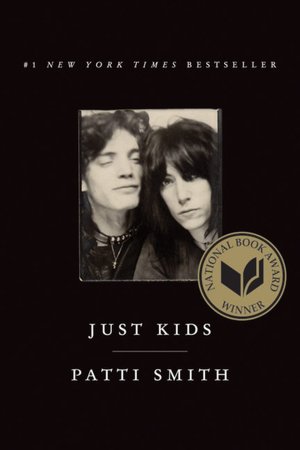
I had the great privilege of hearing Patti Smith read from Just Kids at The New School a while back.  She read from the priceless scene in which she meets Allen Ginsberg at an automat.  I’m quite fond of kitsch automat culture, and used to frequent the one down on Saint Marks when it was still around.  Basically, an automat is fast fast food: you don’t even have to stand in line to order a burger and fries; you just slip a few quarters into a vending machine and out comes surprisingly delicious warm food.  Whenever I ate at the Automat, I felt like I was a character straight out of The Jetsons.  I was hooked on their mac-and-cheese egg rolls.  The resurgence of The Automat only stuck around for a few years, but as a whole they were big a few decades ago.  When Patti Smith was in her early twenties, scraping by to survive, she fed a few quarters into an automat to get some quick, cheap food.  When she turned the knob she discovered the price had gone up.  The machine had sucked up her meager coins and she was about to go hungry when Allen Ginsberg offered her the additional cents and even paid for a cup of coffee.  They get to talking, she knowing perfectly well he is the great poet, and he thinking the whole time she is a handsome boy!

I knew for a long time that I wanted to read Just Kids.  It had all the makings of a book I knew I’d love—New York City, Beat poets, artists, The Hotel Chelsea, Andy Warhol, music, and memoir.  The only problem was that I was inundated with reading assignments for classes and bills to pay for tuition and books for said classes.  Just Kids wasn’t constantly checked out of the library, which was probably for the best because I didn’t have the time to read it anyway.  But!  I have at last read it—savored it.  I so greatly enjoyed Smith’s poetic voice and her obsession over Rimbaud.  I liked reading about Patti Smith and Robert Mapplethorpe’s relationship, their strivings toward art, their fashion!  And I was so happy to discover that in addition to the Allen Ginsberg connection, Smith also befriended poet Gregory Corso, whose poetry I revere.

Patti Smith also began a relationship with Sam Shepard, and they end up collaborating on a play together.  I find great reassurance in reading their exchange.  Smith was nervous about the prospect of improvising during the play, and on page 185 of the first edition (HarperCollins, 2010), Smith asked, “What if I mess it up?  What if I screw up the rhythm?”  Shepard replied:

“You can’t,” he said.  “It’s like drumming.  If you miss a beat, you create another.”

From Just Kids I learned a lot about being part of the “scene,” which comes across as important to the evolution and success of one’s career.  However, this little line spoken by Sam Shepard is a solid reminder that in writing and in life the beat goes on.  If you miss a beat, you improvise and create another.

Jeremy Begbie: Using Musical Styles to Find a Writing Style

13 Mar

On Saturday I attended a luncheon with Jeremy Begbie, amazing jazz pianist and theologian, and then in the evening heard him speak as part of the Gospel & Culture series.  As a writer, I find inspiration everywhere and feel like I can learn so much from other arts disciplines.

Begbie really got me thinking about:

  • tension and resolution
  • abundance within containment
  • improvisation
  • the unexpected
  • discordance

He said art should serve a good end but warned against sentimentality.

Here’s how Redeemer’s Center for Faith & Work promoted the event:

What difference can the announcement that Jesus is raised from the dead make to the arts and artists today? Begbie will show how the arts have unique powers to unlock the revolutionary nature of this event, and in turn, how the resurrection revolutionizes the arts. The presentation will include extensive performance.
Jeremy BegbieJeremy Begbie is the inaugural holder of the Thomas A. Langford Research Professorship in Theology at Duke Divinity School, North Carolina, and founding Director of Duke Initiatives in Theology and the Arts. He teaches systematic theology, and he specializes in the interface between theology and the arts. His particular research interest is the interplay between music and theology. He is also Senior Member at Wolfson College, Cambridge, and an Affiliated Lecturer in the Faculties of Divinity and Music at the University of Cambridge. Previously he has been Associate Principal at Ridley Hall, Cambridge, and Honorary Professor at the University of St Andrews where he directed the research project, Theology Through the Arts at the Institute for Theology, Imagination and the Arts. He is author of a number of books, including Voicing Creation’s Praise: Towards a Theology of the Arts (T & T Clark); Theology, Music and Time (CUP), and most recently, Resounding Truth: Christian Wisdom in the World of Music (Baker/SPCK) which won the Christianity Today 2008 Book Award in the Theology/Ethics Category. He is a professionally trained and active musician, and has taught widely in the UK, North America and South Africa, specializing in multimedia performance-lectures.

Begbie played snippets of classical music to show how discordance can be beautiful because it is unexpected.  Not only did it make me want to listen to more live classical music, but it inspired me to be more playful stylistically with my writing.  It’s fun to experiment with how unexpected twists and turns that leave the reader turning the page to find out what happens next.

My Festival of Faith & Writing Festival Circle: Holy Grounds — The Role of Place in Your Spiritual and Literary Life

9 Mar

As I mentioned a while back, I’ll be leading a Festival Circle this year at the Festival of Faith & Writing held at Calvin College.  It’s a tremendous honor to have been selected to facilitate a discussion group at this prestigious writing conference, where so many authors I admire will be speaking.

In case you’re unfamiliar with what Festival Circle is, here’s how FFW describes it:

This year, we are once again offering Festival Circles, small groups that will meet at least two times during the Festival to discuss a topic of common interest. Each circle, composed of approximately 12–15 attendees and led by a Festival participant, will meet during Thursday dinner and Saturday lunch. Because the circles are scheduled to meet at the same time, it’s possible for attendees to participate in only one.

They go on to explain its purpose:

We hope that Festival Circles will give you a place to connect with other attendees, and to deepen and extend your experience of the Festival.

I want to share with you the description of the Festival Circle that I’m hosting:

Holy Grounds: The Role of Place in Your Spiritual and Literary Life
By looking at what the Bible has to say about the setting of a story, this circle will encourage participants to carefully consider the role of place in their writing, and challenge them to see how different locations affect a story’s style and content.

Facilitator: Stephanie Nikolopoulos
Bio: Stephanie Nikolopoulos (www.StephanieNikolopoulos.com) has worked in book publishing in Manhattan for ten years, is the visual arts editor for Burnside Writers Collective, and is a co-leader of the Writers Group at the Center for Faith & Work at Redeemer Presbyterian Church in New York; her writing has appeared in magazines, newspapers, and books across the country.

I’m genuinely passionate about the multi-faceted subject of place.  I wrote about place for my undergrad thesis at Scripps College, my Burnside Writers Collective column Church Hopping talks about the architecture of unique and beautiful places, the travelogue I wrote an introduction to obviously has a strong emphasis on place, the nonfiction book Burning Furiously Beautiful I’m co-authoring describes how the landscape and history of place affected one of America’s greatest novels, and the memoir I’m writing deals very much with place. My resume aside, I love traveling.  I moved out to California for college without ever even visiting the state first.  I’m the child of an immigrant so place has always played an important role in my identity, in my understanding of who I am and where I come from.

Place isn’t always about a physical place, though.  Place can be a mood, a mental space, a spiritual space.  Place can be about a journey, whether that means hopping a train, opening a book and getting lost in the imagination of an author, being moved to tears, learning something about yourself, understanding the world better, or opening yourself up to a new relationship.  A journey from point A to point B isn’t always a single straight line.  This is true for a traveler (even Jack Kerouac had an infamous setback when he first set off on the road), for a writer (hello, thesis draft number 452), or for a person of faith (Paul went around killing Christians before he went on the road to Damascus and saw the light; as a boy David may have killed Goliath but as an adult he committed adultery … and had the woman’s husband killed; Peter adamantly denied even knowing Christ and then became a martyr).  As the old Paula Abdul song goes, two steps forward, two steps back….

With all that in mind, know that I am on a journey too.  I simply want to walk alongside other writers and talk about the meaning of place in all areas of our lives.  If you would like to join my Festival Circle or any of the others, you can find out how to do so here.

Behind the Curtain: A Magazine Roundtable

8 Mar

Everyone complains about the cost of living in New York City, but I’ve never lived in any other town or city that offered such amazing free events.  It was a Leap Day miracle when McNally Jackson’s Bookstore held a free literary event featuring the esteemed literary editors of top magazines.  Behind the Curtain: A Magazine Roundtable brought together Deborah Treisman of The New Yorker, James Marcus of Harper’s, and Ellah Allfrey of Granta for a conversation moderated by Granta editor John Freeman.


And like all worthwhile free events, this one was PACKED!  Even many who got there early had to stand in the aisles of bookshelves because there were so many attendees.  Those who got there late listened from the stairs.  It was worth it.

The editors discussed using interns—MFA candidates, mind you, not undergrad students—to read through the slush pile (unsolicited manuscripts).  The result was that some interns turned away some really great work before the editors had a chance to see it, while other interns erred on the side of caution, passing too many candidates along to the editors.  I’ve read through slush piles for my grad school’s lit mag and for the children’s book department at my office, and what struck me was how patient the panelists were.  Reading through slush piles is a lot like panning for gold: most of it is just dirt that should be tossed out.


The panelist of editors were genuinely excited about working with new authors—even to the point of overlooking cover letters with the nebulous “Dear Editor/Reader.”  At one point, Freeman asked Granta’s associate editor Patrick Ryan, who was in the audience, to come up and share heartfelt stories of giving first-time contributors their big break.  For those looking to break into lit mags, it’s reassuring to know that the editors really do want to find great, undiscovered writers and are even willing to go through several rounds—one editor mentioned an astounding twenty-one!—of revisions to get a solid piece of work from a writer just starting out in his or her career.

Treisman, Marcus, and Allfrey also talked about what sort of writing they’re looking for, and while responses and desires ranged it was clear that they’re looking not only for high-quality writing (in fact, they admitted to sometimes having to turn away well-written pieces simply because the timing wasn’t right) but for writing that is unique, that covers an area that is has been underserved.  This includes writers from areas of the world where literature isn’t being promoted in the United States or England.


The magazine editors addressed the VIDA controversy, admitting that magazines are failing when it comes to representing women writers.  Treisman said there is a generational divide.  Older women weren’t submitting work to The New Yorker at the same rate as their male counterparts.  Today’s younger generation of women writers, though, are more apt to submit their work to bigger magazines earlier on in their writing careers.  The practical application here is that women writers should be submitting their work to big-name publications.

The big take-away from the night was that the short-story form is not dead.  As someone with a book publishing background, I’ve been taught to be leery of short-story collections.  They just don’t sell.  I’ve repeated this to hopeful writer friends of mine, perhaps crushing their tender, creative spirits.  However, it was clear from the Behind the Curtain discussion that, though the amount of publications have diminished, there are still beloved magazines publishing works of short fiction.  A lot of these magazines also publish personal essays.