Brunch with Artists & Entertainers at the Lotos Club

7 May

LotosA

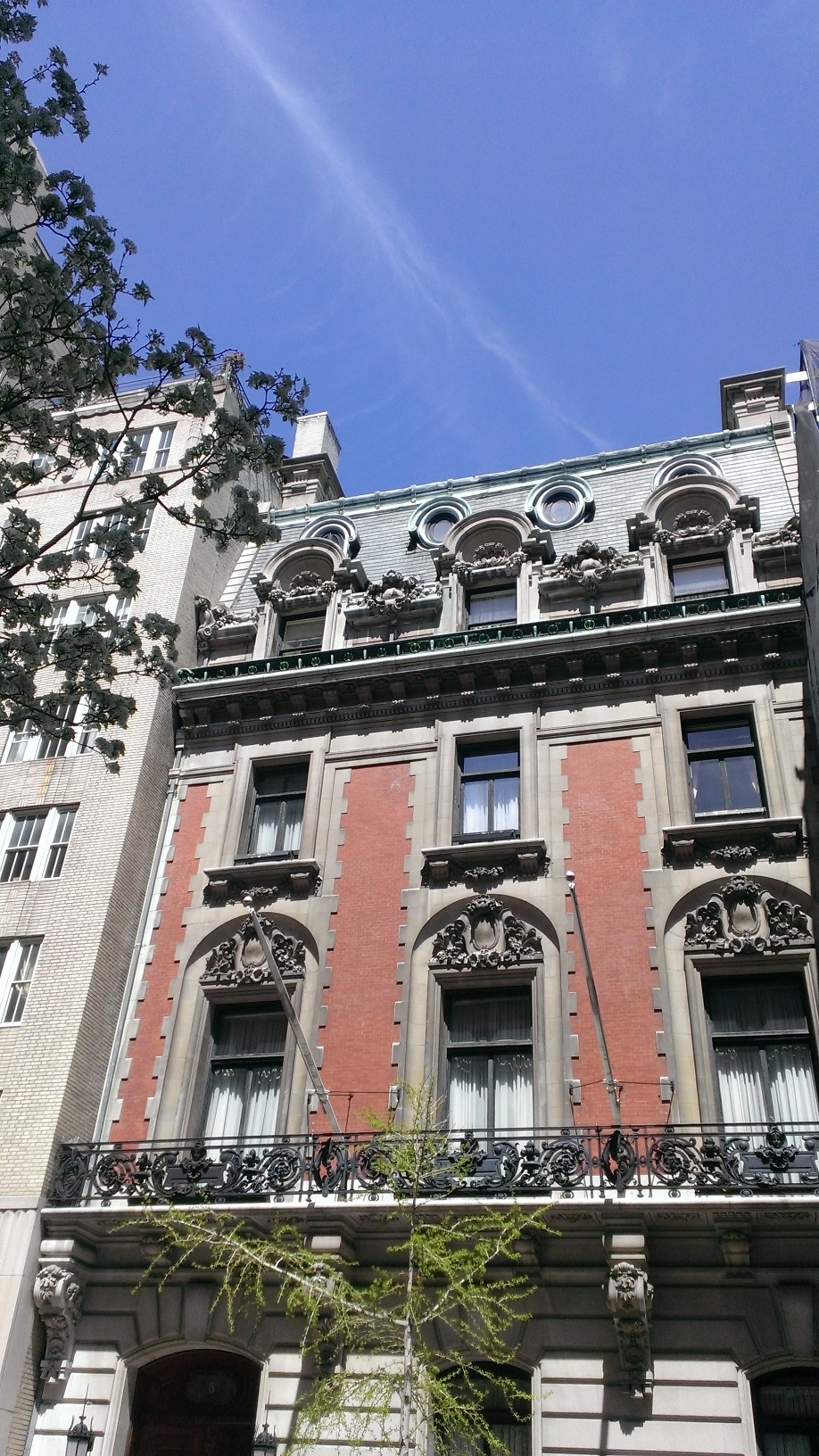
Last month Scripps College invited me to attend a lovely brunch amongst friends and fellow alumni at The Lotos Club:

Alumnae Panel: The Arts and Entertainment Scene in NYC

Mitra Abbaspour ’99, Associate Curator, The Museum of Modern Art

Barbara Barna Abel ’84, Casting Director and Coach, ABEL intermedia

Elizabeth Robbins Turk ’83, Artist, 2010 MacArthur “Genius” Award Winner

Moderator: Veronica Gledhill ’06, Senior Fashion Market Editor, New York Magazine, Online and 2012 Outstanding Recent Alumna

with an update on the College
from President Lori Bettison-Varga

Oh, how I wish they’d do more of these. It was truly inspiring to hear these women tell their stories. They were so impressive yet so humble and honest in talking about their individual journeys as artists.
Lotos1

Lotos2

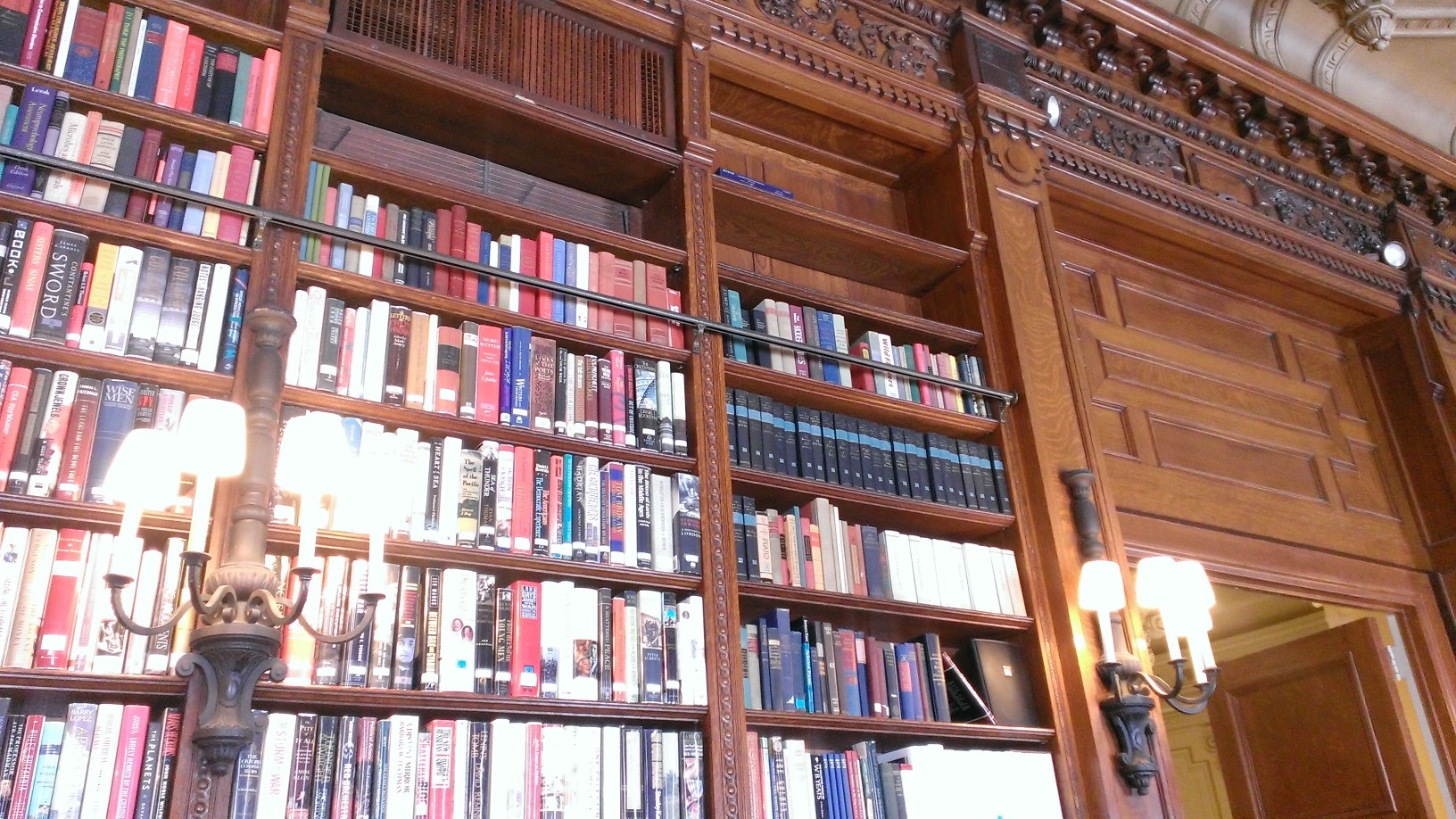
Elizabeth had secured The Lotos Club for the event, and I could’ve sat in that sumptuous library all day long. But I guess that was the point:

The selection of the name The Lotos Club was to convey “an idea of rest and harmony.” The spelling of Lotos comes from Alfred Lord Tennyson’s poem, The Lotos Eaters, two lines of which were selected as the motto of the Club:

 In the afternoon they came unto a land
In which it seemed always afternoon

The endless afternoon setting provided the ideal atmosphere to indulge in creative and stimulating thought and conversation.

Of course, as a good Greek, I should point out that Tennyson’s poem was inspired by The Odyssey.

The circular staircase was breathtaking. I had to stop and take a photograph.

Lotos3

The Lotos Club has an impressive history and has counted amongst its members President Taft, Mark Twain, and Oscar Wilde’s brother Willie.


Clip: Green Wedding Shoes

7 May

Resource3


The lovely editors at Resource Magazine asked me to cover a story on indie, DIY weddings for their Spring 2013 issue. I got to interview Jen Campbell of the blog Green Wedding Shoes, who is so sweet and creative.

You can pick up a print copy at your local Barnes & Noble or keep sitting where you are right now and get the digital edition.

Friday Fun Fact: You Will See Lots of Candles This Weekend

3 May

candle-300x225

You might think Easter already happened back in March, but if you’re Greek you know it’s this weekend. And with Greek Orthodox Easter comes the sight of men who don’t grow mustaches ironically and women who still believe in using lots of Aquanet carrying candles with little red wax-catching cups.

If you missed it last year, here’s my story about this tradition and wondering how to get a lit candle home if I can’t take an open flame on the subway.

David Amram Performs in NYC Twice Next Week!

2 May

Amram

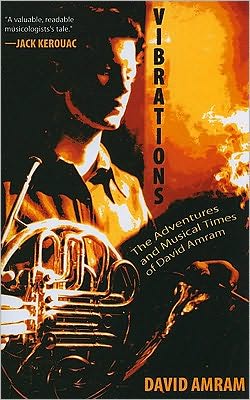
In case you missed it in the comments section last week, David Amram dropped and mentioned he’ll be reading at Literary Manhattan’s 2013 Spring Symposium. David is one of my all-time heroes–exceedingly talented and generous. I never get tired of listening to him play music–and when I say “play,” it really does feel like play, like he’s having a ball going from instrument to instrument, enjoying the craft of making music. He’s also a great storyteller. He has stories about everyone: Jack Kerouac, Allen Ginsberg, Gregory Corso, Dizzy Gillespie, Charles Mingus, Dimitri Mitropoulos, Johnny Depp, the list goes on.

Here’s the info for the 2013 Spring Symposium:

May 5, 2013

299 Madison Ave, New York, NY 10017

12 Noon to 3:30PM

$20 suggested donation


He didn’t mention it, but he’ll also be playing at Cornelia Street Cafe the following evening. Here are those details:

May 6, 2013

29 Cornelia Street, New York, NY  10014

$20 (includes a drink!)


Feasting on Flowers to Celebrate the Month of May

1 May

flower

Kalo mina! It’s the first day of May–or as we Greeks call it, Protomaia or the Feast of the Flowers. Here in New York it’s been a long, long winter. Every time it started to warm up, it would start snowing. After we had one big snowstorm, a robin, that ephemeral symbol of spring, chirped on top of a construction rod as if to say it was tired of the cold weather too. Now, at last the days are longer, and pink flowers are blooming in Spanish Harlem.

During the winter, people always tell me that they’re sure I must wish I was in Greece during the cold season. Yes, we have palm trees in Greece–my dad is obsessed with plants!–but the country doesn’t have a tropical climate year-round. It actually snowed in Greece this year, as you can see from Yannis Behrakis’ stunning photos of a snow-topped Acropolis.

Perhaps this year, more than ever, Greeks are celebrating May Day. Traditionally heralded by picnics and flower collecting, Protomaia announces the start of spring. And with spring comes rebirth. A new beginning. A fresh start.

We could all use that.

The Quotable Greek: Gain Their Reputation

29 Apr

“Skillful pilots gain their reputation

from storms and tempest.”

~ Epicurus

Happy 144th Birthday, Bertram Goodhue!

28 Apr


American architect Bertram Goodhue was born on this day in 1869.  I went Church Hopping to the Church of the Intercession in Washington Heights and St. Bartholomew’s Episcopal Church in Midtown,  two churches he co-designed in New York.

Extra! Extra! Read all about it!  In 1896, Goodhue designed a typeface for Cheltenham Press.  Called Cheltenham, the typeface is the one used for the headline for The New York Times.


Fun Fact Friday: The First AOL Instant Message Was Sent by a Greek

26 Apr

ted

So here’s a fun fact I just read this week, via Yahoo: Ted Leonsis was the very first person to ever sent an AOL instant message.

If you don’t know who Ted Leonsis is here’s a quick run-down of just some of his achievements:

  • He was a senior AOL executive for 13 years
  • He is the co-CEO of Groupon
  • He is a founding member of the Revolution Growth Fund
  • He is the majority owner of the Washington Capitals, the Washington Mystics, and the Washington Wizards
  • He’s on the Board of Directors for American Express
  • He produced the award-winning documentary Nanking
  • He is the author of The Business of Happiness
  • He was born in Brooklyn, NY, and raised in Lowell, MA
  • He currently lives in Potomac, MD, at Marwood, previously owned by Franklin Roosevelt, Joseph P. Kennedy, and Al Gore
  • He mentors through the Hoop Dreams program

Successful people are often thought of as ruthless and privileged, but Ted Leonsis is a self-made millionaire who follows his heart. This is the promotional copy for The Business of Happiness:

When the plane he was on prepared for a crash landing, Ted Leonsis asked himself the crucial question, If today is my last day on earth—will I die happy?. . . and realized the answer was no. Despite having achieved massive business success—he was a self-made multi-millionaire at the age of twenty-seven—he realized he would die unfulfilled. He told God that if he survived, he would turn his life around, give back more than he took, and pursue happiness. After walking off that plane, he got to work.

And while I mentioned Nanking above, I should also point out that his other documentaries are equally about social justice. Kicking It is a documentary narrated by Colin Farrell about the issue of homelessness, and A Fighting Chance tells the motivational story of Kyle Maynard, a wrestler who was born without arms and legs.

Ted Leonsis and the stories he helps get to the public are examples that no matter what our circumstances we are all capable of achievement.

Clip: Trading Text for Visuals: Poets As Visual Artists

25 Apr

blake-300x211

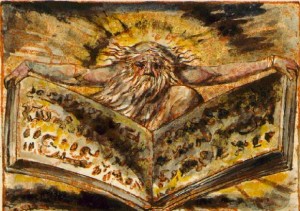
I had a really fun time putting together an article for Burnside about poets who are also visual artists. From the time I was a little child, I have been drawn to both the literary and visual arts worlds. Even in undergrad these two loves of mine co-mingled, as I majored in English and minored in studio art. My undergrad thesis looked at the relationship between writers and artists in New York in the ’40s and ’50s. It didn’t end there. While obtaining my MFA in creative writing, I took a poetry class on the collaborations of the poets and artists of the New York School. My article touches on some of the poets I’ve studied over the years, with of course a focus on the people commonly associated with the Beat Generation, but I pushed myself to find other examples as well.

Our cannons are so steeped in “dead white males” that it was important to me in stretching my knowledge to seek out poet-artists who did not play into that categorization. I was delighted to discover that Elizabeth Bishop painted.  Two years ago it was the hundred-year anniversary of the former Poet Laureate of the United States’ birth, so there were many readings and events to honor her work. Somehow, though, I missed the fact that she was a painter. Maybe it’s because she herself did not take it all that seriously, as I point out in my article. I happen to think they’re delightful, though.

A contemporary poet-painter I am quite interested in researching more about is Babi Badalov. As my article touches on, he mixes languages in his works, a result of having moved a lot between cultures to avoid persecution for his controversial visual poetry. As a writer, language is something I hold dear. My vocabulary is a key to who I am: the words I’ve picked up come from my mother’s midwestern phrasing and my father’s Greek tongue as well as the vernacular of northern New Jersey and the jargon of the institutes of higher learning I attended. I’ve found the preservation of endangered languages so critical because language is about identity. The idea that a poet has no language and has many languages intrigues me. When does Badalov express himself in his native Azerbaijani language and when in Russian? Is his use of English a political act?

In my exploration of the Beats as visual artists, I could have easily waxed on and on. In fact, I did not go into any detail about Jack Kerouac’s artwork, even though he has been the subject of much of my studies. If this is something you’re interested in, leave a note in the comment section below, and I’ll write something up on this. What I did try to do for the Burnside article, though, was show that the Beats were following a rich tradition that came long before them. I point to William Blake and the Chinese and Japanese calligraphers as forerunners and influencers on the work of Allen Ginsberg and Phillip Whalen, for example.

My article was limited to just a few examples, a small taste of the artwork of poets. I’d love to hear who you think should be added to the list. Maybe I’ll make a part II!

John Muir, Teddy Roosevelt, and Jack Kerouac Write about Nature

23 Apr

muir

“Between every two pines is a doorway to a new world.”

~ John Muir

It was conservationist John Muir‘s birthday over the weekend and yesterday was Earth Day. A few years ago, I had the great pleasure of editing a reissue (not the one pictured above) of his My First Summer in the Sierra and writing the flap copy, and I quickly became absorbed in the poetic language he used to described the beauty of the earth. If you’ve been following my blog for a while, you might have caught on that even though I absolutely love the glittering sidewalks and Art Deco skyscrapers of New York City, I am just as comfortable out in nature. (It’s the suburbs I can’t stand!)

Muir was an early advocate of nature preservation and founded the Sierra Club. He used to hang out with Teddy Roosevelt, whom I’ve also written about, and they’d go off exploring Yosemite. Can you imagine any of our recent presidents going off into the woods with someone we’d today probably label a hippie? It was this very friendship between Roosevelt and Muir that led to America’s natural beauty being preserved. Interestingly enough, Muir and Roosevelt were both rather talented writers, and their works are travelogues through nature.

Jack Kerouac referenced John Muir in The Dharma Bums, a novel that makes you want to drop everything and go sit in the woods for a great long while. He also wrote about Muir in an essay entitled “The Vanishing American Hobo“:

John Muir was a hobo who went off into the mountains with a pocketful of dried bread, which he soaked in creeks.

Kerouac was incredibly well read and would often read history books about America before or during his road trips. As “The Vanishing American Hobo” indicates, Kerouac saw the landscape and economy of America changing before his eyes as he traveled. The era he lived in was the beginning of the great highway system, and he saw why Muir’s conservation efforts were so important.

We tend to associate road tripper Jack Kerouac with cars and bars, but he actually loved nature. On the Road is essentially a glowing account of America’s landscape, the melon patches, the sun-drenched sky, the ragged mountains. In Big Sur, we see him sit out and just stare at the ocean, absorbed in nature. His obsession with animals gives us a poignant insight into his psyche.

We often put labels on people, and to see literature through critics’ lenses. What if we read John Muir’s work as literature instead of viewing it as nature writing? What if we read Jack Kerouac’s work as nature writing instead of counter-cultural novel?

What if we saw a story in a blade of grass? What if we listened really hard to the call of a bird?

You might also be interested in this article I wrote a few years about John Muir for Burnside Writers Collective:

And in this clip of me reading from Burning Furiously Beautiful about Jack Kerouac’s empathy toward animals.