Tag Archives: Allen Ginsberg

Bernadette Sees Visions

11 Feb

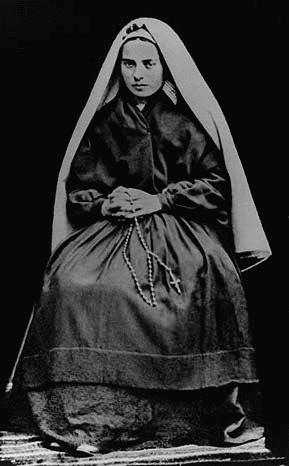
Bernadette_soubirous_2_publicdomainimage via Wikipedia

While out collecting firewood near a French grotto near Massabielle, on February 11, 1858, a fourteen-year-old miller’s daughter by the name of Bernadette Soubirous had a vision of the Immaculate Conception. Some people believed her; others did not. Bishop Laurence questioned her and believed, and today Bernadette is recognized as a saint. The message she had heard from the Immaculate Conception was to build a chapel in the grotto. Today there are many chapels in Lourdes.

There is also a grotto devoted to Our Lady of Lourdes in Lowell, Massachusetts. Jack Kerouac wrote about it, and Allen Ginsberg, Gregory Corso, and Bob Dylan have visited it when stopping by the Beat novelist’s hometown.

I had the good fortune of visiting Lowell’s Grotto of Our Lady of Lourdes with eminent Beat scholar Roger Brunelle, who shared some of his own stories. I wrote about it in my Church Hopping column for Burnside Writers Collective. Two years later I visited again, this time with my Kerouac biography coauthor Paul Maher Jr.


Happy 88th Birthday, Neal Cassady!

8 Feb

firstthird

Neal Leon Cassady was born on this day in 1926 in Salt Lake City, Utah. His mother, Maude Jean (Scheuer), passed away when he was just ten years old, and his father, Neal Marshall Cassady, went on to raise him on the mean streets of skid row in Denver, Colorado. With an alcoholic father, Cassady soon turned to a life of crime, and was arrested when he was only fourteen years old. At nineteen years old, and fresh out of prison, Cassady married a vivacious fifteen year old by the name of LuAnne Henderson. Together they set out for New York City in 1947 to meet up with a Denver friend who had gone on to study at Columbia. It was through Hal Chase that Cassady met two other young guys who studied at Columbia: Jack Kerouac and Allen Ginsberg. His life would forever change.

Returning to Denver, Cassady met Carolyn Robinson, a young teaching assistant at the theater arts department of the Denver Art Museum, whom he married, after divorcing LuAnne. By 1950 he was in a bigamous relationship with Diane Hansen. Cassady’s romances, command of a steering wheel, and zeal for life inspired Kerouac’s writing, and he became Dean Moriarty in On the Road and the title character of Visions of Cody.

What is sometimes overlooked, though, and which I want to celebrate on his birthday is Cassady’s own writing. It was Cassady’s great “Joan Anderson letter” that took Kerouac’s writing to the next level, inspiring him to become more confessional and spontaneous. Although he died in 1968, Cassady also left us with his own memoir, The First Third. Here’s how it’s described on Barnes & Noble:

Immortalized as Dean Moriarty by Jack Kerouac in his epic novel, On the Road, Neal Cassady was infamous for his unstoppable energy and his overwhelming charm, his savvy hustle and his devil-may-care attitude. A treasured friend and traveling companion of Kerouac, Allen Ginsberg, William Burroughs, and Ken Kesey, to name just some of his cohorts on the beatnik path, Cassady lived life to the fullest, ready for inspiration at any turn.

Before he died in Mexico in 1968, just four days shy of his forty-second birthday, Cassady had written the jacket blurb for this book: “Seldom has there been a story of a man so balled up. No doubt many readers will not believe the veracity of the author, but I assure these doubting Thomases that every incident, as such, is true.”

As Ferlingetti writes in his editor’s note, Cassady was “an early prototype of the urban cowboy who a hundred years ago might have been an outlaw on the range.” Here are his autobiographical writings, the rambling American saga of a truly free individual.

For a critical analysis on the “facts” of The First Third, check out David Sandison and Graham Vickers’ Neal Cassady.

While the salacious details of his personal biography are important perhaps to understanding where he came from and his perspective on life, they should not be confused for the totality of who he is and what he offered the world. Contrary to his wild persona, his prose is tame. He methodically plots out his lineage, trying his best to adhere to some intangible idea of what it means to sound literary. Yet it’s also raw. Cassady refuses to conform to the standard rules of grammar, instead allowing his words to gush over the page.

In honor of Cassady’s birthday, read some of his work! It’s the best way to understand the man behind the myth.

What do you think of Neal Cassady’s writing style? Do you have a favorite biography about Cassady?

Who Is Rollo Greb in “On the Road”?

6 Feb

contact

Some names are practically synonymous with Jack Kerouac’s On the Road: Dean Moriarty/Neal Cassady, Old Bull Lee/William S. Burroughs, and Carlo Marx/Allen Ginsberg, for sure.

But what about Rollo Greb? Who was he?

The character Rollo Greb in On the Road was based on Alan Ansen. Kerouac renamed him in other books. He was Irwin Swenson in Visions of Cody and Book of Dreams, Austin Bromberg in Big Sur, and Amadeus Baroque (love that name!) in Doctor Sax. Burroughs called him AJ in Naked Lunch and Port of Saints. Gregory Corso named him Dad Deform in American Express. (See Beat Book Covers’ excellent character key.)

But who was he in real life?

Born on January 23, 1922, and raised on Long Island, Ansen attended Harvard University, which incidentally was also William S. Burroughs’ alma mater.

After college and back in New York City, in 1948, Ansen became a research assistant/secretary to W. H. Auden. The English poet had come over to the US with author Christopher Isherwood (The Berlin Stories) in the first month of 1939. Auden dedicated his 1950 book of lectures The Enchafèd Flood to Ansen. Based on the notes he took while working with the poet, Ansen published Table Talk of W. H. Auden. Here’s the write up on Amazon:

In New York, between 1946 and 1948, the scholar and poet Alan Ansen made rapid notes of Auden’s inimitable conversation. This book is a record of Auden’s private, offhand and sometimes wayward remarks and opinions about art, literature, music, politics, religion and sexuality.


Sounds like a must read! I’m adding it to my Goodreads list.

By the time Ansen was working for Auden, Kerouac was already in the early stages of the work that would become On the Road. Poet Ted Joans went so far as to say:

Without Alan Ansen there would be no William Burroughs.

Ansen himself went on to become a poet and playwright, but never reached the same heights of fame that his mentor and Beat contemporaries did.

If you’re looking to read one of Ansen’s works, Contact High is a good place to start. Here’s the copy from Barnes & Noble:

“Alan Ansen’s first book,” James Merrill has noted, “Disorderly Houses (1961), dedicated to both W. H. Auden and William Burroughs, was also his last to be published commercially. Since then this prolific and unpredictable poet’s work has been available only in editions of his own devising, distributed to friends at his own caprice. As one of the happy few, I can report that his gifts remain as brightly unnerving as ever.”
Though perhaps best known as the model for some of the most flamboyant characters in Beat fiction (Rollo Greb in Kerouac’s On the Road, A. J. in Burroughs’s Naked Lunch, Dad Deform in Corso’s American Express) and as Auden’s secretary (he helped Auden with the syllabification of The Age of Anxiety), Alan Ansen is an accomplished poet in his own right. Having affinities with both the Beats and the New York school of poets, Ansen fuses Beat sensibility with formalist rigor. Contact Highs is the first comprehensive collection of his poetry, and includes a biographical introduction, an afterword by poet Rachel Hadas, and a bibliography of Ansen’s elusive works.

“Alan Ansen occupies a specialized evolutionary niche in twentieth-century letters, and his poetry has unjustly been too long obscured by its unfashionable classicism and its author’s self-effacing stance towards a poetic career. His writings achieve the scarcely possible: transmuting existence into life.” (William Burroughs)

“Ansen is the most delicate hippopotamus of poets with his monstrous classical versifications—he gets conversational fatness ‘into stricter order’ by use of weird echosyllabics, polyphony, strict rhymeless pindarics, self-annihilating sestinas, mono-amphisbaenic and echo rhyme, skeltonics, versicles & alcaics coherent Palindromes & such like master eccentricities—a hangup on Forms which interestingly pushes academic models beyond polite limits into the area of lunatic personal genius—This is an amazing book, with many sad poems.” (Allen Ginsberg)

“Whatever the styles, the cadences are powerfully relentless and informed by an intellectual complexity rare today. As witty as O’Hara, Ansen also plunges into the depths of the human condition. This may be one of the more significant poetry publications of the decade; four stars.” (Library Journal)

“[Contact Highs] careens in voice from a tone of bravado—an unwavering insistence on seeing the universe in all its mockery and injustice—to one of unabashed tenderness. And such conflict implies the poetry’s central tension: a desire to be immersed in life’s drama, rather than merely to judge it. Ansen . . . is a vivid creator of worlds with words, but never too sober in his verbal wizardry. Sly and wild in the manner of Gregory Corso or Allen Ginsberg, the poet marries exultant anarchy to traditional forms. Dismissing ‘shameless lyrists’ who ‘warble their hearts’ content,’ like an ‘eerie oddity’ Ansen ‘retails his uniqueness’ with some bitterness but more brio, and many readers will be grateful.” (Publishers Weekly 10-20-89)

“Ansen’s poetry . . . joins Apollonian reserve and formal skill to Dionysiac drug taking and homoeroticism. Between those poles, however, he creates a space of truly living poetry. Recommended.” (Booklist 10-1-89)

“Beautifully wrought formal (though outrageous) verses. . . . His poems speak for themselves, combining playfulness with astonishing erudition, in the fashion of the better poets of what was in my mind ‘the Ginsberg nucleus.'” (Carl Solomon, American Book Review Nov-Dec 90)

Just goes to show you, just because the other characters in On the Road became more notorious doesn’t mean the lesser-known characters aren’t equally as fascinating.

“That Rollo Greb is the greatest, most wonderful of all. That’s what I was trying to tell you – that’s what I want to be. I want to be like him. He’s never hung-up, he goes every direction, he lets it all out, he knows time, he has nothing to do but rock back and forth. Man, he’s the end! You see, if you go like him all the time you’ll finally get it.”

~On the Road

100 Facts on William S. Burroughs for His 100th Birthday

5 Feb

burr2

The title say it all, and I’ve got a lot of ground to cover so let’s just get on with it!

      1. Burroughs was born on February 5, 1914, which would make him 100 years old today!
      2. But he passed away on August 2, 1997
      3. The S. in William S. Burroughs stands for Seward
      4. Burroughs is actually Burroughs II
      5. Burroughs’ father’s name was Mortimer Perry Burroughs
      6. Mortimer ran a gift shop called Cobblestone Gardens
      7. The II comes from his grandfather
      8. William Seward Burroughs I was the founder of the Burroughs Adding Machine company
      9. William S. Burroughs II named his son William Seward Burroughs III
      10. Burroughs’ mother’s name was Laura Hammon Lee
      11. Burroughs’ pen name was William Lee
      12. Burroughs’ maternal grandfather was a minister
      13. In the ’60s, Burroughs joined and left the Church of Scientology
      14. In 1993 he became a member of the Illuminates of Thanateros
      15. Laura Hammon Lee’s family claimed to be related to Confederate General Robert E. Lee
      16. Burroughs’ uncle was Ivy Lee, the founder of modern PR
      17. His family was not very affectionate
      18. He was born in St. Louis, Missouri and lived on Pershing Avenue in the Central West End section of St. Louis
      19. He attended the private school John Burroughs School, named after the naturalist
      20. Burroughs was class of ’31
      21. Burroughs’ first publishing achievement was at the school when his essay “Personal Magnetism” was published in 1929 in the John Burroughs Review
      22. He didn’t graduate from John Burroughs School
      23. On its website, John Burroughs School calls William S. Burroughs a “controversial author”
      24. After John Burroughs School, he attended Los Alamos Ranch School, an elite boarding school in New Mexico
      25. Another famous author later attended Los Alamos Ranch School: Gore Vidal (born 1925)
      26. At the boys boarding school, Burroughs kept a diary about his attachment to another boy at the school
      27. Burroughs was a virgin through high school
      28. Burroughs dropped out of Los Alamos too
      29. Next up, he went to Taylor School in Clayton, Missouri
      30. From there, he went to Harvard to study art
      31. At Harvard, he was part of Adams House
      32. Back home on summer break, Burroughs became a cub reporter for the St. Louis Post-Dispatch
      33. His beat? Police docket
      34. Surprisingly, he hated the job and refused to cover gruesome stories
      35. That summer he lost his virginity
      36. He shed his virginity to a female prostitute
      37. It was back at Harvard that he was introduced to gay culture when he traveled to New York City with his wealthy Kansas City friend Richard Stern
      38. Stern was apparently a bit like Neal Cassady when it came to driving: he drove so fast that Burroughs wanted to get out of the car once
      39. Burroughs graduated from Harvard in 1936
      40. After he graduated, his parents gave him $200 a month
      41. After Harvard, Burroughs went to Vienna to study medicine
      42. There he became involved in the gay subculture
      43. He also met his first wife there, Ilse Klapper, a Jewish woman fleeing the Nazis
      44. Burroughs and Klapper were not romantically involved, but he married her in Croatia so she could move to the US
      45. After they divorced in New York, they remained friends
      46. By 1939, he had become so obsessed with a man that he severed his own finger — the last joint of his left little finger, to be exact
      47. In 1942, Burroughs enlisted in the US Army
      48. When he became depressed that he was listed as 1-A Infantry instead of officer, his mother called a family friend, a neurologist, to get him a civilian disability discharge due to mental instability
      49. It took five months for him to be discharged, and he waited at Jefferson Barracks, near his family home
      50. Afterward, he moved to Chicago
      51. In Chicago, the Harvard grad became an exterminator
      52. The Burroughs family was friends with another prominent family, the Carrs
      53. William S. Burroughs II was eleven years old when Lucien Carr was born
      54. During primary school in St. Louis, Burroughs had met David Kammerer, who was three years older than him
      55. Kammerer had been Carr’s youth group leader and become obsessed with him, following him to the University of Chicago
      56. When Carr fled to Columbia University in New York City, Kammerer followed — as did Burroughs, who moved a block away from Kammerer in the West Village
      57. Carr met Allen Ginsberg at Columbia and introduced him to Burroughs and Carr
      58. Burroughs met Joan Vollmer Adams around this time, and he moved in with her
      59. In the summer of ’44, Carr killed Kammerer with his Boy Scout knife, and then went to Burroughs — Kammerer’s friend — for help
      60. Burroughs flushed Kammerer’s bloody pack of cigarettes down the toilet and told Carr to get a lawyer and turn himself in, but instead Carr sought out help from Jack Kerouac
      61. Burroughs and Kerouac were arrested as material witnesses, but Burroughs’ father posted bail for him (Kerouac married Edie Parker to get bail money)
      62. Burroughs became involved in drugs around this time, becoming addicted to heroin
      63. When Burroughs got arrested for forging a prescription, he was released to his parents in St. Louis
      64. When he was finally allowed to leave, he went back to New York City for Joan Vollmer Adams, and together, with her daughter, moved to Texas
      65. It was Joan who gave birth to William S. Burroughs III in 1947
      66. After Texas, the family moved to New Orleans
      67. Around this time, Burroughs was arrested after police found letters at Ginsberg’s place that incriminated him
      68. Burroughs, Joan, and the kids went on the lam to Mexico
      69. In Mexico, Burroughs decided to go back to school: he studied Spanish and the Mayan language at Mexico City College
      70. He studied under R. H. Barlow, a homosexual from Kansas City who commit suicide through overdose  in January 1951
      71. He also decided to take up a game of William Tell. It didn’t go so well: he shot Joan in the head, killing her
      72. He only spent 13 days in jail, after his brother bribed authorities to let him out while he waited for trial; witnesses were also bribed so Burroughs would appear innocent. Either way, Burroughs skipped town
      73. Burroughs considers his killing of Joan to be the beginning of his life as a writer; he wrote Queer at this time
      74. Queer was not published until 1985; Burroughs’ first book was actually Junkie, published in 1953 — four years before Kerouac’s On the Road came out
      75. Burroughs III went to live with his grandparents in St. Louis; Joan’s daughter, Julie, went to live with her maternal grandmother
      76. Burroughs himself went down to South America in search of the drug yage
      77. From there, he moved to Palm Beach, Florida, with his parents
      78. His parents paid for him to travel to Rome to see Alan Ansen
      79. They didn’t hit it off romantically, so Burroughs left for Tangier, Morocco
      80. When Kerouac visited Burroughs in Tangier in 1957, he typed up his manuscript for him and edited it into Naked Lunch
      81. In 1959, Burroughs moved to the Beat Hotel in Paris; Ginsberg, Ginsberg’s lover poet Peter Orlovsky, poet Gregory Corso, and photographer Harold Chapman lived there
      82. There, he discovered the cut-up technique of Brion Gysin, which greatly influenced his work
      83. In 1966, Burroughs went to London to seek treatment for his drug addiction and worked there for about six years
      84. Student editor Irving Rosenthal, of Chicago Review, lost his job for publishing excerpts of Naked Lunch and founded his own lit mag, Big Table, where he continued to publish Burroughs’ work. The United States Postmaster General found the work so obscene that he ruled it couldn’t be sent through the mail. This intrigued Maurice Girodias, publisher of Olympia Press
      85. A 1966 case against Naked Lunch remains the United States’ last obscenity trial against literature
      86. Back in the US, Burroughs’ own son had gotten involved in drugs and gotten arrested on prescription fraud (just like dear old dad); Burroughs took him to the Lexington Narcotics Farm and Prison
      87. Burroughs covered the 1968 Democratic National Convention for Esquire magazine; he refused to alter his style to fit Playboy‘s literary demands for another article
      88. Burroughs hated teaching because it expended all his energy and he felt like he got nothing back in return
      89. Bookseller James Grauerholz initiated Burroughs’ reading tour, which helped Burroughs remain in the public eye … and make money for it
      90. In 1976, Burroughs’ son had liver cirrhosis and underwent transplant surgery; Burroughs stayed with him in 76 and 77 to help care for him
      91. Burroughs III cut off his father, writing an article in Esquire that said his father had ruined his life, and died in 1981
      92. In 1978, the Nova Convention took place — a multi-venue retrospective of Burroughs’ work that included readings and discussions by Ginsberg, Patti Smith, Frank Zappa, and Timothy Leary in addition to concerts featuring The B-52s, Debbie Harry, and Philip Glass
      93. Speaking of musicians, in the 90s Kurt Cobain hung out with Burroughs
      94. In the 80s, Burroughs moved to Lawrence, Kansas, where he spent the remainder of his life
      95. Always the gun aficionado, there he created an art form in which he used a shotgun to shoot spray paint bottles that would explode paint onto a canvas
      96. In 1983 Burroughs was inducted into the American Academy and Institute of Arts and Letters
      97. He played a character from one of his own short stories in the 1989 film Drugstore Cowboy
      98. His collaboration with Nick Cave and Tom Waits gave birth to Smack My Crack, a collection of short prose and spoken-word album
      99. Burroughs died from complications of a heart attack
      100. He is buried the Burroughs family plot in Bellefontaine Cemetery

Jack Kerouac’s First Novel Translated in Persian, and It’s Not “On the Road”

3 Feb

dharma

More than fifty years after he rose to literary stardom in America, a novel by Jack Kerouac is being published in Persian for the first time, according to Iran Book News Agency.

Rozaneh Publications hired Farid Qadami to translate Kerouac’s The Dharma Bums.

Apparently you can get Farsi subtitles to the film adaptation of On the Road but the novel hasn’t been translated into Persian yet.

Although this may be the first time a novel by Kerouac is being translated into Farsi, the Iran Book News Agency reported in 2010 that Kerouac’s poetry volume Book of Haikus was translated into Persian by poet Alireza Abiz, a story that David S. Wills covered for Beatdom.

In his now famous interview with Ted Berrigan published by The Paris Review, Kerouac claimed to have Persian origins:

And it’s a Cornish name, which in itself means cairnish. And according to Sherlock Holmes, it’s all Persian. Of course you know he’s not Persian. Don’t you remember in Sherlock Holmes when he went down with Dr. Watson and solved the case down in old Cornwall and he solved the case and then he said, “Watson, the needle! Watson, the needle . . .” He said, “I’ve solved this case here in Cornwall. Now I have the liberty to sit around here and decide and read books, which will prove to me . . . why the Cornish people, otherwise known as the Kernuaks, or Kerouacs, are of Persian origin.”

Here is a story about Houman Harouni translating Allen Ginsberg’s “Howl” into Farsi, which I found via the Allen Ginsberg Project.


Video: Joanne Kyger at The Poetry Project

19 Nov

I was excited to receive an email telling that this video of Joanne Kyger was recently uploaded to Youtube via The Poetry Project.

Poet Joanne Kyger is the author of Just Space: Poems 1979-1989, which includes such poems as “Bob Creeley Has Died And He Is To Have A Tibetan Ceremony,” “Day After Ted Berrigan’s Memorial Reading,” “Yesterday When Diana Drops Me Off On Evergreen,” and “You Believe This Stash Of Writing Is ‘scholarly’?” The book, published by Black Sparrow Press in 1991, is illustrated by Arthur Okamura. Kyger’s other works include The Tapestry and the Web (her first book); Strange Big Moon: The Japan and India Journals: 1960-1964 (foreword by Anne Waldman); God Never Dies; The Distressed Look; and her most recent, About Now: Collected Poems.

Joanne Elizabeth Kyger was born on November 19, 1934, in Vallejo, California. She studied at the University of California, Santa Barbara, and then moved to north, where the San Fransisco Renaissance was happening. In 1958 she met poet Gary Snyder, and when he moved to Japan she went too and married him on February 28, 1960. Together they later traveled to India, where they met up with Allen Ginsberg and Peter Orlovsky. By 1964, she was back in the US, and the following year she married painter Jack Boyce. They separated in the 70s. Kyger currently lives in Bolinas, California.

Check out her poetry online here.


Friday Links: The UK & Beat Generation Connection

15 Nov

Hope you’ve enjoyed the week we spent exploring the connection between the UK and the Beat Generation! Do you like these sorts of thematic weeks?

I thought I’d kick off your weekend with a few related links:

Barry Miles wrote about Jack Kerouac’s Celtic roots in Jack Kerouac: King of the Beats, and you can read that section in the New York Times

I wrote about how Lawrence Ferlinghetti introduced Kerouac to a Breton (a Celtic language brought over to France) phrase here

Carolyn Cassady was living in Bracknell, England, at the time of her death in September

Bracknell is home to the Bracknell Jazz Festival, which has been running since the ’70s

Pat Fenton wrote an article for the Irish Echo entitled “Down memory lane into Paddy Reilly’s,” which explores the band the Black 47 taking inspiration from Jack Kerouac and Celtic music (I think you can read the article in the print edition, sorry!)

Reporters interview beatniks in Newquay, England, sometime around 1960, in this video on Papermag

London Living suggests the best beatnik hangouts

Proud Chelsea brought Paris’s “The Beat Hotel” to London via a 2010 exhibition a few years ago

When England got The Sea Is My Brother before we did, I wondered if the Brits love Kerouac more than the Yankees?

What did you think of Daniel Radcliffe’s American accent as Allen Ginsberg in Kill Your Darlings?


The British Are Coming!: The Beat Generation’s Influence on The Beatles

12 Nov

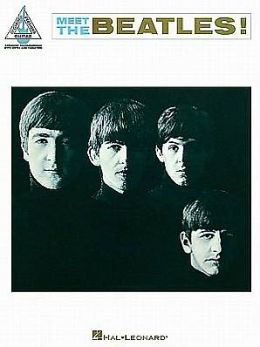
9781617804618_p0_v1_s260x420Check out the turtlenecks on the cover of Meet the Beatles

Yesterday, inspired by Olivia Cole’s article “Won over by the West: The irresistible allure of Americana for post-war Britons” for the November 2013 issue of British GQ, I kicked off a week-long series about the relationship between the Beat Generation and the British Invasion. I didn’t get too much into her article, but instead I wrote about the general history of each “group” (please take this term lightly; neither was an intended movement or formal group) and how and why they are connected. Today, I want to share a fun story with you about the two longest love affairs (Oh gosh, take that even lighter. People get so mad when I use hyperbole.) of my life: the Beatles and the Beats.

I was a HUGE Beatles fan back when I was in high school. I can’t quite remember how I got into the Beatles, but I know it’s not because of my parents. My dad didn’t listen to music. I was raised on smooth jazz, Prince, Lionel Ritchie, and Stevie Wonder, thanks to my mom. As I grew up and started discovering music on my own—Vanilla Ice, Boyz II Men, Snow, Positive K, Arrested Development, REM (should I go on? Ah, nostalgia)—she was the cool mom that listened to whatever I listened to on the radio. My mom was actually too young to be into the Beatles. In the craze of my own private Beatlemania, I pestered her for information, and she said she remembered her older sister getting a letter from their cousin in Sweden talking about this new band The Beatles and how popular they were.

One of the first exposures I had to Jack Kerouac and the Beat Generation came through The Beatles. I owned a VHS — yes, I’m that old! — documentary about The Beatles. It was a pretty low-quality documentary that I think I picked up at the K-Mart at the Closter Plaza. I don’t remember the name of it, but I used to watch it over and over again after school. I remember it saying that John Lennon named The Beatles, in part, because he was influenced by the Beat Generation. I didn’t know what the Beat Generation was at the time, nor did I bother to look it up — again, I’m old, and this was before I’d ever even heard the word “Internet,” so looking things up required going to the Closter Public Library and rifling through the encyclopedias. Still, when you watch something on repeat enough times, it gets ingrained in your memory, and when you suddenly learn something new, the threads of your brain weave everything together.

Wayne Mullins explored this in his essay “Long John Silver and the Beats” for Beatdom:

Several name changes occurred in the early life of the Beatles before John Lennon and Stuart Sutcliffe decided to honour the memory of Buddy Holly by changing the band name to the Beetles (as a play on Buddy Holly and the Crickets), but as John Lennon was a fan of clever word play he decided to change the spelling of The Beetles to Beatles as a way to suggest “beat” or “beat music”. As John Lennon said in a 1964 interview, “It was beat and beetles, and when you said it people thought of crawly things, and when you read it, it was beat music.”

Mullins goes on to prove the Beat–Beatles by discussion John Lennon’s art school education and the exposure he had to instructors who were fans of the Beats and the meeting of Lennon and Allen Ginsberg. He also makes notable claims about the parallel paths the Beats and the Beatles took toward enlightenment, coming from religious upbringings, looking toward the East, and returning (or at least considering) the religions of their youth. The article also points out that Jack Kerouac and Lennon both rejected the associations people made with them, preferring to remain autonomous.

Steve Turner’s book Jack Kerouac: Angelheaded Hipster also speaks to Kerouac’s influence on Lennon:

[John Lennon’s] fellow student Bill Harry specifically remembers Lennon reading “On the Road” and the short story “The Time of the Geek”, which was published in an anthology called ‘Protest’ in 1960. “He loved the ideas of open roads and travelling,” says Harry. “We were always talking about this Beat Generation thing.”

Mullins’ story about Lennon’s meeting Ginsberg was just one incident. The Allen Ginsberg Project post “Sunday 9th – John Lennon” recalls when Ginsberg invited The Beatles to his birthday party and Lennon and George Harrison showed up with their wives.

When the Nixon administration wanted to deport Lennon and Yoko Ono, Beat poet Gregory Corso wrote a letter, as did a whole lot of other famous people, according to John Weiner’s article “How Bob Dylan, Gregory Corso, Joyce Carol Oates and Others Helped Stop Nixon From Deporting John Lennon and Yoko Ono” in the Los Angeles Times.

The Beatles also had an affinity for William S. Burroughs, who appeared on the cover art of their Sgt. Pepper’s Lonely Hearts Club Band.

Not only that, in the Dangerous Minds article “The William S. Burroughs/Beatles connection,” Richard Metzger writes:

Over the weekend, I noticed the following passage in the book With William Burroughs: A Report From the Bunker by Victor Bockris:

Burroughs: Ian met Paul McCartney and Paul put up the money for this flat which was at 34 Montagu Square… I saw Paul several times. The three of us talked about the possibilities of the tape recorder. He’d just come in and work on his “Eleanor Rigby.” Ian recorded his rehearsals. I saw the song taking shape. Once again, not knowing much about music, I could see that he knew what he was doing. He was very pleasant and very prepossessing. Nice-looking young man, hardworking.

He goes on to elucidate the obvious connection: Barry Miles, whom The Allen Ginsberg Project also points to. Miles deserves his own post, but in short the thing to know is that he owned a bookshop in London that was frequented by the Beats when they were there, and he wrote about The Beatles and 1960s London underground culture.

Tune in tomorrow when I finally get into the meat of Cole’s article by discussing her commentary on The Kinks’ frontman Ray Davies’ new memoir.

* * *

Burning Furiously Beautiful: The True Story of Jack Kerouac’s “On the Road” is now available as an ebook and paperback!

The British Are Coming!: The Beat Generation’s Influence on The British Invasion

11 Nov

In her fascinating article “Won over by the West: The irresistible allure of Americana for post-war Britons” for the November 2013 issue of British GQ, Olivia Cole posits that imported media of post-World War II America attracted the British to the United States—and specifically points to influence of the Beat Generation.

This week I’ll be talking about Cole’s thesis in greater depth, but I think it’s important to kick this off with the relevant background information. My reasoning for this isn’t just that a lot of people may not be familiar with pop culture history but rather that by stressing the history we may actually come to a stronger argument in support of her thesis.

First things first, a mini timeline:

  • 1922: Jack Kerouac was born
  • 1939-1945: World War II
  • 1947-1991: The Cold War
  • 1955: Allen Ginsberg’s Howl published
  • 1957: Jack Kerouac’s On the Road published
  • 1964: The British Invasion

World War II and the Beat Generation

Born in 1922, Jack Kerouac was college-aged during World War II. As Paul Maher Jr., my coauthor for the book Burning Furiously Beautiful, writes:

Jack Kerouac set sail for Greenland on July 18, 1942 aboard the S. S. Dorchester. He had enlisted in the Merchant Marines and, if we take the romantic view of things,  was looking for intense experiences that could possibly stimulate him as an emerging writer.

Kerouac served in the Merchant Marines and in the United States Navy and was honorably discharged. England and the US were allies. I specifically wanted to reference Greenland, though, because it reminds me of the famous Beatles quip when a reporter asked the Beatles how they’re enjoying their 1964 tour of the United States:

Reporter: How do you find America?

Ringo Starr: Turn left at Greenland.

I’m getting ahead of myself.

Kerouac’s novel was indeed an overnight success and influenced the culture of the time period. However, many derided the Beat Generation as tearing at American values. In 1958, the derogatory term “beatnik” was coined by journalist Herb Caen. It was an amalgamation of the word “beat” and “Sputnik.” Sputnik was a Russian satellite. Remember: this was during the Cold War, and Russia was not our ally. I’m belaboring this point for a reason:

The United States was invaded—culturally—by its ally. We had a British Invasion—on our music.  We did not experience a feared political Russian invasion.

While Beatles record burnings would occur in the years to come, the Beatles—the forerunners of the British Invasion—arrived in the United States, wearing dapper suits and singing about wanting to hold hands. Our allied invaders appeared (though anyone who actually knows their Liverpool and Hamburg start will laugh at this) much more squeaky clean than our own author, Jack Kerouac, who was writing about drugs and s-e-x.

After all the patriotism surrounding World War II and the “beatnik” fad had played out by the sixties, America was primed to look elsewhere—as long as elsewhere was still “safe.”

The British Invasion

The British Invasion occurred less than a decade after Kerouac’s groundbreaking novel On the Road was published, but it was not an immediate reaction to the Beat Generation.

The year 1964 is the year The Beatles landed in America. This set off the British Invasion. The British Invasion refers to British bands such as The Beatles and The Kinks (who were formed in 1964) but also The Rolling Stones (who were formed in 1962) and The Who (who were formed in 1964), not to mention bands who may be less familiar today but still influential such as The Animals, Peter and Gordan, and Herman’s Hermits, who dominated the music scene and wildly impacted the culture of the United States in the mid-60s.

Cole’s article begins with The Kinks’ Ray Davies’ new memoir, mentions the Rolling Stones’ Keith Richards’ memoir, and concludes with Iain Sinclair’s new memoir. A little background information to tie them together: Richards and Sinclair were born in 1943, Davies was born in 1944. Davies and Richards were born in the greater London area, and Sinclair in Wales. In other words, all were born in the UK within a year of each other. While Sinclair is writer and filmmaker and not technically part of the British Invasion, and while Cole herself does not use the phrase, it is central to her themes. Let me state the obvious: These Britons were not peers of Kerouac’s. In fact, they were about twelve or thirteen when On the Road came out.

It’s reasonable to conjecture that it takes a generation for ideas to create momentum and impact culture. Beatnik shtick around the height of the Beat Generation—itself a marketing tool—was gimmick.

The ideas presented by the so-called Beat Generation took hold perhaps in a more powerful way as it basted in young, impressionable minds, who were more willing to see things from a fresh vantage point and implement change. The new generation of creatives could actually impact culture in a much more meaningful way. This is how we see that the bands that rose to prominence during the sixties were more directly impacted by the Beat Generation than perhaps the Beat Generation’s own peers. This is evident in American music of the time as well: Ramblin’ Jack Elliott, born in 1931, was influenced by Kerouac, and Bob Dylan, born in 1941, was encouraged by the Beats.

Now, whether they all truly understood the message behind the different Beat writers works is a different story—as is that hopefully not-too-subtle remark I just made that the writers associated with the Beat Generation can’t all be lumped into one category with one thought. They were individuals and did not always agree with one another’s politics.

The British may have been inspired by the Beat Generation and their work may have resonated with the American audience in the mid-1960s, but Jack Kerouac wanted no credit for the hippie movement that followed. He felt that they distorted his views. If You Walk in Your Sleep…’s “Collective Memory: Kerouac Hated Hippies” speaks to this.

The British are coming! The British are coming! Tune in tomorrow when I talk about the relationship between The Beatles and The Beat Generation.

* * *

Burning Furiously Beautiful: The True Story of Jack Kerouac’s “On the Road” is now available as an ebook and paperback!

Warby Parker Glasses for Halloween

31 Oct

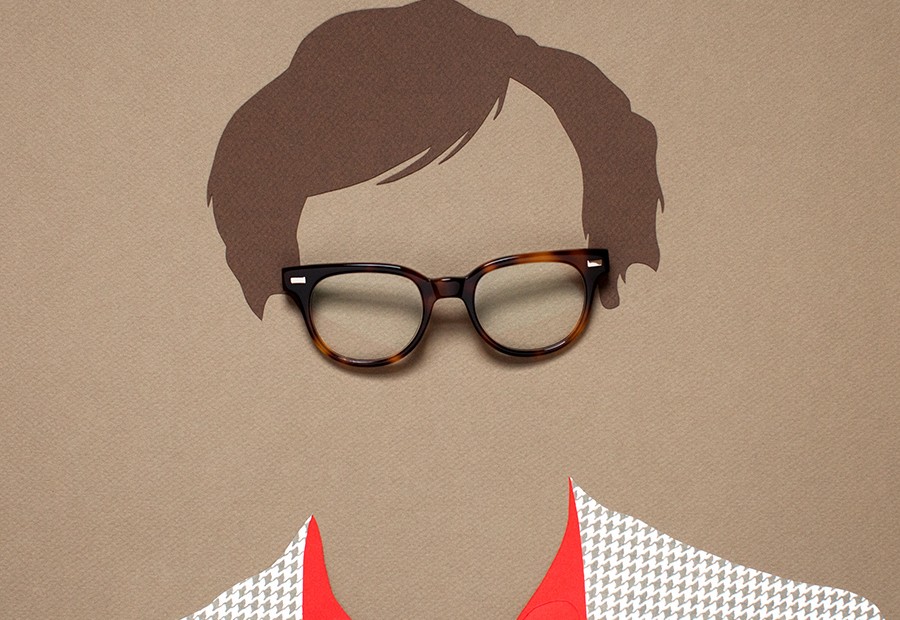
alvie_small-900x620via Warby Parker

Happy Halloween! Though I tortured my sleepover guests with classic horror films when i was a preteen, I’ve never been real big into the scary stuff of Halloween. I do, however, think it’s a super fun opportunity to play dress and reinvent one’s identity for a day.

Then again, I’m a bit of a chameleon when it comes to my style and personality even on an average day. You know how in The Breakfast Club there was the jock, the princess, the brain, the basket case, and the criminal? Or how when you ride the L train you can always tell who’s going to get off at Union Square versus who’s going to Bedford Avenue? I’ve never really identified with one social group or another. One day I might dress preppy in pearls and a button-down shirt with a sweater over it and the next day I might wear lots of dark eye shadow and all black. Likewise, some days I wear glasses and some days I wear contacts. It would be fun to own multiple pairs of glasses to switch out depending on my mood.

Glasses are such a defining accessory/medical need. Certain glasses styles have become synonymous with certain celebrities. Think John Lennon’s little circles. Buddy Holly’s thick frames.

Warby Parker says, “There are plenty of characters to be channeled with the right pair of glasses.” They’re featuring costume ideas like Tootsie, and Dr. Strangelove, Alvie Singer (Annie Hall) on their blog, complete with the prescription glasses they sell. Oh sure it’s a gimmick to get you to buy their merch, but — and I’m not at all affiliated with them and not getting anything for saying this — it’s a rather clever idea. Because sometimes it’s fun to channel someone else for a day!

Also, I really like Warby Parker’s business model: for every pair you buy, they donate to someone in need.

Oh, and get this: their name is a Jack Kerouac reference! Here’s the story:

We’ve always been inspired by the master wordsmith and pop culture icon, Mr. Jack Kerouac. Two of his earliest characters, recently uncovered in his personal journals, bore the names Zagg Parker and Warby Pepper. We took the best from each and made it our name.

So what I want to know then is why they don’t have a blog post for dressing like Allen Ginsberg?! You can’t help but think of his glasses when you visualize him. Plus, with all the Hollywood attention on the Beats lately — characters based on Ginsberg or Kerouac’s alias for him appear in On the Road and Kill Your Darlings — you’d think he’d be a fun person to dress up as for Halloween.

Or maybe I’m the only nerd who thinks dressing like authors and literary characters is a perfectly normal Halloween costume?

And, for a story about the time Allen Ginsberg lost his glasses, check out Burning Furiously Beautiful: The True Story of Jack Kerouac’s “On the Road.” It’s available as an ebook and paperback.