Tag Archives: Allen Ginsberg

Vice’s Suicide Poet: Beat Writer Elise Cowen

20 Jun

Well by now you’ve probably heard about VICE’s suicide fashion spread, “Last Words.” If not, here’s the low down: The lifestyle magazine with the apparently ironic tagline “The Definitive Guide to Enlightening Information” launched The Fiction Issue 2013 featuring all women fiction writers. So far, so good. In fact, almost exemplary considering VIDA’s stats that women authors aren’t equally published. The issue features works by Joyce Carol Oates and Mary Gaitskill, a story on Marilynne Robinson … and a fashion spread on female writers who have committed suicide. Following the public’s uproar, the staff has issued a “statement” explaining their “unconventional” and “artful” approach and “apologiz[ing] to anyone who was hurt or offended.” They have taken it down from their website but not recalled the print publication.

I’m not going to belabor the point about the dangerous implications of “Last Words”—it used self-violence to sell clothing, it said nothing about the writers’ actual work, it glamorized death, it suggested the hysteria of women, oh just to name a few things—but I do want to point out a few things that I haven’t seen the many other critiques point out (though they may certainly be there; I didn’t have time to read every single article): the fashion spread is just one of the many troubling aspects of the issue. Let’s start with the cover: it’s a picture of a skinny woman—her hip bone and clavicle jut out—in a bikini, with her hands behind her back and her legs cut off. Granted it’s a photograph by Ellen Page Wilson of Carole A. Feuerman’s 2008 sculpture Francesca, and Feuerman works out of a feminist perspective, but at quick glance, and when featured on the same page as a link to the Vice “most popular” list that includes “VICE Meets: The Biggest Ass in Brazil,” it would seem to fall in line with the usual negative portrayals of women in the media and representing women as body parts instead of a whole person—even if the artist intended it to show women’s connection with nature and their strength. Oh and that Joyce Carol Oates story I mentioned? It includes a mother on “Xanax or OxyContin.” The one by Mary Gaitskill? About a woman who wonders if it was a mistake not to have children. Hannah H. Kim’s story is about dealing with sadness. Amie Barrodale’s “A Ghost Story” opens with a woman who doesn’t accept a marriage proposal and is disowned by her father, her mother a shut-in with eczema. Zelly Martin’s story “Jailbait” is just what it sounds like: a story about a teenager who drops out of high school after becoming involved with her parents’ friend. They may have literary merit just as the artwork does, but collected together these stories position women as sexual objects and depressives. Based on the staff’s  statement and the fiction and art selected for the issue, “Last Words” was not an “oops” moment for Vice. It was an insidious attack on women.

So just who were these suicidal women portrayed in Vice’s “Last Words”? The spread included Iris Chang, Elise Cowen, Charlotte Perkins, Sylvia Plath, Sanmoa, and Virginia Woolf. Much could be said about any of these writers and why perhaps these particular writers were selected (for instance, the fact that Sanmoa hanged herself with silk stockings and not a rope). The inclusion of Elise Cowen is an interesting one, though, and while I’m by no means endorsing Vice’s tactics, maybe we can turn a negative into an opportunity to discuss the life and legacy of this poet.

Elise Cowen

Vice’s inclusion of Elise Cowen is an interesting choice because she’s not very well known as a poet. As far as I know (a search for her name on BN.com only brings up a DVD), there is no volume of poetry written solely by her. Her work has appeared in various collections but has not appeared on its own. In fact, the first book by her won’t be published until 2014. Tony Trigilio, an English professor at Columbia College Chicago, is editing the first major collection of her writing, entitled Elise Cowen: Poems and Fragments, for Ahsahta Press. Fourteen of those poems were published last year in Court Green, a literary journal Trigilio edits with David Trinidad.

The fact that Vice chose Cowen, when they could have selected more widely published women writers who have committed suicide—for example, travel writer Gertrude Bell, poet Ingrid Jonker (“the South African Sylvia Plath”), or literary critic Beatrice Hastings (Katherine Mansfield’s lover)—suggests the Vice team is either very well read or they were going on cult following more than literary recognition. The reason I am familiar with Elise Cowen, and presumably most other people are as well, is because of her circle of friends.

Elise Cowen dated Allen Ginsberg. In case you’re confused, yes, Ginsberg did date women here or there. He met Cowen through Barnard philosophy professor Alex Greer, and they went out on a date together. They got to talking and discovered they had a mutual friend in Carl Solomon, whom they’d both met while spending time in a mental hospital. Needless to say, Ginsberg and Cowen weren’t the best match: shortly after their romantic involvement, Ginsberg began seeing Peter Orlovsky, who became his lifelong partner, and Cowen began dating a woman with the pseudonym Sheila. The foursome apparently ended up living together after Cowen graduated from Barnard in 1956.

In New York, Cowen supported herself as a typist until she was fired, and then she went to check out the poetry scene in San Francisco, where she lived with an alcoholic painter. She became pregnant and had a late-term abortion and hysterectomy. After she returned to New York, she wound up in Bellevue to get treated for hepatitis and psychosis. Against the doctor’s orders, she checked herself out and went to go live with her parents up in Washington Heights. There, at their Bennett Avenue home, she jumped through the glass of the seventh-story window. Elise Nada Cowen was only twenty-eight years old.

Known at Barnard as Beat Alice, Elise Cowen may not have published a volume of poetry in her lifetime but her story and poetry is known today because of her friends. Her poetry references other great female writers such as Emily Dickinson and Mary Shelley. It is bold, experimental, and sensual.

For more information on Elise Cowen, her poetry, and her friendships, visit:

Elise Nada Cowen ’56 (Barnard College)

The Lady is a Humble Thing: Elise Cowen (Beatdom)

Elise Cowen: Sappho-Dickinson Hybrid with a Beat Sensibility (Jacket 2)

Black daisy chain of nuns (Jacket 2)

On Elise Cowen (1933-1962): poetry on the margins (Wake Your Mind)

Elise Nada Cowen (Cosmic Baseball Association)

Elise Cowen (UPenn)

Women of the Beat Generation (Knight)

Minor Characters (Johnson)

A Different Beat (Peabody)

Journals: Early Fifties, Early Sixties (Ginsberg)

I Celebrate Myself (Ginsberg)
 

Are the Beatniks Anti-American?

27 May

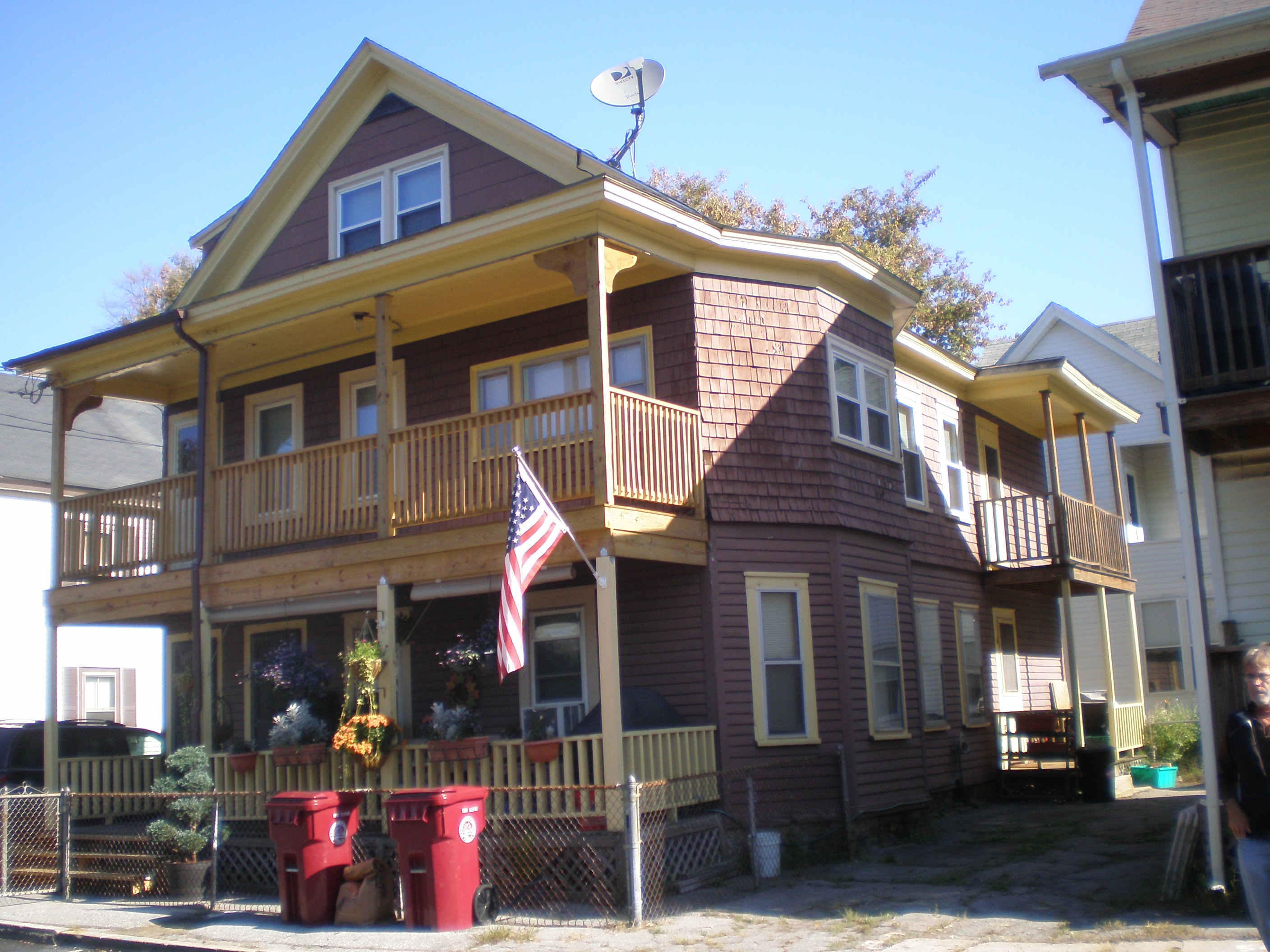
OLYMPUS DIGITAL CAMERAAmerican flag outside Kerouac’s birth home

I came to read Jack Kerouac, Allen Ginsberg, Gregory Corso, and Lawrence Ferlinghetti with little to no preconceived ideas about the Beat Generation. I had heard of Gilligan but never Maynard G. Krebs. I associated goatees with Ethan Hawke and turtlenecks with Sharon Stone. I liked the poetry bit in So I Married an Axe-Murderer but associated it with the spoken word poets of 1990s coffeehouses. So when I picked up The Portable Beat Reader, edited by Ann Charters, I had no presupposed knowledge of the writers in it or the culture they apparently inspired, apart from having discovered the book in a photo spread of a teen girl’s magazine. The kids in the spread looked like how I looked–or, rather, the cooler version of how I wished myself to look. That seemed as good a reason as any to beg my mom to buy the book for me.

I discovered humor and beauty and sensitivity in the words of the poets and novelists associated with the Beat Generation. When I read Kerouac explain the definition of “beat” as being both beat down and beatific, I understood and believed his words. It enlightened the way I read On the Road, and yet I read it sympathetically in the first place. I was a lot like Sal Paradise, hanging out with a friend who was wilder than I was. I longing to hit the road, to escape the humdrum of the suburbs and walk the city sidewalks of New York.

It was only later that I discovered that many others viewed the Beats and their work quite differently. It was only through reading biographies and nonfiction books on the Beats that I came to see that these writers were referred to as “beatniks,” and that that had a negative connotation. The term was a derogatory amalgamation of “Beat” and “sputnik,” and not being up on my history in my teen years, I understood it simply to mean they were “far out,” like a satellite in the space race. I had certainly heard of the Cold War, but it took me longer to understand that “beatnik” suggested the writers were somehow anti-American.

The idea of the Beats as anti-American took a long time for me to wrap my head around. Kerouac had written such a beautiful novel about America. He seemed so in love with the country and even made me fall in love with it in a new way. Before then, as the daughter of an immigrant, I had considered travel as something to do outside of America. I’d been to Europe but never the West Coast. Reading the Beats, I wanted to know more about this splendid vision of America they described. Sure, Ginsberg challenged America, but growing up decades later than him I was encouraged in school to think independently as he did. One could speak up in love. One must speak up in love.

As I continued to study Kerouac in particular, I learned about how he had been in the Merchant Marine during World War II. So much of what I read emphasized that he’d gotten discharged from the US Navy after being diagnosed with “schizoid personality.” It took more digging to hear a story like this one of how much Kerouac respected even the American flag:

At a party with Kesey’s Merry Pranksters Kesey came up and wrapped an American flag around me. So I took it (Kerouac demonstrates how he took it, and the movements are tender) and I folded it up the way you’re supposed to, and put it on the back of the sofa. The flag is not a rag.

The Beats were far from squeaky clean, but anti-American? I don’t see it. Perhaps the Beats didn’t jive with sock hops and malt shops, but maybe that’s a good thing because those 1950s stereotypes whitewashed the truth and left out large segments of the population. Some of us had fathers who spoke with an accent the way Ricky Ricardo did. Some of were intelligent but didn’t like stuffiness. Some of us liked to play our music LOUD. Some of us were friends with the outcasts. Some of us were misfits ourselves.

This Memorial Day, remember that many who died fighting for our country were just kids looking for a chance to escape from home or hoping for a chance to make something of their lives or desiring to be a part of something bigger than themselves. And think about today’s generation of Americans, those who may be a little rough around the edges or a little outspoken but who are so full of life, liberty, and justice.

You may also be interested in Memorial Day: Kerouac in the Merchant Marines.

David Amram Performs in NYC Twice Next Week!

2 May

Amram

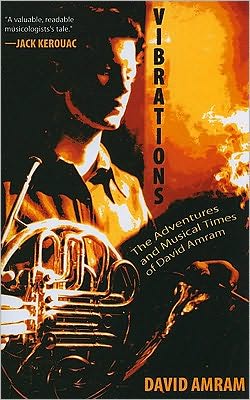
In case you missed it in the comments section last week, David Amram dropped and mentioned he’ll be reading at Literary Manhattan’s 2013 Spring Symposium. David is one of my all-time heroes–exceedingly talented and generous. I never get tired of listening to him play music–and when I say “play,” it really does feel like play, like he’s having a ball going from instrument to instrument, enjoying the craft of making music. He’s also a great storyteller. He has stories about everyone: Jack Kerouac, Allen Ginsberg, Gregory Corso, Dizzy Gillespie, Charles Mingus, Dimitri Mitropoulos, Johnny Depp, the list goes on.

Here’s the info for the 2013 Spring Symposium:

May 5, 2013

299 Madison Ave, New York, NY 10017

12 Noon to 3:30PM

$20 suggested donation


He didn’t mention it, but he’ll also be playing at Cornelia Street Cafe the following evening. Here are those details:

May 6, 2013

29 Cornelia Street, New York, NY  10014

$20 (includes a drink!)


Clip: Trading Text for Visuals: Poets As Visual Artists

25 Apr

blake-300x211

I had a really fun time putting together an article for Burnside about poets who are also visual artists. From the time I was a little child, I have been drawn to both the literary and visual arts worlds. Even in undergrad these two loves of mine co-mingled, as I majored in English and minored in studio art. My undergrad thesis looked at the relationship between writers and artists in New York in the ’40s and ’50s. It didn’t end there. While obtaining my MFA in creative writing, I took a poetry class on the collaborations of the poets and artists of the New York School. My article touches on some of the poets I’ve studied over the years, with of course a focus on the people commonly associated with the Beat Generation, but I pushed myself to find other examples as well.

Our cannons are so steeped in “dead white males” that it was important to me in stretching my knowledge to seek out poet-artists who did not play into that categorization. I was delighted to discover that Elizabeth Bishop painted.  Two years ago it was the hundred-year anniversary of the former Poet Laureate of the United States’ birth, so there were many readings and events to honor her work. Somehow, though, I missed the fact that she was a painter. Maybe it’s because she herself did not take it all that seriously, as I point out in my article. I happen to think they’re delightful, though.

A contemporary poet-painter I am quite interested in researching more about is Babi Badalov. As my article touches on, he mixes languages in his works, a result of having moved a lot between cultures to avoid persecution for his controversial visual poetry. As a writer, language is something I hold dear. My vocabulary is a key to who I am: the words I’ve picked up come from my mother’s midwestern phrasing and my father’s Greek tongue as well as the vernacular of northern New Jersey and the jargon of the institutes of higher learning I attended. I’ve found the preservation of endangered languages so critical because language is about identity. The idea that a poet has no language and has many languages intrigues me. When does Badalov express himself in his native Azerbaijani language and when in Russian? Is his use of English a political act?

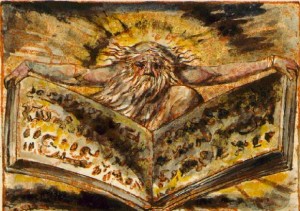
In my exploration of the Beats as visual artists, I could have easily waxed on and on. In fact, I did not go into any detail about Jack Kerouac’s artwork, even though he has been the subject of much of my studies. If this is something you’re interested in, leave a note in the comment section below, and I’ll write something up on this. What I did try to do for the Burnside article, though, was show that the Beats were following a rich tradition that came long before them. I point to William Blake and the Chinese and Japanese calligraphers as forerunners and influencers on the work of Allen Ginsberg and Phillip Whalen, for example.

My article was limited to just a few examples, a small taste of the artwork of poets. I’d love to hear who you think should be added to the list. Maybe I’ll make a part II!

Happy 68th Birthday to Anne Waldman!

2 Apr

Happy birthday, Anne Waldman!

Anne Waldman’s New York – New Jersey upbringing and connection to Greece is the opposite of mine. She was born in A Millville, New Jersey, on April 2, 1945, and grew up on MacDougal Street in New York City, while I was born in New York City and grew up in New Jersey. Likewise, it was her mother who moved to Greece for a few years, while it was my father who was from Greece. These connections and opposites don’t really mean anything, but a few years ago I did run into her at a party.

Anne Waldman is an impressive woman. Here’s a little bit of her bio from Poets.org:

She received her BA from Bennington College in 1966. From 1966 until 1978 she ran the St. Mark’s Poetry Project, reading with fellow poets such as Allen Ginsberg and Gregory Corso. Immediately following her departure from St. Mark’s, she and Ginsberg founded the Jack Kerouac School of Disembodied Poetics at the Naropa Institute in Boulder, Colorado.

She has published over forty books of poetry….

…Waldman has received numerous awards and honors for her poetry, including The Dylan Thomas Memorial Award, The Poets Foundation Award, The National Literary Anthology Award, and The Shelley Memorial Award for poetry. She has received grants from the National Endowment for the Arts and the Foundation for Contemporary Performance Arts. She is a two-time winner of the International Poetry Championship Bout in Taos, New Mexico. She was elected an Academy Chancellor in 2011.

Happy 83rd Birthday, Gregory Corso!

26 Mar

bday

One of my very favorite poets was born on this day in 1930. That’s right: Gregory Corso. He was quite a few years younger than his friends—William S. Burroughs was born in 1914, Jack Kerouac in 1922, Allen Ginsberg in 1926—but was one of the first published. Kerouac had published The Town and the City in 1950, but the novel that would put him on the map—On the Road—wasn’t published for another seven years. Ginsberg’s Howl was published in 1956. Corso published his first poetry book, The Vestal Lady on Brattle, in 1955. He was only twenty-five years old. Speaking of which, Corso wrote a lovely poem called “I Am 25.” I remember back when I was in college, reading it and thinking how far off that seemed. Twenty five. What a magical age. I wrote a little poem emulating his about how old I was then, and instead of saying “I HATE OLD POETMEN!” like the line in his poem, I wrote “I LOVE OLD POETMEN!” And I do. Gregory Corso is brilliant. Both a classicist and a rule breaker.

If anyone could be called “beat,” it was Corso. Most of the people who came to be associated with the Beat Generation were middle-class suburbanites, or something close to that. Corso was born to a sixteen-year-old Italian immigrant in New York City, who later abandoned him to the Catholic Church Charities. He was sent to live with foster parents and ended up homeless on the streets of New York, eventually doing time in prison at thirteen years old for petty larceny. The story goes that while in The Tombs, the Mafia encouraged him to read, and he fell in love with poetry.

Jack Kerouac’s Birthday Celebrations Happening Across the Country

7 Mar

Jack Kerouac’s birthday is coming up on the 12th, and there are a couple of celebratory events happening.

Lowell Celebrates Kerouac has several days of fantastic events centered around what might be my favorite (it’s hard to choose just one!) Kerouac book, Visions of Gerard. They will also be honoring David Amram, who has been a great mentor in my life and work:

Lowell Celebrates Kerouac! will be spotlighting Jack Kerouac’s deeply spiritual and Lowell-based book, Visions of Gerard, throughout this 50th anniversary year of its publication, starting with the birthday events of March 2013. March will feature music by celebrated world musician David Amram, musical collaborator and friend of Kerouac, an art exhibition, educational programs, walking tours, poetry, readings, and other cultural events that celebrate the life and writings of Jack Kerouac.

Friday 8 March 2013

Kerouac: People, Places, and Things
Time: 6:00 to 10:00pm
Location: Lowell Telecommunications Center Gallery, 246 Market St.
Kerouac-influenced art exhibition opening reception

The Magnificent Pigtail Shadow
Time: 6:30 to 7:45pm
Location: Lowell Telecommunications Center Gallery, 246 Market St.
A film by Steven Cerio with the director to present, plus a reading from Big Sur played against the director’s newest short

Music for Jack
Time: 8:00 to 9:30pm
Location: Lowell Telecommunications Center Gallery, 246 Market St.
David Amram and friends. A $10 donation is requested.

Saturday 9 March 2013

Amram and Marion
Time: 10:30am to 12:00pm
Location: Welles Emporium, 175 Merrimack St.
Help Lowell Celebrates Kerouac celebrate its new merchandise home at the Welles Emporium. Musician-author David Amram and poet Paul Marion help Lowell Celebrates Kerouac celebrate its new merchandise home at the Welles Emporium. David and Paul will do readings from their books and poetry as well as Kerouac passages with musical interludes by David. They will sign books and CDs.

Jack and Woody: Two American Originals
Time: 1:00pm
Location: Pollard Memorial Library, 401 Merrimack St.
Woody Guthrie and Jack Kerouac life parallels, talk by author Steve Edington.

Mystic Jack Tour
Time: 3:30 to 5:00pm
Location: Meet at St. Louis Church, 221 West Sixth St.
Led by master Kerouac interpreter Roger Brunelle, specially presented this year in honor of 50th anniversary of publication of Visions of Gerard. A $10 donation is requested.

Lowell Celebrates Kerouac Celebrates Amram!
Time: 8:00pm to ?
Location: White Eagle Cafe, 585 Market St.
Musical event with David Amram, the Part-Time Buddhas, and guest musicians. A $10 donation is requested.

Sunday 10 March 2013

Walking Jack Loop Walk
Time: 12:00 to 5:00pm
Location: Meet at Jack Kerouac Commemorative at Jack Kerouac Park, intersection of French and Bridge Streets
End at Old Worthen Tavern at 5:00 for toasting the birth of Jack Kerouac in March of 1922

Tuesday 12 March 2013

Kerouac Birthday Walk
Time: 6:00pm
Location: Starts at Centralville Social Club, 364 W. 6th St.
On Jack Kerouac’s 91st birthday, walk with LCK group to Lupine Road birth house for readings. The walk will start and end at Centralville Social Club (364 W. 6th St.) parking lot by the prominent Ace Hardware sign on Lakeview Ave., Centralville neighborhood.

Tuesday 19 March 2013

Reading of Visions of Gerard
Time: 7:00pm
Location: Pollard Memorial Library, 401 Merrimack St.
Tour of “Jack’s Library” followed by selected readings and discussion of Visions of Gerard on the 50th anniversary of its publication. This is Kerouac’s possibly most spiritual book as he remembers his childhood years and the deep impacts of his brother Gerard’s death. Sponsored by UMassLowell and Pollard Memorial Library. Funded in part by the Massachusetts Council on the Humanities.

Thanks to Welles Emporium, the Pollard Memorial Library, the White Eagle Pub, the Old Worthen Tavern, Lowell Telecommunications, and the St. Louis de France School for hosting our events.

I also learned via LCK that the Northport Historical Society is hosting a birthday celebration for Kerouac:

Writer/Playwright, Pat Fenton will be reading from his play “Jack’s Last Call, Say Goodbye to Kerouac”, as part of the March is Kerouac Month at the Northport Historical Society. Mr. Fenton will also discuss Kerouac’s Northport years as well as his importance to American literature.

It’s the end of summer in 1964. A major cultural shift is starting to happen in the U.S., and on his last night in Northport, Long Island the America Jack Kerouac saw through a rear view mirror riding along side his “On the Road” partner Neal Cassady is slowly playing again in his mind.

Long after a small going away party that he has thrown for himself is over; Jack keeps on drinking as he prepares to move to Florida with his mother. He reflects back on his fame, his youth as a football star in Lowell, Massachusetts, and the worry that his time has come and gone. As he sums up parts of his life to the audience in a bittersweet narrative, he receives a series of soul-searching phone calls from his daughter Jan.

An obligatory stop at Gunther’s Bar down the block on Main Street, where Jack Kerouac spent much of his Northport Years, will be made by the writer, and the conversation will continue over pints of tap beer.

The birthday celebration will take place on Sunday, March 10th at 3 P.M., at the Northport Historical Society, 215 Main Street, Northport, Long Island.

The Laughing Goat, a coffeehouse and performance space in Colorado, is hosting a poetry reading on March 11:

”So, You’re a Poet,” presents Jack Kerouac’s 91st Birthday Reading & On the Road film screening: The ”So, You’re a Poet” reading series by Boulder’s ”beat book shop” has several Kerouac events on its poetry calendar. Poets who have performed in this venerable, decades-old series include the late Allen Ginsberg, Bernadette Mayer (who will be in Boulder this summer for the Summer Writing Program), Diane di Prima, Janine Pommy Vega, Anselm Hollo, and many more. The series has always been hosted by poet and Kerouac School alumnus Tom Peters, owner of the Pearl Street landmark ”beat book shop.” The series was hosted for many years by the famous Penny Lane Cafe. In the introduction to Poems from Penny Lane Anne Waldman writes ”One thinks of the legendary Cabaret Voltaire in Zurich where the Dadaist movement was born, or the cafes and bars in San Francisco which spawned the Beat Literary Movement, also the cafe Metro and the Nuyorican Cafe, both in New York City’s East Village.” The series currently takes place in the new Laughing Goat Coffeehouse, which has strong ties to the original Penny Lane. Amiri Baraka, Miguel Algarin, Lewis MacAdams, and other poets read there during last year’s Summer Writing Program. The Laughing Goat is surely a Boulder literary institution in the making.

Are there any other Kerouac birthday celebrations we should know about?

How will you be celebrating? If you can’t make it to one of the events, maybe you could write a poem or read a passage from one of Kerouac’s books or stop by the Beat Museum in San Francisco.


A Ginsberg Love Fest at First Blues

22 Jan


WP_20130116_010

Oh, I am still on cloud 9 after the First Blues event to celebrate Allen Ginsberg’s recording!! I got there a bit late, and it was jam-packed with white-haired men who’d probably known various beat poets back in the ‘40s and ‘50s, and earnest, young, bearded hipsters, and girls in leggings and berets. I spotted the incredible poet Steve Dalachinsky and poet-painter Yuko Otomo, whom I’d met at Lowell Celebrates Kerouac, in the crowd. I got to talk with poet Christopher Barry. I had heard another author I know was supposed to be there but there were so many people I couldn’t find him to say hi.


David Amram was his usual self: inspiring. The way he transmutes cultures into music and bends the “rules” of how to play instruments floors me every time. Watching him teaches me that Art is creative and fun, which is something after years of schooling and rule enforcing I often forget. He talked about how the best university is “hangoutology,” that we learn through other people and that we too should always generously teach others.

Kevin Twigg played glockenspiel with Amram. I’d normally heard him play in a full band, but hearing just him and Amram play was special. Twigg’s music sounded like magic!

Anne Waldman, who with Allen Ginsberg founded Naropa University, the Jack Kerouac School of Disembodied Poetics, gave an intense reading. Back in undergrad at Scripps in my 1950s Core class, I heard a recording of Ginsberg reading Howl that forever changed my understanding of the poem because of its moaning intensity. After singing a Blake poem, Waldman did a “Howl” that was transfixing. Hearing her howl live was a glimpse of what it must’ve been like to hear Ginsberg first read “Howl” at the now infamous Gallery Six reading.

Hettie Jones, who is a fantastic and generous writer, read, and I wish she would’ve read longer because it went by too, too quickly.

My eighteen-year-old self would never have imagined that not only would I one day ever-so-casually get to hear all these people read and make music and perform in a bookstore but that I’d actually know so many of them. I couldn’t find Jones after the reading, but she had graciously spent time talking to me when I met her in a class at The New School. A few years ago, I was in the same circle of conversation as Waldman at a party. Twigg asked me to sign a book, which he showed me had been signed by pretty much everyone associated with the Beats. Here he is this amazing musician with tons of covet-worth signatures, and he made me feel like a million bucks by asking me to sign too. Amram, always swamped by the masses, still made time for me, and again made me feel like I was the star. I hope that I do that for other people. He introduced me to his daughter, who was really sweet. He also introduced me to Bill Morgan, whose books have been a tremendous resource to me over the years. It’s so surreal to meet someone you’ve footnoted.

There were also other musicians and poets there, including Ambrose Bye, CA Conrad, Steven Taylor, and Arthur’s Landing, whom I’d never heard before and yet who captured my attention, making me want to explore their work.

Amanda Bullock, who plans the events at Housing Works and whom I’d heard speak about social media at the CLMP literary conference at The New School, was there kicking us all out at the end because we all kept mingling and having hurried, beautiful conversations.

I could hardly sleep from all the excitement.

Greek-American Tina Andreadis Promoted to Senior VP of Publicity at HarperCollins

18 Jan

HarperCollins Publishers promoted Tina Andreadis to senior vice-president of publicity, according to Publishers Lunch.  Hired in 2005 as vice president, director of publicity, Andreadis oversees publicity for many of the publishing house’s imprints.

The Greek America Foundation named Andreadis as part of the Class of 2010 winners of the Forty Under 40; she was thirty-nine at the time. They noted:

Andreadis is very involved in philanthropic and media efforts on behalf of the Greek Orthodox Archdiocese of America. In October 2009 she was a key member of the media team for Patriarch Bartholomew’s historic tour of the United States, working to promote his trip to America. Her influence helped secure an opinion piece by the Patriarch in the Wall Street Journal. Andreadis is an active member of Kimisis Tis Theotokou Greek Orthodox Church of the Hamptons. There she is media chair for the future expansion of the church and a committee chairperson for the church’s annual festival in Southampton.

Congratulations to Tina Andreadis on her new role at HarperCollins!

The New York-based publishing house’s origins go as far back as 1817 when Harper & Brothers was founded and is now one of the largest publishing houses in the world. Side note: like most publishing houses, they have a history of publishing Beat Generation-related books, including Rub Out the Words: The Letters of William S. Burroughs, 1959 – 1974  and Howl: A Graphic Novel.

Lou Reed, Anne Waldman, Hettie Jones, and Others Celebrate Allen Ginsberg’s FIRST BLUES

16 Jan

ORG_BKS_FirstBlues_01

Image via Housing Works

If you’ve never heard Allen Ginsberg read “Howl,” you can’t grasp its full intensity. Ginsberg has one of those voices you can’t shake out of your head, a voice you could hear once and then ten years later still recognize. It’s even but possessive, sucking you into the inner crevices of the poet’s mind and locking you in.

This evening at 7, Housing Works is hosting a musical soiree for the reissue of Ginsberg’s First Blues: Rags, Ballads, Harmonium Songs, Chanteys & Come-All-Ye’s. Ginsberg was a connector, a person who liked to introduce people and make things happen for them. As such, he had many friends and collaborators. Among those who will be celebrating this night of poetry and song include:

Here’s a bit about First Blues from Housing Works:

The work was originally released as a double LP back in 1983, and as a CD in 2006.  Produced by legend John Hammond Sr., this record of songs is a collection of studio sessions from 1971, 1976, and 1981 and included the likes of Bob Dylan, Arthur Russell, David Mansfield, Happy Traum, David Amram, Steven Taylor and Peter Orlovksy. To commemorate this reissue, a limited run of 500 seven track vinyl that mimics the original style down to the newspaper insert will be available that night and online.

Housing Works puts on nerdilcious events.  There was, for instance, the epic reading of Moby-Dick.
They’re also advocates for those living with HIV/AIDS. They’re located at 126 Crosby Street  in Manhattan.

The event is also hosted by Ginsberg Recordings (a collaboration of Ginsberg’s Estate and Esther Creative Group), VitaCoco, and Warby Parker (after all, it’s hard to picture Ginsberg without picturing glasses).