Tag Archives: Beat Generation

Shunning Cars … and Life

24 May

Last summer I relayed the news that Generation Y hates driving. Now it turns out, everybody hates driving.

According to the recent The Exchange article “Why More Families Are Shunning Cars,” the CNW Research of Bandon, Ore., reported that in 2012 the percentage of US households without a car was the highest its been in the 22 years they’ve been tracking this data. The percentage? 9.3%.

Citing a cultural shift, The Exchange says that people today don’t rely on cars as much because:

  • more people live closer to cities and public transportation
  • since they now don’t need a car on a daily basis, these people simply rely on car rentals, which have become more flexible
  • retirees now live in retirement communities that they seldom leave
  • teens prefer to keep in touch virtually than in person
  • the economy is still in the gutter

The economic factor is a fascinating one when it comes to the history of motor vehicles. I’ve been proofreading (what feels like) a lot of books on cars and motorcycles lately and also thinking about cars and road trips while writing Burning Furiously Beautiful: The True Story of Jack Kerouac’s “On the Road,” and it’s been rather interesting to discover just how much the Great Depression and various wars have had on Americans’ driving habits.

An all-too-brief history:

  • cars and motorcycles are relatively new innovations, and they were making leaps and bounds until the Great Depression
  • there was an economic boom following WWII and suburbs became more popular–think Levittown–so the car became integral to family life
  • during the Cold War, the emphasis on patriotism no doubt led to Greyhound campaigns like this one, featuring a veteran who after fighting for the USA wants to travel to see the entire country, and the tv show/extended commercial See the USA in Your Chevrolet

Life in America hadn’t really changed all that much from that time when the economy improved, people moved out to the ‘burbs, and cars became a fact of life.

Until recently.

There were, of course, recessions here or there after the Great Depression, but it wasn’t until December 2007 that the US experienced the Great Recession or the Lesser Depression, whichever ominous phrase you want to use.

The same day that I read–while I was on the subway, mind you–that more people are “shunning” cars, I also read a Newsday article reprinted in amNewYork as “A growth spurt in NYC” that said, “New York City had the greatest numeric gain in population between 2011 and 2012, according to the U.S. Census Bureau estimates out Thursday.” Granted, the article seemed to be specifically comparing growth in cities (see this New York Times article as reference), but unless it’s indicating that people are simply moving from one city to another it seems to suggest that more people are taking to city life. And perhaps that’s the–ahem–driving force behind the decline in car ownership.

So… what do automotive trends have to do with literature?

Arguably the most popular of all authors who wrote about traveling by car and philosophized about the culture of his generation didn’t own a car: as I pointed out in my Hipsters Hate Driving post, Jack Kerouac was a hitchhiker, a bus rider, and a passenger, but rarely a driver, and yet he wrote the great American road-trip novel On the Road.

Now, let’s go back to that point The Exchange made that today’s generation–Generation Y, Millennial, whatever you want to call them–seemingly prefer virtual, rather than interpersonal, relationships. Here’s how The Exchange put it: “Teenagers using social media to keep in touch seem to feel less drawn to the open road than their parents did at the same age.”

The issue at hand is not that today’s generation doesn’t like driving or that they’re moving to the cities in droves. The cultural shift that needs to be more adamantly addressed for both the sake of our personal well-being and literature is that people prefer living life virtually than experiencing it first hand.

Kerouac lived life to the fullest. He famously told Steve Allen that he spent more time experiencing the content that would end up in his book than actually writing it:

ALLEN: Jack….How long did it take you to write On the Road?

KEROUAC: Three weeks….

ALLEN: Three weeks! That’s amazing! How long were you on the road itself?

KEROUAC: Seven years

Of course, as Burning Furiously Beautiful points out, it was only the scroll version on On the Road that Kerouac wrote in three weeks; it actually took him years to write the novel. But that doesn’t change the fact that Kerouac was out there living life, adventuring, experiencing, gathering tales to tell.

If today’s generation spends their life behind the computer screen or is too busy snapping photos for instagram to be present in the moment, that will shape our literature.
David Amram Performs in NYC Twice Next Week!

2 May

Amram

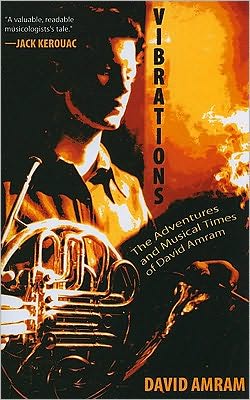
In case you missed it in the comments section last week, David Amram dropped and mentioned he’ll be reading at Literary Manhattan’s 2013 Spring Symposium. David is one of my all-time heroes–exceedingly talented and generous. I never get tired of listening to him play music–and when I say “play,” it really does feel like play, like he’s having a ball going from instrument to instrument, enjoying the craft of making music. He’s also a great storyteller. He has stories about everyone: Jack Kerouac, Allen Ginsberg, Gregory Corso, Dizzy Gillespie, Charles Mingus, Dimitri Mitropoulos, Johnny Depp, the list goes on.

Here’s the info for the 2013 Spring Symposium:

May 5, 2013

299 Madison Ave, New York, NY 10017

12 Noon to 3:30PM

$20 suggested donation


He didn’t mention it, but he’ll also be playing at Cornelia Street Cafe the following evening. Here are those details:

May 6, 2013

29 Cornelia Street, New York, NY  10014

$20 (includes a drink!)


Clip: Trading Text for Visuals: Poets As Visual Artists

25 Apr

blake-300x211

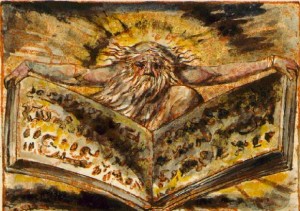
I had a really fun time putting together an article for Burnside about poets who are also visual artists. From the time I was a little child, I have been drawn to both the literary and visual arts worlds. Even in undergrad these two loves of mine co-mingled, as I majored in English and minored in studio art. My undergrad thesis looked at the relationship between writers and artists in New York in the ’40s and ’50s. It didn’t end there. While obtaining my MFA in creative writing, I took a poetry class on the collaborations of the poets and artists of the New York School. My article touches on some of the poets I’ve studied over the years, with of course a focus on the people commonly associated with the Beat Generation, but I pushed myself to find other examples as well.

Our cannons are so steeped in “dead white males” that it was important to me in stretching my knowledge to seek out poet-artists who did not play into that categorization. I was delighted to discover that Elizabeth Bishop painted.  Two years ago it was the hundred-year anniversary of the former Poet Laureate of the United States’ birth, so there were many readings and events to honor her work. Somehow, though, I missed the fact that she was a painter. Maybe it’s because she herself did not take it all that seriously, as I point out in my article. I happen to think they’re delightful, though.

A contemporary poet-painter I am quite interested in researching more about is Babi Badalov. As my article touches on, he mixes languages in his works, a result of having moved a lot between cultures to avoid persecution for his controversial visual poetry. As a writer, language is something I hold dear. My vocabulary is a key to who I am: the words I’ve picked up come from my mother’s midwestern phrasing and my father’s Greek tongue as well as the vernacular of northern New Jersey and the jargon of the institutes of higher learning I attended. I’ve found the preservation of endangered languages so critical because language is about identity. The idea that a poet has no language and has many languages intrigues me. When does Badalov express himself in his native Azerbaijani language and when in Russian? Is his use of English a political act?

In my exploration of the Beats as visual artists, I could have easily waxed on and on. In fact, I did not go into any detail about Jack Kerouac’s artwork, even though he has been the subject of much of my studies. If this is something you’re interested in, leave a note in the comment section below, and I’ll write something up on this. What I did try to do for the Burnside article, though, was show that the Beats were following a rich tradition that came long before them. I point to William Blake and the Chinese and Japanese calligraphers as forerunners and influencers on the work of Allen Ginsberg and Phillip Whalen, for example.

My article was limited to just a few examples, a small taste of the artwork of poets. I’d love to hear who you think should be added to the list. Maybe I’ll make a part II!

John Muir, Teddy Roosevelt, and Jack Kerouac Write about Nature

23 Apr

muir

“Between every two pines is a doorway to a new world.”

~ John Muir

It was conservationist John Muir‘s birthday over the weekend and yesterday was Earth Day. A few years ago, I had the great pleasure of editing a reissue (not the one pictured above) of his My First Summer in the Sierra and writing the flap copy, and I quickly became absorbed in the poetic language he used to described the beauty of the earth. If you’ve been following my blog for a while, you might have caught on that even though I absolutely love the glittering sidewalks and Art Deco skyscrapers of New York City, I am just as comfortable out in nature. (It’s the suburbs I can’t stand!)

Muir was an early advocate of nature preservation and founded the Sierra Club. He used to hang out with Teddy Roosevelt, whom I’ve also written about, and they’d go off exploring Yosemite. Can you imagine any of our recent presidents going off into the woods with someone we’d today probably label a hippie? It was this very friendship between Roosevelt and Muir that led to America’s natural beauty being preserved. Interestingly enough, Muir and Roosevelt were both rather talented writers, and their works are travelogues through nature.

Jack Kerouac referenced John Muir in The Dharma Bums, a novel that makes you want to drop everything and go sit in the woods for a great long while. He also wrote about Muir in an essay entitled “The Vanishing American Hobo“:

John Muir was a hobo who went off into the mountains with a pocketful of dried bread, which he soaked in creeks.

Kerouac was incredibly well read and would often read history books about America before or during his road trips. As “The Vanishing American Hobo” indicates, Kerouac saw the landscape and economy of America changing before his eyes as he traveled. The era he lived in was the beginning of the great highway system, and he saw why Muir’s conservation efforts were so important.

We tend to associate road tripper Jack Kerouac with cars and bars, but he actually loved nature. On the Road is essentially a glowing account of America’s landscape, the melon patches, the sun-drenched sky, the ragged mountains. In Big Sur, we see him sit out and just stare at the ocean, absorbed in nature. His obsession with animals gives us a poignant insight into his psyche.

We often put labels on people, and to see literature through critics’ lenses. What if we read John Muir’s work as literature instead of viewing it as nature writing? What if we read Jack Kerouac’s work as nature writing instead of counter-cultural novel?

What if we saw a story in a blade of grass? What if we listened really hard to the call of a bird?

You might also be interested in this article I wrote a few years about John Muir for Burnside Writers Collective:

And in this clip of me reading from Burning Furiously Beautiful about Jack Kerouac’s empathy toward animals.

Tasty Tuesday: A French Road-Trip Supper

9 Apr

Jack Kerouac’s parents were French Canadian, and he described some fantastic meals in The Town and the City.  While he was on road trips though, he barely had enough money to buy food sometimes.

Saveur magazine created a springtime menu for if you happen to find yourself roadtripping through France … or just dreaming of being there!

The menu includes:

  • olive spread with figs
  • crepes
  • the French Blonde cocktail
  • and more!

Get the dinner party recipe here.

What’s your dream menu for a road trip along France’s famous Route 7?

Clip: A Time to Weep

3 Apr

marystatue-223x300

My art post “A Time to Weep” went up on Burnside yesterday.

The photo above is of a statue of Mary, the mother of Jesus. Catholics refer to her as Our Lady of Lourdes because of the apparition Saint Bernadette had of her in Lourdes, France.

Jack Kerouac fans may be interested in my Church Hopping column on the Grotto of Our Lady of Lourdes.


Gregory Corso’s Friends and Fans Give Him a Birthday Tribute

26 Mar

Michael Limnios is doing impressive work interviewing poets, scholars, and friends of the Beat writers over on Blues GR. For Gregory Corso’s birthday today, he’s compiled stories about the poet from those who had the pleasure of knowing him over the years and those who have read and been influenced by his work. The tribute includes memories and reflections from:

  • Ken Babbs
  • Hettie Jones
  • Harold Chapman
  • Dario Bellini
  • Andy Clausen
  • Eddie Woods
  • Nanos Valaoritis
  • Paul Fericano
  • Francis Kuiper
  • Helen Weaver
  • Elsa Dorfman
  • Marc Olmsted
  • Hank Harrison
  • Elliot Rudie
  • Levi Asher
  • Frank Beacham
  • Neeli Cherkovski,
  • Gordon Ball
  • Catfish McDaris
  • Tisa Walden
  • David Amram
  • Yannis Livadis
  • George Nicholas Koumantzelis
  • Gerald Nicosia
  • Robert Yarra
  • Ruth Weiss
  • Joe Ambrose
  • Cyclop Lester
  • John Sinclair
  • Michael Minzer
  • A. D. Winans
  • Kurt Lipschutz
  • Mark Sargent
  • Harvey Kubernik

Happy 83rd Birthday, Gregory Corso!

26 Mar

bday

One of my very favorite poets was born on this day in 1930. That’s right: Gregory Corso. He was quite a few years younger than his friends—William S. Burroughs was born in 1914, Jack Kerouac in 1922, Allen Ginsberg in 1926—but was one of the first published. Kerouac had published The Town and the City in 1950, but the novel that would put him on the map—On the Road—wasn’t published for another seven years. Ginsberg’s Howl was published in 1956. Corso published his first poetry book, The Vestal Lady on Brattle, in 1955. He was only twenty-five years old. Speaking of which, Corso wrote a lovely poem called “I Am 25.” I remember back when I was in college, reading it and thinking how far off that seemed. Twenty five. What a magical age. I wrote a little poem emulating his about how old I was then, and instead of saying “I HATE OLD POETMEN!” like the line in his poem, I wrote “I LOVE OLD POETMEN!” And I do. Gregory Corso is brilliant. Both a classicist and a rule breaker.

If anyone could be called “beat,” it was Corso. Most of the people who came to be associated with the Beat Generation were middle-class suburbanites, or something close to that. Corso was born to a sixteen-year-old Italian immigrant in New York City, who later abandoned him to the Catholic Church Charities. He was sent to live with foster parents and ended up homeless on the streets of New York, eventually doing time in prison at thirteen years old for petty larceny. The story goes that while in The Tombs, the Mafia encouraged him to read, and he fell in love with poetry.

What a Garifuna-Breton Party Has to Do with Jack Kerouac

15 Mar

James-Lovell

photo via ELA

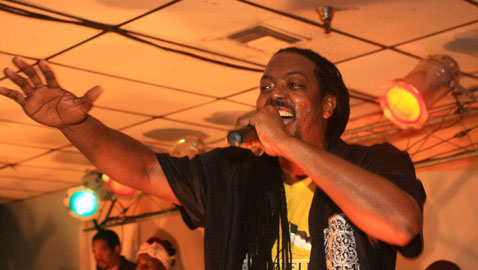
After a short hiatus for renovations and new partnership, Bowery Poetry is back—dropping “Club” from its title—and they’re hosting a Garifuna-Breton party! I’ve posted before about endangered languages—both of which these are—but why I specifically want to mention this party is because Jack Kerouac claimed to have descended from a Breton nobleman.

Bretons are people from Brittany, a Celtic nation located in France. During Kerouac’s day and age there were more than one million Breton speakers. The Brythonic language (Welsh, also endangered, is another example of a Brythonic language) was originally well regarded and spoken among the upper classes, but as people began assimilating it became known as the language of the commoners. Today,  most Bretons today speak French, and only about 200,000 people—particularly in the western area—speak Breton. In the 1960s, the language was being forced out of schools—just like many Native American and Sami languages were. Today, schools are returning to bilingualism, particularly through the efforts of Diwan schools, which were founded in 1977 as an immersion program. Even so, UNESCO classifies Breton as a “severely endangered” language. For more on the history of the language visit Breton Language and visit the US Branch of the International Committee for the Defense of the Breton Language.

Kerouac’s family was French Canadian, and growing up in Lowell, Massachusetts, his first language was the working-class French-Canadian dialect joual. It’s interesting to note that both Breton and joual are associated with commoners; perhaps this is a key to understanding Kerouac and his literature. As far as my current research shows, he was not familiar with the Breton language. However, I recently saw Christopher Felver’s documentary Ferlinghetti: A Rebirth of Wonder, which told the story of how one day Kerouac was sitting on the beach in Big Sur with poet and City Lights founder Lawrence Ferlinghetti repeated the phrase “the fish in the sea speak Breton.” Kerouac perked up, hearing the connection to his roots, and asked Ferlinghetti about it and wrote it down in the little notebook he always carried with him. The phrase found its way into his novel Big Sur.

Satori in Paris, which came three years after Big Sur, recounts Kerouac’s travels to France and Brittany in search of his roots. For a fascinating look at Kerouac’s trip and ancestral lineage, check out Dave Moore’s article “The Breton Traveller” on Beatdom.

Here’s the press release for the Garifuna-Breton party:

BOWERY POETRY

IS BACK WITH

A GRAND GARIFUNA-BRETON PARTY!

Poetry! Music! Dance!

Sunday*, March 18 from 6pm-11pm

Admission $10

Bowery Poetry, 308 Bowery (at 1st Street)

Endangered Language groups unite in a call to action to focus attention on the fact that more than half the world’s languages will disappear this century  

Two cultures who met through the Endangered Language Alliance, will celebrate their differences (Breton being Celtic and Garifuna being Arawak), and their similarities (both on the Endangered Language spectrum), but mainly will just celebrate with live music, dance and poetry. This event is being produced by the Bowery Arts + Science Endangered Language Program, and will be one of the first events at the newly renovated Bowery Poetry space at 308 Bowery.

Breton

The strong Breton cultural movement, known as Fest-Noz,  has preserved the expression of a living and constantly renewed practice of inherited dance repertoires with several hundred variations, and thousands of tunes. About a thousand Festou-Noz take place every year with participants varying from a hundred to several thousand people, thousands of musicians and singers and tens of thousands of regular dancers.

Garifuna

Descendants of Arawak, Carib, and African warriors, the resilient Garifuna people of Central America and the Caribbean are known for their rich traditional folklore, including music, dance, food and language. James Lovell is a New York based Belizean Garifuna drummer, recording artist, performer, teacher, and Garifuna cultural activist who grew up with stories told by his elders about the bravery of the Garifuna people and their military leader, Chief Joseph Chatoyer, against efforts by the British colonialists to deny them their identity and the right to speak the Garifuna language.  


*I double-checked this, and according to the Endangered Language Alliance the event is on MONDAY the 18th.

Review: Ferlinghetti: A Rebirth of Wonder

14 Mar

ferlinghetti_splash

I caught the documentary Ferlinghetti: A Rebirth of Wonder (2009) at Anthology Film Archives this past weekend. Lawrence Ferlinghetti is one of my favorite poets, for his use of language and whimsy. I’ve long appreciate his commitment to freedom of speech, and this documentary made me more aware of how he used his position as a poet and bookseller for activist purposes. Quirky fact: he uses the windows of his office at City Lights as a “blog,” writing his political thoughts for all who pass by to see.

Ferlinghetti: A Rebirth of Wonder is star-studded, including informative interviews and clips with everyone from Amiri Baraka, David Amram, Jack Hirschman, Michael McClure, Anne Waldman, and George Whitman to Giada Diano, Bill Morgan, Dave Eggers, and Lorenzo Ferlinghetti. It impresses upon the viewer just how important Ferlinghetti is by indicating his support of Bob Dylan, his place in American poetry, awards given to him, and the naming of a street after him.

The biographical background information is fascinating, particularly when we hear about Ferlinghetti’s rearing in France, how his mother’s ineptitude at caring for him led to his being raised by the daughter of the founder of Sarah Lawrence College, and his service in World War II (spoiler alert: he saw Nagasaki right after the bomb dropped). There’s even a scene in which Ferlinghetti searches for his roots in Italy, where he was arrested for trespassing when he tried to get a sneak peek at where his father grew up! This of course is all balanced with his founding of City Lights, the Howl trial, and the Human Be-In.

All of it is wonderful, but its broad scope and pacing left the film falling flat in terms of its aesthetics. As a biographer, I understand how director/producer Christopher Felver must have struggled with the editing process. How could he cut anything out when it’s all so important? No one wants to see significant and appealing research fall on the cutting room floor. As a viewer, though, I would have preferred a more limited scope or narrative approach. It would have been a stronger film if Felver, who worked on the documentary for ten years, ruthlessly edited his work to give it a story arc. This film is best suited for those interested in learning more about the free speech movement, poetry in America, the Beat Generation (though Ferlinghetti adamantly declares in one scene “Don’t call me a Beat! I never was a Beat!”), San Francisco, and the 1950s and ‘60s. I’d recommend Ferlinghetti: A Rebirth of Wonder for high-school English classes as well as for writers in general, as it motivates one to consider poetry as subversive action.