
Burnside published my art post A Time to Gather Stones.
Tag Archives: Burnside Writers Collective
Clip: One Object Many Ways: The Rose
1 Jul
Kalo mina! It’s no longer national rose month, but hey, you can still enjoy my post on how different artists have interpreted the rose.
The one about is by Piet Mondrian — the guy known for neo-plasticism, you know: white background with a grid occasionally colored in with primary colors.
You might also enjoy my other posts on roses:
Chloris and the Greek Myth of the Rose
Mighty Aphrodite: Korres Wild Rose + Vitamin C Advanced Brightening Sleeping Facial
Happy 161st Birthday, Antoni Gaudi!
25 Jun
Antoni Gaudi, Catalan architect of insanely intricate, bone-like structures, was born on this day in 1852. When I was backpacking through Europe, I stopped by his La Sagrada Familia. You can read about it in my Church Hopping column on Burnside Writers Collective.
Gaudi was beaten and imprisoned when he showed up at a demonstration against banning Catalan. The language is now considered an endangered language.
Clip: A Time to Scatter Stones
5 JunFor my latest “A Time to…” art post, check out Burnside Writers Collective.
Clip: A Time to Mourn
8 MayBurnside published my visual art take on the verse “a time to mourn.” You can see it here.
Happy 144th Birthday, Bertram Goodhue!
28 Apr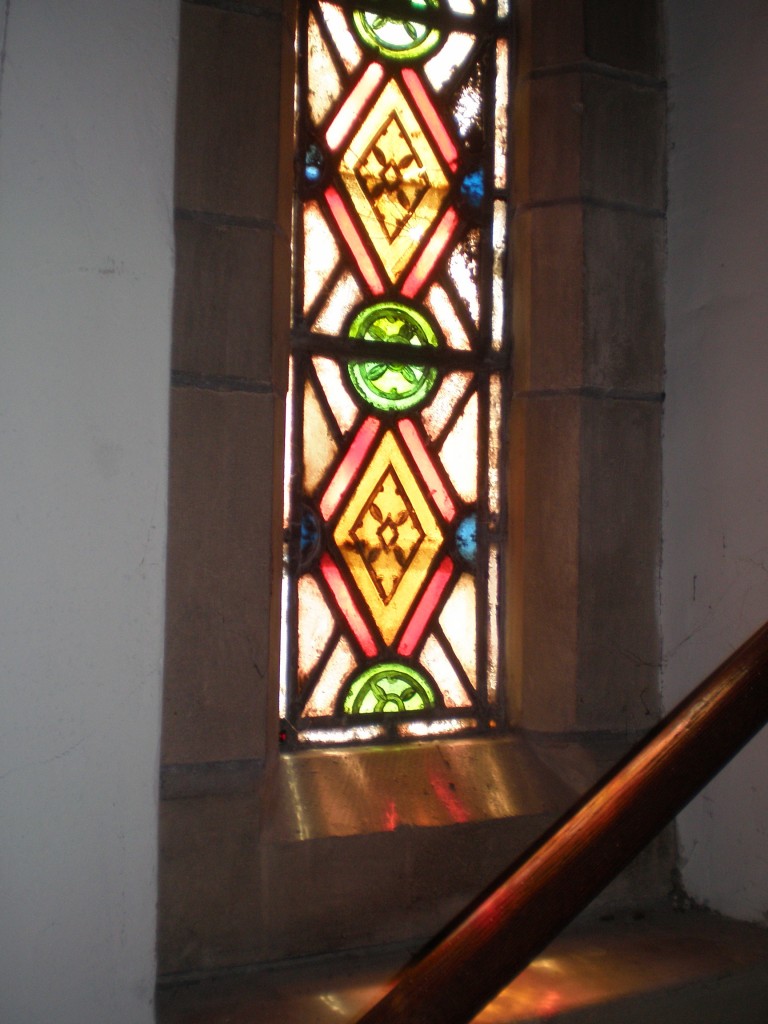
American architect Bertram Goodhue was born on this day in 1869. I went Church Hopping to the Church of the Intercession in Washington Heights and St. Bartholomew’s Episcopal Church in Midtown, two churches he co-designed in New York.
Extra! Extra! Read all about it! In 1896, Goodhue designed a typeface for Cheltenham Press. Called Cheltenham, the typeface is the one used for the headline for The New York Times.
Clip: Trading Text for Visuals: Poets As Visual Artists
25 Apr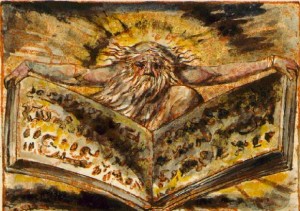
I had a really fun time putting together an article for Burnside about poets who are also visual artists. From the time I was a little child, I have been drawn to both the literary and visual arts worlds. Even in undergrad these two loves of mine co-mingled, as I majored in English and minored in studio art. My undergrad thesis looked at the relationship between writers and artists in New York in the ’40s and ’50s. It didn’t end there. While obtaining my MFA in creative writing, I took a poetry class on the collaborations of the poets and artists of the New York School. My article touches on some of the poets I’ve studied over the years, with of course a focus on the people commonly associated with the Beat Generation, but I pushed myself to find other examples as well.
Our cannons are so steeped in “dead white males” that it was important to me in stretching my knowledge to seek out poet-artists who did not play into that categorization. I was delighted to discover that Elizabeth Bishop painted. Two years ago it was the hundred-year anniversary of the former Poet Laureate of the United States’ birth, so there were many readings and events to honor her work. Somehow, though, I missed the fact that she was a painter. Maybe it’s because she herself did not take it all that seriously, as I point out in my article. I happen to think they’re delightful, though.
A contemporary poet-painter I am quite interested in researching more about is Babi Badalov. As my article touches on, he mixes languages in his works, a result of having moved a lot between cultures to avoid persecution for his controversial visual poetry. As a writer, language is something I hold dear. My vocabulary is a key to who I am: the words I’ve picked up come from my mother’s midwestern phrasing and my father’s Greek tongue as well as the vernacular of northern New Jersey and the jargon of the institutes of higher learning I attended. I’ve found the preservation of endangered languages so critical because language is about identity. The idea that a poet has no language and has many languages intrigues me. When does Badalov express himself in his native Azerbaijani language and when in Russian? Is his use of English a political act?
In my exploration of the Beats as visual artists, I could have easily waxed on and on. In fact, I did not go into any detail about Jack Kerouac’s artwork, even though he has been the subject of much of my studies. If this is something you’re interested in, leave a note in the comment section below, and I’ll write something up on this. What I did try to do for the Burnside article, though, was show that the Beats were following a rich tradition that came long before them. I point to William Blake and the Chinese and Japanese calligraphers as forerunners and influencers on the work of Allen Ginsberg and Phillip Whalen, for example.
My article was limited to just a few examples, a small taste of the artwork of poets. I’d love to hear who you think should be added to the list. Maybe I’ll make a part II!
Clip: A Time to Laugh
17 Apr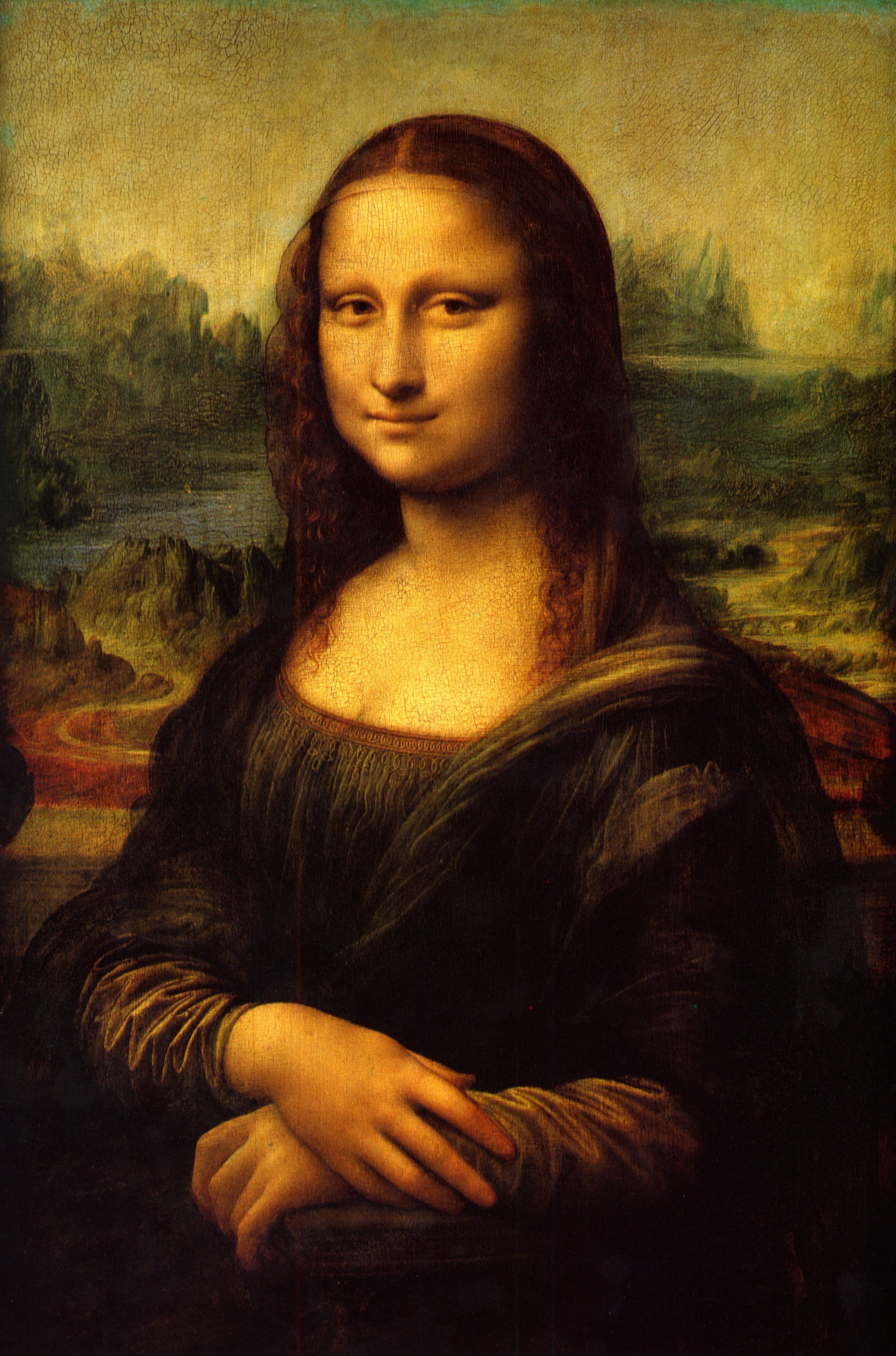
The post “A Time to Weep” seems more appropriate this week, after the Boston Marathon explosions, but yesterday my pre-scheduled post “A Time to Laugh” went up on Burnside. It’s just two works of art and a verse, like most of the blog posts in this “A Time to…” series. Sometimes, though, short is effective. If you need a little levity, silly renditions of the Mona Lisa might be just what you need.
Clip: Paintings in Praise of Poets
10 Apr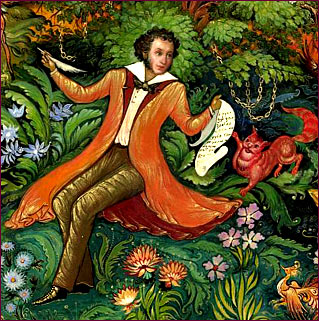
Back when I was in undergrad at Scripps, my thesis involved the relationship between poets and painters. Later, at grad school at The New School, I continued to study the way visual and literary artists influenced each other other and collaborated with one another. It’s endlessly fascinating and much more broad than the time periods of the ’40s, ’50s, and ’60s that I tend to focus on. Burnside Writers Collective just published a survey I did that shows painters honoring poets throughout the ages called “Painters in Praise of Poets.”
The Writerly Blog Hop
3 Apr
Huffington Post columnist and Burnside Writers Collective colleague Emily Timbol invited me to join a blog hop organized by writer Kirsten Oliphant of the wonderfully titled blog I Still Hate Pickles. You may remember that I participated in The Next Big Thing Blog Hop last year. I kind of feel like they’re the chain letters of the blog world and am infinitely curious who’s in my six degrees of separation.
Kirsten says in her “about me” section on her blog that she doesn’t like rules, so it should come as no surprise that she gave me and the other blog hoppers some general guidelines but told us we didn’t have to follow any set format or answer every question. Since I’m one of those creative types that tends to actually like rules (blame the editor side of my brain), I am taking a literal approach to the blog hop and answering her questions one by one.
What makes you (or makes a person) a writer?
A while back there was a funny meme going around called “What People Think Writers Do,” which shows just how relevant it is to discuss what makes a person a writer. There are all sorts of writers—some are political journalists, some write children’s books, some have their books turned into films, some are hobbyists. I don’t think it’s fair to place absolute judgment on who qualifies as a writer. There are many poets and fiction writers who only became famous late in life or even after death. Is a little girl writing in a diary a writer? What if I tell you her name is Anne Frank? Is a doctor who writes poetry on the side a writer? What if his name is William Carlos Williams? Okay, but what if that doctor is a career oncologist who writes nonfiction about cancer? Does it make a difference if his name is Siddhartha Mukherjee and he won a Pulitzer Prize for The Emperor of Maladies? Even if he never writes another book again? Is a blogger a writer? Is a grant writer a writer? Is someone a writer just because they have to write emails at work? Is there a difference between being a writer and writing? I wouldn’t say that whether someone is published or not or whether someone earns money or not means they are or are not a writer, but I would suggest that being a writer, in the sense of it meaning more than someone who occasionally writes their name on a check or writes a grocery list, means being intentional. This could mean being intention in carving out time for writing or being intentional in the selection of words, but not necessarily so: William S. Burroughs, for instance, used a cut-up technique that displaced authorial syntax yet he is still considered a writer.
So do I have the right to call myself a writer? Well, my name has appeared on book covers across the country and the New Yorker and the Paris Review have mentioned my writing. Then again, I don’t live off my writing—I didn’t even make a thousand dollars off my writing last year—and most people have never heard of me. I call myself a writer because even when I’m not writing I am thinking about writing.
Why is it sometimes hard to fess up to being a writer?
There are two big reasons why I sometimes have a difficult time admitting I’m a writer. The first is that when I introduce myself as a writer to people, they automatically ask who my publisher is—and I mean even people who aren’t in the industry suddenly want to know who the gatekeepers who let me through are or want some sort of proof that validates me as more than just the (in their mind) dreaded hobbyist. I feel like it’s like saying I’m a woman, and then someone asking who my gynecologist is. For the record, Barnes & Noble and HarperCollins Publishers have published books containing my writing. The truth, though, is that I sometimes don’t feel comfortable confessing to being a writer because I haven’t written, or published, a full-length book by myself—yet.
The second reason I don’t always like confessing that I’m a writer is because I am an editor. I personally feel that these two callings work well together, but I have noticed that people in publishing houses tend to think that the only reason I am an editor is because I’m trying to get published. I wish I was that savvy! The truth is that I began a career in book publishing because I love working with words. When I was starting out as a proofreader, the idea of being an author seemed like some far-off imagery dream, like being an astronaut. I always had a need to write, and even back then wrote for various publications, but I wasn’t diligently working on my own book. I really love working at a publishing house, seeing a book go from concept to finished product. I love working with authors and helping them achieve their dreams. From my experience, there are a lot of people in the industry who are editors and publishers because they love books and not because they themselves want to be writers. I just happen to be both.
How does writing affect your identity or otherwise impact your life?
I tend to view my experiences through the lens of being a writer. When I go to an art gallery, I automatically think that I have to write about the art I saw. When there’s a particularly momentous current event, I feel the need to write it down in my diary. It’s not just a matter of mining life for stories. I process information by writing. I often joke that I don’t really know what I think about something until I write about it.
Being a memoirist has helped me understand my identity beyond being a writer. Agents and editors tell writers that their main characters should never be a writer. But what do you do if you’re a memoirist and your main character is you, a writer? You dig deeper, you don’t allow your writerly self to speak for who you are. When you can’t rely on that shorthand of clichés about being a writer, that fancy wordwork that hides your true identity, you’re left with just yourself. Writing doesn’t just allow me to be myself—it forces me to be myself.
Want to join the blog hop? Answer the questions however you see fit on your own blog and post a link below as well as link to Kirsten’s post.
Yiasou!
Stephanie Nikolopoulos is a writer, editor, writing teacher, and speaker based in New York City.

She is the coauthor, with Paul Maher Jr., of "Burning Furiously Beautiful: The True Story of Jack Kerouac's 'On the Road.'"
You can email her at stephanie_701 {@} yahoo.com

 Stephanie Nikolopoulos