Tag Archives: feminism

Vice’s Suicide Poet: Beat Writer Elise Cowen

20 Jun

Well by now you’ve probably heard about VICE’s suicide fashion spread, “Last Words.” If not, here’s the low down: The lifestyle magazine with the apparently ironic tagline “The Definitive Guide to Enlightening Information” launched The Fiction Issue 2013 featuring all women fiction writers. So far, so good. In fact, almost exemplary considering VIDA’s stats that women authors aren’t equally published. The issue features works by Joyce Carol Oates and Mary Gaitskill, a story on Marilynne Robinson … and a fashion spread on female writers who have committed suicide. Following the public’s uproar, the staff has issued a “statement” explaining their “unconventional” and “artful” approach and “apologiz[ing] to anyone who was hurt or offended.” They have taken it down from their website but not recalled the print publication.

I’m not going to belabor the point about the dangerous implications of “Last Words”—it used self-violence to sell clothing, it said nothing about the writers’ actual work, it glamorized death, it suggested the hysteria of women, oh just to name a few things—but I do want to point out a few things that I haven’t seen the many other critiques point out (though they may certainly be there; I didn’t have time to read every single article): the fashion spread is just one of the many troubling aspects of the issue. Let’s start with the cover: it’s a picture of a skinny woman—her hip bone and clavicle jut out—in a bikini, with her hands behind her back and her legs cut off. Granted it’s a photograph by Ellen Page Wilson of Carole A. Feuerman’s 2008 sculpture Francesca, and Feuerman works out of a feminist perspective, but at quick glance, and when featured on the same page as a link to the Vice “most popular” list that includes “VICE Meets: The Biggest Ass in Brazil,” it would seem to fall in line with the usual negative portrayals of women in the media and representing women as body parts instead of a whole person—even if the artist intended it to show women’s connection with nature and their strength. Oh and that Joyce Carol Oates story I mentioned? It includes a mother on “Xanax or OxyContin.” The one by Mary Gaitskill? About a woman who wonders if it was a mistake not to have children. Hannah H. Kim’s story is about dealing with sadness. Amie Barrodale’s “A Ghost Story” opens with a woman who doesn’t accept a marriage proposal and is disowned by her father, her mother a shut-in with eczema. Zelly Martin’s story “Jailbait” is just what it sounds like: a story about a teenager who drops out of high school after becoming involved with her parents’ friend. They may have literary merit just as the artwork does, but collected together these stories position women as sexual objects and depressives. Based on the staff’s  statement and the fiction and art selected for the issue, “Last Words” was not an “oops” moment for Vice. It was an insidious attack on women.

So just who were these suicidal women portrayed in Vice’s “Last Words”? The spread included Iris Chang, Elise Cowen, Charlotte Perkins, Sylvia Plath, Sanmoa, and Virginia Woolf. Much could be said about any of these writers and why perhaps these particular writers were selected (for instance, the fact that Sanmoa hanged herself with silk stockings and not a rope). The inclusion of Elise Cowen is an interesting one, though, and while I’m by no means endorsing Vice’s tactics, maybe we can turn a negative into an opportunity to discuss the life and legacy of this poet.

Elise Cowen

Vice’s inclusion of Elise Cowen is an interesting choice because she’s not very well known as a poet. As far as I know (a search for her name on BN.com only brings up a DVD), there is no volume of poetry written solely by her. Her work has appeared in various collections but has not appeared on its own. In fact, the first book by her won’t be published until 2014. Tony Trigilio, an English professor at Columbia College Chicago, is editing the first major collection of her writing, entitled Elise Cowen: Poems and Fragments, for Ahsahta Press. Fourteen of those poems were published last year in Court Green, a literary journal Trigilio edits with David Trinidad.

The fact that Vice chose Cowen, when they could have selected more widely published women writers who have committed suicide—for example, travel writer Gertrude Bell, poet Ingrid Jonker (“the South African Sylvia Plath”), or literary critic Beatrice Hastings (Katherine Mansfield’s lover)—suggests the Vice team is either very well read or they were going on cult following more than literary recognition. The reason I am familiar with Elise Cowen, and presumably most other people are as well, is because of her circle of friends.

Elise Cowen dated Allen Ginsberg. In case you’re confused, yes, Ginsberg did date women here or there. He met Cowen through Barnard philosophy professor Alex Greer, and they went out on a date together. They got to talking and discovered they had a mutual friend in Carl Solomon, whom they’d both met while spending time in a mental hospital. Needless to say, Ginsberg and Cowen weren’t the best match: shortly after their romantic involvement, Ginsberg began seeing Peter Orlovsky, who became his lifelong partner, and Cowen began dating a woman with the pseudonym Sheila. The foursome apparently ended up living together after Cowen graduated from Barnard in 1956.

In New York, Cowen supported herself as a typist until she was fired, and then she went to check out the poetry scene in San Francisco, where she lived with an alcoholic painter. She became pregnant and had a late-term abortion and hysterectomy. After she returned to New York, she wound up in Bellevue to get treated for hepatitis and psychosis. Against the doctor’s orders, she checked herself out and went to go live with her parents up in Washington Heights. There, at their Bennett Avenue home, she jumped through the glass of the seventh-story window. Elise Nada Cowen was only twenty-eight years old.

Known at Barnard as Beat Alice, Elise Cowen may not have published a volume of poetry in her lifetime but her story and poetry is known today because of her friends. Her poetry references other great female writers such as Emily Dickinson and Mary Shelley. It is bold, experimental, and sensual.

For more information on Elise Cowen, her poetry, and her friendships, visit:

Elise Nada Cowen ’56 (Barnard College)

The Lady is a Humble Thing: Elise Cowen (Beatdom)

Elise Cowen: Sappho-Dickinson Hybrid with a Beat Sensibility (Jacket 2)

Black daisy chain of nuns (Jacket 2)

On Elise Cowen (1933-1962): poetry on the margins (Wake Your Mind)

Elise Nada Cowen (Cosmic Baseball Association)

Elise Cowen (UPenn)

Women of the Beat Generation (Knight)

Minor Characters (Johnson)

A Different Beat (Peabody)

Journals: Early Fifties, Early Sixties (Ginsberg)

I Celebrate Myself (Ginsberg)


On the Road Gets a Girly Makeover

4 Jun

book-coverimage via Cup of Jo

The cover of Jack Kerouac’s On the Road got a girly makeover last month as part of author Maureen Johnson’s challenge Coverflip, which asked people to imagine how the covers of famous books would look if they had been written by people of the opposite gender.

The experiment stems from the growing conversation surrounding how books are gendered. For more on this subject, I’d recommend reading Deboarah Copaken Kogan’s article “My So-Called ‘Post-Feminist’ Life in Arts and Letters” for The Nation, about the title and cover for her memoir Shutterbabe about her years as a war photographer. (See the disconnect? babe. war.)

The feminized cover of On the Road seen above—a fake, done in jest to prove Johnson’s point that covers are gendered—interestingly enough bears a resemblance to the real marketing materials for the recent film adaptation of Kerouac’s novel. Whether it was the film poster or the trailer, Kristen Stewart—who played LuAnne—was front and center. The US edition of the movie tie-in novel went with a collage effect but check out this Italian cover:

cover2


Lest you think the Italians are alone for some reason, it’s the same cover used for the Australian edition and the French edition.

What are we to make of the fact the movie-tie in editions look more like the fake Coverflip experiment than more recent printings of On the Road? Are the marketing teams behind these new editions trying to appeal to young women? Are they assuaging misogynistic critiques by giving a female character more attention—or are they actually embracing misogyny by using an image of a woman as a marketing tool?

For more on this subject, you might like:

Judging On the Road by Its Covers

Gender Bias Strikes Again in the Lit World

6 Mar

VIDA charted the number of male-versus-female book reviewers and authors reviewed—and it doesn’t look good. By and large, men are reviewing and getting reviewed much more often than women. And yet, according to this old article on NPR, women read more than men. Go figure.

Two years ago, I presented the argument I’d heard that women aren’t submitting as often as men to the big-name publications. I’ve heard it said that this is because men are more likely to take risks or feel like they could actually get published in these magazines and journals, while in contrast women feel like they aren’t good enough writers yet and so don’t query as often in general and that when they do it’s to smaller, lesser-known publications. I’d still like to see some hard evidence of this.

Tin House responded to this year’s VIDA report, with editor Rob Spillman saying:

Our unsolicited submissions are nearly 50/50 consistently year to year, and our acceptance rate is also 50/50. Agented submissions average closer to 2/3 men versus 1/3 women, with acceptance rates around 60/40. Interestingly, the number of agents who are sending these submissions are 2/3 women versus 1/3 men. We were also surprised to find that although we solicited equal numbers of men and women, men were more than twice as likely to submit after being solicited. This even applies to writers I’ve previously published.

History has taught us to read “dead white men” so I don’t think it’s all that surprising that even female agents would pass along more male writers than female. What I do find curious is that, according to Spillman, women writers are less likely to send work in when it’s directly asked for.


Anne Waldman Speaks on How Beat Poets Selling Out Helped Naropa

28 Jan

If you have about an hour to spare, this interview with poet Anne Waldman at the University of Texas at Austin touches on Jack Kerouac’s awareness of the arts world at the time, the New York School poets and Black Mountain poets, Beatnik-inspired clothing and selling out, how the Jack Kerouac School of Disembodied Poetics at Naropa got its name and why it’s not named after Gertrude Stein, the passing of Gregory Corso and Allen Ginsberg, William S. Burroughs’ cut-up techniques, women of the Beat Generation, the Bowery Poetry Club, and her mother’s time in Greece. It’s a thoughtful interview that’s well worth listening to.

The interview was in conjunction with the Harry Ransom Center’s 2008 exhibit On the Road with the Beats.


Clip: On the Highway of Love, Jack Kerouac Divides Men and Women

16 Aug

The Millions published my essay “On the Highway of Love, Jack Kerouac Divides Men and Women.”

The article made the headline in the Page-Turner section of The New Yorker.

It also made it into the On the Shelf section of The Paris Review.

The article was mentioned in The Atlantic Wire.

Poets & Writers mentioned the article in their Daily News on 8/14/12 … and then again on 8/15/12 to note the response the article has gotten.

That second P&W write up was mentioning Slate‘s response.

Jezebel also devoted a whole article to my article.

Guy Librarian referenced the discussion.

The article was also mentioned on The Daily Beast.

The Huffington Post added commentary to the discussion.

8/19/12; 8/22/12: This post was updated to include additional mentions.

I’m Mentioned in Sojourners

11 Jun

Oh my gosh!  I forgot to mention back in April that I was mentioned in Sojourners!!  Such an honor.

My Burnside Writers Collective colleague Larry Shallenberger, whom I attended the Festival of Faith and Writing with, wrote the article “On the Need to Start an Ole Boys’ Club For Writers” about strong women literary voices, and there was my name alongside Kim Gottschild, Rachel Held-Evans, Sarah Thebarge, Karen Spears Zacharias, Jo Hilder, and Susan Isaacs.  I’m so fortunate to be part of a collective that has strong literary voices — both male and female — and that is an incredible support network.

In the article, Larry mentions my work in writing about Jack Kerouac.  It’s so interesting that he specifically mentioned this, as opposed to my visual arts writing for Burnside, because the Beat Generation has often been criticized for not being more open to women’s voices.  Furthermore, so many women have told me they don’t enjoy reading Kerouac because of his hyper-masculinity.

Larry blogs about things like, oh, “God Talk and the Stenciling on an Atomic Bomb” and “The Personality Bending Power of Story.”

Behind the Curtain: A Magazine Roundtable

8 Mar

Everyone complains about the cost of living in New York City, but I’ve never lived in any other town or city that offered such amazing free events.  It was a Leap Day miracle when McNally Jackson’s Bookstore held a free literary event featuring the esteemed literary editors of top magazines.  Behind the Curtain: A Magazine Roundtable brought together Deborah Treisman of The New Yorker, James Marcus of Harper’s, and Ellah Allfrey of Granta for a conversation moderated by Granta editor John Freeman.


And like all worthwhile free events, this one was PACKED!  Even many who got there early had to stand in the aisles of bookshelves because there were so many attendees.  Those who got there late listened from the stairs.  It was worth it.

The editors discussed using interns—MFA candidates, mind you, not undergrad students—to read through the slush pile (unsolicited manuscripts).  The result was that some interns turned away some really great work before the editors had a chance to see it, while other interns erred on the side of caution, passing too many candidates along to the editors.  I’ve read through slush piles for my grad school’s lit mag and for the children’s book department at my office, and what struck me was how patient the panelists were.  Reading through slush piles is a lot like panning for gold: most of it is just dirt that should be tossed out.


The panelist of editors were genuinely excited about working with new authors—even to the point of overlooking cover letters with the nebulous “Dear Editor/Reader.”  At one point, Freeman asked Granta’s associate editor Patrick Ryan, who was in the audience, to come up and share heartfelt stories of giving first-time contributors their big break.  For those looking to break into lit mags, it’s reassuring to know that the editors really do want to find great, undiscovered writers and are even willing to go through several rounds—one editor mentioned an astounding twenty-one!—of revisions to get a solid piece of work from a writer just starting out in his or her career.

Treisman, Marcus, and Allfrey also talked about what sort of writing they’re looking for, and while responses and desires ranged it was clear that they’re looking not only for high-quality writing (in fact, they admitted to sometimes having to turn away well-written pieces simply because the timing wasn’t right) but for writing that is unique, that covers an area that is has been underserved.  This includes writers from areas of the world where literature isn’t being promoted in the United States or England.


The magazine editors addressed the VIDA controversy, admitting that magazines are failing when it comes to representing women writers.  Treisman said there is a generational divide.  Older women weren’t submitting work to The New Yorker at the same rate as their male counterparts.  Today’s younger generation of women writers, though, are more apt to submit their work to bigger magazines earlier on in their writing careers.  The practical application here is that women writers should be submitting their work to big-name publications.

The big take-away from the night was that the short-story form is not dead.  As someone with a book publishing background, I’ve been taught to be leery of short-story collections.  They just don’t sell.  I’ve repeated this to hopeful writer friends of mine, perhaps crushing their tender, creative spirits.  However, it was clear from the Behind the Curtain discussion that, though the amount of publications have diminished, there are still beloved magazines publishing works of short fiction.  A lot of these magazines also publish personal essays.

Writing Wednesday: Memoirist Patricia Volonakis Davis on How Cultural Identity Changes after Marriage and Moving

13 Jul

Happily ever after wasn’t the case when first-generation Italian Patricia V.–as in Volonakis–Davis married a Greek national.  The author calls her book Harlot Sauce: A Memoir of Food, Family, Love, Loss, and Greece “a tragedy written as a black comedy,” in her interview with Jane Friedman for the article “How to Find a Direct Line to Your Readers” in Writer’s Digest.

In the interview, Davis alludes that her sense of self shifted when she experienced another culture:

…Harlot’s Sauce was about how being raised first generation Italian-American affected my worldview and attitude about myself, then how these both changed as a result of my marrying a Greek national and moving to Greece with him, in an attempt to save our failing marriage.

As a memoirist writing about identity and culture, I’ve often reflected on how being raised Greek American affected my worldview.  For me, though, it wasn’t just about being Greek–it was about being Other.  Or rather, being Something.  I wasn’t just plain Jane American.  My family did not come over on the Mayflower.  I was more than American.  I was Greek American.

However, I did not fully understand this until I moved to California.  I grew up in a pretty diverse town in New Jersey.  Most people were “ethnic.”  When I moved to California, I was suddenly surrounded by blonde-haired, blue-eyed, white Americans.  They weren’t white like I was white, though.  They were American.  Their family had been here for generations.  It was in moving that I came to a better understanding of who I am as a Greek American and who I am as someone who grew up in Northeast America.

I’ve never lived abroad, like Patricia Volonakis Davis did, but I did wander around Europe for about three months one summer, and I gained further understanding of my identity through these travels.  People were quick to make assumptions about my American-ness.  People didn’t really care that I was of Greek descent.  Being raised in America trumped ethnicity in terms of my identity.

It seems to me that identity is fluid.  Depending on where we are and who we’re “comparing” ourselves with, our identity can shift.

For women especially, identity changes with marriage.  Most women still take on their husband’s name, and our names signal a lot about who we are.  For instance, I saw the name Volonakis, and I immediately assumed the author of Harlot Sauce was Greek, even though as it turns out she’s Italian American.  And yet in some ways she became more Greek than I simply by virtue of living in Greece.

I wonder how many women become culturally Other to what they were raised as because of marriage?

Check next week’s Writing Wednesday for more on Patricia Volonakis Davis.

How to Murder a Woman’s Sense of Worth

20 May

The other night I watched the 1965 film How to Murder Your Wife.  First of all, the dancing was outrageous!  I wish I could travel back in time and attend parties in the 1960s.  Okay, but second of all, the clincher of the movie is that a comic-strip writer is on trial for supposedly killing his wife and sets out to prove that she—and all wives—deserve to be murdered.  The all-male jury acquits him on those grounds!  A quick Internet search and I discovered it wasn’t until 1975 that the Supreme Court ruled that women could not be excluded from the jury pool.  (Marissa N. Batt wrote an enlightening article on this in 2004 for Ms.)

1975!  That’s not that long ago.

Close to five decades after How to Murder Your Wife, the comedy Bridesmaids has just come out.  I was talking to a guy I respect the other day about wanting to see it, and he verbally rolled his eyes about it being a chick flick.  I disagreed saying it’s supposed to be like The Hangover but with women as the leads.  I’m not so sure my argument won him over.

As much backlash as there has been over feminism and as much as people think women have obtained equal rights, it seems that that’s just not the case.  Women and girls will watch movies with men as the central character, but if a movie has a female lead it’s denounced a chick flick, unsuitable for guys.

According to a new study released this month, 31% of children’s books have a female central character.

Only 31%.

Are the VIDA findings so surprising then?

Spring Break ’11 Recap: I Got Sick

7 Apr

It’s been go, go, go for the past few months.  When spring break came around, I was so excited for the opportunity relax and have some fun.  I imagined I’d read in the Egyptian room at the Met.  I’d buy fresh veggies at the Union Square greenmarket.  I’d invite friends over for dinner.

Instead, I got sick.  I guess my body knew it could finally take a rest from the manic pace I normally put it through.

Before I got sick, though, I did have some fun.

I went with my sister and my friends Rachel and Fred to the FXB Speed-Networking for a Good Cause event at Sidebar, where I met some really cool people.  FXB, which has been around for twenty years, works to support children affected by poverty and AIDS.  They organize a lot of fun fundraising events for young professionals.

Afterward we met up with our photographer friend Annie and Carly, who was visiting from out of town.  We went to an amazing Japanese restaurant.  I seriously could not get enough of the green beans and corn.

The next day I spring cleaned my apartment. Woot!  Then my friend came over and we ate pizza and chocolate and watched Paper Heart and The Virgin Suicides (which is of course based on the book by Greek-American author Jeffrey Eugenides).

That kick-off weekend I also hopped on the bus and headed over to New Jersey, to have lunch with a friend.  I hadn’t seen her for a few months so we had one of those really good, drawn-out lunches and talked about everything.  So therapeutic.

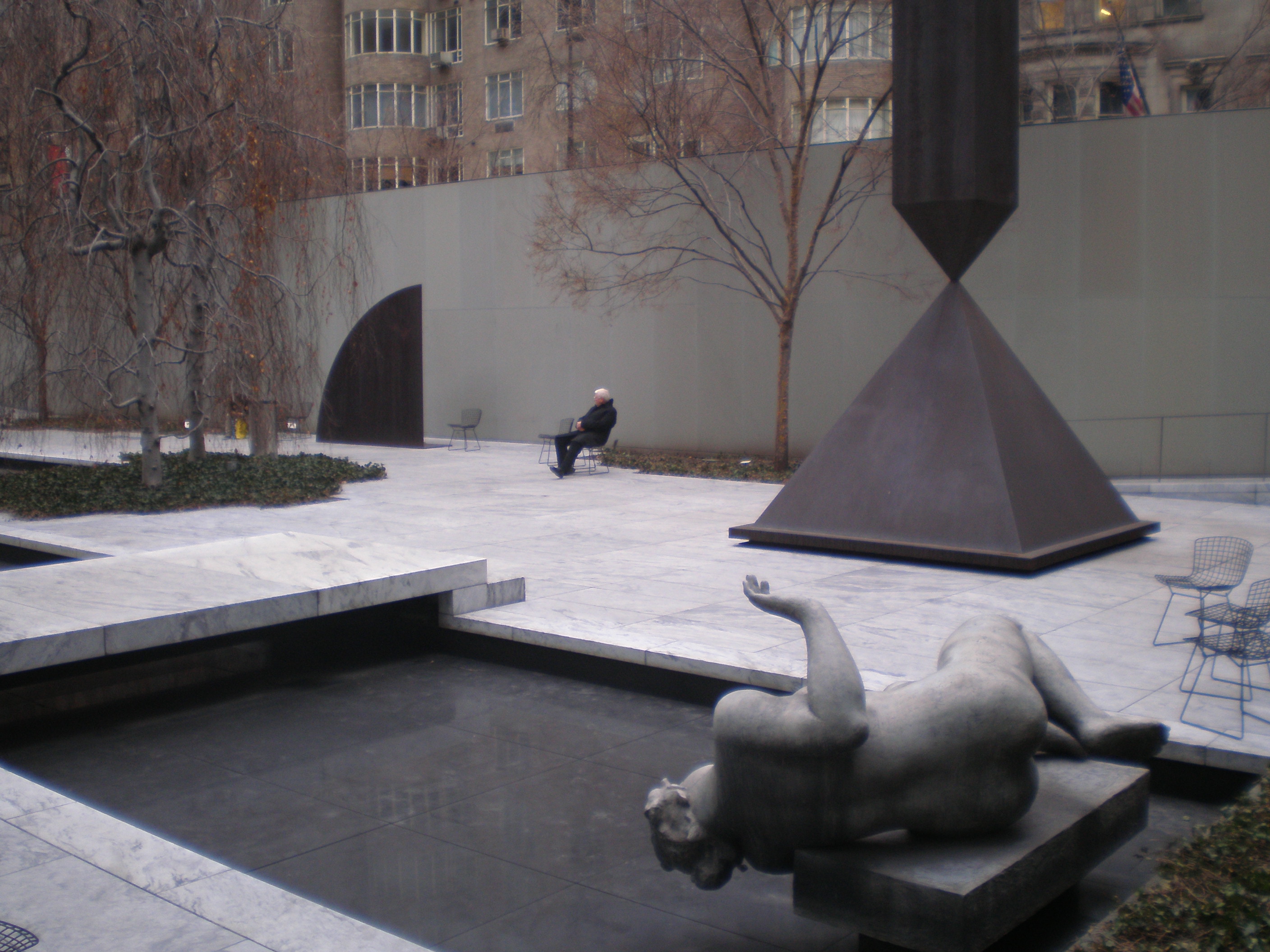
Monday I met up with a friend and fellow Scripps alumna who works at MoMA.  We had lunch and then she gave me a tour of the Pictures by Women: A History of Modern Photography exhibit.  I learned so much more from what she told me than if I had been there by myself.  It was such an inspiring and monumental exhibit.

Then I went to the New York Society for Ethical Culture to hear what all the hoopla was about over Rob Bell and his new book.

By Tuesday I was sick and spent the rest of the time watching films like The Runaways on Netflix and reading Lydia DavisThe End of the Story.