Tag Archives: Greece

Photos from the 2013 New York City Poetry Festival

31 Jul

Po2

Po1

po3

po4

po5

I feel incredibly honored to have been invited to read at the 2013 New York City Poetry Festival. I had such a blast hearing so many great poets read at last year’s festival, and it never occurred to me that just a year later I would be joining them on stage. I have poet RA Araya to thank for continually supporting my writing. He invited me to read Homer in the ancient Homeric Greek and from the literary biography I’m coauthoring with Paul Maher Jr. entitled Burning Furiously Beautiful: The True Story of Jack Kerouac’s “On the Road,” so I read two road trip pieces.

For my Homer selection, I chose the opening passage from The Odyssey. Growing up in the Peloponnesus, my father had to memorize part of the epic poem in school. To this day, he still can recite the lines! I studied Classical Greek at Pomona College (while a student at Scripps), which is different than Homeric Greek. We never really read aloud in class because it’s a “dead” language, one that is no longer spoken but read by scholars. There are debates about how ancient Greek dialects were spoken, as the pronunciation is, according to some scholars, different than modern Greek. I am therefore definitely not adept at reading in the ancient tongue, but if someone asks me to read something specific, I do my best. Fortunately, there are many great English translations of The Odyssey out there too!

It was a no brainer to choose one of the passages about poetry from Burning Furiously Beautiful. In telling the story of the making of the novel On the Road, it was important that the literary biography also explored Kerouac’s poetry and his friendship with other poets. Although he is mainly remembered as a novelist, Kerouac wrote poetry throughout his life, including the period when he was on the road. There’s a really strong section in the book about how Kerouac and Allen Ginsberg influenced each other’s writing, and I wanted to read that, but in the end I found a passage in Burning Furiously Beautiful that seemed to better encapsulate the mood of the Poetry Festival. In the passage, Kerouac has been walking along the highway, hitchhiking, and finds himself composing a poem about everything he sees around him. It reminded me of how out on Governors Island we were all a bunch of writers lofting in the grass and translating the world around us into poetic language.

I read directly after RA, who opened up the event with his famously short-but-sweet poem, and then came Hillary Keel, Sarah Sarai, Carmen Bardeguez-Brown, Kate Levin, Carlos Manuel Rivera, Sparrow, Bonafide Rojas, and Keith Roach. They were amazing! Seriously. Hilary read in German and a couple of the other poets read in Spanish, and I suspect our reading—under the name Miguel Algarin’s Brooklyn Poetry—was the most linguistically diverse at the Festival. I had traveled over the Governors Island with Kate, and I think this was her best reading yet. In addition to poetry about Manhattan and our value as people, she read from her punk novel, which I would’ve thought was a poem if she hadn’t said otherwise. I always enjoy hearing Sarah read, and in particular enjoyed her poem about meeting an angel at a bus stop. The poet who had me in stitches, though, was Sparrow. I’d heard him sing at RA’s birthday party last year, and I loved hearing his one-liner poems this time around.

Special thanks too to our stage manager Liz von Klemperer, who did an excellent job. There were a lot of volunteers who kept the entire event running smoothly. The New York City Poetry Festival is put on by The Poetry Society of New York and is organized by Stephanie Berger and Nicholas Adamski. For the full lineup of the two-day event, check out NYCPF 2013.

I also want to thank my family and friends who trekked out to the island—some coming from as far as Jersey and Brooklyn—to support my reading. The photos here were taken by Leslie Marks, except the last one which is a self portrait. For more photos of me and all the other amazing poets, check out asterix611’s flickr.


“The Mediterranean Is a Miserable Place”

6 Jun

Greek-flag

While surfing the Web, I came across an article titled “Vacationing in the Most Miserable Place on Earth This Summer?” The tag line: “The Mediterranean is a miserable place.”

By the second sentence, the author Curtis Tate, was finger-pointing Greece: “[…] Greece was the flag bearer for the economic and social misery these countries are experiencing.”

There are countries in the news right now for deadly protests, horrific crimes against women, suicide bombers, and warlords. Vacationing in those countries would quite possibly be a more miserable experience.

But wait! Tate’s article actually has nothing to do with vacations. It’s about how people actually living in the Mediterranean–not only in Greece but also France–are unhappy with their current economic situation. His article concludes by saying “[…] China, Brazil, and even Kenya are optimistic for the future….” I have nothing against those countries, and I’m sure they can make lovely vacation destinations, but I’ve heard more people say they’d want to travel to France and Greece. Tate’s article is dangerously misleading.

Tate’s article title perhaps compels readers to click to read but it is offensive in its fear mongering. Unfortunately it appears to be a tactic he–or his editor–has used before:

Is Europe’s Unemployment Worst Than We Thought?

7 Reasons to Fear the Housing Bubble

Is Europe Holding the Rest of the World Back?

Are Chinese Export Numbers Increasingly Sketchy?

To be fair, the actual content of Tate’s “Miserable Place” article is not inaccurate in terms of the statics cited for the outlook of people in the Mediterranean.

The topic is not even his original idea.

Instead of linking to the Pew Research Center’s reports that he cites, Tate links to Drew DeSilver’s article published the day before his, entitled “The Mediterranean: Go for the Beaches, Not the Mood.” Although not identical word for word, Tate’s and DeSilver’s articles have the same content and in the same order. While Tate’s title invokes fear, DeSilver’s title is slightly more optimistic but suggests that the mood will affect one’s vacation.
While it is true that a poor economy can put a damper on tourism because of diminished resources and increased crime, neither Tate’s nor DeSilver’s articles are not making this point. Their articles says absolutely nothing about if and how the economy is affecting vacationers.Instead, Tate remarks that young people are unemployed. Unless he is subtly trying to warn you that you’ll be ordering your frappes from someone in their forties instead of some hot young thang, the fact that young people aren’t finding work right now probably isn’t going to deter your vacation plans. Oh and about that age thing — Jennifer Aniston is 44 and John Stamos is 49. We age well.

DeSilver says, “And, in what should surprise exactly no one, Greece has by far the bleakest outlook.” Hm… “in what should surprise exactly no one,” huh? He’s right: I’m not surprised that the statistics say 99% of Greeks say their country’s economic situation is “very or somewhat bad.” We’re a notoriously melodramatic people. Have you ever read the tragedies?

Does our “miserable” and “very or somewhat bad” outlook on the economy really affect who we are and how we treat our tourists, though?

My sense is that it doesn’t. Certainly, I’m a bit biased, but I’m basing my understanding of Greek tourism on the fact that every non-Greek I know who has visited there has loved it. They’ve found the people to be warm and generous, and they’ve gone multiple times or wished they could.
An article published the same day as Tate’s article was titled “Greece: Athens Tourism Up 10% for First Time in Three Years.” It concluded saying, “Arrivals at regional airports across the country last month showed a 20.5% increase in arrivals of foreign tourists compared to the same month last year.” Earlier this year, the Austrian newspaper Der Standard even hypothesized that this could be “the year of Greek tourism,” according to Capital.Gr.

I did my due diligence and checked out the Pew Research Center’s report. Guess what. The words “travel,” “traveler,” and “vacation” appeared no where in the report.

Greece needs your tourism now more than ever.

Feasting on Flowers to Celebrate the Month of May

1 May

flower

Kalo mina! It’s the first day of May–or as we Greeks call it, Protomaia or the Feast of the Flowers. Here in New York it’s been a long, long winter. Every time it started to warm up, it would start snowing. After we had one big snowstorm, a robin, that ephemeral symbol of spring, chirped on top of a construction rod as if to say it was tired of the cold weather too. Now, at last the days are longer, and pink flowers are blooming in Spanish Harlem.

During the winter, people always tell me that they’re sure I must wish I was in Greece during the cold season. Yes, we have palm trees in Greece–my dad is obsessed with plants!–but the country doesn’t have a tropical climate year-round. It actually snowed in Greece this year, as you can see from Yannis Behrakis’ stunning photos of a snow-topped Acropolis.

Perhaps this year, more than ever, Greeks are celebrating May Day. Traditionally heralded by picnics and flower collecting, Protomaia announces the start of spring. And with spring comes rebirth. A new beginning. A fresh start.

We could all use that.

Gregory Corso’s Friends and Fans Give Him a Birthday Tribute

26 Mar

Michael Limnios is doing impressive work interviewing poets, scholars, and friends of the Beat writers over on Blues GR. For Gregory Corso’s birthday today, he’s compiled stories about the poet from those who had the pleasure of knowing him over the years and those who have read and been influenced by his work. The tribute includes memories and reflections from:

  • Ken Babbs
  • Hettie Jones
  • Harold Chapman
  • Dario Bellini
  • Andy Clausen
  • Eddie Woods
  • Nanos Valaoritis
  • Paul Fericano
  • Francis Kuiper
  • Helen Weaver
  • Elsa Dorfman
  • Marc Olmsted
  • Hank Harrison
  • Elliot Rudie
  • Levi Asher
  • Frank Beacham
  • Neeli Cherkovski,
  • Gordon Ball
  • Catfish McDaris
  • Tisa Walden
  • David Amram
  • Yannis Livadis
  • George Nicholas Koumantzelis
  • Gerald Nicosia
  • Robert Yarra
  • Ruth Weiss
  • Joe Ambrose
  • Cyclop Lester
  • John Sinclair
  • Michael Minzer
  • A. D. Winans
  • Kurt Lipschutz
  • Mark Sargent
  • Harvey Kubernik

Anne Waldman Speaks on How Beat Poets Selling Out Helped Naropa

28 Jan

If you have about an hour to spare, this interview with poet Anne Waldman at the University of Texas at Austin touches on Jack Kerouac’s awareness of the arts world at the time, the New York School poets and Black Mountain poets, Beatnik-inspired clothing and selling out, how the Jack Kerouac School of Disembodied Poetics at Naropa got its name and why it’s not named after Gertrude Stein, the passing of Gregory Corso and Allen Ginsberg, William S. Burroughs’ cut-up techniques, women of the Beat Generation, the Bowery Poetry Club, and her mother’s time in Greece. It’s a thoughtful interview that’s well worth listening to.

The interview was in conjunction with the Harry Ransom Center’s 2008 exhibit On the Road with the Beats.


Blogiversary: Greeks Beat Kerouac in 2012

10 Jan

greek-greece-flag_pink

January 1 marked the anniversary of my blog! Thank you all for your support and encouragement of my writing and blogging. It means so much to me that you take the time to read and comment on my blog entries.

I just reviewed a report of my year in blogging, and it’s been a good year!

Here’s a recap of my most viewed posts of 2012:

Notice anything interesting? They all have to do with Greece, and four out of five of them have to do with Greek beauty and fashion. Despite the fact that most of my blogging efforts this past year were about Jack Kerouac, not a single Kerouac-related entry made it into the top 5.

Two out of the above-mentioned blog posts didn’t receive any comments, despite being popular views. My most commented on post of the year was:

That just goes to show you that comments and views aren’t necessarily correlated.

What were your favorite posts from 2012?

Gift Guide for the Beat Reader

14 Dec

The writers associated with the Beat Generation were anti-Consumerism, and I have a hard time believing they’d want anyone to buy beatnik merch. They would want you to buy and read their literature instead. However, if you have friends who love Beat literature, you may be hesitant to buy them On the Road because chances are they probably already have dog-eared paperbacks of both the standard novel and the scroll version. Here are a couple of alternative Beat-inspired gifts.

Amram

Musician and author David Amram did jazz-poetry performances with Kerouac and other poets. He also wrote the scores to films such as Splendor in the Grass and The Manchurian Candidate and has jammed with a wide variety of musicians. David Amram: The First 80 Years chronicles his genius talent. (You can watch a video of me reading with Amram here.)

logo

Another gift-worthy film is Ginsberg’s Karma, a “documentary about the legendary poet Allen Ginsberg and his mythical journey to India in the early 1960s that transformed his perspective on life and his work.” The film was edited, produced, and directed by Ram Devineni, and features poet Bob Holman. I saw this film at the PEN World Voice Literary Film Feast a few years ago and was inspired to get involved in some of their subsequent projects.

billykoumantzelis

Billy Koumantzelis was a friend of Kerouac’s back in their hometown of Lowell and served as a pallbearer at his funeral. I picked up this CD when I was at Lowell Celebrates Kerouac in 2011. It’s full of stories about Kerouac hanging out at bars, getting into fights, and appearing on The William Buckley Show and makes a great gift for someone who wants to hear stories from someone who knew Kerouac. (I got to meet Koumantzelis last week, and he is a true gentleman. I’ll be sharing stories from that soon.)

corso2

Allen Ginsberg had a portrait of poet Walt Whitman hanging in his apartment. This framed portrait of Gregory Corso is a great tribute to a poet who loved the Classics.

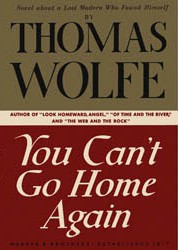
YouCantGoHomeAgain

Jack Kerouac was inspired by author Thomas Wolfe. Bundle up Look Homeward, Angel and You Can‘t Go Home Again for the Kerouac fan.

the-visitation

Kerouac wrote about the Grotto in Lowell, which is a beautiful and peaceful space to visit. Artist Jonathan Collins, whom I met at one of my readings, did a series based on the Grotto, which would make a lovely gift.

Larry-Closs_Beatitude_Anthony-Freda-194x300

Another person I met at a reading was Larry Closs, author of the book Beatitude.
 I stayed up late one night reading this heartbreaking-but-hopeful book of love, friendship, and the power of literature. You can read the synopsis here.

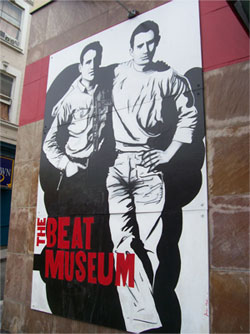
museum-sign

I haven’t finished my California road trip posts yet (so many posts, so little time!), but it will include my visit to The Beat Museum in San Francisco. I was greeted by none other than proprietor Jerry Cimino himself, whose stellar work in preserving Beat history I’ve been following for many years. He took some time out to chat with me and show me the plethora of rare and first-edition Beat books. Even if your budget isn’t big enough for a first edition, you can still get archival lit mags, which make a really cool gift.

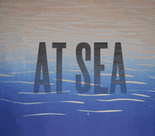
Sea

Another place soon to be featured on my California road trip is City Lights Bookstore. In addition to rare and signed copies of books, you can also get some exclusive works here. At Sea is an “Exquisite handmade letterpress edition of Lawrence Ferlinghetti’s new poem” for poet Pablo Neruda.

Of course there are tons of biographies, walking tour books, graphic novels, films, and so forth that would also make great gifts, but if you’re looking for something a bit more off the beaten path (heh), these might be the gifts you’re looking for.

Gift Guide for the Greek Lover

6 Dec

Whether you’re giving a Greek American a taste of their homeland when they can’t make it back for the holidays or satiating a Hellenophile’s interest in Greek culture, there are countless foods, books, beauty products, and jewelry that will suit your needs.  Plus, select a gift made in Greece and you’ll also be supporting the struggling Greek economy.  Here’s just a small selection of Greek gift ideas, some made in the States, some in Greece, and others elsewhere, but all unique and lovely.

Gifts for the Greek food lover:::


Kokkari: Contemporary Greek Flavors by Janet Fletcher


How to Roast a Lamb: New Greek Classic Cooking by Michael Psilakis

A selection of delicious dressings and marinades from Sophia’s Gourmet Foods

A selection of three different flavors of honey from Odysea Shop

Traditional Greek preserves (rose petal and pergamot) by Monastiri

Kalamata olive oil

Ouzo candies

Pavlidis Dark Chocolate

Pastelli with honey

Bonus tip! – Gifts appear so much nicer when they come as a set.  You may want to give a cookbook with some Greek spices.  A duo or trio of a certain type of product (such as honey or olive oil) is a great way for the recipient to try out a few flavors.  Or, you may want to give a gift basket of assorted Greek candies.


Gifts for someone who loves Greek literature:::


Antigonick by Sophocles, translated by Anne Carson, illustrations by Bianca Stone

The Greek Poets: Homer to Present by Peter Constantine


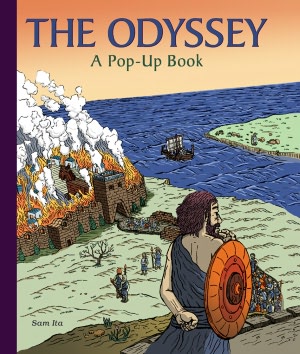
The Odyssey: A Pop-up Book by Sam Ita


Holidays on Ice by David Sederis


Bossypants by Tina Fey


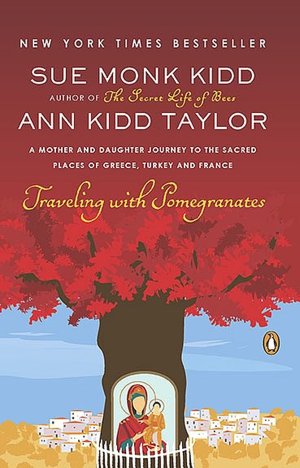
Traveling with Pomegranates by Sue Monk Kidd and Ann Kidd Taylor

Subscription to Greek America Magazine

Bonus tip! – Trying pairing the book with a book light, a notebook and pen, a bookmark with a quote by a Greek philosopher, or a coffee mug (maybe even with a bag of Greek coffee).


Gifts to make someone feel like a beautiful and pampered Greek goddess:::

Beauty products from Korres.  I would especially recommend Korres Wild Rose + Vitamin C Advanced Brightening Sleeping Facial. You can read my review here.

Olive oil body lotion by Olivia

Jewelry by Konstantino

Bonus tip! – Include a lovely handwritten letter.  A bottle of Greek wine (here’s my review of the Greek American wine Pindar) or some fine Greek chocolates (here’s my review of the Greek American chocolatier Chocolate Moderne) would also make someone feel loved and pampered.


As the Greek proverb says, “A gift, though small, is welcome.”

Blues.Gr Interviewed Me about the Beats and Greece!

27 Nov

What mistakes of the Beat Generation would I most like to correct?

What role did Greek immigrants play in Jack Kerouac’s life?

How would I spend a day with Gregory Corso?

What does Greek philosophy have to do with Beat writing?

Am I a Beat??

Find out my answers at Blues.Gr!

Athens-based writer Michael Limnios has been interviewing people associated with the Beat Generation for Blues.Gr.  He has an impressive catalog of interviews, featuring such names as Amiri Baraka, Helen Weaver, Levi Asher, Dennis McNally, and so many other fascinating figures.  I don’t know how I ever got lucky enough to be even remotely associated with these people, but I’m honored.  Michael asks unique questions so the interviews touch on aspects of the so-called Beat Generation that aren’t always addressed.

Next time I’m in Greece, I’ll have to see if he’s available to sit down in the platea and chat about the Beats and jazz and rembetiko over a glass of ouzo!

Greek American Fashion Week: Angelo Lambrou

20 Sep

Of the four designers showing their Spring/Summer 2013 collections at the Greek American Fashion Week Show, only Angelo Lambrou debuted a wedding gown.  The fashion show’s founder and emcee Maria Pardalis, who looked gorgeous in one of Lambrou’s dresses (see pic here), described Lambrou’s Spring/Summer 2013 collection as “African tribal bridal.”  The all-white wedding gown made use of folds and folds of cloth, capturing movement and conjuring drama.

Another dress in his collection kept that billowy white skirt but swapped out the top for a polka-dotted red strapless top.  It’s perfect for bride who wants a wedding dress with unique personality.  It doesn’t have to be worn as a wedding dress, though.  It could also be worn to a fancy summer soiree, say a moonlit cruise.  An alternate version was that same dress but with a black bottom.  This looked even more like evening wear.  What caught my attention was the accessorizing — check out those fantastic statement necklaces!

In addition to the rollicking-waves dresses, there were also sleek evening dresses and smart daytime dresses.  The sleek evening dress was classic, a true wardrobe staple.  The daytime dresses had a retro vibe with stripes, polka dots, and thick piping.  They were flirty in a campy sort of way.  Very adorable.

Angelo Lambrou is based in the East Village here in New York now, but he was born in Southern Africa to Greek-Cypriot parents.  He studied fashion in Johannesburg and London before returning to Botswana to start his own fashion line.  He worked with Miss Botswana in 1999 and designed all the contestants’ dresses for the 2000 Miss Universe competition; he dressed Patti LaBelle for the 2002 Grammy Awards and Maria Bello for the Secret Window premier.