Tag Archives: Gregory Corso

Blues.Gr Interviewed Me about the Beats and Greece!

27 Nov

What mistakes of the Beat Generation would I most like to correct?

What role did Greek immigrants play in Jack Kerouac’s life?

How would I spend a day with Gregory Corso?

What does Greek philosophy have to do with Beat writing?

Am I a Beat??

Find out my answers at Blues.Gr!

Athens-based writer Michael Limnios has been interviewing people associated with the Beat Generation for Blues.Gr.  He has an impressive catalog of interviews, featuring such names as Amiri Baraka, Helen Weaver, Levi Asher, Dennis McNally, and so many other fascinating figures.  I don’t know how I ever got lucky enough to be even remotely associated with these people, but I’m honored.  Michael asks unique questions so the interviews touch on aspects of the so-called Beat Generation that aren’t always addressed.

Next time I’m in Greece, I’ll have to see if he’s available to sit down in the platea and chat about the Beats and jazz and rembetiko over a glass of ouzo!

Clip: Church Hopping: Grotto of Our Lady of Lourdes

12 Oct


A car packed with teenagers was speeding down the street at the exact moment we were approaching the Grotto of Our Lady of Lourdes on foot.  It was an unseasonably warm October day in 2011, and the car window was rolled down.  Or maybe the rebellious, rowdy passengers rolled it down when they saw us, a group of about twenty-five people, looking eagerly toward the Stations of the Cross.  ”God sucks!” a teenager yelled to the support of his peers.  The car vanished down the road as we turned around.


Read the rest of my article Church Hopping: Grotto of Our Lady of Lourdes on Burnside Writers Collective and discover how Jack Kerouac, Gregory Corso, Allen Ginsberg, Bob Dylan, JFK and Jackie Kennnedy, and endangered languages are connected to this place.

Banned Book Week 2012

1 Oct

It’s Banned Books Week!

I’ve been in a few conversations recently about censorship that really got me thinking.  In one, I admitted I’m probably a “square.”  I like following the rules.  That said, I believe 100% in the freedom of speech and the freedom of expression.  I don’t believe the government or libraries or anyone else should ever block our access to literature.  In fact, I believe we should have more free access to information and the written word.  As cliche as the saying is, knowledge is power.  Books are an incredible source for people looking to gain knowledge but also for those trying to understand themselves and the world around them a little bit better.  Censorship is dangerous to our well being.

The other conversation I had was in regard to ratings for children’s books.  Now, personally, I don’t really think ratings are all that helpful.  I’ve seen PG-13 movies that were more offensive to me than movies rated R.  The documentary This Film Is Not Yet Rated exposes why this occurs.  This brings me back to literature: the YA books I read as an adolescent were far more scarring than the books I read today.  So many of the books I grew up reading were about teens that had been raped or physically abused or had other terrible things happen to them.  I suppose these were the moral books that were supposed to scare me into being square so bad things didn’t happen to me.  The books I read today may have adult language or themes, but these classics and New York Times bestsellers intended for adult readers are generally milder and less damaging than the books I read when I was younger.  I don’t think ratings on YA books would necessarily change reading habits, and I do believe teens should have free access to the reading material of their choice, but perhaps both parents and young readers should be aware that the YA label can be a bit misleading.

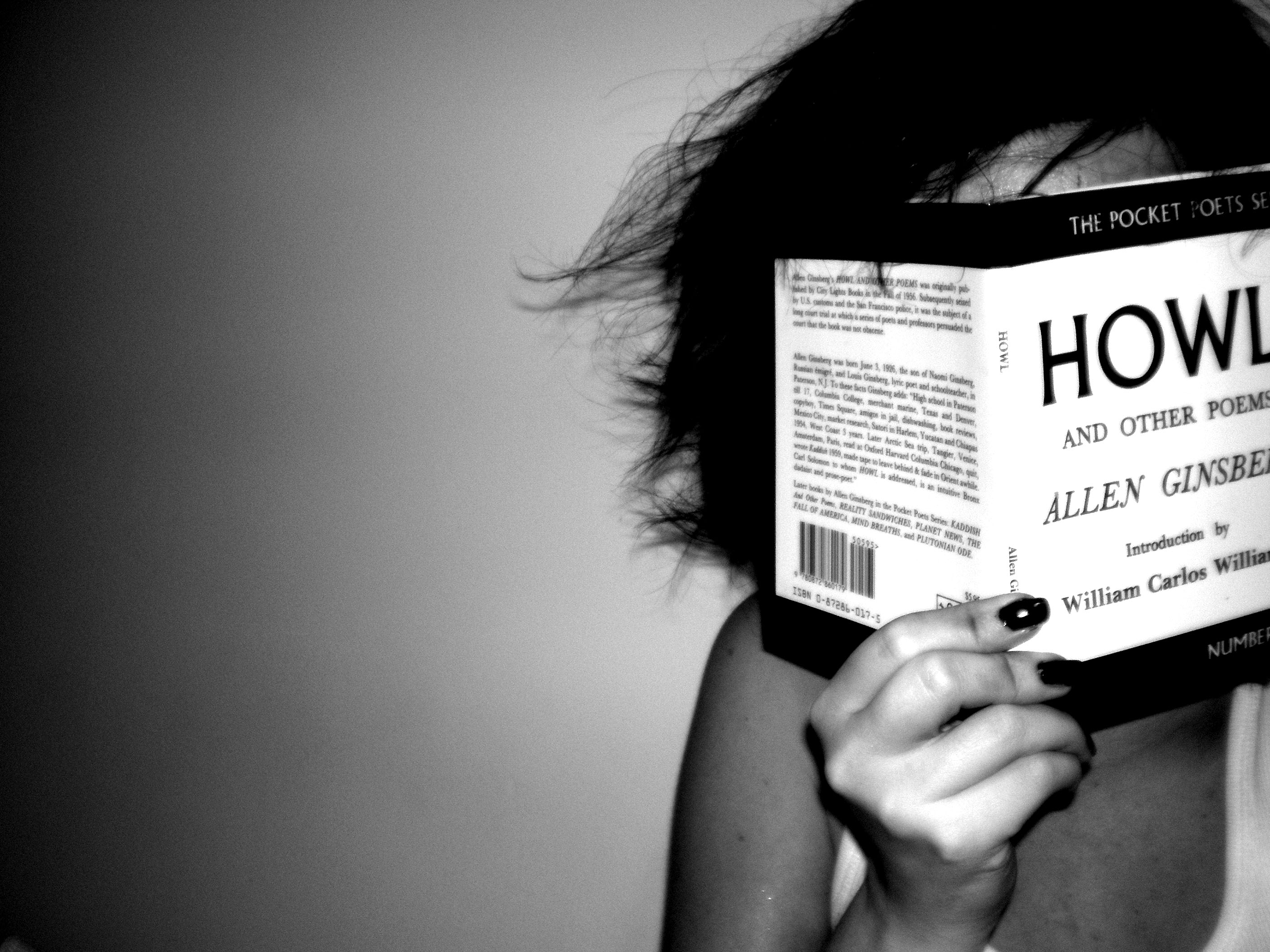
If you’ve never seen HowlBanned Books Week would be a good week to watch it.  The film portrays the true-life events surrounding the obscenity case over City Lights’ Shig Murao and Lawrence Ferlinghetti selling Allen Ginsberg’s Howl.  The book Howl on Trial: The Battle for Free Expression reports on this historical trial, going into more depth.  From the City Lights product page:

To celebrate the 50th anniversary of Howl and Other Poems, with over 1,000,000 copies in print, City Lights presents the story of editing, publishing, and defending the landmark poem within a broader context of obscenity issues and censorship of literary works.

The collection includes:

* The complete “The Howl Letters” — correspondence between Allen Ginsberg, Lawrence Ferlinghetti, Jack Kerouac, Gregory Corso, John Hollander, Richard Eberhart, Louis Ginsberg, and others – with first-person insight into Ginsberg’s thinking and the significance of the poems to the author and his contemporaries.

* Ferlinghetti’s account of hearing “Howl” read at the Six Gallery, of editing the book, and of his court battle to defend its publication.

* A timeline of censorship in the U.S. that places the Howl case in the broader historical context of obscenity issues and censorship of literary works.

* Newspaper reportage, magazine essays, cartoons, photographs, and letters to the editor that illuminate the cultural climate of the mid-1950s, when sexual expression in print was suppressed.

* Excerpts from the trial transcript that show the brilliant criminal lawyer Jake Ehrlich in action.

* ACLU Defense Counsel Albert Bendich’s reflections on the Howl case, and his thoughts about challenges to Constitutionally guaranteed freedoms.

*A look at how the fight against censorship continues today in new forms. 

Interestingly, it was a conservative judge who saw the value in Ginsberg’s Howl, finding it to have “redeeming social importance.”

Find out more about Banned Books Week here.

Recap — with Photos! — of David Amram Reading

10 Sep


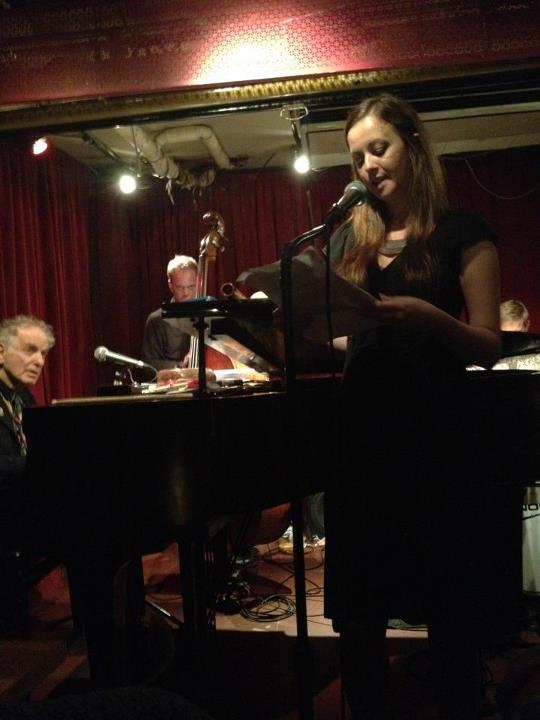
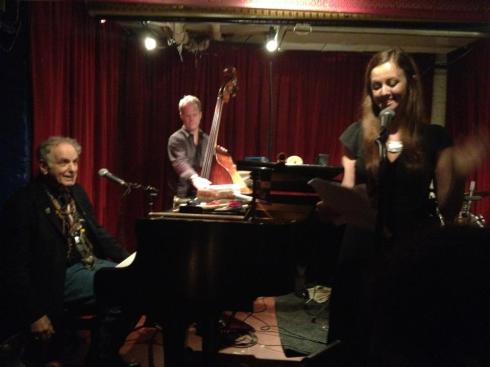
When musician David Amram introduced me before I read with him at Cornelia Street Cafe on September 3, 2012, he very generously said people should pay attention because one day they’d see me on television.  To me, though, reading with David Amram was a much bigger deal than being on television.  There are countless television shows, but there is only one David Amram.  While there are many fantastic musicians and writers out there whom I’d be honored to read with, there are few who hold such a special place in forming my creative identity as Amram does.

I first became acquainted with Amram through studying Jack Kerouac when I was just a teenager.  I was enamored with his improvised performance as Mezz McGillicuddy in the 1957 Robert Frank and Alfred Leslie film Pull My Daisy.  In fact, this photograph, featuring Larry Rivers, Jack Kerouac, David Amram, Allen Ginsberg, and Gregory Corso, who all collaborated on the film, is probably my all-time favorite photograph of the poets, writers, and artists associated with the Beat Generation.  It seems to so purely capture their friendship: just a couple of people hanging out at a cafe, maybe talking about the arts, or maybe just drinking coffee late into the night and enjoying each other’s company.

Although it was literature that introduced me to Amram, his music fascinated me.  Here was a musician who was more than just skillful.  Amram is an innovator.  He’s someone who experiments, improvises, blends genres, captivates.  He is, quite simply, mesmerizing to watch and listen to.

Through reading biographies on Kerouac and also reading Amram’s own biographies, I came to discover the jazz-poetry readings Amram and Kerouac began doing in the Village in 1957.  These were improvised sets, requiring each to masterfully foresee and adapt to changing tempos and moods in each other’s works.  These jazz-poetry collaborations captured my imagination, challenging my view of art and the way in which it’s created, the musicality of words, and the role of collaboration, improvisation, and performance in literature.  As I read about the collaborations in musty library books, forty-some-odd years after they’d taken place, I envisioned what it must’ve been like to be in the crowd at a painter’s loft or at the Circle in the Square.  Did the people there realize they were part of history?

In 2001, I had the opportunity to ask Amram just that when I interviewed him for some research I was doing at the time.  I sat enthralled, clinging to his every word, as he told me about all the places he used to hang out at in New York, about collaborating with Kerouac, and about how the term “Beat Generation” is just a marketing term that people later attached to the individual artists who each create unique works.  As he talked, answering all of my questions and never rushing me, and later as I read another biography of  his, I realized that Amram is the real deal — a creative genius and also a beatific individual, an artist who inspires and encourages.

Amram has been someone whom I’ve long admired, both on an artistic and a personal level.  Reading about those 1957 jazz-poetry readings he did with Jack Kerouac, I never imagined that one day I would have the opportunity to read the book I’m writing on Jack Kerouac with him.  When my former editor suggested we attend Amram’s show at Cornelia Street Cafe in the Village, I excitedly said yes.  A few days later, I had to email him back to say Amram had invited me to read with him.  It was completely surreal.

The September 3, 2012, show was completely sold out.  I had some friends who were turned away at the door.  Special thanks to Cornelia Street Cafe’s Robin Hirsch and the staff for hosting the reading and for doing such an excellent job in organizing the event.  I read a short selection about Kerouac’s time in Mexico from Burning Furiously Beautiful: The True Story of Jack Kerouac’s On the Road, the book I’m co-authoring with Paul Maher, Jr.  It was really exciting because author Larry Closs and painter Jonathan Collins, both of whom I met through the Burning Furiously Beautiful Facebook page, were in the audience.  Poet and producer RA Araya, who has been hugely supportive of my work and whose birthday bash was the premiere reading from Burning Furiously Beautiful, was also there, and graciously provided the photography you see here.  I had some other family and friends there as well and am so appreciative of their support.  It means more to me than most people realize.

As soon as my videographer, Liz Koenig, sends the video, I’ll post it so you can hear me reading with David Amram and his band.  The band, consisting of Amram, Kevin Twigg, and John de Witt played so beautifully — even more of a feat, considering Twigg had hurt his hand before the show.  The music was haunting and fit the piece that I read so perfectly.  I wanted to remain present in the moment, to really hear what they were playing, and savor the moment.  It was one of those times in life that I wanted to tuck into my heart and cherish.


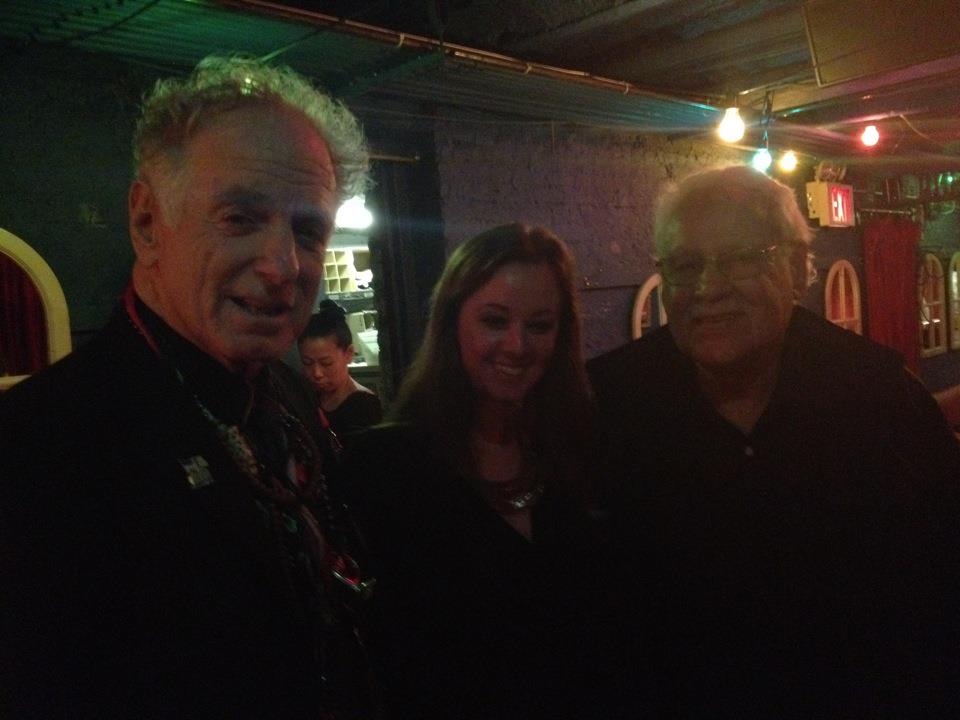
David Amram, Stephanie Nikolopoulos, Joe Pacheco
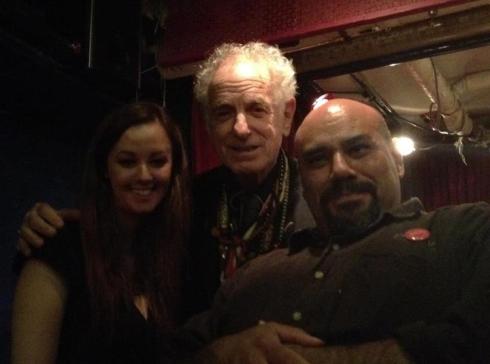
Stephanie Nikolopoulos, David Amram, RA Araya

Moose!

24 Aug

Last Friday night I went to The Buffalo Readings to celebrate poet Kate Levin’s birthday.  It was my first time at the reading series, and everyone was encouraging and inviting, making me feel like part of the group.  It was a real laid-back sort of evening, very far east in the East Village.  A hot and rainy night, where we crowded together on metal folding chairs, listening to different poets read from iphones and sheets of tattered paper stapled together.  Musicians jammed on various instruments, while the poets read.

One of the prose writers told me a hilarious story about working at a camp with Gregory Corso, saying the Beat poet hated all the kids.

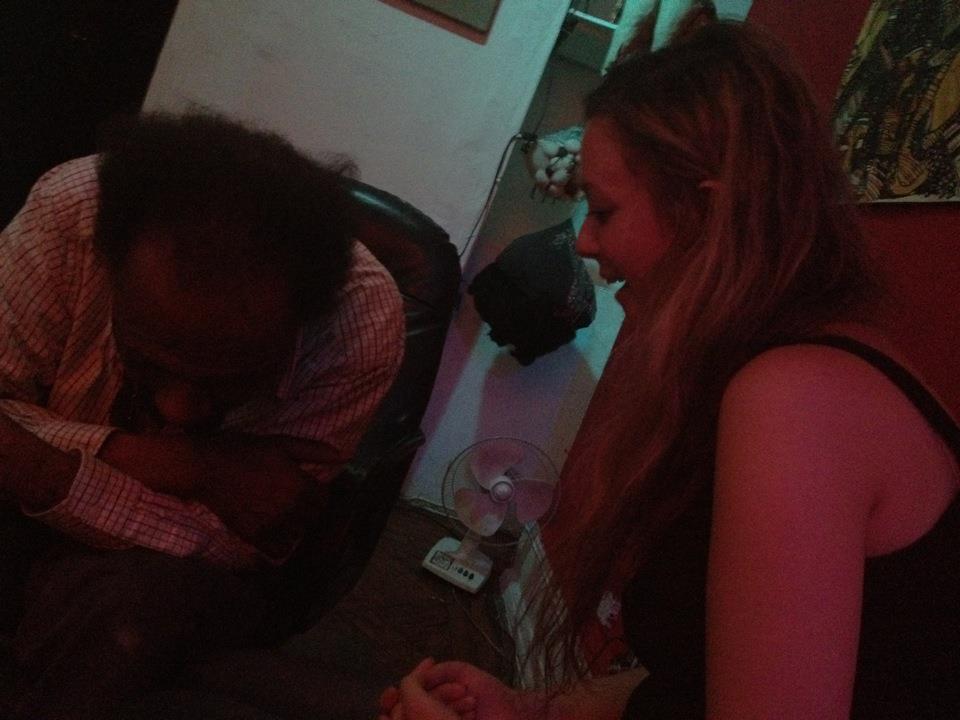
I also spent some time chatting with Steve Cannon, the founder of The Gathering of the Tribes.  We talked for quite some time about the business of poetry and the arts, but we also talked about life … about where we were from and what we’re doing with our lives.  I walked away feeling so blessed when he said, “you’re my type of person.”

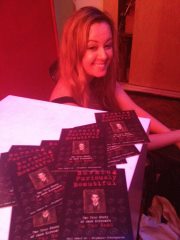
Here are a few photos poet RA Araya — who is probably one of the most encouraging people I’ve ever met; the type of person who is the glue that holds everyone together — took.  The first two are of me promoting Burning Furiously Beautiful (since it was my first time there, I wanted to hear everyone else and didn’t read, but I happened to have a few postcards for the book in my bag, which I was more than happy to share), and the last two are of me with Steve Cannon.


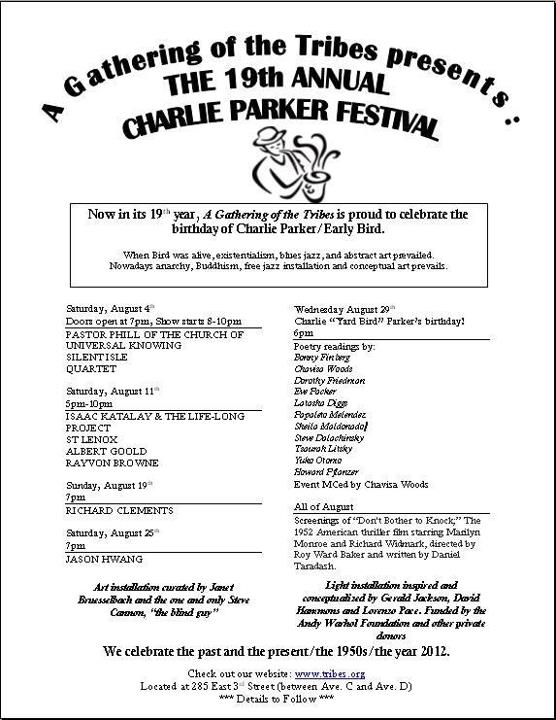
If you’re in the New York City area, you may want to check out this Charlie Parker Festival.


Road Trip with Kevin Russ

23 Aug

I stumbled down the rabbit hole of the Internet into some incredible road-trip photography by Kevin Russ, via Miss Moss. Looking at his photographs of grazing buffalo and wild horses that can’t be broken is like looking into the great American West of the past—and yet his photographs were taken with an iphone.

Kevin Russ’ photographs, wild and natural, rustic and warm, capture a moment that could be any moment in time. Massive mountains and deep gorges speak to the untamed beauty of the American landscape—the type of view that makes you pull over on the side of the road, speechless. You feel small. Not insignificant, but no longer the center of the universe. Your perch in the corner office becomes a little less important. Your eyes readjust. You begin to see.

The photographs have such a timeless quality to them even though there are signs of modern-day life in some of them. There are no people in the photographs that Miss Moss featured, and yet the contemporary traveler is present. There’s the lone yellow school bus traveling in the distance. Mundane-looking cars parked by a corral. The camper on the side of the road. A pastoral home, with what appears to be a kerosene lamp. Teepees. Yellow stripes dashing down grey pavement.

What’s interesting about the absence of people in the photographs is that Russ is actually an amazing portrait photographer. I liked his road-trip work so much that I did a bit of digging around on the Internet and found more of his photos on CameraLuv. He shoots hipsters with envy-inducing haircuts in front of abandoned tires, layers of newspapers, beat-up vans, and industrial fences. Is it any surprise he’s based in Portland?

So then I found his Flickr page and discovered he’s done photography for Radiant, a publication that has published my writing.

I want to languish all day on his Tumblr.

Seeing Kevin Russ’ photography makes me kind of wonder what it would’ve been like if iphones were around when the poets and writers of the Beat Generation were crisscrossing the United States. Allen Ginsberg was the itinerant photographer of the group, capturing hipster friends Jack Kerouac, William S. Burroughs, Gregory Corso, Peter Orlovsky, and the like on their travels.

The Beat Hotel

27 Mar

A couple of years ago, I was ravaging the shelves at the New York Public Library, when I came across Barry Miles’ The Beat Hotel: Ginsberg, Burroughs and Corso in Paris, 1957-1963.  It was around Memorial Day, and I remember sitting by the fountain in the East Harlem section of Central Park, marveling at the ingenious writing methods of my favorite writers and their fascinating lives.  While Burroughs was making his cut-ups and Ginsberg was writing poetry at night and typing them up in the morning, Corso was off wooing girls into buying him dinner.

Here’s what the overview of the book says:

Called “a vivid picture of literary life along the Left Bank in the late 1950s and early 1960s … [and] fun reading” by Library Journal, The Beat Hotel is a delightful history of a remarkable moment in American literary history. From the Howl obscenity trial to the invention of the Cut-up technique, Barry Miles’s extraordinary narrative chronicles the feast of ideas that was Paris, where the Beats took awestruck audiences with Duchamp and Celine, and where some of their most important work came to fruition — Ginsberg’s “Kaddish” and “To Aunt Rose”; Corso’s The Happy Birthday of Death; and Burroughs’s Naked Lunch. Based on firsthand accounts from diaries, letters, and many original interviews, The Beat Hotel is an intimate look at a place that “gave the spirit of Dean Moriarty and the genius of Genet and Duchamp a place to dream together of new worlds over a glass of vin ordinaire” (San Francisco Chronicle).

Wikipedia gives a little background on the Beat Hotel:

The Beat Hotel was a small, run-down hotel of 42 rooms at 9 Rue Gît-le-Cœur in the Latin Quarter of Paris, notable chiefly as a residence for members of the Beat poetry movement of the mid-20th century.

It was a “class 13” hotel, meaning bottom line, a place that was required by law to meet only minimum health and safety standards. It never had any proper name – “the Beat Hotel” was a nickname given by Gregory Corso, which stuck on [2][3]. The rooms had windows facing the interior stairwell and not much light. Hot water was available Thursdays, Fridays and Saturdays. The hotel offered the opportunity for a bath – in the only bathtub, situated on the ground floor – provided the guest reserved time in beforehand and paid the surcharge for hot water. Curtains and bedspreads were changed and washed every spring. The linen was (sometimes and in principle) changed every month.

The Beat Hotel was managed by a married couple, Monsieur and Madame Rachou, from 1933. After the death of Monsieur Rachou in a traffic accident in 1957, Madame was the sole manager until the early months of 1963, when the hotel was closed. Besides letting rooms, the establishment had a small bistro on the ground floor. Due to early experiences with working at an inn frequented by Monet and Pissarro, Madame Rachou would encourage artists and writers to stay at the hotel and even at times permit them to pay the rent with paintings or manuscripts. One unusual thing that appealed to a clientele of bohemian artists was the permission to paint and decorate the rooms rented in whichever way they wanted.

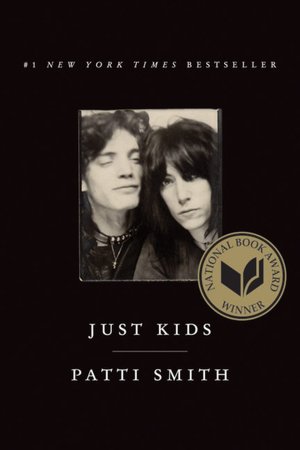
The Chelsea Hotel is kind of like New York’s answer to Paris’ Beat Hotel.  Patti Smith brings the Chelsea Hotel to life in Just Kids, where she also talks about meeting Burroughs, Corso, and Ginsberg and about the idea of improvising in writing.  But I digress….

If you follow me on Twitter, you may remember my recent post lamenting Barney Rosset’s death.  Rosset didn’t shy away from experimental work, publishing the revolutionary works of the Beats at Grove Press. Upon his death, Regina Weinreich wrote an article about his involvement with the Beat Hotel.

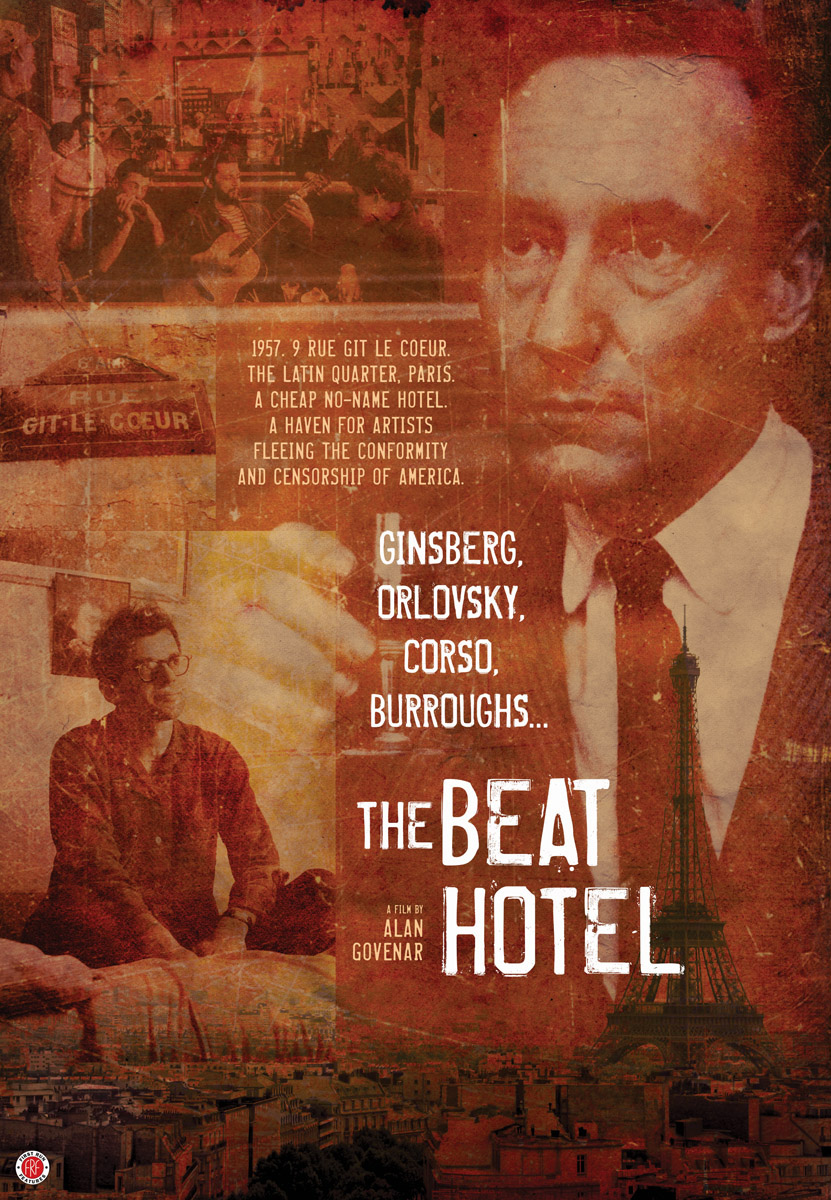
Alan Govenar is directing a new 82-minute documentary, with First Run Features and produced by Documentary Arts,  called The Beat Hotel.  Here’s the press release:

1957. The Latin Quarter, Paris. A cheap no-name hotel at 9 rue Git le Coeur became a haven for a new breed of artists fleeing the conformity and censorship of America. The hotel soon turned into an epicenter of Beat writing that produced some of the most important works of the Beat generation. It came to be known as the Beat Hotel. Opening March 30 in New York City, to be followed by a rollout to other cities across the country, Alan Govenar’s feature documentary THE BEAT HOTEL explores this amazing place and time.

Fleeing the obscenity trials surrounding the publication of his seminal poem Howl, Allen Ginsberg, along with Peter Orlovsky and Gregory Corso, happened upon the hotel on rue Git le Coeur and were soon joined by William Burroughs, Ian Somerville, and Brion Gysin. Run by the indefatigable Madame Rachou, the Beat Hotel was a hotbed of creativity and permissiveness, where Burroughs and Gysin developed the cut-up writing method; Burroughs finished his controversial book Naked Lunch; Ginsberg began his poem Kaddish; Somerville and Gysin invented the Dream Machine; Corso wrote some of his greatest poems; and Harold Norse, in his own cut-up experiments, wrote a novella, aptly called The Beat Hotel.

British photographer Harold Chapman‘s iconic photos and Scottish artist Elliot Rudie‘s animated drawings capturing Ginsberg, Orlovsky, Corso, Burroughs, Gysin, Somerville and Norse just as they were beginning to establish themselves on the international scene bring THE BEAT HOTEL to life on the screen. The memories of Chapman and Rudie interweave with the first-hand accounts of French artist Jean-Jacques Lebel, British book dealer Cyclops Lester, and 95 year old George Whitman. Together with the insights of authors Barry Miles, Oliver Harris, Regina Weinreich, and Eddie Woods, among others, they evoke a time and place where Chapman, mentored by Cartier-Bresson, roamed around Paris photographing nuns, bums, and the idiosyncrasies of street life; Corso took scissors to Marcel Duchamp’s tie in a Dadaist statement while Ginsberg kissed his knees; and Burroughs, with the help of Somerville’s lighting, learned to disappear before an audience’s eyes.

Director Alan Govenar is a writer, folklorist, photographer, and filmmaker. He is president of Documentary Arts and has a Ph.D. in Arts and Humanities from the University of Texas at Dallas. He is the author of 23 books, including Osceola: Memories of a Sharecropper’s Daughter, which won first place in the New York Book Festival (Children’s Non-Fiction), among other prizes. The off-Broadway premiere of his musical “Blind Lemon Blues,” co-created with Akin Babatunde, received rave reviews in The New York Times and Variety. Govenar’s film Stoney Knows How, based on his book by the same title about Old School tattoo artist Leonard St. Clair, was shown at the Museum of Modern Art in New York and the Centre Georges Pompidou in Paris, and was selected as an Outstanding Film of the Year by the London Film Festival. Govenar also has produced and directed numerous films in association with NOVA, La Sept/ARTE, and PBS for broadcast and educational distribution, including The Voyage of Doom, Le Naufrage de la Belle, The Devil’s Swing, Texas Style, Everything But the Squeak, The Human Volcano, The Hard Ride, Dreams of Conquest, and Little Willie Eason and His Talking Gospel Guitar.

Judging from the trailer, The Beat Hotel looks like it will be a documentary not to be missed by any fans of the Beats.

Writing Wednesday: If You Miss a Beat, You Create Another

14 Mar

I had the great privilege of hearing Patti Smith read from Just Kids at The New School a while back.  She read from the priceless scene in which she meets Allen Ginsberg at an automat.  I’m quite fond of kitsch automat culture, and used to frequent the one down on Saint Marks when it was still around.  Basically, an automat is fast fast food: you don’t even have to stand in line to order a burger and fries; you just slip a few quarters into a vending machine and out comes surprisingly delicious warm food.  Whenever I ate at the Automat, I felt like I was a character straight out of The Jetsons.  I was hooked on their mac-and-cheese egg rolls.  The resurgence of The Automat only stuck around for a few years, but as a whole they were big a few decades ago.  When Patti Smith was in her early twenties, scraping by to survive, she fed a few quarters into an automat to get some quick, cheap food.  When she turned the knob she discovered the price had gone up.  The machine had sucked up her meager coins and she was about to go hungry when Allen Ginsberg offered her the additional cents and even paid for a cup of coffee.  They get to talking, she knowing perfectly well he is the great poet, and he thinking the whole time she is a handsome boy!

I knew for a long time that I wanted to read Just Kids.  It had all the makings of a book I knew I’d love—New York City, Beat poets, artists, The Hotel Chelsea, Andy Warhol, music, and memoir.  The only problem was that I was inundated with reading assignments for classes and bills to pay for tuition and books for said classes.  Just Kids wasn’t constantly checked out of the library, which was probably for the best because I didn’t have the time to read it anyway.  But!  I have at last read it—savored it.  I so greatly enjoyed Smith’s poetic voice and her obsession over Rimbaud.  I liked reading about Patti Smith and Robert Mapplethorpe’s relationship, their strivings toward art, their fashion!  And I was so happy to discover that in addition to the Allen Ginsberg connection, Smith also befriended poet Gregory Corso, whose poetry I revere.

Patti Smith also began a relationship with Sam Shepard, and they end up collaborating on a play together.  I find great reassurance in reading their exchange.  Smith was nervous about the prospect of improvising during the play, and on page 185 of the first edition (HarperCollins, 2010), Smith asked, “What if I mess it up?  What if I screw up the rhythm?”  Shepard replied:

“You can’t,” he said.  “It’s like drumming.  If you miss a beat, you create another.”

From Just Kids I learned a lot about being part of the “scene,” which comes across as important to the evolution and success of one’s career.  However, this little line spoken by Sam Shepard is a solid reminder that in writing and in life the beat goes on.  If you miss a beat, you improvise and create another.

Dreams of European Picnics

3 Jun


Two nonfiction writers in my MFA program individually suggested that I check out Saveur, and I’m so glad they recommended the culinary magazine to me!  It’s always full of such mouthwatering images of food and recipes I’d love to taste test.  This week, the article “Menu: A French Picnic for Early Summer” arrived in my inbox.  Sometimes I think I must’ve been French in another lifetime.  I’ve always thought of myself more as an Anglophile than a Francophile, but there’s just something so charming and whimsical about the whole French flea-market aesthetic.

A summer or two ago, I read Barry Miles’ The Beat Hotel, about the years Beat Generation writers Allen Ginsberg, William S. Burroughs, and Gregory Corso lived at 9 rue Git-le-Coeur on the Left Bank of Paris.  Wouldn’t it be lovely to have a long, leisurely picnic of baguette and chevre along the Seine?  Experiencing communion with God while drinking cabernet sauvignon and contemplating the enormous rose window of Cathedrale Notre-Dame de Paris?  Reading bohemian and Beat poetry and penning poems in a pocket journal?

Sometimes I wish the Greek aesthetic lent itself to a more feminine and whimsical feel.  I picture triangles of tiropita, squares of feta cheese generously sprinkled with oregano, and delicate twists of diples dripping with honey and cinnamon all laid out on an off-white doily-like tablecloth crocheted by my yiayia.  Someone is fingerpicking an ornate bouzouki, and I’m reading about how Allen Ginsberg sailed to Greece in 1961 to track down his love.  And I am writing stories about cultivating a garden of memories in Greece.

Writing Wednesday: Who Is the Patron Saint of Your Writing?

23 Mar

Detail of Turf One's painting "Holy Ghost."

“Who is the patron saint of your writing?” my lit instructor inquired.

I’m taking a class that looks at how classic works of literature inspire contemporary works.  We look, for example, at how Evan S. Connell’s Mrs. Bridge informed Meg Wolitzer’s The Wife.  It seems natural that great authors would inspire other great writers to write either in the same style or the same theme.  And yet, my instructor’s question has had me thinking for days.

I’ve never thought of my own writing as being inspired by another writer.  I don’t try to write like my favorite authors, though I’m sure I must’ve done it subconsciously many times.

In a way, this rejection of sameness is reflective of my life in general.  I was the English major in undergrad who hung out with all the premed students.  I was the Greek kid in middle school with all the Korean and Japanese friends.  It never occurred to me to hang out with people who had my identical interests and culture, and it never occurred to me to try to write like another writer.

Except maybe Gregory Corso.

When I was 22 I wrote an homage to Corso’s “I Am 25.” It was pretty much a rip off of Corso’s poem, but it was meant to be.  Corso writes about stealing the poems of Shelley, Chatterton, and Rimbaud, and I more or less swapped out the names of these “old poetmen” for those of Corso, Kerouac, and Ginsberg.

Along those Beat Generation lines, one of my favorite writers is Jack Kerouac.  Read these lines from On the Road:

“Soon it got dusk, a grapy dusk, a purple dusk over tangerine groves and long melon fields; the sun the color of pressed grapes, slashed with burgundy red, the fields the color of love and Spanish mysteries.”

“The one thing that we yearn for in our living days, that makes us sigh and groan and undergo sweet nauseas of all kinds, is the remembrance of some lost bliss that was probably experienced in the womb and can only be reproduced (though we hate to admit it) in death.”

It pains me how beautiful these words are.  While so much has been made of Kerouac’s subject matter and improvisational style, I find that it is his lyrical descriptions and, yes, the rhythm of his prose that captivate me the most.

I have zig-zagged across the country, visiting places Kerouac visited, and I’ve written short travel articles, but I don’t write road-trip novels.  I would like very much to write about America, though.  I’ve written about Kerouac, sure, but I haven’t (consciously) attempted to write in his style.  I love punctuation rules too much.

I would probably choose Jack Kerouac to be the patron saint of my writing, but in reality, my writing voice comes out more like Sue Monk Kidd or, as my mom has pointed out, Donald Miller and Anna Quindlen.

Others tell me to read David SedarisHe’s Greek!  He writes about his family! And indeed, I do see his humor sometimes creeping into my personal essays.  One time, right after reading David Foster Wallace’s Consider the Lobster, I will confess I conjured up his style for an article I wrote, but I fear that was only similar to off-key humming of a song that just played on the radio.

Must I choose just one patron saint?

I admire great writers, and I love to reference them and turn other readers on to them, but I don’t think I could ever choose just one to be my patron saint.  I’m way too much of a schizophrenic writer for that.

Who is your patron saint of writing?