Tag Archives: Jack Kerouac

Harold Pinter’s Proust Screenplay Shows at the 92nd Street Y

14 Jan

G_011614_Pinter_Proustimage via 92nd Street Y

If you recall that Jack Kerouac, a native French speaker, read Marcel Proust’s Remembrance of Things Past, you may be interested in Harold Pinter’s screenplay of it at the 92nd Street Y:

In 1972, Harold Pinter wrote a screenplay from Proust’s seven-volume masterpiece Remembrance of Things Past.

Decades later, Pinter and directing partner Di Trevis adapted the never-filmed script for the National Theatre in London. It has never been produced in the US. In celebration of Pinter’s long friendship with the Poetry Center and the centenary of Swann’s Way, we present a staged reading of the play, affording us “the pleasure of providing yet another angle of perception upon a work so elaborate and many-faceted it never fails to give back new light,” wrote John Updike.

Here is the key facts:

Date: Thu, Jan 16, 2014, 8 pm

Location: Lexington Avenue at 92nd St

Venue: Kaufmann Concert Hall

Price: from $27.00

Pinter wrote “memory plays,” works like No Man’s Land (1975) and Betrayal (1978 — and yes, it was once alluded to on an episode of Seinfeld), which deal with the chronology of time and the way memory warps. He also acted and his last performance was as none other than the title character in Samuel Beckett’s Krapp’s Last Tape — fitting, you see, since the play is about an older man reviewing his earlier years.

Kerouac too was writing about memory as he mythologized himself in his series of semi-autobiographic novels, which he called The Legend of Duluoz.


6 Best Books of 2013, According to Me

26 Dec

It’s that time of year when everyone’s doing their Best of 2013 lists, so I figured I’d add mine!

I know most people pick 5 or 10, but I picked 6. Why 6, you ask? For arbitrary reasons. Yes, I read more than 6 books this year. No, they weren’t all from 2013. And no, not every book that I read that was published in 2013 made this list. These just happen to be the very best of the books that I read that were published in 2013.

This isn’t a ranking, but rather a listing in a way that one theme flows into the next.


paradise

This Is Paradise by Kristiana Kahakauwila

I saw this face-out on a shelf at Barnes & Noble, picked it up, and read the first few lines. The prose was exquisite. I’d nearly given up on fiction, frustrated at how it can be so overwritten yet simple at the same time. This was the type of writing I’d been missing in my life. The language is just gorgeous. I want to reread it already.
 

interestings

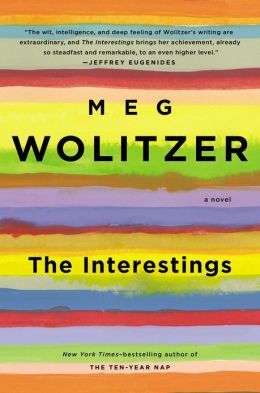
The Interestings by Meg Wolitzer

I had read Wolitzer’s The Wife in grad school and felt it was too heavy-handed, so I cautiously picked this one up after hearing the high praise for it, which almost always dooms a book for me. The Interestings deserves to be on every best of 2013 list. Not only are the story and the themes (the nature of love, the nature of friendships, family, jealousy, career, money, art, New York) thought-provoking on many levels, but the writing strikes that perfect balance of appearing both deliberate and breezy, literary yet conversationally authentic. It’s the type of book I want to now read reviews of and discuss with others, especially women artists.


LeanIn

Lean In: Women, Work, and the Will to Lead by Sheryl Sandberg

I read this for my Scripps College book club, which is composed of alumni from a wide range of class years from the women’s college. We’re all at various stages of our careers, including stay-at-home moms, working moms with infants, moms whose children have flown the nest, recent grads who have just entered the workforce, and mid-career-level women in relationships and not. Some have Ph.D.s, others want to be yoga instructors. The resulting conversation we had about this book is that, in the end, you have to find out what works for you and that may change depending on where you are in your life.

I also happened to finally get around to reading a book a colleague had given to me a few years ago: Patty Azzarello’s Rise: How to be Really Successful at Work AND Like Your Life, which came out in 2010. While Sandberg’s book is chock-full of important statistics and food for thought, Azzarello’s, though perhaps not as carefully edited, offers tips that are actually practical for people in the workforce.
 

Print

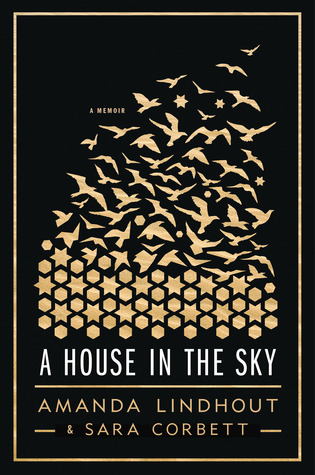
A House in the Sky by Amanda Lindhout and Sara Corbett

This book, the true story about a Canadian journalist and her Australian ex-boyfriend photographer who are kidnapped in Somalia, gave me nightmares. Literally. I became obsessed with the story, reading articles,  watching interviews with the people involved, and following them on Twitter. It got me thinking a lot about perceptions of the West, feminism, and ambition.


Manana

Manana Means Heaven by Tim Z. Hernandez

The publisher sent me this book, and I was a bit leery going into it that it would come off as fan fiction, but Hernandez’s Manana Means Heaven is an incredibly important book to the Beat canon. Through poetic diction, this novel tells the moving story of one of the little-known people who crossed paths with Jack Kerouac. It gives voice to a woman who didn’t even know she’d been written about decades earlier in On the Road.

You can read my interview with Tim here.
 

heart

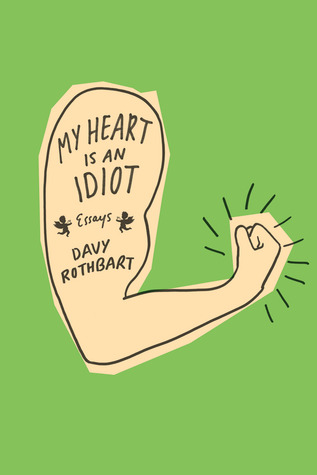
My Heart Is an Idiot by Davy Rothbart

I’ve written about Davy Rothbart before, having encountered one of the stories in this book in The Paris Review and comparing him to Jack Kerouac and then going to see him read in Brooklyn, where I met his dad and pulled a sword out of his cohort. This book technically came out last year, but the paperback came out this year, and it is brilliant. I had to stifle my laughter quite a few times on the subway to keep people from staring at me as I read this book. The thing is, though, there’s a lot of heart in this book too. It’s more than just a bunch of stories that make your eyes bug with incredulity over the antics Rothbart gets himself in. It shows the tenderness and beauty and wonder of humanity in all its forms, from an aspiring DJ to a con-artist.


Tell me your favorite books of 2013 below in the comments section. I’m looking for some new reads, and I figure if you read my blog we probably have similar taste! …And by similar taste, that probably means all over the board.


* * *

Burning Furiously Beautiful: The True Story of Jack Kerouac’s “On the Road” is now available as an ebook and paperback!


Kerouac’s Hometown Inspires Charles Dickens

23 Dec

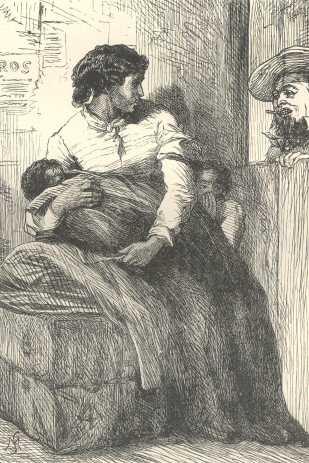
p112sIllustration (not of Mill Girl, fyi) by Marcus Stone, R.A., from Charles Dickens’ American Notes for General Circulation

Many authors have penned Christmas stories, but perhaps the most celebrated is Charles Dickens’ A Christmas Carol, which has spawned Broadway musicals, a Disney cartoon, a Muppet retelling, a United Nations special by Rod Sterling, a Star Trek version, among so many others.

Is it possible that the inspiration for this Victorian novella came from Jack Kerouac’s hometown?

Natalie McKnight, a dean at Boston University, conducted research with student Chelsea Bray that suggests Dickens was inspired by the stories of the Mills Girls when he visited Lowell, Massachusetts, in 1842.

On one of my trips to Lowell to research Kerouac, my friend George Koumantzelis had given me a stack of newspapers, magazines, and flyers to aid in my studies. Among these was information on UMass Lowell’s seven-month-long celebration of Dickens’ trip to Lowell. I had edited new editions of the British author’s stories including his work American Notes for General Circulation, about 1842 trip to America. About to turn thirty years old, he had traveled from Liverpool (later home to the Beatles!) aboard the RMS Britannia and arrived in Boston, where he then visited mental hospitals, orphanages, and prisons around the country and visited with President Tyler.

Among the dots on his map was Lowell … also known as Mill City. Lowell was founded about twenty years prior to Dickens’ visit, as a center for textile manufacturing. Dickens came about two years after the height of the Industrial Revolution, when there were about 8,000 women working in factories in Lowell. If Dickens was inspired by their stories, it should go without saying that their existence was one of strife. About 80 women were packed into a noisy room from 5 am to 7 pm, working under the direction of two men. However, Dickens actually seemed to think well of the mills.

Dickens wrote:

These girls, as I have said, were all well dressed: and that phrase necessarily includes extreme cleanliness.  They had serviceable bonnets, good warm cloaks, and shawls; and were not above clogs and pattens.  Moreover, there were places in the mill in which they could deposit these things without injury; and there were conveniences for washing.  They were healthy in appearance, many of them remarkably so, and had the manners and deportment of young women: not of degraded brutes of burden.  If I had seen in one of those mills (but I did not, though I looked for something of this kind with a sharp eye), the most lisping, mincing, affected, and ridiculous young creature that my imagination could suggest, I should have thought of the careless, moping, slatternly, degraded, dull reverse (I have seen that), and should have been still well pleased to look upon her.

The rooms in which they worked, were as well ordered as themselves.  In the windows of some, there were green plants, which were trained to shade the glass; in all, there was as much fresh air, cleanliness, and comfort, as the nature of the occupation would possibly admit of.  Out of so large a number of females, many of whom were only then just verging upon womanhood, it may be reasonably supposed that some were delicate and fragile in appearance: no doubt there were.  But I solemnly declare, that from all the crowd I saw in the different factories that day, I cannot recall or separate one young face that gave me a painful impression; not one young girl whom, assuming it to be a matter of necessity that she should gain her daily bread by the labour of her hands, I would have removed from those works if I had had the power.

Though he clearly recognizes that the girls work long and hard, he describes the mills as well as the girls’ dorm rooms in a somewhat positive light, mentioning pianos and libraries.

It would seem that the mills girls were of a literary mindset. Beyond just mentioning the library, Dickens goes on to say:

Of the merits of the Lowell Offering as a literary production, I will only observe, putting entirely out of sight the fact of the articles having been written by these girls after the arduous labours of the day, that it will compare advantageously with a great many English Annuals.  It is pleasant to find that many of its Tales are of the Mills and of those who work in them; that they inculcate habits of self-denial and contentment, and teach good doctrines of enlarged benevolence.  A strong feeling for the beauties of nature, as displayed in the solitudes the writers have left at home, breathes through its pages like wholesome village air; and though a circulating library is a favourable school for the study of such topics, it has very scant allusion to fine clothes, fine marriages, fine houses, or fine life.

What Dean McKnight and Bray suggest is that Dickens lifted ideas from these girls’ stories. Kevin Hartnett at The Boston Globe writes:

Now, new research is suggesting that the book may have borrowed—quite liberally—from the amateur writings of the millworkers he visited.

After reading an obscure literary journal published by Lowell textile workers and comparing it to Dickens’s novella, a Boston University professor and student are arguing that some of the most memorable elements of Dickens’s story—the ghosts, the tour through the past, Scrooge’s sudden reconsideration of his life—closely resemble plot points in stories by the city’s “mill girls” that Dickens read after his visit.

They propose that the ghost trope of A Christmas Carol stems from several selections in The Lowell Offering. Comparing the Mills Girls’ stories with Dickens’, they have found several parallels that they believe go beyond mere coincidence or literary tradition.

Their research has created quite a stir online, and they haven’t even written their paper yet, let alone published it.

It’s well worth visiting The Mill Girls and Immigrant Exhibit at the Morgan Cultural Center to find out more about the fascinating lives these factory workers led.

The Morgan Cultural Center also happens to be where one of Kerouac’s typewriters reside. While Kerouac began writing about a hundred years after Dickens’ visit, he too was inspired by the Mill Girls. He didn’t want to be a mill rat. He wanted to get out of Lowell, to do something more with his life. As a struggling writer, he did eventually end up working for a short time at a mill in America, but he continually worked on his writing. While Dickens had come over to Boston by ship from Liverpool, Kerouac went to Liverpool as a merchant seaman. Like Dickens, Kerouac toured America, writing his own travelogue full of social commentary.


* * *

Burning Furiously Beautiful: The True Story of Jack Kerouac’s “On the Road” is now available as an ebook and paperback!

Writing Wednesday: Is Greatness Sabotaging Your Writing?

18 Dec
For better or worse, I don’t recognize a lot of critics’ names. David L. Ulin is an exception. Book critic for The Los Angeles Times, Ulin writes reviews that do so much more than summarize or sweep up a book in a blanket statement. His reviews critique on a higher intellectual plane.
Of course, it helped that he articulated so much of what I felt when I’d read Bruce Bawer’s attack in the New Criterion on Jack Kerouac being included in the Library of America. That’s not to say he unscrupulously defended Kerouac’s poetry—he admitted the Kerouac poem Bawer quoted is “negligible”—but he called Bawer out on spending more time focusing on the so-called Beat label and the people associated with it than on digging into Kerouac’s individual style and innovations.
But I digress.
Ulin has an essay entitled “My First Book(s)”  in the Paris Review Daily that first-time and struggling writers should read. With humorous (not silly—witty) self-deprecation, he writes about what provoked him to write (jealousy, opportunity) and how he got so bogged down in ideas that he incapacitated his body of work. Perhaps my favorite line from the essay:
I was twenty that summer, turning twenty-one in August, and I felt a growing pressure to be (how do I put this without reservation or irony?) great.
That parenthetical itself says so much about not only writing but the human condition. Guarding ourselves through cleverness we can become inauthentic. Sometimes the more we strive to be “great,” the more we lose our true vision and voice. We lose our stories. We lose ourselves.
He writes:
But here’s what is important: I sabotaged my own book. I did this in two ways, first by overthinking and then by overtalking, by telling everyone I knew everything about the work.
Replete with quotes from renowned authors, “My First Book(s)” explores the expectations an author puts of himself, some of which are naïve (“I had gathered so much material—so much unused material—that I’d had the fantasy the book would write itself…”) and some of which are nearly impossible to live up to (“I wanted to write not just a novel but a landmark novel…”).
Ulin’s essay is a refreshing read for all of us who get overwhelmed by our own “big” ideas. It’s also a gentle reminder that all writing—including our unpublished writing—is worthwhile because it teaches us about the process and improves our skills.
In the same link roundup in which they mentioned Ulin’s essay, Poets & Writers linked to a blog post by Percy Jackson author Rick Riordan that also spoke to the slippery idea of greatness:
One thing I’ve discovered. People who believe they are awesome and wonderful at their profession are often . . . not. People who have more self-doubt, who question themselves and are always examining what they did wrong and how they might do better – those folks are often better than they think they are, and they are much more likely to improve. It’s a difficult balance, between self-confidence and self-reflection. No wonder writers are a little barmy. But it is an important balance to strike.
Riordan continues:
Writing is hard. Not everyone can do it. It requires a combination of innate talent and lots and lots of practice and endurance. It also requires the right story, and publishing that story at the right time.
Though they have dissimilar writing styles, Riordan and Ulin both suggest that writing requires humility and stamina.

* * *

Burning Furiously Beautiful: The True Story of Jack Kerouac’s “On the Road” is now available as an ebook and paperback!

10 Books That Have Stuck with Me

17 Dec
gypsy
The other night I fell asleep thinking about the books that have stuck with me over the years. My friend had tagged me in a Facebook post about the ten books that have stuck with her—not necessarily the best books or her favorite books, but the ones that come to mind first. She then tagged me and nine other friends to do the same. I figured it would make for a fun blog post because some of the books may come as a surprise.
Without further ado…:
  1. Bread and Honey by Frank Asch
  2. Squiggly Wiggly’s Surprise by Arnold Shapiro
  3. Charlotte’s Web by E. B. White
  4. Gypsy Summer by Wilma Yeo
  5. Anne of Green Gables by L. M. Montgomery
  6. Sins of the Father by Eileen Franklin
  7. The Dangling Man by Saul Bellow
  8. On the Road by Jack Kerouac
  9. The Pillow Book by Sei Shonagon
  10. Blue Like Jazz by Donald Miller
I could probably write a blog post for each of these titles on why they stuck with me! I could also add so many more books to the list.
There are a few things I’ll point out about the books that actually made the list, though. The first half of the list are children’s books, or perhaps YA. The first two, in fact, are children’s storybooks, but even today their message remains with me. Adult books have a lot more “grey” in them when it comes to morality and message, as we come to understand the complexities and nuances of life, but I think there’s something to be said for the simple and beautiful messages of children’s picture books.
The other thing I’ll point out is that the second half of the list was all read more than ten years ago. Actually, number 6 on the list I read in middle school, and the only book post-undergrad on the list is number 10. It’s obviously not that I haven’t read since then or that I haven’t read good books since then. In fact, I took fantastic literature classes while working toward my MFA and was exposed to books that shaped the way I think about literature and writing. It’s just that when I think of books that have really stuck with me over the years, I was thinking of books that have stood the test of time.
I tag you! What 10 books have stuck with you? Leave them in the comments below.

* * *

Burning Furiously Beautiful: The True Story of Jack Kerouac’s “On the Road” is now available as an ebook and paperback!

Writing Wednesday: When Two Words Become One

11 Dec

1560

Welcome back to Aristophanes week!

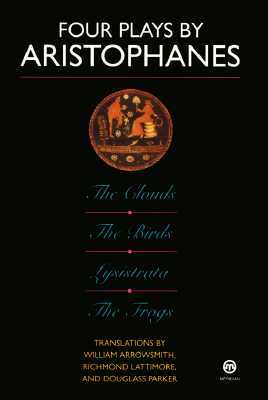
Yesterday I mentioned that fun bit of trivia that Aristophanes is the creator of the longest word in literature that I gleaned from Oliver Tearle’s Huffington Post article “12 Fascinating Facts About Famous Literature.” Like any dutiful Greek scholar, I read some of Aristophanes’ plays when I was in college. They were strange and wild reads.

What I don’t remember learning back then and which I found while I was reading up on him this week was that Aristophanes had a knack for heaping words together, creating long, tongue-twisting compound words. It’s no wonder he’s the king of the longest word in literature!

Take a look at that last word in this stanza from The Acharnians:

How many are the things that vex my heart!
Pleasures are few, so very few — just four –
But stressful things are manysandthousandsandheaps!

The word Aristophanes used there in Greek was the made-up word ψαμμακοσιογάργαρα, which actually meant “sandhundredheaps.”

Meanwhile, in The Birds (no relation to Hitchcock’s film!), Aristophanes coined the word Νεφελοκοκκυγία, which translated is the compound word Cloudcuckooland. Genius, right?!

Okay, so when writing about the longest word in literature Tearle mentioned runner up James Joyce:

Some may think that James Joyce is responsible for the longest word in all of literature, but the longest he managed was 101 letters long, in Finnegans Wake. (This word, for those who are interested, was Bababadalgharaghtakamminarronnkonnbronntonnerronntuonnthunntrovarrhoun-awnskawntoohoohoordenenthurnuk, referring to the thunderclap associated with the Fall of Adam and Eve.)

You word nerds won’t find it too surprising that Joyce appropriated Aristophanes’ penchant for inventing new words since he was more than mildly inspired by Greek literature. You already know that Joyce’s Ulysses parallels Homer‘s The Odyssey. In Ulysses, he created made up and compound words like “scrotumtightening” and “endlessnessnessness.”

Now, I’ve made the point before about the connection between the Greek Classics, James Joyce and Jack Kerouac, and here is another instance in which we see the influence in that Kerouac used compound words as well. He used words like “hangjawed,” “redhot,” and “sicksicksick.”

Through the course of literary history, many authors have used compound words for effect and have coined their own words.

Can’t find the right word? Make up your own!

* * *

Burning Furiously Beautiful: The True Story of Jack Kerouac’s “On the Road” is now available as an ebook and paperback!

Gift Guide: 5 Unique Gifts for the Mad Ones

29 Nov

Happy Black Friday?! The writers associated with the Beat Generation generally avoided vapid commercialism, but if you have a friend, family member, or colleague who is into Beat literature — or if you’re looking to spoil yourself — you may want to bless them with a gift that values their literary interest this holiday season. But what do you get for the Beat reader who has a bookshelf full of dog-eared novels and biographies?

If your friends are “the mad ones, the ones who are mad to live, mad to talk, mad to be saved” — you know, people who religiously read Jack Kerouac — they’ll appreciate these unique literary-inspired gifts.

Then, again, as Kerouac said: “Offer them what they secretly want and they of course immediately become panic-stricken.”

1. A cappuccino cup from Caffe Reggio.

CappuccinoCupMediumImage via Caffe Reggio

Caffe Reggio one of the coffeehouses the Beats hung out at in Greenwich Village.

2. Teavana Global Treasures Tea Gift Set.

teaImage via JC Gourmet Gifts

“‘Now you understand the Oriental passion for tea,'” said Japhy. “‘Remember that book I told you about; the first sip is joy, the second is gladness, the third is serenity, the fourth is madness, the fifth is ecstasy.'” ~Jack Kerouac

3. Chronicle Books Bedside Dream Journal.

Bedside_Dream_JournalImage via Chronicle

“All human beings are also dream beings.” ~Jack Kerouac

4. On the Road key ring from Penguin.

pc_keyring_ontheroadImage via Penguin

Get your kicks on Route 66 with this On the Road key ring from Penguin.

5. Cinnamon Apple Pie Candle from SweetShoppeCandles.

pieImage via Etsy

“I ate apple pie and ice cream—it was getting better as I got deeper into Iowa, the pie bigger, the ice cream richer.” ~Jack Kerouac

You can get more ideas on my Gifts for the Mad Ones Pinterest page and from my blog post last year Gift Guide for the Beat Reader.

And you know what these all pair well with? You guessed it! A copy of Burning Furiously Beautiful: The True Story of Jack Kerouac’s “On the Road.” which is available in paperback through Lulu and Amazon and in ebook through Lulu.


* * *

Burning Furiously Beautiful: The True Story of Jack Kerouac’s “On the Road” is now available as an ebook and paperback!

Contest: Show Us Your Burning Furiously Beautiful

21 Nov

Show us YOUR copy of Burning Furiously Beautiful for a chance to win Jack Kerouac memorabilia.

Paul is giving away his own personal copy of an audio cassette that Carolyn Cassady made for him, labeled with her handwriting (with also the mailer too, which bears her signature), of Jack and Neal Cassady reading into a tape recorder. It’s one-of-a-kind and can be yours.
Rules: Just buy yourself a copy and find a cool as Miles Davis place to take a picture of it or of you holding it and post it on the official Burning Furiously Beautiful Facebook page and then find everyone you know to LIKE it. Only “likes” on the Facebook page — not if you post the pic here or elsewhere on Facebook — will be counted. The entry with the most “likes” by November 28, 2013, will win

How to purchase:

We’ve already received some really creative entries, which I’m excited to share with you! Even if you’re not interested in entering the contest, you can cast your vote for your favorite photo.

Contest1Richard Marsh

Contest2Kate Levin

Contest3Roxanne Leinhauser-Brennan

Contest4Katie Ingegneri

Contest5Anne-Marie Giroux

Contest6Ben Stables

Vote or enter here!

Clip: Vox Poetica Published My Poem “In a Diner in America Circa 1956”

20 Nov

Vox-Transparent

I’m thrilled to be published in vox poetica. The lit mag was founded in 2009 by Annmarie Lockhart, a resident of Bergen County, New Jersey — where I’m from!

The poem featured, “In a Diner in America Circa 1956,” came to me one day as I was walking on Park Avenue during my lunch break. I was thinking about Jack Kerouac stopping in a roadside cafe for a little nourishment as he traveled across the country, and the awkwardness and opportunities that abound when one travels on one’s own.

It’s a pastiche of Jack Kerouac’s interview on The Steve Allen Show, his narration of what may be the only true Beat film Pull My Daisy, and an amalgamation of information from his novels and letters as well as biographies.

You can read it here.

A Tribute to Constantine P. Cavafy

18 Nov

220px-Cavafy1900What an impressive mustache! Cavafy via Wikipedia

When you set out on your journey to Ithaca,
pray that the road is long,
full of adventure, full of knowledge.

~ from the poem “Ithaca” by Constantine P. Cavafy

Born in the Egyptian province of Alexandria, Constantine Peter Cavafy was born to Greek parents in 1863. Riffing on last week’s British invasion theme, I’ll note that he actually spent some time in the Beatles‘ hometown of Liverpool. Cavafy’s life, like Kerouac’s, was one of movement. From Liverpool, he moved back to Alexandria, and then from there to Constantinople and back to Alexandria. He also spent some time in France.

Cavafy worked as a journalist, and it wasn’t until he was in his forties that he wrote his most important works of poetry — giving all us late-bloomers hope! He urges us to embrace life’s journey in his passionate 1911 poem Ithaca, inspired by Homer’s Odyssey. He urges us to slow down, to explore, to learn, to experience, to savor. It is the perspective one gains on the journey itself that matters.

Tonight PEN presents a tribute to Cavafy, featuring André Aciman, Michael Cunningham, Mark Doty, Olympia Dukakis, Craig Dykers, Edmund Keeley, Harry Kremmydas, Daniel Mendelsohn, Orhan Pamuk, Dimitris Papaioannou, and Kathleen Turner. For more information on the New York tribute, visit the PEN America website.

* * *

You may also like:

* * *

Burning Furiously Beautiful: The True Story of Jack Kerouac’s “On the Road” is now available as an ebook and paperback!