A Swedish Children’s Author’s World War II Diaries May Make for an Enlightening Read
17 AugThis May Improve Your Mood about Your Social Media Presence
12 AugThis is me reading at Ronnie Norpel‘s fantastic reading series Tract 187 Culture Clatch at The West End —/ photo by author Nana Ekua Brew-Hammond
Over the years, I’ve blogged about everything from twitter to pinterest, in the effort to help fellow writers think about their social media presence. Why? Because every conference and expo I’ve attended has drilled the need for social media into my head. Swirling around my brain, I hear platform, platform, platform.
But platform is about so much more than social media.
According to Rob Eagar’s article “Stop Grading an Author’s Social Media Presence” on Digital Book World, publishers are “misguided” in how they look at an author’s social media presence. He suggests what authors and publishers should focus on is:
- Email list and performance
- Monthly website visitors
- Speaking schedule or webinar participants
- Previous sales history
I’d highly, highly suggest reading the full article. What he says makes a lot of sense.
Does this mean we abandon social media?
By no means! It means social media is simply one tool in our toolbox. Okay, toolbox metaphors aren’t quite my lingo—nor my “brand”—but the point is that publishers, agents, librarians, and readers value the fact that an author uses social media, so we should maintain our online presence, but we should also look to diversify. Give a reading. Engage with people who leave comments. Send out a newsletter. Host a webinar. Maintain your backlist. Participate in a panel.
That’s what I’m doing at least. Or at least trying to do.
You can find the facebook page Paul Maher Jr. and I run for Burning Furiously Beautiful here.
My Twitter handle is @stephanieniko.
I pin about Jack Kerouac and the Beat Generation and lit life and 1950s fashion and nighttime road trips and the Greek beauty and deer on Pinterest.
I write articles for other publications.
I am reading at Word Bookstore in Jersey City.
I am teaching a writing class at the Festival of Women Writers.
I am participating on a panel at BinderCon.
I am co-organizing the faith and writing conference called The Redeemed Writer: The Call and the Practice.
There’s so much more to writing than, well, writing. I enjoy it, though. It’s stretching me as a writer, as an entrepreneur, and as a person.
Texting as a New Yorker
30 Jul“Where are you?” “Brooklyn.” [silence…]
Yeah, they’re not coming to meet you.“Know anyone who needs a roommate?”
Whether you have a friend of a friend who is maybe possibly thinking about moving to New York, or your landlord just hiked your rent up a gajillion percent, someone is ALWAYS looking for an apartment. Usually this is a mass text.
The Perfect Novel for My Personality … and Yours!
29 JulISTJ: The Age of Innocence by Edith WhartonWith interest in traditions and loyalty, and an ability to make a huge impact despite being quiet, ISTJs will appreciate Wharton’s masterpiece of manners.
Video from David Amram & Co.’s Inspiring Show at Cornelia Street Cafe
15 Jun“Every day is an experience. Every day is an adventure.”
“Pay attention to anybody and everybody, and you’ll be amazed at what you can learn.”
Christina Rossetti and Jack Kerouac Describe the Sound of the Sea
30 AprAs April closes out, I dream of warmer days spent reading poetry by the sea. I think of Jack Kerouac captivated by the sound of the Pacific Ocean in Big Sur, the poem “Sea” he wrote about it and how his friend and fellow poet Lawrence Ferlinghetti influenced the poem.
Years earlier, Gothic poet Christina Rossetti had written that the sea sounds like moaning.
Christina Rossetti’s “By the Sea”
Why does the sea moan evermore?
Shut out from heaven it makes its moan.
It frets against the boundary shore;
All earth’s full rivers cannot fill
The sea, that drinking thirsteth still.Sheer miracles of loveliness
Lie hid in its unlooked-on bed:
Anemones, salt, passionless,
Blow flower-like; just enough alive
To blow and multiply and thrive.Shells quaint with curve, or spot, or spike,
Encrusted live things argus-eyed,
All fair alike, yet all unlike,
Are born without a pang, and die
Without a pang, – and so pass by.
What does the sea sound like to you?
Robert Frost, Jack Kerouac, Gregory Corso, and the Road Not Taken
16 AprIn honor of National Poetry Month, I wanted to share some poems.
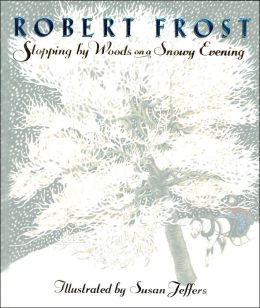
I write a lot about the road. I write about Jack Kerouac’s On the Road and even wrote a whole book about it called Burning Furiously Beautiful. When I was much younger, though, all the way back in elementary school, I encountered Robert Frost’s “The Road Not Taken.” Here it is for your reading pleasure.
Robert Frost’s “The Road Not Taken”
Two roads diverged in a yellow wood,
And sorry I could not travel both
And be one traveler, long I stood
And looked down one as far as I could
To where it bent in the undergrowth;
Then took the other, as just as fair,
And having perhaps the better claim,
Because it was grassy and wanted wear;
Though as for that the passing there
Had worn them really about the same,
And both that morning equally lay
In leaves no step had trodden black.
Oh, I kept the first for another day!
Yet knowing how way leads on to way,
I doubted if I should ever come back.
I shall be telling this with a sigh
Somewhere ages and ages hence:
Two roads diverged in a wood, and I—
I took the one less traveled by,
And that has made all the difference.
Frost begins his poem, “Two roads diverged in a yellow wood, / And sorry I could not travel both.” It reminds me of the Gregory Corso quote: “If you have a choice of two things and can’t decide, take both.” It’s not always that easy, though, is it? You can’t always choose to go both left and right at the same time. You can’t always choose to stay and to go. Sometimes you have to make a choice.
Robert Frost says, “I took the one less traveled by.” And that’s certainly what Jack Kerouac, Gregory Corso, and the many other poets and writers associated with the Beat Generation did. They choose the road less traveled.
Choosing the road less traveled is not an easy choice, though. It is an unfamiliar one. It is one without precedent. It comes with risk.
Sometimes, though, it’s worth it. It can’t be a reckless risk. It must be, as my father would say, a calculated risk.
Remembering Lucien Carr
28 JanBecause of the film Kill Your Darlings, much has been made recently of Lucien Carr’s murder of David Kammerer, but that’s not how he should be remembered. Carr served his time and tried to distance himself from that association, though he did remain lifelong friends with the people he’d met as a prank-loving student at Columbia. He even went so far as to have Allen Ginsberg take his name out of the dedication to Howl after learning of it in the first printing.
So what should we remember Lucien Carr for? He did not, after all, seek to capitalize on his name or associations with his own writing. Instead, he should remember for tirelessly working as an editor at UPI for close to five decades. There, he encouraged and molded young writers, just as he often did for his “Beat” friends.
Lucien Carr passed away on this day in 2005.
Recommended reading::: Eric Homberger’s obituary “Lucien Carr” for The Guardian.
Happy 99th Birthday, Robert Lax!
30 NovRobert Lax was born on this day in 1915 in Olean, in the Southern Tier region of New York.
Lax studied poetry with Mark Van Doren at Columbia University and graduated in 1938, right before Jack Kerouac arrived on campus. Similarly, they both took on a life of wandering. Lax worked for some prestigious magazines — The New Yorker and Time — and then joined the circus as a juggler.
Eventually, he found his way to the Greek island of Patmos. The island is known as a place of pilgrimage, as the apostle John had lived there. Lax himself went on to live here for more than thirty years, living the life of a hermit and writing beautiful poetry.
Kerouac indeed did end up getting in contact with his fellow alum. You can read his letter to him in Jack Kerouac: Selected Letters, 1940-1956.
Remembering Alan Ansen
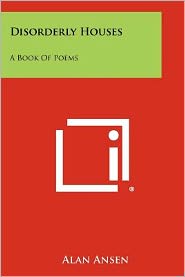
12 NovOn this day in 2006 we lost Alan Ansen.
Today we celebrate his life and work. Ansen, a graduate of Harvard, was secretary to none other than the great W. H. Auden, who had come to New York City in 1939. He hung out with Jack Kerouac, William S. Burroughs, Allen Ginsberg, and Gregory Corso, and is even written into their works. By the 1960s, he had moved to Greece, where he lived on Alopekis Street in Athens, and hung out with other expatriate poets such as James Merrill (who went on to get the Pulitzer Prize in Poetry in 1977), Chester Kallman (one of Auden’s lovers), and Rachel Hadas (who went on to receive the Guggenheim Fellowship).
Ansen passed away in Athens at the age of eight-four, but leaves behind his poetry and prose. Check out:
I think reading someone’s work is one of the best way to celebrate their life. Do you have a favorite poem by Ansen?