Tag Archives: jazz

The British Are Coming!: Beat Influence on The Kinks

13 Nov

Books-hp-GQ_04Nov13_pr_b_642x390

Today I’m continuing my discussion of Olivia Cole’s fascinating thesis that American media had a profound impact on post-World War II England, argued in her article “Won over by the West: The irresistible allure of Americana for post-war Britons” for the November 2013 issue of British GQ.

Cole points to The Kinks’ frontman Ray Davies’ “love/hate relationship with America,” referencing a Kerouac-like affair with the road.

A little background info that doesn’t appear in her article but might be helpful: The Kinks are the British rock band behind the songs “You Really Got Me” and “Lola.” They were formed in North London in 1964 — also known as the year The Beatles landed in America and set off the British Invasion.

In reviewing Ray Davies’ new memoir Americana: The Kinks, The Road And The Perfect Riff, Cole explains how the British band leader’s youthful obsession with “the cowboy heroes of Fifties Westerns” and American comic books “got him daydreaming and writing songs.” Growing up the seventh out of eight children — the youngest being Dave Davies, his Kinks bandmate — Ray Davies had barely even traveled out of his hometown of Fortis Green and dreamed of America.

Cole reports that the freedom of the road was at first alluring to Davies. Using Amazon’s preview, I read in Davies’ chapter The Empty Room:

In recent years I had become a transient observer, never settling anywhere and, after a life on the road, never committing to a place or a person.

Davies’ romantic relationships could not be sustained on the road. Cole refers to his failed relationship with Chrissie Hynde, but following the dissolution of his first marriage he attempted suicide. Rockin’ Town town put it this way:

First, his wife of nine years, Rasa, split taking the kids. A week later, Davies was admitted to Highgate Hospital and treated for a drug overdose that looked suspiciously like a suicide attempt.

Cole reports that Davies felt the loneliness of the road. She writes that he:

wonders to what extent the rock-star/beatnik lifestyle lets anything meaningful stand a chance.

Ray Davies, born in 1944, would have been thirteen when On the Road was published in the US. It does not appear from Cole’s article that the Beat Generation’s influence on The Kinks was explicit. However, Davies discusses the same jazz musicians that captivated Kerouac, the adventure and disappointment of a life on the road, and Americana.

Here is Barnes & Noble’s overview of Ray Davies’ memoir Americana: The Kinks, The Road And The Perfect Riff:

As a boy in post-War England, legendary Kinks’ singer/songwriter Ray Davies fell in love with America—its movies and music, its culture of freedom, fed his imagination. Then, as part of the British Invasion, he toured the US with the Kinks during one of the most tumultuous eras in recent history—until the Kinks group was banned from performing there from 1965-69. Many tours and trips later, while living in New Orleans, he experienced a transformative event: the shooting (a result of a botched robbery) that nearly took his life. In Americana, Davies tries to make sense of his long love-hate relationship with the country that both inspired and frustrated him. From his quintessentially English perspective as a Kink, Davies—with candor, humor, and wit—takes us on a very personal road trip through his life and storied career as a rock star, and reveals what music, fame, and America really mean to him. Some of the most fascinating characters in recent pop culture make appearances, from the famous to the perhaps even-more-interesting behind-the-scenes players. The book also includes a photographic insert with images from Davies’s own collection from the band’s archive.

The book was published by Sterling Publishing on October 15, 2013.

Tune in tomorrow when I talk about Cole’s discussion of Iain Sinclair’s take on the Beat Generation in his forthcoming book American Smoke.

* * *

Burning Furiously Beautiful: The True Story of Jack Kerouac’s “On the Road” is now available as an ebook and paperback!
The British Are Coming!: The Beat Generation’s Influence on The Beatles

12 Nov

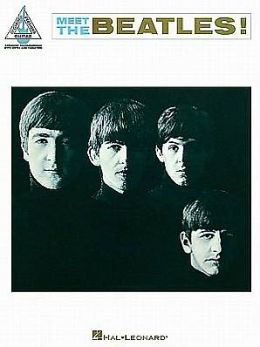
9781617804618_p0_v1_s260x420Check out the turtlenecks on the cover of Meet the Beatles

Yesterday, inspired by Olivia Cole’s article “Won over by the West: The irresistible allure of Americana for post-war Britons” for the November 2013 issue of British GQ, I kicked off a week-long series about the relationship between the Beat Generation and the British Invasion. I didn’t get too much into her article, but instead I wrote about the general history of each “group” (please take this term lightly; neither was an intended movement or formal group) and how and why they are connected. Today, I want to share a fun story with you about the two longest love affairs (Oh gosh, take that even lighter. People get so mad when I use hyperbole.) of my life: the Beatles and the Beats.

I was a HUGE Beatles fan back when I was in high school. I can’t quite remember how I got into the Beatles, but I know it’s not because of my parents. My dad didn’t listen to music. I was raised on smooth jazz, Prince, Lionel Ritchie, and Stevie Wonder, thanks to my mom. As I grew up and started discovering music on my own—Vanilla Ice, Boyz II Men, Snow, Positive K, Arrested Development, REM (should I go on? Ah, nostalgia)—she was the cool mom that listened to whatever I listened to on the radio. My mom was actually too young to be into the Beatles. In the craze of my own private Beatlemania, I pestered her for information, and she said she remembered her older sister getting a letter from their cousin in Sweden talking about this new band The Beatles and how popular they were.

One of the first exposures I had to Jack Kerouac and the Beat Generation came through The Beatles. I owned a VHS — yes, I’m that old! — documentary about The Beatles. It was a pretty low-quality documentary that I think I picked up at the K-Mart at the Closter Plaza. I don’t remember the name of it, but I used to watch it over and over again after school. I remember it saying that John Lennon named The Beatles, in part, because he was influenced by the Beat Generation. I didn’t know what the Beat Generation was at the time, nor did I bother to look it up — again, I’m old, and this was before I’d ever even heard the word “Internet,” so looking things up required going to the Closter Public Library and rifling through the encyclopedias. Still, when you watch something on repeat enough times, it gets ingrained in your memory, and when you suddenly learn something new, the threads of your brain weave everything together.

Wayne Mullins explored this in his essay “Long John Silver and the Beats” for Beatdom:

Several name changes occurred in the early life of the Beatles before John Lennon and Stuart Sutcliffe decided to honour the memory of Buddy Holly by changing the band name to the Beetles (as a play on Buddy Holly and the Crickets), but as John Lennon was a fan of clever word play he decided to change the spelling of The Beetles to Beatles as a way to suggest “beat” or “beat music”. As John Lennon said in a 1964 interview, “It was beat and beetles, and when you said it people thought of crawly things, and when you read it, it was beat music.”

Mullins goes on to prove the Beat–Beatles by discussion John Lennon’s art school education and the exposure he had to instructors who were fans of the Beats and the meeting of Lennon and Allen Ginsberg. He also makes notable claims about the parallel paths the Beats and the Beatles took toward enlightenment, coming from religious upbringings, looking toward the East, and returning (or at least considering) the religions of their youth. The article also points out that Jack Kerouac and Lennon both rejected the associations people made with them, preferring to remain autonomous.

Steve Turner’s book Jack Kerouac: Angelheaded Hipster also speaks to Kerouac’s influence on Lennon:

[John Lennon’s] fellow student Bill Harry specifically remembers Lennon reading “On the Road” and the short story “The Time of the Geek”, which was published in an anthology called ‘Protest’ in 1960. “He loved the ideas of open roads and travelling,” says Harry. “We were always talking about this Beat Generation thing.”

Mullins’ story about Lennon’s meeting Ginsberg was just one incident. The Allen Ginsberg Project post “Sunday 9th – John Lennon” recalls when Ginsberg invited The Beatles to his birthday party and Lennon and George Harrison showed up with their wives.

When the Nixon administration wanted to deport Lennon and Yoko Ono, Beat poet Gregory Corso wrote a letter, as did a whole lot of other famous people, according to John Weiner’s article “How Bob Dylan, Gregory Corso, Joyce Carol Oates and Others Helped Stop Nixon From Deporting John Lennon and Yoko Ono” in the Los Angeles Times.

The Beatles also had an affinity for William S. Burroughs, who appeared on the cover art of their Sgt. Pepper’s Lonely Hearts Club Band.

Not only that, in the Dangerous Minds article “The William S. Burroughs/Beatles connection,” Richard Metzger writes:

Over the weekend, I noticed the following passage in the book With William Burroughs: A Report From the Bunker by Victor Bockris:

Burroughs: Ian met Paul McCartney and Paul put up the money for this flat which was at 34 Montagu Square… I saw Paul several times. The three of us talked about the possibilities of the tape recorder. He’d just come in and work on his “Eleanor Rigby.” Ian recorded his rehearsals. I saw the song taking shape. Once again, not knowing much about music, I could see that he knew what he was doing. He was very pleasant and very prepossessing. Nice-looking young man, hardworking.

He goes on to elucidate the obvious connection: Barry Miles, whom The Allen Ginsberg Project also points to. Miles deserves his own post, but in short the thing to know is that he owned a bookshop in London that was frequented by the Beats when they were there, and he wrote about The Beatles and 1960s London underground culture.

Tune in tomorrow when I finally get into the meat of Cole’s article by discussing her commentary on The Kinks’ frontman Ray Davies’ new memoir.

* * *

Burning Furiously Beautiful: The True Story of Jack Kerouac’s “On the Road” is now available as an ebook and paperback!

Jamming Jack

7 Nov

Friday night at Lowell Celebrates Kerouac we all headed over to the White Eagle Pub, a dive bar on Market Street.

WP_20131011_020

The evening started off with a viewing of Brent Mason’s documentary Grave Matters. The thirty-minute film got off to a riotous start when one of the people in the crowd fell or fainted off their chair! The film had to be stopped, but after it was determined she was okay, the documentary started rolling again. Whew, what excitement. Canadian musician and filmmaker Brent Mason explores Jack Kerouac’s life and legend by documenting his visit to the author’s hometown of Lowell, Massachusetts. Complete with interviews from people like Kerouac’s friend and eventual pallbearer Billy Koumantzelis.

Billy was there in the audience and afterwards he introduced me to Brent–who was there with his teenaged son–and Jim Sampas. Jim played some recordings of Jack reciting his work.

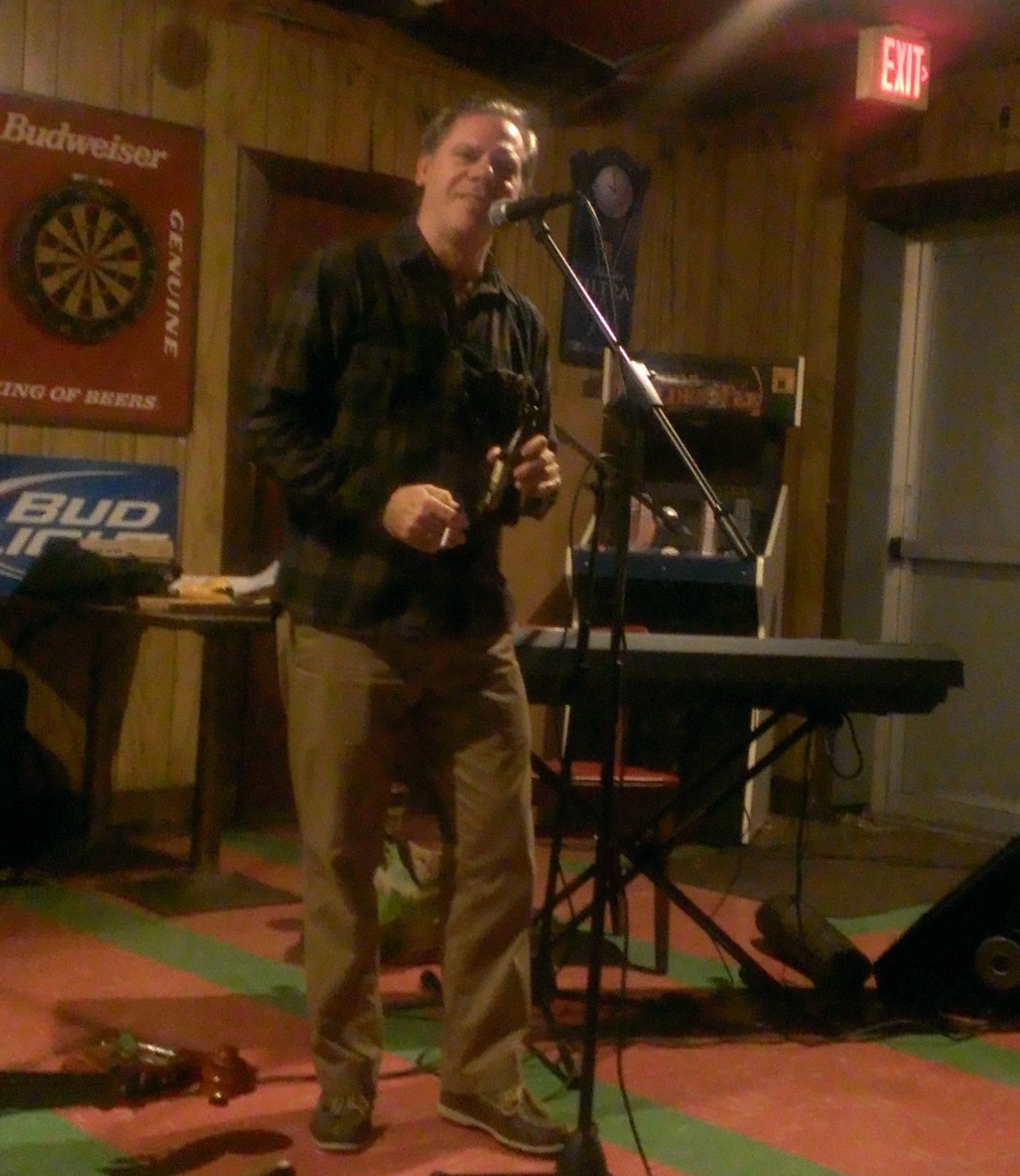
David Amram led Jamming Jack and was magnificent as always. I’ve seen him play a few times now, and each time feels unique.

He also invited people up to read and perform in what turned out to be an inspiring evening.

Jerry

Here Lowell’s very own actor and screenwriter Jerry Bisantz, of Image Theater, performs as Jack Kerouac.

Steve

Christopher Barry and his youngest brother Stephen Barry each performed their poetry. Stephen (pictured above) had flown all the way from California to be at the event. I’ve met Chris a few times, and it’s always a pleasure hearing him read. It was nice meeting his brother and seeing that talent obviously runs in the family.

SteveD

Jazz-poet Steve Dalachinsky, whom I’d heard read at Lowell Celebrates Kerouac two years ago, was back to read more poetry! He is brilliant. His wife Yuko Otomo was in the audience, and I wish she’d read too.

Drummer

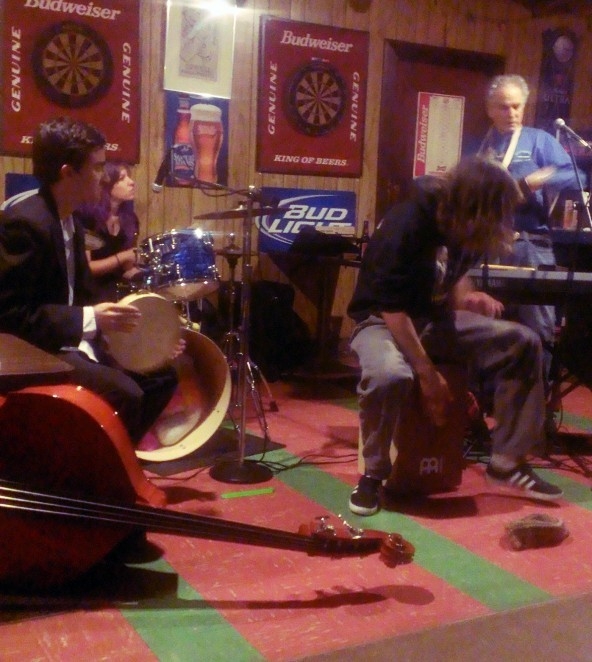
Throughout the performances, David was playing the piano. He also selected some wonderful young musicians to accompany them. I believe the drummer and the guy on the tambourine were local students. The guy on the box-drum came from further away and was at LCK two years ago. If anyone has their names or contact info, please do pass it along. They were phenomenal.

Toward the end of the evening, David starts talking, says something about an author who wrote a new book, and that she doesn’t know he’s going to call her stage, and then calls out my name! The last time I read with David I was so nervous I could barely eat the entire day. I didn’t have time to get nervous this time around! I read one of Kerouac’s prose-poems. So beautiful! I don’t know that I did it justice, but it was such an honor to get to read Kerouac’s own words in his hometown and with so many phenomenal musicians and writers there.

The event made me kind of sad… It was so fun and inspiring, and I wish that Kerouac would’ve gotten to see that his literature continues to be appreciated to this day by people who are willing to come from far-flung locales of Canada and California and from people in their teens to people in their 80s.

* * *

Burning Furiously Beautiful: The True Story of Jack Kerouac’s “On the Road” is now available as an ebook and paperback!

Happy Birthday, Amiri Baraka!

7 Oct

BluesPeople

Happy birthday to the great poet, playwright, critic, and activist Amiri Baraka!

Baraka was born on this day in 1934 in Newark, the same New Jersey city where eight years earlier Allen Ginsberg had been born. His given name was Everett LeRoi Jones, and he went by LeRoi, eventually changing his name in the late 1960s to Amiri Baraka. Baraka had studied at Rutgers University and Howard University before, like  Ginsberg and Jack Kerouac, studying at Columbia University. Also like Kerouac, he took classes at The New School. However, while Ginsberg and Kerouac could be found in the English departments, Baraka’s major fields of study were philosophy and religion. It is not surprising, then, that he became known for his social criticism.

As his website states:

Baraka started his professional career by joining the US Air Force in the early fifties.  Destined to be an accomplished author, he did not serve the military for long and switched to a completely different domain by opting to work in a warehouse for music records. This is where his social circle expanded and added the Black Mountain Poets, New York School Poets and the Beat Generation to it. Also, it developed his interest in Jazz music which later matured in making him one of the most sought after music critics. 

Around that same time, in 1958, he married Hettie Cohen. Together they founded the short-lived lit mag Yugen. He also edited the lit mag Floating Bear with Diane DiPrima. His first book of poems, Preface to a Twenty Volume Suicide Note, was published in 1961. Perhaps the book he is best known for is the 1963 jazz criticism Blues People: Negro Music in White America.

Baraka has gone on to receive the PEN Open Book Award, the James Weldon Johnson Medal for contributions to the arts, an Obie Award (for Dutchman), and the American Academy of Arts & Letters award, and become Professor Emeritus at the State university of New York at Stony Brook and the Poet Laureate of New Jersey.

This is barely even scraping the surface of who Baraka is and the importance of his work. My emphasis on his connection to Ginsberg, Kerouac,  DiPrima, and the Beat Generation is an artificial construct, simply to navigate my usual Kerouac readers. Baraka’s literature and activism is integral to our nation’s history and development. The Poetry Foundation offers a more thorough biography.

Read an excerpt from Blues People on Barnes & Noble.

Find out more on Amiri Baraka’s website.

Clip: Jazz and the Beat Generation

11 Jul

beatsofsummer-button

I’m super excited::: Roof Beam Reader invited me to participate in the Beats of Summer series!

The literary blog is named after a J. D. Salinger novella and is run by a cum laude graduate of California State University, who earned an MA in English with an emphasis on American lit. He is now an academic adviser for two universities while pursing a PhD in English.

The Beats of Summer series so far has included:

Women of the Beat Generation in 3 Easy Steps from Jackie Mania

Jack Kerouac

William S. Burroughs

a giveaway

You can read my article — Jazz and the Beat Generation — here.

“On the Road” Review

18 Dec


OLYMPUS DIGITAL CAMERA

OLYMPUS DIGITAL CAMERA

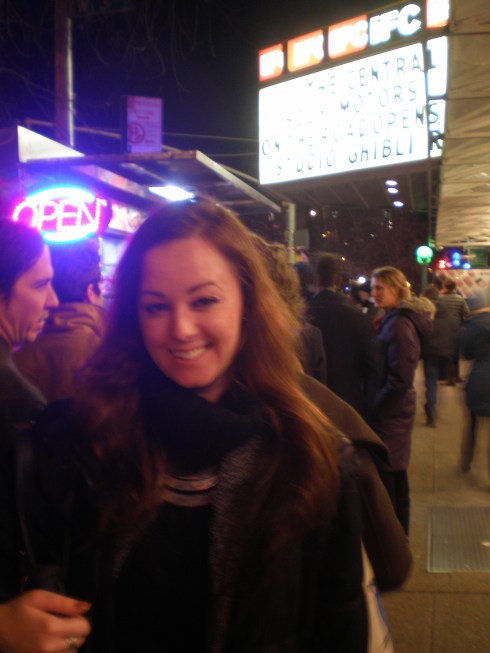
On Friday, December 14, I attended a special sneak preview of On the Road at IFC Center in Greenwich Village. It was history in the making. At long last, Jack Kerouac’s seminal road novel had made its way to the silver screen. Kerouac himself wrote a lot about going to the movies, and he wanted his novel turned into a film. In fact, he even wrote to Marlon Brando, asking him to buy it and star in it.

Francis Ford Coppola bought the film rights decades ago. I have a friend who wrote a screenplay that he showed to Coppola, and there have been numerous actors associated with the film adaptation, but the project always seemed to stall. Finally, Walter Salles came on as director and Jose Rivera as screenwriter, and soon after an impressive cast lined up, and the film looked like it would finally take off. And it did! It debuted at Cannes Film Festival in May 2012. Throughout the summer and into the fall, the film showed at theatres across Europe and South America. Those of us in the States read reviews, watched clips, argued about whether the novel could be adapted for film in a successful way, and debated the choices for the cast while we waited for the quintessential American story to come to us. At long last, when it was announced that a sneak preview of On the Road was taking place in the neighborhood Kerouac used to hang out in, people lined up on the Avenue of Americas for a chance to see it. As my good friend Elizabeth and I waited in line, an older man offered us $50 for our movie tickets. Considering we were so excited we were taking photos to commemorate the event, we probably weren’t the best people to try to scalp from. Needless to say, I watched the film, and, for whatever it’s worth, I can now give you my review of On the Road, which opens in New York and LA on December 21 and the rest of the country in January.

Let me start with a caveat: I am perhaps a bit too close to the subject matter to review On the Road objectively. After all, I am writing a book about the true story of On the Road. I have also heard and read reviews by a few other Beat scholars and fans and watched many Youtube clips from the film. I came in with lots of preconceived notions, and I watched the film more as a critic than as your average moviegoer. That said, I did not go into it as a literary snob wanting it to fail. I came into it wanting to see Kerouac’s work done justice.

***

On the Road is wonderfully nuanced. And to me, it’s the nuances in the acting, directing, and screenwriting that make On the Road a worthwhile adaptation of the novel. Everyone involved in the film understood that Kerouac’s novel is not just about some crazy kids driving at high speeds across the country, getting high, and getting laid. They understood that depicting this wild behavior — the film does not censor anything — was necessary not for shock value but because it underscores the complexity of the characters. In particular, the film does justice to the theme of the loss of fathers. Burning Furiously Beautiful, the book I’m coauthoring, delves into the personal life stories of the real-life people the characters are based on, giving further insight into their behavior and lifestyle. Understanding the characters’ back story elucidates their desires and actions, and the film adaptation neither glorifies nor critiques the characters. It gives them space to reveal themselves to the viewer.

Interestingly, the character that fell flat to me was the character of Sal Paradise, based on Jack Kerouac and played by Sam Riley. The actor, screenwriter, and director did a great job showing him to be an observer, which was true to Kerouac’s nature. However, the film itself was not seen through Sal’s eyes. He seemed like just another character. The landscape, the jazz shows, the parties were depicted through a neutral perspective. Not only did this make it difficult to understand Sal’s motivations and character — this is most evident in the scene with Terry (“the Mexican girl”), which isn’t developed enough for us to understand why it’s included — it meant we lost his voice. While critics over the years have focused on the road trip antics, for me, the strength of the novel was its insanely beautiful poetry. The film adaptation was more about the story and less about the literature.

Overall, though, the dialogue for the characters and the acting was phenomenal. Viggo Mortensen needs to star in a biopic on William S. Burroughs. Amy Adams took on the persona of Jane. Kristen Stewart brought a depth to Marylou that Kerouac himself didn’t. Kirsten Dunst showed great emotion in her scenes. Tom Sturridge played Carlo Marx with intensity but also surprising humor; his dialogue was quintessential Ginsberg: dramatic and over the top. Elisabeth Moss’ Galatea was a nice contrast to the other characters, while Danny Morgan’s Ed was a bit too goofy; these two characters are the reason the characters end up at Old Bull Lee and Janes’s place, but if it weren’t for that they could’ve been edited out for the film. Garrett Hedlund was charismatic. He lit up the screen.

My most pressing criticism of the film is that it felt a bit too much like a period piece for my personal preference.  I was impressed that the film was historically accurate, and yet I found myself distracted by those details. For example, when the focus was on the exterior of the Hudson, it made the story feel removed instead of vibrant; yet the shots within the car or from the viewpoint of the passenger were beautiful. Likewise, there were times when the wallpaper in a room jumped out at me more than it probably should have. I’m by no means suggesting the story should have been modernized, but the setting and props should not overpower the story. There were also scenes like the one at the jazz club which felt staged, almost cartoonish. I would’ve liked something a bit more raw, a bit grittier or impressionist.

In contrast, the New Year’s Eve party was sheer brilliance. Here were fast cuts and disorienting angles. Here were sweat and thrashing limbs. Here was jazz you wanted to dance to. Here was the energy that made you want to shout go, go, go! There were also beautiful quiet moments laced throughout the film. Poetic landscape. Honest heart-to-hearts. Subtle glances. Almost any time the characters were on the road, the dialogue, the filmography, and the acting were spot on.

The film adaptation of On the Road may enlighten some people’s perception of Jack Kerouac.

Gift Guide for the Beat Reader

14 Dec

The writers associated with the Beat Generation were anti-Consumerism, and I have a hard time believing they’d want anyone to buy beatnik merch. They would want you to buy and read their literature instead. However, if you have friends who love Beat literature, you may be hesitant to buy them On the Road because chances are they probably already have dog-eared paperbacks of both the standard novel and the scroll version. Here are a couple of alternative Beat-inspired gifts.

Amram

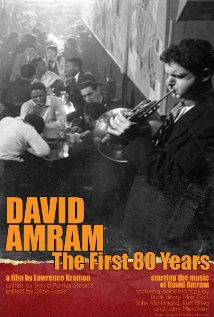
Musician and author David Amram did jazz-poetry performances with Kerouac and other poets. He also wrote the scores to films such as Splendor in the Grass and The Manchurian Candidate and has jammed with a wide variety of musicians. David Amram: The First 80 Years chronicles his genius talent. (You can watch a video of me reading with Amram here.)

logo

Another gift-worthy film is Ginsberg’s Karma, a “documentary about the legendary poet Allen Ginsberg and his mythical journey to India in the early 1960s that transformed his perspective on life and his work.” The film was edited, produced, and directed by Ram Devineni, and features poet Bob Holman. I saw this film at the PEN World Voice Literary Film Feast a few years ago and was inspired to get involved in some of their subsequent projects.

billykoumantzelis

Billy Koumantzelis was a friend of Kerouac’s back in their hometown of Lowell and served as a pallbearer at his funeral. I picked up this CD when I was at Lowell Celebrates Kerouac in 2011. It’s full of stories about Kerouac hanging out at bars, getting into fights, and appearing on The William Buckley Show and makes a great gift for someone who wants to hear stories from someone who knew Kerouac. (I got to meet Koumantzelis last week, and he is a true gentleman. I’ll be sharing stories from that soon.)

corso2

Allen Ginsberg had a portrait of poet Walt Whitman hanging in his apartment. This framed portrait of Gregory Corso is a great tribute to a poet who loved the Classics.

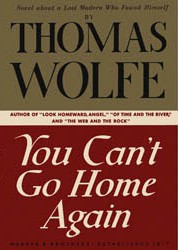
YouCantGoHomeAgain

Jack Kerouac was inspired by author Thomas Wolfe. Bundle up Look Homeward, Angel and You Can‘t Go Home Again for the Kerouac fan.

the-visitation

Kerouac wrote about the Grotto in Lowell, which is a beautiful and peaceful space to visit. Artist Jonathan Collins, whom I met at one of my readings, did a series based on the Grotto, which would make a lovely gift.

Larry-Closs_Beatitude_Anthony-Freda-194x300

Another person I met at a reading was Larry Closs, author of the book Beatitude.
 I stayed up late one night reading this heartbreaking-but-hopeful book of love, friendship, and the power of literature. You can read the synopsis here.

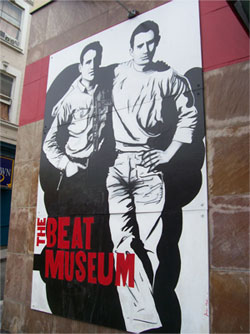
museum-sign

I haven’t finished my California road trip posts yet (so many posts, so little time!), but it will include my visit to The Beat Museum in San Francisco. I was greeted by none other than proprietor Jerry Cimino himself, whose stellar work in preserving Beat history I’ve been following for many years. He took some time out to chat with me and show me the plethora of rare and first-edition Beat books. Even if your budget isn’t big enough for a first edition, you can still get archival lit mags, which make a really cool gift.

Sea

Another place soon to be featured on my California road trip is City Lights Bookstore. In addition to rare and signed copies of books, you can also get some exclusive works here. At Sea is an “Exquisite handmade letterpress edition of Lawrence Ferlinghetti’s new poem” for poet Pablo Neruda.

Of course there are tons of biographies, walking tour books, graphic novels, films, and so forth that would also make great gifts, but if you’re looking for something a bit more off the beaten path (heh), these might be the gifts you’re looking for.

Jazz for Peace

10 Dec

When my dear friend Sue, whom I’ve known since first grade, invited me to a jazz show fundraiser I immediately said yes. As I’ve been studying Jack Kerouac, I’ve been reading a lot about how he frequented the jazz clubs of Harlem and wrote jazz reviews. I’m kind of a method writer, and I like to get out and experience what I’m writing about. And of course it’s great to be able to help others just by doing something you love — listening to music and eating great food. And when I say great food, I mean they had fried olives stuffed with blue cheese! Afterwards, I asked Sue if she’d be interested in doing a little write up, and she not only agreed but was so enthusiastic about it.  Below she shares about this worthwhile fundraiser, the great music, and the cute moment we shared with people at our table:

Jack, Josie and I hurriedly rushed into the restaurant.  We finally arrived at Lura Restaurant Lounge at 949 Columbus Avenue (Duke Ellington Blvd and 106th Street), way uptown.  We were running late for the Jazz for Peace Event, the Global Alliance for Community Development’s (GACD) 2nd Anniversary Fundraiser.  Jack serves on GACD’s Board of Directors, and the three of us work for the same company in midtown, where we were rushing in from.  I was to meet my friends, Mike and Stephanie, at Lura by 7pm.  I walked in and looked around.  To my left, Steph sat alone at a table, dressed in black, buried deep in a book.  Mike was off to my right at the bar, looking directly at me and smiling. 

Josie and I gathered Mike and joined Steph at the table.  I know them; they know of each other.  The usual chatter ensued, and drinks and food were ordered.  Lura has an exceptional menu, and we had a hard time deciding what to get.  Everything looked (and was) scrumptious.  As we settled in, David McCoy, Executive Director of GACD, stood up in front of the room and talked about the work they are doing and aspire to do and the results of their labor up to that point.  One of the most inspiring initiatives that he described was the water programs GACD has designed in collecting and filtering rainwater for communities. It made one feel so proud to be a part of this great cause in some way and was an appropriate reminder of what was going on outside of the room.  He turned our attention over to Rick DellaRatta and Jazz for Peace* and, appropriately for a late October evening, they opened up with “Autumn Leaves.”

I noticed that Josie was talking to an elderly couple at the next table.  The man was keeping half-time with his hand on the table and on his knee, joking that the music was too fast for old people to dance to.  Josie, who was sitting closest to the woman, was deep in conversation, probably partly due to the fact that one could hardly hear anyone unless he or she was right next to you.  After a few moments, Josie revealed to us that this couple happened to be, in fact, the parents of the keyboardist and vocalist, Rick DellaRatta.  The man, DellaRatta’s father, had been a musician in the War, and his wife, DellaRatta’s mother, was a pianist who had played with him.  They’d been married for over 50 years.  DellaRatta’s father displayed so much insight into the music being played, the technicalities of it, how each instrument contributed to the overall sound.  The bassist plucked away, with all ten fingers at one point.  The drummer, who looked like a teenager, blew everybody away with the seeming madness of his drumming.  He paused and syncopated with so much force, yet absolute grace and control.  The saxophonist, who stood in front, slightly to the right of the stage, whenever I looked over at him, would just be standing there, still, looking out at the audience.  Every so often, you’d hear him first, the singing, soaring sounds of the sax, running up and down the octaves where his fingers, all of a sudden, were a blur, a complete contrast to his previous state of inertia.  The energy emanating from the stage forced one to stop what one was doing, or even thinking about, and to just feel the music, to let the symphony flow through you and move you.

The next day at work, Jack and I agreed that the night was too short.  Josie and I were anxious to see the pictures Mike had taken of us inside and outside the venue. 

4

Please see links for more information on GACD and how you can help support them and their more-than-worthy cause to combat poverty.  Hope to see you at GACD’s 3rd Anniversary Fundraiser!

Sue J. Chang lives in Manhattan, NY in Battery Park City and publishes mixes on 8tracks.com.

* Via: On September 25, 2002 Jazz pianist and vocalist Rick DellaRatta was invited to lead a band consisting of Israeli, Middle Eastern, European, Asian and American Jazz Musicians in a concert inside the United Nations for an International audience in what is now considered one of the significant cultural events of our time. Rick named this band JAZZ FOR PEACE™ and has since performed over 800 Benefit Concerts to raise funds, publicity and awareness for outstanding organizations in need worldwide. In addition Jazz for Peace performs educational programs bringing music and Jazz back into the schools and donates musical instruments to underprivileged children. Jazz for Peace concerts have featured Rick DellaRatta along with such notable jazz artists as Paquito D’Rivera, Victor Lewis, Lenny White, Eddie Gomez, Dave Valentin, Ray Mantilla, Rick Margitza and many others. Mr. DellaRatta’s Jazz influenced orchestral composition “Permutata” was recently recorded by the London Symphony Orchestra.  For more information please visit http://www.jazzforpeace.org


Blues.Gr Interviewed Me about the Beats and Greece!

27 Nov

What mistakes of the Beat Generation would I most like to correct?

What role did Greek immigrants play in Jack Kerouac’s life?

How would I spend a day with Gregory Corso?

What does Greek philosophy have to do with Beat writing?

Am I a Beat??

Find out my answers at Blues.Gr!

Athens-based writer Michael Limnios has been interviewing people associated with the Beat Generation for Blues.Gr.  He has an impressive catalog of interviews, featuring such names as Amiri Baraka, Helen Weaver, Levi Asher, Dennis McNally, and so many other fascinating figures.  I don’t know how I ever got lucky enough to be even remotely associated with these people, but I’m honored.  Michael asks unique questions so the interviews touch on aspects of the so-called Beat Generation that aren’t always addressed.

Next time I’m in Greece, I’ll have to see if he’s available to sit down in the platea and chat about the Beats and jazz and rembetiko over a glass of ouzo!

Video from Collaboration with Jazz Musician David Amram

19 Sep


This is the video from my collaborative reading with David Amram at Cornelia Street Cafe on Labor Day.  If you missed my full recap, you can read it here.

In the video you’ll hear me reading a section on Jack Kerouac’s time in Mexico, which gives some perspective on Kerouac’s faith, his sensitivity toward animals, and his tumultuous friendship with Neal Cassady.  The book I’m reading from is my book with Paul Maher Jr. called Burning Furiously Beautiful: The True Story of Jack Kerouac’s On the Road

Special thanks to my videographer Liz Koenig.

The event also picked up some press!

Larry Closs mentioned it in his article “Transcending Beat with David Amram.”

The Pappas Post mentioned it in “Stephanie Nikolopoulos and Jazz legend David Amram pay tribute to Jack Kerouac.”