Tag Archives: jazz

Recap — with Photos! — of David Amram Reading

10 Sep


When musician David Amram introduced me before I read with him at Cornelia Street Cafe on September 3, 2012, he very generously said people should pay attention because one day they’d see me on television.  To me, though, reading with David Amram was a much bigger deal than being on television.  There are countless television shows, but there is only one David Amram.  While there are many fantastic musicians and writers out there whom I’d be honored to read with, there are few who hold such a special place in forming my creative identity as Amram does.

I first became acquainted with Amram through studying Jack Kerouac when I was just a teenager.  I was enamored with his improvised performance as Mezz McGillicuddy in the 1957 Robert Frank and Alfred Leslie film Pull My Daisy.  In fact, this photograph, featuring Larry Rivers, Jack Kerouac, David Amram, Allen Ginsberg, and Gregory Corso, who all collaborated on the film, is probably my all-time favorite photograph of the poets, writers, and artists associated with the Beat Generation.  It seems to so purely capture their friendship: just a couple of people hanging out at a cafe, maybe talking about the arts, or maybe just drinking coffee late into the night and enjoying each other’s company.

Although it was literature that introduced me to Amram, his music fascinated me.  Here was a musician who was more than just skillful.  Amram is an innovator.  He’s someone who experiments, improvises, blends genres, captivates.  He is, quite simply, mesmerizing to watch and listen to.

Through reading biographies on Kerouac and also reading Amram’s own biographies, I came to discover the jazz-poetry readings Amram and Kerouac began doing in the Village in 1957.  These were improvised sets, requiring each to masterfully foresee and adapt to changing tempos and moods in each other’s works.  These jazz-poetry collaborations captured my imagination, challenging my view of art and the way in which it’s created, the musicality of words, and the role of collaboration, improvisation, and performance in literature.  As I read about the collaborations in musty library books, forty-some-odd years after they’d taken place, I envisioned what it must’ve been like to be in the crowd at a painter’s loft or at the Circle in the Square.  Did the people there realize they were part of history?

In 2001, I had the opportunity to ask Amram just that when I interviewed him for some research I was doing at the time.  I sat enthralled, clinging to his every word, as he told me about all the places he used to hang out at in New York, about collaborating with Kerouac, and about how the term “Beat Generation” is just a marketing term that people later attached to the individual artists who each create unique works.  As he talked, answering all of my questions and never rushing me, and later as I read another biography of  his, I realized that Amram is the real deal — a creative genius and also a beatific individual, an artist who inspires and encourages.

Amram has been someone whom I’ve long admired, both on an artistic and a personal level.  Reading about those 1957 jazz-poetry readings he did with Jack Kerouac, I never imagined that one day I would have the opportunity to read the book I’m writing on Jack Kerouac with him.  When my former editor suggested we attend Amram’s show at Cornelia Street Cafe in the Village, I excitedly said yes.  A few days later, I had to email him back to say Amram had invited me to read with him.  It was completely surreal.

The September 3, 2012, show was completely sold out.  I had some friends who were turned away at the door.  Special thanks to Cornelia Street Cafe’s Robin Hirsch and the staff for hosting the reading and for doing such an excellent job in organizing the event.  I read a short selection about Kerouac’s time in Mexico from Burning Furiously Beautiful: The True Story of Jack Kerouac’s On the Road, the book I’m co-authoring with Paul Maher, Jr.  It was really exciting because author Larry Closs and painter Jonathan Collins, both of whom I met through the Burning Furiously Beautiful Facebook page, were in the audience.  Poet and producer RA Araya, who has been hugely supportive of my work and whose birthday bash was the premiere reading from Burning Furiously Beautiful, was also there, and graciously provided the photography you see here.  I had some other family and friends there as well and am so appreciative of their support.  It means more to me than most people realize.

As soon as my videographer, Liz Koenig, sends the video, I’ll post it so you can hear me reading with David Amram and his band.  The band, consisting of Amram, Kevin Twigg, and John de Witt played so beautifully — even more of a feat, considering Twigg had hurt his hand before the show.  The music was haunting and fit the piece that I read so perfectly.  I wanted to remain present in the moment, to really hear what they were playing, and savor the moment.  It was one of those times in life that I wanted to tuck into my heart and cherish.
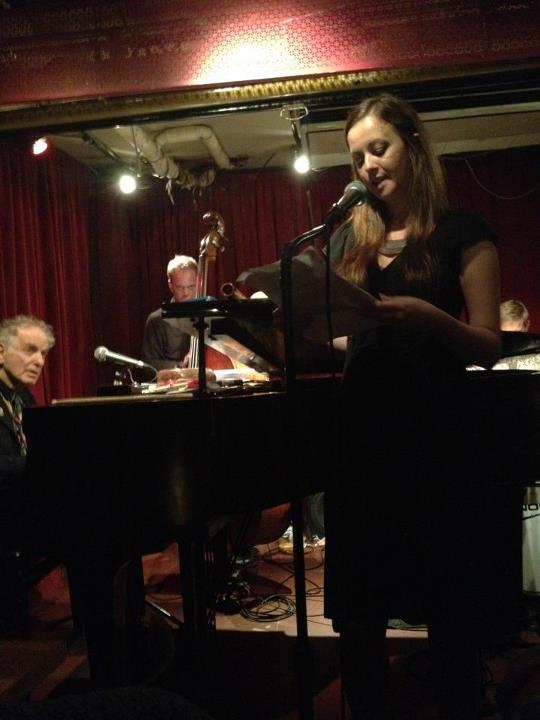


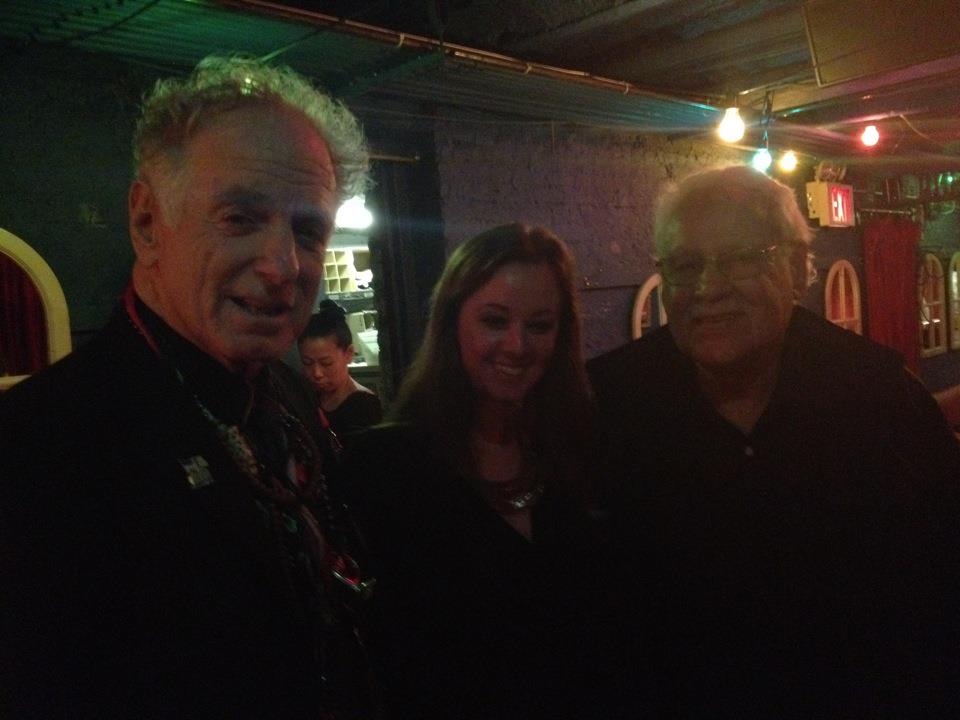
David Amram, Stephanie Nikolopoulos, Joe Pacheco

Stephanie Nikolopoulos, David Amram, RA Araya

Videos from Premiere Reading from Burning Furiously Beautiful: The True Story of Jack Kerouac’s On the Road

31 Aug

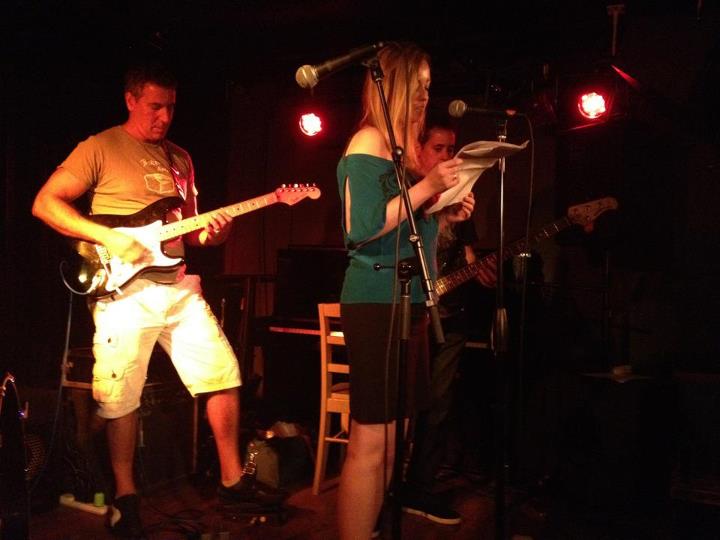
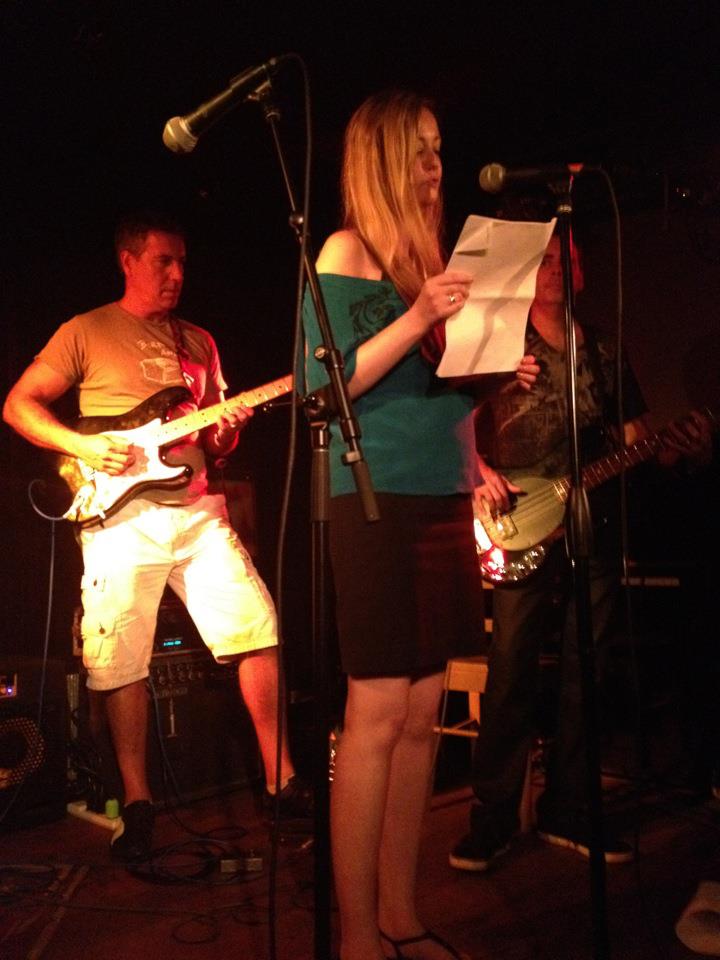
Here’s video from the very first reading from Burning Furiously Beautiful: The True Story of Jack Kerouac’s On the Road, cowritten with biographer Paul Maher Jr.  This is the reading that took place at The Sidewalk Cafe, to celebrate poet RA Araya’s birthday, and the awesome band I collaborated with is called flashbackpuppy.  Not only was this my first reading from the book — it was also my first time reading with a live band!  We didn’t rehearse the collaboration at all.  I literally met them for the first time when I got up on the stage.

Video via Liz Koenig

Video via Fred Rodriguez

***

Don’t forget to come out this Monday night, September 3, at 8:30, to  Cornelia Street Cafe (29 Cornelia St., NYC).  Just steps from where Jack Kerouac and David Amram did their jazz-poetry readings in 1957, I’ll be reading about Kerouac while David Amram plays!  If you’ve ever caught any of his performances, you know that Amram is not only a phenomenal musician but also a great storyteller.

Amram & Co. includes David Amram, Kevin Twigg, John de Witt, and Adam Amram.  $10 cover, plus $10 minimum.

***

9/2/12: That’s Jon Martinez on bass, Patrick Conlon on drums, Peter Beckett guitar playing in the videos.

Ramblin’ Jack: Just Because You Don’t Like a Book, Doesn’t Mean It Isn’t Well Written

20 Aug

Over the years, many readers have criticized Jack Kerouac’s work for its rambling prose and sounding too colloquial.  Everyone is certainly welcome to his or her own opinions.  The world would be a pretty boring place if we all liked exactly the same thing.  The literary arts are, to a certain degree, subjective.  One doesn’t have to like or enjoy a work, though, to see its importance and value.  Even if it doesn’t change the likeability of a work, it’s important to consider its artistry before completely dismissing it.

Take Of Mice and Men.  This book did nothing for me when I read it in high school.  I didn’t like the story.  The writing style was just fine, but not particularly innovative.  Still, it was a classic!  John Steinbeck!  I should like it, right?  I didn’t.  I moved on to The Red Pony.  Hated it even more.  But I was determined to like John Steinbeck.  Finally, I read Travels with Charley, which became one of my favorite books.  Same thing with Kurt Vonnegut.  As a teenager, I didn’t feel cool because I thought Breakfast of Champions was simultaneously silly and trying too hard.  Afterward, I read Cat’s Cradle, and even though the nature of the subject matter wasn’t of interest to me, I loved the book.

Sometimes it just takes finding that right book by an author.  Just because it’s a classic doesn’t mean we’re going to all like the same book.  And that’s okay, but it doesn’t mean we should dismiss it—it’s a classic for a reason—or give up on the author.  If we do, we face missing out on some really great literature.

I don’t enjoy all of Jack Kerouac’s books.  And perhaps my favorite of his works is one that many people don’t read: Visions of Gerard.  For the people who don’t like Kerouac because of his subject matter, I’d encourage them to check out some of his other books.

However, even for the books we don’t like, we can still learn from them and sometimes even appreciate them.  When I was getting my Master of Fine Arts—I spell this out to emphasize the artistic nature of literature—in creative writing at The New School, instructors always stressed that we didn’t have to like everything we read but we had to keep an open mind and give each work a fair shot.  One of my first instructors always asked whether we liked the book, sometimes taking a poll.  Of course the interesting part came when we debated why or why not.

I’ll be honest: I read a lot of books I did not enjoy.  Many I ended up giving away to anyone who would take them.  But I kept some of the books I did not like—because even though I didn’t find reading them a pleasurable reading experience, either because they weren’t the style I enjoy or the subject matter bored me, I recognized their brilliance.  Sometimes the books I hated reading the most ended up being the very ones that had the most profound influence on my understanding of literature and the craft of my own writing.

One of these books was Alain Robbe-Grillet’s Jealousy.  The antithesis of a beach read, this book requires the reader to concentrate and piece together and analyze.  It’s not so much that the language or concepts were difficult—in fact, quite the contrary.  It was the author’s style, the limited view he gave the reader, that made the book both frustrating and genius.  It challenged my view of what literature was, how literature was supposed to work, and why we read—in a good way!

Now, as far as Kerouac’s prose stylings, there are a few things worth considering:

  • Kerouac’s first language was not English.  He was born in Massachusetts to immigrant parents who spoke to him in the French-Canadian dialect joual.  When he went off to school, half the day was taught in French Canadian and the other half in English.  It wasn’t until he reached high school that he began to feel comfortable speaking in English.
  • While many people critique the American colloquialisms Kerouac uses, it’s worth noting that people praise Mark Twain for doing the same thing.  Kerouac was working to capture a unique American sound, the language of his times.  He used to tape record conversations with his friends and refer to letters they wrote him, just to capture authentic speech patterns and diction.
  • The so-called rambling prose wasn’t just echoing true-to-life conversations and speech patterns; it was also referring to the stream-of-consciousness narrative of modernist novels.  One of the books he read that influenced his writing style was James Joyce’s Ulysses, an experimental novel that employed stream of consciousness.  In fact, you know that famous quote from On the Road about the roman candles?  The one that goes:

… but burn, burn, burn like fabulous yellow roman candles exploding like spiders across the stars and in the middle you see the blue centerlight pop and everybody goes “Awww!”

Well, compare it to this line from Ulysses:

…O! then the Roman candle burst and it was like a sigh of O! and everyone cried O! O! in raptures and it gushed out of it a stream of rain gold hair threads and they shed and ah! they were all greeny dewy stars falling with golden, O so lovely, O, soft, sweet, soft!

  • Kerouac read voraciously.  He read the Greek Classics, comic books, the Russian masters, westerns, the bible, and history books.  In his journals, he refers to these works, evidence of his thoughtful contemplation of what he read.  These works influenced both the content and prose style of his own writing.
  • In addition to books, Kerouac’s writing was deeply influence by music.  If you read his work aloud or dissect his sentence structure, you can hear the bebop rhythm of his prose.  He and his musician friend David Amram used to improvise jazz-poetry readings together, creating it spontaneously, on the spot.  This is a lot harder than it sounds.  You have to really have a firm grasp on chord progression, rhythm, rhyme, and language—all while taking cues from someone else who is also improvising.

Sometimes works that seem effortless are the hardest ones of all to create.


Burning Furiously Beautiful: The True Story of Jack Kerouac’s On the Road discusses in more detail Kerouac’s literary development.

Photos from Reading at Sidewalk Cafe

15 Aug

I had so much fun reading at poet RA Araya’s birthday bash at the Sidewalk Cafe this past Sunday!! RA was such a great host and is so encouraging.  There were so many amazingly talented poets and musicians there.  I felt so honored to get to read with them.

I started off reading the beginning of Homer’s The Odyssey in Ancient Greek (bringing awareness to Greece’s cultural heritage as well as the plight of endangered languages) and then read a section from Burning Furiously Beautiful: The True Story of Jack Kerouac’s On the Road, the book that I’m coauthoring with Paul Maher Jr., while the flashbackpuppy band improvised a jazzy tune.

Here are some pictures RA took.


That’s me sitting next to poet Juan Valenzuela.  In the foreground is poet Miguel Algarin, who co-founded the Nuyorican Poets Cafe and knew Jack Kerouac back in the day.

Special thanks to my friends, who came out to support me.

From the Lost Generation to the Beat Generation: Hollywood’s Obsession

12 Jul


With Hemingway and Gellhorn currently on HBO and a remake of The Great Gatsby heading to theatres this Christmas, The Observer’s Daniel D’Addario ponders if we’re experiencing a “Lost Generation Boom.”

The Lost Generation refers to the writers during the World War I era, many of whom became expatriates.  The Lost Generation writers include F. Scott Fitzgerald, T. S. Eliot, Gertrude Stein, Ernest Hemingway, and John Dos Passos, among others.  Hemingway popularized the term in A Moveable Feast, in which he quoted Stein as telling him a story about a man who said, “That’s what you all are … all of you young people who served in the war. You are a lost generation.”

D’Addario also references last summer’s Midnight in Paris, but in some regard, we’ve been experiencing the “boom” for quite some time now … at least in the cocktail scene.  A few years ago, speakeasy-type bars became all the rage here in New York.  Dimly lit lounges served up spiked punches in tea cups.  There are also Jazz Age parties on Governor’s Island, where everyone gets all dolled up in fantastic flapper dresses and Sacque suits.  And the Oak Room—which in the ‘20s was Algonquin’s Pergola Room—just reopened.

However, Hollywood isn’t only obsessed with the Lost Generation.  The Beat Generation, which wasn’t popular for a long time, is beginning to see a revival.  On the Road, based on Beat writer Jack Kerouac’s novel, just premiered at Cannes Film Festival in May and will be released Stateside sometime later this year.  Next year, Kill Your Darlings, about a murder involving Kerouac, William S. Burroughs, and others associated with the Beat Generation, will be released.  In 2010, Howl, based on Allen Ginsberg’s poem and the trial that followed its publication, came out.  These aren’t small movies by any means.  Howl starred it-boy James Franco, Kill Your Darlings will star Daniel Radcliffe, and much has been made of On the Road starring Kristen Stewart.

Perhaps we’re trying to figure out our own generation by looking at those in the past.

Clip: In the Bathtub with a Jazz Musician and a Beat Poet

29 Jun


Burnside posted an essay of mine called “In the Bathtub with a Jazz Musician and a Beat Poet.”  It’s a true story.

Mixtape: Music and Poetry for On the Road

28 Jun

photo via Aunt13’s 8tracks mix

Aunt13 over on 8tracks made a mix called Music and Poetry for On the RoadIt’s inspired by Jack Kerouac’s On the Road and in the blurb she mentions Burning Furiously Beautiful!  How cool is that?!

I have the coolest friends!  I am going to be listening to this while I write, for sure, and daydreaming of hitting the road.  Aunt13 has over 300 mixes, so be sure to show her some love.

You may recall I posted a while back the soundtrack for the On the Road film.  It was just announced yesterday that the film will be making its US debut in late fall.

J. Haeske also made a mix for the soundtrack he’d envision for the film.  Teaser!  I have an interview with him about his new book on Kerouac lined up for you, so stay tuned.

What songs would you put on a mix for On the Road?

Also, I took my own advice about social media, and created a Facebook page for Burning Furiously Beautiful: The True Story of Jack Kerouac’s On the Road, the book I’m co-authoring with Paul Maher Jr.  Be sure to “like” the book on Facebook!  We’ll be posting news about the book, information from Across the Underwood, updates on the film, and so much more!

Road Trip Writing: On the Road and The Canterbury Tales

18 Jun

Jack Kerouac once quipped back at a journalist, “I’m not a beatnik; I’m a Catholic.”  Despite the Beat Generation being associated with the countercultural movement—sex, drugs, and … jazz—Kerouac’s writing so often points toward the spiritual.

Visions of Gerard describes his saint-like brother who died at age nine and touches upon life in the Catholic church in Lowell, Massachusetts.  When he left home, Kerouac began exploring Buddhism.  Ultimately he grew disenchanted by it, though, an experience he describes in Desolation AngelsOn the Road is tinged with the idea of holiness.  Check out this quote:

As we crossed the Colorado-Utah border I saw God in the sky in the form of huge gold sunburning clouds above the desert that seemed to point a finger at me and say, “Pass here and go on, you’re on the road to heaven.”

Beautiful, isn’t it?  In some ways, Sal Paradise—what a name!—is on a pilgrimage.  The point of the trip itself isn’t religious, but along the way Sal sees God in nature and in the act of traveling.  Throughout On the Road, Kerouac writes about searching for the holy.  What he finds there on the open road is the beatific—the blessings that seem contradictory to what the world says are blessings.

If you think about it, one of the earliest road trip novels is about a pilgrimage: The Canterbury Tales.  Chaucer’s fourteenth-century tale has all the seedy characters one might find William S. Burroughs depicting.  The pilgrims are road tripping from Southwark to the Saint Thomas Becket shrine at Canterbury Cathedral.  Just like how Sal Paradise finds he has tell good stories to anyone who picks him up while hitchhiking, the cast of characters in The Canterbury Tales each tell a story along the journey.

To support the National Literacy Trust, a group of modern-day pilgrims recently reenacted The Canterbury Tales.  You can read about it, see photographs, and listen to portions at the Guardian.


* * *

Don’t forget!

I’m reading tonight at 7:00 at The Penny Farthing (103 3rd Ave., downstairs in the speakeasy), here in New York City, as part of the Storytellers event, hosted by C3.

Jack Kerouac, Music Journalist

9 May

When Jack Kerouac went off to Columbia University, he told people he was going to be a journalist.  His father, Leo Kerouac, was a printer in Lowell, who owned a print shop called Spotlight Print.  Leo handled printing for some of the big businesses in New England, and also did a bit of writing of his own.  This inspired Ti Jean, as little Jack was called.  He used to lay on the floor, creating his own little newspapers and comics.

In school in New York, first at Horace Mann prep school and then at Columbia, Kerouac contributed to the school newspapers.  The writing he did for the papers would best be described as music journalism.  He soaked in all the great 1940s bebop of Harlem and wrote jazz reviews.

There was no Pitchfork at the time.  Rolling Stone magazine wasn’t founded until 1967.  Even many of today’s popular jazz magazines weren’t in existence yet.  Music journalism didn’t have the esteem that it does today.

Jack Kerouac may not have gone on to become a famous music critic or any sort of journalist in the traditional sense of the word, but his jazz reviews were not in vain.  Writing music reviews, he honed his craft.  He learned to listen well, and he learned how to recreate the excitement of a live gig on the page.  This all went into his future novels.  In On the Road, Kerouac wrote about experiencing jazz firsthand.  Today, his books, even if they contain fictional elements, are testaments to the music of the 1940s and ‘50s.  Although he may have obscured the names of his friends, the names of musicians and famous jazz clubs remain intact.

Furthermore, bebop style influenced the way Kerouac wrote.  He learned about the notion of spontaneity and incorporated it into his own work.  His writing style echoes the rawness and the genius of live, spontaneous jazz.

In Burning Furiously Beautiful, Paul Maher Jr. and I write about some of the great jazz clubs of the 1940s and ‘50s that Kerouac visited while he criss-crossed the country.  The book tells the true story behind On the Road.  It is a portrait of Jack Kerouac, but it’s also a portrait of the United States.  In mentioning these jazz clubs that Kerouac visited, we examine a bit of America’s cultural history.

On the Road Soundtrack

4 May

You’ve seen the posters, the trailers, the movie stills, and the interviews for the On the Road film. Now discover the soundtrack for On the Road.

According to Indiewire, the film will mostly have an original score by Gustavo Santaolalla. The Academy Award-winning composer was behind the music for Babel and Brokeback Mountain.

“On The Road” Soundtrack Tracklist

1. Sweet Sixteen – Greg Kramer
2. Roman Candles
3. Yep Roc Heresy – Coati Mundi
4. Reminiscence
5. Lovin’ It
6. The Open Road
7. Memories / Up to Speed
8. I’ve Got the World on a String – Ella Fitzgerald
9. That’s It
10. Keep it Rollin’
11. Hit That Jive Jack – Slim Gaillard
12. God Is Pooh Bear
13. Death Letter Blues – Son House
14. I Think of Dean
15. Jack Kerouac Reads ‘On the Road’ – Jack Kerouac

Considering how important bebop was to Kerouac’s writing style and even the content of On the Road, music will probably—or at least it should—play a large role in this film. I’m curious if the film will actually incorporate the music that Kerouac listened to in Harlem jazz clubs and the musicians he wrote about in On the Road. Music rights can be hard to obtain, but given that many kids aren’t listening to jazz today, I’d think the estates of many jazz musicians would jump at the chance to get some publicity.

I’m excited to hear Santaolalla’s take on what the music for On the Road should sound like.