Tag Archives: my mom

The Longest Word in Literature Is, Of Course, Greek

10 Dec

Ari

I always take a deep breath before I spell out my name for someone, a nonverbal warning to the person asking for it to prepare themselves. “N as in ‘Nancy,’” I say, then pause. “I-K.” Another pause, just like I heard my mother spelling it out so many times to credit card companies over the phone when I was growing up. The spelling out proceeded like that for some time, til all twelve letters were given.

Most of our friends get used to our long last name over time, so when I recently had to spell out the address of where my parents live in Greece for a family friend, I warned her to make sure she had enough room on the paper. This place name was long even for us.

I was not at all surprised, therefore, to learn via The Huffington Post, run by a Greek woman, that literature’s longest word can be found in a Greek play. Aristophanes’ Assemblywomen, an ancient comedy about the upheaval that occurs when women insert themselves in politics (things like: men must sleep with an ugly women before they sleep with a beautiful woman), contains a word that is 171 letters.

From Oliver Tearle:

Since you’re doubtless itching to know what this word is, I’ll give Aristophanes the final word: Lopado­­temacho­­selacho­­galeo­­kranio­­leipsano­­drim­­hypo­­trimmato­­silphio­­parao­­melito­­katakechy­­meno­­kichl­­epi­­kossypho­­phatto­­perister­­alektryon­­opte­­kephallio­­kigklo­­peleio­­lagoio­­siraio­­baphe­­tragano­­pterygon.

And if you’re curious what that looks like in Greek, I found it on Wikipedia:

λοπαδοτεμαχοσελαχογαλεοκρανιολειψανοδριμυποτριμματοσιλφιοκαραβομελιτοκατακεχυμενοκιχλεπικοσσυφοφαττοπεριστεραλεκτρυονοπτοκεφα-λλιοκιγκλοπελειολαγῳοσιραιοβαφητραγανοπτερύγων.

It’s the name of a dish that has about that many ingredients in it (okay, maybe only 16 or so but that’s still too many ingredients, and it sounds disgusting).


* * *

Burning Furiously Beautiful: The True Story of Jack Kerouac’s “On the Road” is now available as an ebook and paperback!

The British Are Coming!: The Beat Generation’s Influence on The Beatles

12 Nov

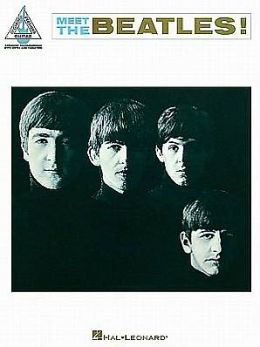
9781617804618_p0_v1_s260x420Check out the turtlenecks on the cover of Meet the Beatles

Yesterday, inspired by Olivia Cole’s article “Won over by the West: The irresistible allure of Americana for post-war Britons” for the November 2013 issue of British GQ, I kicked off a week-long series about the relationship between the Beat Generation and the British Invasion. I didn’t get too much into her article, but instead I wrote about the general history of each “group” (please take this term lightly; neither was an intended movement or formal group) and how and why they are connected. Today, I want to share a fun story with you about the two longest love affairs (Oh gosh, take that even lighter. People get so mad when I use hyperbole.) of my life: the Beatles and the Beats.

I was a HUGE Beatles fan back when I was in high school. I can’t quite remember how I got into the Beatles, but I know it’s not because of my parents. My dad didn’t listen to music. I was raised on smooth jazz, Prince, Lionel Ritchie, and Stevie Wonder, thanks to my mom. As I grew up and started discovering music on my own—Vanilla Ice, Boyz II Men, Snow, Positive K, Arrested Development, REM (should I go on? Ah, nostalgia)—she was the cool mom that listened to whatever I listened to on the radio. My mom was actually too young to be into the Beatles. In the craze of my own private Beatlemania, I pestered her for information, and she said she remembered her older sister getting a letter from their cousin in Sweden talking about this new band The Beatles and how popular they were.

One of the first exposures I had to Jack Kerouac and the Beat Generation came through The Beatles. I owned a VHS — yes, I’m that old! — documentary about The Beatles. It was a pretty low-quality documentary that I think I picked up at the K-Mart at the Closter Plaza. I don’t remember the name of it, but I used to watch it over and over again after school. I remember it saying that John Lennon named The Beatles, in part, because he was influenced by the Beat Generation. I didn’t know what the Beat Generation was at the time, nor did I bother to look it up — again, I’m old, and this was before I’d ever even heard the word “Internet,” so looking things up required going to the Closter Public Library and rifling through the encyclopedias. Still, when you watch something on repeat enough times, it gets ingrained in your memory, and when you suddenly learn something new, the threads of your brain weave everything together.

Wayne Mullins explored this in his essay “Long John Silver and the Beats” for Beatdom:

Several name changes occurred in the early life of the Beatles before John Lennon and Stuart Sutcliffe decided to honour the memory of Buddy Holly by changing the band name to the Beetles (as a play on Buddy Holly and the Crickets), but as John Lennon was a fan of clever word play he decided to change the spelling of The Beetles to Beatles as a way to suggest “beat” or “beat music”. As John Lennon said in a 1964 interview, “It was beat and beetles, and when you said it people thought of crawly things, and when you read it, it was beat music.”

Mullins goes on to prove the Beat–Beatles by discussion John Lennon’s art school education and the exposure he had to instructors who were fans of the Beats and the meeting of Lennon and Allen Ginsberg. He also makes notable claims about the parallel paths the Beats and the Beatles took toward enlightenment, coming from religious upbringings, looking toward the East, and returning (or at least considering) the religions of their youth. The article also points out that Jack Kerouac and Lennon both rejected the associations people made with them, preferring to remain autonomous.

Steve Turner’s book Jack Kerouac: Angelheaded Hipster also speaks to Kerouac’s influence on Lennon:

[John Lennon’s] fellow student Bill Harry specifically remembers Lennon reading “On the Road” and the short story “The Time of the Geek”, which was published in an anthology called ‘Protest’ in 1960. “He loved the ideas of open roads and travelling,” says Harry. “We were always talking about this Beat Generation thing.”

Mullins’ story about Lennon’s meeting Ginsberg was just one incident. The Allen Ginsberg Project post “Sunday 9th – John Lennon” recalls when Ginsberg invited The Beatles to his birthday party and Lennon and George Harrison showed up with their wives.

When the Nixon administration wanted to deport Lennon and Yoko Ono, Beat poet Gregory Corso wrote a letter, as did a whole lot of other famous people, according to John Weiner’s article “How Bob Dylan, Gregory Corso, Joyce Carol Oates and Others Helped Stop Nixon From Deporting John Lennon and Yoko Ono” in the Los Angeles Times.

The Beatles also had an affinity for William S. Burroughs, who appeared on the cover art of their Sgt. Pepper’s Lonely Hearts Club Band.

Not only that, in the Dangerous Minds article “The William S. Burroughs/Beatles connection,” Richard Metzger writes:

Over the weekend, I noticed the following passage in the book With William Burroughs: A Report From the Bunker by Victor Bockris:

Burroughs: Ian met Paul McCartney and Paul put up the money for this flat which was at 34 Montagu Square… I saw Paul several times. The three of us talked about the possibilities of the tape recorder. He’d just come in and work on his “Eleanor Rigby.” Ian recorded his rehearsals. I saw the song taking shape. Once again, not knowing much about music, I could see that he knew what he was doing. He was very pleasant and very prepossessing. Nice-looking young man, hardworking.

He goes on to elucidate the obvious connection: Barry Miles, whom The Allen Ginsberg Project also points to. Miles deserves his own post, but in short the thing to know is that he owned a bookshop in London that was frequented by the Beats when they were there, and he wrote about The Beatles and 1960s London underground culture.

Tune in tomorrow when I finally get into the meat of Cole’s article by discussing her commentary on The Kinks’ frontman Ray Davies’ new memoir.

* * *

Burning Furiously Beautiful: The True Story of Jack Kerouac’s “On the Road” is now available as an ebook and paperback!

Friday Links: Breathe In, Breathe Out

8 Nov

Oh, what a week, what a week. It seems like so many people I know are going through difficult times right now, myself included. I think this weekend we could all use a little nurturing. Here are a couple links to take you into what is hopefully a restful and enjoyable weekend:

Iconoclastic Writer penned a post entitled “Memory Babe: a writing exercise inspired by Jack Kerouac.” It’s an old post, but I think being in tune with our senses and learning to write resonate detail can be meditative

Sometimes just looking at beautiful, far-off lands makes me feel like I can breathe a little more

In an effort to drink less coffee (and ahem stronger drinks) and more tea, I bought a delicious champagne rose tea from Mitsua in New Jersey a few weeks ago

I’m also excited to try the new Teavana that opened up on the Upper East Side — it’s one of Oprah’s favorite things!

My doctor recommended this Upper East Side restaurant to me

I’ve been missing my mom a lot lately, which has made me crave macaroni & cheese, both a comfort food and one of her specialties. I might have to check out one of these places

I’ve been embracing my homebody side these days and reading and rereading the interior decorating magazine Domino — I’m so glad they’re back!

I like to light a candle when I write, and I see that Bath & Bodyworks — my favorite place to buy candles — is having their candle sale

Paul and I are holding a contest where you could win a one-of-a-kind tape that Carolyn Cassady personally gave to Paul. You can find the details and enter (or just vote for your favorite) on the Facebook page for Burning Furiously Beautiful: The True Story of Jack Kerouac’s “On the Road”


Confessions of an Awkward Lowell Celebrates Kerouac Attendee

5 Nov

bus

I hit the road last month to attend Lowell Celebrates Kerouac!

Confession time! In most circumstances I feel like a hanger-on if I’m in the company of whomever is the man or woman of the hour. Maybe it’s related to the Imposter Syndrome Sheryl Sandberg talks about in Lean In. Who am I to talk to someone of great stature? I never want to bother anyone, make it appear that I’m trying to get something out of them, or come out as some zealous fan. So, my typical response is to just keep to myself.

The first year I attended LCK I went alone and barely talked to anyone. I had been studying Kerouac’s literature for more than a decade and was fascinated by everything around me. It felt so surreal to be in Kerouac’s stomping grounds, to see his birth home, the Grotto, the Pawtucket Falls, the mill town he’d loved and written about. Roger Brunelle gave excellent tours, and I was enthralled by every moment of it. I loved every moment of it, and even though I had no one to share it with I didn’t really mind.

This year was completely different. My friend Julie Parker let me crash at her beautiful home outside of Boston, which was brimming with books and paintings and so full of inspiration. She’s a design consultant who does package design, marketing, and brand identity, so when we weren’t at the festival we had endless conversations about publishing and self-promotion.

I got to meet Paul! Oh my gosh, I was so nervous. Paul and I have been collaborating together for almost two years, and I probably spend more time talking on the phone with him than anyone else except maybe my mom when she’s in the States (when she’s in Greece, it’s difficult with the time difference), but we’d never met in person. I guess I was worried by meeting in person, something would change. It ended up being awesome. He gave Julie and me a tour of Lowell, and since he himself grew up there, his insight and stories were really personal.

I also got to catch up with David Amram and Billy Koumantzelis. I first got to know each of them from interviewing them about their friendship with Jack Kerouac, and since then I’ve been careful not to assume they’d remember me or talk to me beyond that. I completely understand that they’d have other, more important, people to talk to. But I didn’t want to go to my default of keeping my distance for fear that would make it seem like I didn’t want to talk to them. Ugh. My head gets so mixed up sometimes! Anyway, I did end up getting to spend time with both of them, and they’re both so gracious and fascinating individuals. For all the negative things that have been said over the years about Jack Kerouac, I have to say that he sure knows how to pick friends. These guys are stand-up gentlemen. Even though I first got to know them because of their friendship with Kerouac, that doesn’t even matter to me anymore. I just like talking to them and hearing their perspectives. When I had first interviewed Billy, I was curious about who he is, and at one point he stopped me and said, “Aren’t you here to ask me about Kerouac?”

Through one of David’s concerts at Cornelia Street Café, I’d met the poet Christopher Barry. He was at LCK too and introduced me to his brother, Stephen Barry, who is also a poet. Chris is a great guy, and it was fun chatting with him and his brother. David also introduced me to Steve Dalachinsky and Yuko Otomo, who are these amazing poets from New York City. Seriously. Probably among the best I’ve ever heard read—and I’ve heard a lot of poets read over the years. I probably would’ve been too shy to ever introduce myself if it weren’t for David. Billy also introduced me to Jim Sampas. You know, the guy behind One Fast Move or I’m Gone and the new film Big Sur. I sat there kind of stunned, saying, “I’m a big fan of your work.” I gave him a postcard for Paul’s and my book, Burning Furiously Beautiful, and Jim said, “I think I’ve heard of this.” Wow. I also got to meet the documentary filmmaker (Grave Matters) Brent Mason. Super nice guy. I met Stephen D. Edington, the organizer of LCK. He’s given sermons at the Unitarian Universalist Church of Nashua, which I’ve read online and found quite interesting.  And, I got to meet Roger Brunelle and his wife, both of whom were so warm. I don’t know why I get so nervous to introduce myself and talk to people sometimes….

Another highlight, though, was meeting people from the Burning Furiously Beautiful Facebook page. I was so touched when they came up and introduced themselves. I am so thankful for the network we have on that page, and it’s been great meeting like-minded people offline.

I guess I write all this to show that even if you sometimes are predisposed toward awkwardness, shyness, and over-thinking things, good things happen when you step out of your comfort zone. A colleague of mine recently posted on Facebook about how his daughter was having trouble with good greetings, that it took her a while to warm up to even people she knew when she’d see them again. I feel a lot like that little girl sometimes. Although this is supposed to be a recap of my time at LCK, I think it’s important that I share my true story. I’ve gotten the impression sometimes that people think if you read Kerouac, you’re trying to be cool. I never really had the impression of Kerouac as the cool guy. I always thought of him as the guy shambling after his friends. I think if you really read and study Kerouac, you understand that he too battled shyness, that although he had a lot of successes he also had a lot of failures, that he was prone to both self-assurance and worry. I think that if we just be ourselves and use our gifts and if we are open to opportunities and push ourselves little by little out of our comfort zone, we will surprise ourselves by what we can do. The key though is that it’s not about being in the spotlight or about others in the spotlight; it’s about the blessings of creating art, doing what we love, and fellowshipping with others.

* * *

Burning Furiously Beautiful: The True Story of Jack Kerouac’s “On the Road” is now available as an ebook and paperback!

Your Coffee Personality

24 Sep

How do you like your coffee? I read on Yahoo! On the Road that James Moore and Judi James published a book called The You Code: What Your Habits Say About You, which says that your coffee order may give insight into your personality.

This coffee-intertwined-with-one’s-personality hypothesis reminds me of Dean Bakopoulos’ My American Unhappiness. The novel’s protagonist, Zeke Pappas, “psychically” knows customers’ coffee orders at Starbucks. I put “psychically” in quotes because Zeke’s clairvoyance is in reality a parlor trick, educated guesses based on how the customers look and act. In other words, he can guess their coffee order based on their personality.

Moore and James’ The You Code suggests that your coffee order is about more than your taste buds. It’s about who you are deep down inside. For instance: Those who take their coffee black, according to the Yahoo article written by Vera H-C Chan, are “quiet and moody.”

I’m not too picky when it comes to how I take my coffee. When I first began drinking coffee in high school, I drank it black. I think I thought that made me a badass or something. I was far from a badass: the word “badass” makes me uncomfortable; I wouldn’t say it aloud. I actually really liked the taste of coffee, though. It wasn’t something I forced myself to drink to look cool. Coffee felt comforting. Maybe because I associate it with my mom. These days I often take my coffee with milk, putting the milk in first, then the coffee. But not always. Some days I still drink it black, no milk, no sugar. If I’m at Starbucks I usually order a latte—sometimes just a regular latte, but other times, as I consider ordering coffee out a treat, I’ll get a vanilla latte, pumpkin spice latte, or gingerbread latte. When the weather’s warm, I’ll switch to a Frappuccino. Some days, I just drink tea.

The article doesn’t say—though maybe the book does—what it means if you vary your coffee order. Perhaps multiple personality disorder? I’ve always been a bit of a chameleon, adapting to circumstances and refusing to be pigeonholed.

Or perhaps that’s just me being a writer.

Citing Ryoko Iwata’s research, Pooja Thakkar noted one’s profession is indicative of the type of coffee they order. Apparently, we writers like flavored coffee, which might be why I switch up my latte choices.

How do you take your coffee?

How I Spent My Name Day

31 Dec

400122_10200220737743484_402115136_n

For my name day, my family took me to Delray Beach, Florida. It’s a cute little oceanside town with lots of restaurants, antique shops, surf shops, and galleries. My favorite part of the trip was looking in the display cases at the antique store with my mom. When I was a little girl, she used to always take me with her to the antique stores we both loved so much. When we all moved, we had to give up a lot of our family heirlooms. Tea cups from my grandma’s side of the family. Handmade doilies from my yiayia’s side of the family. Exquisite purchases my parents had made when decorating their own home. I loved reminiscing with my mom in Delray Beach.

ccsb_mock_menu_33

Photo via Cupcake Couture.

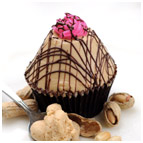
We also went to a super adorable cupcake shop my sister loves called Cupcake Couture.  All the cupcakes are named after fashion designers. I got the Jean Paul Peanutier, pictured above. So yummy! The frosting was a light whipped peanut butter. Oh my gosh, I’m salivating just thinking about it.

Image.asp

Photo via Wags to Riches.

We also stopped into a fancy pet shop called Wags to Riches. It was the type of place that sold rhinestone collars and designer-looking clothes in miniature form for dogs. They had some adorable puppies. I’m currently looking for an apartment right now that will allow pets because I’d like to get a dog of my own. I’m thinking of getting a Maltese. If you’ve ever had one, let me know in the comments section if they’re easy to train. Otherwise, I might get a poodle, which is what I had growing up.

After Delray Beach we went out to dinner at The Cheesecake Factory. It wasn’t my choice, and it was bittersweet for me. The last time I’d been to that particular Cheesecake Factory was with my grandma, who has since passed away.

Jeff Bridges Interviews Garrett Hedlund, Who Plays Dean Moriarty in “On the Road”

13 Dec

I’ve been connected with so many people these days who are interested in the different writers associated with the Beat Generation. Katie, who is researching Joan Burroughs, turned me on to Interview Magazine‘s feature on Garrett Hedlund, who plays the Dean Moriarty character in the film adaptation of Jack Kerouac’s On the Road.

What initially caught my eye was photographer Robbie Fimmano‘s moody portraits of Hedlund. The black-and-white photographs are stunning. I wish I could post them here, but I don’t want to impose on his or the magazine’s copyright, so instead you can check out the online gallery here. He’s looking a bit like Johnny Depp in some of the photographs.

Actor Jeff Bridges, who apparently played his father in Tron (I say apparently because do you really think I watched Tron?), interviewed Hedlund for the magazine, and it starts off kind of cute and silly because they’re calling each other “Dad” and “Son.” Hedlund is from Minnesota and is Swedish, just like my mother, and he talks a little bit about coming from Minnesota in the interview. He also reveals that even though he played Dean Moriarty, the character based on Neal Cassady, in On the Road, he relates more to Sal Paradise. You can read the full interview here.

The film is finally opening in the States on December 21.

Hearts in the Window

6 Feb

One year for Valentine’s Day when I was growing up, my mother taped red doily hearts to the bay windows of our kitchen.  It set my girlish heart aflutter.  There could be nothing more romantic than red doilies in the shape of hearts!

My mother always had a way of making the holidays special at our house.  She would be the first person to denounce Americana or anything too craftsy as hokey, and yet she had precious decorations that only came out for the various holidays.

Living in a tiny New York City walkup with limited storage space, I’ve had to relinquish more and more holiday decorations with each move I’ve made.  It just never seems to make sense to pack up little trinkets that at most only get a few weeks of display time.

My “practical” decision making doesn’t bode well for my whimsical side, though.  The holidays seem to come and go without much fanfare, and New Year’s bleeds into Valentine’s Day, both vanishing into forgotten dreams.  I get wrapped up in my writing, in attending readings and visiting museums, and of course in shopping, and I forget to pause and really celebrate life.  I’m forever thankful for small moments, but I think sometimes we need to actually celebrate—even if it’s as simple as Scotch-taping a few doilies to the window.

xoxo

Clip: Coffee and Portraiture and the Associations We Make

27 Dec

Associations are revealing.  This morning, as I was drinking a cup of horrid office coffee, my brain leapt from the specific brand and flavor of coffee my mom drank when I was growing up to a seemingly unrelated bit of biographical information about a photographer I’d researched while working on a blog post on his efforts to Save the Whales.  The photographer is Louie Psihoyos, the film director of The Cove, the Oscar Award-winning feature documentary that uncovers the horrifying mass slaughter of dolphins.  Psihoyos is from the Midwest, as is my mom (he was born in Iowa, my mom in Minnesota), and his immigrant parent came from the Peloponnesus, the same region of Greece my dad grew up in and where both of my parents now live.  That wasn’t the association I made this morning, though.  Instead, I was recalling that I myself had recently taken a photograph of my coffeemaker and a bag of hazelnut Eight O’Clock Coffee, while photographing some other food in my kitchen, and that I always associate hazelnut Eight O’Clock Coffee with my mom.  From there, I remembered I’d recently read about a photographer who’d photographed people with their possessions.  At first I didn’t even remember that the photographer was Psihoyos.  As I started to write the blog post about how I associate coffee with my mom, I kept thinking about the significance of Psihoyos photographing people with their possessions and what the objects we’re associated with impart about our identity.

Read the rest of the article on Burnside Writers Collective.