Tag Archives: New York City

Shunning Cars … and Life

24 May

Last summer I relayed the news that Generation Y hates driving. Now it turns out, everybody hates driving.

According to the recent The Exchange article “Why More Families Are Shunning Cars,” the CNW Research of Bandon, Ore., reported that in 2012 the percentage of US households without a car was the highest its been in the 22 years they’ve been tracking this data. The percentage? 9.3%.

Citing a cultural shift, The Exchange says that people today don’t rely on cars as much because:

  • more people live closer to cities and public transportation
  • since they now don’t need a car on a daily basis, these people simply rely on car rentals, which have become more flexible
  • retirees now live in retirement communities that they seldom leave
  • teens prefer to keep in touch virtually than in person
  • the economy is still in the gutter

The economic factor is a fascinating one when it comes to the history of motor vehicles. I’ve been proofreading (what feels like) a lot of books on cars and motorcycles lately and also thinking about cars and road trips while writing Burning Furiously Beautiful: The True Story of Jack Kerouac’s “On the Road,” and it’s been rather interesting to discover just how much the Great Depression and various wars have had on Americans’ driving habits.

An all-too-brief history:

  • cars and motorcycles are relatively new innovations, and they were making leaps and bounds until the Great Depression
  • there was an economic boom following WWII and suburbs became more popular–think Levittown–so the car became integral to family life
  • during the Cold War, the emphasis on patriotism no doubt led to Greyhound campaigns like this one, featuring a veteran who after fighting for the USA wants to travel to see the entire country, and the tv show/extended commercial See the USA in Your Chevrolet

Life in America hadn’t really changed all that much from that time when the economy improved, people moved out to the ‘burbs, and cars became a fact of life.

Until recently.

There were, of course, recessions here or there after the Great Depression, but it wasn’t until December 2007 that the US experienced the Great Recession or the Lesser Depression, whichever ominous phrase you want to use.

The same day that I read–while I was on the subway, mind you–that more people are “shunning” cars, I also read a Newsday article reprinted in amNewYork as “A growth spurt in NYC” that said, “New York City had the greatest numeric gain in population between 2011 and 2012, according to the U.S. Census Bureau estimates out Thursday.” Granted, the article seemed to be specifically comparing growth in cities (see this New York Times article as reference), but unless it’s indicating that people are simply moving from one city to another it seems to suggest that more people are taking to city life. And perhaps that’s the–ahem–driving force behind the decline in car ownership.

So… what do automotive trends have to do with literature?

Arguably the most popular of all authors who wrote about traveling by car and philosophized about the culture of his generation didn’t own a car: as I pointed out in my Hipsters Hate Driving post, Jack Kerouac was a hitchhiker, a bus rider, and a passenger, but rarely a driver, and yet he wrote the great American road-trip novel On the Road.

Now, let’s go back to that point The Exchange made that today’s generation–Generation Y, Millennial, whatever you want to call them–seemingly prefer virtual, rather than interpersonal, relationships. Here’s how The Exchange put it: “Teenagers using social media to keep in touch seem to feel less drawn to the open road than their parents did at the same age.”

The issue at hand is not that today’s generation doesn’t like driving or that they’re moving to the cities in droves. The cultural shift that needs to be more adamantly addressed for both the sake of our personal well-being and literature is that people prefer living life virtually than experiencing it first hand.

Kerouac lived life to the fullest. He famously told Steve Allen that he spent more time experiencing the content that would end up in his book than actually writing it:

ALLEN: Jack….How long did it take you to write On the Road?

KEROUAC: Three weeks….

ALLEN: Three weeks! That’s amazing! How long were you on the road itself?

KEROUAC: Seven years

Of course, as Burning Furiously Beautiful points out, it was only the scroll version on On the Road that Kerouac wrote in three weeks; it actually took him years to write the novel. But that doesn’t change the fact that Kerouac was out there living life, adventuring, experiencing, gathering tales to tell.

If today’s generation spends their life behind the computer screen or is too busy snapping photos for instagram to be present in the moment, that will shape our literature.

Brunch with Artists & Entertainers at the Lotos Club

7 May

LotosA

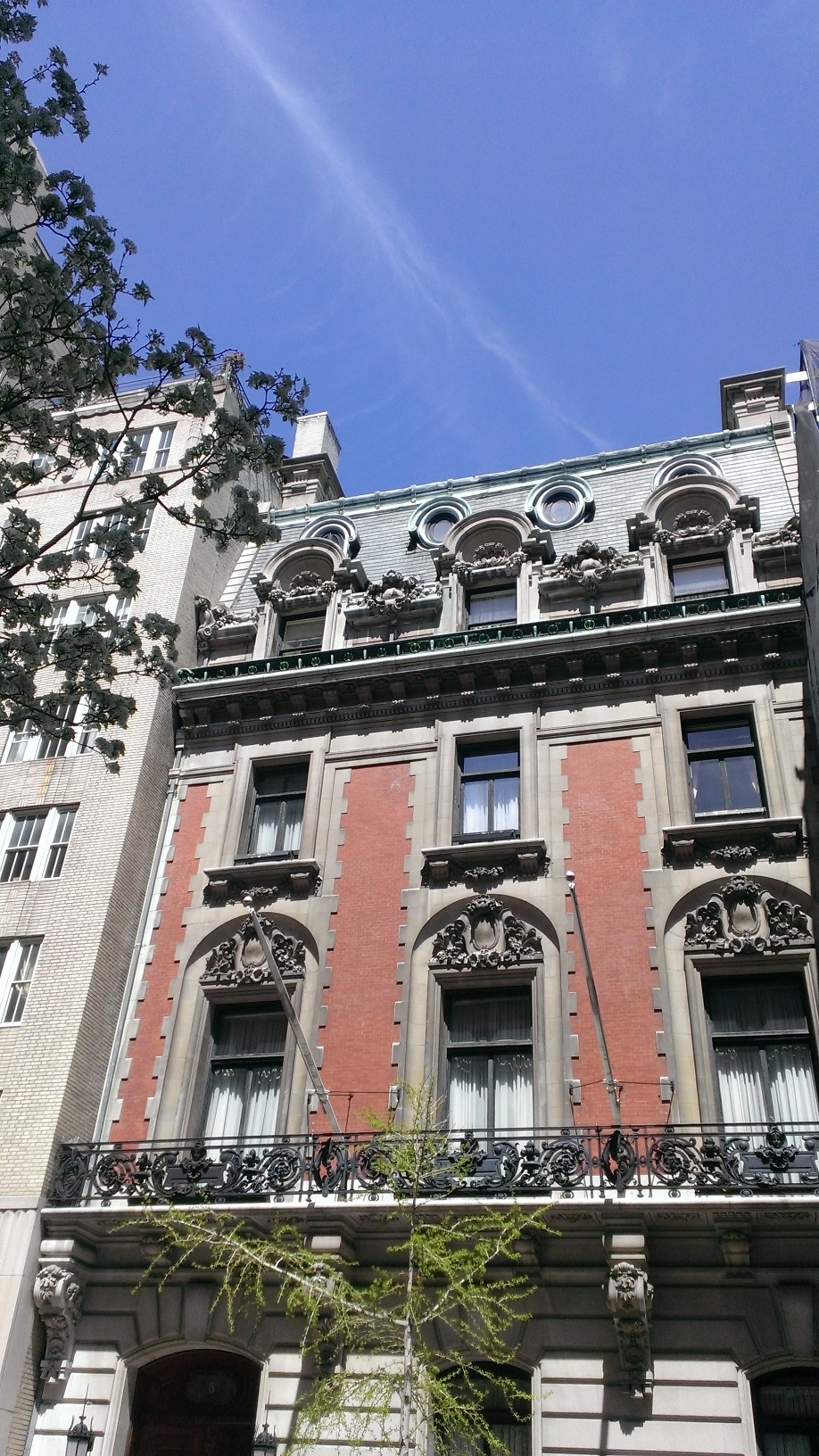
Last month Scripps College invited me to attend a lovely brunch amongst friends and fellow alumni at The Lotos Club:

Alumnae Panel: The Arts and Entertainment Scene in NYC

Mitra Abbaspour ’99, Associate Curator, The Museum of Modern Art

Barbara Barna Abel ’84, Casting Director and Coach, ABEL intermedia

Elizabeth Robbins Turk ’83, Artist, 2010 MacArthur “Genius” Award Winner

Moderator: Veronica Gledhill ’06, Senior Fashion Market Editor, New York Magazine, Online and 2012 Outstanding Recent Alumna

with an update on the College
from President Lori Bettison-Varga

Oh, how I wish they’d do more of these. It was truly inspiring to hear these women tell their stories. They were so impressive yet so humble and honest in talking about their individual journeys as artists.

Lotos1

Lotos2

Elizabeth had secured The Lotos Club for the event, and I could’ve sat in that sumptuous library all day long. But I guess that was the point:

The selection of the name The Lotos Club was to convey “an idea of rest and harmony.” The spelling of Lotos comes from Alfred Lord Tennyson’s poem, The Lotos Eaters, two lines of which were selected as the motto of the Club:

 In the afternoon they came unto a land
In which it seemed always afternoon

The endless afternoon setting provided the ideal atmosphere to indulge in creative and stimulating thought and conversation.

Of course, as a good Greek, I should point out that Tennyson’s poem was inspired by The Odyssey.

The circular staircase was breathtaking. I had to stop and take a photograph.

Lotos3

The Lotos Club has an impressive history and has counted amongst its members President Taft, Mark Twain, and Oscar Wilde’s brother Willie.


Welcome to Beat Week!

12 Dec

The people behind the On the Road film are uniting a community of angel-headed hipsters. They’ve organized lots of fun activities leading up to the release of the film in the States. Welcome to Beat Week!

beat-week

Those of us who are passionate about Jack Kerouac’s literature may cringe at the use of the word “beatnik” and the commercialism of the events–the supper club event costs $95 and is a far cry from the cafeteria food Kerouac typically described in his writing; I’m not sure what haircuts have to do with the book or the film adaptation of On the Road and I’m pretty sure Kerouac wouldn’t have been able to afford the prices there–but perhaps these are simply fun events that will inspire a new generation to check out Kerouac’s book for themselves to see what the buzzzzzz is all about. And I must say, the chance to see Jose Rivera and Walter Salles in person is too good to pass up!

What do you think: Is this crass commercialism or an inspired way to engage the Millennial Generation? Is Jack Kerouac finally getting his due or are we headed into Maynard G. Krebs territory?

Big Sur and the Best Laid Plans….

15 Oct

I just got back from a trip where everything seemed to go awry.

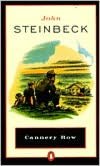
On my recent trip to San Francisco for a friend’s wedding, I had big plans to visit John Steinbeck’s Monterey, where Cannery Row is set, and Jack Kerouac’s Big Sur, where he spent time in his friend poet Lawrence Ferlinghetti’s cabin and the title of one of his books.  This idea, mind you, came after plans had already gone awry when I discovered none of my other friends were able to make it to the wedding or were flying in just in time for the wedding, leaving me with a few days to myself.  I’d been to San Francisco a few times and already done the big touristy things and the Beat literary things in the city (minus the Beat Museum, which wasn’t around the last time I was there–and which will have its own post coming up soon!), so I figured I’d take my literary wanderings a bit further south.

Steinbeck’s Cannery Row came out in 1945, two years before Kerouac made that first big trip out West.  Post-World War II, both Steinbeck and Kerouac spent time in the same area of California—Monterey, Big Sur, Salinas—and wrote about migrant workers, the working class, the down and out, absurd heroes.  Steinbeck writes of Cannery Row:

Its inhabitants are, as the man once said, “whores, pimps, gamblers and sons of bitches,” by which he meant Everybody. Had the man looked through another peephole he might have said, “Saints and angels and martyrs and holy men,” and he would have meant the same thing.

Steinbeck’s message is very much Kerouac’s as well.  Kerouac writes about “the holy con-man with the shining mind” and other Beat characters whom society might consider derelicts but whom he considers saint-like.

I planned to do a close study of Steinbeck’s Cannery Row and to reread Kerouac’s Big Sur to compare and contrast the places, characters, themes, and language.  Visiting a place can sometimes be the best form of research.  You see and hear things that aren’t in books, get a sense of proportion and distance, and see how the landscape has changed.  I wanted to see the land, to feel the sand between my toes, to have the salty ocean breeze whip through my hair, to smell the sardines.  I wanted to experience the rough terrain that so embodied Kerouac’s mind frame in Big Sur.

Unfortunately, a trip to Big Sur would not happen for me.  My plans went awry when I discovered that after Labor Day public transportation to Big Sur stopped running during the week and that the only tour that stops at Big Sur was sold out before I got to book it.  Discovering this two days before I was supposed to leave—okay, so they weren’t exactly “the best-laid plans…”—put a wrench in my itinerary.

Well, here’s my Pinterest inspiration board for Big Sur.

Here’s an article called “Steinbeck vs. Kerouac: Gentlemen, Start Your Engines!” from Big Think.

And here’s an article from Monterey County Weekly on the film adaptation of Kerouac’s Big Sur.

I was, however, able to book a different tour that at least went to Monterey.  I had to get up super early–did I mention there were several conferences going on in San Francisco so the only hotel I could find within my budget was an hour away?–to get to the 9am bus.  I got there right on time, getting one of the few remaining seats in the very back of the bus, on the side that wouldn’t have a good view.  …Two hours later, we were still in San Francisco.  The bus was blowing hot air through the vents and overheating–not great for all the senior citizens on the trip (oh, did I not mention the demographic was ever-so-slightly older?).  They brought in mechanics, and when they failed to fix it, we eventually got a new bus.  About half the people on the tour were so mad that their precious vacation time was wasted that they refused to get on and left the tour completely.  The good news: I got a better seat.

Here are a few pictures from Salinas and Monterey.

John Steinbeck references the aphorism “the best-laid plans of mice and men often goes awry” in the title of one of his other books, Of Mice and Men.  The phrase can be traced back to Robert Burns’ poem “To a Mouse”:

The best-laid schemes o’ mice an’ men
Gang aft agley

Don’t you love that eighteenth-century Scottish English?  (One day I will have to describe my misadventures in Scotland too….)

One of the things I love best about On the Road is Jack Kerouac’s candor that trips often do go awry.  When Sal Paradise, the narrator based on Kerouac, starts his first big road trip from the East Coast to the West, he has grand plans of traveling one great highway all the way there.  That doesn’t work out—nor does he even get out of state before having to turn back and come home again.  He’d been trying to hitchhike his way out of New York City and ended up stranded in a torrential downpour in Bear Mountain, one of the places my own family frequented when I was growing up.  Not one to let problems rain on his parade, Paradise/Kerouac heads back to New York City and buys fare for public transportation that will take him to the first leg of his destination.

Sometimes you just gotta keep on truckin’!  It’s a good lesson for traveling and for life.

What’s the worst that has ever happened to you on your vacation?

* * *

I’m reading tonight at 7pm at  The Penny Farthing (103 3rd Ave., downstairs in the speakeasy) here in New York City! This is a Storytellers event, hosted by C3.  I’ll be reading from Burning Furiously Beautiful: The True Story of Jack Kerouac’s On the Roadcoauthored with Paul Maher Jr.

From the Lost Generation to the Beat Generation: Hollywood’s Obsession

12 Jul


With Hemingway and Gellhorn currently on HBO and a remake of The Great Gatsby heading to theatres this Christmas, The Observer’s Daniel D’Addario ponders if we’re experiencing a “Lost Generation Boom.”

The Lost Generation refers to the writers during the World War I era, many of whom became expatriates.  The Lost Generation writers include F. Scott Fitzgerald, T. S. Eliot, Gertrude Stein, Ernest Hemingway, and John Dos Passos, among others.  Hemingway popularized the term in A Moveable Feast, in which he quoted Stein as telling him a story about a man who said, “That’s what you all are … all of you young people who served in the war. You are a lost generation.”

D’Addario also references last summer’s Midnight in Paris, but in some regard, we’ve been experiencing the “boom” for quite some time now … at least in the cocktail scene.  A few years ago, speakeasy-type bars became all the rage here in New York.  Dimly lit lounges served up spiked punches in tea cups.  There are also Jazz Age parties on Governor’s Island, where everyone gets all dolled up in fantastic flapper dresses and Sacque suits.  And the Oak Room—which in the ‘20s was Algonquin’s Pergola Room—just reopened.

However, Hollywood isn’t only obsessed with the Lost Generation.  The Beat Generation, which wasn’t popular for a long time, is beginning to see a revival.  On the Road, based on Beat writer Jack Kerouac’s novel, just premiered at Cannes Film Festival in May and will be released Stateside sometime later this year.  Next year, Kill Your Darlings, about a murder involving Kerouac, William S. Burroughs, and others associated with the Beat Generation, will be released.  In 2010, Howl, based on Allen Ginsberg’s poem and the trial that followed its publication, came out.  These aren’t small movies by any means.  Howl starred it-boy James Franco, Kill Your Darlings will star Daniel Radcliffe, and much has been made of On the Road starring Kristen Stewart.

Perhaps we’re trying to figure out our own generation by looking at those in the past.

Clip: In the Bathtub with a Jazz Musician and a Beat Poet

29 Jun


Burnside posted an essay of mine called “In the Bathtub with a Jazz Musician and a Beat Poet.”  It’s a true story.

I’m Reading at The Penny Farthing 6/18/12

13 Jun


I’ll be reading one of my Greek American stories this Monday night, June 18, at The Penny Farthing!

The Storytellers event, hosted by C3, starts at 7 and will be in the super cool downstairs speakeasy of The Penny Farthing at 103 3rd Avenue (@ 13th Street) in New York City.

Hope to see you there!

Writing Wednesday: If You Miss a Beat, You Create Another

14 Mar

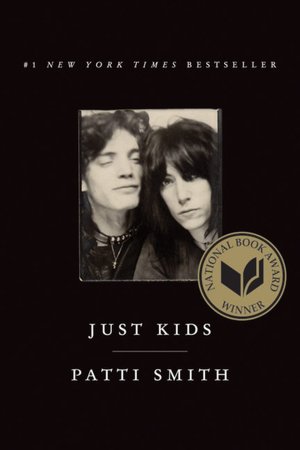
I had the great privilege of hearing Patti Smith read from Just Kids at The New School a while back.  She read from the priceless scene in which she meets Allen Ginsberg at an automat.  I’m quite fond of kitsch automat culture, and used to frequent the one down on Saint Marks when it was still around.  Basically, an automat is fast fast food: you don’t even have to stand in line to order a burger and fries; you just slip a few quarters into a vending machine and out comes surprisingly delicious warm food.  Whenever I ate at the Automat, I felt like I was a character straight out of The Jetsons.  I was hooked on their mac-and-cheese egg rolls.  The resurgence of The Automat only stuck around for a few years, but as a whole they were big a few decades ago.  When Patti Smith was in her early twenties, scraping by to survive, she fed a few quarters into an automat to get some quick, cheap food.  When she turned the knob she discovered the price had gone up.  The machine had sucked up her meager coins and she was about to go hungry when Allen Ginsberg offered her the additional cents and even paid for a cup of coffee.  They get to talking, she knowing perfectly well he is the great poet, and he thinking the whole time she is a handsome boy!

I knew for a long time that I wanted to read Just Kids.  It had all the makings of a book I knew I’d love—New York City, Beat poets, artists, The Hotel Chelsea, Andy Warhol, music, and memoir.  The only problem was that I was inundated with reading assignments for classes and bills to pay for tuition and books for said classes.  Just Kids wasn’t constantly checked out of the library, which was probably for the best because I didn’t have the time to read it anyway.  But!  I have at last read it—savored it.  I so greatly enjoyed Smith’s poetic voice and her obsession over Rimbaud.  I liked reading about Patti Smith and Robert Mapplethorpe’s relationship, their strivings toward art, their fashion!  And I was so happy to discover that in addition to the Allen Ginsberg connection, Smith also befriended poet Gregory Corso, whose poetry I revere.

Patti Smith also began a relationship with Sam Shepard, and they end up collaborating on a play together.  I find great reassurance in reading their exchange.  Smith was nervous about the prospect of improvising during the play, and on page 185 of the first edition (HarperCollins, 2010), Smith asked, “What if I mess it up?  What if I screw up the rhythm?”  Shepard replied:

“You can’t,” he said.  “It’s like drumming.  If you miss a beat, you create another.”

From Just Kids I learned a lot about being part of the “scene,” which comes across as important to the evolution and success of one’s career.  However, this little line spoken by Sam Shepard is a solid reminder that in writing and in life the beat goes on.  If you miss a beat, you improvise and create another.

Tasty Tuesday: Georgetown Cupcake SoHo

21 Feb


Remember those insanely delicious cupcakes I wrote about after tasting them at the Gabby Awards?  The ones that I was willing to bus it all the way to DC for?  Well, it turns out all I have to do now is hop on the subway.  On February 11, Sisters Sophie LaMontagne and Katherine Kallinis opened up Georgetown Cupcake SoHo at 111 Mercer St.

They’ve even whipped up special New York-themed cupcakes to mark the occasion:::

  • Apple Crumble
  • B&W Cookie
  • New York Cheesecake

They’re decorated with fondants in the shape of subway stops and taxi cabs.  Too, too cute.

Shhhh!  Can I let you in on a secret?  I’ve been Facebook stalking them and they always reveal their “secret” menu flavors on their social media accounts.  The first 100 to “guess” their not-so-secret-secret flavor get a free cupcake!

Can’t wait to try them all!

Happy Birthday, Teddy Roosevelt!

27 Oct

Happy birthday, Teddy Roosevelt!

On October 27, 1858, Theodore Roosevelt was born right here in New York City.  I had the opportunity to visit his birth home a few years ago and write the introduction to his classic book Hunting the Grisly and Other Stories, published by the Barnes & Noble Library of Essential Reading.

I am opposed to hunting for sport, and in my introduction I highlight the fact that although Roosevelt was a hunter he was also a conservationist who set up fifty-one wildlife refuges.

Roosevelt’s Hunting the Grisly is available for purchase in both paperback and ebook format.