Tag Archives: On the Road

Road Trip: The Salad Bowl of the World

15 Nov

One of the reasons I was excited to travel the California coast from San Francisco to Monterey was because we’d pass Salinas.  John Steinbeck and Jack Kerouac wrote about Salinas Valley.  Steinbeck’s Of Mice and Men was set in Salinas.  In 1960, Kerouac published a piece called “The Vanishing American Hobo” in Holiday magazine, which in part said:

I myself was a hobo but only of sorts, as you see, because I knew some day my literary efforts would be rewarded by social protection — I was not a real hobo with no hope ever except that secret eternal hope you get sleeping in empty boxcars flying up the Salinas Valley in hot January sunshine full of Golden Eternity towards San Jose where mean-looking old bo’s ‘ll look at you from surly lips and offer you something to eat and a drink too — down by the tracks or in the Guadaloupe Creek bottom.  

Kerouac also wrote about Salinas in Big Sur.  Even though it was in Selma, California (called Sabinal in the novel) — the Raisin Capital of the World — that Kerouac wrote about picking crops with “the Mexican girl,” Terry, in On the Road, I imagine it to be very much like Salinas.

The Salinas Valley, which begins south of San Ardo, and runs all the way to Monterey Bay, is known as “the Salad Bowl of the World.”  Most of the green salad produce you eat in the US comes from the Salinas Valley.  Named during California’s Spanish colonial period, Salinas means a salty lake or marsh.  The climate and growing conditions make the valley particularly fertile.

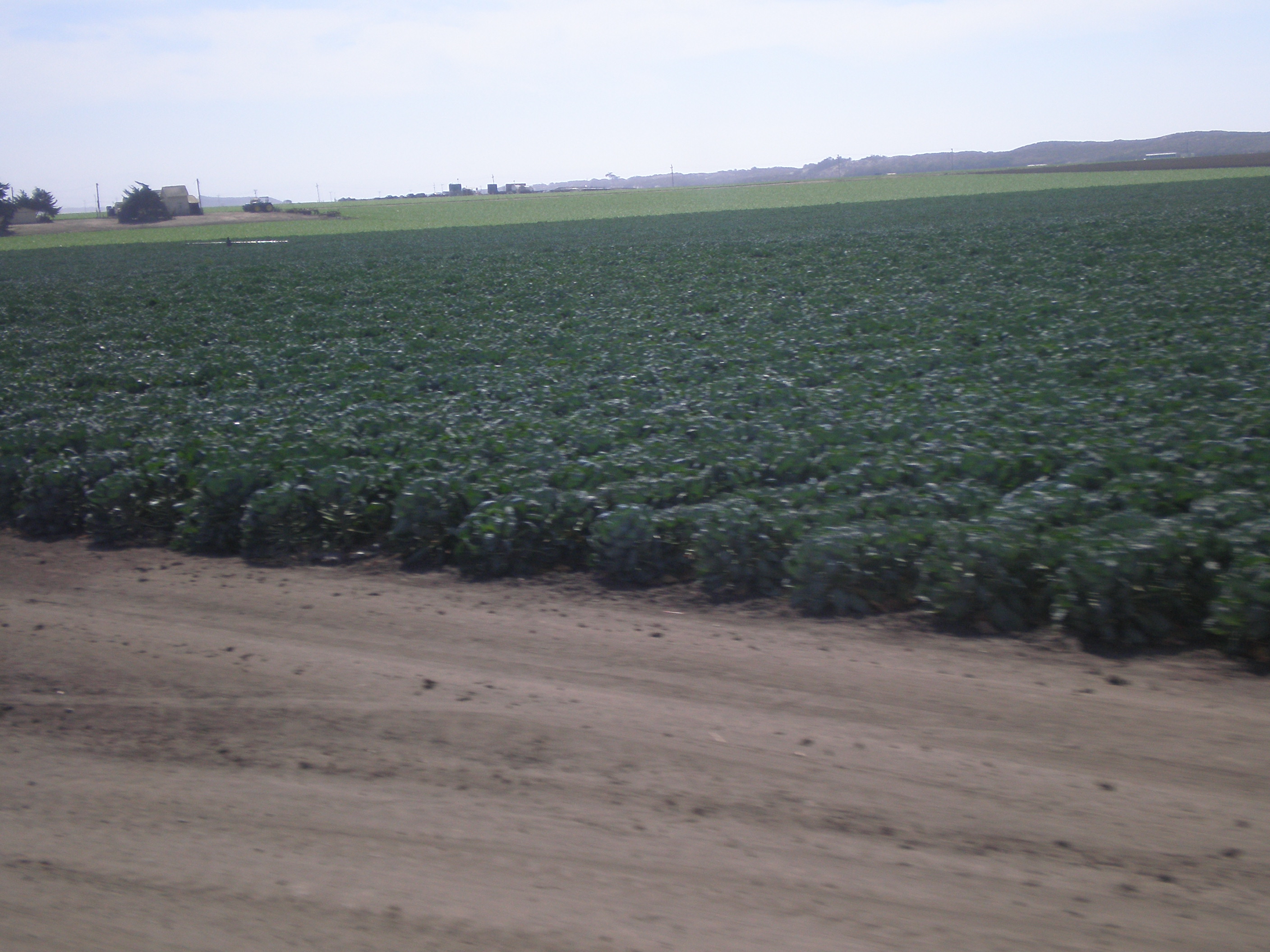
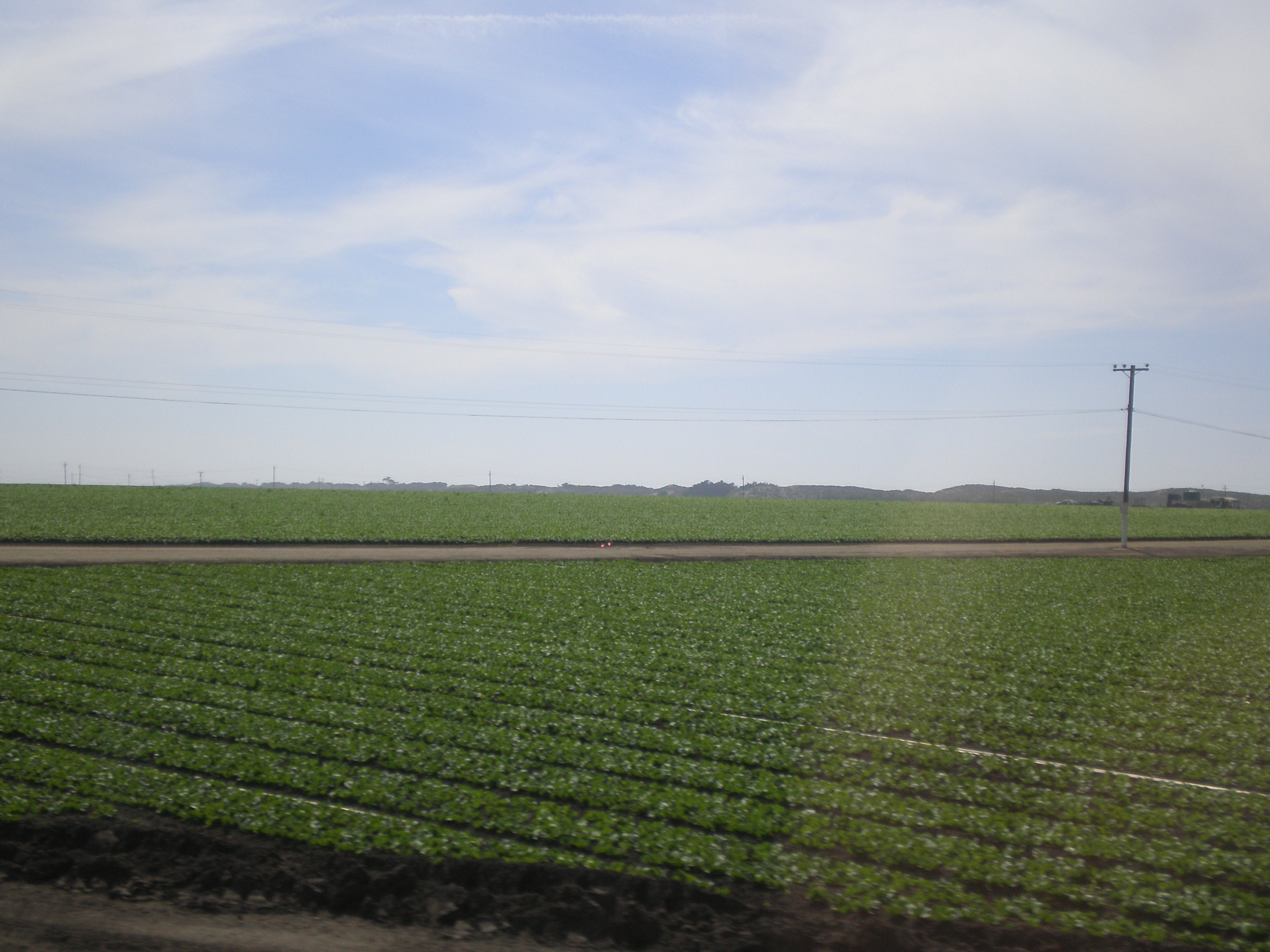
I saw signs promising 7 avocados for $1.  Do you know how much I pay for an avocado here in New York City?  $2 for a single avocado!  I was super excited — “stoked” to use the lingo I picked up while living in Cali (yes, people really talk like that there).  However, in keeping with the everything-going-awry theme of the trip, we did not get to make the stop because our bus had broken down earlier on the trip and we were already two hours behind schedule.  I took these photos from the window of the bus.

She Threw Out Her Cell Phone and Packed On the Road

13 Nov

This young woman gets up to the microphone.  She speaks confidently but not in a rehearsed manner as she tells her story.   She’s been in New York City only for a few months now, since sometime this summer.  Unlike many people, she wasn’t intent on staying here.  New York City wasn’t her dream destination.  She had run away from home.  Her plan was to flee the East Coast for the West.  Californ-i-a.  She packed her bags and hit the road.  Along the way, she met a guy and became involved with a church in Manhattan.  She decided to stay.  She decided to share her story with others.

Afterwards, I approach her.  I want to know more.  Why had she left, throwing out her cell phone so no one could even get in touch with her?  Has she reconciled with those she left behind?  She answers my questions and asks about the book — Burning Furiously Beautiful — I had read from at the same microphone as her.  She tells me that of the few possessions she packed with her when she left home, one of them was Jack Kerouac’s On the Road.

Jack Kerouac and NaNoWriMo

8 Nov

Jack Kerouac claimed to have written On the Road in three weeks.  That’s only partly true.  My coauthor, Paul Maher Jr., and I tell the less marketable but more realistic story in Burning Furiously Beautiful: The True Story of Jack Kerouac’s On the Road.

Part of the way Kerouac wrote his novels was to sit down at a typewriter and write, write, write til the story was told.  There’s something to be said about this.  The intensity of writing a whole novel in a short time span drives the work.  It’s so easy as an author to get distracted, to start something and never complete it, to get so caught up in getting syntax correct that the story never moves forward.  The “backspace” button on the computer keyboard is all too familiar to most authors, struggling as self-editors.  We want to get it right.  Sometimes this happens at the expense of getting it done at all.

While many would disagree, some authors believe that the key to writing is to push out a first draft.  Once the backbone of the story is there on the page, the author can always go back and edit it.  Most times, the editing process is the longest and most arduous.  Whole sections are moved or deleted.  Characters are killed off if they’re not important.  Diction is tightened.

I decided to participate in NaNoWriMo — National Novel Writing Month — this year to gain a better sense of what Kerouac went through when he wrote his books.  Call it “method writing” to understand the subject of my book better.

A Manhattan in Big Sur: Cocktail Recipe for Jack Kerouac’s Big Sur Manhattan

16 Oct

Big Sur tells the story of Jack Kerouac’s alter ego escaping the pressures of fame brought on after the publishing success of On the Road by hiding out at the desolate cabin owned by his friend, City Lights Bookstore owner Lawrence Ferlinghetti (called Lorenzo Monsanto in the novel).  Kerouac had a notorious sweet tooth, perhaps most noticeably evident by all that delicious apple pie a la mode he writes of eating in On the Road.  In Big Sur, his friends point out his taste for a sweet of a different sort—sweet drinks!

Kerouac’s drink of choice in Big Sur is the classic cocktail the Manhattan, which gets its sweetness from vermouth, orange bitters, and a maraschino cherry.  The Manhattan has been called “the drinking man’s drink,” though, probably because of all the whiskey in it.

Here’s the history of the Manhattan, as told by That’s the Spirit!:

Samuel J. Tilden was elected Governor of New York in 1874, and to celebrate, socialite Jenny Jerome threw a party at the Manhattan Club in New York City.  Jerome asked the bartender to create a drink for the occasion. The bartender mixed 1 1/2 ounces bourbon, 1 1/4 ounces each of sweet and dry vermouth, and a dash of bitters. It met with Jerome’s approval and she named the drink the “Manhattan,” after the club.  Jenny Jerome later earned her place in history as she later became Lady Randolph Churchill, mother of Sir Winston Churchill, one of England’s most famous Prime Ministers.  The Manhattan became a classic cocktail that has survived a number of changes over the years and is presently enjoying a comeback alongside its cousin, the Martini.

That’s the most popular version of the story, but of course, like most cocktail history, there are other versions of the story as well.

That said, there are also variations of Manhattans.  It can be made with rye whiskey or bourbon.  Although Big Sur doesn’t specify, Kerouac would probably have preferred the bourbon variety, since rye whiskey is more on the bitter side.  Likewise, there are different types of vermouth: sweet and dry.  The bitters can either be traditional Angostura bitters or Angostura Orange.  Some people add a lemon peel for garnish.

On almost any given page of Big Sur there is a reference to alcohol, as the book documents Kerouac gripped by the disease of alcoholism.  While many culture critics have accused Kerouac of promoting a nefarious lifestyle, Kerouac makes the dangers of alcohol quite plain in Big Sur as he portrays himself in deplorable states of breakdown.  In addition to the maraschino cherry, some bartenders will even add a bit of the cherry juice to the drink.  Yum!

Big Sur also describes Kerouac drinking a lot of port wine.  A Manhattan made with port instead of vermouth is called a Ruby Manhattan.  Since he frequented the famous Nepenthe in Big Sur, though, I’m going to go with their recipe.  It’s quite possible the restaurant has changed its cocktail recipe since Kerouac’s autobiographical novel was published in 1962, but their current Manhattan ingredients includes Makers Mark, sweet vermouth, and blood orange bitters.

Nepenthe doesn’t include the ingredient breakout, but based on other general Manhattan recipes, this is my take on Jack Kerouac’s Big Sur Manhattan:

  • 3 oz. Makers Mark
  • 2 oz. sweet vermouth
  • dash of blood orange bitters
  • a Maraschino cherry as garnish, but while you’re at it add a splash of cherry juice to sweeten

Stir the ingredients over ice, then strain into a cocktail glass (the Martini glass) to serve straight up. Garnish with the cherry.

Big Sur and the Best Laid Plans….

15 Oct

I just got back from a trip where everything seemed to go awry.

On my recent trip to San Francisco for a friend’s wedding, I had big plans to visit John Steinbeck’s Monterey, where Cannery Row is set, and Jack Kerouac’s Big Sur, where he spent time in his friend poet Lawrence Ferlinghetti’s cabin and the title of one of his books.  This idea, mind you, came after plans had already gone awry when I discovered none of my other friends were able to make it to the wedding or were flying in just in time for the wedding, leaving me with a few days to myself.  I’d been to San Francisco a few times and already done the big touristy things and the Beat literary things in the city (minus the Beat Museum, which wasn’t around the last time I was there–and which will have its own post coming up soon!), so I figured I’d take my literary wanderings a bit further south.

Steinbeck’s Cannery Row came out in 1945, two years before Kerouac made that first big trip out West.  Post-World War II, both Steinbeck and Kerouac spent time in the same area of California—Monterey, Big Sur, Salinas—and wrote about migrant workers, the working class, the down and out, absurd heroes.  Steinbeck writes of Cannery Row:

Its inhabitants are, as the man once said, “whores, pimps, gamblers and sons of bitches,” by which he meant Everybody. Had the man looked through another peephole he might have said, “Saints and angels and martyrs and holy men,” and he would have meant the same thing.

Steinbeck’s message is very much Kerouac’s as well.  Kerouac writes about “the holy con-man with the shining mind” and other Beat characters whom society might consider derelicts but whom he considers saint-like.

I planned to do a close study of Steinbeck’s Cannery Row and to reread Kerouac’s Big Sur to compare and contrast the places, characters, themes, and language.  Visiting a place can sometimes be the best form of research.  You see and hear things that aren’t in books, get a sense of proportion and distance, and see how the landscape has changed.  I wanted to see the land, to feel the sand between my toes, to have the salty ocean breeze whip through my hair, to smell the sardines.  I wanted to experience the rough terrain that so embodied Kerouac’s mind frame in Big Sur.

Unfortunately, a trip to Big Sur would not happen for me.  My plans went awry when I discovered that after Labor Day public transportation to Big Sur stopped running during the week and that the only tour that stops at Big Sur was sold out before I got to book it.  Discovering this two days before I was supposed to leave—okay, so they weren’t exactly “the best-laid plans…”—put a wrench in my itinerary.

Well, here’s my Pinterest inspiration board for Big Sur.

Here’s an article called “Steinbeck vs. Kerouac: Gentlemen, Start Your Engines!” from Big Think.

And here’s an article from Monterey County Weekly on the film adaptation of Kerouac’s Big Sur.

I was, however, able to book a different tour that at least went to Monterey.  I had to get up super early–did I mention there were several conferences going on in San Francisco so the only hotel I could find within my budget was an hour away?–to get to the 9am bus.  I got there right on time, getting one of the few remaining seats in the very back of the bus, on the side that wouldn’t have a good view.  …Two hours later, we were still in San Francisco.  The bus was blowing hot air through the vents and overheating–not great for all the senior citizens on the trip (oh, did I not mention the demographic was ever-so-slightly older?).  They brought in mechanics, and when they failed to fix it, we eventually got a new bus.  About half the people on the tour were so mad that their precious vacation time was wasted that they refused to get on and left the tour completely.  The good news: I got a better seat.

Here are a few pictures from Salinas and Monterey.

John Steinbeck references the aphorism “the best-laid plans of mice and men often goes awry” in the title of one of his other books, Of Mice and Men.  The phrase can be traced back to Robert Burns’ poem “To a Mouse”:

The best-laid schemes o’ mice an’ men
Gang aft agley

Don’t you love that eighteenth-century Scottish English?  (One day I will have to describe my misadventures in Scotland too….)

One of the things I love best about On the Road is Jack Kerouac’s candor that trips often do go awry.  When Sal Paradise, the narrator based on Kerouac, starts his first big road trip from the East Coast to the West, he has grand plans of traveling one great highway all the way there.  That doesn’t work out—nor does he even get out of state before having to turn back and come home again.  He’d been trying to hitchhike his way out of New York City and ended up stranded in a torrential downpour in Bear Mountain, one of the places my own family frequented when I was growing up.  Not one to let problems rain on his parade, Paradise/Kerouac heads back to New York City and buys fare for public transportation that will take him to the first leg of his destination.

Sometimes you just gotta keep on truckin’!  It’s a good lesson for traveling and for life.

What’s the worst that has ever happened to you on your vacation?

* * *

I’m reading tonight at 7pm at  The Penny Farthing (103 3rd Ave., downstairs in the speakeasy) here in New York City! This is a Storytellers event, hosted by C3.  I’ll be reading from Burning Furiously Beautiful: The True Story of Jack Kerouac’s On the Roadcoauthored with Paul Maher Jr.

“Beat Generation” Premieres during Lowell Celebrates Kerouac

10 Oct


Kerouac’s play “Beat Generation,” written the same year that On the Road was published, will also have its premiere tonight.  The event stage production is taking place during Lowell Celebrates Kerouac, the week-long literary where fans from across the country make their pilgrimage to Kerouac’s hometown in Massachusetts.

As The Guardian reports, until around 2005, Kerouac’s play “The Beat Generation” sat unpublished in a New Jersey warehouse. In 2006 Da Capo Press published the play, with an introduction by A. M. Holmes.  Kerouac, who had a great interest in film, never got to see his own play put on or his novels made into a film.

Merrimack Repertory Theatre (MRT) raised funds through Kickstarter to stage the play in Lowell and is presented with UMass Lowell.  It was made with “the support and collaboration of Kerouac Literary Estate representative John Sampas,” according to MRT.

The play centers around the same group of New York City friends Kerouac often wrote about, as they pass around a bottle of wine.  Perhaps even more so than his novels, which are rich in poetry, the emphasis in “Beat Generation” is on dialogue.  Kerouac had a great ear for the unique syncopation of everyday language and the lingua franca of the working class.  As Kerouac himself said:

One thing is sure: It is now a real play, an original play, a comedy but with overtones of sadness and with some pretty fine spontaneous speeches that are as good as Clifford Odets.

Odets (1906-1963) was a playwright raised in Philly and the Bronx who wrote such plays as Waiting for Lefty and Golden Boy.  Born to Russian- and Romanian-Jewish immigrant parents, Odets used ethnic language and street talk in his plays.  Arthur Miller said of Odets’ work,  ″For the very first time in America, language itself . . . marked a playwright as unique.″  Kerouac himself was the son of immigrant French-Canadian parents and made use of both ethnic language–his own joual dialect as well as Greek and Spanish–and street talk.

For information on the special events surrounding the play as well as tickets, visit MRT.

10 Things You May Not Know about Jack Kerouac

27 Sep

Here are ten things you may not know about Jack Kerouac.

  1. His parents were French-Canadian immigrants, and he didn’t learn to speak English until he went to school.  It wasn’t until he was a teenager that he began feeling comfortable conversing in English.
  2. He was the baby of the family.  He had an older sister named Caroline (nicknamed “Nin”) and an older brother named Gerard, who died when he was just a boy.
  3. He was a Classicist.  He used to skip school just to go read the Classics in the library.
  4. He attended prep school.  Graduating a year early from high school, he had a scholarship lined up to attend Columbia University, but they required him to attend Horace Mann Preparatory School first.
  5. While in school, he wrote music reviews.  He also had a job as a sports writer for his hometown paper.
  6. He joined the US Navy and the US Merchant Marine.
  7. His go-to food while hitchhiking across the country was apple pie.
  8. His first book, The Town and the City, was published under the name John Kerouac.  When he drew the cover he envisioned for On the Road, he also wrote his name as John Kerouac.  His parents had given him the name Jean-Louis, and John was the closest Americanization of his name.
  9. His first marriage took place in prison.  He had been arrested as a material witness after his friend murdered a man who had been stalking him.  Kerouac’s girlfriend agreed to post bail if he married her.
  10. In addition to writing, he also was a painter.

Foreign Film Titles of On the Road

24 Sep

The other day I was editing a book that mentioned an 80s movie.  This particular book happened to have been translated into English, though, and the title of the movie was botched!  The tricky thing with translation work is that there are multiple words that mean similar things and sometimes the literal translation isn’t correct.

The film adaptation of Jack Kerouac’s On the Road debuted in Cannes back in May and, although it won’t make it to the US until December, it has gone on to show in some other countries around the world.  However, if you’re looking to find out if the film is showing in theatres in your country, you may find it listed with a translated title.

According to IMDB, these are the titles that On the Road is going by in other countries:

En el camino Spain (imdb display title)
Kelyje Lithuania (imdb display title)
Matkalla Finland (imdb display title)
Na Estrada Brazil (imdb display title)
Na ceste Czech Republic (imdb display title)
On the road – Unterwegs Germany (imdb display title)
Onderweg Netherlands
Pela Estrada Fora Portugal (imdb display title)
Sur la route France (imdb display title)
W drodze Poland (imdb display title)

Some of these, for example the French and Spanish, are literal translations, but it doesn’t appear that all of them are.  I believe “Matkalla” is the Finnish word for “trips.”  The Polish title could also translate as “In Transit.”

If you speak any of these languages, let us know if they’re exact translations.

Exclusive Interview with Author Paul Maher Jr.

7 Sep

I am so excited to share my interview with Paul Maher, Jr.  He has such incredible insight on Kerouac and the writing process in general.  I think you’ll see why I enjoy working with him so much on Burning Furiously Beautiful: The True Story of Jack Kerouac’s On the Road.

How did you first become interested in Jack Kerouac?

I remember one of the first books I ever picked up of Kerouac’s, it was Dr. Sax. I didn’t buy it at the time, I just looked at the back cover and read its blurb: “In this haunting novel of intensely felt adolescence, Jack Kerouac tells the story of Jack Duluoz, a French-Canadian boy growing up, as Kerouac himself did, in the dingy factory town of Lowell, Massachusetts.” That was the exact same sentiment of myself at the time, I must have been about 18 or 19, and my adolescence too was “intensely felt” as well as growing up in Lowell. I also grew up in Centralville in a French  Canadian enclave for about the same time period as Jackie Duluoz. Soon afterwards, when I did buy Dr. Sax, I related to Kerouac’s capturing of the whole scene, the sense of hauntingness; the dialects, the sensibilities, and the mystery of Catholicism. I attended Saint Louis de France school like Jack did, and attended masses there. My last time in the basement of that church, it was for my father’s funeral. I remember sitting in those little wooden pews, smelling the burning candles, and the hushed yet amplified sounds of murmurings, sneezes and the priest standing before us all. It brought me right back to my boyhood when I used to walk there every day. Except, of course, the cycle was complete for my father who had also attended that church as a boy, as well as his parents.

So, dipping into Kerouac was easy for me. That was my introduction, not, like many, On the Road. After reading Dr. Sax and Visions of Cody, my first Kerouac books, On the Road seemed a bit tame. A disappointment really, and it still ranks lower than those aforementioned visionary masterpieces. It is no wonder Dr. Sax was a novel that he was really proud of.

You grew up in Kerouac’s hometown of Lowell, MA.  What was that like and how does it inform your understanding of Kerouac and his work?

I can’t objectively say what it was like, it just was. There was also a lot not to like about Lowell, like any other town or city. Growing up in Lowell was as natural as anything else. My home address was less than a quarter-mile from three of his Centralville addresses. His house in Dr. Sax was next to the Hildreth Street cemetery, and walking by that cemetery, as a child, the stone wall was high and there were iron gates surrounding it. It was padlocked with a chain. We never got in, so we wondered what was in there, and so that naturally retained a mystery for us. Adjacent to that house was a funeral home, and my father and grandfather were waked there (among others). There was a mystery to all of it, and I easily made those associtations captured so perfectly in his Lowell writings. However, I didn’t feel it so much with Maggie Cassidy or Vanity of Duluoz, because I didn’t grow up in Pawtucketville or attend Lowell High School. Those two books do more to capture an era than a certain mystical reverence for childhood.

I have a high regard for Visions of Gerard as well, because it captures more of the Franco-American sensibility of Centralville, and that sort of insular vibe common to the city. Like Kerouac, I was friends with kids named Plourde and Beaulieu, for all I know they were grandsons of his friends.

Which is your favorite of Kerouac’s books?

In no particular order, any of those books written between 1952 and 1954, especially those that have more of a mystical nature. I love The Subterraneans and Tristessa. The Lowell novels, Visions of Gerard and Dr. Sax; Book of Sketches and Some of the Dharma. I always carry Visions of Cody with me, though I am no admirer of Neal Cassady, I am fond of how Kerouac transmuted that person into his artistic sensibility to create a portrait of bygone America.

One of your greatest skills as a biographer is the thoroughness of your research.  Do you have any tips for aspiring biographers on how to track down hard-to-find material and incorporate the information into a work without it sounding like a Wikipedia entry?

I’m not a trained researcher. I took courses for my degrees on how to conduct research and much of it was rote, based on archaic practices and for the most part, teaching us to dispense with the piecemeal detective work of newspapers and archives, and instead operate backwards by working through secondary sources. For my Kerouac biography, I made it a point not to use the existing biographies as a resource. On the other hand, I had already retained much of what was written and having that knowledge, I could work on another level.

I also operate out of a sixth sense, almost intuiting where material might be, or something that may exist and is worth pursuing by surmising that it might be there. It may be as simple as spelling a name wrong, and then doing searches for it. The Internet has made it awfully easy to do much of it, especially in regards to newspapers and magazines. However, there is also room to abuse it, so that it does sound like a Wikipedia entry.

Per incorporating it, that can be tricky. You always want to use it where it adds to the narrative and doesn’t seem like filler material. I could have easily added anecdotal information on every town Kerouac passed through when he traveled across America. However, the emphasis is on Kerouac, not the town. However, if it was a documentary on the Travel channel, then it works.

I feel like you and I have worked really well together on Burning Furiously Beautiful, but collaboration is not desirable to many people or can be intimidating for those interested in it, particularly artists who want to leave their personal imprint on a work.  However, there is a grand tradition of collaboration; Kerouac himself collaborated with Burroughs on And the Hippos Were Boiled in Their Tanks.  What would you say to someone who is contemplating collaboration?

You just have to operate on blind trust and intuition. I like collaborating, but I can certainly understand the desire to want to have your own book, with just your name beneath the title. I am past that; it doesn’t matter to me if my name is on there at all. Films are created in collaboration with others, books are no exception.

In addition to various biographies on Kerouac, you’ve written Tom Waits on Tom Waits, Miles on Miles, and One Big Soul: An Oral History of Terrence Malick.  You’ve recently started writing your first novel and are documenting the process through your blog Scrivener Notes.  Why are you documenting the writing process?  What do you think are the positive and negative effects of lifting the curtain to expose the work that goes into writing, especially this early on when the work is still at its nascent stage?

I have always been very open about my work, sometimes to my detriment. To write inside a vacuum, to sit on your idea and let it gestate in isolation doesn’t seem like fun at all. I feel with this little adventure, that the book can just as well bloom when it is fostered by a like-minded community. I think there is something perilous and reckless yet strangely beautiful in throwing your ego out the window and letting the world watch you try to invent something out of nothing.

I have finally arrived to the point in my life that I don’t care about how any book of mine is received, because they are written out of a pure volition of wanting to do it, not having to, and in wanting to do it, once it is done, the act of creating has already been accomplished. The rest is just grist for the mill.

Documenting it just seemed right to do. I always wanted to see someone else do it, and I haven’t found it done to my satisfaction. I could write an entry how thrilled and elated I am to finish a chapter, and the next day write how much I suck. There is a reality television vibe to it. I do understand that it will only appeal to maybe 1% of the people out there, if anyone at all, but since I am doing it for myself, it doesn’t matter to me who reads it in the end. At the very least I will eventually get a novel out of it for better or for worse.

In happenstance, I could say the negative thing is that someone can lift your ideas and run with it. This has already happened with a reputable person in Kerouac studies. However, I think once the writing on the blog is exposed enough, it is more or less on public record so if someone does lift from it, then they are pretty much hurling themselves and their work into disrepute.

You write a little on your blog about why you wanted to make the leap from biography to novel.  What I want to know is how, if at all, do you think your biography work will influence your fiction?

I’m not sure that it will. The work ethic is already ingrained in me. I wanted to free myself from the world of facts and I have started resenting having to prove myself to publishers any longer. I have come to recognize that it isn’t an art form, it is a business, and I do not have a business mindset.

Also, a recent incident when my research and ideas were stolen from me has totally killed the spirit of writing biography, though I do admire others that are more honest in their profession. Operating out of my own intelligence and imagination keeps my ideas and impulses sacred and pure. I guess that’s it.

You also are a photographer and a filmmaker.  While these are notable in their own right, as a writer I am curious if you see any correlation between those art forms and the literary arts?  You and I have spoken before about how the narrative of film has influenced your scene-setting in your books.  Can you talk a little more about this?

The only correlation for it is personal, in that I am creating out of my own impulses to satisfy me. Taking a photo is immediate gratification, writing keeps me constantly busy, and it keeps my depression at bay. It keeps me in books and it serves to keep my mind occupied and focused since it is always burning at both ends.

Through chance and not design, I have a natural tendency to see things cinematically. That takes in imagery, dialogue, and creating a setting. This is how our collective minds are trained, and to bombard a reader with minutiae just for the sake of being all-encompassing with the facts is just an exercise of indulgence. We live in new times, where the facts are available if we want them, within a few keystrokes. I think pointing to the heart of the matter, isolating a biographical scenario like it was a storyboarded scene adds to the appeal of the book tremendously. I think Kerouac also had that in mind with his “bookmovies.”

How do you find time to do everything?  How do you balance all these various projects?

If I had to itemize my time, I couldn’t do it. I live this stuff. I breathe it. If we were taught at the beginning of our lives that we had to make sure we breathe at least eighteen times per minute, and it wasn’t automatic, that we had to go about our daily lives having to count, then we would crumble, sooner or later, under the pressure of it all. It would be too stressful. Instead, it comes to us automatically; we don’t have to make room for it. I just do it because it is all I think about. If I don’t do it, then I feel like shit. My mind turns to mud. I get lethargic. Unbalanced. So, like I said, it has become a survival mechanism for me, whether it is a book, a blog entry, an email or a photograph, all of it is tied into the daily phenomena of my being.

I never have considered how it is all balanced other than I keep my own schedule. When I need a break from one project to let it breathe, I move to another. Eventually I return to all of them.

Actually, managing writing projects is a lot easier than trying to manage a practical everyday life for me. To that end I am a colossal failure.


***

9/7/12, 10:28am: Several minor edits were made to this interview.

Videos from Premiere Reading from Burning Furiously Beautiful: The True Story of Jack Kerouac’s On the Road

31 Aug

Here’s video from the very first reading from Burning Furiously Beautiful: The True Story of Jack Kerouac’s On the Road, cowritten with biographer Paul Maher Jr.  This is the reading that took place at The Sidewalk Cafe, to celebrate poet RA Araya’s birthday, and the awesome band I collaborated with is called flashbackpuppy.  Not only was this my first reading from the book — it was also my first time reading with a live band!  We didn’t rehearse the collaboration at all.  I literally met them for the first time when I got up on the stage.

Video via Liz Koenig

Video via Fred Rodriguez

***

Don’t forget to come out this Monday night, September 3, at 8:30, to  Cornelia Street Cafe (29 Cornelia St., NYC).  Just steps from where Jack Kerouac and David Amram did their jazz-poetry readings in 1957, I’ll be reading about Kerouac while David Amram plays!  If you’ve ever caught any of his performances, you know that Amram is not only a phenomenal musician but also a great storyteller.

Amram & Co. includes David Amram, Kevin Twigg, John de Witt, and Adam Amram.  $10 cover, plus $10 minimum.

***

9/2/12: That’s Jon Martinez on bass, Patrick Conlon on drums, Peter Beckett guitar playing in the videos.