Tag Archives: William S. Burroughs

Greek-American Tina Andreadis Promoted to Senior VP of Publicity at HarperCollins

18 Jan

HarperCollins Publishers promoted Tina Andreadis to senior vice-president of publicity, according to Publishers Lunch.  Hired in 2005 as vice president, director of publicity, Andreadis oversees publicity for many of the publishing house’s imprints.

The Greek America Foundation named Andreadis as part of the Class of 2010 winners of the Forty Under 40; she was thirty-nine at the time. They noted:

Andreadis is very involved in philanthropic and media efforts on behalf of the Greek Orthodox Archdiocese of America. In October 2009 she was a key member of the media team for Patriarch Bartholomew’s historic tour of the United States, working to promote his trip to America. Her influence helped secure an opinion piece by the Patriarch in the Wall Street Journal. Andreadis is an active member of Kimisis Tis Theotokou Greek Orthodox Church of the Hamptons. There she is media chair for the future expansion of the church and a committee chairperson for the church’s annual festival in Southampton.

Congratulations to Tina Andreadis on her new role at HarperCollins!

The New York-based publishing house’s origins go as far back as 1817 when Harper & Brothers was founded and is now one of the largest publishing houses in the world. Side note: like most publishing houses, they have a history of publishing Beat Generation-related books, including Rub Out the Words: The Letters of William S. Burroughs, 1959 – 1974  and Howl: A Graphic Novel.

“On the Road” Review

18 Dec


OLYMPUS DIGITAL CAMERA

OLYMPUS DIGITAL CAMERA

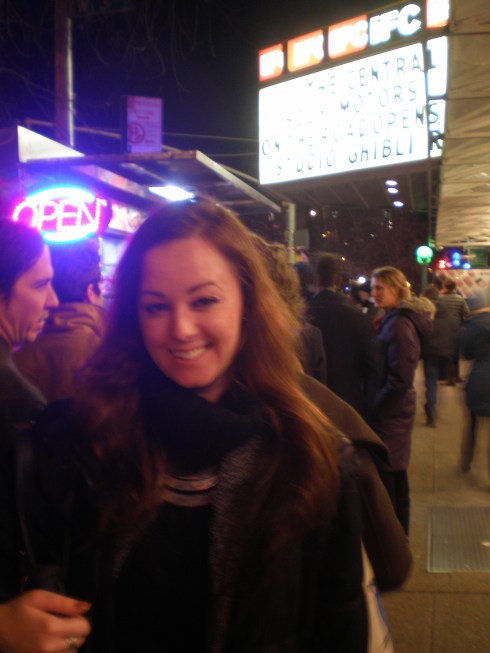
On Friday, December 14, I attended a special sneak preview of On the Road at IFC Center in Greenwich Village. It was history in the making. At long last, Jack Kerouac’s seminal road novel had made its way to the silver screen. Kerouac himself wrote a lot about going to the movies, and he wanted his novel turned into a film. In fact, he even wrote to Marlon Brando, asking him to buy it and star in it.

Francis Ford Coppola bought the film rights decades ago. I have a friend who wrote a screenplay that he showed to Coppola, and there have been numerous actors associated with the film adaptation, but the project always seemed to stall. Finally, Walter Salles came on as director and Jose Rivera as screenwriter, and soon after an impressive cast lined up, and the film looked like it would finally take off. And it did! It debuted at Cannes Film Festival in May 2012. Throughout the summer and into the fall, the film showed at theatres across Europe and South America. Those of us in the States read reviews, watched clips, argued about whether the novel could be adapted for film in a successful way, and debated the choices for the cast while we waited for the quintessential American story to come to us. At long last, when it was announced that a sneak preview of On the Road was taking place in the neighborhood Kerouac used to hang out in, people lined up on the Avenue of Americas for a chance to see it. As my good friend Elizabeth and I waited in line, an older man offered us $50 for our movie tickets. Considering we were so excited we were taking photos to commemorate the event, we probably weren’t the best people to try to scalp from. Needless to say, I watched the film, and, for whatever it’s worth, I can now give you my review of On the Road, which opens in New York and LA on December 21 and the rest of the country in January.

Let me start with a caveat: I am perhaps a bit too close to the subject matter to review On the Road objectively. After all, I am writing a book about the true story of On the Road. I have also heard and read reviews by a few other Beat scholars and fans and watched many Youtube clips from the film. I came in with lots of preconceived notions, and I watched the film more as a critic than as your average moviegoer. That said, I did not go into it as a literary snob wanting it to fail. I came into it wanting to see Kerouac’s work done justice.

***

On the Road is wonderfully nuanced. And to me, it’s the nuances in the acting, directing, and screenwriting that make On the Road a worthwhile adaptation of the novel. Everyone involved in the film understood that Kerouac’s novel is not just about some crazy kids driving at high speeds across the country, getting high, and getting laid. They understood that depicting this wild behavior — the film does not censor anything — was necessary not for shock value but because it underscores the complexity of the characters. In particular, the film does justice to the theme of the loss of fathers. Burning Furiously Beautiful, the book I’m coauthoring, delves into the personal life stories of the real-life people the characters are based on, giving further insight into their behavior and lifestyle. Understanding the characters’ back story elucidates their desires and actions, and the film adaptation neither glorifies nor critiques the characters. It gives them space to reveal themselves to the viewer.

Interestingly, the character that fell flat to me was the character of Sal Paradise, based on Jack Kerouac and played by Sam Riley. The actor, screenwriter, and director did a great job showing him to be an observer, which was true to Kerouac’s nature. However, the film itself was not seen through Sal’s eyes. He seemed like just another character. The landscape, the jazz shows, the parties were depicted through a neutral perspective. Not only did this make it difficult to understand Sal’s motivations and character — this is most evident in the scene with Terry (“the Mexican girl”), which isn’t developed enough for us to understand why it’s included — it meant we lost his voice. While critics over the years have focused on the road trip antics, for me, the strength of the novel was its insanely beautiful poetry. The film adaptation was more about the story and less about the literature.

Overall, though, the dialogue for the characters and the acting was phenomenal. Viggo Mortensen needs to star in a biopic on William S. Burroughs. Amy Adams took on the persona of Jane. Kristen Stewart brought a depth to Marylou that Kerouac himself didn’t. Kirsten Dunst showed great emotion in her scenes. Tom Sturridge played Carlo Marx with intensity but also surprising humor; his dialogue was quintessential Ginsberg: dramatic and over the top. Elisabeth Moss’ Galatea was a nice contrast to the other characters, while Danny Morgan’s Ed was a bit too goofy; these two characters are the reason the characters end up at Old Bull Lee and Janes’s place, but if it weren’t for that they could’ve been edited out for the film. Garrett Hedlund was charismatic. He lit up the screen.

My most pressing criticism of the film is that it felt a bit too much like a period piece for my personal preference.  I was impressed that the film was historically accurate, and yet I found myself distracted by those details. For example, when the focus was on the exterior of the Hudson, it made the story feel removed instead of vibrant; yet the shots within the car or from the viewpoint of the passenger were beautiful. Likewise, there were times when the wallpaper in a room jumped out at me more than it probably should have. I’m by no means suggesting the story should have been modernized, but the setting and props should not overpower the story. There were also scenes like the one at the jazz club which felt staged, almost cartoonish. I would’ve liked something a bit more raw, a bit grittier or impressionist.

In contrast, the New Year’s Eve party was sheer brilliance. Here were fast cuts and disorienting angles. Here were sweat and thrashing limbs. Here was jazz you wanted to dance to. Here was the energy that made you want to shout go, go, go! There were also beautiful quiet moments laced throughout the film. Poetic landscape. Honest heart-to-hearts. Subtle glances. Almost any time the characters were on the road, the dialogue, the filmography, and the acting were spot on.

The film adaptation of On the Road may enlighten some people’s perception of Jack Kerouac.

Exclusive Interview with Author Paul Maher Jr.

7 Sep

I am so excited to share my interview with Paul Maher, Jr.  He has such incredible insight on Kerouac and the writing process in general.  I think you’ll see why I enjoy working with him so much on Burning Furiously Beautiful: The True Story of Jack Kerouac’s On the Road.

How did you first become interested in Jack Kerouac?

I remember one of the first books I ever picked up of Kerouac’s, it was Dr. Sax. I didn’t buy it at the time, I just looked at the back cover and read its blurb: “In this haunting novel of intensely felt adolescence, Jack Kerouac tells the story of Jack Duluoz, a French-Canadian boy growing up, as Kerouac himself did, in the dingy factory town of Lowell, Massachusetts.” That was the exact same sentiment of myself at the time, I must have been about 18 or 19, and my adolescence too was “intensely felt” as well as growing up in Lowell. I also grew up in Centralville in a French  Canadian enclave for about the same time period as Jackie Duluoz. Soon afterwards, when I did buy Dr. Sax, I related to Kerouac’s capturing of the whole scene, the sense of hauntingness; the dialects, the sensibilities, and the mystery of Catholicism. I attended Saint Louis de France school like Jack did, and attended masses there. My last time in the basement of that church, it was for my father’s funeral. I remember sitting in those little wooden pews, smelling the burning candles, and the hushed yet amplified sounds of murmurings, sneezes and the priest standing before us all. It brought me right back to my boyhood when I used to walk there every day. Except, of course, the cycle was complete for my father who had also attended that church as a boy, as well as his parents.

So, dipping into Kerouac was easy for me. That was my introduction, not, like many, On the Road. After reading Dr. Sax and Visions of Cody, my first Kerouac books, On the Road seemed a bit tame. A disappointment really, and it still ranks lower than those aforementioned visionary masterpieces. It is no wonder Dr. Sax was a novel that he was really proud of.

You grew up in Kerouac’s hometown of Lowell, MA.  What was that like and how does it inform your understanding of Kerouac and his work?

I can’t objectively say what it was like, it just was. There was also a lot not to like about Lowell, like any other town or city. Growing up in Lowell was as natural as anything else. My home address was less than a quarter-mile from three of his Centralville addresses. His house in Dr. Sax was next to the Hildreth Street cemetery, and walking by that cemetery, as a child, the stone wall was high and there were iron gates surrounding it. It was padlocked with a chain. We never got in, so we wondered what was in there, and so that naturally retained a mystery for us. Adjacent to that house was a funeral home, and my father and grandfather were waked there (among others). There was a mystery to all of it, and I easily made those associtations captured so perfectly in his Lowell writings. However, I didn’t feel it so much with Maggie Cassidy or Vanity of Duluoz, because I didn’t grow up in Pawtucketville or attend Lowell High School. Those two books do more to capture an era than a certain mystical reverence for childhood.

I have a high regard for Visions of Gerard as well, because it captures more of the Franco-American sensibility of Centralville, and that sort of insular vibe common to the city. Like Kerouac, I was friends with kids named Plourde and Beaulieu, for all I know they were grandsons of his friends.

Which is your favorite of Kerouac’s books?

In no particular order, any of those books written between 1952 and 1954, especially those that have more of a mystical nature. I love The Subterraneans and Tristessa. The Lowell novels, Visions of Gerard and Dr. Sax; Book of Sketches and Some of the Dharma. I always carry Visions of Cody with me, though I am no admirer of Neal Cassady, I am fond of how Kerouac transmuted that person into his artistic sensibility to create a portrait of bygone America.

One of your greatest skills as a biographer is the thoroughness of your research.  Do you have any tips for aspiring biographers on how to track down hard-to-find material and incorporate the information into a work without it sounding like a Wikipedia entry?

I’m not a trained researcher. I took courses for my degrees on how to conduct research and much of it was rote, based on archaic practices and for the most part, teaching us to dispense with the piecemeal detective work of newspapers and archives, and instead operate backwards by working through secondary sources. For my Kerouac biography, I made it a point not to use the existing biographies as a resource. On the other hand, I had already retained much of what was written and having that knowledge, I could work on another level.

I also operate out of a sixth sense, almost intuiting where material might be, or something that may exist and is worth pursuing by surmising that it might be there. It may be as simple as spelling a name wrong, and then doing searches for it. The Internet has made it awfully easy to do much of it, especially in regards to newspapers and magazines. However, there is also room to abuse it, so that it does sound like a Wikipedia entry.

Per incorporating it, that can be tricky. You always want to use it where it adds to the narrative and doesn’t seem like filler material. I could have easily added anecdotal information on every town Kerouac passed through when he traveled across America. However, the emphasis is on Kerouac, not the town. However, if it was a documentary on the Travel channel, then it works.

I feel like you and I have worked really well together on Burning Furiously Beautiful, but collaboration is not desirable to many people or can be intimidating for those interested in it, particularly artists who want to leave their personal imprint on a work.  However, there is a grand tradition of collaboration; Kerouac himself collaborated with Burroughs on And the Hippos Were Boiled in Their Tanks.  What would you say to someone who is contemplating collaboration?

You just have to operate on blind trust and intuition. I like collaborating, but I can certainly understand the desire to want to have your own book, with just your name beneath the title. I am past that; it doesn’t matter to me if my name is on there at all. Films are created in collaboration with others, books are no exception.

In addition to various biographies on Kerouac, you’ve written Tom Waits on Tom Waits, Miles on Miles, and One Big Soul: An Oral History of Terrence Malick.  You’ve recently started writing your first novel and are documenting the process through your blog Scrivener Notes.  Why are you documenting the writing process?  What do you think are the positive and negative effects of lifting the curtain to expose the work that goes into writing, especially this early on when the work is still at its nascent stage?

I have always been very open about my work, sometimes to my detriment. To write inside a vacuum, to sit on your idea and let it gestate in isolation doesn’t seem like fun at all. I feel with this little adventure, that the book can just as well bloom when it is fostered by a like-minded community. I think there is something perilous and reckless yet strangely beautiful in throwing your ego out the window and letting the world watch you try to invent something out of nothing.

I have finally arrived to the point in my life that I don’t care about how any book of mine is received, because they are written out of a pure volition of wanting to do it, not having to, and in wanting to do it, once it is done, the act of creating has already been accomplished. The rest is just grist for the mill.

Documenting it just seemed right to do. I always wanted to see someone else do it, and I haven’t found it done to my satisfaction. I could write an entry how thrilled and elated I am to finish a chapter, and the next day write how much I suck. There is a reality television vibe to it. I do understand that it will only appeal to maybe 1% of the people out there, if anyone at all, but since I am doing it for myself, it doesn’t matter to me who reads it in the end. At the very least I will eventually get a novel out of it for better or for worse.

In happenstance, I could say the negative thing is that someone can lift your ideas and run with it. This has already happened with a reputable person in Kerouac studies. However, I think once the writing on the blog is exposed enough, it is more or less on public record so if someone does lift from it, then they are pretty much hurling themselves and their work into disrepute.

You write a little on your blog about why you wanted to make the leap from biography to novel.  What I want to know is how, if at all, do you think your biography work will influence your fiction?

I’m not sure that it will. The work ethic is already ingrained in me. I wanted to free myself from the world of facts and I have started resenting having to prove myself to publishers any longer. I have come to recognize that it isn’t an art form, it is a business, and I do not have a business mindset.

Also, a recent incident when my research and ideas were stolen from me has totally killed the spirit of writing biography, though I do admire others that are more honest in their profession. Operating out of my own intelligence and imagination keeps my ideas and impulses sacred and pure. I guess that’s it.

You also are a photographer and a filmmaker.  While these are notable in their own right, as a writer I am curious if you see any correlation between those art forms and the literary arts?  You and I have spoken before about how the narrative of film has influenced your scene-setting in your books.  Can you talk a little more about this?

The only correlation for it is personal, in that I am creating out of my own impulses to satisfy me. Taking a photo is immediate gratification, writing keeps me constantly busy, and it keeps my depression at bay. It keeps me in books and it serves to keep my mind occupied and focused since it is always burning at both ends.

Through chance and not design, I have a natural tendency to see things cinematically. That takes in imagery, dialogue, and creating a setting. This is how our collective minds are trained, and to bombard a reader with minutiae just for the sake of being all-encompassing with the facts is just an exercise of indulgence. We live in new times, where the facts are available if we want them, within a few keystrokes. I think pointing to the heart of the matter, isolating a biographical scenario like it was a storyboarded scene adds to the appeal of the book tremendously. I think Kerouac also had that in mind with his “bookmovies.”

How do you find time to do everything?  How do you balance all these various projects?

If I had to itemize my time, I couldn’t do it. I live this stuff. I breathe it. If we were taught at the beginning of our lives that we had to make sure we breathe at least eighteen times per minute, and it wasn’t automatic, that we had to go about our daily lives having to count, then we would crumble, sooner or later, under the pressure of it all. It would be too stressful. Instead, it comes to us automatically; we don’t have to make room for it. I just do it because it is all I think about. If I don’t do it, then I feel like shit. My mind turns to mud. I get lethargic. Unbalanced. So, like I said, it has become a survival mechanism for me, whether it is a book, a blog entry, an email or a photograph, all of it is tied into the daily phenomena of my being.

I never have considered how it is all balanced other than I keep my own schedule. When I need a break from one project to let it breathe, I move to another. Eventually I return to all of them.

Actually, managing writing projects is a lot easier than trying to manage a practical everyday life for me. To that end I am a colossal failure.


***

9/7/12, 10:28am: Several minor edits were made to this interview.

Road Trip with Kevin Russ

23 Aug

I stumbled down the rabbit hole of the Internet into some incredible road-trip photography by Kevin Russ, via Miss Moss. Looking at his photographs of grazing buffalo and wild horses that can’t be broken is like looking into the great American West of the past—and yet his photographs were taken with an iphone.

Kevin Russ’ photographs, wild and natural, rustic and warm, capture a moment that could be any moment in time. Massive mountains and deep gorges speak to the untamed beauty of the American landscape—the type of view that makes you pull over on the side of the road, speechless. You feel small. Not insignificant, but no longer the center of the universe. Your perch in the corner office becomes a little less important. Your eyes readjust. You begin to see.

The photographs have such a timeless quality to them even though there are signs of modern-day life in some of them. There are no people in the photographs that Miss Moss featured, and yet the contemporary traveler is present. There’s the lone yellow school bus traveling in the distance. Mundane-looking cars parked by a corral. The camper on the side of the road. A pastoral home, with what appears to be a kerosene lamp. Teepees. Yellow stripes dashing down grey pavement.

What’s interesting about the absence of people in the photographs is that Russ is actually an amazing portrait photographer. I liked his road-trip work so much that I did a bit of digging around on the Internet and found more of his photos on CameraLuv. He shoots hipsters with envy-inducing haircuts in front of abandoned tires, layers of newspapers, beat-up vans, and industrial fences. Is it any surprise he’s based in Portland?

So then I found his Flickr page and discovered he’s done photography for Radiant, a publication that has published my writing.

I want to languish all day on his Tumblr.

Seeing Kevin Russ’ photography makes me kind of wonder what it would’ve been like if iphones were around when the poets and writers of the Beat Generation were crisscrossing the United States. Allen Ginsberg was the itinerant photographer of the group, capturing hipster friends Jack Kerouac, William S. Burroughs, Gregory Corso, Peter Orlovsky, and the like on their travels.

From the Lost Generation to the Beat Generation: Hollywood’s Obsession

12 Jul


With Hemingway and Gellhorn currently on HBO and a remake of The Great Gatsby heading to theatres this Christmas, The Observer’s Daniel D’Addario ponders if we’re experiencing a “Lost Generation Boom.”

The Lost Generation refers to the writers during the World War I era, many of whom became expatriates.  The Lost Generation writers include F. Scott Fitzgerald, T. S. Eliot, Gertrude Stein, Ernest Hemingway, and John Dos Passos, among others.  Hemingway popularized the term in A Moveable Feast, in which he quoted Stein as telling him a story about a man who said, “That’s what you all are … all of you young people who served in the war. You are a lost generation.”

D’Addario also references last summer’s Midnight in Paris, but in some regard, we’ve been experiencing the “boom” for quite some time now … at least in the cocktail scene.  A few years ago, speakeasy-type bars became all the rage here in New York.  Dimly lit lounges served up spiked punches in tea cups.  There are also Jazz Age parties on Governor’s Island, where everyone gets all dolled up in fantastic flapper dresses and Sacque suits.  And the Oak Room—which in the ‘20s was Algonquin’s Pergola Room—just reopened.

However, Hollywood isn’t only obsessed with the Lost Generation.  The Beat Generation, which wasn’t popular for a long time, is beginning to see a revival.  On the Road, based on Beat writer Jack Kerouac’s novel, just premiered at Cannes Film Festival in May and will be released Stateside sometime later this year.  Next year, Kill Your Darlings, about a murder involving Kerouac, William S. Burroughs, and others associated with the Beat Generation, will be released.  In 2010, Howl, based on Allen Ginsberg’s poem and the trial that followed its publication, came out.  These aren’t small movies by any means.  Howl starred it-boy James Franco, Kill Your Darlings will star Daniel Radcliffe, and much has been made of On the Road starring Kristen Stewart.

Perhaps we’re trying to figure out our own generation by looking at those in the past.

Road Trip Writing: On the Road and The Canterbury Tales

18 Jun

Jack Kerouac once quipped back at a journalist, “I’m not a beatnik; I’m a Catholic.”  Despite the Beat Generation being associated with the countercultural movement—sex, drugs, and … jazz—Kerouac’s writing so often points toward the spiritual.

Visions of Gerard describes his saint-like brother who died at age nine and touches upon life in the Catholic church in Lowell, Massachusetts.  When he left home, Kerouac began exploring Buddhism.  Ultimately he grew disenchanted by it, though, an experience he describes in Desolation AngelsOn the Road is tinged with the idea of holiness.  Check out this quote:

As we crossed the Colorado-Utah border I saw God in the sky in the form of huge gold sunburning clouds above the desert that seemed to point a finger at me and say, “Pass here and go on, you’re on the road to heaven.”

Beautiful, isn’t it?  In some ways, Sal Paradise—what a name!—is on a pilgrimage.  The point of the trip itself isn’t religious, but along the way Sal sees God in nature and in the act of traveling.  Throughout On the Road, Kerouac writes about searching for the holy.  What he finds there on the open road is the beatific—the blessings that seem contradictory to what the world says are blessings.

If you think about it, one of the earliest road trip novels is about a pilgrimage: The Canterbury Tales.  Chaucer’s fourteenth-century tale has all the seedy characters one might find William S. Burroughs depicting.  The pilgrims are road tripping from Southwark to the Saint Thomas Becket shrine at Canterbury Cathedral.  Just like how Sal Paradise finds he has tell good stories to anyone who picks him up while hitchhiking, the cast of characters in The Canterbury Tales each tell a story along the journey.

To support the National Literacy Trust, a group of modern-day pilgrims recently reenacted The Canterbury Tales.  You can read about it, see photographs, and listen to portions at the Guardian.


* * *

Don’t forget!

I’m reading tonight at 7:00 at The Penny Farthing (103 3rd Ave., downstairs in the speakeasy), here in New York City, as part of the Storytellers event, hosted by C3.

The Beat Hotel

27 Mar

A couple of years ago, I was ravaging the shelves at the New York Public Library, when I came across Barry Miles’ The Beat Hotel: Ginsberg, Burroughs and Corso in Paris, 1957-1963.  It was around Memorial Day, and I remember sitting by the fountain in the East Harlem section of Central Park, marveling at the ingenious writing methods of my favorite writers and their fascinating lives.  While Burroughs was making his cut-ups and Ginsberg was writing poetry at night and typing them up in the morning, Corso was off wooing girls into buying him dinner.

Here’s what the overview of the book says:

Called “a vivid picture of literary life along the Left Bank in the late 1950s and early 1960s … [and] fun reading” by Library Journal, The Beat Hotel is a delightful history of a remarkable moment in American literary history. From the Howl obscenity trial to the invention of the Cut-up technique, Barry Miles’s extraordinary narrative chronicles the feast of ideas that was Paris, where the Beats took awestruck audiences with Duchamp and Celine, and where some of their most important work came to fruition — Ginsberg’s “Kaddish” and “To Aunt Rose”; Corso’s The Happy Birthday of Death; and Burroughs’s Naked Lunch. Based on firsthand accounts from diaries, letters, and many original interviews, The Beat Hotel is an intimate look at a place that “gave the spirit of Dean Moriarty and the genius of Genet and Duchamp a place to dream together of new worlds over a glass of vin ordinaire” (San Francisco Chronicle).

Wikipedia gives a little background on the Beat Hotel:

The Beat Hotel was a small, run-down hotel of 42 rooms at 9 Rue Gît-le-Cœur in the Latin Quarter of Paris, notable chiefly as a residence for members of the Beat poetry movement of the mid-20th century.

It was a “class 13” hotel, meaning bottom line, a place that was required by law to meet only minimum health and safety standards. It never had any proper name – “the Beat Hotel” was a nickname given by Gregory Corso, which stuck on [2][3]. The rooms had windows facing the interior stairwell and not much light. Hot water was available Thursdays, Fridays and Saturdays. The hotel offered the opportunity for a bath – in the only bathtub, situated on the ground floor – provided the guest reserved time in beforehand and paid the surcharge for hot water. Curtains and bedspreads were changed and washed every spring. The linen was (sometimes and in principle) changed every month.

The Beat Hotel was managed by a married couple, Monsieur and Madame Rachou, from 1933. After the death of Monsieur Rachou in a traffic accident in 1957, Madame was the sole manager until the early months of 1963, when the hotel was closed. Besides letting rooms, the establishment had a small bistro on the ground floor. Due to early experiences with working at an inn frequented by Monet and Pissarro, Madame Rachou would encourage artists and writers to stay at the hotel and even at times permit them to pay the rent with paintings or manuscripts. One unusual thing that appealed to a clientele of bohemian artists was the permission to paint and decorate the rooms rented in whichever way they wanted.

The Chelsea Hotel is kind of like New York’s answer to Paris’ Beat Hotel.  Patti Smith brings the Chelsea Hotel to life in Just Kids, where she also talks about meeting Burroughs, Corso, and Ginsberg and about the idea of improvising in writing.  But I digress….

If you follow me on Twitter, you may remember my recent post lamenting Barney Rosset’s death.  Rosset didn’t shy away from experimental work, publishing the revolutionary works of the Beats at Grove Press. Upon his death, Regina Weinreich wrote an article about his involvement with the Beat Hotel.

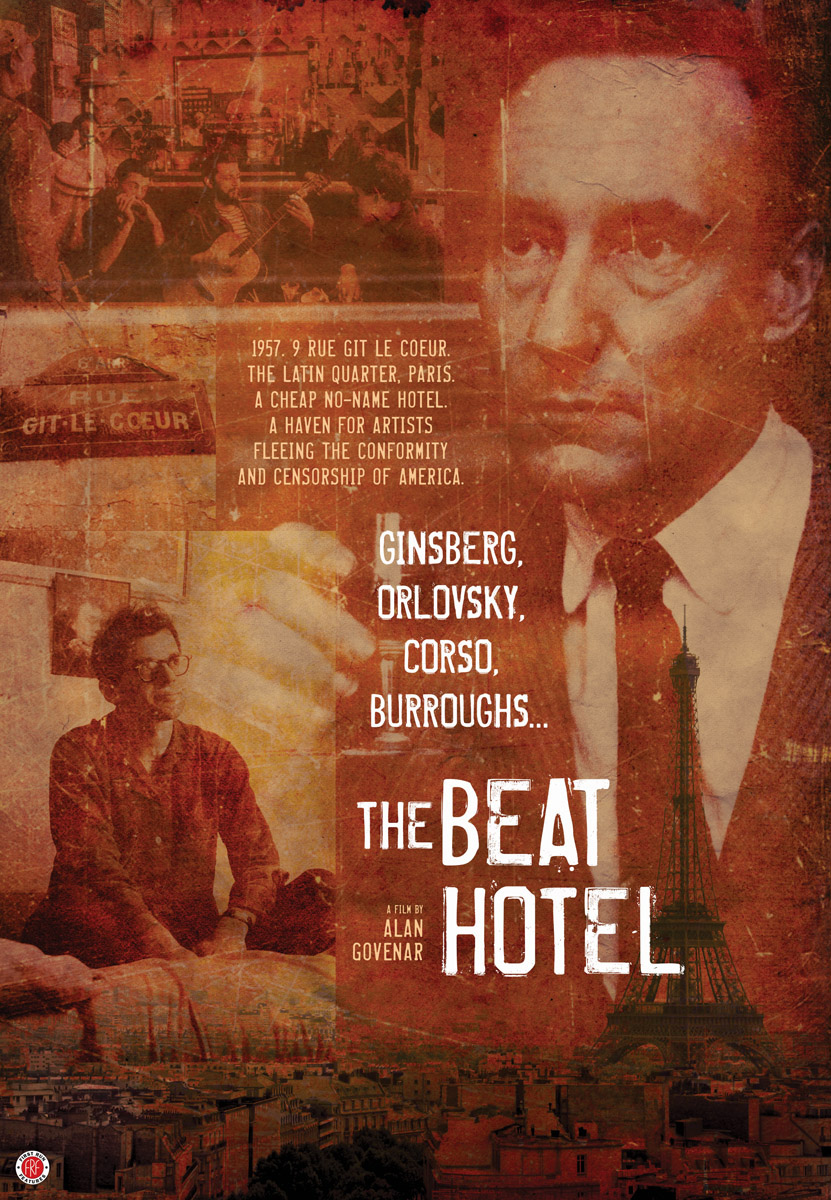
Alan Govenar is directing a new 82-minute documentary, with First Run Features and produced by Documentary Arts,  called The Beat Hotel.  Here’s the press release:

1957. The Latin Quarter, Paris. A cheap no-name hotel at 9 rue Git le Coeur became a haven for a new breed of artists fleeing the conformity and censorship of America. The hotel soon turned into an epicenter of Beat writing that produced some of the most important works of the Beat generation. It came to be known as the Beat Hotel. Opening March 30 in New York City, to be followed by a rollout to other cities across the country, Alan Govenar’s feature documentary THE BEAT HOTEL explores this amazing place and time.

Fleeing the obscenity trials surrounding the publication of his seminal poem Howl, Allen Ginsberg, along with Peter Orlovsky and Gregory Corso, happened upon the hotel on rue Git le Coeur and were soon joined by William Burroughs, Ian Somerville, and Brion Gysin. Run by the indefatigable Madame Rachou, the Beat Hotel was a hotbed of creativity and permissiveness, where Burroughs and Gysin developed the cut-up writing method; Burroughs finished his controversial book Naked Lunch; Ginsberg began his poem Kaddish; Somerville and Gysin invented the Dream Machine; Corso wrote some of his greatest poems; and Harold Norse, in his own cut-up experiments, wrote a novella, aptly called The Beat Hotel.

British photographer Harold Chapman‘s iconic photos and Scottish artist Elliot Rudie‘s animated drawings capturing Ginsberg, Orlovsky, Corso, Burroughs, Gysin, Somerville and Norse just as they were beginning to establish themselves on the international scene bring THE BEAT HOTEL to life on the screen. The memories of Chapman and Rudie interweave with the first-hand accounts of French artist Jean-Jacques Lebel, British book dealer Cyclops Lester, and 95 year old George Whitman. Together with the insights of authors Barry Miles, Oliver Harris, Regina Weinreich, and Eddie Woods, among others, they evoke a time and place where Chapman, mentored by Cartier-Bresson, roamed around Paris photographing nuns, bums, and the idiosyncrasies of street life; Corso took scissors to Marcel Duchamp’s tie in a Dadaist statement while Ginsberg kissed his knees; and Burroughs, with the help of Somerville’s lighting, learned to disappear before an audience’s eyes.

Director Alan Govenar is a writer, folklorist, photographer, and filmmaker. He is president of Documentary Arts and has a Ph.D. in Arts and Humanities from the University of Texas at Dallas. He is the author of 23 books, including Osceola: Memories of a Sharecropper’s Daughter, which won first place in the New York Book Festival (Children’s Non-Fiction), among other prizes. The off-Broadway premiere of his musical “Blind Lemon Blues,” co-created with Akin Babatunde, received rave reviews in The New York Times and Variety. Govenar’s film Stoney Knows How, based on his book by the same title about Old School tattoo artist Leonard St. Clair, was shown at the Museum of Modern Art in New York and the Centre Georges Pompidou in Paris, and was selected as an Outstanding Film of the Year by the London Film Festival. Govenar also has produced and directed numerous films in association with NOVA, La Sept/ARTE, and PBS for broadcast and educational distribution, including The Voyage of Doom, Le Naufrage de la Belle, The Devil’s Swing, Texas Style, Everything But the Squeak, The Human Volcano, The Hard Ride, Dreams of Conquest, and Little Willie Eason and His Talking Gospel Guitar.

Judging from the trailer, The Beat Hotel looks like it will be a documentary not to be missed by any fans of the Beats.

Dreams of European Picnics

3 Jun


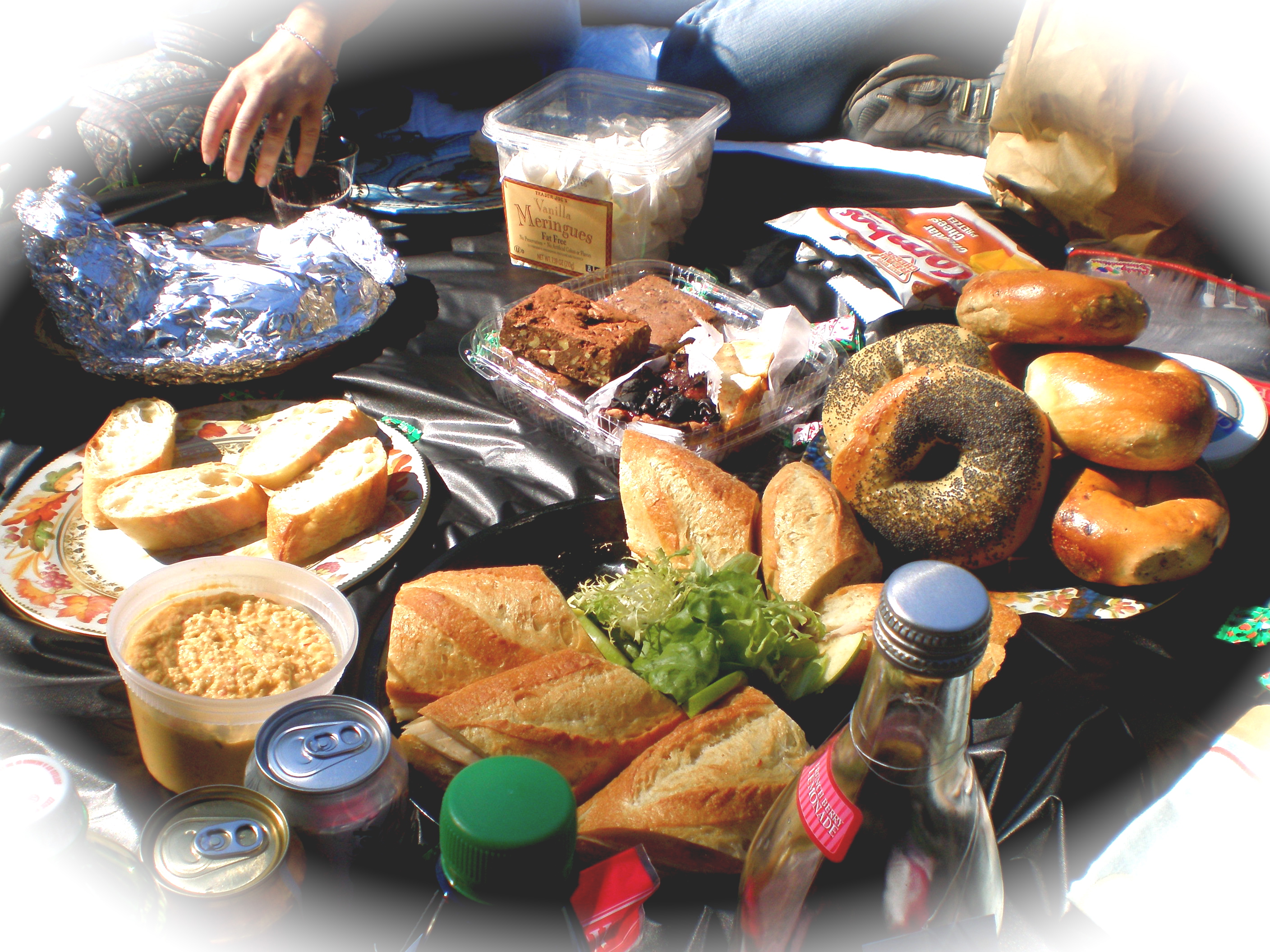
Two nonfiction writers in my MFA program individually suggested that I check out Saveur, and I’m so glad they recommended the culinary magazine to me!  It’s always full of such mouthwatering images of food and recipes I’d love to taste test.  This week, the article “Menu: A French Picnic for Early Summer” arrived in my inbox.  Sometimes I think I must’ve been French in another lifetime.  I’ve always thought of myself more as an Anglophile than a Francophile, but there’s just something so charming and whimsical about the whole French flea-market aesthetic.

A summer or two ago, I read Barry Miles’ The Beat Hotel, about the years Beat Generation writers Allen Ginsberg, William S. Burroughs, and Gregory Corso lived at 9 rue Git-le-Coeur on the Left Bank of Paris.  Wouldn’t it be lovely to have a long, leisurely picnic of baguette and chevre along the Seine?  Experiencing communion with God while drinking cabernet sauvignon and contemplating the enormous rose window of Cathedrale Notre-Dame de Paris?  Reading bohemian and Beat poetry and penning poems in a pocket journal?

Sometimes I wish the Greek aesthetic lent itself to a more feminine and whimsical feel.  I picture triangles of tiropita, squares of feta cheese generously sprinkled with oregano, and delicate twists of diples dripping with honey and cinnamon all laid out on an off-white doily-like tablecloth crocheted by my yiayia.  Someone is fingerpicking an ornate bouzouki, and I’m reading about how Allen Ginsberg sailed to Greece in 1961 to track down his love.  And I am writing stories about cultivating a garden of memories in Greece.