Archive | July, 2012

Social Media Lessons from SXSW 2012

11 Jul

Calvin Reid makes insightful remarks about the role e-technology and social media are playing in publishing in “SXSW 2012: New Publishing Models and the Rise of the Referral Economy.”  If you’re new to publishing and looking to make your mark on the industry and find readers, I’d highly encourage you to read the entire article.  To his point on “curating,” here’s some remarks of his that you might find especially helpful:

  • “Altounian said he’s targeting a demographic under the age of 40 that wants to read on an array of devices anytime they want and they don’t want to pay much, if anything, for the content they read on them. … Altounian was making the point that, at least for emerging artists, getting their content in front of readers through traditional publishers is an uphill battle that doesn’t work for everyone; that his goal is to build a list of self-branded artists (using social media tools) and by offering some free content now, and some for-pay content later when the freebie-oriented audiences for these artists reaches critical mass and wants more of their stuff.”
  • “Certainly one of the most intellectually vivid panels was Curators or the Curated, a panel examining the phenomenon of content sharing—essentially the practice of any and everyone linking to content and sending it out to followers and friends around the web—and what that means to publishers, creators and the curators themselves. … In theory curators bring attention to content and drive traffic to the original site; in practice some curators are having more impact than the publications they curate from. And its generated a debate about the practice and what it means—and of course how to monetize it.”
  • “He also rejected some of the anti-advertising curatorial comments, noting that business platforms were important and that he had worked for a Minn.-based newspaper that did away with escort ads and the loss of revenue killed the newspaper.”

What I take away from this is the following:

Writers need to start building a platform NOW—as in, even before we’ve written our book, we need to start curating content on our subject matter.  This means tweeting, forwarding, and “liking,” other writers’ posts related to our subject and also blogging, tweeting, and writing our own status updates on our subject.

Generate content and don’t be afraid to give it away for free.  It’s better to give our writing away for free in the beginning so that we can establish ourselves as authorities on that topic and/or as interesting storytellers.  Eventually, people will love you and want to buy your writing—but it might take a lot of giving your work away for free first.  Michael Hyatt is a big proponent of giving away free content.  Not only does he give away valuable information on his blog, but he also created an ebook that he gives to anyone who subscribes to his blog.  Both the blog subscription and the ebook are free.

Don’t be all holier than thou about advertising.  Solicit advertising for your blog.  I personally would suggest keeping your advertising in line with your brand—and your brand should probably be consistent with how you’d want to be thought of by your friends and parents as well.  What I mean is, I personally would rather go hungry than earn money from escort ads.  The best ads are going to be ones that relate to your subject matter.  So if I’m writing about Greek identity, ads about learning how to play the harmonica aren’t going to be controversial but they won’t be as relevant as ads about learning how to speak Greek.

Humbly consider the rights to your content.  Bloggers may quote rather heavily from anything you post—and by heavily, I mean they might use your work entirely and just give you credit via a link.  This might be a breach of your copyright, but before you get your knickers in a bunch consider if their promotion of your work might be helping you out with some free advertising.  Maybe it’s bringing new readers to your work.  …But then again, maybe it’s not.  Therefore, always be careful with what sort of content you put on your blog.  Sure, someone could pirate your whole book, but it’s more likely someone will repost a blog entry than your entire book.  With that in mind, be prepared that what you publish on your blog might end up elsewhere.

Pay attention to your e-rights.  Landing a book contract is about more than just the print rights these days.  Make sure your contract expressly states an agreement about electronic and print-on-demand editions.

It feels like writers—and artists of any sort—get a raw deal.  We have to give a lot of free content away.  Professionals in other industries don’t seem to have to do this to the same extent.  Lawyers may work an occasional pro bono case, but they’re not expected to work for free before making it big.  Doctors may do Doctors Without Borders to give back and help people, but this is a personal choice they make.  I suppose in some ways artists giving away their work—and having it stolen from them in the case of extreme curating—is an internship of sorts, but the difference is that artists are expected to intern their entire lives or at least until they hit it big.

Therefore, I’d encourage all artists to be savvy.

Yes, you might feel pressured to build your platform and give away content for free, but make sure you’re getting something in return for your investment.

Don’t let your platform overtake your writing.  Your platform is a means to an end—your book project.

Use the system.  There’s nothing wrong with giving away content for free.  There’s nothing wrong with soliciting ads.  There’s nothing wrong with social media.  Don’t let anyone or any platform rule over you.  Keep your goals in perspective and use the system to your advantage.  Find your target audience, make connections, earn money, promote your projects.

You can find me not only here on this blog, but also on Twitter, Pinterest, and Google+.

Tasty Tuesday: Pictures from Dinner at Village Taverna

10 Jul


While I was getting my MFA in creative nonfiction at The New School, I kept walking by a Greek restaurant that was being built on University Place.  When it finally opened, I was drowning in writing my thesis and Burning Furiously Beautiful.  Right before the semester ended my writer friend Allison–who is obsessed with Greece (a good thing considering all the Greek stories I shared in class)–and I went to check it out.  Village Taverna was definitely worth the wait.

The food at Village Taverna is classic Greek taverna fare served up in a spacious, beautiful dining area with a casual vibe.  The portions were generous–and delicious.  I didn’t try the wine, but they have an impressive Greek wine list.  Village Taverna has the best vegetarian gyro in New York–the grilled vegetables pita wrap.  I want to go back and try their meze–tzatziki and veggie chips, namely–and vegetarian moussaka (it has artichokes in it!).

Who’s with me?!

Your Home Can Smell Like Big Sur

9 Jul

Busy poet Lawrence Ferlinghetti, who is still active at ninety-three years old, moved out to San Francisco and founded City Lights in 1953.  More than just the independent bookstore of Beat pilgrimages, City Lights is a book publisher, and in 1956, Ferlinghetti was arrested on obscenity charges because he had published and sold Allen Ginsberg’s Howl.  He was later found not guilty of a crime.

The year after Ginsberg and Ferlinghetti made the papers, Jack Kerouac finally found fame with On the Road.  The fame was overwhelming, though.  Talk-show hosts invited the naturally shy author on their show.  Wanderlust kids, winos, and dogged readers showed up unannounced at his home.  Fame took a toll on his mind, body, soul.

Ferlinghetti had a cabin, a refuge, out in the wilderness of Big Sur.  He could escape the hustle and bustle of San Francisco for respite along the coast of central California.  After the fame wore him down, Kerouac escaped there too, living for a brief time in Ferlinghetti’s cabin in the woods.  The result of this experience is the 1962 novel Big Sur.

Juniper Ridge now has a room spray called Big Sur.  According to their website, it smells of “wild ginger, burnt honey, salt, damp ground.”  The ingredients are plucked from the deserts and mountains of the West, and 10% of the $20 spray bottle goes back to protecting western wilderness.  They also have a Big Sur soap, essential oil, and sachet.  For $50 you can give the gift of Big Sur, which includes the items already mentioned, plus wild huckleberry jam (perhaps reminiscent of Neal Cassady, whom some have said is Huckleberry Finn incarnate).  The gift comes gift wrapped with real pine cones!  And, like the others, 10% of the profit goes to protecting wilderness.

Road Trip: Club Ed

6 Jul

Throw your rucksack into the trunk of your beat-up ’49 Hudson.  Rev the engine.  Peel out of LA.  An hour into the California desert, and you’ve rolled into Lancaster.  You’ve traveled back in time and hit Club Ed.

One-time film set for Eye of the Storm, Club Ed embodies the nostalgia of On the Road, though IMDB does not report Lancaster as one of the locations the Hollywood version of Jack Kerouac’s novel was filmed.

Club Ed is pure roadside bliss for the wanderlust traveler who wishes to step back into an era, where pie was still made on the premises of greasyspoons and served up by surly waitresses, who kept your mug full of stale coffee.  The menu is written in paint on the window.  You look out and all you see for miles on end is the scorched shrubs dotting the valley.  Mountains loom in the distance.  There’s an old gas station, where you should fill your tank.  You may not see another one soon.

On the Road will inevitably inspire people to hit the road.  Route 66 isn’t what it used to be, though.  Drive through Missouri or Texas, and you’ll likely seen the same chain stores from the highway that you’d seen in Arizona and California.  Club Ed isn’t the real deal, and yet it looks more authentic than a Denny’s.

Eloping on the Road

5 Jul

I have so many friends right now who either just got married or are in the process of planning their weddings. There’s so much to consider: venues, wedding cake ganache, narrowing down the guest list, who sits next to whom, DIYing centerpieces, the dress.

Eloping sounds better and better….  And what better way than eloping on the road?!

Green Wedding Shoes featured a couple who got married on the road. Their wedding photos feature retro suitcases, maps, and the classic hand-out-the-window shot.

Did you know that when Jack Kerouac, the author of On the Road, got married he was quite the opposite of being on the road? He’d been arrested as a material witness of a murder. His dad was so upset he refused to post bail. But his girlfriend, Edie Parker, came from a wealthy family. She said she’d post bail—on one condition: that Kerouac agreed to marry her. You can read the whole story in Burning Furiously Beautiful.

Happy Fourth of July!

4 Jul

Happy July 4th!

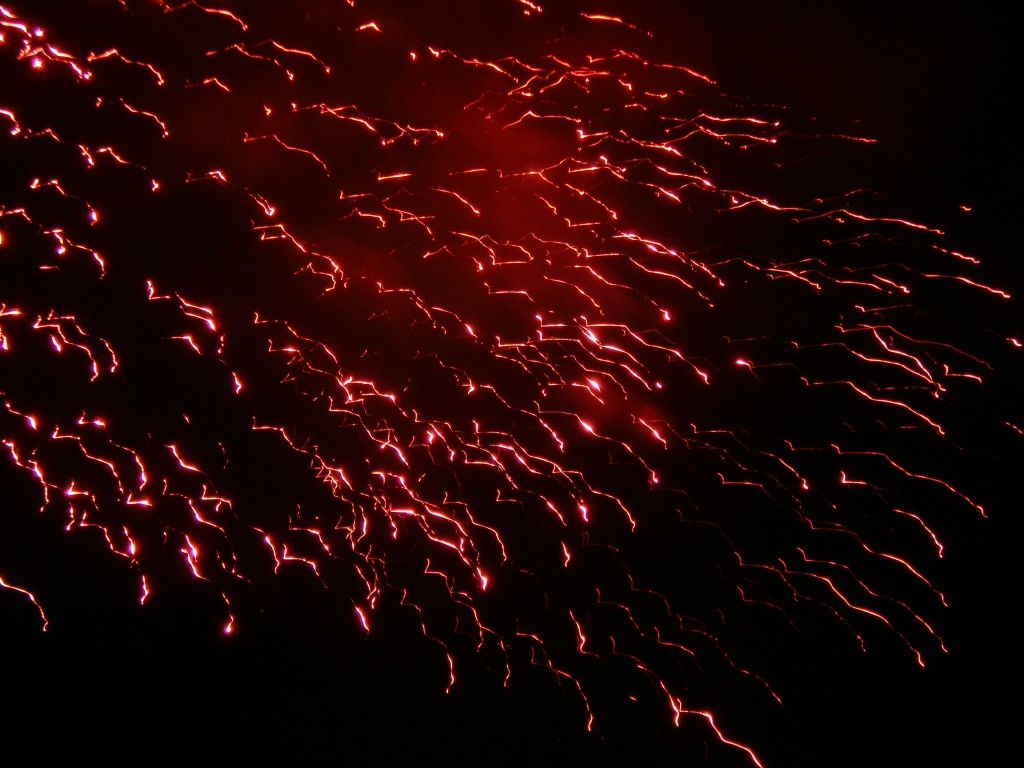
Here’s my post from last year, complete with fireworks photos!!

It’s Independence Day here in the US, but did you ever stop to consider that each country has its own unique independence story? (This is Greece’s independence day story.)

Not only that, in some way, every person has their own independence day story, their own coming-of-age story. The moment they realized they were independent, free, but also responsible for themselves.

What’s your independence story?

Hipsters Hate Driving

3 Jul

I knew I was getting old the day I saw a car commercial where the driver was clearly younger than I am.

So here’s an interesting bit of news: Generation Y doesn’t like to drive. According to Reuter’s “America’s Generation Y not driven to drive,” the Millennials think driving is more of a hassle than it’s worth.  A California think tank analyst, Tony Dudzik says instead of a driver’s license, a cell phone is the new rite of passage for young adults.

The article points to a few different reasons why Generation Y may be less interested in driving:

  • Smart phones make it easier to know public transportation schedules
  • More Gen-Yers are riding bikes
  • People are more concerned about saving the planet
  • Car-sharing services are making it easier not to have to own a car

From a cultural perspective, this makes total sense.  Gen Y is the hipster culture.  The kids in Williamsburg who listen to low-fi indie music on their hi-tech iphone, knit water-bottle cozies that they sell on etsy, ride their bicycles to work, buy their clothes from Buffalo Exchange, spend their weekends at the food coop, brew their own craft beer, and vlog on YouTube. If they drive, they drive hybrids. Because they’re all about the i-this and the i-that, they seek out community more intentionally. Who needs a car, if your friend or parents (they also happen to be the Peter Pan Generation, living at home after college) have one?

I personally fall somewhere between Gen X and Gen Y, making me part of Generation Flux.  Generation X refers to people born between the early 1960s and 1980s, while Generation Y refers those born between the late 1970s and the 2000s.  I know when I was growing up, there were a lot of cultural arts programs in the school about saving the rainforest and saving the whales, we studied acid rain and the ozone layer, and we joined KAP: Kids Against Pollution.  In drivers ed, they pretty much terrified you with statistics, photos, and videos that suggested it was likely you were going to die if you got behind the wheel. The shows that were popular when I was a teen were Mad About You, Seinfeld, Friends, Will & Grace, and Sex and the City, all of which were set in New York City.  Other popular shows like Ally McBeal, Frasier, and ER were also set in cities. Our stars didn’t drive.  They took cabs and rode the subway. Is it any surprise that we moved into the city and followed suit?

So will a generation who grew up watching Paris Hilton, Lindsey Lohan, and Snooki getting arrested for driving under the influence and/or crashing their cars, a generation coming of age during the Great Recession, a generation who doesn’t care about driving, embrace the 1950s road trip adventure of On the Road when the movie comes out and the novel by Jack Kerouac it is based on?  Well, here’s another interesting twist: Jack Kerouac didn’t like driving either. If you read his novel, you’ll see that most of the time, the character based on him in the novel is on the bus or in the passenger seat.

How do you feel like the era you grew up in influenced you?

Now you can “like” Burning Furiously Beautiful on Facebook!

Greece Leading the Pack

2 Jul

So many people I talk to seems to have this idea, driven by the media and not personal experience, that Greeks are lazy and aren’t doing anything innovative.  This is simply not true.

  • Greeks were ranked third in Europe for the number of hours they work in a year, according to a poll surveying 1995-2005.
  • Greek healthcare is amongst the best in the world.  It’s universal.
  • The Greek maritime industry is recognized as incredibly powerful in the world economy.  It’s not as high as it was in the 1970s, but Greek shipping heirs still seem to be attracting the likes of Paris Hilton and an Olsen twin.
  • Greek companies, such as Korres and Apivita, are leading the natural skincare and makeup revolution.
  • Greece is leading animal rights activism by banning the use of animals in circuses.
  • Greeks are often considered the most hospitable people.  It’s no wonder tourism continues to thrive, despite the media’s ploy to scare people away from the country.  Time + Leisure magazine named Santorini “The World’s Best Island” last year.
  • Greece’s Peloponnese region hardly needs to market itself to attract surfers and golfers from around the world.
  • Greek wine is currently having a revival.  Greek wine is very trendy right now in the United States.
  • Greece is home to the longest cable-stayed bridge in Europe.

Greece is working hard to bridge the gap between its rich history and its present.  The country is respecting its past, its traditions, its natural landscape, and its flora and fauna, while simultaneously capitalizing on these strengths.