Learning to Say “No,” Without Needing an Excuse
28 OctMary Karr Reveals Her Favorite Memoirs
28 Oct
Mary Karr Credit Illustration by Jillian Tamaki via The New York Times
Mary Karr, memoirist extraordinaire, has a new book out. It’s not a memoir but a book about writing memoir: The Art of Memoir. I’m adding it to my ever-growing must-read list.
I’ve had the opportunity to hear Mary Karr speak at the Brooklyn Book Festival and at the Festival of Faith & Writing, and of course she is the author of The Liar’s Club, Lit, and Cherry.
I love Q&As and was thrilled to read her answers to The New York Times’ Sunday Book Review “By the Book” column. I got some great reading inspiration (Annie Liontas’ Let Me Explain You, about a Greek-American family), I loved her answers to whom she’d invite to a literary party (can I get an invite?!), and I was happy to discover her favorite memoir is St. Augustine’s Confessions, since I had recently discussed the book in my class “Writing Under the Influence of the Beat Generation” at the Hobart Festival of Women Writers.
I was especially intrigued by her question “Do Flannery O’Connor’s letters count?” to the question “Who are the best memoirists ever?” I used Kerouac’s letters for much of my research for Burning Furiously Beautiful. I think in some way, letters are a form of memoir. In another way, though, they don’t necessarily adhere to the intentional literary craft I discussed in my response to “In the Age of Memoir, What’s the Legacy of the Confessional Mode?” Though a great letter writer is better than a mediocre memoirist!
You can read the full interview with Mary Karr here.
Apple Cheddar Grilled Cheese: The Perfect Autumn Lunch
27 OctYou know the other day how I went apple picking? Well, the truth is … I don’t like apples. I don’t hate them, but they’re just so generic. They’re the cheap fruit leftover in every gift basket. I know they’re supposed to be really good for you. I’ve even edited entire books devoted to the benefits of apples. But on their own they’re just not my thing.
In a grilled-cheese sandwich, though, that’s a different story altogether!
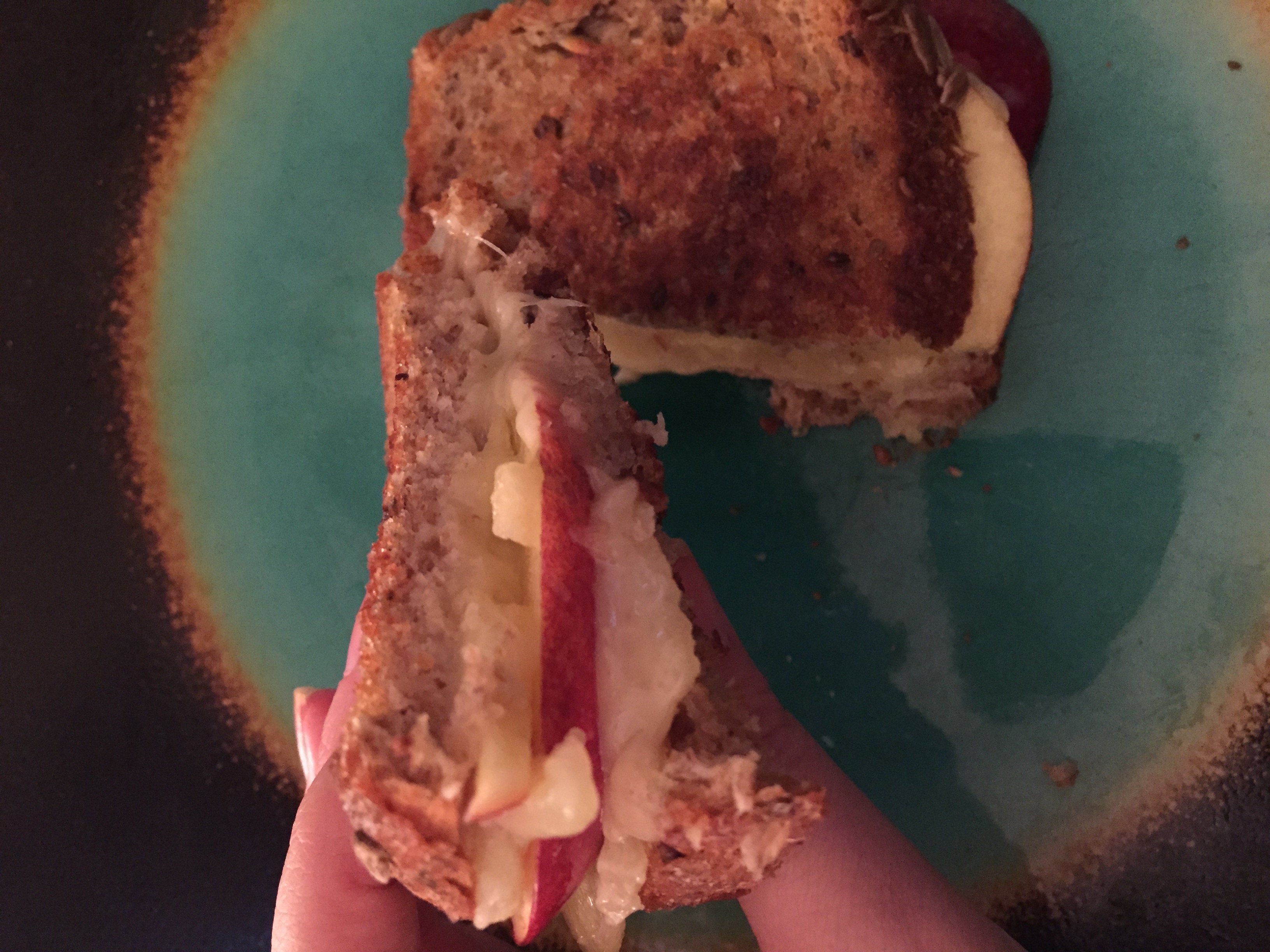
Growing up eating at Jersey diners, I’ve had my fair share of grilled cheese with tomato. I love it. But for fall, grilled cheese with apple is the way to go. It’s so easy, inexpensive, and delicious. Perfect for the starving artist who want to up their grilled cheese game.
I chose a hearty bread — Bread Alone’s Whole Grain Health. I first discovered Bread Alone through the Union Square Greenmarket when I worked in a publishing house in that area. Bread Alone makes their organic bread by hand. The Catskills-originated bakery is committed to remaining local — and fortunately Manhattan is included in local. The Whole Grain Health bread has sunflower seeds, sesame seeds, and flax (a great source of omega-3, which as a vegetarian I am always looking out for!), and a healthy dose of honey.
The apple was from my apple-picking adventures at Dubois Farms. I believe it was a Gala apple, but truthfully all the apples kinda looked alike once they got in my bag. I think it was Gala and not Fuji though because it was sweet, which is what I was going for.
Usually I go with American cheese, but I wanted cheddar to go with the apple. I selected a two-year-aged cheddar made from raw milk from Grafton Village. I try not to be too picky with my vegetarianism when it comes to cheese because I love love love cheese, so bonus points for this cheese using a vegetarian rennet. The two-year-old Grafton Village cheddar was super creamy, though it didn’t melt well … though that’s probably because my slices were too thick!
I put a little margarine on the backs of the bread, assembled the cheese, then the apple slices, and then a little more cheese, and then heated them up in the frying pan. It only took a few minutes before each side was golden and warm and gooey.
I paired it with some split pea soup.
So delicious! Apple cheddar grilled cheese is the perfect light meal for a crisp autumn day.
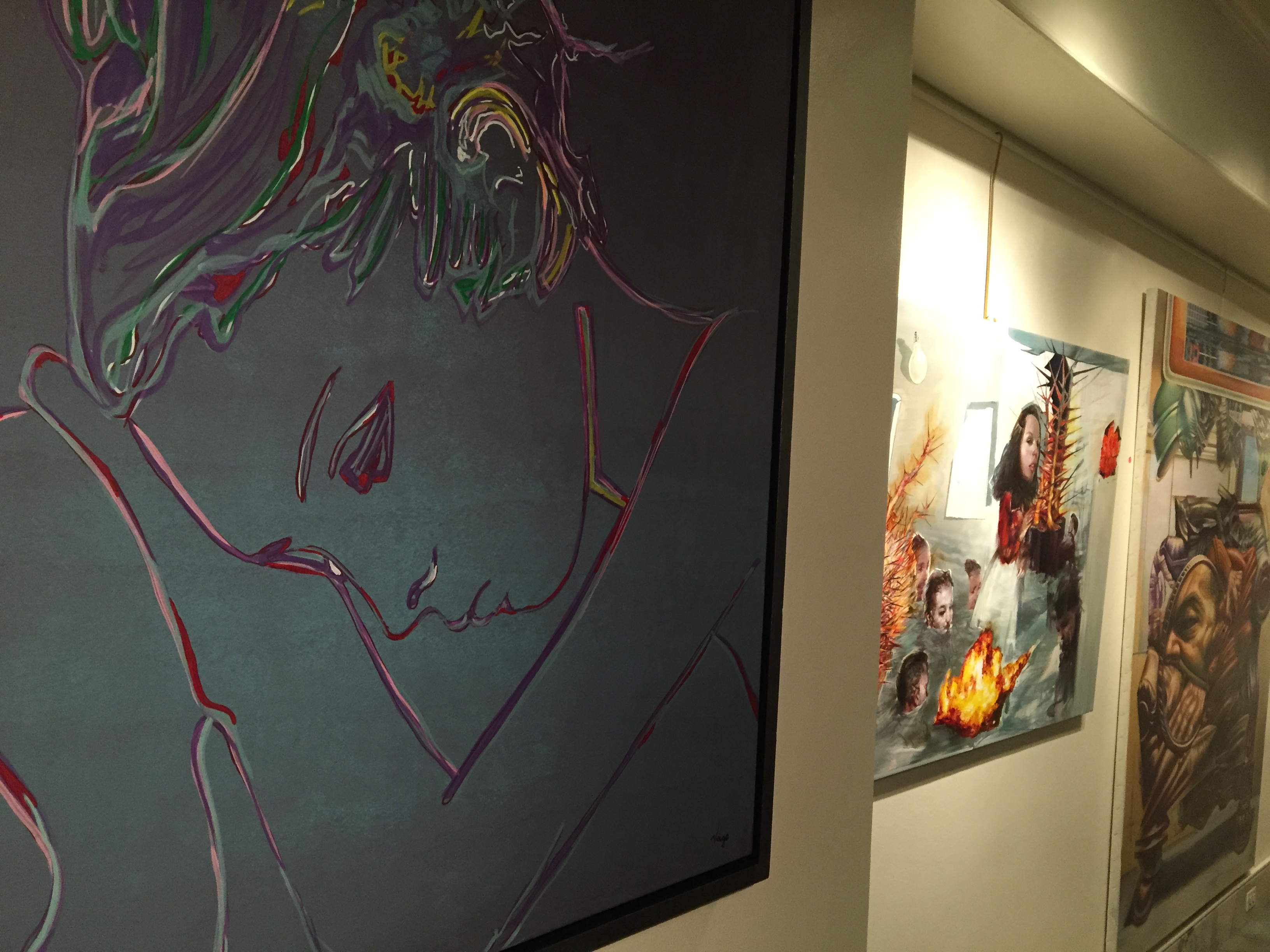
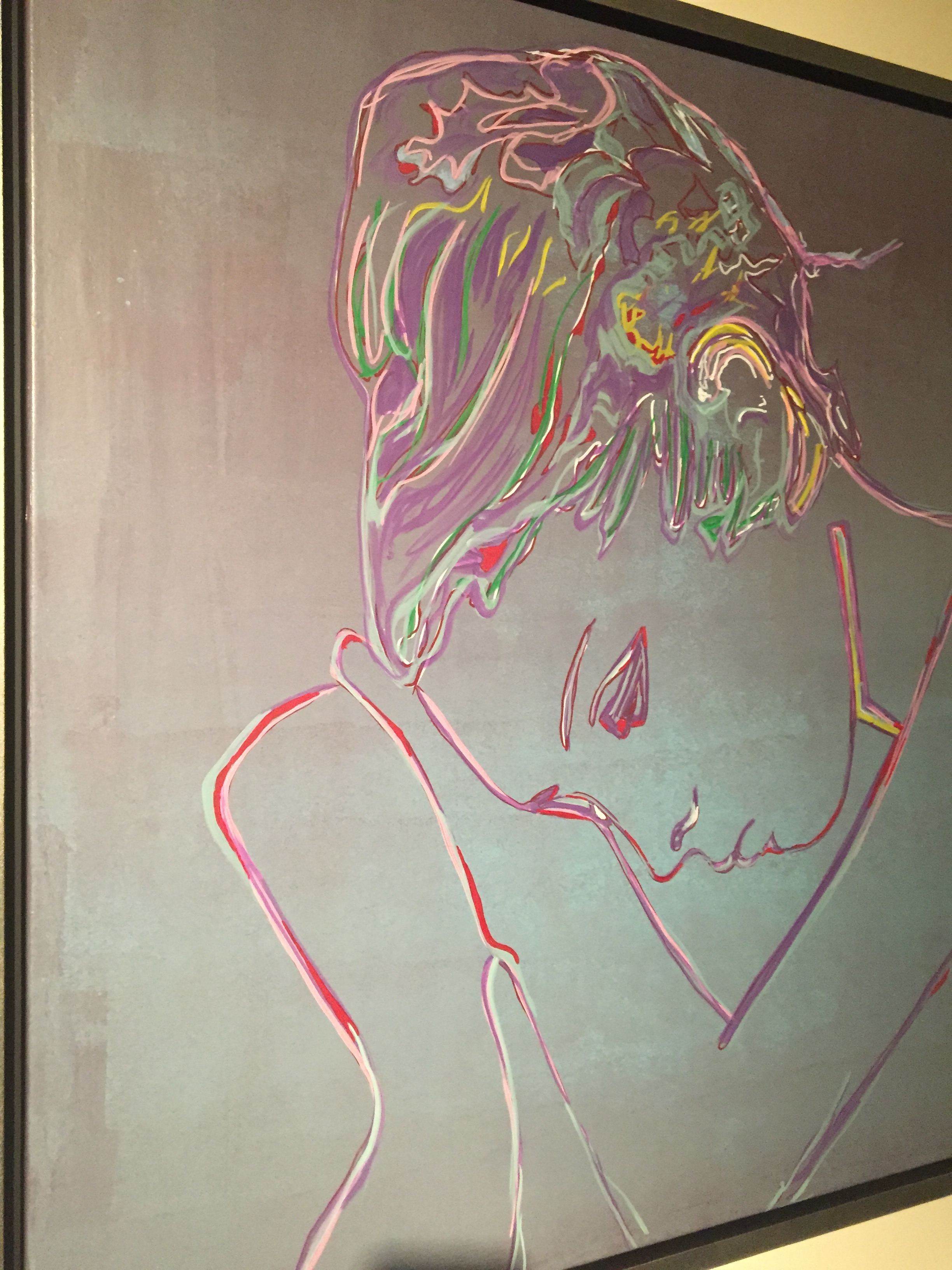
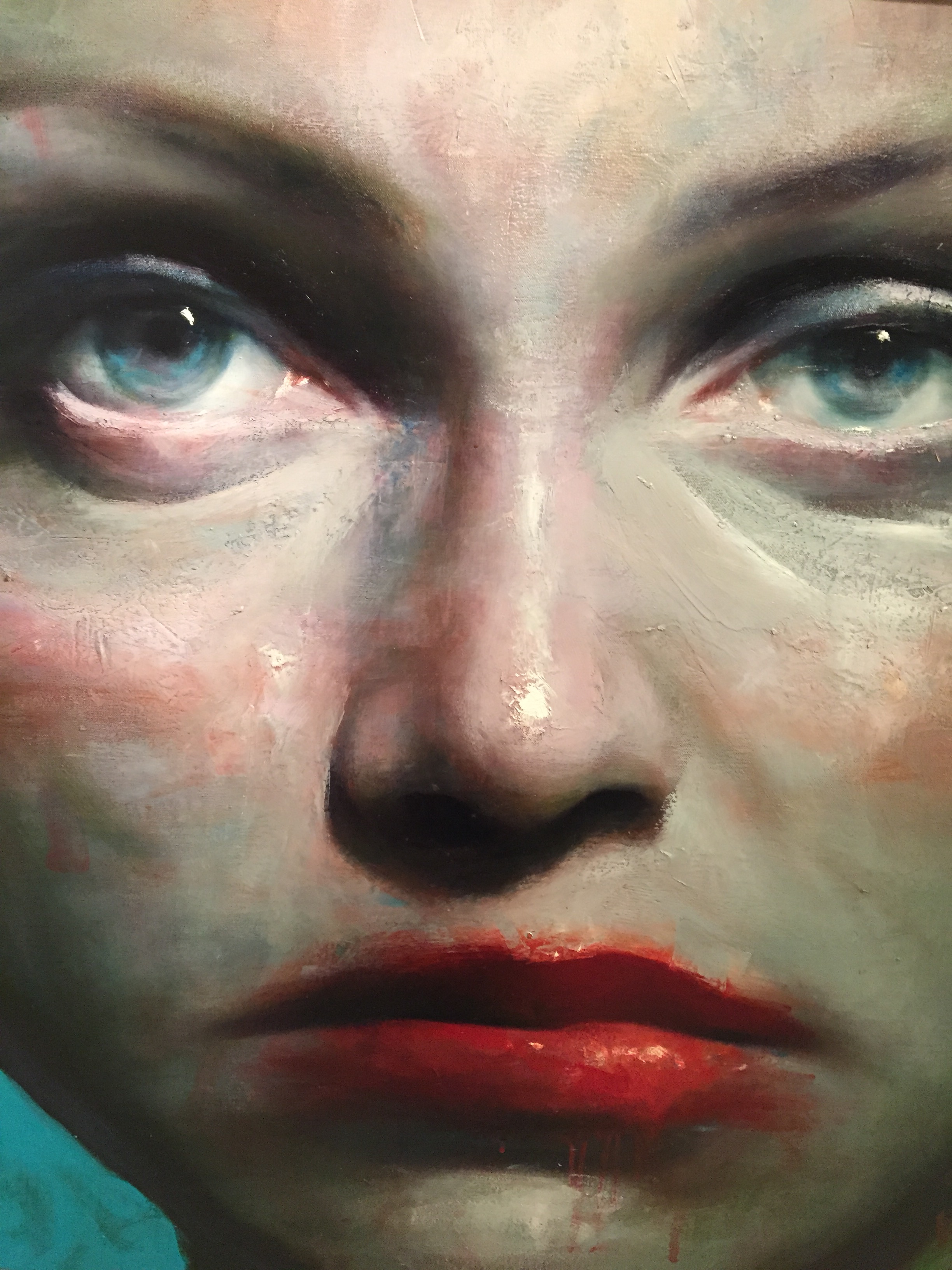
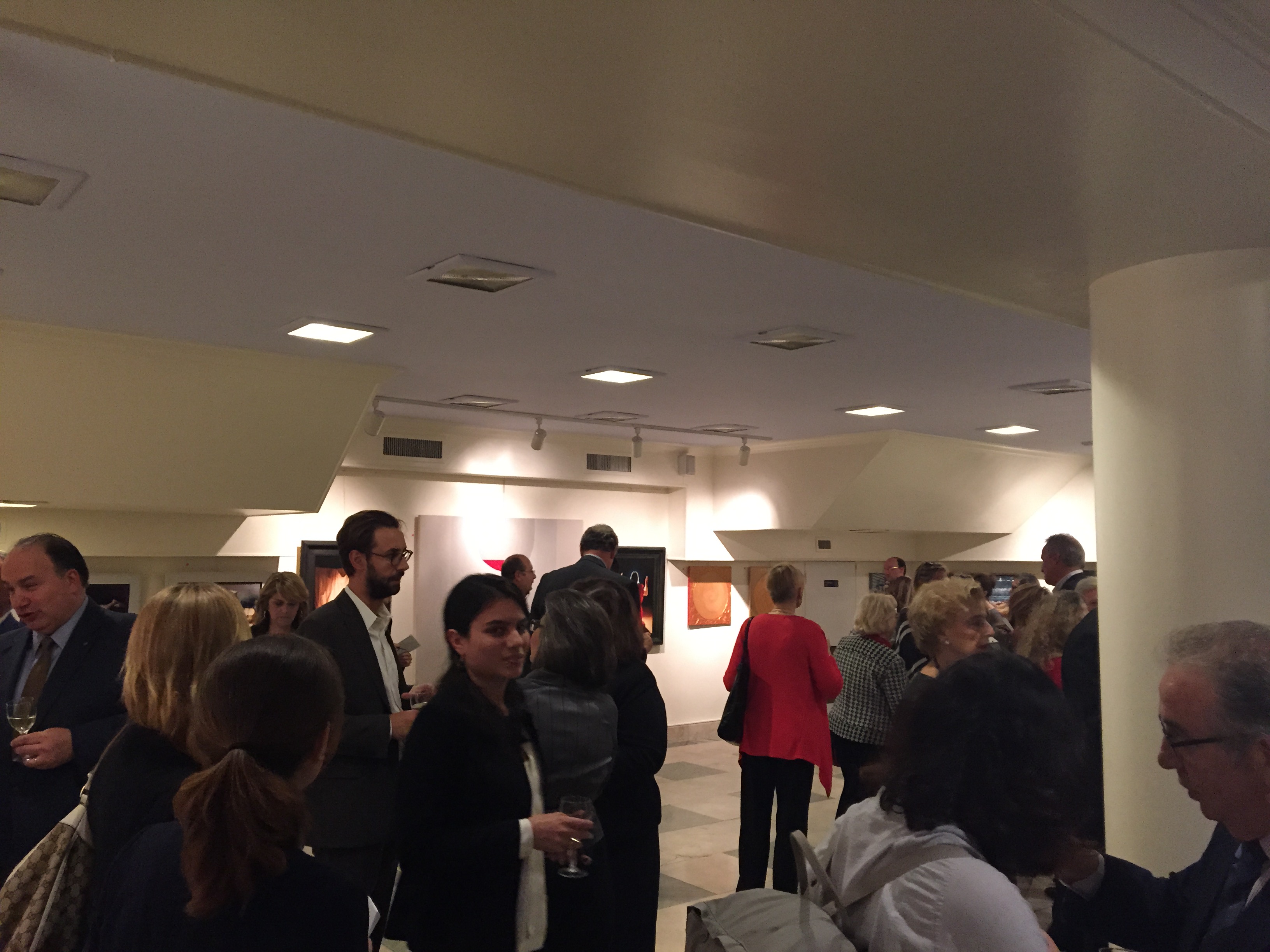
Consulate General of Greece in New York Proves That Current Greek Art Matters
26 OctShould We Judge the Quality of a Memoir by Its Confessions?
21 Oct
Leslie Jamison Credit Illustration by R. Kikuo Johnson via The New York Times
At the Hobart Festival of Women Writers, part of my class, “Writing Under the Influence of the Beat Generation,” was about confessional writing. As a class, we took a look back at the first examples of confessional writing in literary history before plunging into the poetry of Diane Di Prima, who is associated with the Beat Generation.
The New York Times’ Sunday Book Review posed the question “In the Age of Memoir, What’s the Legacy of the Confessional Mode?”
Leslie Jamison wrote:
These days, American literary culture features both a glut of so-called “confessional” work and an increasingly familiar knee-jerk backlash against it: This writing is called solipsistic or narcissistic; it gets accused of lacking discretion or craft. Its heritage is often traced to women writers, Sylvia Plath and Anne Sexton, and its critiques are insidiously — and subcutaneously — gendered. So many of the attacks against the confessional mode come back to the language of the body: An author is spilling her guts or bleeding on the page. Her writing whores itself out, exposing private trauma for public fame. (Or a four-figure advance and an adjunct job.)
Ouch! But, unfortunately, so true. Jamison says:
Because people have grown so obsessed with the drama of Plath’s life, they read the poems solely as reflections of its traumas….
In other words, readers get so caught up in the content that they forget the style. This is a huge tragedy. Commercial memoirs today are all about celebrity or about hard-won, momentous moments in life. There is certainly room for works that celebrate and motivate, but is that the whole or only point of the memoir?
I’ve often heard people sarcastically remark that memoir writing is egotistical. Or else, they denigrate their own lives by arguing there’s nothing in their life worth writing about. I disagree. Whole-heartedly. First of all, the process of writing a memoir is at its core about seeking a balanced truth that is far from self-promoting. At times, the memoirist may even feel self-loathing. But again, every life matters. Everyone has something to say. Everyone is complex and interesting.
Memoir is not just about a flat telling of one’s life. It’s storytelling. It’s choosing words that capture a moment so precisely that the reader can step into the author’s world even if their lives are vastly different. Memoir, in the end, is about craft. It’s an art form.
How Do You Like Them Apples?
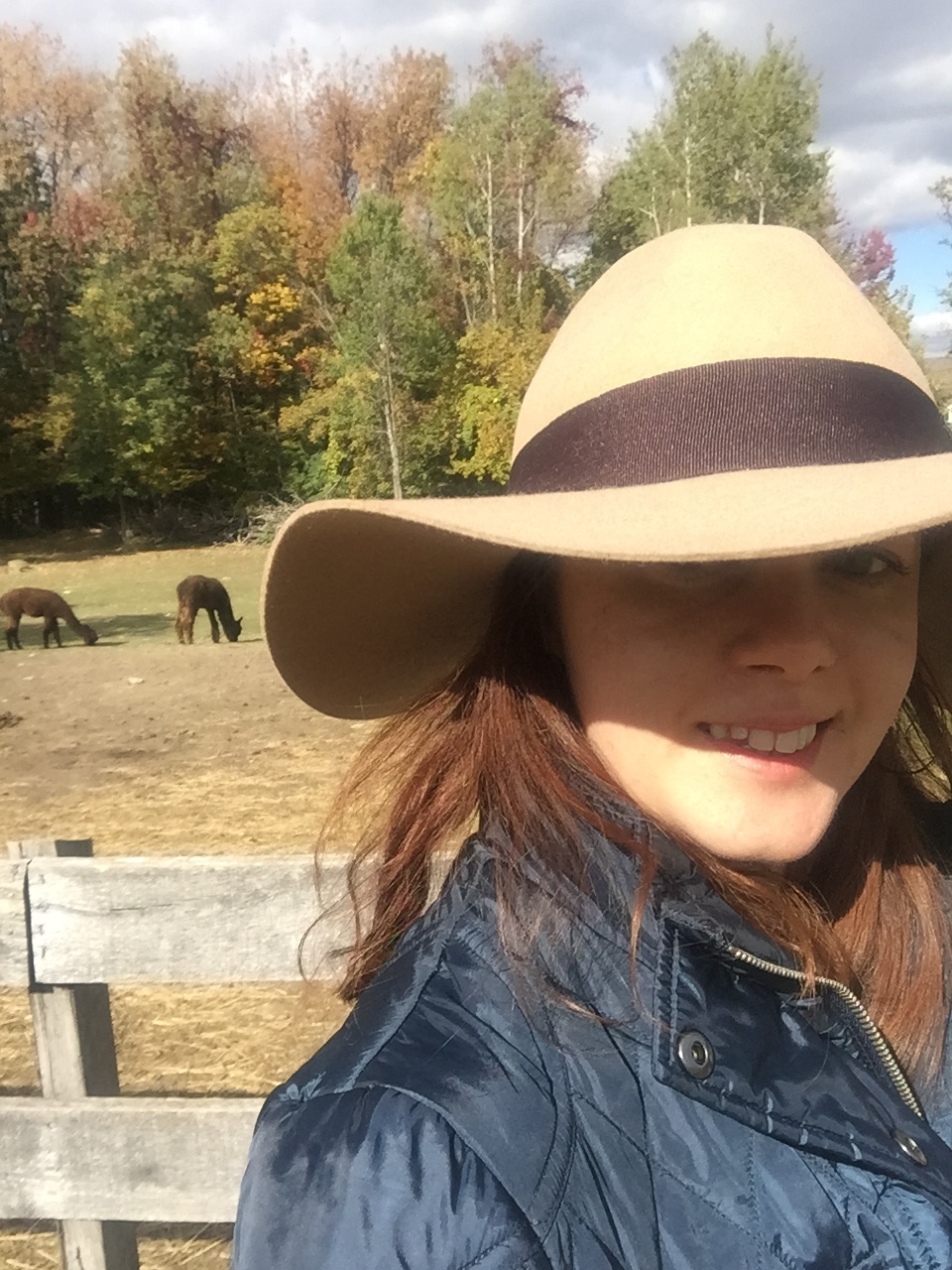
20 OctEvery year my friend organizes an autumn apple-picking trip. It’s a nice break from fighting long lines in tiny aisles at grocery stores in New York City. Also, it always makes me think of helping my dad out on the garden in Greece. I took the bus out to Fort Lee, New Jersey, to meet my fellow apple-picking friends, and then we drove two hours or so out to Highland, New York. My friend is the definite “mom” of the group — she brought me an extra jacket because it was spectacularly cold out that day, which I wore on top of my lighter coat.
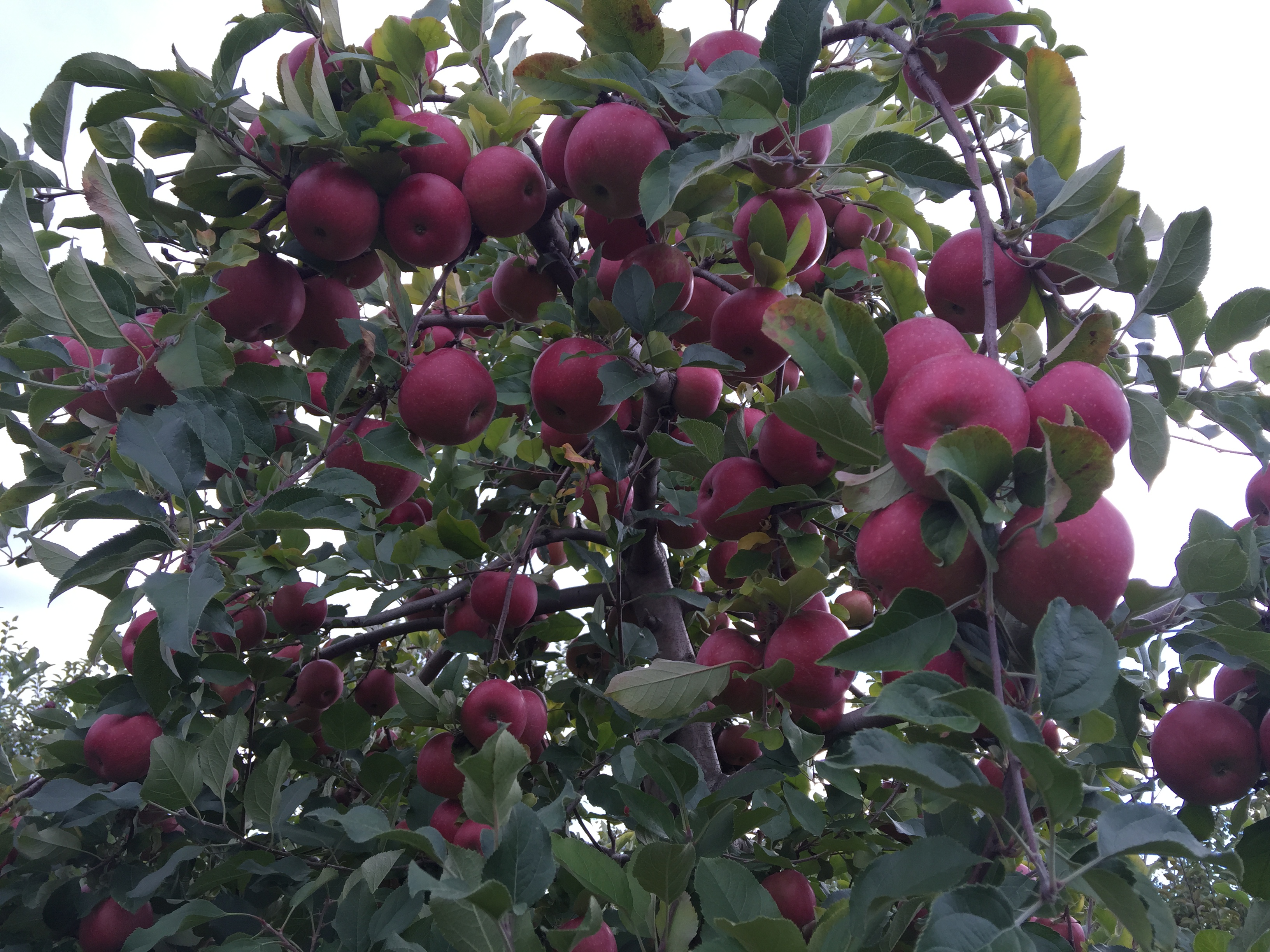
The farm we went to was called Dubois Farms U-Pick (209 Perkinsville Rd., Highland, NY), which we determined was pronounced like author W. E. B. Du Bois. We were immediately greeted by the smell of grilling burgers and apple cider donuts. The employees there were also super friendly, going out of their way to help us on our apple-picking mission. We were on the hunt for Fuji apples. Or, I should say, my Japanese American friend was on the hunt for that specific apple type. Hmm… does she perhaps have a bias when it comes to apple selection? I also got some Gala apples, which I picked up because they sounded fancy. The type of apples that would know how to throw a swanky party.
What I particularly liked about Dubois Farms is that you don’t have to pay an entry fee. Some farms make you pay to pick. So basically you’re paying to do the labor yourself on top of paying by the pound. At Dubois, though, you only pay by the pound — and the pound is cheaper than what a city dweller pays for apples. It’s a win-win for a starving artist. You can have your fun, and eat your apples too!
I have to admit, though, one of my favorite parts had nothing to do with the apples. I loved all the farm animals, especially that silly goat, who kept trying to my attention. Plus, it was my first time seeing an alpaca in real life!! Remember this scene in Napoleon Dynamite?!
How to Get an Editor’s Attention
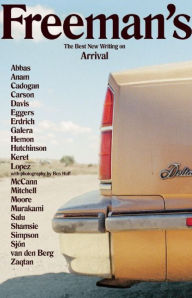
14 OctThe other day I wrote about John Freeman’s new literary magazine, Freeman’s. I’d started that blog entry as an introduction to an article he’d written for Electric Literature, but it got unwieldy. At least in blogging terms. Internet readers like their posts pithy!
In “Anatomy of a Discovery: How a Literary Magazine Finds New Writers,” Freeman dives into the editorial selection process. In short, he say editors:
“Read the slush. Tell the ones we meet to try. Listen to a writer’s supporters.”
The essay reveals that sometimes it’s through meeting someone at a booth at AWP and oftentimes, it’s through the recommendation of an MFA writing instructor.
It’s an insightful article that shows the importance of networking, attending high-profile literary events, and enrolling in the right MFA program (that is, one where the instructor’s are well-connected) being such a standout writer that your writing professor is willing to mention your name to their editor.
As an introvert, I found hope in this sentiment from Freeman:
Fatin, who had seemed so shy in person and on email, was not at all shy on the page. She moves swiftly in and out of four or five different characters points of view like it was nothing, like it was what she was for.
If you want to get published, read the full article here.
You might also enjoy my blog posts:
Keep in Touch with Your Alumni Network
So You Want to Be in Publishing
Five Tips for How to Promote without Selling Out
Making the Most of My Writing MFA
Also! Next month, I’m slated to speak on the panel “Lessons Learned” about my experience publishing at BinderCon.
“I don’t feel that it is necessary to know exactly what I am.” ~Michel Foucault
12 Oct“I don’t feel that it is necessary to know exactly what I am. The main interest in life and work is to become someone else that you were not in the beginning. If you knew when you began a book what you would say at the end, do you think that you would have the courage to write it?
What is true for writing and for love relationships is true also for life. The game is worthwhile insofar as we don’t know where it will end.”
~Michel Foucault
The Personal “I” in Literature: Narcissus & Literature at the Onassis Festival
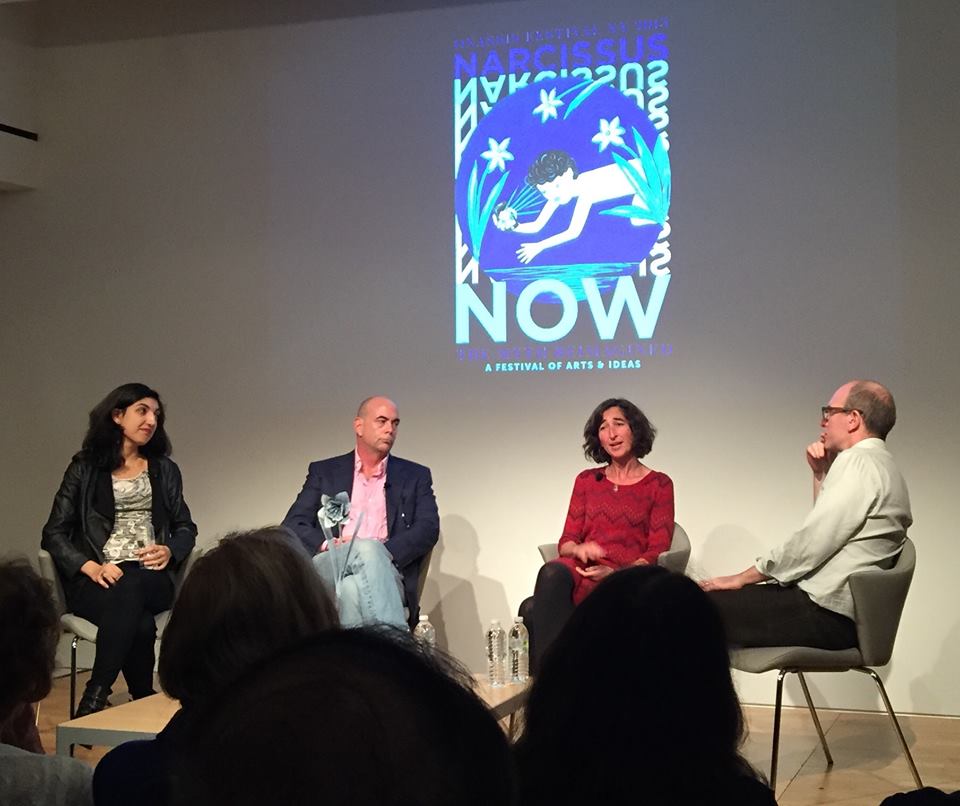
12 OctIs writing inherently narcissistic? Even when writing in the third person, can the writer ever fully disappear from the page? Is the personal “I” more trustworthy in journalism because it acknowledges the reporter’s presence? Is the personal “I” in literary fiction more prone to becoming an unreliable narrator than a third-person narrator?
Lorin Stein, editor in chief of The Paris Review, sat down with Donald Antrim, Elif Batuman, and Jessica Moss to tackle the question of how writers interact with the mirror of the page in the panel Narcissism & Literature at the Onassis Festival‘s Narcissism Now: The Myth Reimagined on October 10, 2015.
Jessica Moss, professor of philosophy at NYU, opened the dialogue up by discussing Plato’s Republic. She discussed Plato’s thoughts on writing in the first person versus the third person, literary concepts that didn’t quite yet have terms at the time. She revealed that Plato believed that a first-person narrator should be “a good, noble person.”
The author of The Possessed, Elif Batuman is also well-known for her journalism for n+1 and The New Yorker. She related that she likes putting herself into her journalism pieces because she feels she will be perceived as more trustworthy. Her editor, at times, disagrees, telling her to remove herself from the story. Batuman transitioned the conversation from the Greek Plato to the Russian Fyodor Dostoyevsky. She told how Dostoyevsky — or as Jack Kerouac would call him, Dusty — originally wrote Crime and Punishment in first-person diary form before switching to the third-person narrator of the published version. In discussing this, the panelists agreed that the third-person showed the story through more action.
Donald Antrim, who also frequently writers for The New Yorker, is the author of the memoir The Afterlife, which deals with his relationship with his mother, Louanne Antrim, and resulted in him writing in the third person to tell her life story. Antrim explained that one of the pitfalls of the first-person narrator is that he or she is constantly in the reader’s ear, justifying his viewpoint. Antrim said, “We’re not interested in a narrator who’s telling us all the time what to think.” Antrim brought the conversation from the Greek Plato and the Russian Dostoyevsky to the English Mary Wollstonecraft Shelley’s Frankenstein, an interesting exploration of narration, which starts out as a letter from a sea captain, transitions into Victor Frankenstein telling his story, and then transitions into the story of the monster.
Antrim said, “The third person doesn’t require having things figured out”; he explained that, in contrast, a first-person narrator either is telling the reader exactly how he or she feels in that moment or is reflecting on that moment. Stein said the first-person stories that interest him are the ones where there is dramatic irony because the narrator doesn’t know something. He suggested French novels use more immediate first person than American novels do. That reminded me of how Darcey Steinke once said French authors think American writers write “close to the house,” an expression, if I remember correctly, that suggested American authors over-explain themselves. As a memoirist, this is something I’ve spent significant time thinking about and working out in my writing. I once had someone in a workshop come up with what they thought was a revelation about why I acted and thought the way I did and she asked me if I realized that thing about myself, and I, frankly, was surprised that she’d asked me that because I had purposely written to reveal that very same thing. I had thought my subtlety was a sign of good writing, but their question made me wonder if people would think I’m not self-aware if I don’t spell things out for them. Unfortunately there wasn’t a Q&A for the panel because I would’ve been quite curious to hear the panelists thoughts on immediacy and self-awareness in memoir writing. I was surprised there wasn’t more talk about memoir, personal essay, semi-autobiographical writing, and the insertion of the personal “I” in journalism in a panel on narcissism. The discussion of narration in literature, however, was riveting.
Lowell Celebrates Kerouac 2015 Is Underway
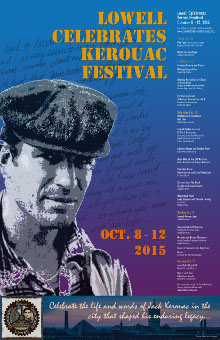
8 OctLowell Celebrates Kerouac! is officially underway, kicking off on Monday with a reading by Michael McClure. As if McClure alone wasn’t enough to draw a crowd, Tim Z. Hernandez, author of Manana Means Heaven, and David Amram will be there, along with lots of other special guests and a great crowd of Beat scholars and fans. You can view the whole 2015 Lowell Celebrates Kerouac! line-up here.
Whether you’re attending LCK or living vicariously through others’ reports, here are a few links to get you in the spirit:::
- My interview with Tim Z. Hernandez
- Exclusive video of David Amram performing at Cornelia Street Cafe in New York City
- Confessions of an awkward Lowell Celebrates Kerouac attendee
- Photos from Jammin’ Jack at Lowell Celebrates Kerouac
- 7 Kerouac-related places to visit in Lowell
- 5 of the most famous people and things to come out of Lowell
- Lowell of yesteryear
- Kerouac’s typewriter
- The bridge Kerouac wrote about was demolished